This wine is not made in Fulham by Alex Hurley but in the sunshine state in collaboration with wine maker Graham Tatomer.
Known for his light touch and sourced from cool climate parts of the state the wine still bursts out of the glass with ripe grapefruit and apple and quickly reveals tropical notes of pineapple and mango. There is cream and toast and a whiff of smoke from the use of new oak but it is kept nicely in check.
Although full in body, the rich fruitiness is balanced by crisp and fresh acidity and the alcohol remains medium with a long uplifting finish.
In summary crisp and fresh and yet still ripe and sunny at the same time, great value and just delicious!
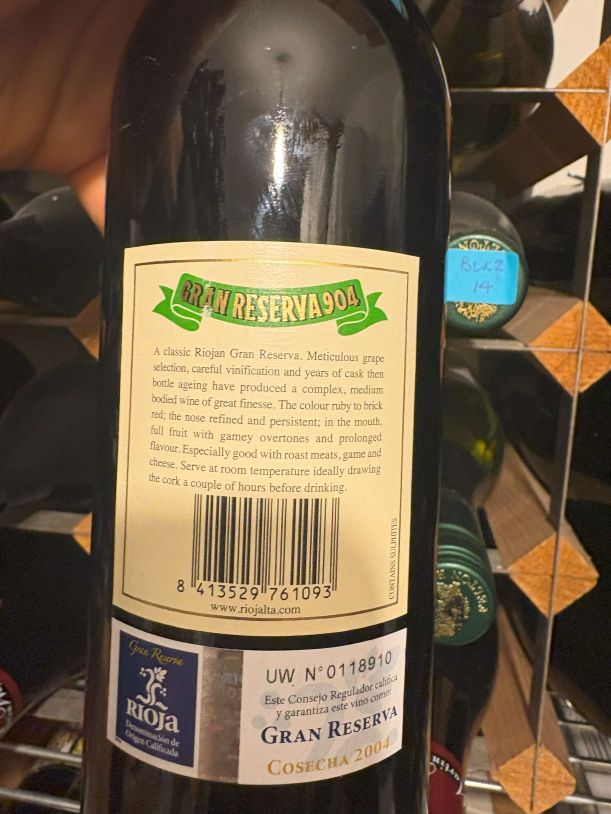
The 10% Graciano in this wine (the rest Tempranillo) adds a perfumed lift to the beautiful aromas and extra freshness on the palate. Although low yielding, late ripening and prone to mildew interest in the grape and plantings have recovered in Rioja and there are some exceptional single varietal bottlings (see our note on Contino).
La Rioja Alta always far exceed the minimum aging requirements set by the DOCA (the highest of the protected origin denominations) in this case after fermentation the wine was matured in old American oak barrels for 5 years and then a further 2 years in bottle before release.
The traditional classification system has come under the criticism that simply aging a wine for successively longer periods, from Crianza to Reserva and finally Gran Reserva, does not necessarily mean that you are getting a higher quality of wine. Also, there an increasing number of Chateau style wineries focusing on wines from a single place, vineyard or grape rather than the traditional approach of blending and barrel aging. This approach is certainly producing some great wines for instance the single vineyard and varietal wines of Contino.
However, the Gran Reserva 904 exemplifies the beauty of the traditional approach. 10 years ago, upon release this wine was already drinking wonderfully with a rich array of primary fruit, secondary barrel flavours and complex tertiary notes from long aging. Today the wine has developed further into something extraordinary.
The nose is a heady concoction of plum, raspberry, cinnamon, and smoke along with dried fruits, leather armchair and moist earth. The tell for me on this wine are the characteristic notes of balsamic vinegar and coconut. On the palate fresh, a mid-weight agile body, fine grained tannins that dust your cheeks and underwrite the still intense fruit. The wine is complex and giving with a superb long finish of dried fruits and wet leaves.
Long may Rioja produce amazing traditional wines like this!
This little brother to the iconic Armagh shiraz that Jim Barry produces holds its own. At almost 10 years old the deep garnet colour shows little sign of evolution.
The nose is pronounced in intensity with waves of violets, ripe red and black fruit, liquorice, dried herbs and a pleasant medicinal note. There are new oak lashings of smoke, chocolate and vanilla and some signs of evolution such as prunes, tobacco and dried meat.
It’s undeniably a big wine of the old school variety but very well balanced, freshness prevents the alcohol and body from weighing it down and everything hangs off firm but ripe tannins. The finish is long and layered.
Great to drink now but will continue to slowly evolve for another decade.
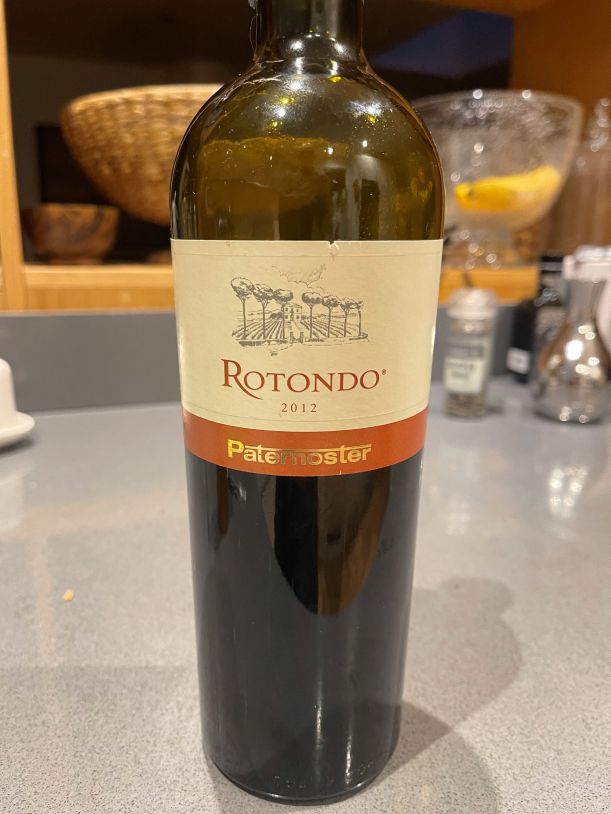
From the Basilicata region in the south of Italy just where the ankle would be of whoever is wearing the uncomfortably high healed boot.
It is warm and mediterranean here but the slopes of Monte Vulture provide some cooling altitude to slow the growing season down allowing flavour to develop in the grapes. These mineral rich soils of volcanic ash and limestone over clay drain well but retain moisture which is also needed for the grapes to grow in the warm climate.
Aglianico is the other key ingredient here known as the Nebbiolo of the south. This grape variety thrives in these harsh volcanic soils, ripening very late and retaining high levels of acidity. This along with a powerful tannic structure and concentrated fruit can create wines with great aging potential.
This wine by Paternoster which is 100% Aglianico has a deep colour displaying its bottle age. Out of the glass jump black berries, black cherries and herbal notes of dried thyme and liquorice. It’s seen some newish oak evident from the touch of vanilla, coffee and smoke and there are lovely mature aromas of prune, prosciutto and tobacco.
In the mouth it is definitely full bodied but has great balance, the abundant tannins are firm but ripe and fine grained. It remains fresh through the long finish and there is not a hint of heat. In fact, 14% seems pretty restrained in these times when a lot of pinot noirs are coming in at 14.5%.
Look at for this grape variety from Vulture DOC and the more premium Superiore DOCG version. It is also the major component of wines from Taurasi in Campagnia where it is generally softened with a little Piedirosso in the blend.
En Primeur, the sale of wines as futures, was until a few years ago a method of sale for premium Bordeaux and Burgundy but now it is increasingly being used for fine wines from other regions.
In this tasting the wines are pre-release but not by much. Brunello di Montalcino must be matured for a minimum of 5 years, including at least two in barrel, before being released to the market. These wines are already in bottle, rather than barrel samples and due out in 2025. So this EP seems to be more about marketing and to generate some expert reviews and promotional activity amongst the merchants.
For the customer the days of buying a future wine to help the wine makers cash flow and enjoying a slight discount in exchange are largely long gone. Now EP seems to be more about securing an allocation of rare or prestigious wines.
Brunello di Montalcino is a DOCG south of Siena within Tuscany. It is warmer and drier than Chianti producing more powerful concentrated expressions of Sangiovese. Its not far from the coast so parts receive some cooling breezes and inland the beautiful rolling hills provide a little elevation. Both of these factors help slow ripening down, which helps develop flavour and maintain freshness in the wines.
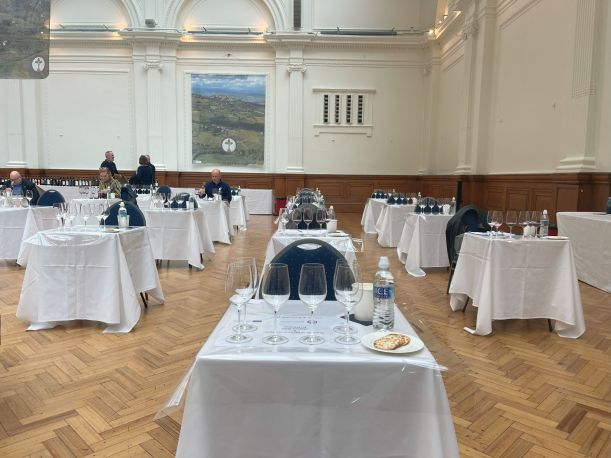
The seated format of the tasting was actually brilliant, no juggling of glass, catalogue (or e-catalogue on your phone) pen and pad, and no elbows required to push through the usual scrums that form around the popular tables – bliss!
It reminded me of how much I like Brunello and I was impressed by how approachable many of the wines were already on release. However with high acidity, fine sandy tannins and that concentrated red fruit they promise much more to come with bottle age. Many displayed classic sour cherry, dusty soft red fruits, bay leaf, dried herbs and a hint of black tea.
It was great to try and compare and contrast the impact of different soil types, those with more clay seeming to display riper fruit. Also to contrast the effect of using either Slavonian or French oak casks. Whilst the French oak did add a layer of spice and sometimes subtle toast, none of the wines I tried seemed overdone.
Of the many great wines on show a few stood out to me:
Argiano BdM – Lovely nose, balanced with a nice touch of spice.
Banfi Vigna Murrucheto BdM – Concentrated fruit and subtle toastiness.
Capanna BdM – Classic sour cherry, black tea and touch of wet stone.
Col d’ Orcia BdM – Intense riper red cherry and plum, dried herbs, bay leaf and a nice dusty finish.
Col d’ Orcia Poggio al Vento Riserva 2016 – Concentrated pot purri, raspberries, sour cherry, black tea, smoke and leather, super long.
Sesti BdM – Consistently fine, roses, sweet cherry, cranberry, dried oregano, black tea and freshly turned soil, amazing concentration.
Sesti Phenomina Reserva 2018 – Knock put too!
Uccelliera BdM – A big wine but still fresh with rich cherry tart, roasted herbs and a bit of toast.
Many thanks to Hunt and Speller and Consorzio del vino Brunello di Montalcino for organising this great tasting and providing so much interesting information about the wines in the catalogue.
By the way don’t forget the Rosso di Montalcino category of wines too. Supposedly entry level but many of the top estates produce what are effectively baby Brunello’s which represent great value for money and can be enjoyed sooner.
An enlightening DO Penedes & Xarel-lo master class with Alvaro Ribalta MW yesterday. Alvaro was able to cut through some of the complexity of the region which overlaps with #Cava and #Catalonia and has no less than 10 named sub-regions. Key take outs were three broader zones: coastal, middle valley and mountainous and the quality focus coming from a group of well-travelled younger winemakers.
The consensus is that #Xarel-lo, suited to the mediterranean climate and poor soils, high in acidity and age worthy, is the most promising grape for Penedes quality wines. It is neutral and examples show how well it works with a range of winemaking techniques; new oak, battonage, a bit of skin contact, concrete eggs, sparkling traditional method and even natural wine making.
Great examples were:
X Col-leccio 2019 by @Nadal – lees stirring, ready to drink, complex, textured with a lovely briny finish.
Xarel-lo Pairal 2020 by @canrafolsdelscaus. Made in chestnut barrels, oxidative notes of bruised apple, cake spices and a long mineral nutty finish.
Lluna Nova Xarel-lo 2017 by @BodegasPinord. Biodynamically made, fermented in French oak with lovely integrated toasty notes, preserved lemon, and a long briny, nutty finish.
La Sinia 2021, by @Maset fermented and aged in acacia barrels with subtle oaky notes, ripe apple and peach.
Refugi de @loxarel_vins sparkling 100% Xarel-lo, partly fermented in oak barrel and cellared for around three years: toasty, ripe red apple, fennel, creamy texture and salty finish.
109 de Loxarel 2011. A crazy wine with aged for 109 months, undiscouraged i.e. Pet Nat: slightly cloudy lemon with flashes of gold, smoky, sea shells, coastal rock pools, nutty, hardly any autolytic notes in spite of the extended lees contact, creamy texture and persistent fine bubbles, intense and long pleasant bitter, salted almond finish.
I can see the gently oaked versions of Xarel-lo having wide appeal and the unoaked lees aged versions working well with food, richer sea food in particular. Cheers!
Greece’s wine story is ancient, its golden age between 500–300 BCE saw Hellenic culture and viticulture spread across the Mediterranean. Wines were often infused with pine resin, herbs or honey, more for preservation than flavour. But centuries of upheaval, from Roman rule to civil wars, meant Greek wine lost ground. Until fairly recently, it was largely defined by Retsina. However, since the 1980s, quality-driven estate bottlings have steadily redefined the landscape. Today, with rising exports and a growing reputation, Greece is quietly producing some seriously characterful and delicious wines.
The country’s geography plays a vital role. A warm Mediterranean climate dominates, though elevation and coastal influences bring vital moderation. Summers can be punishingly hot; Santorini, for example, sees as little as 200mm of annual rainfall. Inland regions swing to harsh winters, while strong island winds can challenge growers.
Greece’s mountainous terrain and low-fertility soils yield naturally limited, quality-focused harvests. Many international varieties are also grown which are still favoured by the domestic market. But around 90% of vineyards are planted with indigenous varieties, some 300 in total, many with real identity and resilience.
Assyrtiko, originally from Santorini, is a flagship white, prized for its tension between ripe fruit and taut acidity. Savatiano and Roditis are widely planted; when grown with care, they offer surprisingly refined expressions. Moschofilero and Malagousia add aromatic flair and freshness.
Among reds, Agiorgitiko is versatile and plush-fruited, while Xinomavro, from Macedonia’s Naoussa PDO, is more structured, with a profile not unlike Barolo.
Increasingly mainstream, Greece is now firmly on the map for thoughtful drinkers seeking something distinct, grounded in tradition, yet confidently modern.
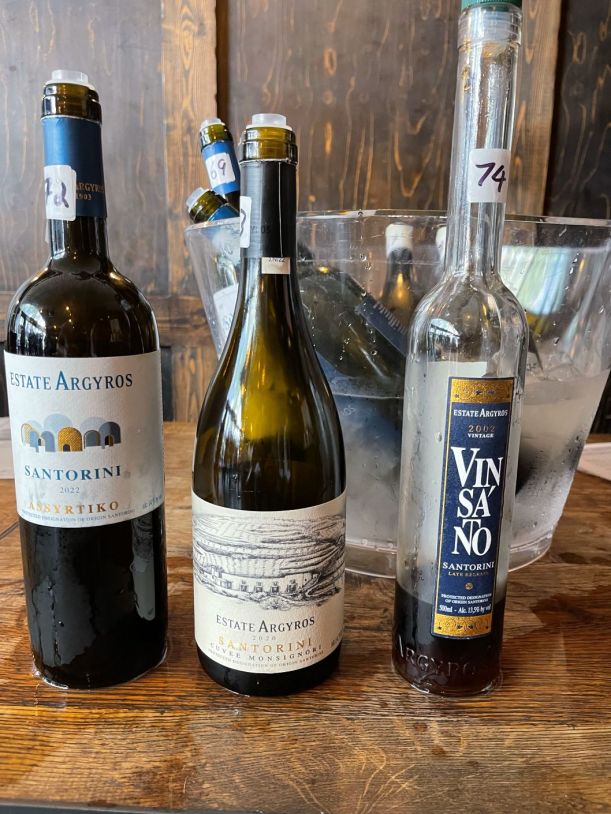
I was delighted to find an old favourite the Argyros Estate Assyrtiko 2020
Made from a blend of vineyards with 100 year old vines, the wine spends 3-4 months on lees. On the nose, stone fruit, sea air and an undertone of herb; tarragon or cut grass. The fruit is ripe, there is cooked lemon with a salty tingling long finish in the mouth. The body is full and acidity bracing. This wine is made for food especially Greek dips, fetta and grilled fish. Delicious.
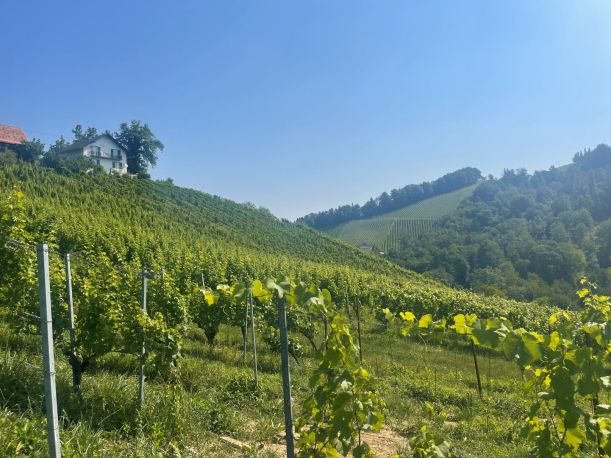
At BioWeingut Karl Renner, nestled in the rolling hills of Pössnitz in the Südsteiermark, sustainability is at the very heart of everything they do. For Karl and his family, who have stewarded this land since 1966, the focus is clear: create wines of character with minimal intervention, and protect the land for future generations.
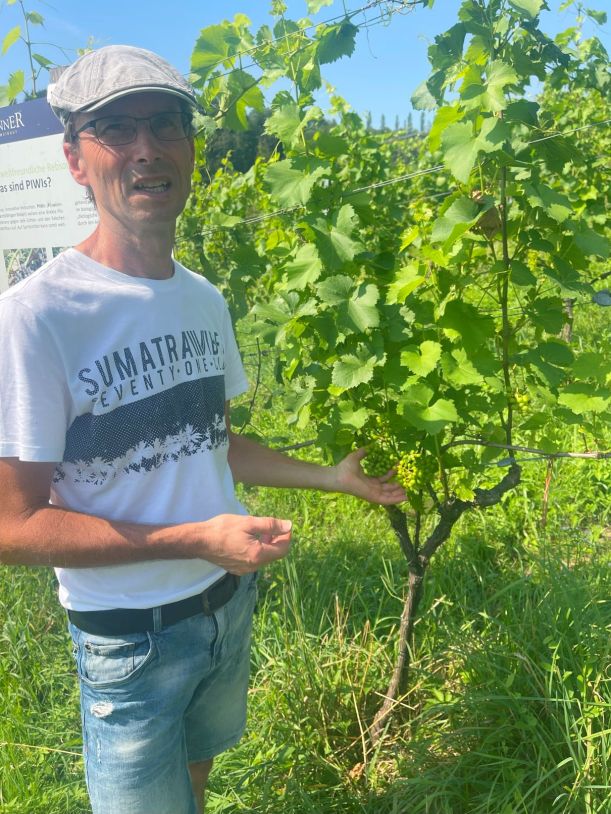
But even for the most committed organic growers, nature presents challenges. Karl points to oidium and downy mildew as the most persistent threats to viticulture in the Südsteiermark. These fungal diseases, brought to Europe in the 19th century, remain the main reason why vineyards, even organic ones, require frequent treatments. In some seasons, up to 20 copper sulphate sprays are needed to try and keep disease at bay. “It’s too much,” says Karl. “It leaves copper in the soil which builds up over time.”
That’s why Renner is turning toward PIWI or as he calls them “next generation” varieties, fungus-resistant hybrids bred to thrive with far fewer treatments. Since 2011, he’s been gradually replanting his vineyards with these innovative grapes, which make organic viticulture not only more effective but also more appealing for wider adoption in the wine industry.
The four main PIWI varieties Karl works with are:
Muscat Bleu – A mid-budding, early-ripening variety, Muscat Bleu is highly aromatic and serves as an early indicator in the vineyard: its berries turn a vivid blue before ripening to black. This allows Karl to closely monitor ripeness progression in the vineyard.
Chardonel – A hybrid of Chardonnay and Seyval Blanc, first developed in New York in 1953, Chardonel delivers both structure and finesse. It captures the familiar elegance of Chardonnay but thrives under organic management.
Souvignier Gris – A cross between Seyval Blanc and Zähringer, Souvignier Gris is one of Karl’s standout performers. It ripens later and retains excellent acidity. It also has some frost resistance.
Muscaris – This cross between Solaris and Gelber Muskateller produces an early-ripening, highly aromatic wine. Muscaris stands out for its expressive floral and spicy notes, making it useful for both varietal bottlings and blends.
These varieties are allowing Karl to dramatically reduce chemical inputs. Where conventional or even organic growers might spray upwards of 15–20 times per season, Renner’s PIWI vines typically need only 2–4 treatments. That reduction means less soil compaction from tractors, lower CO₂ emissions, and healthier microbial life in the vineyard. Cover crops further enhance soil structure and biodiversity, especially on the estate’s steep slopes.
In the winery there is a lot to learn, the wine making knowledge for the varieties traditionally grown; Sauvignon Blanc, Morillon (Chardonnay) and Pinot Blanc, that has been accumulated over generations must be learnt anew for this New Generation of varieties. Karl is experimenting with skin contact, barrel ageing, and unfiltered bottlings to explore the full potential of these newer grapes. He’s also trialling blends that include both PIWI and traditional varieties, giving wine drinkers something familiar while showcasing the potential of these robust hybrids.
Tasting notes:
Thirsch Chardonel 2020
Thirsch: historical name of the farm. First vintage 2011, still experimental.
Aged 2 years in barrel for stability.
Smoky, orange peel, peach, apricot, herbal and nutty notes.
Fermented on skins: Muscaris 2–3 weeks, Souvignier Gris 3 months.
Separate harvest dates.
Pear, banana, cider notes.
Slightly grippy mouthfeel, long finish.
At Weingut Renner, the message is clear: PIWI varieties represent a practical, scalable solution for making organic viticulture more successful. As climate change, disease pressure, and sustainability demands intensify, Karl’s approach offers a compelling model for other growers — not just in Austria, but across Europe and beyond.
As wine drinkers are we ready to expand our horizons and discover these new wines? Natural wines have found an audience, why not “next generation” varieties too?
Renner ‘Thirsch’ Muscaris 2020. Südsteiermark, Austria
Highly aromatic with an expressive bouquet of floral notes—honeysuckle, orange blossom—alongside dried orange peel, grapefruit pith, ripe peach, nectarine, and melon. There’s a subtle herbal edge and a muscat-like character with a touch of gamey complexity.
Dry, with medium-plus acidity, medium alcohol, and a medium-plus body. The texture is creamy with a slight tang from skin contact, plus a hint of tannin. On the palate, it delivers slightly fresher fruit tones mingled with dried citrus peel and a nutty nuance. Long, lingering finish.
A really complex and intriguing wine.
Thirsch Souvignier Gris & Pinot Blanc Blend 2021. Südsteiermark, Austria
Slightly cloudy in the glass. Aromas of apple, pear, bruised apple, banana, marzipan, nuts, and a touch of smokiness and yeast.
The palate shows more fruit intensity, with a dry profile, medium-plus acidity, medium alcohol, and a full body. Textural and grippy with a bold mouthfeel. Finishes long, leaving notes of apricot, marzipan, and nuts.
Ric and intense both of these wines are great food wines with the body and texture to cope well with richer dishes whilst still providing plenty of freshness and lift.
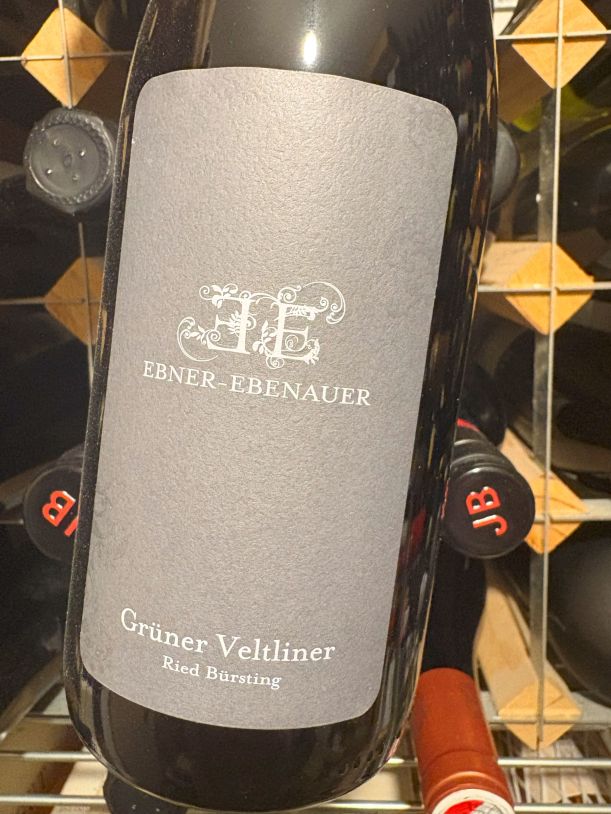
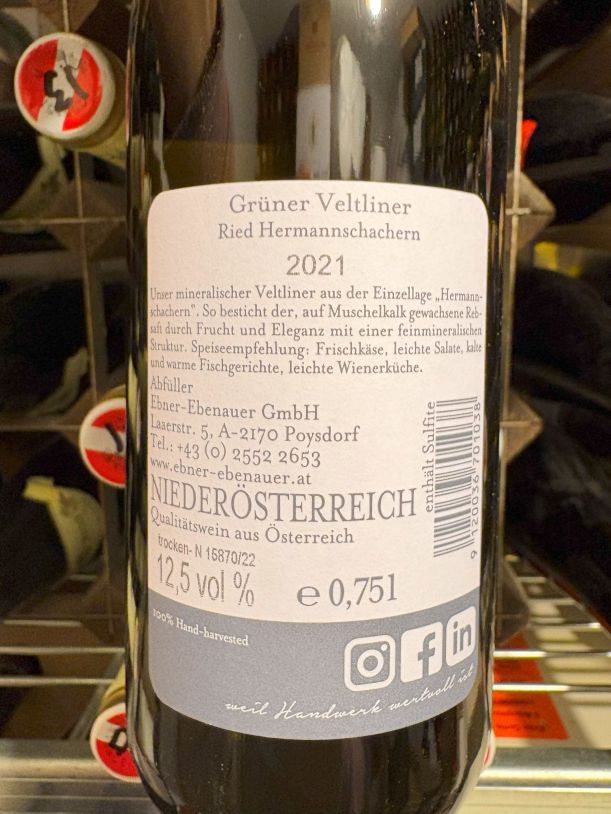
Ebner-Ebenauer make small amounts of biodynamic and organic wines from largely old vines in the north east of the Weinviertel region near Poysdorf. The charismatic Marion and her husband Manfred are making waves with their very late disgorged Blanc de Blancs and Noirs but it is their range of single vineyard Grüner Veltliners expressive the varied soils and aspects that we are focusing on there.
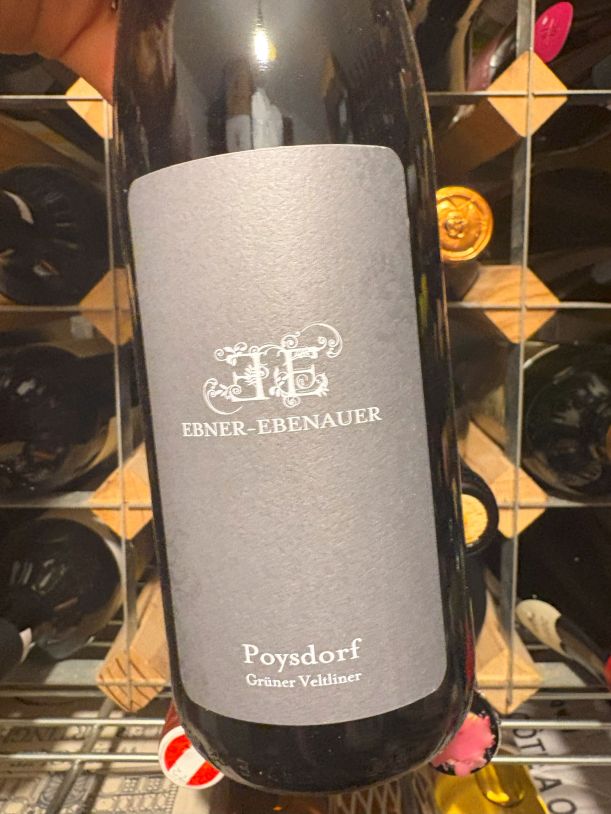
Ebner-Ebenauer Poysdorf Grüner Veltliner 2021. A blend from across their vineyards, spicy, with wet stone a touch of white pepper and crunchy orchard fruit. Refreshingly moreish, light but managing to sustain ones interest. Great value.
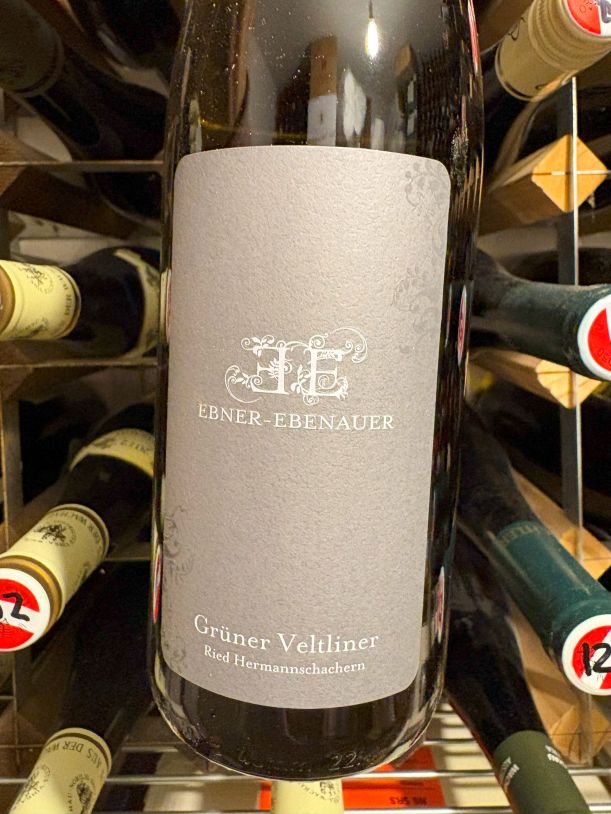
Ebner-Ebenauer Poysdorf Hermanschachern Grüner Veltliner 2021. From a single vineyard with limestone and fossil soils and 30 year + vines. Citrus, fresh pear and apple a touch of white peach, white pepper, herbs and wet stones. Mid weight with great focus and freshness this lasts long on the palate. Drinking now but will evolve over the years. My favourite and the pick for wine of the month.
Ebner-Ebenauer Poysdorf Bürsting Grüner Veltliner 2021. From a single vineyard of 50 year old vines, rich, spicy, juicy and complex, concentrated and full bodied. Decant or cellar for up to 10 years.
The 2021 vintage, by the way, across Austria really has a superb balance of fruit and freshness.







 WanderCurtis Wine