WanderCurtis Wine

Wine tastings, corporate events, reviews and recommendations


Leave a comment

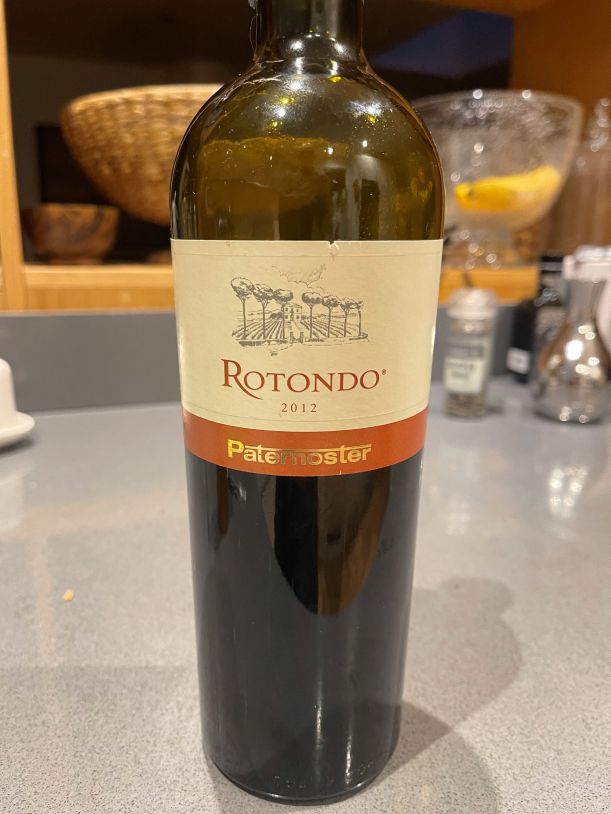
Rotondo Aglianico del Vulture 2012

From the Basilicata region in the south of Italy just where the ankle would be of whoever is wearing the uncomfortably high healed boot.

It is warm and mediterranean here but the slopes of Monte Vulture provide some cooling altitude to slow the growing season down allowing flavour to develop in the grapes. These mineral rich soils of volcanic ash and limestone over clay drain well but retain moisture which is also needed  for the grapes to grow in the warm climate.  

Aglianico is the other key ingredient here known as the Nebbiolo of the south.  This grape variety thrives in these harsh volcanic soils, ripening very late and retaining high levels of acidity. This along with a powerful tannic structure and concentrated fruit can create wines with great aging potential.

This wine by Paternoster which is 100% Aglianico has a deep colour displaying its bottle age. Out of the glass jump black berries, black cherries and herbal notes of dried thyme and liquorice. It’s seen some newish oak evident from the touch of vanilla, coffee and smoke and there are lovely mature aromas of prune, prosciutto and tobacco.

In the mouth it is definitely full bodied but has great balance, the abundant tannins are firm but ripe and fine grained. It remains fresh through the long finish and there is not a hint of heat. In fact, 14% seems pretty restrained in these times when a lot of pinot noirs are coming in at 14.5%.

Look at for this grape variety from Vulture DOC and the more premium Superiore DOCG version.  It is also the major component of wines from Taurasi in Campagnia where it is generally softened with a little Piedirosso in the blend.


Leave a comment

Do low yields really make for better wines?

There’s a romantic allure to the idea that if vines put all their energy into fewer grapes, flavours concentrate, skins thicken and wines of depth and character will follow. It’s a story winemakers often tell, and it’s one that underpins much of European wine law. But does lower yield really mean higher quality in the glass? Or is it more complicated than that?

In the AOC system (Appellation d’Origine Contrôlée), maximum yields are tightly regulated. As you move up the hierarchy, the permitted output drops. For example, in IGP Pays d’Oc, where mass-market Merlots and Syrahs are made, yields can reach 100 hL/ha. But in Bandol, home to intense Mourvèdre reds, the limit is just 40 hL/ha.

Many wineries proudly talk about their yield-reducing techniques: bud rubbing, green harvesting, shoot thinning, all in pursuit of better fruit. But how real is the link between fewer grapes and better wine?

Grape quality.

It’s true that lower yields often result in higher-quality grapes, smaller berries with more concentrated flavours and better balance between sugars and acids. In red grapes, that also means a higher skin-to-juice ratio, which is crucial for extracting colour, tannin, and aroma. This can lead to wines that are more structured, more complex, and more age-worthy.

Conversely, when a vine carries too much fruit, the result can be diluted, insipid wine. The vine simply can’t ripen everything well. Sugar may build, but flavour lags behind, and acid levels drop, leaving wines flat or unbalanced. This is particularly noticeable with more delicate varieties that struggle to retain their identity under high cropping.

But this isn’t a one-size-fits-all rule. Some varieties are more sensitive than others. Pinot Noir, with its thin skin and delicate nature, thrives on low yields. Push it too hard, and it quickly loses character. Grenache, on the other hand, can crop more generously and still produce juicy, expressive wines, particularly in warm, dry climates where ripening is less of a challenge.

Correlation isn’t the same as causation

In Burgundy, Grand Cru vineyards like Echezeaux are restricted to 35 hL/ha, and the wines are often sublime. But low yields alone don’t guarantee greatness. In Bordeaux, some legendary vintages; 1982, 2005, 2010 delivered both high quality and high volume. And in tough years like 2013 or 2017, yields were low, but this certainly didn’t make them great vintages.

The issue is this: yields can be low for many reasons, frost, hail, drought, disease. These stresses can reduce volume, but they don’t necessarily improve grape quality. In fact, they often have the opposite effect, leaving berries under-ripe or damaged. Low yield, in these cases, is more of a symptom of vineyard struggle than a sign of excellence.

It’s about balance

What really matters is how much fruit a vine can properly ripen. This sweet spot depends on grape variety, vine age, and, critically, location. A vine in the cool Mosel will struggle to ripen Cabernet Sauvignon no matter the yield. In contrast, in warm, dry areas like Châteauneuf-du-Pape, Grenache can yield generously and still reach full flavour.

This is why a balanced vine is everything. A healthy canopy, well-matched to the fruit load, allows grapes to ripen slowly and evenly. Sunlight must reach the bunches without overexposure. Dr. Richard Smart’s research highlights the importance of the leaf-to-fruit ratio. If the canopy is managed well, through pruning, training, and shoot thinning, the vine can support both ripeness and complexity, even at higher yields.

Beyond yield: The bigger picture

Yield is just one piece of the quality puzzle. Soil structure, drainage, and mineral content shape a vine’s health and its capacity to ripen its fruit. Climate, both macro and micro, dictates ripening windows, acidity levels, and the development of flavour compounds.

Then comes vineyard management: irrigation, pest control, canopy structure. And let’s not forget the winemaking itself. Gentle handling, fermentation temperature, ageing choices all can make or break a wine, regardless of what happened in the vineyard.

So yes, lower yields can help, particularly with sensitive varieties and in cooler climates. But  plenty of mediocre wines come from low-yielding vintages, just as some brilliant bottles emerge from vines that carried more fruit.

Practical limits

Growers do have tools to influence yield like green harvesting and bud removal, but they’re not without risk. Pruning too early invites frost damage. Cutting bunches mid-season may encourage larger grapes, lowering that all-important skin-to-juice ratio.

In practice, especially in regulated regions, if harvest looks too big, grapes are often simply left on the vine or dropped before picking to meet AOC rules. That might tick the legal box, but it doesn’t always improve quality, especially in mechanically harvested vineyards, where sorting isn’t as selective.

Dr. Smart argues that growers have more control over ripeness than yield. By managing the canopy to avoid shading and encourage even ripening, growers can often improve both the quality and the quantity of grapes. When a vine is in balance for the site in question, the result is often better than any number dictated by regulation.

The verdict.

So, does low yield mean better wine? Well sometimes……..

Great wine comes from thoughtful choices: matching grape to place, nurturing healthy vines, managing the canopy, harvesting at the right moment. Yield matters, yes, but quality is about balance, timing, and a touch of artistry.


Leave a comment

Brunello di Montalcino 2019 En Primeur – under exam conditions!

En Primeur, the sale of wines as futures, was until a few years ago a method of sale for premium Bordeaux and Burgundy but now it is increasingly being used for fine wines from other regions. 

In this tasting the wines are pre-release but not by much.  Brunello di Montalcino must be matured for a minimum of 5 years, including at least two in barrel, before being released to the market.  These wines are already in bottle, rather than barrel samples and due out in 2025. So this EP seems to be more about marketing and to generate some expert reviews and promotional activity amongst the merchants.

For the customer the days of buying a future wine to help the wine makers cash flow and enjoying a slight discount in exchange are largely long gone.  Now EP seems to be more about securing an allocation of rare or prestigious wines.

Brunello di Montalcino is a DOCG south of Siena within Tuscany. It is warmer and drier than Chianti producing more powerful concentrated expressions of Sangiovese. Its not far from the coast so parts receive some cooling breezes and inland the beautiful rolling hills provide a little elevation. Both of these factors help slow ripening down, which helps develop flavour and maintain freshness in the wines.

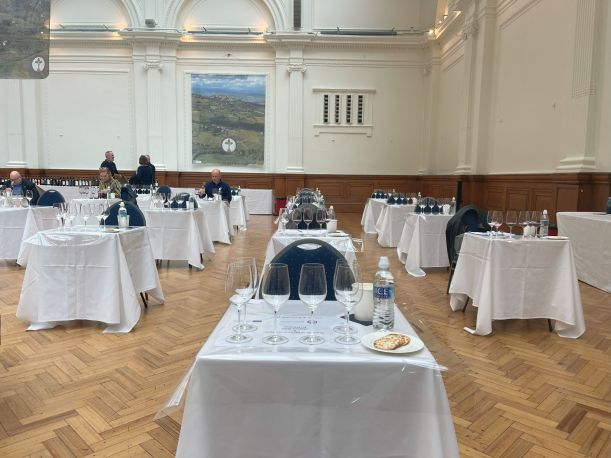
The seated format of the tasting was actually brilliant, no juggling of glass, catalogue (or e-catalogue on your phone) pen and pad, and no elbows required to push through the usual scrums that form around the popular tables – bliss!

It reminded me of how much I like Brunello and I was impressed by how approachable many of the wines were already on release. However with high acidity, fine sandy tannins and that concentrated red fruit they promise much more to come with bottle age. Many displayed classic sour cherry, dusty soft red fruits, bay leaf, dried herbs and a hint of black tea.  

It was great to try and compare and contrast the impact of different soil types, those with more clay seeming to display riper fruit. Also to contrast the effect of using either Slavonian or French oak casks. Whilst the French oak did add a layer of spice and sometimes subtle toast, none of the wines I tried seemed overdone. 

Of the many great wines on show a few stood out to me:

  • Argiano BdM – Lovely nose, balanced with a nice touch of spice.
  • Banfi Vigna Murrucheto BdM – Concentrated fruit and subtle toastiness.
  • Capanna BdM – Classic sour cherry, black tea and touch of wet stone.
  • Col d’ Orcia BdM – Intense riper red cherry and plum, dried herbs, bay leaf and a nice dusty finish.
  • Col d’ Orcia Poggio al Vento Riserva 2016 – Concentrated pot purri, raspberries, sour cherry, black tea, smoke and leather, super long. 
  • Sesti BdM – Consistently fine, roses, sweet cherry, cranberry, dried oregano,  black tea and freshly turned soil, amazing concentration. 
  • Sesti Phenomina Reserva 2018 – Knock put too!
  • Uccelliera BdM – A big wine but still fresh with rich cherry tart, roasted herbs and a bit of toast. 

Many thanks to Hunt and Speller and Consorzio del vino Brunello di Montalcino for organising this great tasting and providing so much interesting information about the wines in the catalogue.

By the way don’t forget the Rosso di Montalcino category of wines too. Supposedly entry level  but many of the top estates produce what are effectively baby Brunello’s which represent great value for money and can be enjoyed sooner.

For more information on the region see our Brunello di Montalcino trip tasting notes.


Leave a comment

Penedes & Xarel-lo master class with Alvaro Ribalta MW

An enlightening DO Penedes & Xarel-lo master class with Alvaro Ribalta MW yesterday.  Alvaro was able to cut through some of the complexity of the region which overlaps with #Cava and #Catalonia and has no less than 10 named sub-regions. Key take outs were three broader zones: coastal, middle valley and mountainous and the quality focus coming from a group of well-travelled younger winemakers. 

The consensus is that #Xarel-lo, suited to the mediterranean climate and poor soils, high in acidity and age worthy, is the most promising grape for Penedes quality wines. It is neutral and examples show how well it works with a range of winemaking techniques; new oak, battonage, a bit of skin contact, concrete eggs, sparkling traditional method and even natural wine making. 

 Great examples were: 

  • X Col-leccio 2019 by @Nadal – lees stirring, ready to drink, complex, textured with a lovely briny finish. 
  • Xarel-lo Pairal 2020 by @canrafolsdelscaus. Made in chestnut barrels, oxidative notes of bruised apple, cake spices and a long mineral nutty finish. 
  • Lluna Nova Xarel-lo 2017 by @BodegasPinord. Biodynamically made, fermented in French oak with lovely integrated toasty notes, preserved lemon, and a long briny, nutty finish. 
  • La Sinia 2021, by @Maset fermented and aged in acacia barrels with subtle oaky notes, ripe apple and peach. 
  • Refugi de @loxarel_vins  sparkling 100% Xarel-lo, partly fermented in oak barrel and cellared for around three years: toasty, ripe red apple, fennel, creamy texture and salty finish. 
  • 109 de Loxarel 2011. A crazy wine with aged for 109 months, undiscouraged i.e. Pet Nat: slightly cloudy lemon with flashes of gold, smoky, sea shells, coastal rock pools, nutty, hardly any autolytic notes in spite of the extended lees contact, creamy texture and persistent fine bubbles, intense and long pleasant bitter, salted almond finish. 

 I can see the gently oaked versions of Xarel-lo having wide appeal and the unoaked lees aged versions working well with food, richer sea food in particular. Cheers!


Leave a comment

Bodegas Valdespino’s cellar

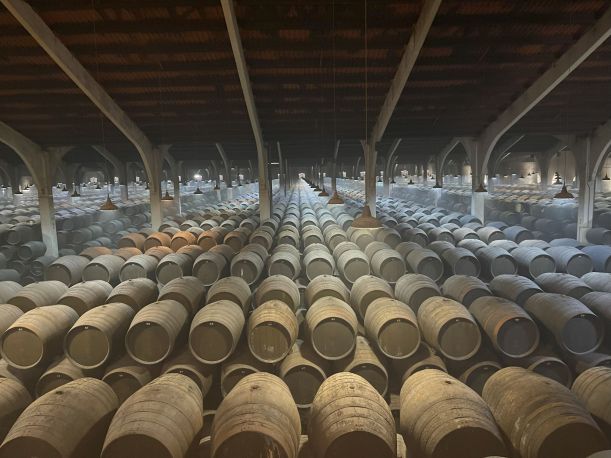
Jerez de la Frontera, so named as the boundary between warring Christians and Moors in the 13th Century is the home of bodegas Valdespino. And just look at this amazing cellar, in the dim light and controlled moisture haze it seems to go on as far as the eye can see!

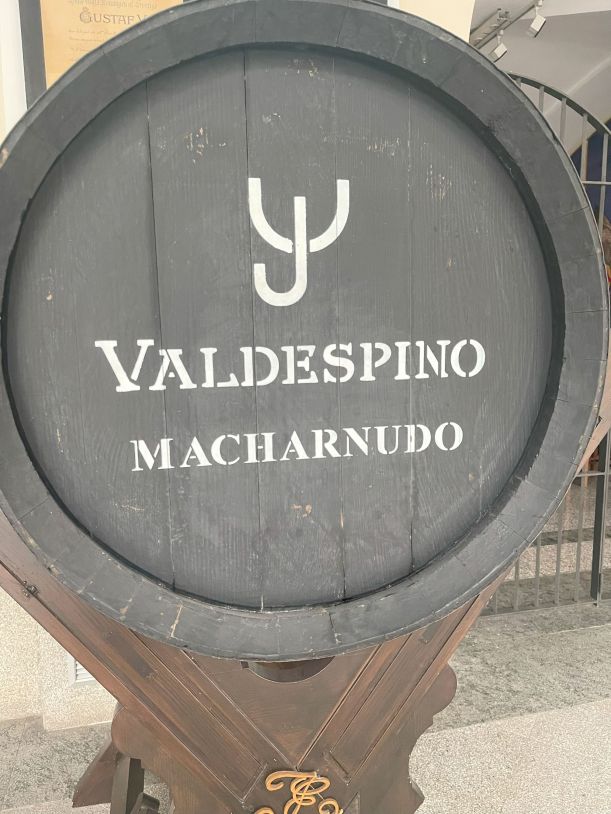
This is where the solera for the excellent Inocente Fino and the Tio Diego Amontillado live. Both contain wine made from the highest point of the Macharnudo Alto single vineyard.

Doors to the west open to allow the cool Poniente breeze in

The best vineyards in the sherry triangle have Albariza soils which are a mix of limestone, silica and clay. These soils absorb moisture in the winter and then form a crust during the dry growing season retaining moisture and slowly releasing it to the vines. The gently sloping vineyards have a series of troughs, called Asperpia, worked into them to catch water and let it soak into the soil.  

The Macharnudo Alto vineyard has a little more elevation than elsewhere and so catches the cooling Poniente breeze from the Atlantic and the albariza soils here contain a particularly high level of limestone both contributing to more concentrated grapes.

In the cellar the solera systems sit side by side each with 10 criadera and the final tier of solera.  The Inocente barrels all contain flor and as with all Finos the resulting wine has been fully matured under a layer of yeast. Wine is removed for bottling from the bottom solera layer, where the wines are oldest, each spring and autumn when the flor is thickest. The wines therefore have an average age of around 10 years. The barrels in the solera are then topped up successively each from the criadera above it until new wine is added to the first set of barrels. The nutrients within the fresh wine added helps to feed the flor yeast and keep it alive.

The first three criadera of the Tio Diego Amontillado solera system have flor and then more spirit is added fortifying the wines up to 17% ABV which kills it off.  The wine matures in the remaining layers of the solera oxidatively resulting in a wine with both yeasty flor character and nutty, caramel type notes and a of course a darker colour. There is more evaporation without the floor and so the abv rises by another few degrees. Wine is only drawn off the solera once a year meaning that the average age of the Tio Diego is more like 17-18 years.

There is one other wine connected with these soleras and that is the Palo Cortado. Every now and then the wine maker recognises that one or two of the barrels ‘want to be’ Palo Cortado. It may be that the flor has died or the barrel displays some extra concentration or individual character.  These barrels are moved over to join the Palo Cortado solera producing Viejo C.P. or even the PC  VOS (Very Old Sherry).

There are 11 layers within these solera systems and there are 70 barrels in each making 770 in total. This sounds like a lot but less than 40% is taken out each year and with an average age of 10 and 17 years respectively it takes a lot of time and space not mention care and attention to make these fantastic wines.  

For tasting notes of the Inocente Fino see wine of the month


Leave a comment

Flint Wines American Tasting

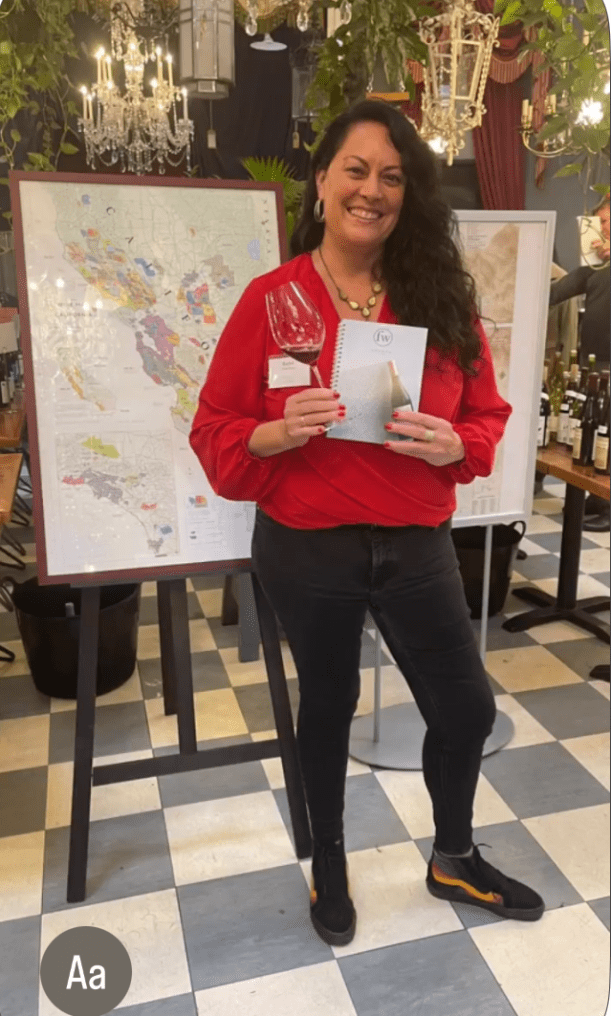
Flint Wines have a comprehensive portfolio of wines from the USA and to support a recent portfolio tasting they have put together an amazing American tasting booklet.  It is packed full of maps, descriptions of each AVA’s character, climate, aspect, soils and detailed winery profiles. 

Quality grapes in California are very much a product of one or more factors in the vineyard that moderate the otherwise warm climate. The cold Pacific sends cooling breezes and overnight fog far inland along the State’s various east west valleys that cut through the coast mountains and of course San Fransico Bay itself.  Also vineyards planted at altitude on these mountain slopes also enjoy cooler nights. 

Grapes as a result ripen more slowly, developing flavour and retaining more acid giving the wine maker lots of good material to work with.  Growers of Pinot Noir, Chardonnay and even Syrah are particularly on the lookout for cool climate pockets.  It was great to be able to visualise all this with aid of these maps.

The tasting was organised by region which allowed you to travel from one AVA to another comparing and contrasting and really see how wine makers are responding to the changing conditions.

Hats off to Rachel Dixon their USA Ambassador, who’s mission to educate about wines of American is certainly working! 

For me standout wineries included:

  • Chanin Wines –  Chardonnays & Pinots from Los Alamos, Santa Maria Valley 
  • Christom Vineyards-  Chardonnays & Pinots  from Willamette Valley, Oregan
  • Tyler Winery  – Chardonnays & Pinots from Santa Rita Hills, California.
  • Snowden Vineyards – Sauvignon Blanc & Cab Sauvignon from Napa Valley, California.


Leave a comment

Wines of Greece Annual Tasting

Greece’s wine story is ancient, its golden age between 500–300 BCE saw Hellenic culture and viticulture spread across the Mediterranean. Wines were often infused with pine resin, herbs or honey, more for preservation than flavour. But centuries of upheaval, from Roman rule to civil wars, meant Greek wine lost ground. Until fairly recently, it was largely defined by Retsina. However, since the 1980s, quality-driven estate bottlings have steadily redefined the landscape. Today, with rising exports and a growing reputation, Greece is quietly producing some seriously characterful and delicious wines.

The country’s geography plays a vital role. A warm Mediterranean climate dominates, though elevation and coastal influences bring vital moderation. Summers can be punishingly hot; Santorini, for example, sees as little as 200mm of annual rainfall. Inland regions swing to harsh winters, while strong island winds can challenge growers.

Greece’s mountainous terrain and low-fertility soils yield naturally limited, quality-focused harvests. Many international varieties are also grown which are still favoured by the domestic market. But around 90% of vineyards are planted with indigenous varieties, some 300 in total, many with real identity and resilience.

Assyrtiko, originally from Santorini, is a flagship white, prized for its tension between ripe fruit and taut acidity. Savatiano and Roditis are widely planted; when grown with care, they offer surprisingly refined expressions. Moschofilero and Malagousia add aromatic flair and freshness.

Among reds, Agiorgitiko is versatile and plush-fruited, while Xinomavro, from Macedonia’s Naoussa PDO, is more structured, with a profile not unlike Barolo.

Increasingly mainstream, Greece is now firmly on the map for thoughtful drinkers seeking something distinct, grounded in tradition, yet confidently modern.

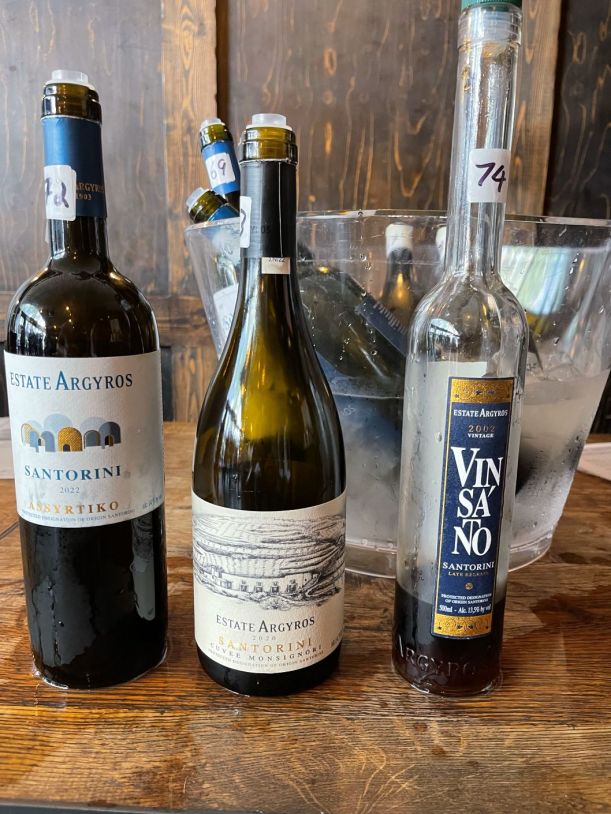
I was delighted to find an old favourite the Argyros Estate Assyrtiko 2020

Made from a blend of vineyards with 100 year old vines, the wine spends 3-4 months on lees. On the nose, stone fruit, sea air and an undertone of herb; tarragon or cut grass. The fruit is ripe, there is cooked lemon with a salty tingling long finish in the mouth. The body is full and acidity bracing. This wine is made for food especially Greek dips, fetta and grilled fish. Delicious.

For my full tasting notes of the Argyros range see Adam’s article on the winery.


Leave a comment

Sparkling Wines Chile and Argentina

A condensed summary of sparkling wines from Chile and Argentina including history,  regions, growing environment, vineyard management, grape varieties, wine making, styles, wine law and business.

Sources include: WSET Diploma Wines of the World, Oxford Wine Companion by Julia Harding and Jancis Robinson, various producer websites.

Note this document is intended for personal use only not for commercial or promotional use. We accept no liability for any omissions or errors that may be contained in the document.

© Kiran Curtis 2023. Personal use only not to be used for commercial or promotional purposes.


Leave a comment

Sparkling Wines Germany

A condensed summary of sparkling wines from Germany including history,  regions, growing environment, vineyard management, grape varieties, wine making, styles, wine law and business.

Sources include: WSET Diploma Wines of the World, Oxford Wine Companion by Julia Harding and Jancis Robinson, various producer websites.

Note this document is intended for personal use only not for commercial or promotional use. We accept no liability for any omissions or errors that may be contained in the document.

© Kiran Curtis 2023. Personal use only not to be used for commercial or promotional purposes.


Leave a comment

Sparkling Wines Italy, Tank Method

A condensed summary of tank method wines from Italy including history,  regions, growing environment, vineyard management, grape varieties, wine making, styles, wine law and business.

Sources include: WSET Diploma Wines of the World, Oxford Wine Companion by Julia Harding and Jancis Robinson, various producer websites.

Note this document is intended for personal use only not for commercial or promotional use. We accept no liability for any omissions or errors that may be contained in the document.

© Kiran Curtis 2023. Personal use only not to be used for commercial or promotional purposes.