WanderCurtis Wine

Wine tastings, corporate events, reviews and recommendations


Leave a comment

Sparkling Wines Traditional Method, Italy

A condensed summary of traditional method Italian sparkling wines including history,  regions, growing environment, vineyard management, grape varieties, wine making, styles, wine law and business.

Sources include: WSET Diploma Wines of the World, Oxford Wine Companion by Julia Harding and Jancis Robinson, various producer websites.

Note this document is intended for personal use only not for commercial or promotional use. We accept no liability for any omissions or errors that may be contained in the document.

© Kiran Curtis 2023. Personal use only not to be used for commercial or promotional purposes.


Leave a comment

Sparkling Wines Traditional Method, England & Wales

A condensed summary of English sparkling wine including history,  regions, growing environment, vineyard management, grape varieties, wine making, styles, wine law and business.

Sources include: WSET Diploma Wines of the World, Oxford Wine Companion by Julia Harding and Jancis Robinson, various producer websites.

Note this document is intended for personal use only not for commercial or promotional use. We accept no liability for any omissions or errors that may be contained in the document.

© Kiran Curtis 2023. Personal use only not to be used for commercial or promotional purposes.


Leave a comment

Sparkling Wines, Traditional Method, Cava.

A condensed summary of Cava wines including history,  regions, growing environment, vineyard management, grape varieties, wine making, styles, wine law and business.

Sources include: WSET Diploma Wines of the World, Oxford Wine Companion by Julia Harding and Jancis Robinson, various producer websites.

Note this document is intended for personal use only not for commercial or promotional use. We accept no liability for any omissions or errors that may be contained in the document.

© Kiran Curtis 2023. Personal use only not to be used for commercial or promotional purposes.


Leave a comment

Sparkling Wines, France, Cremant

A condensed summary of traditional method Cremant wines from France including history,  regions, growing environment, vineyard management, grape varieties, wine making, styles, wine law and business.

Sources include: WSET Diploma Wines of the World, Oxford Wine Companion by Julia Harding and Jancis Robinson, various producer websites.

Note this document is intended for personal use only not for commercial or promotional use. We accept no liability for any omissions or errors that may be contained in the document.

© Kiran Curtis 2023. Personal use only not to be used for commercial or promotional purposes.


Leave a comment

Traditional Method Sparkling Wine – Champagne

A condensed summary of Champagne including history,  regions, growing environment, vineyard management, grape varieties, wine making, styles, wine law and business.

Sources include: WSET Diploma Wines of the World, Oxford Wine Companion by Julia Harding and Jancis Robinson, various producer websites.

Note this document is intended for personal use only not for commercial or promotional use. We accept no liability for any omissions or errors that may be contained in the document.

© Kiran Curtis 2023. Personal use only not to be used for commercial or promotional purposes.


Leave a comment

Overview of Sparkling Wine

A condensed introduction to Sparkling wines including, regions, growing environment, vineyard management, grape varieties, different wine making methods, and styles.

Sources include: WSET Diploma Wines of the World, Oxford Wine Companion by Julia Harding and Jancis Robinson, various producer websites.

Note this document is intended for personal use only not for commercial or promotional use. We accept no liability for any omissions or errors that may be contained in the document.

© Kiran Curtis 2023. Personal use only not to be used for commercial or promotional purposes.


Leave a comment

Willamette Valley AVA: World class Pinot Noir and Chardonnay.

The Willamette Valley is Oregon’s most celebrated wine region, renowned for producing world-class Pinot Noir, Chardonnay, and Pinot Gris. While vines were planted in the region as early as the 19th century, modern winemaking began in the 1960s, when pioneering wine makers like David Lett of Eyree Vineyards took a risk on the marginal climate as a place to grow Burgundian Pinot Noir. Today, the region is home to over 700 wineries, the majority of which are small, family-owned estates dedicated to sustainable farming and minimal-intervention winemaking.

The Willamette Valley benefits has warm summers but cool air is drawn in from the Pacific through gaps in the coast range, altitude can also provide cool nights further extending the growing season. Rainfall is concentrated in winter and spring, allowing grapes to ripen slowly and develop complexity while retaining natural acidity. The valley’s diverse soils, ranging from ancient marine sediment to volcanic basal, further enhance the character of the wines, contributing to their depth and sense of place.

Clonal selection has proved to be key to successfully growing both Pinot Noir and Chardonnay and once the move was made away from those suitable in California to mainly Dijon clones both varieties have thrived. Pinot Noir yields wines of elegance and balance, often marked by red fruit, floral aromatics, and earthy minerality. Chardonnay, once an afterthought, has emerged as a serious contender, showcasing crisp acidity, restrained fruit, and a Burgundian sense of structure. Pinot Gris, also gets a look in.

The Willamette Valley AVA encompasses several smaller sub-AVAs, each with distinct characteristics.

  • Dundee Hills: The birthplace of Oregon Pinot Noir, this region is slightly warmer and has red volcanic soils that retain water through the growing season and advantage as water is scarce and most smaller wineries dry farm.
  • Eola-Amity Hills: Cooled by coastal winds through the Van Duzer Corridor.
  • Yamhill-Carlton: Defined by a south facing bowl formation and free draining marine sedimentary soils.
  • Ribbon Ridge: A tiny but highly regarded AVA on  200m high ridge.
  • Chehalem Mountains: A varied region at the north end of the valley with the largest area of plantings.
  • Van Duzer Corridor AVA: A break in the coastal range makes this one of the coolest and windiest areas.

A recent tasting organised by the Oregan Wine Board at the American Embassy provided a great chance to sample the excellent wines being produced in Willamette Valley and the wider Oregan region.  Although it was hard to discern clear sub-regional characteristics from this sample, there were many wines of great quality and individuality and many passionate and engaging winemakers presenting them.


Leave a comment

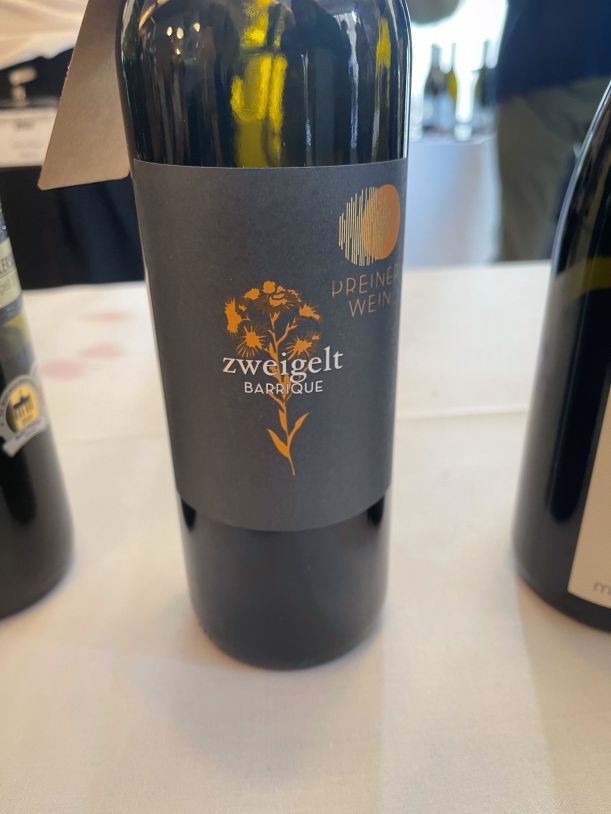
Zweigelt from the Neusiedlersee DAC Wine Growing Region

A recent lunch and tasting organised by the DAC showcased the wines of the region with the aim of promoting Zweigelt as the leading grape for producing red wine in the area.

Neusiedlersee DAC is located in Burgenland, near the Hungarian border. It surrounds Lake Neusiedl, a large, shallow body of water that significantly influences the local climate. The region has a long winemaking history and became a DAC (Districtus Austriae Controllatus) in 2012, specifically red wines made from Zweigelt and sweet wines made with Welschriesling.

The lake acts as a heat reservoir, moderating temperatures and reducing the risk of frost. The Pannonian climate brings hot summers, mild winters, and long, sunny autumns, ideal for ripening grapes. Humidity from the lake also fosters noble rot, making the area famous for its sweet wines.

Zweigelt is the dominant grape variety, producing structured, fruit-forward red wines with vibrant cherry and spice notes. Other varieties, including Blaufränkisch, St. Laurent, and international grapes, are also grown. Winemaking practices emphasize ripe fruit expression, often employing modern techniques such as stainless steel fermentation and oak aging. The resulting Zweigelt wines span the range from youthful and juicy to complex, barrel-aged styles with depth and longevity. In addition to reds, Neusiedlersee is known for its luscious botrytized sweet wines, particularly Ausbruch and Beerenauslese.

Zweigelt, Austria’s most planted red grape, was created in 1922 by Dr. Fritz Zweigelt through a cross of Blaufränkisch and St. Laurent. It is popular among growers due to its adaptability, high yields, and disease resistance. The variety does well in Neusiedlersee, where warm conditions enhance its ripeness and balance.

There were two styles evident from the tasting an unoaked style with soft tannins, bright acidity, juicy cherry and plum fruit and a spicy, slightly peppery finish. These wines are for easy drinking whilst young and are good value.  The second style is aged in oak barrels for a richer, more structured expression. These more premium versions are more complex and can mature well in bottle developing dried fruit and earthy and chocolatey notes with time.


Leave a comment

Hunter Valley Semillon: A unique age worthy white

A recent tasting of wines from New South Wales by Wine Australia I tasted some very unique Semillon wines from the Hunter Valley.  Hunter valley is near the east coast of Australia and at between 30 and 33 degrees of latitude hot during the day and with intense levels of sunlight. In fact the climate is classified as sub-tropical!  So how does this region produce high acid fresh and lean and age worthy Semillons?

Viticulture and Winemaking

The region’s warm, humid climate is moderated by coastal breezes and morning mists, reducing disease pressure and allowing for slow, steady ripening. The secret to the distinctive style of Hunter Valley Semillon  is that the grapes are often harvested early, sometimes with alcohol levels as low as 10-11%, to preserve acidity and freshness.  Also sandy, well-drained soils contribute to the grape’s signature crispness.

In the winery, Hunter Valley Semillon is made with minimal intervention. Fermentation occurs in stainless steel to maintain purity, and oak is rarely used. The result is a wine which is very lean. In its youth it can be somewhat closed and a little undemonstrative featuring citrus notes and green apple, with high acidity and a light, delicate texture.

Bottle Aging Potential

The surprise is that despite its austere youth, Hunter Valley Semillon is famed for its extraordinary aging ability. Over time, often 10 to 20 years, the wines develop complex flavours of honey, toast, and nuts without any oak influence, while retaining their vibrant acidity.

These lovely characteristics emerge after about 8 or 9 years and a number of wine makers hold wines back only releasing them once they are mature.


Leave a comment

The Art of Basket Training: Santorini’s Ancient Answer to a Harsh Climate.

A delicious bottle of Estate Argyros Assyrtiko 2021 made me think of the just how extreme the growing environment on Santorini and admire once again how the combination of unique growing techniques and the special qualities of the Assyrtiko grape variety come to together to produce stunning wines.

Santorini Instagram central of the Aegean, is home to some of the world’s most unique and resilient vineyards. Here, where volcanic soils and fierce winds challenge even the hardiest of grapevines, local winegrowers have perfected a centuries-old training method known as kouloura—the basket training system.

Unlike the neatly trellised rows seen in most wine regions, Santorini’s vines grow in a low, circular shape, woven carefully by hand into protective nests close to the ground. This technique requiring huge amount of highly skilled labour in the vineyard, is vital to the survival of the island’s vineyards.

One of the primary threats to grapevines on Santorini is the island’s relentless winds, which sweep in from the sea with punishing force. The basket structure shields the delicate grape clusters within its coils, preventing wind damage and reducing the risk of berries drying out or breaking prematurely. This natural windbreak ensures that the vines can thrive despite the extreme conditions.

Moisture retention is another crucial benefit of basket training. Santorini receives minimal rainfall, but the volcanic pumice-rich soil has an extraordinary ability to absorb and store the scarce water available. It does mean vines are planted at very low densities so that there is enough water to go around. At night, humidity from the Aegean condenses on the vine leaves and trickles down into the soil. The low, coiled structure of the vines helps trap this precious moisture, ensuring slow, steady hydration.

This ancient technique, passed down through generations is one to the key factors behind the unique, concentrated and structured expressions of Assyrtiko that the Island produces.