WanderCurtis Wine

Wine tastings, corporate events, reviews and recommendations


Leave a comment

Österreichischen Traditionsweingüter (ÖTW)

Have you ever wondered what the term ‘Erste Lage’ or 1 ÖTW on a bottle of wine from Austria means? I attended a seminar at the bi-annual Trade Austrian Wine tasting last week that explained the story behind the ÖTW and forthcoming changes coming into place.

First a quick overview of the current legal framework that applies to Austrian wine. Like other European wine producing countries a tiered classification system exists with specific labelling:

  • ‘Österreichischer Wein’ means that the wine is made from grapes grown anywhere in the country. The wine can be from a single grape variety but not certain protected varieties such as Blaufränkisch. There are also some not very challenging minimum and maximum limits on must weight and yield.
  • ‘Landwein’ means the wine is made from grapes from an area with Protected Geographical Indication (PGI). There are three: Weinland, Steirerland and Bergland. Each area has an approved list of grape varieties but the list is long and the areas are large.
  • ‘Qualitätswein’ is indicated by the red top with a white stripe through it. These wines are from grapes coming from an area with protected status (PDO). The wines are tasted and tested to ensure they display typical characteristics of the region and meet more stringent minimum standards including must weight and maximum yields.
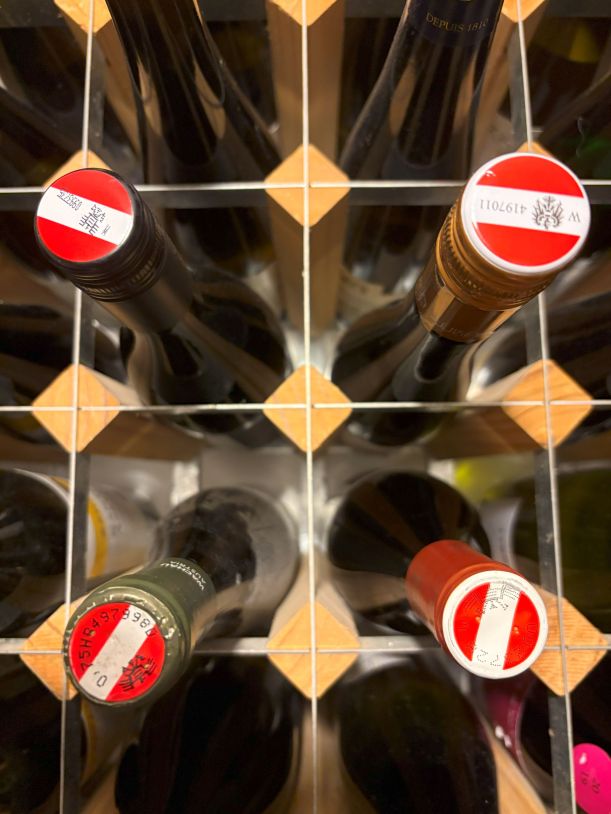
‘Qualitätswein’ can be labelled ‘Kabinett’ if it is not enhanced within the winery in any way and is less than 13% ABV. If labelled ‘Reserve’ the wine will be 13% ABV or over.

‘Qualitätswein’ may also be labelled Districtus Austriae Controllatus (DAC).  This means that it comes from one of 18 regionally typical controlled areas for example Weinviertel, Wachau or Leithaberg. Each DAC has quite a limited list of permitted grape varieties and the wines are tasted by a panel to approve typicity. Anything falling outside the scope or from a non-permitted variety can only be labelled Landwein.

Now within the DAC geographical area there are further spatial refinements: Gebietswein means it just corresponds the DAC area, Ortswein is from a particular village area and Riedenwein is from a single vineyard.

This is where the ÖTW comes in.

Founded in 1991 the ÖTW (oo – tay – vay) is a trade Association. It was set up to create a vineyard classification system designed to help consumers get an even better understanding of what to expect from the wine inside the bottle.  Anything that can help in this respect is of course a good thing. 
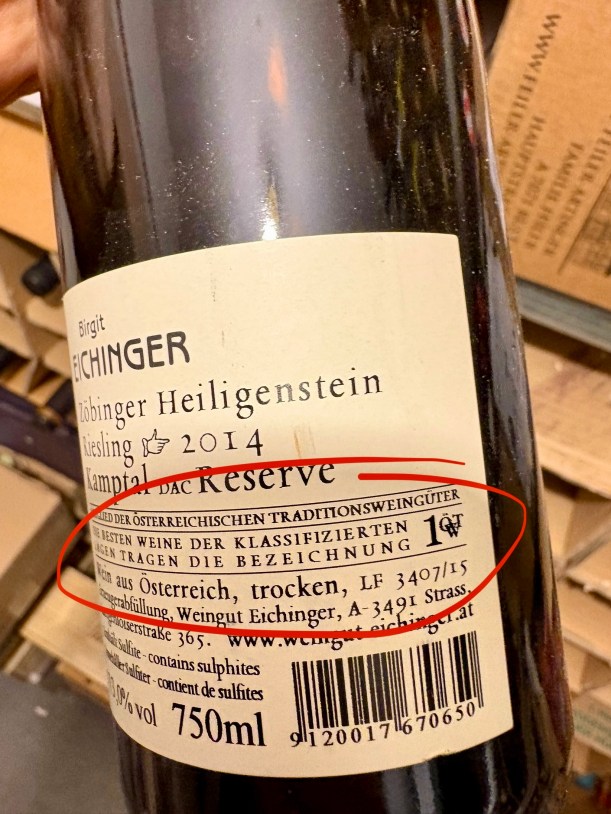
Started by a group of wineries in Kamptal and Kremstal the ÖTW splits the Riedenwein category down into three ascending subcategories: Ried Lage , Erste Lage and Grosse Lage. So far vineyards have only been classified as Erste Lage / 1 ÖTW but in time the intention is to elevate some of these to Grosse Lage.

The model is evidently similar to the classification of vineyards in Burgundy where distinct from village and lieu dit wines there are classified premier and grand cru vineyards. However as with the Bordeaux classification Chateaux in 1855 the vineyards in Burgundy were categorised back in the 19th Century according to the market value achieved of the wines, as a measure of quality and status.

So interestingly the ÖTW claims that vineyards in their system are not classified on the subjective bases of quality and price. Instead the ‘significance’ of the plot is measured using multiple parameters. These include: historical and cultural, physical characteristics, the number of wineries producing from the vineyard also average price and variance over time.  The wines produced are also evaluated via blind tastings by growers and international experts and the consistency of their performance over time.
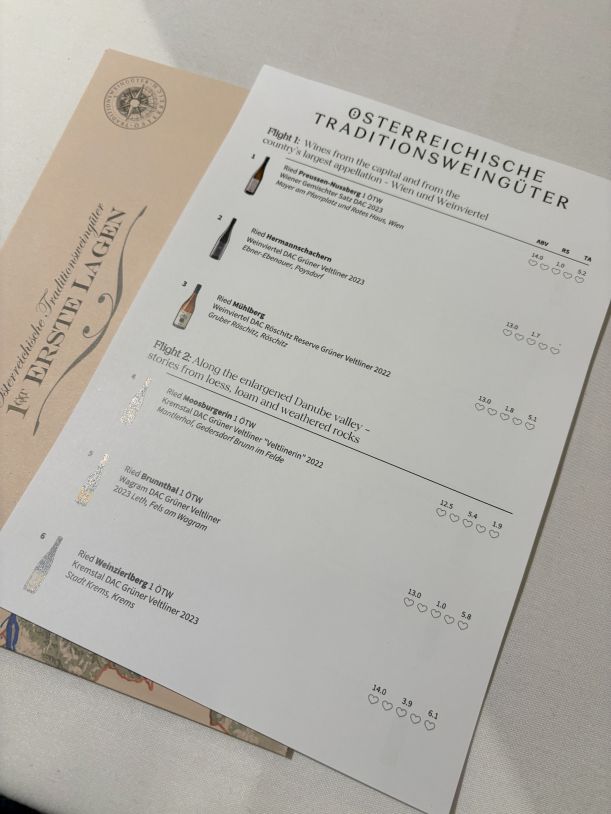
Anecdotally we tasted three wines from Ried Heiligenstein 1 ÖTW which were all Riesling but from three different producers: Birgit Eichinger 2022, Allram 2019 and Bründlmayer 2015. The wines were all of the highest quality with thrilling concentration and persistence. They were layered and complex and showed how age worthy they can be.

This was obviously too small a sample to be able to divine clear vineyard characteristics but the tasting certainly backed up my experience that 1 ÖTW on the label means that the winery has set out with serious intent to make a high quality wine that speaks of its origin.

The ÖTW system has expanded and is now used by members in Kamptal, Kremstal, Traisental, Wagram, Vienna, Carnuntum, Thermenregion and the Weinviertel.

A notable exception to this list is the Wachau and its not clear why the producers there don’t feel the need to participate.  Speculating, the region is perhaps more domestically and internationally well-known and they have their own quality hierarchy: Stienfeder, Federspiel and Smaragd so demand and recognition is probably already strong enough. Also many single vineyard wines are produced and I wonder if the number of monopole vineyards are sufficient to make vineyard classification less important than producer name? Research for another day.

The ÖTW is however on the up and has in principle be approved for adoption by the ministry of agriculture into law.  As with any change in wine law there are those that are not convinced and currently an appealed against adoption is being determined in the courts. Watch this space.
Leave a comment

More than Grüner: other Austrian white varieties.

Grüner Veltliner has found its way onto many a restaurant wine list, supermarket shelf and specialist merchant worldwide and I am a long term fan of all the different expressions that the Winzers of Austria capably produce, from crisp easy drinking summer wines to structured treasures that bloom after a decade or two in the cellar.

But what about the other indigenous and traditional white grape varieties that Austria has to offer?  Well there are plenty including the following:

  • Welschriesling (confusingly not related to Riesling, makes easy drinking dry whites but comes into its own on the humid shores of the Neusiedlersee where its thin skins invite noble rot and where superb sweet wines are made).
  • Weissburgunder (although it is white it is not Chardonnay but actually Pinot Blanc probably originating in Burgundy).
  • Neuburger (a natural crossing of Roter Veltliner and Sylvaner).
  • Gelber and Roter Muskateller (an aromatic and ancient variety).
  • Frühroter Veltliner (another natural crossing of Roter Veltliner and Sylvaner).
  • Traminer (Savagnin): Roter Traminer, Gewürtztraminer and Gelbe Traminer (Named after the Tyrolian town on Tramin and coming in red, pink and yellow hued grapes respectively).
  • Bouvier (A cultivated crossing between Gelber Muskateller and Pinot Blanc).
  • Roter Veltliner (parent of many other but not Grüner Veltliner!).
  • Rotgipfler (Natural crossing between Roter Veltliner and Traminer).
  • Zierfandler/ Spätrot (Another natural crossing between Roter Veltliner and one of the Traminers).
  • Sylvaner/ Grüner Sylvaner (Actually an autochthonous (I know not enough vowels surely!, basically means originating from the place or indigenous) variety that made its way from Austria to Germany and Alsace but plantings have all but disappeared in its home land pushed aside by easier to grow Grüner Veltliner).

Over the last year I have been expanding my horizons by seeking out three of these in particular.

Roter Veltliner

Historically grown in Kamptal, Wagram and Kremstal often as part of a field blend this variety was largely uprooted in the 1950s and 60s as part of a shift to single varietal vineyards.  The grape is challenging to grow being prone to frost, botrytis and mould das it ripens late. Grüner Veltliner by contrast is hardier and ripens earlier and so was the favoured variety for replanting and now accounts for over 30% of all area under vine.  

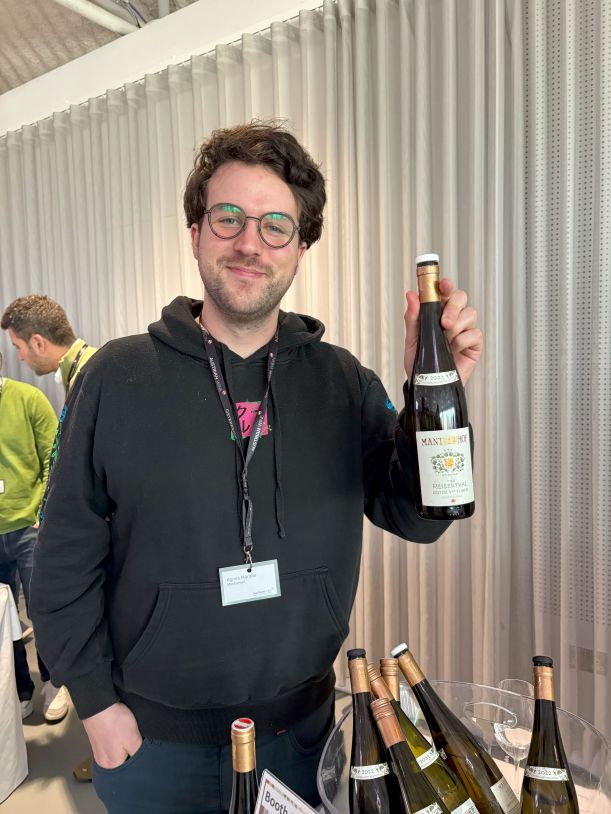
Roter Veltliner has continued to dwindle over the last couple of decades but, according to Jospeh Mantler of family Weingut Mantlerhof in Kremstal who wrote a dissertation on the variety, is making something of a resurgence as a single varietal wine.

As the climate has changed hazards such as drought, sunburn and heat stress are becoming as important if not more so than frost and fungal diseases.  It turns out that Roter Veltliner handles lack of water and heat rather well and the natural reddish pink colour of the skins means it doesn’t have to reach for the factor 50 in the sun.

So what are the wines like? The wines are not aromatic but have subtle orchard fruit, herbal and sweet root vegetable aromas. They have a broad textured mouth feel and whilst fresh have  soft acidity making them a great contrast to Grüner Veltliner.  There are two broad wine making approaches: a high yield, easy drinking style and a more concentrated textured and age worthy style that requires several passes of the vineyard to pick the grapes at optimum ripeness.

Weingut Leth of Wagram makes both styles. Their Roter Veltliner Fells Klassik 2023 has muted aromas of apple, pear, dried herbs and a touch of sweet spice. On the palate it is quite textured but with nice freshness. A nice uncomplicated partner to richer Austrian or Asian dishes.

Weingut Mantlerhof only make a reserve style from a single vineyard.  The Roter Veltliner Ried Gedersdorfer Reisenthal 2023 has notes of ripe yellow apple, pear, celeriac, parsnip and white pepper. In the mouth its actually just off dry which balances the acidity, there is a creamy mouth feel and a long persistent finish.  Joseph recommends bottle aging this wine to allow it to develop more notes of spice and dried fruit.

Rotgipfler & Zierfandler

These two varieties are largely grown in the Thermenregion particularly around Gumpoldskirchen on the hillsides of the Wienerwald just south of Vienna. The area’s volcanic springs were popular with the Romans and so of course wine has been grown there ever since. It’s a little warmer than the other parts of Niederösterreich but not as warm as Burgendland to the east.

Rotgipfler is made as a single variety but also often blended with Zierfandler for balance as it retains more acidity when ripe.  Both display some of aromatic and tropical fruit Traminer characteristics and both are textural and full bodied with sweet spicy notes.  Late harvested Zierfandler is also used to make sweet wines. High quality examples apparently mature well in bottle.

Stift Klosterneuburg’s 2023 Cuvee Gumpoldskirchen is a blend of both.  Ripe tropical fruit on the nose, with banana, cinnamon and cake spices. The body is full and alcohol high, off dry but balanced with a nice long finish.

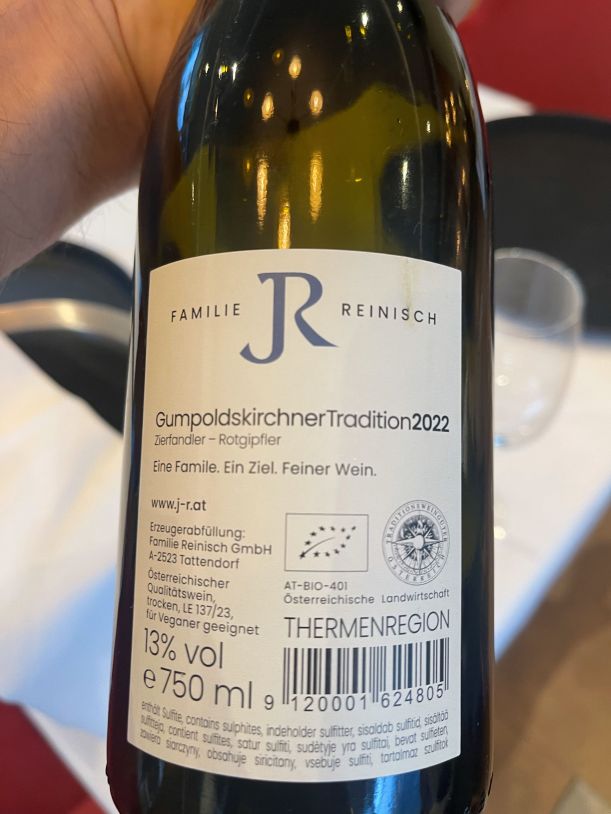
Familie Reinish Gumpoldskirchner Tradition 2022. Also a blend. Exotic, ripe stone and tropical fruit salad with sweet spices on the nose. Rich creamy mouth feel, some sweetness but overall manages to be remain fresh with a long finish.

Do try these varieties when you come across them!

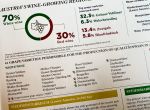
AustrianWine.com has an excellent website packed full of useful information on the wines and regions and vineyards. It also provides super regional maps and contact details for wineries for when you visit. The featured image above is a photo of a great summary fact sheet provided by the association at a recent tasting in London.


Leave a comment

Annual Austrian Wine Tasting

The whites on show were mostly 2013, a warm year with ripe fruit, making the wines from Kremstal & Kamptal even more lush & inviting than usual, for me though the slightly fresher more structured wines of the Wachau shone brightest.

Bründlmayer, Kamptal.
These are always very seductive wines, soft & open but with great underlying structure.

Klassik ‘Kamptaler Terrassen’ Grüner Veltliner 2013.
This is a great immediately accessible lighter body wine, lovely broad fruit, touch of mineral, enough freshness & lift and medium length. Lots of drinking pleasure. (top pick)

Grüner Veltliner Loiser Berg 2013
A delicious blend of herbs, ground spice, minerality and ripe green fruit, more weight, great length. (top pick)

Grüner Veltliner Alte Reben 2013.
A fuller bodied wine, ground herbs & spice with intense fruit and creamy texture. Lovely.

Grüner Veltliner Lamm 2013
This is a fully bodied concentrated wine with a Burgundian lick of wood, intense ripe stone fruit, compact and age worthy.

F.X.Pichler, Wachau.

Very sought after wines with an international reputation, deservedly so because the wines are consistently outstanding.

Grüner Veltliner, Loibner Klostersatz Federspiel 2013.
Fantastic to see some Federspiel wines on show, these light to mid body style Grüners (with less than 13% alcohol) for me offer superb drinking pleasure, top notch examples such as this have all the floral, mineral and fruit complexity you could wish for in their youth. Great balance and length.

Grüner Veltliner, Loibner Steinertal Smaragd 2013.
A bit reticent compared to the Federspiel, floral, white peach, intense on the palate tight fruit stoney mineral. Great structure that will no doubt unwind over time.

Grüner Veltliner, Dürnsteiner Liebenberg Smaragd 2013.
More giving with stone fruit & ripe pear on the nose, mouth filling fuller body with perfectly balanced acidity, delicious long and really sexy.

Riesling, Burgstall Federspiel 2013
Another superb Federspiel, riveting, super fresh, tight mineral, compact fruit, great balance and satisfying length. Leaves you wanting more (on a west facing terrace at sun down!). (top pick)

Riesling, Steinertal Smaragd 2013
Nice tight mineral, fresh white peach, compact core full of promise & great length. Super refined.

Riesling, Dürnsteiner Kellerberg Smaragd 2013
Broader and softer than the Steinertal, ripe stone fruit, subtle herby spice, good acidity & incredible length.

Weingut Joseph Ehmoser, Wagram.

Great value quality wines.

Grüner Veltliner, von den Terrassen. 2013.
Nice ripe ear, floral, medium acidity and length. Good quality everyday drinking. 2013 was a warm year and so this vintage has a bit less of the fresh bite that I particularly enjoy in a Grüner.

Grüner Veltliner, Hohenberg, 2013.
Made in concrete eggs that keep the wine in motion and contact with the lees, sure enough the wine has a nice creamy texture, lovely spicy notes, very good.

Riesling vom Gelben Löss 2013.
A round and accessible fruit driven riesling, good mineral notes, round body and great length. Will repay a couple years in the cellar to develop some of those classic riesling characteristics.

Weissburgunder, 2013.
Fuller bodied and riper than the GV & Rieslings rich fruit, spicy, quite big and intense. These can be age worthy wines developing honey and dried fruit and spicy notes.

Knoll, Wachau

One of the top wine makers in the Wachau, producing outstanding traditional wines, a personal favourite. It would have been nice to see some of their Federspiels which are extraordinarily good.

Grüner Veltliner Ried Kreutles Smaragd, 2013.
Floral nose, hydrangea, peach, ground spice, pear and gooseberry, perfect balance and good length. Lovely. (The Federspiel Knoll produces from this vineyard is always drop dead gorgeous but in short supply).

Grüner Veltliner Reid Loibenberg Smaragd, 2013.
Intense mineral and spicy notes, concentrated ripe stone fruit, quite full bodied & very long.

Grüner Veltliner Ried Schütt Smaragd, 2013.
The Schütt vineyard seems to produce consistently beautiful refined wines. This has a nose of sweet white flowers, ripe pear, nectarine, superb balance and compact body, long. Fantastic. (top pick).

Riesling Pfaffenberg, Kabinett, 2013. (this is just outside the border of Wachau in Niederoesterreich. The Kabinett is equivalent to Federspiel style).
Lovely tight fruit, soft texture, bright acidity and good length. Lighter body. Enjoyable now but with good future.

Riesling Ried Kellerberg Smaragd, 2013.
Ripe apple, pear, hawthorne and spice, intense on the palate, high acidity, tightly coiled. Excellent.

Riesling Ried Schütt Smaragd. 2013.
Tight nose, floral, tropical fruit, compact body, good balance again tightly coiled but deep and refined.

Petra Unger, Kremstall.

Grüner Veltliner, ‘Q’ 2013.
A light fresh wine with green apples, classic touch of pepper and good lift.

Grüner Veltliner Reserve, Gottschelle, 2013.
More substance than ‘Q’ nice ripe pear, crisp apple, medium body and enough complexity to sustain one’s interest.

Grüner Veltliner, Alte Reben Oberfeld, 2013.
Old vines in deep sandy soils giving a intense and complex wine, fully bodied and demanding.

Riesling, Classic Hinters Kirchl, 2013.
Lovely rich and spicy riesling with great fresh acidity really delicious. (top pick).

Riesling Reserve Steiner Gaisberg, 2013.
Old vines, more classic riesling character, intense, complex and long.

Grüner Veltliner Eiswein Oberfeld, 2012.
Unusual to have GV ice wine and something very special, intensely sweet but with good acidity, complex, poached spiced pear, very very long. Superb. (top pick)

Stad Krems,Kremstal.

Grüner Veltliner Loessterrassen 2014
Nice fruity, medium light body, rounded & soft, medium length.

Grüner Veltliner Klassik Weinzierlberg. 2013.
More structure, light fruit and ground spicer, god acidity.

Grüner Veltliner Reserve Stein. 2013.
A selection from two vineyards near Stein, floral, ripe pear, balanced with good length.

Riesling Steinterrassen, 2012.
Good freshness, medium light body, medium length. May fill out a bit more with a year or two more?

Riesling Reserve Schieferterrassen, 2013.
Lovely ripeness, lots of fruit, touch of mineral and medium acidity. Good length.

Schloss Gobelsburg, Kamptal.

Grüner Veltliner Loessterrassen, 2013.
Light, crisp GV with a soft texture, great everyday drinking.

Grüner Veltliner Reserve Steinsetz, 2013.
Ripe pear, bit of ground pepper & spice, quite intense, medium acidity ad good length.

Grüner Veltliner Reserve Renner, 2013. (Reserve is equivalent to Smaragd, 13% +)
Again concentrated, ripe and a little heavy, good length.

Grüner Veltliner Reserve Lamm, 2013.
Vines are trained in a lyra form to maximise ripening, concentrated, ripe stone fruit, peach, even pineapple notes, full body & very long.

Grüner Veltliner Reserve Tradition, 2012.
This wine spends longer in inert large oak barrels allowing it to breath. Flowers and peach on the nose, wide and rounded on the palate full body but great fresh acidity ( 2012 was a more classic year). (top pick).

Riesling Reserve Gaisberg, 2013.
Floral nose, big spicy full bodied, medium acidity.

Riesling Reserve Heiligenstein, 2103.
More linear structured, compact fruit, medium body and acidity, long finish.

Hirtzberger, Wachau.

Grüner Veltliner Rotes Tor Federspiel, 2013.
Lovely mix of ripe pear, ground spice, stones and enough freshness and length. Excellent. (top pick).

Grüner Veltliner Axpoint Smaragd, 2012.
Really ripe green and stone fruit, intense, minerals great balance & freshness, a top notch Wachau GV. (again 2012 just seems to have that extra freshness and structure).

Grüner Veltliner Honivogl Smaragd 2012.
More opulent & fruit driven than the Axpoint, very well balanced and complex.

Riesling Steinterassen Federspiel 2013.
Light to medium riesling with medium acidity and length.

Riesling Hochrain Smaragd 2011.
A wine with great structure, intense & tightly coiled at the moment, good length and promise.

IMG_0023