

Subscribe to continue reading
Subscribe to get access to the rest of this post and other subscriber-only content.

Subscribe to get access to the rest of this post and other subscriber-only content.
At BioWeingut Karl Renner, nestled in the rolling hills of Pössnitz in the Südsteiermark, sustainability is at the very heart of everything they do. For Karl and his family, who have stewarded this land since 1966, the focus is clear: create wines of character with minimal intervention, and protect the land for future generations.
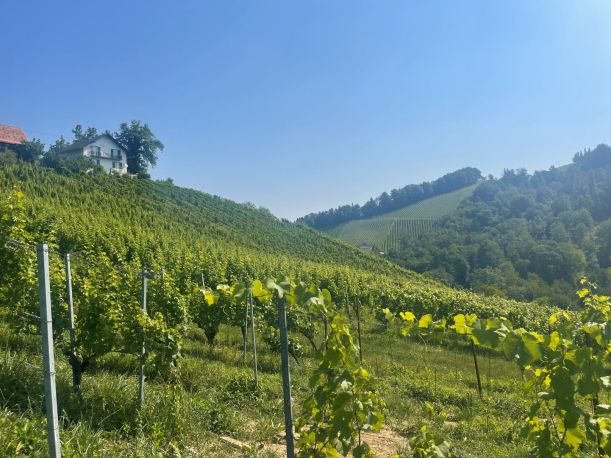
But even for the most committed organic growers, nature presents challenges. Karl points to oidium and downy mildew as the most persistent threats to viticulture in the Südsteiermark. These fungal diseases, brought to Europe in the 19th century, remain the main reason why vineyards, even organic ones, require frequent treatments. In some seasons, up to 20 copper sulphate sprays are needed to try and keep disease at bay. “It’s too much,” says Karl. “It leaves copper in the soil which builds up over time.”
That’s why Renner is turning toward PIWI or as he calls them “next generation” varieties, fungus-resistant hybrids bred to thrive with far fewer treatments. Since 2011, he’s been gradually replanting his vineyards with these innovative grapes, which make organic viticulture not only more effective but also more appealing for wider adoption in the wine industry.
The four main PIWI varieties Karl works with are:
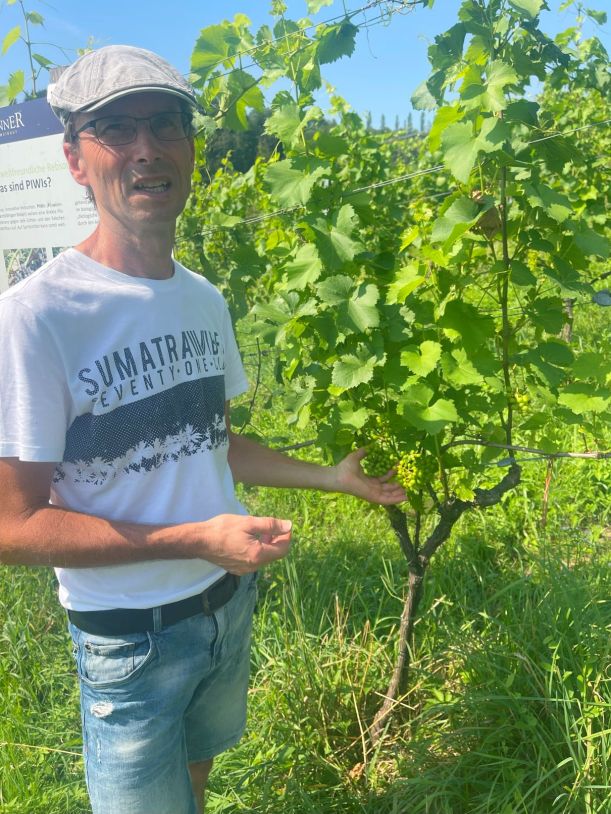
These varieties are allowing Karl to dramatically reduce chemical inputs. Where conventional or even organic growers might spray upwards of 15–20 times per season, Renner’s PIWI vines typically need only 2–4 treatments. That reduction means less soil compaction from tractors, lower CO₂ emissions, and healthier microbial life in the vineyard. Cover crops further enhance soil structure and biodiversity, especially on the estate’s steep slopes.
In the winery there is a lot to learn, the wine making knowledge for the varieties traditionally grown; Sauvignon Blanc, Morillon (Chardonnay) and Pinot Blanc, that has been accumulated over generations must be learnt anew for this New Generation of varieties. Karl is experimenting with skin contact, barrel ageing, and unfiltered bottlings to explore the full potential of these newer grapes. He’s also trialling blends that include both PIWI and traditional varieties, giving wine drinkers something familiar while showcasing the potential of these robust hybrids.
Tasting notes:
Thirsch Chardonel 2020
Souvignier Gris 2020
Souvignier & Pinot Blanc Thirsch 2021 – Barrel Sample (Souvignier Gris 60% / Pinot Blanc 40%)
Thirsch Muscaris 2020
(For a full tasting notes follow this link)
Amber 2020 Winburg (65% Muscaris / 35% Souvignier Gris)
At Weingut Renner, the message is clear: PIWI varieties represent a practical, scalable solution for making organic viticulture more successful. As climate change, disease pressure, and sustainability demands intensify, Karl’s approach offers a compelling model for other growers — not just in Austria, but across Europe and beyond.
As wine drinkers are we ready to expand our horizons and discover these new wines? Natural wines have found an audience, why not “next generation” varieties too?
 WanderCurtis Wine