WanderCurtis Wine

Wine tastings, corporate events, reviews and recommendations


Leave a comment

New Generation Disease-Resistant Hybrid Grapes

Viticulture is an art steeped in tradition, terroir, and let’s face it, chemicals. The sad truth is that grape growing is one of the most chemically intensive forms of agriculture on the planet, with vineyards receiving more fungicide, pesticide, and herbicide input per hectare than almost any other crop. These inputs, do help suppress disease and pests but come at a steep cost, both financially and ecologically. Soil health suffers, biodiversity declines and waterways are polluted. In the face of climate change and a growing appetite for sustainability, this model of winegrowing is increasingly becoming untenable.

But what if vines didn’t need constant chemical protection to thrive? Well as it happens the non-vinifera species of vines don’t. While Vitis vinifera, the species behind nearly all fine wines, succumbs under the pressure of diseases like downy mildew, powdery mildew and botrytis bunch rot, (not to mention Pierce’s disease, and virus carrying nematodes) other Vitis species possess natural resistance to many of these threats. Vitis labrusca, riparia, rotundifolia, and others evolved in conjunction with some of the most damaging of these diseases and so developed defences that could transform viticulture.

There’s just one catch: they don’t taste all that nice when vinified. Non-vinifera grapes often carry what’s politely called a “foxy” flavour, a musky, wild, and sometimes animalistic character that isn’t welcomed by lovers of elegant Pinot Noir or noble Riesling.

This is where hybrids come in. By crossing disease-resistant American or Asian grape species with classic vinifera varieties, breeders have developed grapes that combine the best of both worlds: resilience in the vineyard and drinkability in the glass. Hybrid grapes are not a new phenomenon. The 19th and 20th centuries saw waves of innovation, from the American hybrids developed to battle phylloxera, to the French and German breeding programmes that gave us the Pilzwiderstandsfähige Rebsorten (PiWi) literally, “fungus-resistant varieties.”

Some of these hybrids have already found homes in certain wine styles and regions. Vidal Blanc is the backbone of Canadian ice wine, capable of surviving both freezing temperatures and fungal pressure. Seyval Blanc has become a staple in English sparkling wine and WineGB reports that planting of PiWis including Seyval Blanc, Solaris, Rondo, and Regent increases year on year and now stands at 10%. Yet despite these successes, widespread adoption of hybrids has lagged. Part of the issue is perception, hybrids don’t carry the same prestige or name recognition as Chardonnay or Cabernet Sauvignon, and in markets that prize varietal labelling, that’s a tough sell.

Still, change is in the air. Breeding new hybrid varieties has always been a long, painstaking process. But now, advances in gene sequencing allow scientists to more precisely identify the disease resistance traits they’re after and so grow and bring new grape varieties to trail much quicker than in the past.

And while traditional wine markets may be slow to adapt, there’s one community that’s embracing hybrids with open arms: natural and sustainable winemakers. For these growers and vintners, avoiding inputs and considering their environmental footprint is often an intrinsic part of their philosophy. With minimal intervention, no chemical sprays, and low-sulphur winemaking, hybrids offer a way to farm in line with their values. Since natural wines often eschew strict varietal labelling anyway, the lack of name recognition becomes less of a barrier.

Names like Phoenix, Regent, Solaris, Chardonel, and Traminette are cropping up in forward-thinking vineyards. Solaris, in particular, is gaining traction in northern Europe for its ability to ripen in cooler climates, while maintaining fresh acidity and low disease susceptibility. Regent is showing promise for red wines with depth and spice, and Traminette, a relative of Gewürztraminer, is celebrated for its aromatic complexity.

It’s time to reconsider our relationship with hybrids and perhaps rebadge them “next generation” varieties as Karl Renner (see review here) likes to call them.  Puligny Montrachet and Pomerol may spring to mind at the mention of Chardonnay and Merlot but let’s be honest the majority of wines labelled with these  varieties are actually inexpensive wines produced by industrial viticulture.  New generation hybrid varieties may never replace the pinnacle expressions of the classics but they’re certainly capable of producing delicious, high quality wines without all the nastycides.

Go on have a little adventure and give them a try.

1 Comment

BioWeingut Karl Renner: Cultivating a new generation of grape varieties in the Südsteiermark, Austria.

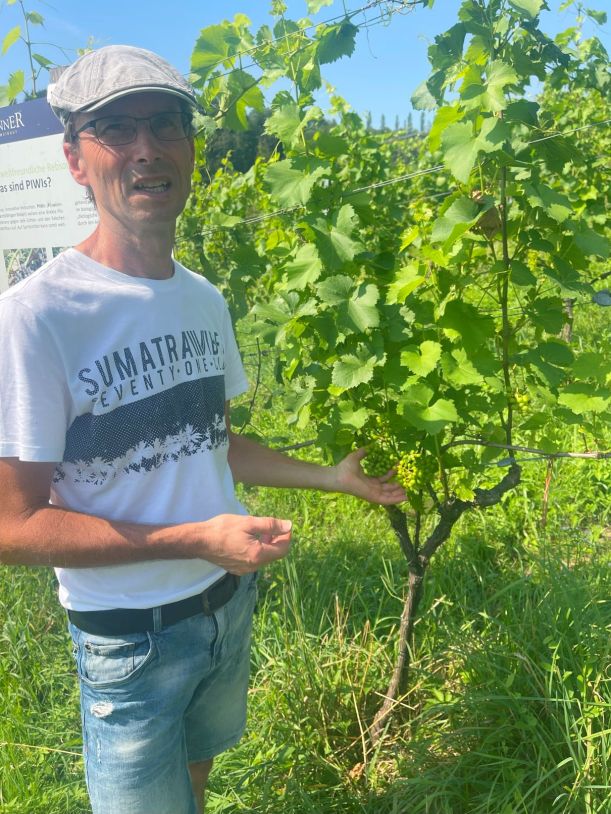
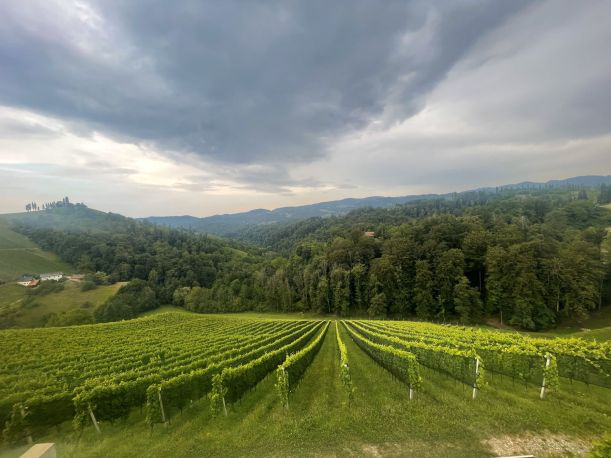
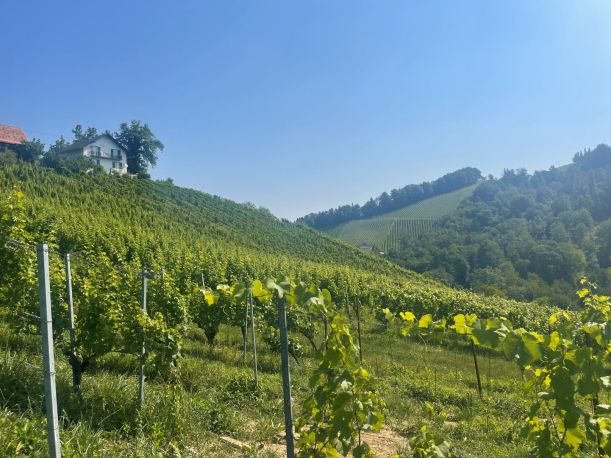
At BioWeingut Karl Renner, nestled in the rolling hills of Pössnitz in the Südsteiermark, sustainability is at the very heart of everything they do. For Karl and his family, who have stewarded this land since 1966, the focus is clear: create wines of character with minimal intervention, and protect the land for future generations.

But even for the most committed organic growers, nature presents challenges. Karl points to oidium and downy mildew as the most persistent threats to viticulture in the Südsteiermark. These fungal diseases, brought to Europe in the 19th century, remain the main reason why vineyards, even organic ones, require frequent treatments. In some seasons, up to 20 copper sulphate sprays are needed to try and keep disease at bay. “It’s too much,” says Karl. “It leaves copper in the soil which builds up over time.”

That’s why Renner is turning toward PIWI or as he calls them “next generation” varieties, fungus-resistant hybrids bred to thrive with far fewer treatments. Since 2011, he’s been gradually replanting his vineyards with these innovative grapes, which make organic viticulture not only more effective but also more appealing for wider adoption in the wine industry.

The four main PIWI varieties Karl works with are:

  • Muscat Bleu – A mid-budding, early-ripening variety, Muscat Bleu is highly aromatic and serves as an early indicator in the vineyard: its berries turn a vivid blue before ripening to black. This allows Karl to closely monitor ripeness progression in the vineyard.
  • Chardonel – A hybrid of Chardonnay and Seyval Blanc, first developed in New York in 1953, Chardonel delivers both structure and finesse. It captures the familiar elegance of Chardonnay but thrives under organic management.
  • Souvignier Gris – A cross between Seyval Blanc and Zähringer, Souvignier Gris is one of Karl’s standout performers. It ripens later and retains excellent acidity. It also has some frost resistance.
  • Muscaris – This cross between Solaris and Gelber Muskateller produces an early-ripening, highly aromatic wine. Muscaris stands out for its expressive floral and spicy notes, making it useful for both varietal bottlings and blends.

These varieties are allowing Karl to dramatically reduce chemical inputs. Where conventional or even organic growers might spray upwards of 15–20 times per season, Renner’s PIWI vines typically need only 2–4 treatments. That reduction means less soil compaction from tractors, lower CO₂ emissions, and healthier microbial life in the vineyard. Cover crops further enhance soil structure and biodiversity, especially on the estate’s steep slopes.

In the winery there is a lot to learn, the wine making knowledge for the varieties traditionally grown; Sauvignon Blanc, Morillon (Chardonnay) and Pinot Blanc, that has been accumulated over generations must be learnt anew for this New Generation of varieties.  Karl is experimenting with skin contact, barrel ageing, and unfiltered bottlings to explore the full potential of these newer grapes. He’s also trialling blends that include both PIWI and traditional varieties, giving wine drinkers something familiar while showcasing the potential of these robust hybrids.

Tasting notes:

Thirsch Chardonel 2020

  • Thirsch: historical name of the farm. First vintage 2011, still experimental.
  • Aged 2 years in barrel for stability.
  • Smoky, orange peel, peach, apricot, herbal and nutty notes.
  • Textured mouthfeel, long finish.

Souvignier Gris 2020

  • Smoky with tropical notes: peach, banana, nuts.
  • Medium body, high acidity.
  • Creamy mouthfeel, nutty and delicious.

Souvignier & Pinot Blanc Thirsch 2021 – Barrel Sample (Souvignier Gris 60% / Pinot Blanc 40%)

  • Slightly cloudy, natural wine style.
  • Aromas: marzipan, floral, sour gooseberry, banana.
  • Medium body, medium alcohol, medium+ acidity.
  • Balanced with a long finish. Sweet and savoury interplay. Love this one.

Thirsch Muscaris 2020

  • Short skin contact, fermented in stainless steel.
  • Highly aromatic: blossom, roses, pink grapefruit, peach.
  • Dry, medium+ acidity.
  • Fresh citrus, orchard, and stone fruits.
  • Textured with a slight prickle.

(For a full tasting notes follow this link)

Amber 2020 Winburg (65% Muscaris / 35% Souvignier Gris)

  • Fermented on skins: Muscaris 2–3 weeks, Souvignier Gris 3 months.
  • Separate harvest dates.
  • Pear, banana, cider notes.
  • Slightly grippy mouthfeel, long finish.

At Weingut Renner, the message is clear: PIWI varieties represent a practical, scalable solution for making organic viticulture more successful. As climate change, disease pressure, and sustainability demands intensify, Karl’s approach offers a compelling model for other growers — not just in Austria, but across Europe and beyond.

As wine drinkers are we ready to expand our horizons and discover these new wines? Natural wines have found an audience, why not “next generation” varieties too?


1 Comment

Weingut Renner ‘New Generation’ wines.

Two wines this month!

Renner ‘Thirsch’ Muscaris 2020. Südsteiermark, Austria

Highly aromatic with an expressive bouquet of floral notes—honeysuckle, orange blossom—alongside dried orange peel, grapefruit pith, ripe peach, nectarine, and melon. There’s a subtle herbal edge and a muscat-like character with a touch of gamey complexity.

Dry, with medium-plus acidity, medium alcohol, and a medium-plus body. The texture is creamy with a slight tang from skin contact, plus a hint of tannin. On the palate, it delivers slightly fresher fruit tones mingled with dried citrus peel and a nutty nuance. Long, lingering finish.

A really complex and intriguing wine.

Thirsch Souvignier Gris & Pinot Blanc Blend 2021. Südsteiermark, Austria

Slightly cloudy in the glass. Aromas of apple, pear, bruised apple, banana, marzipan, nuts, and a touch of smokiness and yeast.

The palate shows more fruit intensity, with a dry profile, medium-plus acidity, medium alcohol, and a full body. Textural and grippy with a bold mouthfeel. Finishes long, leaving notes of apricot, marzipan, and nuts.

Ric and intense both of these wines are great food wines with the body and texture to cope well with richer dishes whilst still providing plenty of freshness and lift.