WanderCurtis Wine

Wine tastings, corporate events, reviews and recommendations


Leave a comment

Red Wine Making Summary

A one-page summary flow chart of the key stages in Red Wine making.

I have reworked these from notes that I made during my Diploma and am sharing them on these pages for anyone studying a formal WSET course or just interested in learning. 

These notes are absolutely not a substitute for the course books provided by WSET or indeed any other reference books. However I have found it helpful to condense information and present it visually in a way that tries to draw out the what, how and why that links things together or the similarities and contrasts that can help to make sense of everything.  These note are very much prompts to the memory rather than full or detailed explanations.

Please beware there may still be errors in these notes and if you spot any do let me know.

Sources include: WSET Diploma, Oxford Wine Companion by Julia Harding and Jancis Robinson, Understanding Wine Technology by David Bird & Nicolas Quille.

Note: this document is intended for personal use only not for commercial or promotional use. We accept no liability for any omissions or errors that may be contained in the document.


Leave a comment

White Wine Making Summary

A one-page summary flow chart of the key stages in White Wine making.

I have reworked these from notes that I made during my Diploma and am sharing them on these pages for anyone studying a formal WSET course or just interested in learning. 

These notes are absolutely not a substitute for the course books provided by WSET or indeed any other reference books. However I have found it helpful to condense information and present it visually in a way that tries to draw out the what, how and why that links things together or the similarities and contrasts that can help to make sense of everything.  These note are very much prompts to the memory rather than full or detailed explanations.

Please beware there may still be errors in these notes and if you spot any do let me know.

Note: this document is intended for personal use only not for commercial or promotional use. We accept no liability for any omissions or errors that may be contained in the document.

Sources include: WSET Diploma Wine Production, Understanding Wine Technology by David Bird & Nicolas Quille and Oxford Wine Companion by Julia Harding and Jancis Robinson.


Leave a comment

Do low yielding vineyards mean better quality wines?

It’s often asserted that wines from low yielding vineyards are better quality, the argument being that the vine struggles and focuses its energy into producing small concentrated grapes with thick skins.

The idea that managing vineyards to achieve ‘low yields’ results in better grape quality is also enshrined in the European AOC (Appellation d’Origine Contrôlée) system.  Each wine region sets an upper limit to the yield that is permitted from a vineyard. The yield is measured as either the volume of wine in hectolitres, or the tonnage of grapes, per hectare of vineyard produced.

As you ascend the appellation hierarchy the permitted yield reduces. For instance in France IGP Pays d’Oc, where huge quantities of every day drinking bottles of Merlot and other single variety wines are produced, the maximum yield for red wines is 100 hL/ha but in the smaller Bandol AOC, which produces concentrated age worthy reds from Mourvèdre it is only 40 hL/Ha.  

Many wineries talk about the way they restrict the yields from their vineyards through bud rubbing and green harvesting in order to produce high quality grapes for their premium wines.  However when one looks more closely, they are often rather coy about stating the exact yield.

To examine whether the relationship holds true its worth asking a few questions:

  • Firstly what do we mean by high quality grapes when it comes to wine making?
  • Secondly is there any evidence that yield and quality are directly correlated?
  • Thirdly even if restricted yield is a contributary factor in determining the how well the grape ripens how important is it compared to other factors in the vineyard?
  • Finaly in practice to what extent is the wine grower able manage the yield with a view to improving quality and meeting AOC targets?

Grape quality.

For wine making, a good quality grape delivers enough sugar for the juice to be fermented into an enjoyable beverage. At the same time the tart and harsh components within an unripe grape, including malic acid and methoxypyrazines, must have had time to metabolise and reduce in quantity.  Pleasant flavours and flavour precursors need time to develop, for instance terpenes that add  floral and fruity notes. For black grapes the skins need to ripen developing anthocyanins for colour and softening harsh tannins through polymerization.  When this all comes together the grape is optimally ripe.

For the grapes to be optimally ripe the vine needs just the right amount of warmth and sunlight.  Too little and the grapes remain unripe, tart and lacking in flavour. For example the cool and variable climate of the UK makes it challenging to grow high quality late ripening black grapes such as Grenache Noir. However too much heat and sun and the grapes accumulate sugar and loose acidity too quickly. In this case resulting in unbalanced high alcohol wines lacking in flavour concentration. For example the very warm central valley in California produces high volumes of wine but the area is not generally known for producing premium quality wines.

Correlation of quality to yield.

In Burgundy there is certainly a correlation between the high quality wines produced from Grand Cru vineyards such as Echezeaux in the village of Vosne Romanee where the yield is restricted to 35 hL/Ha and the generic Bourgogne wines produced at up to 69/ hL/Ha. 

However looking at Bordeaux there are certainly many great vintages such as 1982, 2005 and 2010 where both quality and volume of production was high. There were also years, such as 2013 and 2017, where production volumes were low but which are not generally classed as great vintages.

The issue here is that there are lots of reasons why the yield can be low. These include frost damage, diseases such as mildew, pests such as birds, viruses such as leaf roll along with drought and heat stress.  These factors do not necessarily result in the surviving grapes reaching optimal ripeness.  In fact many can also actually lead to lower quality because the grapes fail to ripen or are spoiled.

Other vineyard factors that contribute to optimum ripening.

There are many and they start with matching the grape variety with the vineyard and climate type. Clearly Cabernet Sauvignon which likes warmth and is late ripening is not a good match for the cool shorter season of the Mosel Valley even with the effects of climate change. Likewise growing high quality Pinot Noir which ripens early will be problematic in Stellenbosch’s warm mediterranean climate. 

Following this the wine grower aims to grow vines that are in ‘balance’ where the quantity of grapes the vine produces equates to the quantity that it is able to properly ripen.  It is quite possible for a vine to produce lots of un-optimally ripe grapes, it is after all growing them for the birds who are less fussy than the vintner.   The availability of water and nutrients effects the vines ability to ripen the grapes but also the exposure to warmth and sunlight.  By balancing the vine planting density, spacing of rows and training system of the vines with the local meso-climate the vine has a chance to properly ripen grapes.  Dr Richard Smart has shown through research that what matters most is the leaf to grape ratio and to avoid shading the fruit zone.  This might well mean that in a cool continental climate the point at which the vine gets enough  heat and sunshine to ripen the grapes results in a yield that is lower than in a warmer mediterranean climate where the vine can support higher cropping whilst still fully ripening the grapes.

What can the wine grower influence in the vineyard.

Once a vineyard is established it is actually not straightforward to control the final yield at the end of the growing season. Growers can ‘rub buds’ out after bud burst or green harvest the smallest outer bunches before veraison.  However it is risky to remove buds so early in the season as hazards such as frost and mildew could still arise and further reduce yield. Green harvesting encourages growth of the remaining bunches so doesn’t reduce the final weight as much as might be expected. It can also result in larger berries which might undesirably reduce the skin to pulp ratio for red wines.

Stephen Skelton reports that what often happens in practice is that, if at harvest time the AOC maximum yields are likely to be exceeded, grapes are often simply left in the fields.  If hand harvested selection of the best bunches in the vineyard might improve quality. However if mechanically harvested this method of lowering yield will not benefit quality.

Dr Richard Smart argues that it the wine grower has more control over reaching optimal ripeness than predetermined yields.  By managing the canopy through the growing season to balance the leaf area with the fruit crop and importantly to avoid shading the fruit zone, not only can better quality grapes be grown, but often larger quantities too.

So it appears that although low yields and high quality can be coincident as the say in the medical world the relationship isn’t necessarily causal.  It is more important to get the right balance in the vine whereby for the given climate, topography and soils the vine is trained and the canopy managed through the season, to optimally ripen the bunches it bears.


Leave a comment

How easy is it to identify the common characteristics of Rhone wines? Part 1: Whites

Tasting wines with contrasting aromatic and structural qualities side-by-side is a great way of calibrating your palette and improving your tasting skills. But training yourself to recognise the characteristics of a particular grape variety or blend is another matter.  

The excellent Guild Som’ has a series of podcasts on blind tasting. In the episode called ‘Study methods for improving your blind tasting’ they suggest that to really get to know a particular grape variety or regional blend you should line up as many samples and taste them non blind side by side.

Sounds obvious right? But normally when tasting a wine one is focusing on what if anything makes it unique and interesting.  Here one is looking for common characteristics and similarities. By making detailed notes you can then look for any consistent ‘tells’ to help identify the variety. It is still worth looking at the differences to help understand what the range of tolerance for a grape variety is. I guess the process also helps embed a personal taste memory that can be triggered when you come across it again.

So at a recent Big Rhone Tasting by the excellent Yapp Brothers I decided to try this out and see what I could learn.  First the whites here and then the reds will follow.

Part 1: White Rhone

White Southern Rhone

Cotes du Rhone Chateauneuf du Papes. Well these are tricky! So many different grape varieties and combinations and not really enough of a sample on this occasion to make generalisations about. They all had similar structure: medium acidity, full body & highish alcohol and varying levels of viscous mouth feel.

White Northern Rhone – Croze Hermitage, Saint Joseph and Hermitage.

These but can be 100% either.  These wines were also full bodied but were fresher and more structured. The texture was viscous but somehow firmer. Whilst there were floral notes and ripe stone fruit they were in essence savoury and many had a saline note. Use of oak was evident to varying degrees. (Wow the Jean-Loius Chave wines were amazing!)

White Northern Rhone – Condrieu

Made from 100% Viognier these wines all had a lot in common. Although sometimes toasty oak masked the nose there were pretty consistent distinct floral notes of cut flowers and blossom. Interestingly although the level of acidity was only medium the wines managed to have a freshness about them that balanced the full body and oily, viscous texture. (George Vernay really does produce a great range of Viogniers.)

These wines were all fruitier on the nose than the palate where they tended to be more savoury certainly on the finish.

Detailed White Rhone Tasting Notes

Côtes du Rhône Villages Sablet: Domaine Saint Gayan ‘L’Oratory’ 2023 13%

A blend of Viognier, Bourboulenc, Clairette, Roussanne and Grenache Blanc. Very pale watery lemon in colour, ripe apple a floral note peach and some green herbs. Dry with medium acid a viscous elastic quality to the texture, less fruity on the pallet. There are more vegetal and rooty notes and spice on the palate. Medium plus in length.

Lirac: Domaine Maby ‘La Fermade’ Blanc 2023 14.5%

Grenache Blanc (55%) Clairette (25%), Piquepoul (15%) and Ugni Blanc (5%). Very pale watery lemon colour, reflective. White flower, orchard fruit, ripe pear, white peach on the nose. Dry with medium acidity and a full body more creamy texture more citrus and vegetable notes on the palate than the nose a little grip?  Medium plus length.

Châteauneuf du Pape: Le Vieux Donjon Blanc 2023. 14%

Clairette, Roussanne. Super pale lemon colour. Medium plus intensity nose quite tight and a bit closed. Some floral notes, ripe apple and pear and a mineral and saline quality. Dry with medium acid full body definitely high alcohol there’s a thick creamy firm texture and again a savoury dominance to the palate with wet stones and a salty note. There is some grip to the sides of the cheek.

Crozes-Hermitage: Alain Graillot Blanc 2023. 13%

Marsanne with some Roussanne. Pale but slightly more lemon colour. The legs are medium but quite quick. On the nose there is orchard fruit, herbs and spicy notes. It is dry with medium acid and has an elastic viscous mouth feel. Again orchard fruit, some peach, herbs and a touch of brine with a dry long finish.

Saint-Joseph: Jean-Louis Chave Sélection ‘Circa’ Blanc 2023. 13.5%

100% Roussanne. Pale and watery lemon colour with medium legs. Some florality, citrus, pear, peach all ripe in character and definite vanilla and toast notes. It’s dry, savoury with medium acid, full body and has an elastic viscous texture. The finish is spicy and a bit salty with a long toasty note.


Hermitage: Jean-Louis Chave Sélection ‘Blanche’ 2021

100% Marsanne. Again medium lemon colour with a watery rim and medium slow legs. The nose has some floral notes smoke, toast, ripe peach and verging on tropical notes. It is dry with medium plus acid, full body and high alcohol but beautifully balanced. It has a silky viscous mouth feel and a slight salty note.

Hermitage: Domaine Jean-Louis Chave Blanc 2019. 15%.

80% Marsanne and 20% Roussanne. Medium yellow colour with a watery rim, slow and thick legs. Immediately one notices the toast, smoke and oak notes, then ripe peach, some tropical pineapple notes and vanilla. The pallet is dry with medium acid. It’s rich and concentrated, full-bodied and has a thick viscous mouth feel. Super concentrated, obviously high alcohol but well integrated and it’s very long finishing with some nice salty notes.

Condrieu & Viognier


IGP Collines Rhodaniennes: Domaine Georges Vernay ‘Le Pied de Samson’ 2023. 14.5%

So floral: cut flowers in bloom, peach blossom. The wine has thick and slow legs. It’s dry with medium acidity, medium + body, an oily viscous texture, but balanced with enough freshness to carry it through.

Condrieu: Domaine Georges Vernay ‘Les Terrasses de l’Empire’ 2023. 14%.

Pale colour, slow thick legs. Blossom ripe pear and just ripe peach. On the pallet dry medium acidity, full body with an oily, viscous texture but again a balanced lifted quality.

Condrieu: Domaine Georges Vernay ‘Les Chaillées de l’Enfer’ 2023. 12.5%

Honeysuckle peach and some spice on the nose again, pale but with medium legs. It is dry with medium to medium plus acid medium + body with a silky texture. On the pallet one can still taste cut flowers, its fresher with peach and some spice, it has a long finish.

Condrieu: Domaine Georges Vernay ‘Coteau de Vernon’ 2022. 14%

Pale lemon in colour with thick legs. The florality here is more subtle but there are still cut flowers ripe pear, some peach and a little smoke. It is dry with medium to medium acid and an oily, viscous mouth feel. On the pallet one notices the ripe fruit, peach and pear, herbs and also a touch of toast and smoke. Long finish.

Condrieu: ‘La Carthery’ 2019 Chateau Grillet. 15%

Very pale and watery appearance with thick slow legs. Immediately one notices toast spice then some floral notes and peach but added in with green dried herbs and more smoke. On the pallet it is dry with medium to medium plus acid, full body an oily, viscous and elastic texture. This is an intense and concentrated wine with great balance. It finishes on a long smoky peachy note.


Leave a comment

Blind tasting Albariño, Grüner Veltliner and Pinot Grigio

Are there distinctive tells that can help differentiate phenolic whites like Albariño / Alvarinho, Grüner Veltliner and Pinot Grigio? We been tasting to find out, read on to see what we discovered.

In our continuing quest to improve as blind tasters we often listen to the great series of podcasts that the Guild of Sommeliers produce on the subject.

In a recent episode the talk touched on the confusion that Albariño, Grüner Veltliner and Pinot Grigio often cause. They are after all, all phenolic grape varieties and structurally similar in a number of ways. The tasters in the podcast each had a slightly different take on what markers they used to differentiate the varieties, so we thought we’d better line up some samples and see if we could root out some ‘tells’ of our own.

Guild Som’ advised assembling samples that show typicity, tasting them against each other no-blind and writing detailed notes to identify both similarities and differences.

In the Blind Tasting episode hosted by Chris Tange and featuring Chris Lara & Torrey Lewis they talked about noticing the textural differences of the wines and spotting the characteristic earthy – radish aromas in Grüner.  

They also talked about impact compounds which are the chemicals responsible for certain wines having distinct types of aromas.  These include Methoxypyrazine (grass and green pepper), Monoterpenes (floral and citric), Rose-cis oxide (rose) Rotundone (pepperiness), Polyfunctional thiols (tropical fruit and box tree).

Here the panel pointed out that Albariño sometimes has floral ‘monoterpenoid’ notes but never peppery ‘rotundone’ note and vice versa Grüner often has peppery rotundones but not obvious floral monoterpenes.

For completeness we also looked at what two of our other ‘go to’ authorities on blind tasting say about the varieties: 

Tim Gaiser is an MS and author of Message in the Bottle who I think it is fair to say takes an aroma led approach to identification but also emphasises what can be learnt from appearance. Nick Jackson MW, author of Beyond Flavour, in contrast emphasises the structure of the wine.

Pinot Grigio.

Tim Gaiser Pale – med straw, green, possibly rose/ copper colour.Tart apple, pear, floral, lemon , lees, mineral.Tells: Tart fruit, floral and mineral notes.

Nick Jackson Acidity shape is ‘linear and horizontal’ and ‘tingly’.
Albariño

Tim Gaiser Straw – green glintsWhite peach, mandarin orange, blossom, herbs, lees, wet stone. Tells: Viognier nose + Reisling structure.

Nick Jackson ‘Wall to wall acidity’ on entry, disappears then returns.High level of phenolic grip. Salty character.
Grüner  Veltliner

Tim Gaiser Pale to deep yellow with green.Tart green apple/pear, citrus, white pepper (rotundone) herbal veg notes, lentils, mineral. Warmer versions ripe stone fruit.Tells: Herbs, white pepper, lentil.

Nick Jackson ‘Roller coaster acidity’, up down then up again, ‘humming’.‘Savoury flavour profile’

What we tasted

We tasted in sequence six wines:  

  • Forte Alto Pinot Grigio 2023. IGT Dolomiti.
  • Pinot Grigio, Alto Adige DOC St Michael-Eppan
  • Pequenos Rebentos Alvarinho, Moncao e Melgaco. 2023
  • Bar Bun Tin, Albariño. Rias Baixas. 2023.
  • Ebner Ebenauer Grüner Veltliner Poysdorf 2021
  • Wachau Werk Grabenwerkstatt Grüner Veltliner 2021.

Full tasting notes are bellow beware they do include a few odd terms as we searched for ways to describe textural and phenolic characteristics.

We then chose one of each variety to taste directly side by side to compare and contrast:

Forte Alto Pinot Grigio 2023. IGT Dolomiti. 12% Lighter intensity, but a cheaper wine, clean floral, fruity, slightly confected in character. Rose water., A sweeter hit than others with a thin line of medium acid. The texture: fine grained and light. A slight ‘lemon pip’ bitterness on the finish.Pequenos Rebentos Alvarinho, Monção e Melgaço 2023. More colour intensity whilst still pale. More pronounced, salty sea air, cut flowers  (daffodils – monoterpenes?). This floral note is a big difference between it and the Grüner. Lime, apricot. Dry, the acid is still a mouth filling ball, the finish salty and dry. Ripe fruit contrasts with the salty finish. The texture and grip is like fine soft talcum coating the gums and cheeks. Long.Ebner Ebenauer, Poysdorf 2021 (12%) Pale, much less overtly fruity, the defining character is savoury.  Notes of white pepper, radish, spices and earthiness laying over orchard and stone fruit. It is dry. The acid has a big impact and is tart, it does drop away then rematerializes as a horizontal rod laying on your tongue. Again radish earthy spicy notes. The texture is a spicier grippy sensation across gums and cheeks. Not a hint of florallity.

So what did we discover?

There were distinguishing characteristics in the aromatics, the impact compounds, and the shape of the acidity. They all displayed some phenolic grip but wider tasting will be needed to see if there are consistent textural differences.

The Albariños were also floral, displaying monoterpenes but had a distinct salty quality contrasting with the fruit. The acidity was indeed mouth filling in a different way to the others.

The Grüner Veltliners were not at all floral and displayed classic white peppery ‘rotundone’ notes. The acidity was a different shape, like a horizontal rod lying on your tongue and the perception of it dropped away and reappeared. There were savoury notes fitting with the earthy, lentil and radish descriptions.

The Pinot Grigios were floral, displaying monoterpenes. We did feel the acid as a line from front to back of the palate in contrast with the others.

So each of the tasting approaches certainly had something to offer!

Full tasting notes

Forte Alto Pinot Grigio 2023 – IGT Dolomiti (12%)

  • Appearance: Very pale lemon with a green glint. Watery rim.
  • Nose: Medium intensity. Aromas of generic blossom ‘air freshener,’ grapefruit with pith, ripe pear, red apple, and melon. A subtle herbal note.
  • Palate: Dry, with medium+ acidity, medium body, and lower-end medium alcohol. Well-balanced with a medium finish. The texture offers a fine-grained grip on the cheeks and gums. Palate consistent with the nose, showcasing ripe fruit, but with a slightly stronger, bitter green herb note. The acidity is linear and horizontal, creating an electric, voltage-like sensation that reverberates briefly.

Pinot Grigio, Alto Adige DOC – St. Michael-Eppan (13%)

  • Appearance: Very pale lemon with a slight spritz and faint foam – Faulty!
  • Nose: Medium intensity but somewhat muted. Aromas of white flowers, grapefruit, ripe pear, and peach, with a hint of spice and white peppery funkiness. A dusty quality slightly masks the aromas.
  • Palate: Dry, with medium acidity, medium+ body, and medium alcohol. Slightly more grip on the cheeks. The fruit is more pronounced on the palate but still masked by what looks like some secondary fermentation in the bottle.

Pequenos Rebentos Alvarinho, Monção e Melgaço 2023 (13%)

  • Appearance: Slightly richer lemon colour than the Pinot Grigios, but still watery.
  • Nose: Medium+ intensity with ripe pear, lemon, lime, floral, white flowers, and just-ripe nectarine. Hints of baguette, wet stone, and briny rock pool.
  • Palate: Dry, with high acidity, medium+ body, and medium alcohol. Long finish. The acidity is mouth-filling, expanding across the palate with a noticeable salty tang. The texture is reminiscent of a cotton shirt—firm rather than silky—leaving a persistent soft grip on the cheeks and gums, with lingering fruit flavours.

Bar Bun Tin Albariño, Rías Baixas 2023 (12.5%)

  • Appearance: Richer in colour compared to the previous wines.
  • Nose: Intense and pronounced yet compact. Aromas of ripe orchard fruit, apricot, melon, banana, sultana, tinned pineapple, and sea spray. A touch of nutmeg adds complexity, with a focus on ripe, concentrated fruit.
  • Palate: Dry, with high acidity, full body, and medium alcohol. Again mouth-filling acidity which adds to the wine’s length. The palate reveals more ripe fruit, cake spice, and perhaps a hint of mushroom—suggesting possible botrytis influence. Complex and layered. The texture resembles thicker cloth, with a grippy, mouth-coating feel.

Ebner Ebenauer, Poysdorf 2021 (12%)

  • Appearance: Pale and watery, similar to the Pinot Grigios.
  • Nose: Not floral or overly fruity. Aromas of ripe yellow apple, pear, peach, and apricot, with earthy spice notes. Hints of radish, lentils, and a slightly heady distillate note.
  • Palate: Dry, with medium+ acidity that lies horizontally across the palate. Medium intensity, body, and alcohol, with medium+ length. The orchard fruit is tarter than on the nose, with dominant spice and earthy radish flavours. Definite white pepper and savoury notes. Light texture. The acidity initially hits sharply, gradually fades, then reappears more softly, lingering persistently.

Wachau Werk Grabenwerkstatt 2021 (12%)

  • Appearance: Pale, slightly cloudy.
  • Nose: Medium+ intensity. Aromas of grapefruit peel, ripe apple, peach, and melon, overlaid with white pepper, earthy spice, and radish. A crayon-like note adds a savoury character.
  • Palate: Dry, with high acidity that quickly drops off but resurfaces more softly, hovering in the central palate and resonating. Medium- body and medium alcohol. The fruit is tarter on the palate, with more citrus character than on the nose. Predominantly savoury, with a slightly bitter finish. Notes of wet stone and a powdery grip add texture.


Leave a comment

Bulgarian wine producing regions

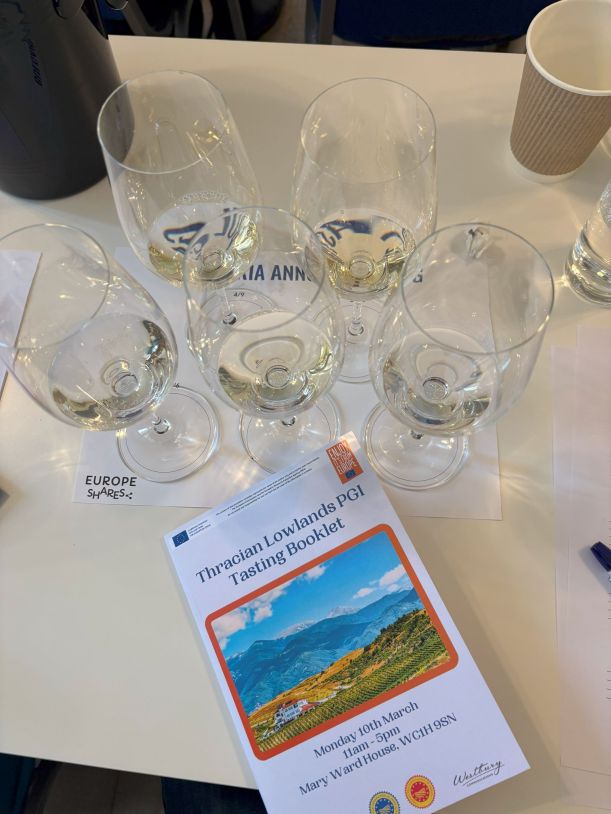
A recent masterclass organised by ThracianLowlands PGI and presented by Jamie Goode provided a great overview of Bulgarian wines produced from native grape varieties. Since the fall of communism which focused on mass produced wine, the return of land to winegrowing families and support for the industry upon joining the EU the industry has experienced something of a revival.  Indigenous grape varieties are being show cased but also wines from international grapes. Back in the 80s it was popular for its quaffable Merlot and now makes for instance some excellent value Pinot Noir too.

There are currently only two PGIs: the Danubian Plains and The Thracian Lowlands which between them cover pretty much all of the country. Its pointed out that Bulgaria is on similar latitude to Tuscany and Bordeaux but this just means it is in the zone and actually has its own unique climatic influences and these vary dramatically across these large regions.

The Thracian Low Lands PGI lies to the south below the line of the Balkan Mountains. The climate is continental and the summers are warm.  The region is large and varied and informally divided into the Struma Valley with mediterranean influences to the west, Thracian Valley to the south, the Rose valley between the Balkan and Sredna Gora mountains and the Black Sea Coast with maritime influences which spans both PGIs.

The Danubian Plains PGI to the north of the Balkan Mountains is continental in climate and cooler than the Thracian Lowlands.  Influences include the wide water body of the Danube and to the east the Black Sea. It is therefore informally subdivided into the Danube River Plains to the west and the Black Sea Coast.

The Native Wine Grapes of Bulgaria:

Varieties include aromatic whites through to bold, structured reds.  Some are old and some the product of crossings produced during the communist era many with a terpenic Muscat quality.

White Varieties: Aromatic and Expressive

Red Misket, despite its name, is a white grape with a faint blush hue. It is also unrelated to the other Misket varieties. One of Bulgaria’s oldest varieties, it thrives in the Rose Valley, yielding floral, citrus-driven wines with crisp acidity. These wines are often vinified dry but retain an alluring perfume reminiscent of Muscat.

Dimyat is a sun-loving variety with Thracian origins, predominantly grown along the Black Sea coast. Known for its delicate body and bright acidity, it produces refreshing white wines typically with aromatic notes of roses. The sample we tasted ‘Why Not Red Misket’ by Milkov was actually more orchard fruity, with a nice wet stone and brine finish with light body and only 11% ABV.

Vrachanski Misket an old variety, hails from northern Bulgaria, offering intensely aromatic wines with citrus, herbal, and floral nuances. It shares a kinship with Muscat varieties, often resulting in vibrant, expressive wines. The example we tasted from Tipchenitza Winery was blended with Chardonnay and matured in French oak barrels and had an interesting mix of floral and peach notes and smoky wood.

Tamay Anka, is actually a clone of Muscat Blanc a Petit Grains so native but not autochthonous. It displays a characteristic exotic floral and spicy character.

Sandanski Misket, a rarity found in the Struma Valley, a crossing of Melnik and Tamayanka. It delivers aromatic, peach-tinged wines with a distinct herbal undertone, often crafted into fresh, dry styles.

Red Varieties: Both Power and Elegance.

Broadleaved Melnik, a signature variety of the southwest, produces complex, age-worthy wines with rich red fruit, spice, and tobacco notes. Named after the town of Melnik it flourishes in the Struma Valley, needing the warm Mediterranean influence to fully ripen.

Melnik 55, a modern crossing of Broadleaved Melnik, ripens earlier and delivers softer, fruit-driven reds with vibrant cherry and peppery spice. One example we tasted from Villa Melnik was ripe, full bodied with black fruits and spice and over 15% ABV, the other from biodynamic AYA estate elegant structured with slightly sour fruit notes and a little pleasant funk.

Mavrud, an ancient Thracian variety, is Bulgaria’s boldest red. It exudes dark berry, leather, and earthy tones, crafting robust wines with firm tannins and great aging potential. The example we tasted from Cheval de Katarzyna was indeed round and fleshy with tasty ripe fruits.

Rubin, a cross between Nebbiolo and Syrah, offers deep colour, ripe fruit, and velvety tannins, blending elegance with power. The results are surprisingly as attractive as the mix sounds. I tasted a couple of examples which had structure yet freshness and worked well oaked and unoaked.

Pamid, one of the country’s oldest grapes, is light-bodied and easy-drinking, producing fresh, fruit-forward reds best enjoyed young.

Gamza, known as Kadarka in Hungary, thrives in northern Bulgaria, yielding delicate, cherry-laden wines with lively acidity, often compared to Pinot Noir in finesse. We tasted two examples. The first Thomas Gamza single vineyard 2022 by Burgozone Collection which was light in colour, perfumed with red cherry, medium acidity and a nice savoury edge. Delicious. The second Koshava Gamza 2023 by Bononia Estate had 25% cabernet franc in the blend which gave it a slight herbal note and a little extra grip.  Still with soft red fruit and freshness a lovely excellent value wine.

There is a broad range of well-made wine styles here at attractive prices that will have wide appeal. I particularly liked some of the Gamza and Rubin wines which will appeal to lovers of Pinot Noir and Nebbiolo.


Leave a comment

Collio: Friuli Venezia-Giulia’s Premier White Wine Region

A recent ‘Discovering Collio’ masterclass led by Peter McCombie MW focused on the distinctive white wines of the region.

First a quick summary of the Collio region. Located in the northeastern part of Friuli Venezia-Giulia, it runs along the border with Slovenia. Collio DOC lies within the province of Gorizia, forming part of the broader Friuli DOC.

The region’s location between the Julian Alps to the north and the Adriatic Sea to the south creates a mild, temperate climate. Cool mountain breezes moderate the warmer maritime influence from the Adriatic and the region’s rolling hills provide vineyard with altitudes typically ranging from 100 to 300m above sea level. These factors combine to extended the growing season and promote grapes with greater flavour and concentration.

A key feature of Collio’s terroir is its signature soil type, known locally as ‘Ponca’. Ponca is a combination of marl and limestone formed from ancient seabed deposits. It has good water retention while still providing sufficient drainage.

Grape Varieties

The three grape varieties that are probably most distinctive are  Ribolla Gialla, Pinot Grigio and Friulano.  These featured in the tasting along with Sauvignon Blanc and various blends under a Bianco label.

  • Ribolla Gialla (ree-BOLL-ah JAH-lah): A native variety of Friuli, Ribolla Gialla produces wines with high acidity and delicate aromatics. Typical flavours include citrus, green apple, and white flowers, with a distinctive mineral backbone. Peter talked about a ‘sapid’ quality that a lot of the wines have meaning a savoury, saline, wet stone quality that gives lift to the wines. When made in a modern style, the wines are light and crisp. In skin-contact or orange wine styles, Ribolla Gialla develops more texture, with notes of dried fruit and spice.
  • Pinot Grigio: In Collio, Pinot Grigio offers greater complexity than its mass-produced counterparts. The wines here often have a light pink tinge to them. They are typically medium-bodied, with aromas of pear, white peach, and floral notes, supported by bright acidity and a herby, wet stone finish. Some producers experiment with brief skin contact, resulting in copper-hued wines with additional texture and subtle tannic grip.
  • Friulano: Formerly known as Tocai Friulano, this grape is a flagship of the region. It yields wines with medium body, moderate acidity, and a distinct almond-like bitterness on the finish. Flavour notes often include yellow apple, pear, and subtle herbs.  Peter pointed out the grassy notes often evident. The characteristic salinity makes it highly food-friendly.

Wine making Approaches

Producers in Collio typically follow two primary winemaking approaches: modern protective winemaking and traditional skin-contact (orange wine) production.

Modern Protective Winemaking: This technique emphasises the preservation of freshness and purity and Friuli led the transition to single varietal wines made in this way in Italy.   Grapes are harvested early in the morning to retain acidity and are quickly pressed to minimize oxygen exposure. Fermentation takes place in temperature-controlled stainless steel tanks, preventing oxidation and preserving the grape’s primary fruit aromas. These wines tend to be crisp, vibrant, and fruit-forward, with a clear expression of variety and terroir.

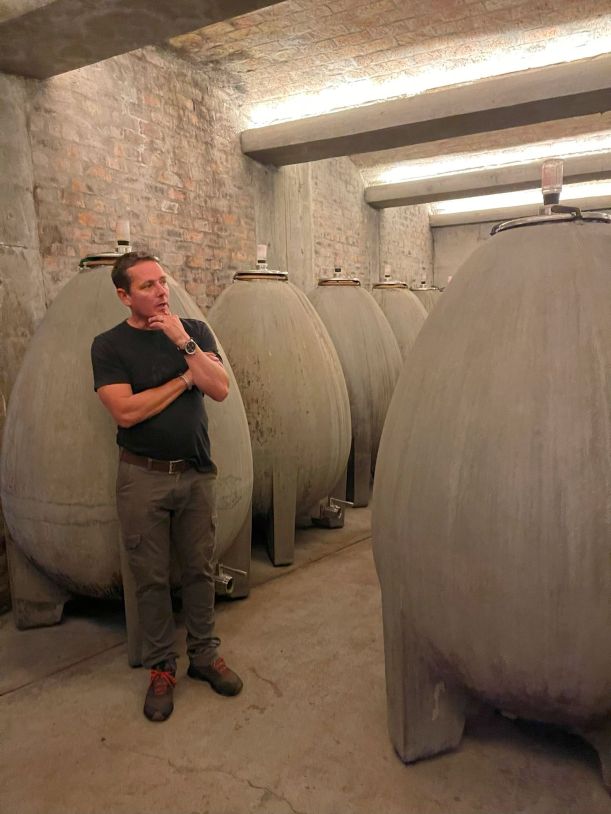
Orange Wine (Skin-Contact): Inspired by ancient techniques, this approach involves prolonged maceration on the grape skins, even for white varieties. The resulting wines are amber-hued, with enhanced tannic structure and complex flavours. Often fermented and aged in large wooden casks, amphorae, or concrete tanks, these wines develop oxidative and savoury characteristics, displaying notes of dried fruit, honey, and spice, along with firm texture and a long finish.

However the wines tasted actually displayed quite a few wine makers using short periods of maceration, extended lees aging, maturation in both old and new wood so there is definitely a spectrum of wine making practices that spans between the two.


Leave a comment

Vin Jaune: A labour of love from Jura

At a recent Alliance Wine/H2Vin tasting I was delighted to find the wines of Jura represented by Domaine Berthet-Bondet.  Jura, tucked between Burgundy and the Swiss border, is home to one of France’s most fascinating wines: Vin Jaune. Produced exclusively from the Savagnin grape, this golden-hued wine is the result of an extraordinary winemaking process and a true reflection of the region’s terroir.

Jura’s climate isn’t for the faint of heart. Winemakers here battle heavy rainfall and the constant threat of spring frosts, making each vintage a labour of love. The region’s distinctive local varieties—Savagnin, Poulsard, and Trousseau—thrive in the marl and limestone soils, giving rise to wines with remarkable complexity. But it’s Savagnin that truly shines in Vin Jaune production.

An ancient variety, Savagnin is a genetic powerhouse. It’s the parent of some of the world’s most renowned grapes, including Pinot Noir, Chenin Blanc, Grüner Veltliner, Sauvignon Blanc, Silvaner, Trousseau, and Petit Manseng. Despite its heritage, Savagnin remains a relative rarity, thriving in Jura’s cool climate where it retains its bright acidity and rich aromatics.

What makes Vin Jaune so distinctive is its biological aging. After fermentation, the wine is transferred to old oak barrels and left untouched for a minimum of six years. During this time, a delicate layer of yeast known as voile (meaning “veil”) forms on the surface. This yeast blanket protects the wine from oxidation while contributing complex nutty, spicy, and saline flavours. The result is a wine with striking aromas of walnuts, almonds, curry spice, and dried fruit, all balanced by piercing freshness.

Due to the extended aging process, evaporation takes its toll, all that is left from one litre of wine is 62 cl which is why Vin Jaune is bottled in the distinctive clavelin, a squat 62 cl bottle.  This is also the reason why it is relatively expensive. Although quite often wine makers will bottle wines matured sous voile earlier which offer much of the character and are a little more accessible.

On the table, Vin Jaune is a great match with the local Comté cheese and works well with rich spicy food. And while it’s fascinating young, Vin Jaune is built to age, developing even more complexity over decades.

The Domaine Berthet-Bondet, Chateau Chalon 2016 was floral, chamomile, with bruised apples, bread dough notes, orange peel and nutty notes. Really complex. There is something in common with a Fino sherry but Vin Jaune is quite distinctive with more fruit at its core and of course the wines are lighter. It was dry with quite high acidity and full body, finishing with a very long nutty saline note. Amazing.


Grafted roots stocks versus own rooted vines

Subscribe to continue reading

Subscribe to get access to the rest of this post and other subscriber-only content.


Leave a comment

Regenerative Viticulture: Farming for the Future

Regenerative Viticulture (RV) is quietly revolutionising how some of the world’s most thoughtful winegrowers approach their craft. It’s more philosophy than prescription, rooted in ecology and driven by a desire to transform vineyards into thriving self-sustaining ecosystems now and for generations to come.

At its heart, RV aims to restore soil health, improve resilience to climate extremes, reduce chemical inputs, sequester carbon, and nurture biodiversity. These are lofty ambitions, but for many growers, they’re fast becoming the only way forward.

Why Regenerative Viticulture?

The motivations behind RV vary. For some, it’s about producing better wine with less interference. Others are adapting to the escalating challenges of climate change; heatwaves, erratic rainfall, and soil erosion. Toby Buck of Te Mata is looking toward the horizon: “Our estate has to be sustainable for there to be a viable legacy.”

RV also speaks to the growing desire among wine drinkers for transparency, ecological integrity, and authenticity. In a world increasingly wary of greenwashing, it’s no surprise that many pioneers of organic and biodynamic win, like Tablas Creek and Felton Road, see RV as the next evolution.

But what makes RV different isn’t just the list of things it avoids. It’s the things its doing to build the growing environment back up.

The Methods

Rather than following a fixed set of rules, RV offers a toolbox of practices. Growers adapt methods to their particular environment, soils, and climate, to create resilient, biodiverse agro-ecosystems with healthier vines and deeper-rooted sustainability.

Soil First

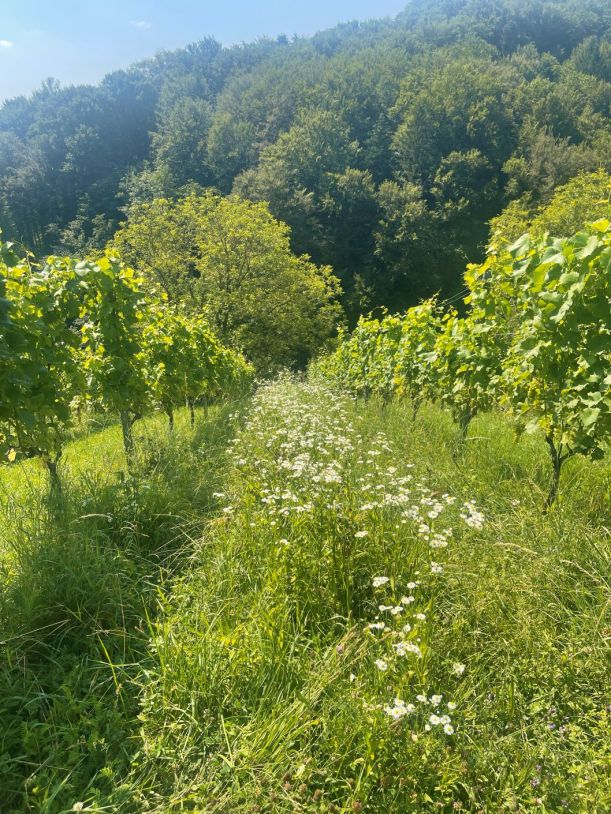
Soil health is the cornerstone. Cover crops are sown between vine rows, preventing erosion, locking in moisture, and supporting underground networks of fungi and microbes. These relationships, vital to nutrient cycling and carbon storage, create a self-sustaining system beneath the vines.

Legumes fix nitrogen. Grasses manage vine vigour. Compost (including grape pomace, manure, and even biochar from prunings) replenishes nutrients and increases humus. This aids water retention and carbon sequestration. Johan Reyneke, whose South African vineyard was an early adopter, says humus levels have risen significantly thanks to high-density cattle grazing in the dormant season and careful composting.

Designing with Nature

Regenerative vineyards are often shaped at a landscape level. Incorporating trees and permanent wild habitat attracts predatory insects, supports biodiversity, and buffers weather extremes. Trees help cool vineyards during heatwaves and provide modest frost protection, but they must be carefully placed to avoid shading vines.

Water management, too, is critical. Techniques like keyline planting slow runoff and help retain moisture.

Integrating Animals

Animals, ducks, sheep, and cattle, are another key component. They manage weeds, fertilise the soil, and reduce the need for mechanical inputs. Reyneke uses ducks to tackle snails, and a herd of cattle in winter. Trellising systems can be adapted to allow grazing even during the growing season.

From Chemicals to Complexity

RV reduces reliance on synthetic inputs, especially pesticides and herbicides, which often damage beneficial biodiversity. Alternatives include organic-approved treatments and the cultivation of disease-resistant Piwi hybrids, which dramatically reduce the need spray against mildew. But organic practices like tilling can damage soil structure and release carbon, so many regenerative growers aim for minimal or no tillage, using mulches and interrow planting instead.

RV doesn’t pretend to be a silver bullet. Some growers still use herbicides, or till occasionally. But the emphasis is on long-term soil health, not short-term fixes.

The Costs and the Payoff

Transitioning to RV takes time, skill, and often money. Johan Reyneke openly speaks of the “school fees to pay”, yield drops during early experimentation, the need for new equipment, and a steep learning curve. Managing a vineyard as a living ecosystem means more complexity, more hands-on work, and more multidisciplinary knowledge.

Certification can also be costly and fragmented. Still, frameworks like Regenified offer tiered pathways that make entry more accessible.

On the other hand, RV can reduce dependence on costly external inputs like fertilisers and fuel, whose prices have soared in recent years. Tablas Creek believes improved soil health will extend vineyard lifespans beyond the usual 25-year cycle, reducing replanting costs and boosting profitability.

Yields may initially dip, but often recover, and some growers report even better quality grapes and more reliable harvests in extreme conditions. Extended ripening seasons, preserved acidity, and lower alcohol levels are just a few of the benefits Reyneke and others have observed.

Building a Business and a Legacy

Beyond the balance sheet, RV aligns with a growing desire to create purposeful, resilient wine businesses. Tablas Creek embraced ROC certification for its inclusion of social fairness. Felton Road is pushing towards net zero carbon. RV is simply one part of a larger mission.

In the end

Regenerative Viticulture won’t save the planet on its own. But as the wine world increasingly looks at lifecycle carbon footprints, packaging, distribution, winery energy, it’s clear RV is an important piece of a larger sustainability puzzle.

It offers something compelling: a way of farming that puts the ecosystem first, builds resilience, and returns power to the soil. It’s a way of producing authentic wines and perhaps these wines are just better too?  Give them a try and see what you think……….

This article is based upon my independent research project for the WSET diploma.