WanderCurtis Wine

Wine tastings, corporate events, reviews and recommendations


Leave a comment

Mt Brave, Mount Veeder Cabernet Sauvignon 2019, Napa Valley

Tasted ahead of our Jackson Family Wines dinner at Bocco di Lupo in Soho this wine is from the Napa Valley in California, home of super premium ripe cabernets.

Napa Valley is nestled within the coastal range of mountains but is open to San Pablo Bay in the south. The slopes of Mount Veeder AVA face east and located to the south-west experiences both the cooling influences of the Bay and altitude. East facing slopes are also shielded from the sun in late afternoon at the hottest part of the day. This means it is day time temperatures on the mountain can be 10 – 15 degrees cooler than the valley floor.  These conditions tend to produce wines that are structured with firm tannins and retained freshness and the ability to age for a long time.

The wine is mostly cabernet sauvignon but with a splash of other Bordeaux varietals: Cabernet Franc, Merlot, Malbec and Petit Verdot.  In fact JFW make a Mt Brave Mount Veeder Malbec too.

Deep crimson and ruby with lively viscous legs denoting the 14.5% ABV

Nose is superb: Ripe blackcurrant, blackberry liqueur, a lingering savoury meaty element with a bright red plum and cherry lift, followed by perfumed cedar, blackcurrant leaf, sandalwood, fresh vanilla pod, a hint of milk chocolate, a bit of pencil shavings, and lifted tones of violets encompassed by new oak. Stunningly elegant and evocatively haunting.

Palate: Fruit is all ripe but not overripe with a strong surge of acidity highlighting the red cherry and plum and a long finish tending to concentrated blackcurrant with a hint of savoury meatiness. Tannins are fine but very abundant and a bit grippy, with oak not feeling quite fully integrated yet. Warm finish denoting the ABV level. Super balance and elegance with an undercurrent of power supported by the structure. This will transform intime into a magnificent example of Napa elegance balanced with power.


Leave a comment

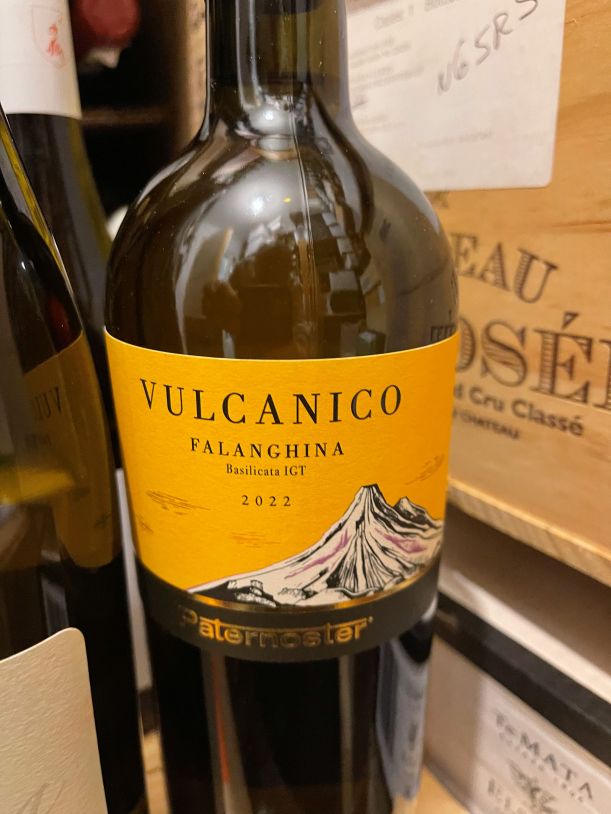
Vulcanico Falanghina 2022, Paternoster.

I must admit to not being very familiar with this grape variety until my Diploma studies and so I was happy to find this example in a wine shop at the airport in Verona to pick up and try.

The Campagnia region is better known for the Falanghina grape variety, grown on the slopes of Vesuvious near Naples. However this example is from Basilicata slightly further south which also has volcanic soils and a bit of elevation.  Falanghina is disease resistant and so was traditionally used to reliably produce everyday drinking wines but wine makers are increasingly producing more interesting wines from lower yielding plots.

The colour is rich lemon and with some coaxing there are floral notes of honeysuckle, some citrus, orchard fruit, a touch of nectarine and some dried herbs.  Its dry with a full body as you would expect from southern Italy but there a good amount of acidity keeping it fresh which is also a common characteristic of indigenous Italian white varieties. Finally there is pleasing note of olive brine on the finish that lingers pleasantly.  The wine is not overly complex but has great balance both structurally and between fruity and savoury flavours making it work well with food.


Leave a comment

Do low yields really make for better wines?

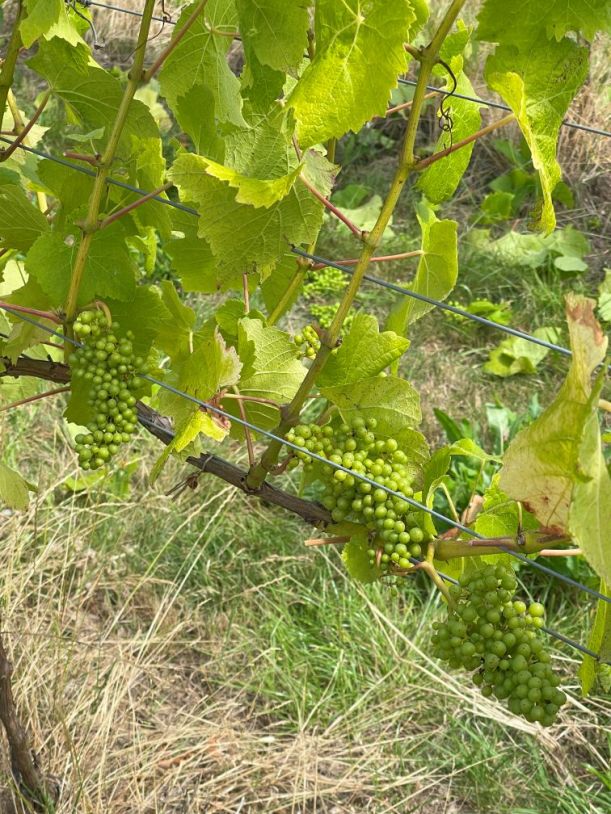
There’s a romantic allure to the idea that if vines put all their energy into fewer grapes, flavours concentrate, skins thicken and wines of depth and character will follow. It’s a story winemakers often tell, and it’s one that underpins much of European wine law. But does lower yield really mean higher quality in the glass? Or is it more complicated than that?

In the AOC system (Appellation d’Origine Contrôlée), maximum yields are tightly regulated. As you move up the hierarchy, the permitted output drops. For example, in IGP Pays d’Oc, where mass-market Merlots and Syrahs are made, yields can reach 100 hL/ha. But in Bandol, home to intense Mourvèdre reds, the limit is just 40 hL/ha.

Many wineries proudly talk about their yield-reducing techniques: bud rubbing, green harvesting, shoot thinning, all in pursuit of better fruit. But how real is the link between fewer grapes and better wine?

Grape quality.

It’s true that lower yields often result in higher-quality grapes, smaller berries with more concentrated flavours and better balance between sugars and acids. In red grapes, that also means a higher skin-to-juice ratio, which is crucial for extracting colour, tannin, and aroma. This can lead to wines that are more structured, more complex, and more age-worthy.

Conversely, when a vine carries too much fruit, the result can be diluted, insipid wine. The vine simply can’t ripen everything well. Sugar may build, but flavour lags behind, and acid levels drop, leaving wines flat or unbalanced. This is particularly noticeable with more delicate varieties that struggle to retain their identity under high cropping.

But this isn’t a one-size-fits-all rule. Some varieties are more sensitive than others. Pinot Noir, with its thin skin and delicate nature, thrives on low yields. Push it too hard, and it quickly loses character. Grenache, on the other hand, can crop more generously and still produce juicy, expressive wines, particularly in warm, dry climates where ripening is less of a challenge.

Correlation isn’t the same as causation

In Burgundy, Grand Cru vineyards like Echezeaux are restricted to 35 hL/ha, and the wines are often sublime. But low yields alone don’t guarantee greatness. In Bordeaux, some legendary vintages; 1982, 2005, 2010 delivered both high quality and high volume. And in tough years like 2013 or 2017, yields were low, but this certainly didn’t make them great vintages.

The issue is this: yields can be low for many reasons, frost, hail, drought, disease. These stresses can reduce volume, but they don’t necessarily improve grape quality. In fact, they often have the opposite effect, leaving berries under-ripe or damaged. Low yield, in these cases, is more of a symptom of vineyard struggle than a sign of excellence.

It’s about balance

What really matters is how much fruit a vine can properly ripen. This sweet spot depends on grape variety, vine age, and, critically, location. A vine in the cool Mosel will struggle to ripen Cabernet Sauvignon no matter the yield. In contrast, in warm, dry areas like Châteauneuf-du-Pape, Grenache can yield generously and still reach full flavour.

This is why a balanced vine is everything. A healthy canopy, well-matched to the fruit load, allows grapes to ripen slowly and evenly. Sunlight must reach the bunches without overexposure. Dr. Richard Smart’s research highlights the importance of the leaf-to-fruit ratio. If the canopy is managed well, through pruning, training, and shoot thinning, the vine can support both ripeness and complexity, even at higher yields.

Beyond yield: The bigger picture

Yield is just one piece of the quality puzzle. Soil structure, drainage, and mineral content shape a vine’s health and its capacity to ripen its fruit. Climate, both macro and micro, dictates ripening windows, acidity levels, and the development of flavour compounds.

Then comes vineyard management: irrigation, pest control, canopy structure. And let’s not forget the winemaking itself. Gentle handling, fermentation temperature, ageing choices all can make or break a wine, regardless of what happened in the vineyard.

So yes, lower yields can help, particularly with sensitive varieties and in cooler climates. But  plenty of mediocre wines come from low-yielding vintages, just as some brilliant bottles emerge from vines that carried more fruit.

Practical limits

Growers do have tools to influence yield like green harvesting and bud removal, but they’re not without risk. Pruning too early invites frost damage. Cutting bunches mid-season may encourage larger grapes, lowering that all-important skin-to-juice ratio.

In practice, especially in regulated regions, if harvest looks too big, grapes are often simply left on the vine or dropped before picking to meet AOC rules. That might tick the legal box, but it doesn’t always improve quality, especially in mechanically harvested vineyards, where sorting isn’t as selective.

Dr. Smart argues that growers have more control over ripeness than yield. By managing the canopy to avoid shading and encourage even ripening, growers can often improve both the quality and the quantity of grapes. When a vine is in balance for the site in question, the result is often better than any number dictated by regulation.

The verdict.

So, does low yield mean better wine? Well sometimes……..

Great wine comes from thoughtful choices: matching grape to place, nurturing healthy vines, managing the canopy, harvesting at the right moment. Yield matters, yes, but quality is about balance, timing, and a touch of artistry.

Leave a comment

Penedes & Xarel-lo master class with Alvaro Ribalta MW

An enlightening DO Penedes & Xarel-lo master class with Alvaro Ribalta MW yesterday.  Alvaro was able to cut through some of the complexity of the region which overlaps with #Cava and #Catalonia and has no less than 10 named sub-regions. Key take outs were three broader zones: coastal, middle valley and mountainous and the quality focus coming from a group of well-travelled younger winemakers. 

The consensus is that #Xarel-lo, suited to the mediterranean climate and poor soils, high in acidity and age worthy, is the most promising grape for Penedes quality wines. It is neutral and examples show how well it works with a range of winemaking techniques; new oak, battonage, a bit of skin contact, concrete eggs, sparkling traditional method and even natural wine making. 

 Great examples were: 

  • X Col-leccio 2019 by @Nadal – lees stirring, ready to drink, complex, textured with a lovely briny finish. 
  • Xarel-lo Pairal 2020 by @canrafolsdelscaus. Made in chestnut barrels, oxidative notes of bruised apple, cake spices and a long mineral nutty finish. 
  • Lluna Nova Xarel-lo 2017 by @BodegasPinord. Biodynamically made, fermented in French oak with lovely integrated toasty notes, preserved lemon, and a long briny, nutty finish. 
  • La Sinia 2021, by @Maset fermented and aged in acacia barrels with subtle oaky notes, ripe apple and peach. 
  • Refugi de @loxarel_vins  sparkling 100% Xarel-lo, partly fermented in oak barrel and cellared for around three years: toasty, ripe red apple, fennel, creamy texture and salty finish. 
  • 109 de Loxarel 2011. A crazy wine with aged for 109 months, undiscouraged i.e. Pet Nat: slightly cloudy lemon with flashes of gold, smoky, sea shells, coastal rock pools, nutty, hardly any autolytic notes in spite of the extended lees contact, creamy texture and persistent fine bubbles, intense and long pleasant bitter, salted almond finish. 

 I can see the gently oaked versions of Xarel-lo having wide appeal and the unoaked lees aged versions working well with food, richer sea food in particular. Cheers!


Leave a comment

The Mediterranean Climate

I am sharing notes that I’ve made during my Diploma on these pages for anyone studying a formal WSET course or just interested in learning. 

These notes are absolutely not a substitute for the course books provided by WSET or indeed any other reference books. However I have found it helpful to condense information and present it visually in a way that tries to draw out the what, how and why that links things together or the similarities and contrasts that can help to make sense of everything.  These note are very much prompts to the memory rather than full or detailed explanations.

I am revisiting these notes over time to improve them and iron out the no doubt many inaccuracies and inconsistencies that they contain. However in the meantime please beware there may be errors and if you spot any do let me know.

The notes are free to down load are intended for personal use only all you need to do is sign up to our newsletter.


Leave a comment

The Maritime Climate

I am sharing notes that I’ve made during my Diploma on these pages for anyone studying a formal WSET course or just interested in learning. 

These notes are absolutely not a substitute for the course books provided by WSET or indeed any other reference books. However I have found it helpful to condense information and present it visually in a way that tries to draw out the what, how and why that links things together or the similarities and contrasts that can help to make sense of everything.  These note are very much prompts to the memory rather than full or detailed explanations.

I am revisiting these notes over time to improve them and iron out the no doubt many inaccuracies and inconsistencies that they contain. However in the meantime please beware there may be errors and if you spot any do let me know.

The notes are free to down load are intended for personal use only all you need to do is sign up to our newsletter.


Leave a comment

The Continental Climate

I am sharing some notes that I’ve made during my Diploma on these pages for anyone studying a formal WSET course or just interested in learning. 

These notes are absolutely not a substitute for the course books provided by WSET or indeed any other reference books. However I have found it helpful to condense information and present it visually in a way that tries to draw out the what, how and why that links things together or the similarities and contrasts that can help to make sense of everything.  These note are very much prompts to the memory rather than full or detailed explanations.

I am revisiting these notes over time to improve them and iron out the no doubt many inaccuracies and inconsistencies that they contain. However in the meantime please beware there may be errors and if you spot any do let me know.

The notes are free to down load are intended for personal use only all you need to do is sign up to our newsletter.


Leave a comment

Sparkling Wines Chile and Argentina

A condensed summary of sparkling wines from Chile and Argentina including history,  regions, growing environment, vineyard management, grape varieties, wine making, styles, wine law and business.

Sources include: WSET Diploma Wines of the World, Oxford Wine Companion by Julia Harding and Jancis Robinson, various producer websites.

Note this document is intended for personal use only not for commercial or promotional use. We accept no liability for any omissions or errors that may be contained in the document.

© Kiran Curtis 2023. Personal use only not to be used for commercial or promotional purposes.


Leave a comment

Sparkling Wines Germany

A condensed summary of sparkling wines from Germany including history,  regions, growing environment, vineyard management, grape varieties, wine making, styles, wine law and business.

Sources include: WSET Diploma Wines of the World, Oxford Wine Companion by Julia Harding and Jancis Robinson, various producer websites.

Note this document is intended for personal use only not for commercial or promotional use. We accept no liability for any omissions or errors that may be contained in the document.

© Kiran Curtis 2023. Personal use only not to be used for commercial or promotional purposes.


Leave a comment

Sparkling Wines Italy, Tank Method

A condensed summary of tank method wines from Italy including history,  regions, growing environment, vineyard management, grape varieties, wine making, styles, wine law and business.

Sources include: WSET Diploma Wines of the World, Oxford Wine Companion by Julia Harding and Jancis Robinson, various producer websites.

Note this document is intended for personal use only not for commercial or promotional use. We accept no liability for any omissions or errors that may be contained in the document.

© Kiran Curtis 2023. Personal use only not to be used for commercial or promotional purposes.