
As published in Decanter Magazine March 2026 issue
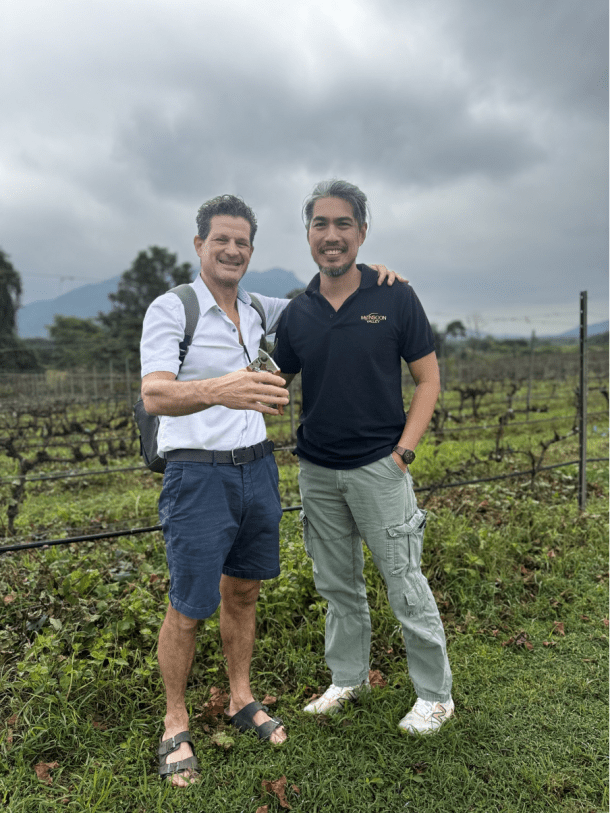
Adam with Suppached Sasomsin, winemaker and viticulturist, Monsoon Valley vineyard
When I arrived at Monsoon Valley vineyard in late November, I expected sun-baked vineyards and postcard tropical glamour. Instead, I stepped into sodden soils, heavy air and low clouds threatening yet more rain. The monsoon hadn’t left when it should have and Suppached Sasomsin the estate’s winemaker and viticulturist was clearly uneasy.
As we walked the vineyards, he explained why. November is normally pruning time, a critical reset in Thailand where vines never truly sleep. With no winter dormancy at this latitude, the vines just keep growing, throwing out huge amounts of foliage unless they’re aggressively cut back. But pruning in these conditions is dangerous. Wet cuts invite disease, but if you delay pruning too long, the entire growing cycle shifts forward, pushing harvest into the rainy season potentially affecting fruit quality.
Listening to Suppached, I began to understand that viticulture here isn’t about following rules; it’s about constant risk management. This is the reality of new latitude wines: viticulture far outside the traditional comfort zone. Survival depends on intervention, science and adaptation. That philosophy was clearest in the nursery. New clones and crossings are assessed for vigour, disease resistance and resilience to heat and drought.
Disease pressure is constant, and organic ideals give way to pragmatism. One innovation caught my attention: crushed mussel shells, ground into a fine powder and sprayed onto the vines. Under magnification, the particles act like tiny blades, physically deterring insect pests.
Tasting the wines later, overlooking the vineyards, I was struck not just by their quality, but by their defiance. These aren’t wines chasing European models they’re wines shaped by place, pressure and persistence.
 WanderCurtis Wine