WanderCurtis Wine

Wine tastings, corporate events, reviews and recommendations


Leave a comment

Kumeu River: Producing champion chardonnays

The story of Kumeu River (pronounced: Koo-MEE-oo River) Wines is intertwined with the origins of New Zealand’s wine industry itself. From its early pioneering days as Croation immigrants who established a vineyard to its current reputation for producing world-class Chardonnay, the Brajkovich family has been at the forefront, earning international acclaim for their exceptional wines.

In 2015 Stephen Browett of Farr Vintners, organised a series of blind tastings against some of the finest Premier Cru and Village white Burgundies. The events brought together top critics, sommeliers, and wine writers to assess the wines side by side. In an upset to the established order Kumeu’s Maté’s, Coddington, Hunting Hill, and Estate Chardonnays triumphed in every flight except one, where they placed joint first with a leading Burgundy. This achievement cemented Kumeu River’s reputation for incredible quality and value wines.

The winery’s 30 hectares of vineyards, located on clay-rich soils with a sandstone base, play a vital role in their success. These soils retain enough moisture at depth to keep the vines hydrated through the dry summer months, eliminating the need for irrigation. This ensures the vines produce grapes of great concentration and balance.

With Auckland’s urban sprawl encroaching on vineyard land, Kumeu expanded in 2017, acquiring the Rays Road vineyard in Hawke’s Bay. Here, they have planted Chardonnay, alongside Sauvignon Blanc and Pinot Noir, on limestone slopes, adding further diversity to their portfolio.

In the winery, grapes are meticulously hand-harvested and sorted before whole-bunch pressing. Fermentation takes place in French oak barrels, the mix of new and old is tailored to the vintage and vineyard plots.  Wild yeast is always used to enhance the wines’ complexity.

A recent tasting of the 2023 vintage confirmed once again that these refined, elegant Chardonnays rival the best in the world.


Leave a comment

Meerlust Rubicon 2017

From vineyards close to False Bay in Stellenbosch, South Africa. There is a noticeable cooling effect from breezes, in this part of the region, that push inland from the cold waters of the Bay really slowing the ripening season down and allowing concentrated and flavourful grapes to grow.

Founded in 1756 Meerlust Estate does call into question the use of the term ‘New World’ when comes to the wines of South Africa (see our review of Constancia which tells the story of how wine growing started in the country). On the other hand it is fair to say that the birth, or probably rebirth, of quality wine production only properly got under way after the fall of apartheid in 1994.

The idea of ‘crossing the Rubicon’, at which point there was no turning back for Julius Ceasar, inspired the name of the wine. Nico Myburgh, part of the founding family, created the wine from Cabernet Sauvignon, Merlot and Cabernet Franc, inspired by the use of blending in Bordeaux crossing the line and helping to establish the style in South Africa.

Indeed this wine is easy to mistake for a classic right back Bordeaux when tasted blind, there is something about the way that the growing conditions in Stellenbosch allow restrained and elegant wines to be made that whilst ripe retain notes of capsicum and black currant leaf characteristic of classic Claret.

This wine already shows some bricking on the garnet rim. The nose is expressive with ripe black currant, capsicum, black pepper, baked blackcurrant tart, smoke, toast and coffee grounds, signifying use of French Oak. It also has nice notes of earth and leather from the years in bottle.

In the mouth it is fresh, with ripe but firm tannin, the body is full but the alcohol well integrated. Elegant and well balanced with a very long tasty finish. This wine is widely available and great value for a wine showing enough maturity to drink now but with capacity to develop further.


Leave a comment

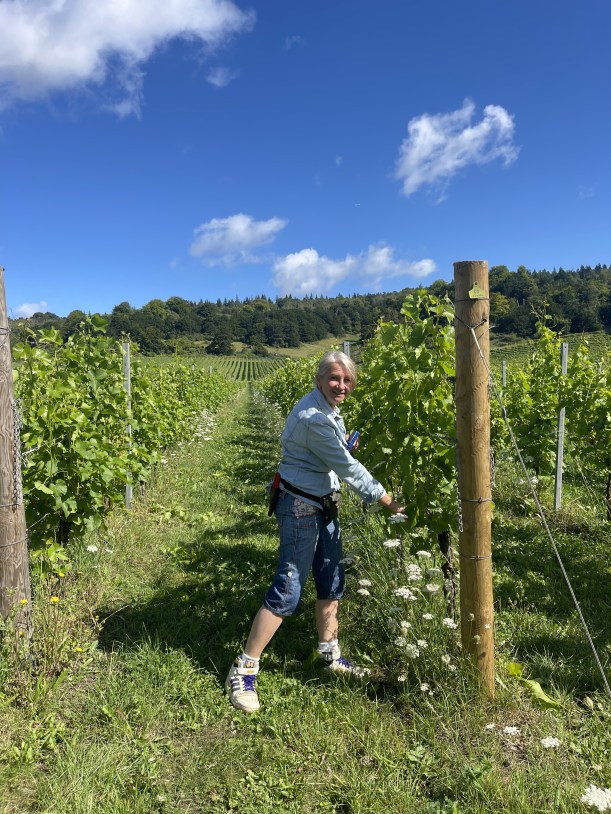
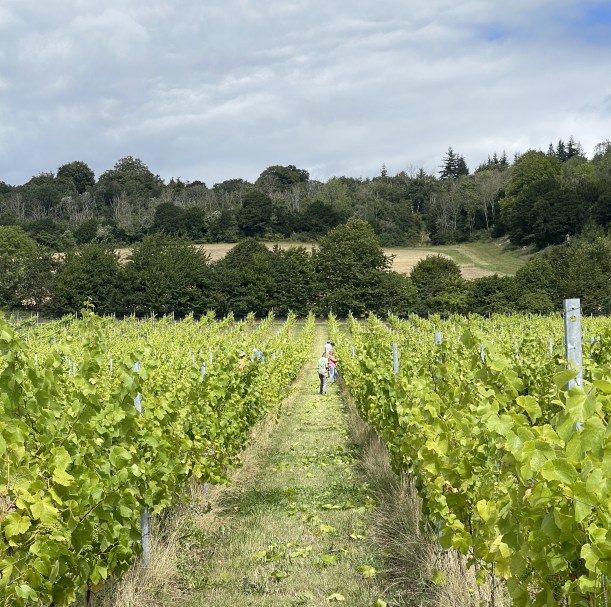
Albury Organic Vineyard leaf stripping and green harvest volunteer day.

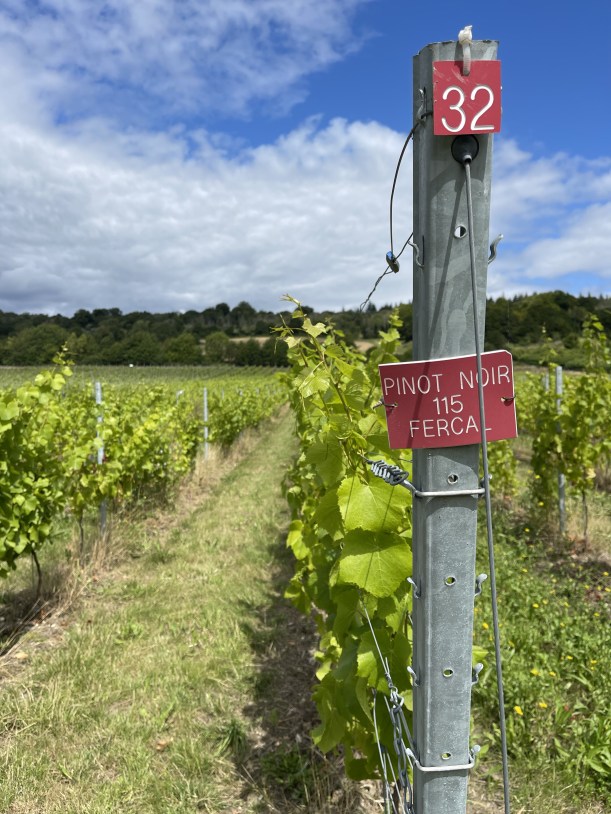
Nestled below woodland on the gentle slopes of the Surrey Hills is Albury Organic Vineyard.

The dynamic Alex Valsecchi manages the estate with her team where they grow organically, biodynamically and use regenerative viticulture practices to make wine as sustainably and environmentally friendly as they can.

Alex admits that she and Nick Wenman, the owner, must be ‘a bit mad’ to take on the challenge of growing wine in this way in the damp and fickle English climate.

But really what they’re doing is showing just what amazing results can be achieved when you have a vision (no doubt determination and a lot of hard work come into it too!).

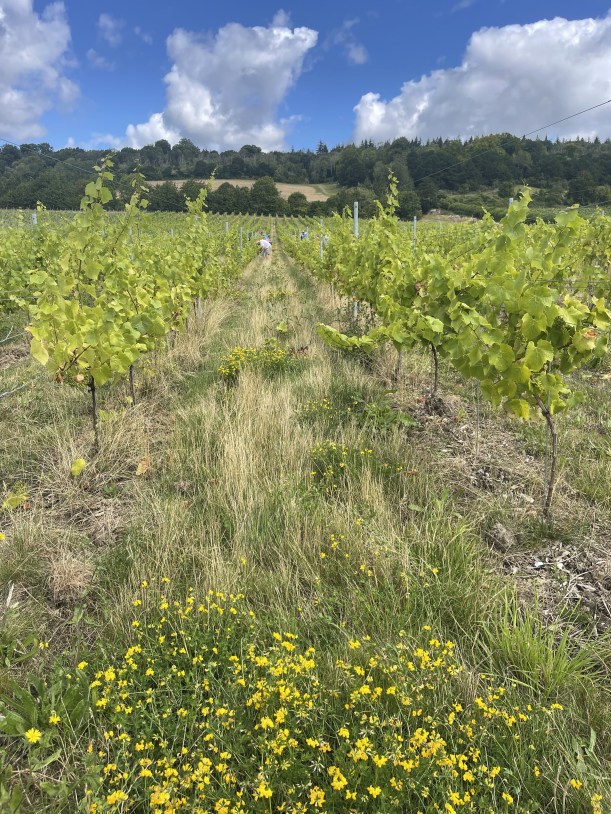
On a sunny day the vineyards are idyllic. A carpet of flowering clovers, herbs, legumes, orchids, yarrows, grasses and even wild strawberries, which are all native to the chalk hills of Surrey, has been allowed to colonise the space between the vine rows.

This along with a wildlife pond and wild flower meadow creates a diversity of habitats for beneficial insects and wildlife. 

By having diverse plants with their roots in the ground and by using only light tillage, Alex’s aim has also been to improve soil health and biodiversity below ground.

All this is on London’s doorstep and Albury welcome volunteers through the season to help out in the vineyard and experience it all first hand.

I spent a day in July helping leaf strip and green harvest in the newest section of the vineyard. Planted in 2022 these young vines need this type of tough love to strengthen them up for the future.

I can thoroughly recommend joining in and there’s a refreshing glass of Seyval Blanc fizz (tasting note bellow) and some lunch to keep you going. Harvest will most likely be in the first two weeks of October and will be an amazing opportunity to get in involved. You can sign up on their website.

Albury Estate Seyval Blanc 2021

Very pale, with fine bubbles. Blossom, hawthorn, jasmine, lemon verbena, green and yellow apple, pear, quince, thyme and a lovely touch of biscuit and croissant. Crisp acidity but rounded out by the apple & pastry flavours which linger nicely. Invigorating and Refreshing at a pleasing 11%.

I didn’t try Attila’s bite, she was at the vet!


Leave a comment

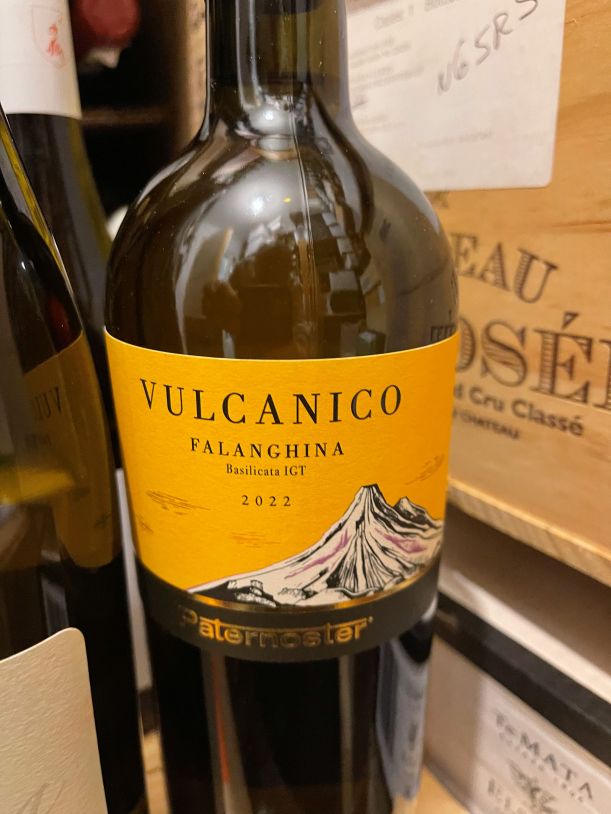
Vulcanico Falanghina 2022, Paternoster.

I must admit to not being very familiar with this grape variety until my Diploma studies and so I was happy to find this example in a wine shop at the airport in Verona to pick up and try.

The Campagnia region is better known for the Falanghina grape variety, grown on the slopes of Vesuvious near Naples. However this example is from Basilicata slightly further south which also has volcanic soils and a bit of elevation.  Falanghina is disease resistant and so was traditionally used to reliably produce everyday drinking wines but wine makers are increasingly producing more interesting wines from lower yielding plots.

The colour is rich lemon and with some coaxing there are floral notes of honeysuckle, some citrus, orchard fruit, a touch of nectarine and some dried herbs.  Its dry with a full body as you would expect from southern Italy but there a good amount of acidity keeping it fresh which is also a common characteristic of indigenous Italian white varieties. Finally there is pleasing note of olive brine on the finish that lingers pleasantly.  The wine is not overly complex but has great balance both structurally and between fruity and savoury flavours making it work well with food.


Leave a comment

Barbaresco Produttori del Barbaresco 2019

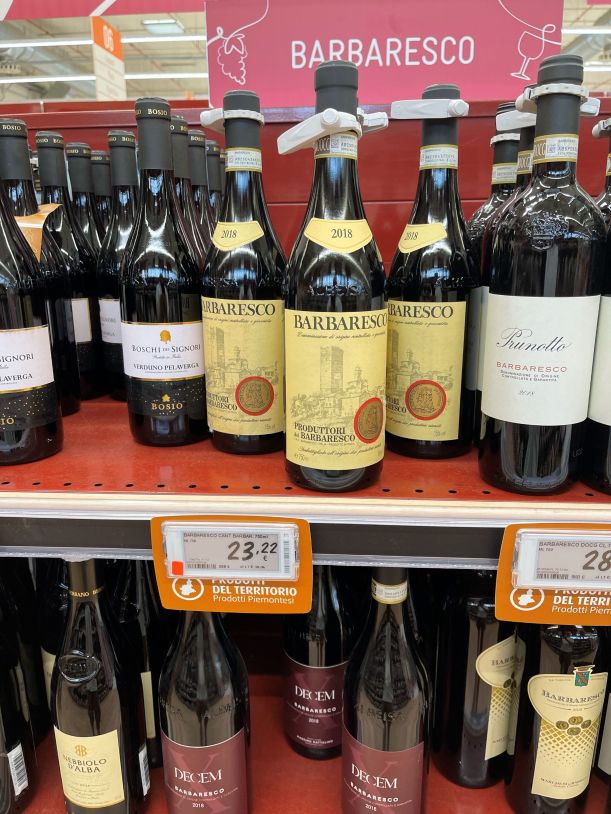
This very longstanding co-op in Piemonte produces a range of excellent wines. Along with the many single vineyard offerings this wine is a blend across the winegrowers’ parcels and consistently provides great value for money. Look at the price here in the village of Barbaresco in Euros for the 2018 vintage, even landed in the UK its a smart buy.

Released in the spring of the third year after harvest this characteristically pale wine already shows some bricking on the rim. There is rose and strawberry , wet stone some cake spice and a touch of dried cherry and earth on the nose. Everything is in balance and although the acidity, tannin and alcohol of this Nebbiolo is characteristically high it feels light and supple in the mouth.  The finish is persistent ending on a nice stoney dried cherry note.  Superb!

2019 was a more classic vintage not as feted as the excellent 2016 but fresher than 2018. See our article on the annual Barbaresco Tavola.


Leave a comment

France, The Loire wine producing region.

A one-page summary of the: climate, topography, growing hazards, wine law, grape varieties, wine growing and making practices and the main wine producing sub-regions.

Sources include: WSET Diploma Wines of the World, Oxford Wine Companion by Julia Harding and Jancis Robinson, various producer maps and aerial photography.

Note this document is intended for personal use only not for commercial or promotional use. We accept no liability for any omissions or errors that may be contained in the document.


Leave a comment

France, Burgundy, Cote d’Or wine producing region.

A one page summary of the Crus of the Cote d’Or illustrating the key differences in topography, soils and aspect.

Sources include: WSET Diploma Wines of the World, Oxford Wine Companion by Julia Harding and Jancis Robinson, various producer wine maps and aerial photography.

Note this document is intended for personal use only not for commercial or promotional use. We accept no liability for any omissions or errors that may be contained in the document.


Leave a comment

Austrian Wine Regions

A one page summary of the: climate, topography, growing hazards, wine law, grape varieties, wine growing and making practices and the main wine producing regions.

Austria has come up a couple of times as a country in the D3 tasting exam. Key wines to look out for include:

  • Grüner Veltliner from the Wachau, Kamptal or Kremstal.
  • Blaufränkisch from Burgenland.
  • Trocken Beeren Auslese blend from Burgenland or Ruster Ausbruch.

Riesling from the same regions as Grüner is a possibility, but made in small quantities and also Zweigelt in an easy drinking style or barrique matured.

The Austrian Wine website has a huge amount of detailed information about the full range of Austrian grape varieties, regions and wineries.

Sources include: WSET Diploma Wines of the World, Oxford Wine Companion by Julia Harding and Jancis Robinson, Wine Austria.

Note this document is intended for personal use only not for commercial or promotional use. We accept no liability for any omissions or errors that may be contained in the document.


Leave a comment

2024 Cali Cru Central Coast Chardonnay 2020, London Cru

This wine is not made in Fulham by Alex Hurley but in the sunshine state in collaboration with wine maker Graham Tatomer. 

Known for his light touch and sourced from cool climate parts of the state the wine still bursts out of the glass with ripe grapefruit and apple and quickly reveals tropical notes of pineapple and mango. There is cream and toast and a whiff of smoke from the use of new oak but it is kept nicely in check.

Although full in body, the rich fruitiness is balanced by crisp and fresh acidity and the alcohol remains medium with a long uplifting finish.

In summary crisp and fresh and yet still ripe and sunny at the same time, great value and just delicious!


Leave a comment

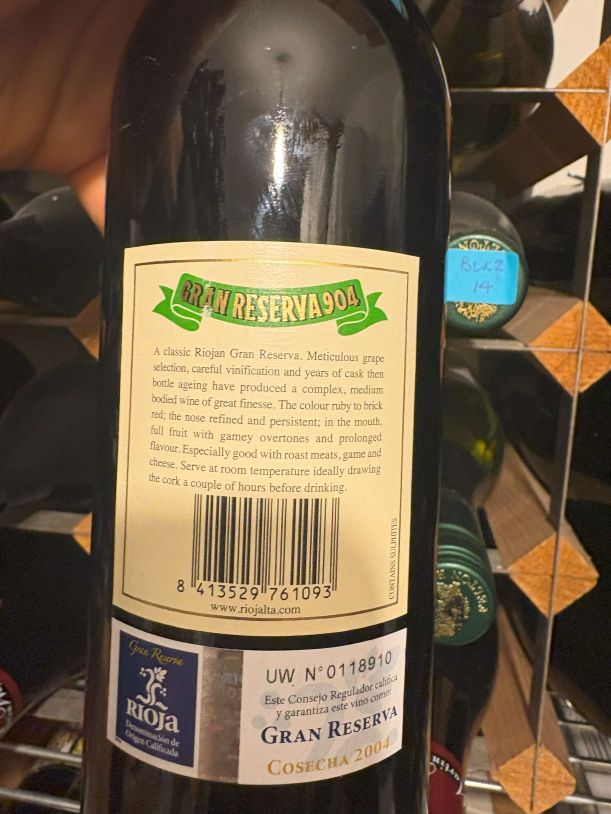
La Rioja Alta Gran Reserva 904 2004

The 10% Graciano in this wine (the rest Tempranillo) adds a perfumed lift to the beautiful aromas and extra freshness on the palate. Although low yielding, late ripening and prone to mildew interest in the grape and plantings have recovered in Rioja and there are some exceptional single varietal bottlings (see our note on Contino).

La Rioja Alta always far exceed the minimum aging requirements set by the DOCA (the highest of the protected origin denominations) in this case after fermentation the wine was matured in old American oak barrels for 5 years and then a further 2 years in bottle before release.

The traditional classification system has come under the criticism that simply aging a wine for successively longer periods, from Crianza to Reserva and finally Gran Reserva, does not necessarily mean that you are getting a higher quality of wine.  Also, there an increasing number of Chateau style wineries focusing on wines from a single place, vineyard or grape rather than the traditional approach of blending and barrel aging.  This approach is certainly producing some great wines for instance the single vineyard and varietal wines of Contino.

However, the Gran Reserva 904 exemplifies the beauty of the traditional approach.  10 years ago, upon release this wine was already drinking wonderfully with a rich array of primary fruit, secondary barrel flavours and complex tertiary notes from long aging. Today the wine has developed further into something extraordinary.

The nose is a heady concoction of plum, raspberry, cinnamon, and smoke along with dried fruits, leather armchair and moist earth. The tell for me on this wine are the characteristic notes of balsamic vinegar and coconut. On the palate fresh, a mid-weight agile body, fine grained tannins that dust your cheeks and underwrite the still intense fruit. The wine is complex and giving with a superb long finish of dried fruits and wet leaves.

Long may Rioja produce amazing traditional wines like this!

For more information see our visit to the winery.