WanderCurtis Wine

Wine tastings, corporate events, reviews and recommendations


Leave a comment

Do low yielding vineyards mean better quality wines?

It’s often asserted that wines from low yielding vineyards are better quality, the argument being that the vine struggles and focuses its energy into producing small concentrated grapes with thick skins.

The idea that managing vineyards to achieve ‘low yields’ results in better grape quality is also enshrined in the European AOC (Appellation d’Origine Contrôlée) system.  Each wine region sets an upper limit to the yield that is permitted from a vineyard. The yield is measured as either the volume of wine in hectolitres, or the tonnage of grapes, per hectare of vineyard produced.
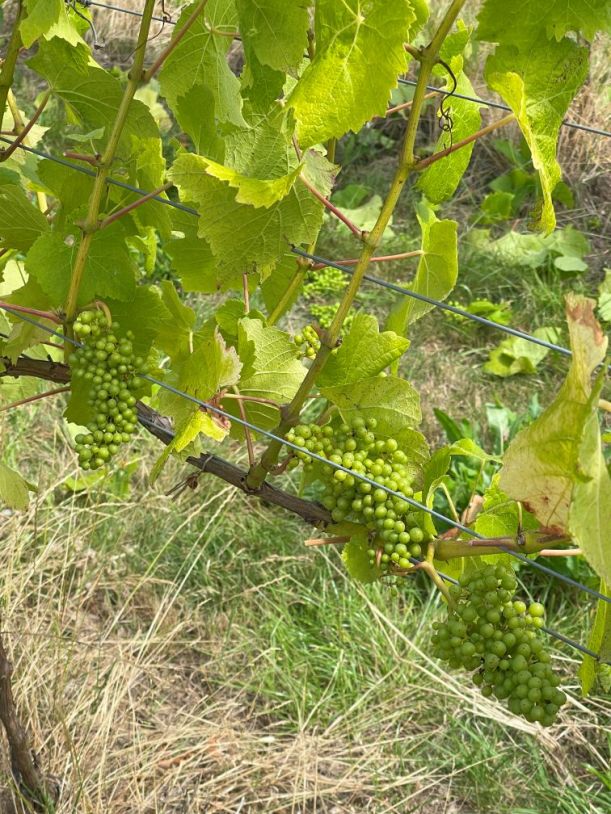
As you ascend the appellation hierarchy the permitted yield reduces. For instance in France IGP Pays d’Oc, where huge quantities of every day drinking bottles of Merlot and other single variety wines are produced, the maximum yield for red wines is 100 hL/ha but in the smaller Bandol AOC, which produces concentrated age worthy reds from Mourvèdre it is only 40 hL/Ha.  

Many wineries talk about the way they restrict the yields from their vineyards through bud rubbing and green harvesting in order to produce high quality grapes for their premium wines.  However when one looks more closely, they are often rather coy about stating the exact yield.

To examine whether the relationship holds true its worth asking a few questions:

  • Firstly what do we mean by high quality grapes when it comes to wine making?
  • Secondly is there any evidence that yield and quality are directly correlated?
  • Thirdly even if restricted yield is a contributary factor in determining the how well the grape ripens how important is it compared to other factors in the vineyard?
  • Finaly in practice to what extent is the wine grower able manage the yield with a view to improving quality and meeting AOC targets?

Grape quality.

For wine making, a good quality grape delivers enough sugar for the juice to be fermented into an enjoyable beverage. At the same time the tart and harsh components within an unripe grape, including malic acid and methoxypyrazines, must have had time to metabolise and reduce in quantity.  Pleasant flavours and flavour precursors need time to develop, for instance terpenes that add  floral and fruity notes. For black grapes the skins need to ripen developing anthocyanins for colour and softening harsh tannins through polymerization.  When this all comes together the grape is optimally ripe.

For the grapes to be optimally ripe the vine needs just the right amount of warmth and sunlight.  Too little and the grapes remain unripe, tart and lacking in flavour. For example the cool and variable climate of the UK makes it challenging to grow high quality late ripening black grapes such as Grenache Noir. However too much heat and sun and the grapes accumulate sugar and loose acidity too quickly. In this case resulting in unbalanced high alcohol wines lacking in flavour concentration. For example the very warm central valley in California produces high volumes of wine but the area is not generally known for producing premium quality wines.

Correlation of quality to yield.

In Burgundy there is certainly a correlation between the high quality wines produced from Grand Cru vineyards such as Echezeaux in the village of Vosne Romanee where the yield is restricted to 35 hL/Ha and the generic Bourgogne wines produced at up to 69/ hL/Ha. 

However looking at Bordeaux there are certainly many great vintages such as 1982, 2005 and 2010 where both quality and volume of production was high. There were also years, such as 2013 and 2017, where production volumes were low but which are not generally classed as great vintages.

The issue here is that there are lots of reasons why the yield can be low. These include frost damage, diseases such as mildew, pests such as birds, viruses such as leaf roll along with drought and heat stress.  These factors do not necessarily result in the surviving grapes reaching optimal ripeness.  In fact many can also actually lead to lower quality because the grapes fail to ripen or are spoiled.

Other vineyard factors that contribute to optimum ripening.

There are many and they start with matching the grape variety with the vineyard and climate type. Clearly Cabernet Sauvignon which likes warmth and is late ripening is not a good match for the cool shorter season of the Mosel Valley even with the effects of climate change. Likewise growing high quality Pinot Noir which ripens early will be problematic in Stellenbosch’s warm mediterranean climate. 

Following this the wine grower aims to grow vines that are in ‘balance’ where the quantity of grapes the vine produces equates to the quantity that it is able to properly ripen.  It is quite possible for a vine to produce lots of un-optimally ripe grapes, it is after all growing them for the birds who are less fussy than the vintner.   The availability of water and nutrients effects the vines ability to ripen the grapes but also the exposure to warmth and sunlight.  By balancing the vine planting density, spacing of rows and training system of the vines with the local meso-climate the vine has a chance to properly ripen grapes.  Dr Richard Smart has shown through research that what matters most is the leaf to grape ratio and to avoid shading the fruit zone.  This might well mean that in a cool continental climate the point at which the vine gets enough  heat and sunshine to ripen the grapes results in a yield that is lower than in a warmer mediterranean climate where the vine can support higher cropping whilst still fully ripening the grapes.

What can the wine grower influence in the vineyard.

Once a vineyard is established it is actually not straightforward to control the final yield at the end of the growing season. Growers can ‘rub buds’ out after bud burst or green harvest the smallest outer bunches before veraison.  However it is risky to remove buds so early in the season as hazards such as frost and mildew could still arise and further reduce yield. Green harvesting encourages growth of the remaining bunches so doesn’t reduce the final weight as much as might be expected. It can also result in larger berries which might undesirably reduce the skin to pulp ratio for red wines.

Stephen Skelton reports that what often happens in practice is that, if at harvest time the AOC maximum yields are likely to be exceeded, grapes are often simply left in the fields.  If hand harvested selection of the best bunches in the vineyard might improve quality. However if mechanically harvested this method of lowering yield will not benefit quality.

Dr Richard Smart argues that it the wine grower has more control over reaching optimal ripeness than predetermined yields.  By managing the canopy through the growing season to balance the leaf area with the fruit crop and importantly to avoid shading the fruit zone, not only can better quality grapes be grown, but often larger quantities too.

So it appears that although low yields and high quality can be coincident as the say in the medical world the relationship isn’t necessarily causal.  It is more important to get the right balance in the vine whereby for the given climate, topography and soils the vine is trained and the canopy managed through the season, to optimally ripen the bunches it bears.


Grafted roots stocks versus own rooted vines

Subscribe to continue reading

Subscribe to get access to the rest of this post and other subscriber-only content.


Leave a comment

WSET D6 Independent Research Assignment – Regenerative Viticulture

The WSET D6 Independent Research Assignment in 2024 was on the subject of Regenerative Viticulture.

The context given was: The term ‘regenerative viticulture’ (RV) did not appear in the 2015 edition of the Oxford Companion to Wine but today is a much-discussed topic. The aim is not simply to maximise production but farm to improve the agricultural ecosystem with a view to long term sustainability. It is claimed that by improving soil health and increasing biodiversity, the health and resilience of the vineyard can be enhanced, the inputs and costs reduced, and a contribution made to restraining anthropogenic climate change. Whilst there are seen to be many benefits to RV, there are also challenges to its implementation.

In 3000 words the paper had to give an account of the aims of RV, comment on commercial advantages and disadvantages and finally give a personal opinion on the approach’s future.

The key requirement here was to carry out wide ranging literature review, primary research isn’t really needed although many students conducted a few interviews. Critical interpretation of the source material is called for and a clear argument supported by examples.

The assignments need to be properly reference using Harvard or similar methodology.

Note: this document is intended for personal use only not for commercial or promotional use. We accept no liability for any omissions or errors that may be contained in the document. It remains the copy right of WSET.


Leave a comment

Do low yields really make for better wines?

There’s a romantic allure to the idea that if vines put all their energy into fewer grapes, flavours concentrate, skins thicken and wines of depth and character will follow. It’s a story winemakers often tell, and it’s one that underpins much of European wine law. But does lower yield really mean higher quality in the glass? Or is it more complicated than that?

In the AOC system (Appellation d’Origine Contrôlée), maximum yields are tightly regulated. As you move up the hierarchy, the permitted output drops. For example, in IGP Pays d’Oc, where mass-market Merlots and Syrahs are made, yields can reach 100 hL/ha. But in Bandol, home to intense Mourvèdre reds, the limit is just 40 hL/ha.

Many wineries proudly talk about their yield-reducing techniques: bud rubbing, green harvesting, shoot thinning, all in pursuit of better fruit. But how real is the link between fewer grapes and better wine?

Grape quality.

It’s true that lower yields often result in higher-quality grapes, smaller berries with more concentrated flavours and better balance between sugars and acids. In red grapes, that also means a higher skin-to-juice ratio, which is crucial for extracting colour, tannin, and aroma. This can lead to wines that are more structured, more complex, and more age-worthy.

Conversely, when a vine carries too much fruit, the result can be diluted, insipid wine. The vine simply can’t ripen everything well. Sugar may build, but flavour lags behind, and acid levels drop, leaving wines flat or unbalanced. This is particularly noticeable with more delicate varieties that struggle to retain their identity under high cropping.

But this isn’t a one-size-fits-all rule. Some varieties are more sensitive than others. Pinot Noir, with its thin skin and delicate nature, thrives on low yields. Push it too hard, and it quickly loses character. Grenache, on the other hand, can crop more generously and still produce juicy, expressive wines, particularly in warm, dry climates where ripening is less of a challenge.

Correlation isn’t the same as causation

In Burgundy, Grand Cru vineyards like Echezeaux are restricted to 35 hL/ha, and the wines are often sublime. But low yields alone don’t guarantee greatness. In Bordeaux, some legendary vintages; 1982, 2005, 2010 delivered both high quality and high volume. And in tough years like 2013 or 2017, yields were low, but this certainly didn’t make them great vintages.

The issue is this: yields can be low for many reasons, frost, hail, drought, disease. These stresses can reduce volume, but they don’t necessarily improve grape quality. In fact, they often have the opposite effect, leaving berries under-ripe or damaged. Low yield, in these cases, is more of a symptom of vineyard struggle than a sign of excellence.

It’s about balance

What really matters is how much fruit a vine can properly ripen. This sweet spot depends on grape variety, vine age, and, critically, location. A vine in the cool Mosel will struggle to ripen Cabernet Sauvignon no matter the yield. In contrast, in warm, dry areas like Châteauneuf-du-Pape, Grenache can yield generously and still reach full flavour.

This is why a balanced vine is everything. A healthy canopy, well-matched to the fruit load, allows grapes to ripen slowly and evenly. Sunlight must reach the bunches without overexposure. Dr. Richard Smart’s research highlights the importance of the leaf-to-fruit ratio. If the canopy is managed well, through pruning, training, and shoot thinning, the vine can support both ripeness and complexity, even at higher yields.

Beyond yield: The bigger picture

Yield is just one piece of the quality puzzle. Soil structure, drainage, and mineral content shape a vine’s health and its capacity to ripen its fruit. Climate, both macro and micro, dictates ripening windows, acidity levels, and the development of flavour compounds.

Then comes vineyard management: irrigation, pest control, canopy structure. And let’s not forget the winemaking itself. Gentle handling, fermentation temperature, ageing choices all can make or break a wine, regardless of what happened in the vineyard.

So yes, lower yields can help, particularly with sensitive varieties and in cooler climates. But  plenty of mediocre wines come from low-yielding vintages, just as some brilliant bottles emerge from vines that carried more fruit.

Practical limits

Growers do have tools to influence yield like green harvesting and bud removal, but they’re not without risk. Pruning too early invites frost damage. Cutting bunches mid-season may encourage larger grapes, lowering that all-important skin-to-juice ratio.

In practice, especially in regulated regions, if harvest looks too big, grapes are often simply left on the vine or dropped before picking to meet AOC rules. That might tick the legal box, but it doesn’t always improve quality, especially in mechanically harvested vineyards, where sorting isn’t as selective.

Dr. Smart argues that growers have more control over ripeness than yield. By managing the canopy to avoid shading and encourage even ripening, growers can often improve both the quality and the quantity of grapes. When a vine is in balance for the site in question, the result is often better than any number dictated by regulation.

The verdict.

So, does low yield mean better wine? Well sometimes……..

Great wine comes from thoughtful choices: matching grape to place, nurturing healthy vines, managing the canopy, harvesting at the right moment. Yield matters, yes, but quality is about balance, timing, and a touch of artistry.


Leave a comment

The Mediterranean Climate

I am sharing notes that I’ve made during my Diploma on these pages for anyone studying a formal WSET course or just interested in learning. 

These notes are absolutely not a substitute for the course books provided by WSET or indeed any other reference books. However I have found it helpful to condense information and present it visually in a way that tries to draw out the what, how and why that links things together or the similarities and contrasts that can help to make sense of everything.  These note are very much prompts to the memory rather than full or detailed explanations.

I am revisiting these notes over time to improve them and iron out the no doubt many inaccuracies and inconsistencies that they contain. However in the meantime please beware there may be errors and if you spot any do let me know.

The notes are free to down load are intended for personal use only all you need to do is sign up to our newsletter.


Leave a comment

The Maritime Climate

I am sharing notes that I’ve made during my Diploma on these pages for anyone studying a formal WSET course or just interested in learning. 

These notes are absolutely not a substitute for the course books provided by WSET or indeed any other reference books. However I have found it helpful to condense information and present it visually in a way that tries to draw out the what, how and why that links things together or the similarities and contrasts that can help to make sense of everything.  These note are very much prompts to the memory rather than full or detailed explanations.

I am revisiting these notes over time to improve them and iron out the no doubt many inaccuracies and inconsistencies that they contain. However in the meantime please beware there may be errors and if you spot any do let me know.

The notes are free to down load are intended for personal use only all you need to do is sign up to our newsletter.


Leave a comment

The Continental Climate

I am sharing some notes that I’ve made during my Diploma on these pages for anyone studying a formal WSET course or just interested in learning. 

These notes are absolutely not a substitute for the course books provided by WSET or indeed any other reference books. However I have found it helpful to condense information and present it visually in a way that tries to draw out the what, how and why that links things together or the similarities and contrasts that can help to make sense of everything.  These note are very much prompts to the memory rather than full or detailed explanations.

I am revisiting these notes over time to improve them and iron out the no doubt many inaccuracies and inconsistencies that they contain. However in the meantime please beware there may be errors and if you spot any do let me know.

The notes are free to down load are intended for personal use only all you need to do is sign up to our newsletter.


Leave a comment

The Growing Environment

I am sharing notes that I’ve made during my Diploma on these pages for anyone studying a formal WSET course or just interested in learning. 

These notes are absolutely not a substitute for the course books provided by WSET or indeed any other reference books. However I have found it helpful to condense information and present it visually in a way that tries to draw out the what, how and why that links things together or the similarities and contrasts that can help to make sense of everything.  These note are very much prompts to the memory rather than full or detailed explanations.

I am revisiting these notes over time to improve them and iron out the no doubt many inaccuracies and inconsistencies that they contain. However in the meantime please beware there may be errors and if you spot any do let me know.

The notes are free to down load are intended for personal use only all you need to do is sign up to our newsletter.


Leave a comment

The vine growing cycle

I am sharing notes that I’ve made during my Diploma on these pages for anyone studying a formal WSET course or just interested in learning. 

These notes are absolutely not a substitute for the course books provided by WSET or indeed any other reference books. However I have found it helpful to condense information and present it visually in a way that tries to draw out the what, how and why that links things together or the similarities and contrasts that can help to make sense of everything.  These note are very much prompts to the memory rather than full or detailed explanations.

I am revisiting these notes over time to improve them and iron out the no doubt many inaccuracies and inconsistencies that they contain. However in the meantime please beware there may be errors and if you spot any do let me know.

The notes are free to down load are intended for personal use only all you need to do is sign up to our newsletter.


Leave a comment

Vine Morphology and Physiology

I am sharing notes that I’ve made during my Diploma on these pages for anyone studying a formal WSET course or just interested in learning. 

These notes are absolutely not a substitute for the course books provided by WSET or indeed any other reference books. However I have found it helpful to condense information and present it visually in a way that tries to draw out the what, how and why that links things together or the similarities and contrasts that can help to make sense of everything.  These note are very much prompts to the memory rather than full or detailed explanations.

I am revisiting these notes over time to improve them and iron out the no doubt many inaccuracies and inconsistencies that they contain. However in the meantime please beware there may be errors and if you spot any do let me know.

The notes are free to down load are intended for personal use only all you need to do is sign up to our newsletter.

Vine Morphology

Vine morphology refers to the form and structure of the vine and vine physiology is the science of how the vine functions. Understanding how the vine works is key to viticulturists and wine professionals, as these characteristics determine vine growth, grape quality, and ultimately, the wine’s expression. The grapevine (Vitis vinifera) is a perennial, deciduous plant that has proved to be highly adaptable evolving to thrive in a wide variety of climates. As natural tree climbers, vines rely on tendrils to support their upward growth, using their fruit to attract animals that help spread their seeds.

Vine Morphology: Structure and Form

A grapevine consists of several key anatomical components: the roots, trunk, canes, shoots, leaves, flowers, and fruit.

Roots: The root system anchors the vine and absorbs water and nutrients. Depending on soil type and cultivation practices, roots can extend several meters deep, allowing the vine to access essential minerals and moisture.

Trunk: The permanent woody structure of the vine, the trunk supports the upper growth and serves as a conduit for nutrient and water transport.

Canes and Shoots: Canes are mature, lignified shoots from the previous growing season, while current-season shoots emerge from buds and contain the leaves, flowers, and tendrils.

Leaves: Vital for photosynthesis, leaves convert sunlight into energy, producing sugars that fuel vine growth and grape ripening. Leaf shape and size vary by variety and impact transpiration and canopy management.

Tendrils: These curling structures help the vine climb and support itself, essential for its natural growth habit.

Flowers and Fruit: The vine’s inflorescence develops into clusters of grapes after fertilization. The number, size, and composition of the fruit are influenced by vine balance, climate, and vineyard management.

Vascular System: The vine’s vascular system, composed of xylem and phloem, is responsible for transporting water, nutrients, and sugars throughout the plant. The xylem carries water from the roots to the leaves, while the phloem distributes sugars produced during photosynthesis to support growth and fruit development.