WanderCurtis Wine

Wine tastings, corporate events, reviews and recommendations


Leave a comment

Greek Wine Producing Regions

A one page summary of the: climate, topography, growing hazards, wine law, grape varieties, wine growing and making practices and the main wine producing regions.

Greece has at the time of writing not come up as a country in the D3 tasting exam. However key wines have come up in the mixed bag and if it did wines to look out for include:

  • Assyrtiko from Crete or Santorini
  • Xinomavro from Naoussa (or Amynteo)
  • Moschofilero from Mantinia
  • Agiorgitiko from Nemea

And don’t forget Retsina!

For a deeper dive, beyond the Diploma curriculum, into the many Greek PDOs and IGTs Wines of Greece website has plenty of information.

Sources include: WSET Diploma Wines of the World, Wines of Greece & various producer wine maps and aerial photography.

Note this document is intended for personal use only not for commercial or promotional use. We accept no liability for any omissions or errors that may be contained in the document.

© Kiran Curtis 2025. Personal use only not to be used for commercial or promotional purposes.


Leave a comment

Bulgarian wine producing regions

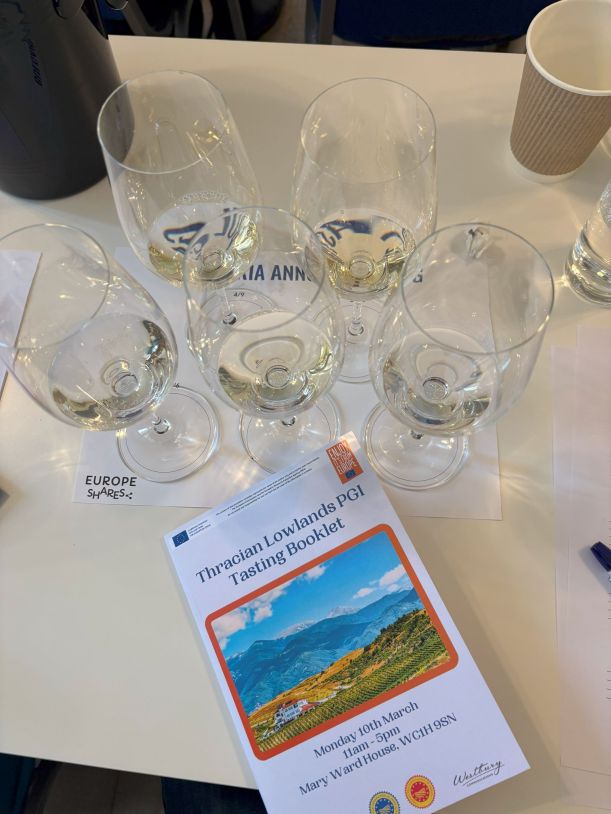
A recent masterclass organised by ThracianLowlands PGI and presented by Jamie Goode provided a great overview of Bulgarian wines produced from native grape varieties. Since the fall of communism which focused on mass produced wine, the return of land to winegrowing families and support for the industry upon joining the EU the industry has experienced something of a revival.  Indigenous grape varieties are being show cased but also wines from international grapes. Back in the 80s it was popular for its quaffable Merlot and now makes for instance some excellent value Pinot Noir too.

There are currently only two PGIs: the Danubian Plains and The Thracian Lowlands which between them cover pretty much all of the country. Its pointed out that Bulgaria is on similar latitude to Tuscany and Bordeaux but this just means it is in the zone and actually has its own unique climatic influences and these vary dramatically across these large regions.

The Thracian Low Lands PGI lies to the south below the line of the Balkan Mountains. The climate is continental and the summers are warm.  The region is large and varied and informally divided into the Struma Valley with mediterranean influences to the west, Thracian Valley to the south, the Rose valley between the Balkan and Sredna Gora mountains and the Black Sea Coast with maritime influences which spans both PGIs.

The Danubian Plains PGI to the north of the Balkan Mountains is continental in climate and cooler than the Thracian Lowlands.  Influences include the wide water body of the Danube and to the east the Black Sea. It is therefore informally subdivided into the Danube River Plains to the west and the Black Sea Coast.

The Native Wine Grapes of Bulgaria:

Varieties include aromatic whites through to bold, structured reds.  Some are old and some the product of crossings produced during the communist era many with a terpenic Muscat quality.

White Varieties: Aromatic and Expressive

Red Misket, despite its name, is a white grape with a faint blush hue. It is also unrelated to the other Misket varieties. One of Bulgaria’s oldest varieties, it thrives in the Rose Valley, yielding floral, citrus-driven wines with crisp acidity. These wines are often vinified dry but retain an alluring perfume reminiscent of Muscat.

Dimyat is a sun-loving variety with Thracian origins, predominantly grown along the Black Sea coast. Known for its delicate body and bright acidity, it produces refreshing white wines typically with aromatic notes of roses. The sample we tasted ‘Why Not Red Misket’ by Milkov was actually more orchard fruity, with a nice wet stone and brine finish with light body and only 11% ABV.

Vrachanski Misket an old variety, hails from northern Bulgaria, offering intensely aromatic wines with citrus, herbal, and floral nuances. It shares a kinship with Muscat varieties, often resulting in vibrant, expressive wines. The example we tasted from Tipchenitza Winery was blended with Chardonnay and matured in French oak barrels and had an interesting mix of floral and peach notes and smoky wood.

Tamay Anka, is actually a clone of Muscat Blanc a Petit Grains so native but not autochthonous. It displays a characteristic exotic floral and spicy character.

Sandanski Misket, a rarity found in the Struma Valley, a crossing of Melnik and Tamayanka. It delivers aromatic, peach-tinged wines with a distinct herbal undertone, often crafted into fresh, dry styles.

Red Varieties: Both Power and Elegance.

Broadleaved Melnik, a signature variety of the southwest, produces complex, age-worthy wines with rich red fruit, spice, and tobacco notes. Named after the town of Melnik it flourishes in the Struma Valley, needing the warm Mediterranean influence to fully ripen.

Melnik 55, a modern crossing of Broadleaved Melnik, ripens earlier and delivers softer, fruit-driven reds with vibrant cherry and peppery spice. One example we tasted from Villa Melnik was ripe, full bodied with black fruits and spice and over 15% ABV, the other from biodynamic AYA estate elegant structured with slightly sour fruit notes and a little pleasant funk.

Mavrud, an ancient Thracian variety, is Bulgaria’s boldest red. It exudes dark berry, leather, and earthy tones, crafting robust wines with firm tannins and great aging potential. The example we tasted from Cheval de Katarzyna was indeed round and fleshy with tasty ripe fruits.

Rubin, a cross between Nebbiolo and Syrah, offers deep colour, ripe fruit, and velvety tannins, blending elegance with power. The results are surprisingly as attractive as the mix sounds. I tasted a couple of examples which had structure yet freshness and worked well oaked and unoaked.

Pamid, one of the country’s oldest grapes, is light-bodied and easy-drinking, producing fresh, fruit-forward reds best enjoyed young.

Gamza, known as Kadarka in Hungary, thrives in northern Bulgaria, yielding delicate, cherry-laden wines with lively acidity, often compared to Pinot Noir in finesse. We tasted two examples. The first Thomas Gamza single vineyard 2022 by Burgozone Collection which was light in colour, perfumed with red cherry, medium acidity and a nice savoury edge. Delicious. The second Koshava Gamza 2023 by Bononia Estate had 25% cabernet franc in the blend which gave it a slight herbal note and a little extra grip.  Still with soft red fruit and freshness a lovely excellent value wine.

There is a broad range of well-made wine styles here at attractive prices that will have wide appeal. I particularly liked some of the Gamza and Rubin wines which will appeal to lovers of Pinot Noir and Nebbiolo.

Leave a comment

Tuscan Sangiovese

Sangiovese is the most widely planted grape variety in Italy, known for its adaptability and quality potential. It is an early-budding, late-ripening vine that is vigorous and high-yielding, often requiring green harvesting to control crop load for better quality. It performs best on south to southeast-facing slopes at cooler higher elevations ( 200 + meters) which help extend the ripening period. It thrives in the classic Galestro found in Tuscany arguably the home of this grape variety.

It forms the backbone of Chianti, where it must make up at least 70% of the blend, and Chianti Classico, where the minimum is 80%. Vino Nobile di Montepulciano also relies heavily on Sangiovese but in Brunello di Montalcino the wines are 100% Sangiovese producing powerful, long-lived wines.

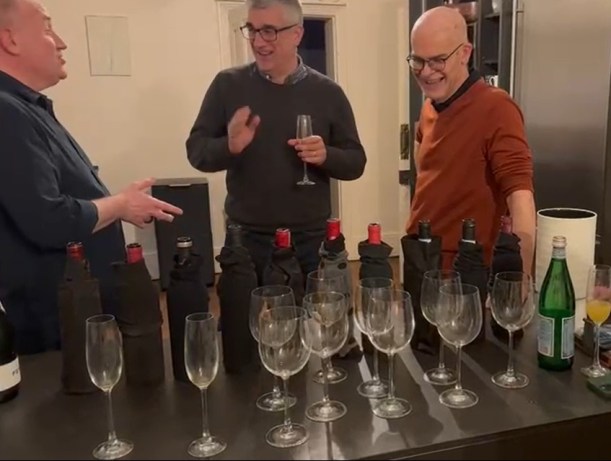
This contrast between 100% Sangiovese wines and blends was brought home to me recently when advising on the selection of northern Italian wines for a wedding. I was struck by how sensitive Sangiovese wines are to the addition of even quite small amounts of other varieties. Canaiolo and Colorino are the classic varieties added for florality and deeper colour in Chianti Classico. These obviously change the aromatics a bit and the colour.  However when international varieties such as Cabernet Sauvignon and Merlot are added that delicate sour cherry and chalky character of Sangiovese seems to disappear.

Given the quantity of the grape grown in Italy it is perhaps not a surprise, it can’t all be grown on these ideal sites and so blending is obviously a useful way of filling in gaps and completing a wine at a certain price point. And there really are some great reasonably priced wines from Tuscany.


Leave a comment

France, The Loire wine producing region.

A one-page summary of the: climate, topography, growing hazards, wine law, grape varieties, wine growing and making practices and the main wine producing sub-regions.

Sources include: WSET Diploma Wines of the World, Oxford Wine Companion by Julia Harding and Jancis Robinson, various producer maps and aerial photography.

Note this document is intended for personal use only not for commercial or promotional use. We accept no liability for any omissions or errors that may be contained in the document.


Leave a comment

France, Burgundy, Cote d’Or wine producing region.

A one page summary of the Crus of the Cote d’Or illustrating the key differences in topography, soils and aspect.

Sources include: WSET Diploma Wines of the World, Oxford Wine Companion by Julia Harding and Jancis Robinson, various producer wine maps and aerial photography.

Note this document is intended for personal use only not for commercial or promotional use. We accept no liability for any omissions or errors that may be contained in the document.


Leave a comment

Austrian Wine Regions

A one page summary of the: climate, topography, growing hazards, wine law, grape varieties, wine growing and making practices and the main wine producing regions.

Austria has come up a couple of times as a country in the D3 tasting exam. Key wines to look out for include:

  • Grüner Veltliner from the Wachau, Kamptal or Kremstal.
  • Blaufränkisch from Burgenland.
  • Trocken Beeren Auslese blend from Burgenland or Ruster Ausbruch.

Riesling from the same regions as Grüner is a possibility, but made in small quantities and also Zweigelt in an easy drinking style or barrique matured.

The Austrian Wine website has a huge amount of detailed information about the full range of Austrian grape varieties, regions and wineries.

Sources include: WSET Diploma Wines of the World, Oxford Wine Companion by Julia Harding and Jancis Robinson, Wine Austria.

Note this document is intended for personal use only not for commercial or promotional use. We accept no liability for any omissions or errors that may be contained in the document.


Leave a comment

Sparkling Wines Chile and Argentina

A condensed summary of sparkling wines from Chile and Argentina including history,  regions, growing environment, vineyard management, grape varieties, wine making, styles, wine law and business.

Sources include: WSET Diploma Wines of the World, Oxford Wine Companion by Julia Harding and Jancis Robinson, various producer websites.

Note this document is intended for personal use only not for commercial or promotional use. We accept no liability for any omissions or errors that may be contained in the document.

© Kiran Curtis 2023. Personal use only not to be used for commercial or promotional purposes.


Leave a comment

Sparkling Wines Germany

A condensed summary of sparkling wines from Germany including history,  regions, growing environment, vineyard management, grape varieties, wine making, styles, wine law and business.

Sources include: WSET Diploma Wines of the World, Oxford Wine Companion by Julia Harding and Jancis Robinson, various producer websites.

Note this document is intended for personal use only not for commercial or promotional use. We accept no liability for any omissions or errors that may be contained in the document.

© Kiran Curtis 2023. Personal use only not to be used for commercial or promotional purposes.


Leave a comment

Sparkling Wines Italy, Tank Method

A condensed summary of tank method wines from Italy including history,  regions, growing environment, vineyard management, grape varieties, wine making, styles, wine law and business.

Sources include: WSET Diploma Wines of the World, Oxford Wine Companion by Julia Harding and Jancis Robinson, various producer websites.

Note this document is intended for personal use only not for commercial or promotional use. We accept no liability for any omissions or errors that may be contained in the document.

© Kiran Curtis 2023. Personal use only not to be used for commercial or promotional purposes.


Leave a comment

Fortified Wines – Rutherglen Muscat

A condensed summary of Rutherglen Muscat wines of Australia including history, growing environment, vineyard management, grape varieties, wine making, styles, wine law and business.

Sources include: WSET Diploma Wines of the World, Oxford Wine Companion by Julia Harding and Jancis Robinson, various producer websites.

Note this document is intended for personal use only not for commercial or promotional use. We accept no liability for any omissions or errors that may be contained in the document.

© Kiran Curtis 2023. Personal use only not to be used for commercial or promotional purposes.