On the nose waxy honeycomb, pear, apricot jam, tangerine rind, perhaps a hint of white flowers.
A wine with bit of age on show.
In the mouth, medium plus to full body, acidity courses down the centre of the tongue and builds as you taste the wine. Rich but remaining fresh. There is a nice semi viscous mouth feel.
Finishes on a mineral note with a slightly bitter (phenolic) touch, and the finish is long and lingering.
Well balanced, lovely an outstanding wine. Developed but will continue to age well.
The Willamette Valley is Oregon’s most celebrated wine region, renowned for producing world-class Pinot Noir, Chardonnay, and Pinot Gris. While vines were planted in the region as early as the 19th century, modern winemaking began in the 1960s, when pioneering wine makers like David Lett of Eyree Vineyards took a risk on the marginal climate as a place to grow Burgundian Pinot Noir. Today, the region is home to over 700 wineries, the majority of which are small, family-owned estates dedicated to sustainable farming and minimal-intervention winemaking.
The Willamette Valley benefits has warm summers but cool air is drawn in from the Pacific through gaps in the coast range, altitude can also provide cool nights further extending the growing season. Rainfall is concentrated in winter and spring, allowing grapes to ripen slowly and develop complexity while retaining natural acidity. The valley’s diverse soils, ranging from ancient marine sediment to volcanic basal, further enhance the character of the wines, contributing to their depth and sense of place.
Clonal selection has proved to be key to successfully growing both Pinot Noir and Chardonnay and once the move was made away from those suitable in California to mainly Dijon clones both varieties have thrived. Pinot Noir yields wines of elegance and balance, often marked by red fruit, floral aromatics, and earthy minerality. Chardonnay, once an afterthought, has emerged as a serious contender, showcasing crisp acidity, restrained fruit, and a Burgundian sense of structure. Pinot Gris, also gets a look in.
The Willamette Valley AVA encompasses several smaller sub-AVAs, each with distinct characteristics.
Dundee Hills: The birthplace of Oregon Pinot Noir, this region is slightly warmer and has red volcanic soils that retain water through the growing season and advantage as water is scarce and most smaller wineries dry farm.
Eola-Amity Hills: Cooled by coastal winds through the Van Duzer Corridor.
Yamhill-Carlton: Defined by a south facing bowl formation and free draining marine sedimentary soils.
Ribbon Ridge: A tiny but highly regarded AVA on 200m high ridge.
Chehalem Mountains: A varied region at the north end of the valley with the largest area of plantings.
Van Duzer Corridor AVA: A break in the coastal range makes this one of the coolest and windiest areas.
A recent tasting organised by the Oregan Wine Board at the American Embassy provided a great chance to sample the excellent wines being produced in Willamette Valley and the wider Oregan region. Although it was hard to discern clear sub-regional characteristics from this sample, there were many wines of great quality and individuality and many passionate and engaging winemakers presenting them.
The late afternoon breeze begins to dissipate the heat of the day, the sun gently sinks over the sea, islands in the distance emerge in silhouette as the sky shades pink and purple. Evening time on the Greek islands. Hard to improve on that I hear you murmur?
Well actually there is a way to dial up the experience: make sure you are enjoying a glass of chilled Robola on the island of Cephalonia!
In Captain Corelli’s Mandolin the bottles of Robola that the drunken priest downs while hiding from his flock would bear, I imagine, little relation to the excellent wines the island currently produces. However, the storey does serve to illustrate the very long tradition of wine making on the island which stretches back over centuries of Venetian influence.
Wine is produced on several of the Ionian islands but Cephalonia is known as the home of one of the best Greek white wines Robola. Perhaps not as famous as Santorini’s Assyrtiko but definitely worth searching out particularly if you enjoy fresh, crisp and minerally wines with elegance and structure. The best are grown in poor limestone soils high up on mount Ainos.
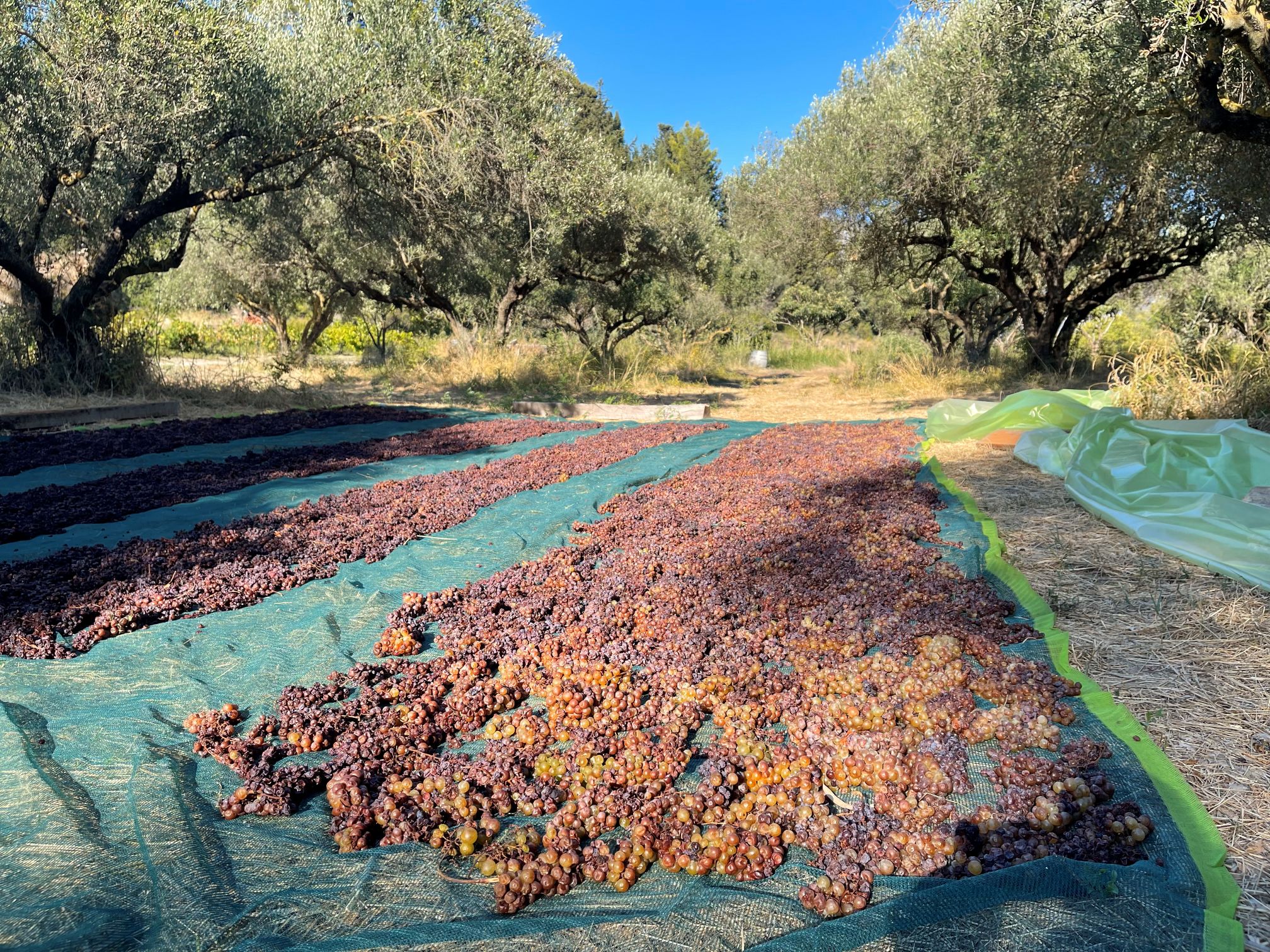
Grapes drying at Sclavos Wines
Robola is not the only show in town though indeed there is a bewildering array of grape varieties grown on the island. The other main grape varieties are Mavrodaphne and Muscat Blanc. Mavrodaphne is a red grape traditionally used to produce a sweet red wine, thanks to the Venetians love of the Passito method of sun drying their grapes, but now also made into a delicious dry reds too.
Local wines are widely available in all the tavernas, many stocking the excellent entry level Robola produced by the Cephalonia Cooperative which arrives in a cloth sack. Also, sometimes some more premium higher altitude and even single vineyard Robolas by the Cooperative and wineries such as Gentilini. Do try the various alarmingly coloured rose wines (think Aperol Spritz) that are made on the island too!
Sadly, I only managed to visit Sclavos Wines and Domaine Foivos whilst on the island and as Adam has recently reviewed Sclavos Winery here I will focus on Domaine Foivos.
Domaine Foivos
Domaine Foivos was formed when Theodore Orkopoulos bought the Matzavino family winery which is one of the oldest wineries in Greece. In fact, Theodore believes that Homer mentions the wines in the Iliad!
The estates vineyards are located in different parts of the island and contain a large range of very old indigenous grape varieties many of which are pre-phylloxera. Since the phylloxera louse killed off most native European vines by attacking their roots nearly all modern vines have been grafted onto American vine roots which are resistant so it is unusual to find old ungrafted vines that have survived.
It became evident during our three hour long tasting that Theodore possesses just the sort of boundless enthusiasm and a relentlessly enquiring mind needed to fully grasp the wine making opportunities that this precious library of vines presents.
Theodore Orkopoulos winemaker at Domaine Foivos
We started with a master class on Robola show casing different wine making techniques applied to grapes from the vineyards on mount Ainos.
Black Label Cephalonian Robola, 2021.
The vines are fully pressed and allowed a bit of skin contact.
The nose is a little floral with a touch of pink grapefruit. On the palate nice fruit, good balance and freshness and a pleasant prickle from the skin contact. A very nice wine that has tension and character.
Blue Label Cephalonian Robola, 2021.
This wine is also made with a full press but without any skin contact.
A refined nose of peach and wet stone. In the mouth a slimmer body and softer acidity with good length. This wine is available in the UK. It would work well as an aperitif to go with the sunset followed by the black label with dinner at the local Taverna.
Barcarola Cephalonian Robola, 2021.
This version of Robola is made with only the first free run juice of a selection of the grapes.
It has quite a different nose, much more perfumed, floral with delicate citrus notes. Theodore describes it as more pure expression of the grape. Again, a lighter body, very nicely balanced with a long lingering finish. This is a more premium wine.
Orange Robola 2021
This wine is made with 5 days skin contact which is relatively restrained by natural wine making standards so it is not very ‘orange’ in appearance. Possibly why I liked it so much! Ripe fruit on the nose, white peach, rounder on the palate with more ripe fruits and a nice prickly sensation. Very tasty.
Amphora Robola, 2021
This wine is made in small clay amphora.
On the nose more herbal notes over the top of peach, wet stony notes and something floral like lilac. Also complex in the mouth with a very nice texture and length.
East – West Robola + Assyrtiko, 2020
This wine is a 50:50 mix of Robola from Domaine Foivos and Assyrtiko from Zanthi.
It has a rich nose of peach and other tropical fruits and on the palate a lovely a mix of peach fruit and salty citric notes from the Assyrtiko.
Asteris Robola Rose, 2020
A bit of mavrodaphne is added to give a splash of juicy fruit to layer on top of the peach and citrus profile of the Robola. This is not one of the alarming coloured roses mentioned in the introduction, looks very respectable.
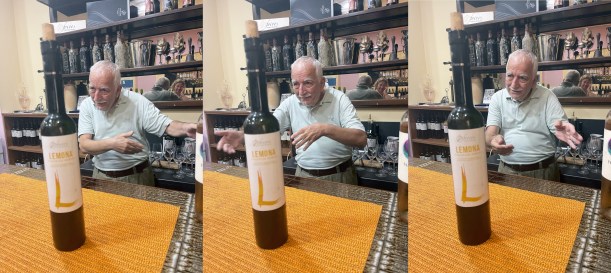
Lemona Sun dried Robola, 2012
Grapes are dried in the sun for up to 20 days. Then pressed to make this amazing sweet wine. Around 10kg of grapes are needed for each half bottle!
On the nose sweet fruit, caramel. In the mouth complex flavours of lemon, nuts and honey. Very long, great balance with real lift and length.
Appropriately named after Lemona goddess of the environment.
Foivos is one of the few wineries offering so many versions of Robola and it’s a result of Theodoros’ continuing search to discover all aspects of the grape.
The masterclass of Robola over, Theodore explained what had prompted him to start to experiment with using amphora. It’s understood that the ancient Greeks heavily watered their wine down and Theodore wanted to find out why. He set about making wine using clay amphora in the way that the ancients did, which included adding wooden staves and found that the results were good. However, Theodore realised that storage of the wine in clay amphorae over weeks and months would cause the wine to oxidise badly. So, the theory is that by the time the important religious festivals came around in the new year the wine from the last harvest would have needed to be heavily diluted to make it drinkable.
Theodore also believes that the ancient Greeks stored wines under water possibly to try and prevent it spoiling through oxidation and this has also led Foivos to carry out some very interesting experiments in aging wine under the sea.
Nautilus White, 2021
Made from blend of Tsaousi, Vostilidi, Muscatel and Muscat grapes this wine is bottle aged for 6 months in the winery aquarium which creates and environment of total darkness, constant temperature and lack of oxygen. On the nose lemon pith, lemon peel, fresh green herbs and a floral note. In the mouth round, medium acidity, more pith and citrus notes with a pleasant slight bitter bite at the end. Very vibrant and long. Available in the UK.
Nautilus Rose, 2021.
Mavrodaphne, Muscatel, Muscat, Tsaousi and Vostilidi grapes. Also bottle aged in the winery tank. Very aromatic, wild flowers and wet stones. On the palate soft red fruits, super dry with a fresh lift and a dry salty finish. Very nice in deed. Exported to British Columbia amoungst other places.
47 and 47 Undersea
47, 2017
The wine is a remarkable blend of 47 varieties: 41 whites and 6 reds to make a rose. This is where the field ‘library’ of indigenous grape varieties comes in.
Mineral, stony notes on the nose with fresh cut soft red fruit. On the palate strawberries, raspberries then baked lemon, very fresh. Complex with waves of flavours, long.
47 Undersea, 2017
As if 47 wasn’t extraordinary enough the same 47 varieties have also been bottle aged for 18 months under sea. The wine is stored in cages at depth of 22 m. As with the Nautilus wines this ensures, darkness, constant temperature and lack of oxygen but in addition higher than atmospheric pressure and a saline environment.
This wine has a different nose to the straight 47, with less obvious fruit, the fruit more integrated with the mineral notes. In the mouth tangy fruit salad flavours, complex with a stony and salty edge. Amazing to see the difference to the non-sea aged version
Red varieties.
Myesis, 2017 (initiation)
Made of 3 grapes mostly Mavrodaphne but with Cephalonian varieties: Theiako and Araklino.
A nice whiff of marzipan oh the nose with a bit of spice. A good medium body with soft rounded fruit and subtle barrel notes.
Daphne Daphne, 2016
This is a dry wine made from 100% Mavrodaphne. On the nose, plums, farmyard, smoke. In the mouth medium body, a bit of lift, dark fruits and savoury notes, medium soft tannins. Very tasty.
Amphora Red, 2021.
Another dry red mostly Mavrodaphne with 15% Vostilidi. The clay amphora gives the wine an overdose if oxygen for about 2 weeks while it ferments. Also, the amphora mean that the fermentation temperature is uncontrolled.
Nice balance, medium acidity, soft but mouth coating tannins. Lovely.
42, 2016
Another remarkable blend this time of 42 red varieties from heritage vineyards. Theodore says the grapes compete in the glass to come out on top, a continuing battle with new winners presenting themselves at each stage of the wine’s development. A rich nose of dark and red fruit and smoke. Medium body, a kaleidoscope of fruits, toasty notes, complex. Delicious!
Methyse, 2004.
Named after a follower of Dionysus the god of winemaking.
This is the traditional sweet wine of Mavrodaphne.
Super dark in colour, nose of chocolate, Kirsch, dried oranges and Christmas spices. Sweet but with enough freshness to lift it, complex and very long. A real treat!
Tasting the Foivos range of wines with Theodore at his cellar was a fascinating experience! It is wonderful that way he takes inspiration from the past, cherishes local heritage and yet continues to explore and experiment with new ways of expressing the wines. Do seek out the wines and try them.
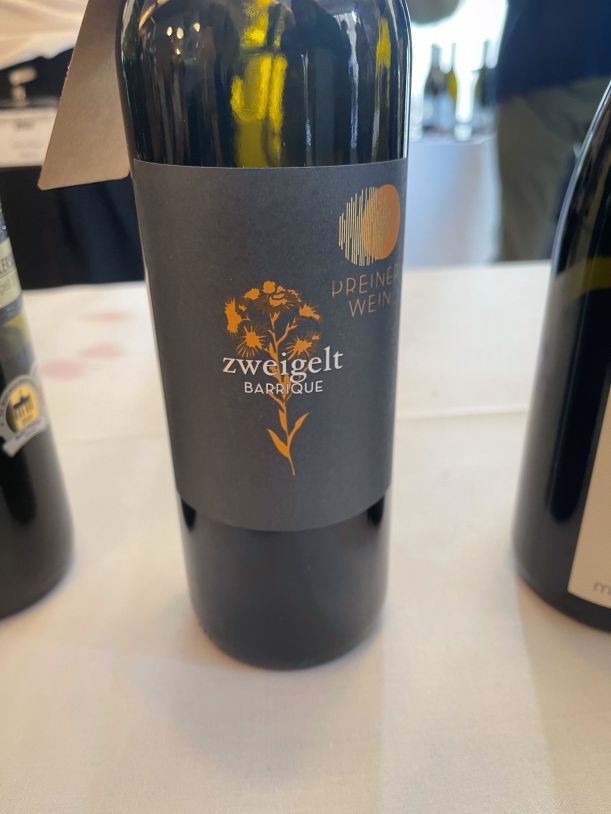
A recent lunch and tasting organised by the DAC showcased the wines of the region with the aim of promoting Zweigelt as the leading grape for producing red wine in the area.
Neusiedlersee DAC is located in Burgenland, near the Hungarian border. It surrounds Lake Neusiedl, a large, shallow body of water that significantly influences the local climate. The region has a long winemaking history and became a DAC (Districtus Austriae Controllatus) in 2012, specifically red wines made from Zweigelt and sweet wines made with Welschriesling.
The lake acts as a heat reservoir, moderating temperatures and reducing the risk of frost. The Pannonian climate brings hot summers, mild winters, and long, sunny autumns, ideal for ripening grapes. Humidity from the lake also fosters noble rot, making the area famous for its sweet wines.
Zweigelt is the dominant grape variety, producing structured, fruit-forward red wines with vibrant cherry and spice notes. Other varieties, including Blaufränkisch, St. Laurent, and international grapes, are also grown. Winemaking practices emphasize ripe fruit expression, often employing modern techniques such as stainless steel fermentation and oak aging. The resulting Zweigelt wines span the range from youthful and juicy to complex, barrel-aged styles with depth and longevity. In addition to reds, Neusiedlersee is known for its luscious botrytized sweet wines, particularly Ausbruch and Beerenauslese.
Zweigelt, Austria’s most planted red grape, was created in 1922 by Dr. Fritz Zweigelt through a cross of Blaufränkisch and St. Laurent. It is popular among growers due to its adaptability, high yields, and disease resistance. The variety does well in Neusiedlersee, where warm conditions enhance its ripeness and balance.
There were two styles evident from the tasting an unoaked style with soft tannins, bright acidity, juicy cherry and plum fruit and a spicy, slightly peppery finish. These wines are for easy drinking whilst young and are good value. The second style is aged in oak barrels for a richer, more structured expression. These more premium versions are more complex and can mature well in bottle developing dried fruit and earthy and chocolatey notes with time.
Earlier this week I popped along to the Bordeaux Grand Crus Classes tasting 2018 to 2021.
General impression was the 2019 and 2020 are both very good vintages, 21 a bit pale in comparison and 2018 forward and inviting, perhaps a bit ‘big’ in the right bank merlot based wines.
The wines of Comtes von Neipperg were great as usual and I particularly liked the 2019s across the range. La Mondotte is astonishingly good but eye wateringly expensive however I also loved the 2019 Chateau d’Aiguihle a Cote Castillon at the other end of his range.
The 2019 has ripe dark fruit, coffee, coco powder and smoke but more tension and longer finish than the 2018. Drink dates are 2023 – 39 according to wine searcher but I thought it (along with a lot of the 18 & 19 wines) was quite approachable already if given a good decant.
On the nose wild strawberries, dried rose petals and earthy aromas and a classic tar note on the nose.
Very dry and super mouth-watering. Dusty grainy tannin around mouth and the upper lip. Even with such a firm structure the wine is lifted and elegant.
As it opens up there are more sour cherry fruit notes in the mouth with orange peel. It is perhaps beginning to fade a little but still a nice long lingering finish. Time to drink up.
A recent tasting of wines from New South Wales by Wine Australia I tasted some very unique Semillon wines from the Hunter Valley. Hunter valley is near the east coast of Australia and at between 30 and 33 degrees of latitude hot during the day and with intense levels of sunlight. In fact the climate is classified as sub-tropical! So how does this region produce high acid fresh and lean and age worthy Semillons?
Viticulture and Winemaking
The region’s warm, humid climate is moderated by coastal breezes and morning mists, reducing disease pressure and allowing for slow, steady ripening. The secret to the distinctive style of Hunter Valley Semillon is that the grapes are often harvested early, sometimes with alcohol levels as low as 10-11%, to preserve acidity and freshness. Also sandy, well-drained soils contribute to the grape’s signature crispness.
In the winery, Hunter Valley Semillon is made with minimal intervention. Fermentation occurs in stainless steel to maintain purity, and oak is rarely used. The result is a wine which is very lean. In its youth it can be somewhat closed and a little undemonstrative featuring citrus notes and green apple, with high acidity and a light, delicate texture.
Bottle Aging Potential
The surprise is that despite its austere youth, Hunter Valley Semillon is famed for its extraordinary aging ability. Over time, often 10 to 20 years, the wines develop complex flavours of honey, toast, and nuts without any oak influence, while retaining their vibrant acidity.
These lovely characteristics emerge after about 8 or 9 years and a number of wine makers hold wines back only releasing them once they are mature.
A delicious bottle of Estate Argyros Assyrtiko 2021 made me think of the just how extreme the growing environment on Santorini and admire once again how the combination of unique growing techniques and the special qualities of the Assyrtiko grape variety come to together to produce stunning wines.
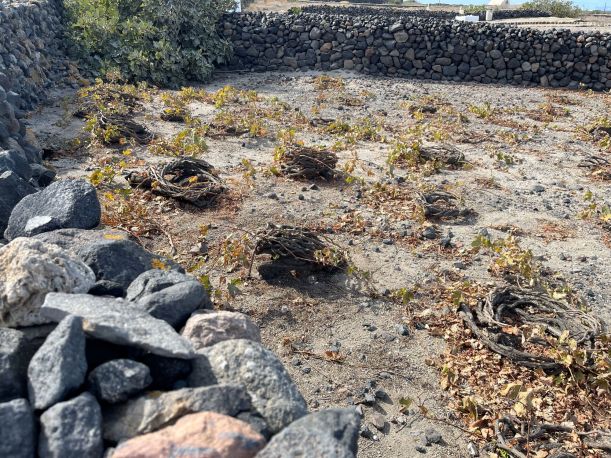
Santorini Instagram central of the Aegean, is home to some of the world’s most unique and resilient vineyards. Here, where volcanic soils and fierce winds challenge even the hardiest of grapevines, local winegrowers have perfected a centuries-old training method known as kouloura—the basket training system.
Unlike the neatly trellised rows seen in most wine regions, Santorini’s vines grow in a low, circular shape, woven carefully by hand into protective nests close to the ground. This technique requiring huge amount of highly skilled labour in the vineyard, is vital to the survival of the island’s vineyards.
One of the primary threats to grapevines on Santorini is the island’s relentless winds, which sweep in from the sea with punishing force. The basket structure shields the delicate grape clusters within its coils, preventing wind damage and reducing the risk of berries drying out or breaking prematurely. This natural windbreak ensures that the vines can thrive despite the extreme conditions.
Moisture retention is another crucial benefit of basket training. Santorini receives minimal rainfall, but the volcanic pumice-rich soil has an extraordinary ability to absorb and store the scarce water available. It does mean vines are planted at very low densities so that there is enough water to go around. At night, humidity from the Aegean condenses on the vine leaves and trickles down into the soil. The low, coiled structure of the vines helps trap this precious moisture, ensuring slow, steady hydration.
This ancient technique, passed down through generations is one to the key factors behind the unique, concentrated and structured expressions of Assyrtiko that the Island produces.
Sclavos winery takes a minimum intervention approach to wine making and is transitioning to biodynamic practices in the vineyards.
Their goal is to craft natural organic wines that showcase the unique characteristics of local grape varieties, influenced by their microclimate. After harvest, grapes undergo careful hand-sorting to remove any unsuitable fruit. Vinification employs modern techniques, including stainless steel tanks, pneumatic presses with nitrogen environments, and oak fermenters.
Mavrodaphne is traditionally made as a sweet wine on Kefalonia and in order to protect the PDO classification dry versions are actually not allowed to be labelled as Mavrodaphne! Sclavos along with others, has long advocated for the recognition of red dry wines from this variety. The winery is introducing new expressions of Mavrodaphne Kefallinia, continuing its pioneering efforts in dry vinification and aging, a practice initiated 25 years ago.
The Mavrodaphne variety undergoes three weeks of fermentation, followed by over a year of aging in French oak barrels of varying sizes (225L, 500L, and large oak tanks).
The winery has 14 hectares of their own vineyards, but buys some grapes in to produce 160, 000 bottles annually.
The wines:
Alchymiste 2020 Mavrodaphne and Moschatela grapes picked relatively early. This wine is made in stainless steel tanks producing a rose colour wine. On the nose crushed raspberries and chalk dust. A nice fruit mix with a smoky slightly animal note – goaty! also malt loaf. It is fresh and medium bodied with soft powdery tannins.
Orgion 2020 Mavrodaphne aged partly in French oak barrels. There is a floral jasmine note also smoke and again malt loaf. The oak is very subtle and fills it all out the wine making it a bit rounder. Very nice.
Xinodos Biodaynamic 2020 From old vine Mavrodaphne + 17% Vostilidi, co-vinified. Matured for one year in big barrels. The wine is dark and concentrate. It is dry with red and blue fruits and has the tannin and acidity to age well.
Vin Doux Du Soleil 2020 Made from sun dried Moschato grapes. Intense concentrated fruit, good acidity, very long.
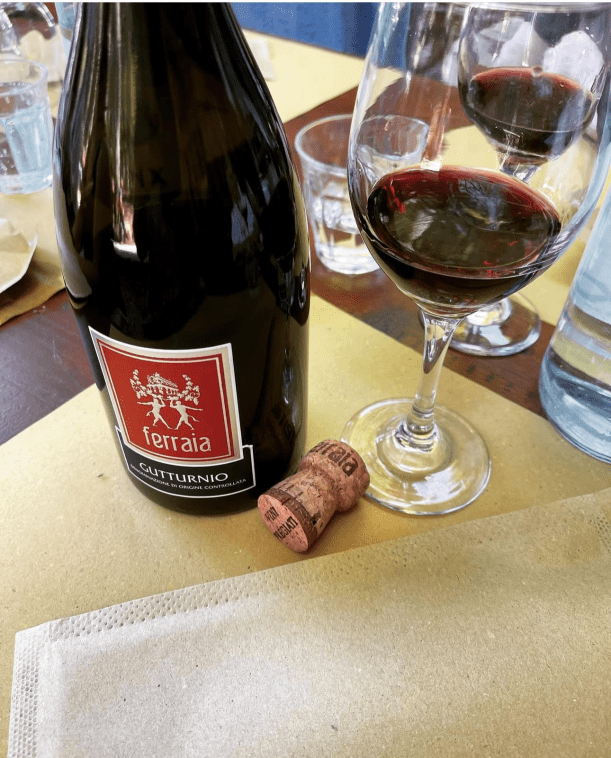
Enjoying a lunchtime glass of slightly chilled Gutturnio frizzante red. Dry with crunchy cherry flavours and mild grip, pairs perfectly with antipasti of local salami and prosciutto. A blend of Barbera and Croatina made in Emilia-Romagna. Refreshing in the heat. Cincin!
This wine is unlikely to be readily available here in the UK but you could try a Lambrusco. Look out for dryer Brut styles and subregions such as Lambrusco di Sorbara DOC.









 WanderCurtis Wine