Just before our memorable Col D’Orcia wine dinner at Fredericks Count Francesco Marone Cinzano told us of the estates long history, his love of Sangiovese and extended an invitation to the winery to all our followers.
The storey of Col D’Orcia
The Count talks about what makes Sangiovese so special in Brunello di Montalcino.
Thoughts on the magnificent 2010 vintage and an invitation.
Ahead of our Felton Road tasting at Season Kitchen earlier this week owner and producer Nigel Greening shared his story and thoughts on past and current vintages.
Nigel recounts how he went from wine enthusiast to owner and producer of some of the worlds finest wines.
The million dollar question: the secret of Felton Road’s success:
Nigel’s thoughts on the 2014 vintage:
Built for the long haul some of Nigel’s favourite older vintages:
With its sublime food, rolling landscapes that bewitch the eye, pristine hill top villages and amazing wines it’s easy to wax lyrical about the Brunello di Montalcino region. For me the more fruit focused and elegant Brunello di Montalcinos from higher altitude really sang and the excellence of the fresh crunchy Rossos, with their teasing savoury touch, was a real eye opener. If one had to be critical perhaps a few of the Reserves seemed to try a little too hard for critic scores at the expense of drinking pleasure but then again this just reflects the exciting diversity of wine making approaches to be found in the region. A must for all wine lovers.
The 2010 vintage of Brunello di Montalcino has generated unprecedented world wide excitement and large volumes of sales on release. The quality, with attendant critical fanfare, is obviously a major factor, perhaps also a market hungry for excellence after a run of lack lustre Bordeaux vintages. The BdMs are generally premium priced wines and classically demand patience in the cellar and the premeditation to open them hours or even a day in advance to open up. However since the 2007 vintage they have become much more approachable in their youth than they traditionally were. Rosso di Montalcinos are generally made for drinking from release although many winemakers produce more serious offerings that can happily age. The wines come in quite a range of styles dependent on the vineyard location and wine makers approach to the use of new oak, extraction of fruit and length of aging in barrel. So there is probably a BdM to please all tastes from elegant with vigorous fruit to powerful, malty leather bound tomes.
Day 1
Fuligni
S.J IGT Toscana 2013. A blend of mostly Sangiovese but with some merlot aged in French oak tonneaux. Slightly dusty nose, cherries, some notes of plumb. Nice freshness, soft tannin and a roundness but with a characteristic Sangiovese fresh cherry finish.
Rosso di Montalcino Ginestreto 2013. 14%.The rosso is made as a glimpse of the brunello. A slightly spirit nose, lovely crunchy fresh cherries in the mouth with a good savoury layer. Great balance, soft tannins, high alcohol balanced by the acidity. Good to drink now.
Brunello di Montalcino 2009. 14%. Fuligni have already sold out of the 2010 vintage but explained that 2009 was in this part of the region as good as the 10. Light intensity garnet colour. Cherries on the nose, spice, cinnamon, touch of caramel with a meaty undertone, then orange peel: complex. More of the same in the mouth, medium body great balance and length.
Siro Pacenti.
Siro Pacenti owns vineyards in the north of the region as well as the south. The wines are vinified separately and then blended to form both the Rosso and BdM. The wines are raised in French oak barrique except the riserva which is matured in larger tonneaux.
BdM Pelagrilli 2010. Smokey nose, bit of balsamic, some spice, herbs, thyme, oregano and red fruit. In the mouth intense concentrated red fruit, cherry pie, smoke, toast but not overwhelming and well integrated. Some charcuterie and a lick of vanilla. If hoisin sauce was made with cherries this would be it. Very long. Excellent.
BdM Vecchie Vigne. 2010. A tighter nose, earthy spices: cumin, turmeric, sour cherry, a bit closed but deep. Medium body, fresh with mouth coating firm but ripe fine grained tannins. Ripe fruit, blueberries but a bit masked by the wood influence, meat and blood below. Very long.
Day 2
Uccelliera
Uccelliera, named after the hunting bird loft that still stands on the site, produces a total of 60000 bottles from 6 hectares of Sangiovese plus half a hectare of merlot & cabernet sauvignon. Winemaker Andrea also has olive trees and animals on the farm.
Some of the vineyards lie around the house and were purchased from neighbouring Ciacci Piccolomini but additional plots have been added in the Orcia valley along with a plot of older vines planted in 1975 north of town.
The vineyards are farmed organically and the dry conditions of the Orcia valley favour this. When necessary they spray calcium in the early mornings.
The Rosso is already selected and vinified separately over several picks. The grapes are covered in dry ice to avoid oxidation as soon as they are picked. They are then cold soaked to block fermentation for the first few days to extract colour and allow the natural yeasts to develop and eventually start fermentation. The Brunello spends about 1 month on skins and the Rosso 20 days.
The winery also uses very old French oak barrels which are not toasted for magnums. These were originally destined for the Riserva as the very tight grain produces elegant Sangiovese. An IGT in magnum is now produced which is not to be confused with the regular Brunellos which are aged in large Slavonian oak barrels and around 20% new French oak barriques. The Riserva is produced from specific vineyards with the oldest vines and highest altitude.
The climate is very localised with up to 5 degrees difference with Montalcino and a different profile of rainfall. The geology and soils are also very varied across Montalcino from area to area.
Barrel tasting notes:
BdM 2014 from large Slavonian oak barrels and lower elevation vineyards. Up front fruit, darker cherry, fine grained tannin, high acidity. This has only been in barrel for about 6 months out of the two years it is destined to spend.
BdM 2014 from lightly toasted French oak barrels from higher elevation vineyards. Slightly richer riper fruit a hint of toast, fine grained tannin more grippy very long. Of course very primary at this stage.
The wines are matured in barrel separately then blended later and finished in either type of barrel according to the development of the wine. Andrea is beginning to leave longer and longer intervals between racking the wines off the sediments sometimes up to 2 years.
BdM 2013 from large barrels 1.5 years in. Slightly reduced, funky nose at first then clears to give red fruits lightly confected. Lighter body & more floral with slightly grainer tannin grippy & a touch fierce at the moment.
BdM 2013 smaller barrel, upper level vineyards. More red fruits and more concentration, fresh cranberry, less oak influence than the equivalent 2014, just a touch of pastry, lovely freshness. Good length.
Rapace Toscana 2013 barrelsample. This IGT is a blend of Sangiovese 60%, merlot 30 % and cabernet 10%. The grapes are co-fermented in small French oak barriques. Darker more intense colour. More dark fruit, rich toasty notes, fuller body with medium acidity. Spice, cinnamon, coffee etc. but still good pure fruit. Long finish.
Rapace Toscana 2012 in bottle. Again darker, medium body, ripe fruits, rich with spice and lots of tannin and toast. Great length.
Brunello di Montalcino 2012 from large barrel. Red fruit a bit of herb & spice red fruit, savoury notes of blood. Lots of mouth coating friendly cocoa like tannin, very long.
BdM 2012 from barrique. Sour cherry, sweet toast with a bit of roast coffee. Really powerful with lots of grippy oak tannin high alcohol.
BdM 2012 in barrel blend 50: 50 of the above: More of the fruit and savoury character but with the volume turned up on the tannin and oak compared to the large barrel sample. Fascinating to see how the blend melds to best of both, keeping the fruit but adding structure from the wood. Not the final blend but this looks like it will be a fantastic Brunello!
Riserva BdM 2012 from the 1975 vineyards barrel sample. More concentrated fruit, savoury with a mineral iron note, complex, graceful and yet powerful very long and delicious. Another one that promises to be superb.
BdM 2011 final blend. Lighter body & more elegant with lovely balance of fruit and touch of umami. Great freshness and good length. A really nice drinking wine that won’t need years of patience. Too lightly described as a restaurant wine in my opinion.
BdM 2010 out of bottle. Slightly spirity nose, touch of cola bit tight & concentrated but persistent deep. On the palate a fantastic combination of ripe fruit & savoury, mineral notes. Great freshness and lovely balance and very very long finish. Really complex. The combination of elegance and power is obviously why there is such excitement about this vintage.
BdM Riserva 2008. More savoury vegetal nose with sour cherry dried herbs and balsamic notes. Lovely rich moth feel, more baked fruit, beginnings of tertiary flavours. The extra time breathing in wood barrels softens the wine and develops more mellow flavours. Complex and very long.
BdM Riserva 2010. Dark so dark for sangiovese deep Ruby colour. Pronounced nose with lots going on, still developing. Dark cherries, some blueberry, dark chocolate cocoa, chocolate coated cherry, dusted in herbs: thyme and earth. Some middle aged leather, tobacco and sweet vanilla. High acidity attacks the palate with sweet cherry and a meaty, bloody, sweaty after taste that had savoury notes. Tannins are integrated with wood tannins drying. Length is amazing leaving a clean mouth but concentrated throat of dark fruit. Wow! (Stuart Grostern’s note)
This was an incredible tasting which gave us a great insight into the craft and skill that goes into making the outstanding wines, a real labour of love. The wines were superb and are available at Justerini & Brookes. The 2010 BdM has just been released and is an outstanding wine for a great price. The 2012 Rosso is also a superb value delicious drinking wine.
Col D’ Orcia
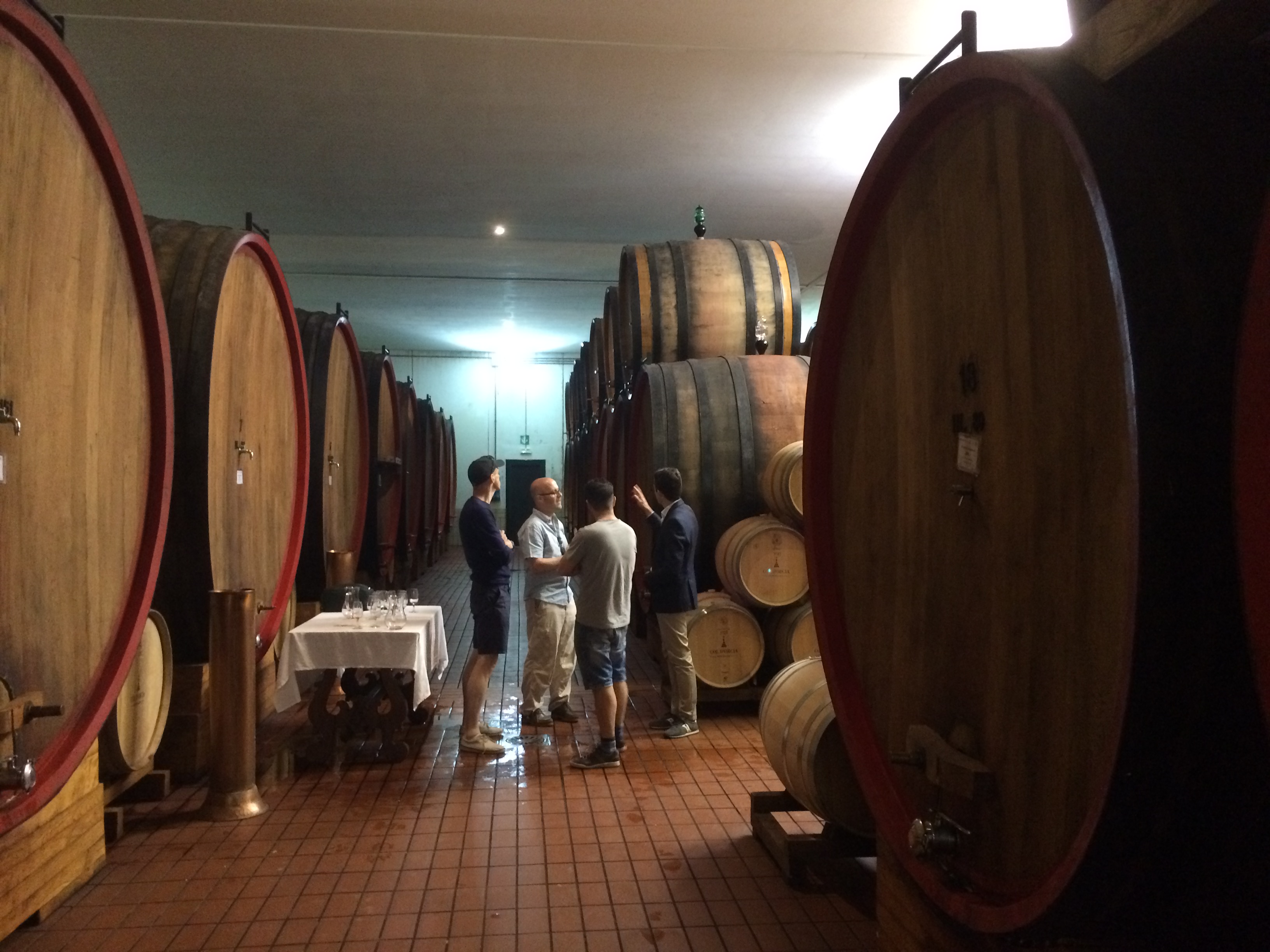
The whole production of Col d’Orcia has been certified organic since 2013 and at 540 hectares is the largest organic producer in Tuscany. Col d’Orcia is third largest Brunello producer making 800,000 bottles per annum of which 20, 000 are the renowned single vineyard BdM Poggio al Vento, the ‘windy ridge’. The wines are aged in large Slavonian and French oak barrels to allow the wine to breathe and develop over time.
Banditella 2010 Rosso di Montalcino. This is a single vineyard wine matured in 20 to 25 % barrique with a production of 25000 bottles. Lovely cherry notes on the nose. Medium body on palate with great freshness, crunchy cherries and some savoury notes. Nice grainy tannins, a bit grippy but good fruit length on the finish. This is a great food wine with tomato based pasta dishes.
Brunello di Montalcino 2010. Aged 36 months in large oak barrels, 60% Slavonian and the rest oak tonneau with no barrique. Tasty sour cherry notes with some wild garrigue herbs, floral notes of iris & hyacinth. Medium body, fine bright red fruit, great freshness savoury hints with a residue of caramel. Fine grained tannin, nicely grippy and long. Works beautifully with local Pici ragu!.
Poggio al Vento BdM 2007. Single vineyard from a fantastic year. Red fruit, some leather and tobacco leaves, garrigue herbs complex intense nose even though it is still a bit tight. Medium body with good crunchy red fruit and very fine grained tannins, sustained savoury notes, still rather reticent but with really lots of length. This is a great wine needs time to open up either in the glass or after a few more years.
BdM 2014. Barrel sample. Nice cherry fresh fruit, med body, toasty but subtle, great freshness. Will be a good one.
BdM 2012.Barrel sample. Attractive kirsh cherry, backed tart, spices, creamy toast, bit of tobacco lots going on already. Great balance and freshness. Excellent this bodes well for release next year.
Count Marone Cinzano’s winery welcomes visitors for a tour of the winery and wine tasting. They have also recently started hosting lunches with organic food including local wild boar and deer. Not to be missed. For more information visit www.coldorcia.it call + 39 0477 80891 or email info@coldorcia.it
Sesti
Perched on a hill top just north of Sant Angelo in Colle Castello di Argiano is a tranquil oasis heavy with the scent of blossom and surrounded by beautiful views across the surrounding rolling countryside. No wonder Guisseppe & Elisa Sesti fell in love with the place long before they started making the estates wines.
Sauvignon Blanc 2014. Made just for the family. Floral; orange blossom, citrus, nice mineral stoney sensations balance the fruit, high acidity. Beautifully balanced. Lovely to taste a white, superb!
Rosato 2014. A really pale rose pink colour. Made with 100% Sangiovese. Minerals on the nose, some dried herbs. Bracing saline feel in mouth, high alcohol, light fruit, lingering red fruit after taste. A perfect sun downer.
Monteleccio 2013. This is an IGT as it is aged less than the regulation one year in barrel to make a Rosso di Montalcino. Strawberry confected fruit, some herbyness, and cumin too on the nose. Wow this is great! Lovely fresh crunchy wild strawberries, minerality gives it some substance, lovely length & balance. A delicious wine to simply enjoy equivalent of many Rossos. Fantastic value.
Rosso di Montalcino 2013. Light intensity of colour. On the nose strawberry, confected fruit, herbs; sage, thyme, rosemary also flowers; violet, some earthy spices; turmeric etc. In the mouth really fresh bright fruit, high acidity, minerals and a long lingering flavour. This has the substance of a Brunello. Really great stuff. ****
Brunello di Montalcino 2009. This flight of wines are a progression with a clear common character running through them all, the intensity just successively steps up but each is perfectly balanced in itself. The BdM has more fruit, more cumin & turmeric, more violets & wild garrigue herbs then introduces some tobacco leaf, blood and meat. Then perhaps a whiff of new Gucci leather hand bag. Complex to say the least. Medium body, silky tannins which are reasonably grippy, rich sour cherry fruit. The palate is not as open as the nose but there are beginnings of some secondary flavours too. Lovely mouth-watering acidity with a very long finish. This is my kind of wine!
Phenomina BdM Riserva 2005. Each vintage has its own astronomical themed label, this one showing Venus joining Jupiter. Darker brown hues with medium intensity colour. Malty notes, cola, sweeter baked fruits, then tobacco, crème caramel, orange peel, lilies. Medium body, baked stewed fruit, plumbs, rhubarb, leather, high acid, soft tannins great balance. Tobacco notes with a long savoury salty finish. Amazing complexity!
Overall a superb range of wines you can’t go wrong with any of them. Available from Armit wines. The Monteleccio and Rosso are tremendous value.www.armitwines.co.uk
Pieve Santa Restututa (Gaja)
The winery is named after the church on the site which is now converted into a stunning seminar & tasting room. Vaulted tunnels lead down to a state of the art winery hidden under the entrance driveway. The only clue to this subterranean structure is an oxidised steel sculpture by the architect floating over its central roof light.
Wine making in the area dates back to Roman times and the vineyards have long been prized and even fought over by competing nobles. The winery has 25 ha in total, 17 surrounding the winery and 8 near Torrenieri. The Rennina vineyard adjoins the winery and the vines are immaculately groomed in traditional Guyot style. Sugarille vineyard lies just to the south.
Fermentation is temp controlled and micro oxygenation used. The wines are aged in oak tonneau for 24 months with 20-25% new oak. Then it spends 6 months in concrete tanks before bottling which helps remove the sediment.
Interestingly Gaja rates 2011 and 13 over 2012 because high temperatures accelerated sugar ripening, and therefore alcohol, over phenolic ripeness. It’s therefore probably unlikely that Sugarille will be made. Many other wine makers on our trip extolled the virtues of the 2012 vintage.
Brunello di Montalcino 2011. Ripe red fruit, a balsamic strand, sweet sandalwood & floral notes. Great balance, high acidity, mouth coating tannin, quite grippy, high alcohol with a slightly hot finish. But long with nice baked fruit flavours. Already a very tasty wine.
Rennina BdM 2011. Single vineyard. Slightly spicy, herby nose, bit of meat and blood, complex. Lovely mouth feel with fine grained tannin, bright acidity and crunchy cherry fruit. Tasty savoury and mineral notes again a little residual wood tannin that needs to integrate. Already drinking well but built to last. Really delicious!
Sugarille BdM 2011. Sugarille vineyard is mostly galestro soil schist where Sangiovese excels. Slightly spirity on the nose, strawberry, confected red cherry fruit, bit tight but some dried herbs. Quite powerful, rich concentrated fruit, fine grainy tannin with grip, long fruit finish. Again bit of wood on the finish. Quite a powerful wine but with great balance and persistence.
Sugarille BdM 2014 barrel sample. Cherry boiled sweets, bit of ground coffee on the nose. Wow lots of toast and lots of tannin, medium body, moderate acidity really good length. Obviously still pretty embryonic having only spent a few months in barrel.
Sugarille BdM 2013 barrel sample.
Some high red fruit notes but lots of coco and coffee grounds on the nose. Medium body, nice ripe cherry paste flavours, some toast & more coffee grounds, lots of tannin and bright acidity, all tightly packed. Oak tannin on the finish but very long flavour profile. The makings of an awesome wine.
Fascinating to taste the Sugarille single vineyard Brunellos as they evolve in barrel. These are uncompromisingly serious wines, packed full with everything meticulously in place and with extraordinary potential.
Day 3
Conti Costanti
Located just outside the town of Montalcino Costanti is one of the oldest wineries in the region. The vineyards are immediately around the house and adjoin the famous Biondi Santi winery. Annual production is generally 50,000 bottles overall with 35,000 bottles of BdM around 8000 bottles of the Riserva.
2013 Rosso di Montalcino 14.5% Aged 1 year in oak tonneau then 12mths in bottles. The oak is 50% young but not new having been used for the family’s table wine for a couple of years. Sweet cherry strawberries, floral notes, really fresh with beautiful balance. Sweet fruit and savoury notes, overall delicate with soft, cool tannins and a very long persistent finish. A Baby BdM m really excellent!
2010 Brunello di Montalcino. 14% Clear bright ruby colour. Grandma’s homemade strawberry jam, perhaps some herbs, thyme. In the mouth ripe cherry, some orange citrus notes, nice structure underneath. Crisp acidity and beautifully integrated tannins. Amazingly approachable now but with great precision and structure for a long life. A fantastic wine with a very long lingering herb and mineral finish.
2007 Riserva BdM 14%. Slightly darker colour but clear light intensity. Ripe dark cherry sweet fruit with a touch of smoke and dried herbs. The beginnings of secondary notes: Gucci band bag & a whiff of menthol. More rich ripe sweet red & black fruits on the palate with lovely savoury notes. A medium body wine with silty tannins with a bit of grip. Enough freshness and again very long finish. Superb balance. This is a bigger wine but not for the sake of it. Outstandingly good.
2012 Ardingo. 100% merlot from Monosoli vineyard aged in French oak barrique. Nose of plum chutney with a bit of smoke. Another amazingly elegant wine, an overall impression of baked red fruit pie with custard. Great freshness to balance the secondary toast and creaminess. Ripe tannins and good length.
One of my top tastings where the consistent elegance and freshness of the wines really appealed.
It seems that, just occasionally, I must have been a little over enthusiastic in my wine purchases because I’ve noticed that there are a few more bottles in the cellar than I strictly need. When I recently looked into the options to off load some of this excess stock I found there to be quite a few well established forums for private owners to sell their wine. Clearly I am not alone in having eyes bigger than my palate.
When you consider that one is often buying wines, at the finer end of the scale ten or more years ahead of their optimal drinking windows it is perhaps not surprising that one can end up with case or two too many of a particular type of wine or vintage. Also one’s tastes evolve over time and so the dream cellar your younger self worked so hard to assemble might not match that of your ungrateful older self. Whatever the case the good news is that there are a number of ways in which one can create some room in the cellar whilst at the same time some cash in the bank.
The easiest wines to trade are those that are still in storage by the case In Bond. In Bond means that the duty and VAT due on wine when imported and sold have not yet been paid and it is possible to store the wine indefinitely in a special Bonded Warehouse in this state of limbo, only incurring the tax when you have it delivered home. Investment grade wines tend to be traded in Bond and the fact that they are stored in these specialist temperature and humidity controlled warehouses provides some assurance of their condition.
Fine wine merchants
The traditional broking services that fine wine merchants provide have in recent years been expanded and to a degree automated to allow wines other than the just investment wines to the traded. Berry Brothers and Bordeaux Index both run exchanges that allow customers to list wines for sale. BBR appear to allow customers to choose any asking price they like whilst BI encourage customers to choose price within a range of their calculated average market price. Both merchants charge a 10% commission on any sale which seems to include or not be liable to VAT.
I’ve tried both platforms found them easy to use and they bring your wine to the attention of all their other customers. The main disadvantage is that you need to have the wine stored with the merchant already. BI allows you to transfer wine into storage with them but BBR only allow wines bought and stored with them to be traded. Also if the merchant has the same wine in stock already then it will list its own before any that it is broking.
Before listing anything its worth looking to see if any cases of the same wine are on offer and what the asking prices are. So far I’ve managed to sell two cases of 05 Bordeaux that I bought through BBR both for a fair price and another two cases of wine through BI again at more or less market prices. As the merchant is essentially broking the wine it’s great because there is nothing more to do but wait for the funds to appear on your account, which could happen a little quicker.
Independent on line trading platforms
An alternative to broking your wine through your existing wine merchant is to use a purpose built on line trading platform. There are two that I have come across: Cavex and Wine Owners.
Cavex appears to be aimed at the investor collector and is set up as a trading platform allowing one to monitor the fine wine market and buy from and sell to others registered on the platform, however only wine stored In Bond can be traded. Cavex charge only 3% commission on any sale which is attractive but also charge the buyer a premium of 3% + VAT (so 3.6% all up) too to its worth considering this when setting prices.
Setting up an account is free and one can upload details of any wines you might consider trading including the price you paid for them. This can be done manually, which is reasonable quick because there is something akin to a predictive text function that recognises most wines and then allows you to choose the vintage etc. Alternatively if you have your collection on something like Excel one can export and upload a csv file and Cavex will set up your cave for you.
Once your wines are listed the platform automatically shows the lowest price that the same wine is offered on the exchange and also the highest bids that may have been made. Once on the exchange all one’s wines are listed whether offered for sale or not and the exchange allows other members to bid on all wines listed. An email notifies one of any bid within 10% of the offer price and one can then accept it or counter by modifying the price. The web site is reasonably easy to use but kept crashing while I uploaded my wines.
So far I have sold one case of Bordeaux 2009. After a round of bid and counter offer it went at just below the ‘market’ price but with the benefit of the low commission rate. Interestingly this was not an ‘investment’ grade wine so clearly users are not just speculators. One thing to bear in mind is that once a bid has been accepted one has to organise the transfer of the wine to the buyer’s bonded warehouse. This is not difficult to do but may result in some charges in the region of £10-£20 if they don’t happen to use the same one as yours. If the wine is being shipped abroad and apparently a lot goes to the Far East then the costs are borne by the buyer. The funds which had been held by Cavex arrived in my account from quite quickly after the wine had been transferred.
The Wine Owners platform is similar in principle but offers much more in the way of cellar management. The platform encourages one to upload your entire wine collection and does not restrict it to wines stored IB. This is an excellent feature particularly if you have wine stored Duty Paid with the Wine Society or even at home in a wine cellar. Again Wine Owners offer to upload your wine collection for you if you send it to them.
Once uploaded the website provides information on the current & historic value of the wine, drinking dates, critics scores plus a record of the information you provided on the storage location, price paid, quantity remaining etc. The website is very user friendly and has some brilliant features such as the ability to search through your cellar by region, vintage, readiness to drink etc.
One can offer wine for sale on the exchange and also other users can make speculative bids on any of the wines you have uploaded. The trading fees are 6.5% + VAT (7.8% all up) sellers fee and buyers also pay a fee of 2.5% + VAT (3%). For a charge Wine Owners will inspect the condition of your wine thereby allowing cases cellared at home to be traded. I imagine that once a transaction has been agreed there will be costs involved in transferring or delivering the wine although it is not clear from the tutorials to who they fall.
Although I’ve received numerous bids on wines both offered and un-offered they have unfortunately so far been all cheeky bids well below the market price. So as yet it’s difficult to judge how effective a trading platform it is. I have noticed however that at least one of the cases that I have listed with them appears on the wine-searcher website so they are in reaching a larger audience of buyers than just those registered on the site.
On line wine actions.
When it comes to selling on a few bottles of wine from the cellar at home there are a couple of options. If one had enough to make up an interesting mixed case, which included a few attention grabbing trophy wines, then it would be possible to consign the wine to an auction house like Bonhams. I’ve bought wine from Bonhams on several occasions but to date have never attempted to sell anything in this way.
I have however recently been using UK online auction platform BidforWine with some success. Bidforwine works in a very similar way to eBay; one writes a description of the wine, takes photos of the bottles and gives information on its condition and provenance. The lot can be offered with or without a reserve price, one can set the start the price & choose the duration of the auction. Buyers have the option to collect the wine themselves or to pay for having it shipped. Sellers generally promise to pack bottles in ‘Polysafe’ type polystyrene tubes for safety and use a tracked delivery provider like Parcel Force. Like EBay there is a system of feedback to allow buyers to assess seller’s past performance. Sellers pay a small listing fee which depends on whether one sets a starting or reserve price and an 8.5% + VAT (10.2%) commission on any sales.
I’ve listed 3 lots to date, the first, a pair of bottles of mature Bordeaux from a well-known chateau, had 8 bidders competing for it and sold for a fair price. The second a mixed case of lesser known Bordeaux chateaux but from stellar vintages which generated less interest and sold very cheaply. I had listed both of these with no reserve and a starting price of a pound but I wasn’t prepared to sell the third lot, two quite expensive bottles of another well-known Bordeaux, at a loss so I listed at a fair starting reasoning that if they didn’t sell I would have lost nothing. The auction is still running but there is already a bid for over the this price. On can search the results of past auctions in order to see what prices a wine one is considering selling has achieved which is obviously helpful in deciding whether to sell and what to set the starting price at.
Unsurprisingly it appears that popular wines are easier to sell for a fair price than more obscure but equally good wines, so better to drink them up and trade the usual suspects. Ultimately when I have bought via auction the attraction has been the opportunity to pick up more mature wines at a bit of a discount to the current market price so it’s worth bearing this in mind in deciding to sell.
Comparing costs
So what would price would one set with each of these options if one wanted to receive say £200 net from the sale?
BI/BBR – £220 (less 10% commission, with no transfer fee because the wine stays in storage with the merchant)
Cavex – £223.47 (less 3.6% gross commission but assuming a £15 warehouse transfer fee)
Wine Owners – £231.92 (less 7.8% gross commission and assuming a £15 warehouse transfer fee)
Bid for Wine – £222.74 (less 3.6% gross commission).
On the face of it, it is cheapest for the purchaser to buy via the merchants as they only pay £220, then Bid for Wine at £222.74, Cavex at £230.47 and then Wine Owners at £239.90. However there would either be a transfer or delivery fee to pay with Bid for Wine which would make it similar to Wine Owners.
Final thought.
Probably the most effective and easiest way I’ve found to exchange wine has been direct with wine friends of mine. Provided the wine is good, splitting a case purchased or buying and selling a few bottles at the price originally paid always works a treat.
And with money in the bank and space in the cellar there’s only one thing to do……………
A tricky tasting with many wines appearing closed, a root day or are New Zealand’s maturing vines beginning to produce wines that behave just as capriciously in their youth as the best of the old world?
New Zealand undoubtedly produces some of the worlds premium wines and what makes this all the more extraordinary is that it does so from relatively young vines and in the context of a fair bit of climatic variation from year to year. At a tasting 18 months ago to celebrate 10 years of Craggy Range Te Muna pinot noir Steve Smith MW was confident that after a decade the vines were beginning to show their full character. So in theory the wines should just get better and better, no pressure then!
With 474 wines from 103 producers on show and only an hour and a half window I therefore thought the best thing to do was focus on a few old favourites to see how they were developing and what the current vintages are like.
Felton Road Central Otago
Felton Road Elms Chardonnay 2013.
Crisp citrus, ripe pear, lovely texture, this wine has substance but also great freshness & good length. Delicious & great value. (No oak but aged in old barrels to soften and round it out).
Felton Road Chardonnay Bannockburn 2013.
A captivating succession of citrus, lemon & lime, stoney mineral notes, a whiff of white flowers and just a hint of bakery and toast. Great complexity and length, at whole lot of wine for the price. (Again more Chablis than Cote d’Or with only 8% new wood).
Felton Road Block 2 Chardonnay 2013.
My notes read: ‘OMG this is fantastic!’ so it was pretty good. Again citrus, ripe green apples, a good lick of minerals, very intense at this stage with great balance and long lingering finish. Thrilling and with plenty of ageing potential. Grand Cru in terms of quality, Nigel Greening founder of Felton Road believes that whilst NZ pinots are already internationally recognised the Chardonnays are now ready to sit at the top table too.
Felton Road Pinot Noir Bannockburn 2013.
This wine strikes a great balance between forward tasty ripe fruit and a nice vegital backbone, finishing with lashings of spice and wood. Reliably delicious.
Felton Road Pinot Noir Cornish Point 2013.
True to this vineyard’s character this wine is spicy, seductive and forward. Ripe red fruits, cake spices and a lush mouth feel, nice long finish. I always wonder how this will age, having started out so delicious.
Felton Road Pinot Noir Calvert 2013.
Again the consistent character of this vineyard comes through, quite distinct from the Cornish Point, although the clones and vinification are exactly the same. More compact with great balance, clean fruit, perfume with a nice savoury core and great length. Fantastic. One to tuck away for a few years and great value when compared with premier cru Burgundy.
Felton Road Pinot Noir Block 3 2013.
A lovely delicate balance of confected strawberry, cinnamon spice, real depth and complexity & great freshness and length.
Felton Road Pinot Noir Block 5 2013.
This has an earthy, meaty nose with ripe black cherry, intense and primary, fuller bodied with a caressing mouth feel and just enough freshness to lift the very long finish. Amazing.
Craggy Range
Craggy Range Avery Vineyard Sauvignon Blanc, Marlborough. 2014
A great fresh gooseberry driven SB with a touch of elderflower and cracking acidity.
Craggy Range Te Muna Road Vineyard Sauvignon Blanc, Martinborough.
2014.
This has more substance, stone fruit and a nice creaminess, but still all the crisp freshness that you would hope for, very satisfying.
Craggy Range Chardonnay Kidnappers Vineyard. Hawke’s Bay 2012.
Vibrant ripe citrus, touch of honey and a lovely saline whiff of the sea shore. Great balance and freshness, the tiny touch of oak very subtle.
Craggy Range Pinot Noir Te Muna Road vineyard, Martinborough. 2012.
This seemed a little closed down and I have noticed that although they start open and inviting MZ some PNs seem to close down and become more reticent after a couple of years. Red fruit and a vegital base, good balance and nice finish. This is normally a real crowd pleaser with pure fruit and a heady floral perfume as evidenced by our 10 year tasting finishing with the 2011 two years ago.
Craggy Range Pinot Noir Aroha Te Muna Road vineyard, Martinborough. 2011.
A selection from the finest parcels with some whole bunch fermentation. Quite primal with earthy, vegital with black cherries wood and smoke, you can almost taste the stalk tannin which may need a bit of time to fully integrate. Again quite closed but with plenty of substance.
Craggy Range Syrah Gimblett Gravels, Hawke’s Bay. 2011.
Black and white pepper, tight black fruit, quite austere at the moment , medium body with good balance, will hopefully fill out with time.
Craggy Range ‘ Le Sol’ Gimblett Gravels, Hawke’s Bay. 2011.
Again quite closed overall but clearly an intense wine with a deep core of black fruit, black pepper and toast. Great balance and long length.
Craggy Range ‘Sophia’ Gimblett Gravels, Hawke’s Bay. 2011.
Gorgeous polished nose, perfumed wood polish, ripe blackberries, medium body, fine tannins, silky mouth feel and good length. Delicious.
I was lucky enough to try the whole Greywacke range last week at the New Zealand Trade tasting.
Somewhat unusually for me, being a dedicated Kiwiphile I found a lot of what was on offer
underwhelming. I consulted my recently downloaded ‘When Wine’ a biodynamic calendar for when wine drinks best
and found it to be a root day.
Now it may well be a load of nonsense but something was suppressed last week …
Until I was lucky enough to sample Greywacke . Kevin Judd is something of a genius . The expression and immaculate balance in his wines are secondary to none .
This Wild Sauvignon is special
Fermented entirely with naturally occurring yeast –
A delicate combination peach skin aromatics , citrus-blossom notes – a dash of lime cordial hints of fennel.
The finish is long and crisp the balance perfection.The Chardonnay and other wines equally brilliant.
It was a delight to meet the charming Filippo Comelli at a recent trade tasting in London.
A multilingual polymath with a recent MBA and an interest in his families winery in the Friuli region of North East Italy.
This elegant Soffumbergo Bianco has fruit and flower aromas in a balanced blend of Friulano, Chardonnay and Malvasia, with a drop of Picolit.
I have tried the whole range of Comelli , the quality , vibrancy and freshness is clear throughout.
This wine was a delicious accompaniment to Vietnamese Spring rolls and coconut fish curry.
I was also fortunate enough to try the EOOS Picolit a native variety,Vino Santo with low production yields,with exotic aromas including apricot and orange blossom.
Tasting a range of the wines of Northern Rhone the overall delicacy and freshness of these wines comes across with several great recent vintages there are great wines to be found at every level.
Hosted by Marie Cordonier of Maison Jaboulet Aîné and attended by Marcel Orford Williams, chief buyer of the Wine Society & fellow Crouch End resident.
Bistro Aix, Crouch End
La Chapelle
The wines:
Le Grand Pompee St Joseph Blanc 2010 Approx price: £14
Served as an aperitif. Nice floral nose, good creamy texture in the mouth, great balance and good length. 100% Marsanne. Lovely.
Condrieu Les Grands Amandiers 2008 (Viognier) Approx price: £43
Smokey nose, peaches lurking underneath, more oily texture, stone fruit, medium length. We tasted the 2010 at Maison Jaboulet in Tain L’Hermitage which was floral and fruity and had greater freshness.
Hermitage Le Chevailier de Sterimberg 2008 Approx price: £44
Served together with the H Sterimberg with pate starter.
Named after the knight crusader Gaspard de Sterimberg who established a hermitage on the hill. This blend of approx. 70% marsanne and 30% rousanne is sensational. A compact and concentrated nose of pear flesh with a whiff of wood, on the palate again tight complex flavours mixing fruit and nuttiness: apricot stones. This wine has a beautiful mouth feel and great length, still a baby. At Maison Jaboulet in Tain L’Hermitage we tasted the 2010 which was even more concentrated, had more vigour and freshness and delicious note. One of the wines of the trip Excellent!
St Joseph Le Grand Pompee Rouge 2010 Approx price: £15
Nice fruity peppery nose, sweet black fruit, savoury notes emerging, medium body, more fruit great lift and freshness, reasonably sustained. This is good now but with a few years in bottle will fill out with more savoury substance. From granite soils. Great value from a great year. All the 2010 wines we tasted on our trip were stunning with great clean fruit, balance and freshness. Marcel also felt that one could hardly go wrong buying this vintage.
Cornas Grandes Terrasses: 2009 Approx price: £27
Served with Confit de Canard main course.
Decanted for about an hour this delicious fruit driven wine had a nose of really ripe blackberry with a touch of chocolate almost new world in its exuberance. Concentrated in the mouth packed with more sweet fruit, powerful, plenty of good tannin and enough balance. 2009 was another great year but riper and this has a good future.
Croze Hermitage Domaine de Thalabert 2007 Approx price: £23
A long standing favourite of mine this Croze is special. Marcel explained that it is one of the oldest vineyards in the area, established by Jaboulet and pre-dating the appellation. Although received wisdom is that Croze from the hilly area north of Hermitage is generally the best this vineyard on the plain consistently produces very fine wine because of a subtle elevation and difference in soil make up. Whatever the reason I love it and have found that it is best to forget about it for at least 6 – 7 years at which point it begins to sing.
The 2007 is approachable now with nice fruit reflecting yet another good year in the Rhone (though more so in the south). I would still tuck this away for another couple of years though and have resisted opening any bottled of my case bought EP from the Wine Society.
Served side by side with the Cornas the contrast is clear this is all elegance and restraint in comparison to the exuberance of the Cornas. Black cherry, touch of coffee, white pepper on the nose, still a little tight on the palate but then more black fruit, spice and characteristic great vigour from the acidity, medium long. Promises wonderful drinking. (currently10% discount at Bibendum)
Hermitage La Petite Chapelle 2007 Approx price: £60
In Tain this was a little closed by having been decanted for a couple of hours it was much more expressive. Served blind with the Chapelle 01 it was fairly clear which was the more youth full wine. Nice fruit on the nose, a scented nose with whiff of flowers and savoury notes underneath. Lots going on in the mouth, really fresh sweet fruit, savoury note making a vibrant mix, long and exciting. A super wine which will no doubt develop beautifully.
Hermitage La Chapelle 2001 Approx price: £94
On the nose, more mushroom, earth and secondary flavours but still with baked fruit tart sweetness. On the palate amazing bright acidity and plenty of spicy fruit. Tastes a lot younger than the bouquet even though it is 12 years old. Marcel says this was a tannic year that has taken a long time to come around but it now is coming into its own.
Hermitage La Chapelle 1991
An amazing treat brought by Marcel to share with us. And what a demonstration in what Hermitage is all about. Marcel feels that the true expression of Hermitage is a blend of the different vineyards (Michel Chapoutier would disagree but diversity of opinion is the spice of life) and La Chapelle is mostly from Le Meal which produces riper more opulent fruit with some wine from Le Bessards which is more tannic and structured.
This wine at over 22 years is from a very good vintage overshadowed by the 1990 and 1989 vintages. Decanted for about half an hour un-agitated the nose begins as sweet celery sticks then a little soy sauce. With air a world of aromas opens up each arriving hot on the heels of the other in that way that complex great wines have of continually giving more and more: confit de canard, candied fruits, horse leather, orange peel, oriental spices, baked blackberry pie all this in the mouth too but with great core of freshness and a salty tang. Amazing persistence and vigour, hauntingly lingering in the mouth. Some wines cerebral and others sensual this is both, simply outstanding.
Thanks to Marie Cordonier of Maison Jaboulet for helping to organise the evening and being such a great host.
Also big thanks to Marcel Orford Williams (Wine Society) for sharing his knowledge to give such detail and colour to the evening and also for sharing this wonderful wine.
Finally we were as always well looked after by the team at http://www.bistroaix.co.uk/ serving delicious french cuisine.
Interesting tasting today of Bordeaux reds and whites from left bank appellation Pessac-Leognan. The en primeur vintage of 2012 was on show with either 2009 or 2010 along side for comparison.
Whites in general the 2012s were fresh, clean and compared favourably with the 2009s. The 2010s had the more body and substance but were different animals. I really liked the 12s that had enough fruit to counter the high acidity.
For the reds 2010 was all structure and seriousness and 2009 rounded and all come hither conforming to stereotype. However many of the 2012 were pretty good too.
Stand out whites were: Malartic-Lagraviere both 10 and 12 and Chateau de Fieuzal again both 09 & 12.
Other wines that showed well included Ch de France 12, Ch La Garde, Ch Couhins (Graves) 12 (100% Sauv blanc), Dom de Chevalier 12 & Ch Bouscaut 11 & 12.
Reds that wowed included funnily enough Malartic-Lagraviere and Chateau de Fieuzal again, then Dom de Chevalier.
With Jo and Claudia of Wines of South Africa ,we tasted 28 wines, with a three course dinner( main course of 28 day matured sirloin ) and drinks reception (Jordans Riesling) on the terrace , at the fabulous High Timber Restaurant on the banks of the River Thames.It’s founders are Gary and Kathy Jordan of Jordans Wine Estate , South Africa.Neleen Strauss co-owner treated us royally, the food and service at High Timber excellent.
Wines included the following ;
Whites – Howard Booysen Riesling,Boer and Brit Sauvignon Blanc,Steenberg sauvignon,SAAM middleburg Chenin Blanc,Radford Dale Chenin,Delaire chardonnay,Journeys End chardonnay,Beau Constanta Viognier,Steenberg Magna Carta, FMC Ken Forrester Chenin Blanc
Red– Radford Dale Pinot Noir , Crystallum Pinot, Crystallum Hemel en Aarde Valley pinot noir,Journeys End Merlot and Cape Doctor,Kaapzicht Steytler Pinotage,Keermont Syrah,Radford Dale Syrah,Anthonij Rupert 2007,Kaapzicht steyler vision 2008,Holden Manz big G.
We were really lucky to be able to try such a huge selection of great wines
which showed the great variety and quality of South African wine.Full write up and tasting notes








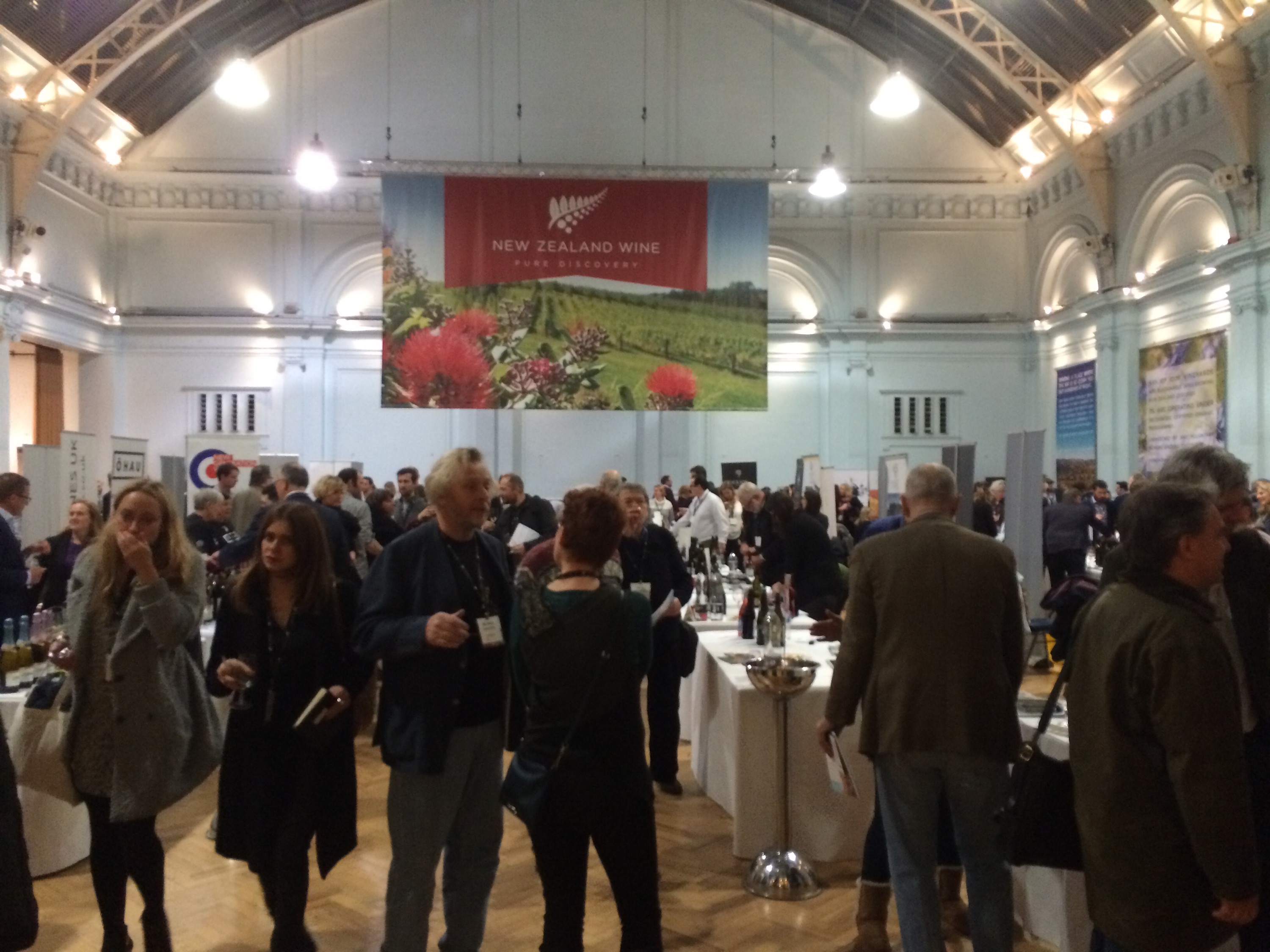
 I was lucky enough to try the whole Greywacke range last week at the New Zealand Trade tasting.


 WanderCurtis Wine