This little brother to the iconic Armagh shiraz that Jim Barry produces holds its own. At almost 10 years old the deep garnet colour shows little sign of evolution.
The nose is pronounced in intensity with waves of violets, ripe red and black fruit, liquorice, dried herbs and a pleasant medicinal note. There are new oak lashings of smoke, chocolate and vanilla and some signs of evolution such as prunes, tobacco and dried meat.
It’s undeniably a big wine of the old school variety but very well balanced, freshness prevents the alcohol and body from weighing it down and everything hangs off firm but ripe tannins. The finish is long and layered.
Great to drink now but will continue to slowly evolve for another decade.
From the Basilicata region in the south of Italy just where the ankle would be of whoever is wearing the uncomfortably high healed boot.
It is warm and mediterranean here but the slopes of Monte Vulture provide some cooling altitude to slow the growing season down allowing flavour to develop in the grapes. These mineral rich soils of volcanic ash and limestone over clay drain well but retain moisture which is also needed for the grapes to grow in the warm climate.
Aglianico is the other key ingredient here known as the Nebbiolo of the south. This grape variety thrives in these harsh volcanic soils, ripening very late and retaining high levels of acidity. This along with a powerful tannic structure and concentrated fruit can create wines with great aging potential.
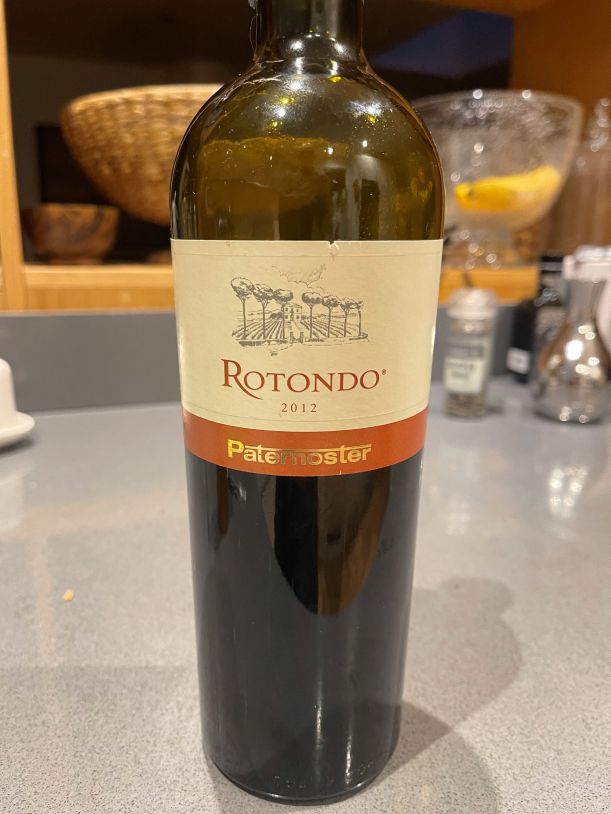
This wine by Paternoster which is 100% Aglianico has a deep colour displaying its bottle age. Out of the glass jump black berries, black cherries and herbal notes of dried thyme and liquorice. It’s seen some newish oak evident from the touch of vanilla, coffee and smoke and there are lovely mature aromas of prune, prosciutto and tobacco.
In the mouth it is definitely full bodied but has great balance, the abundant tannins are firm but ripe and fine grained. It remains fresh through the long finish and there is not a hint of heat. In fact, 14% seems pretty restrained in these times when a lot of pinot noirs are coming in at 14.5%.
Look at for this grape variety from Vulture DOC and the more premium Superiore DOCG version. It is also the major component of wines from Taurasi in Campagnia where it is generally softened with a little Piedirosso in the blend.
The onset of 2024 has left me reflecting on my inherent Francophilia. This got the better of me towards the end of last year. I had been meaning to visit Alsace for years. It took so long partly because of my preference for red wine and more recently due to Covid.
My favourite varietal though is Gewürztraminer. This is very much a marmite love or hate grape. For me it’s love. The most textured, succulent, floral powerhouse of a wine I’ve ever tasted was a Matawherho Gewürztraminer from Gisborne in New Zealand. It was an early 1990’s vintage tasted at a masterclass with my boss of the time Dr David Durham at his home next to Cloudy Bay, Marlborough New Zealand in 1995.
The 1976 Hugel Gewürztraminer with a nose distinctly reminiscent of cannabis was a highlight of many years of wine tasting.
This grape has mesmerised me since. I also have great appreciation of the other white Alsatian varieties. Well made Pinot Gris is also beautifully textured and aromatic. Riesling whilst not my first go to drink due to its high acidity playing havoc with my gastrointestinal equilibrium is still a wine I highly regard.
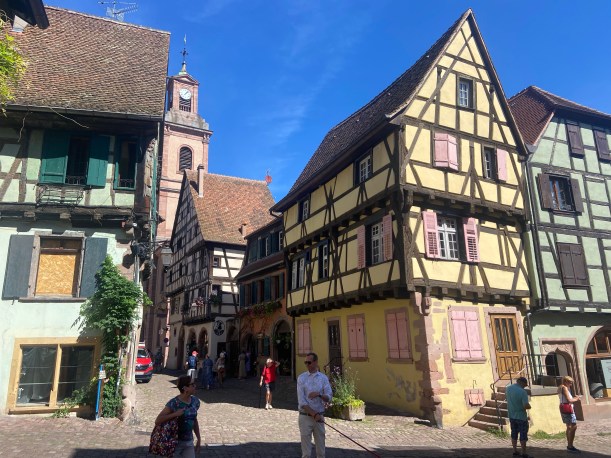
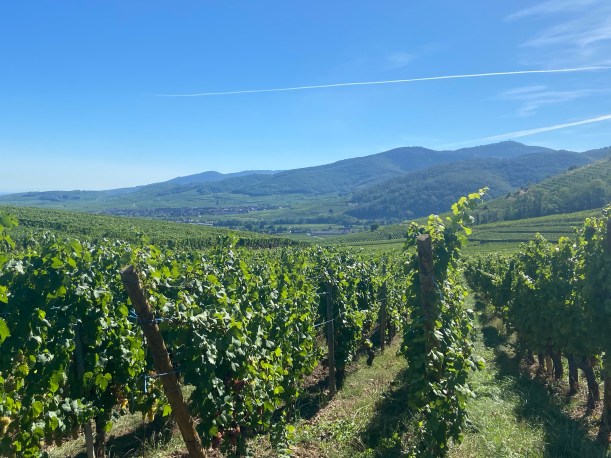
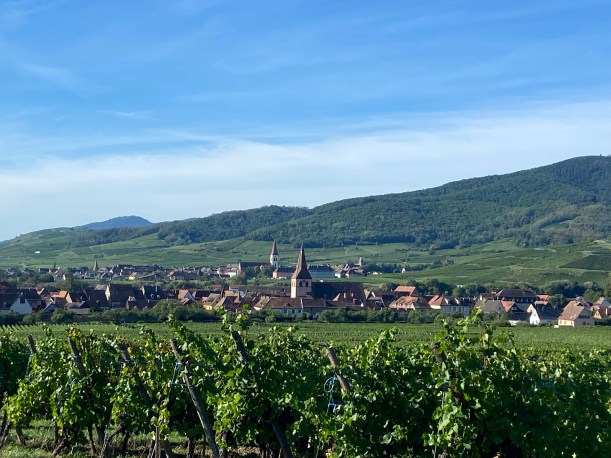
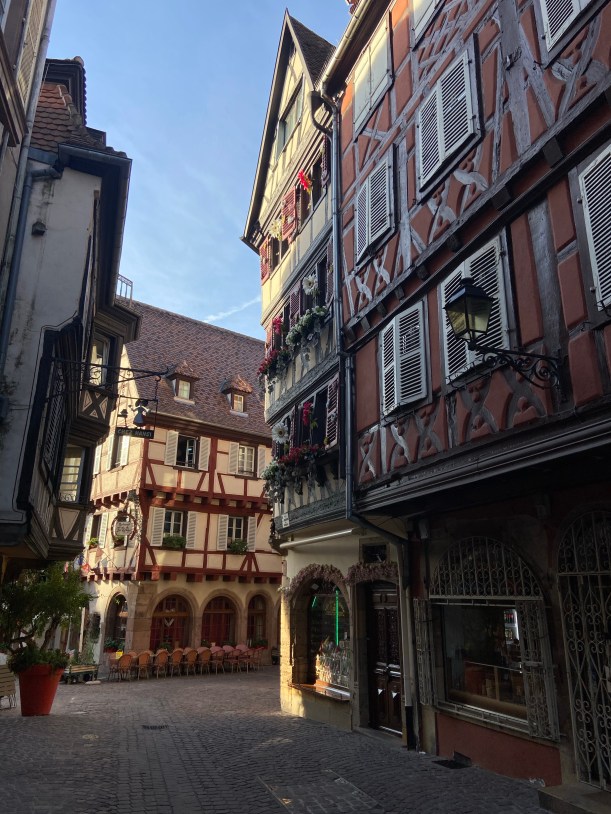
So I finally made it to Alsace, and the wait was worth it. Not only for the wines but for the delightfully preserved chocolate box towns and villages such as Colmar, Riquewihr and Ribeauville. It really feels like an amalgamation of France and Germany as its geography and history suggest.
I stayed in central Colmar at the Hotel Le Colombier. This is very conveniently located centrally and for the electric bike store on the same street. This is an excellent way to explore the region as there are many dedicated wine cycle routes throughout the area.
I wasn’t wild about the food, quite pork base and Germanic. They do an interesting pizza type of thing called a Tarte Flambee in French and FlammeKueche in German.
It was the first day of the Rugby World Cup so the flight was awash with excited fans.
I’d had also long wished to visit Chateau Coutet in Barsac having met Aline Baly on many occasions in London. I’m also a fan of dessert wines, again not everyone’s taste. Aline was in Paulliac but generously arranged the Maitre du Chai, Laurier Girardot to entertain us.
We started in the vineyards surrounding the pristine opulent Chateau.
Laurier discussed the terroir, which is slightly different to Sauternes and a little further from the River Garonne. The style here being a little less unctuous than Sauternes and perhaps less botrytis. They also make a dry white. The wines as ever, were finely balanced, long and delicious with complexity evident in older vintages.
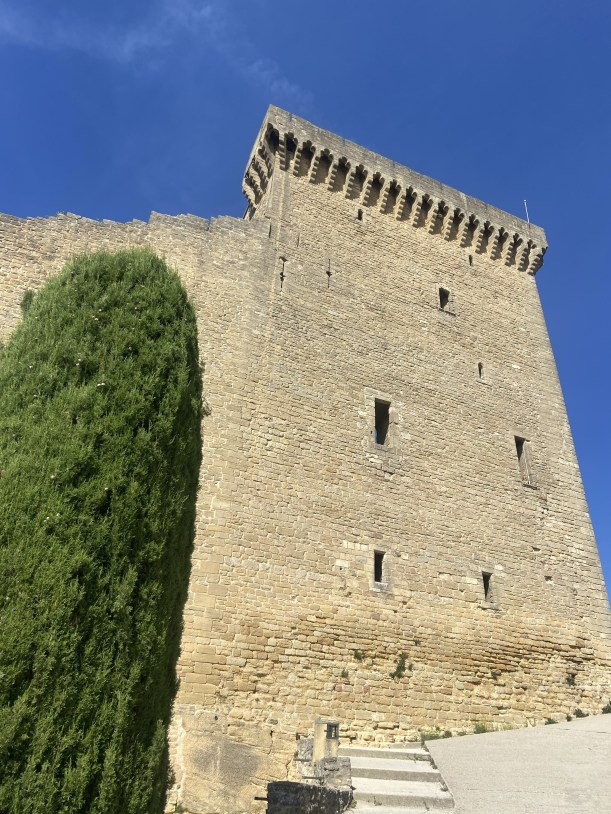
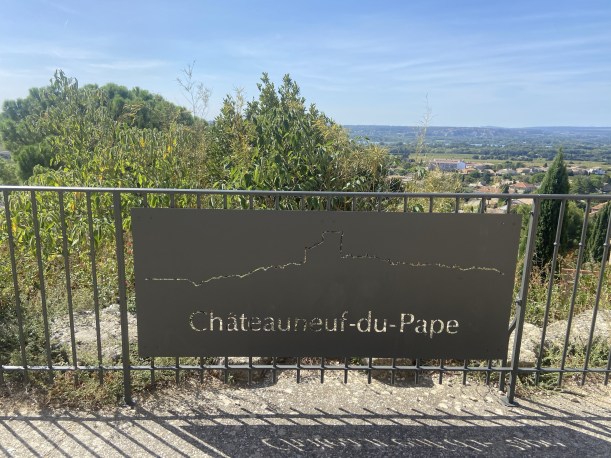
Châteauneuf-du-Pape
Next up a flight to Marseille, en route to another region I’ve longed to visit, Châteauneuf-du-Pape.
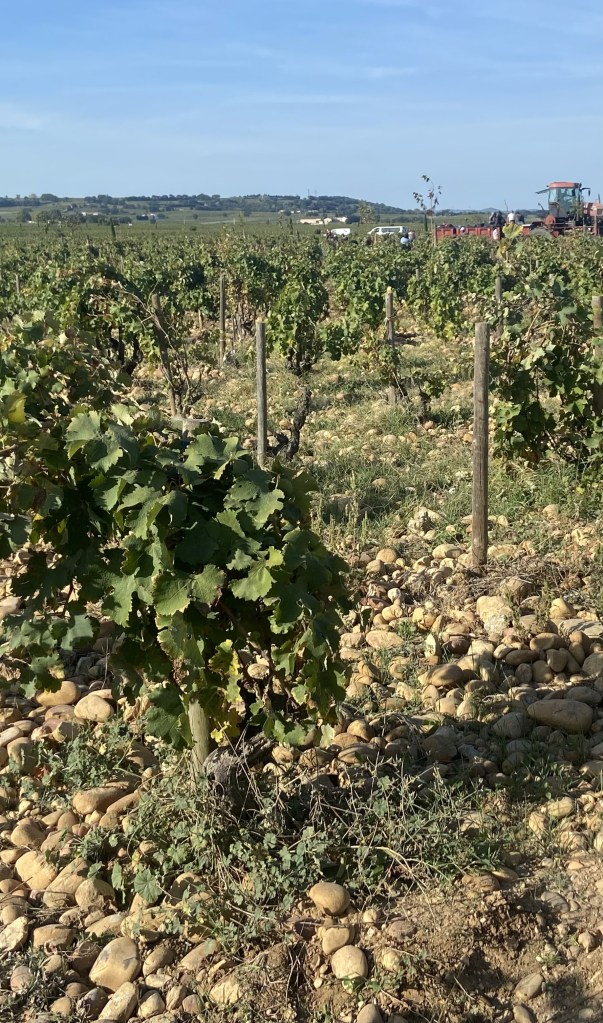
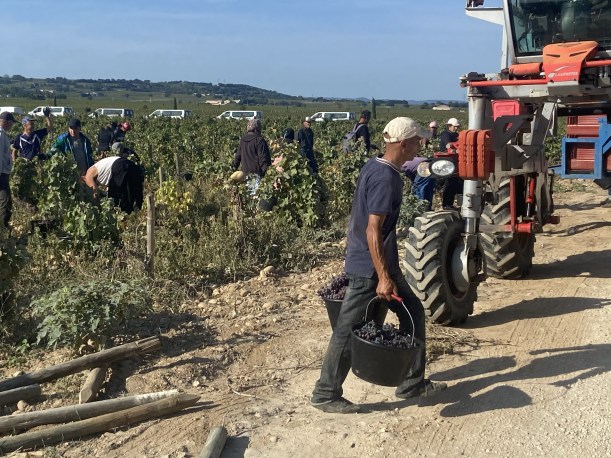
It’s one thing reading about the ‘Galets’ (larger pebbles/ smooth rocks) which are characteristic of the area. it’s another thing to see them. The entire vineyards are literally covered with layers of Galets with virtually no soil evident. These rocks have been washed down from the Alps over millions of years dating to when the area was the bed of the Rhone river.
Beaucastel were in the midst of the most fascinating new build. They had a competition amongst world renowned architects who tendered for the job. It was finally won by and Indian based firm. In keeping with Beaucastel organic and biodynamic sustainability, the new structure is being built with products of excavation.
The excavated earth for the new cellar is gently crushed and then taken to a large vertical mold and compressed. This creates the large slabs to build the new winery. It already looks amazing and effortlessly blends in with the environment.
We tasted the 2008 and 2019 Beaucastel and also a 100% Roussane of which little is made. The wines as expected were spotlessly balanced and full of fine grained tannins.
I was impressed by the Chateau Mont Redon range, especially with their most moderately priced Lirac which is full of fruit but also has a lovely mouthfeel. I have been buying en primeur Mont Redon from the wine society for many years.
Final visit of the day was to a very welcoming and passionate Antoine at Chateau La Nerthe.
He gave us the historical background. There have been grapes here since Roman times. More recently they were one of the pioneers of the Appelation Controlle system
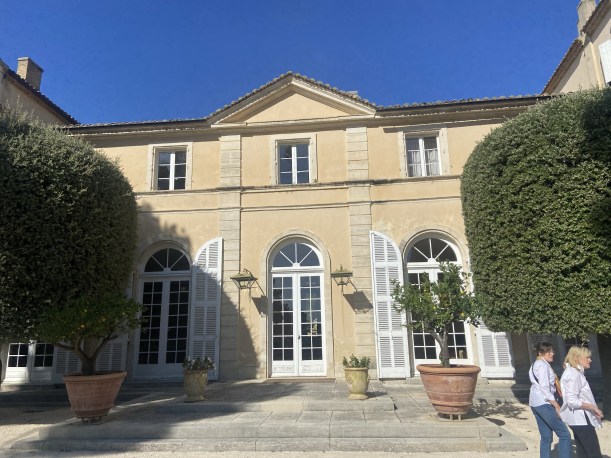
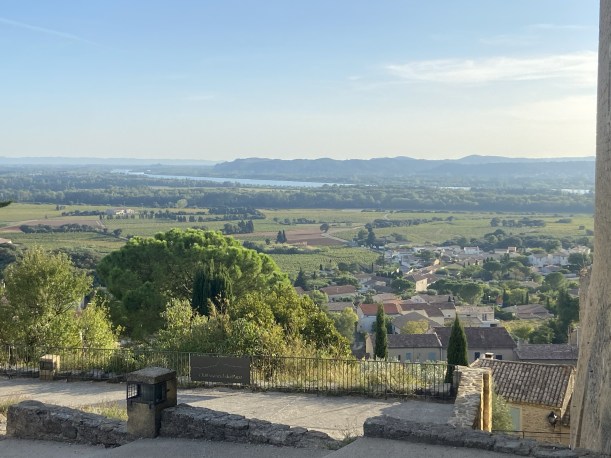
This a stunning chateau with views reaching far and wide. We toured the cellars and we were lucky enough to witness a live ‘remontage’ and sample 4 day old Mourvèdre from the tank. It was surprisingly delicious given its age.
Wine tasting here can be a little confusing as 13 grape varieties are permitted.
6 white grape varieties: Grenache blanc, Clairette, Roussanne, Bourboulenc, Picpoul and Picardan. Grenache blanc, a mutation of Grenache noir, is the most commonly used grape variety. Red grapes: Grenache, Syrah, Mourvèdre, Cinsault, Vaccarèse, Terret, Counoise, Muscardin.
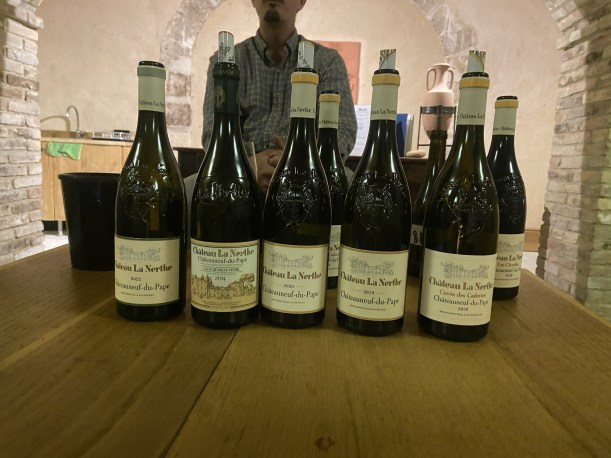
We tasted a range of their wines including
Château la Nerthe 2014 Clos de Beauvenir – it had an oxidised nose, almond, nice freshness and texture Good food wine
Château la Nerthe Barrel sample, Syrah amazing for only 4 weeks old! Full of fruit Soft tannins Delicious!!!
2020 Château la Nerthe Châteauneuf du Pape 25% Mourvèdre, Balanced, good year, plenty of fresh fruit alcohol well integrated
2019 Château la Nerthe Châteauneuf du Pape . 35 %Mourvèdre Syrah 31 %Grenache 33 % about a third each A bit more serious than 2020 and probably need more ageing to develop complexity
2020 Château la Nerthe Châteauneuf du Pape Cuvee des Cadettes which is made from their best grapes 9.000 bottles only GSM blend
2019 Château la Nerthe Châteauneuf du Pape Cadettes 55 % Mourvèdre floral earthy savoury serious big wine.
Antoine then brought out a blind wine which I immediately described as Pinotesque. I was happy to be correct in my deduction that it was one of their very limited production 100% Grenache.
This tasting was one of the highlights of many years of different wine trips. Thanks to @bossofthewine, Bruce Baldinger and the New Yorkers. We had serendipitously met them on the tour of the old Synagogue in Carpentras the day before and tagged along to this visit.
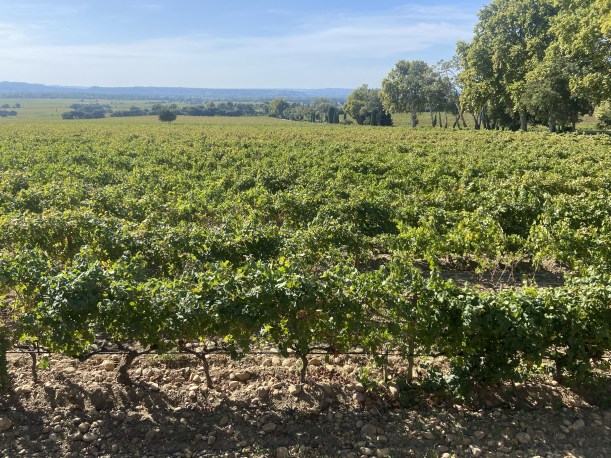
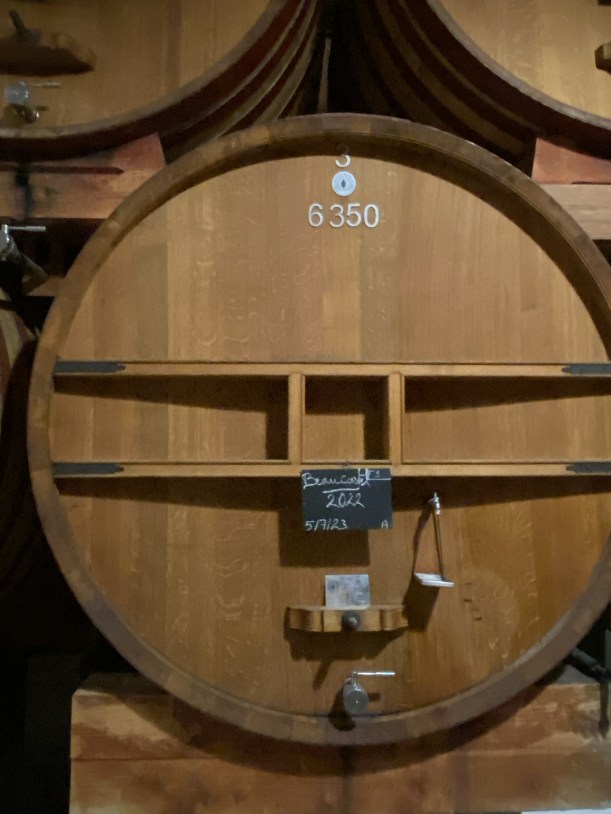
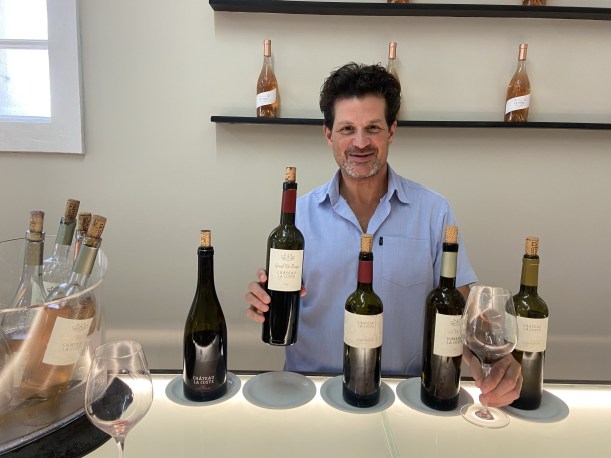
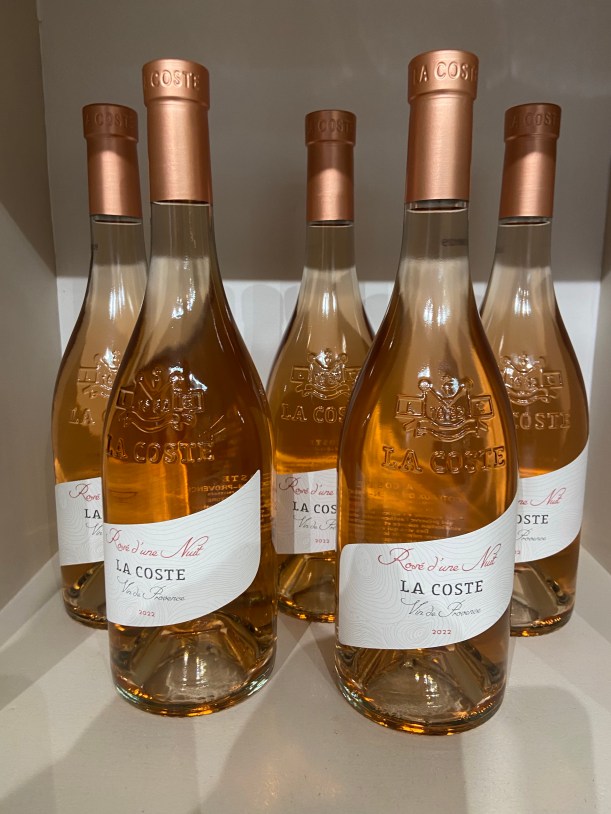
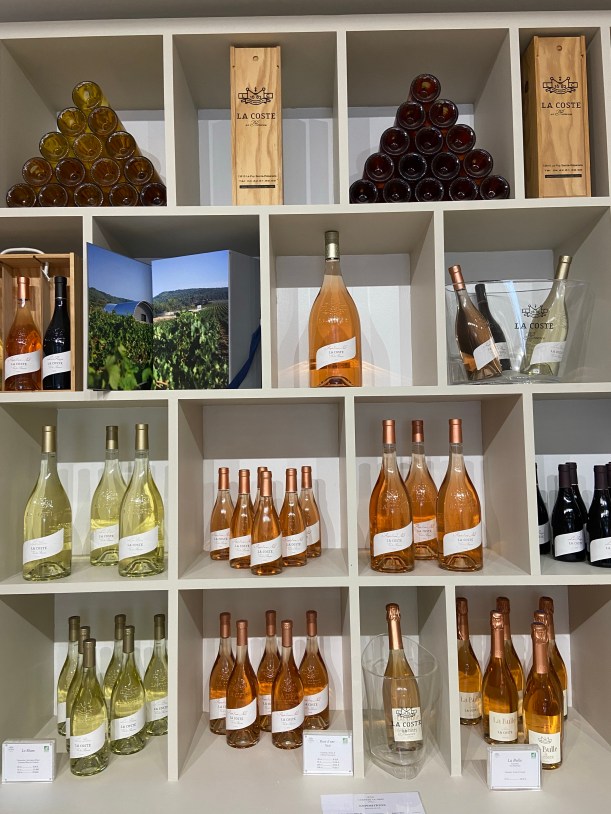
Finally I must not forget the opulent Chateau La Coste in Provence. It was a short drive south from our accommodation in Lourmarin through the beautiful countryside towards Aix en Provence near the village of Le Puy-Sainte – Reparade.
This is a real destination owned by Irish property magnate Paddy Mckillen. It has its own art and architecture walk, 600 acre sculpture park, a luxury hotel Villa La Coste multiple very high end restaurants and excellent wine.
Despite the breadth and depth and quality of wines across the world, there’s nothing quite like returning to La Belle France!
En Primeur, the sale of wines as futures, was until a few years ago a method of sale for premium Bordeaux and Burgundy but now it is increasingly being used for fine wines from other regions.
In this tasting the wines are pre-release but not by much. Brunello di Montalcino must be matured for a minimum of 5 years, including at least two in barrel, before being released to the market. These wines are already in bottle, rather than barrel samples and due out in 2025. So this EP seems to be more about marketing and to generate some expert reviews and promotional activity amongst the merchants.
For the customer the days of buying a future wine to help the wine makers cash flow and enjoying a slight discount in exchange are largely long gone. Now EP seems to be more about securing an allocation of rare or prestigious wines.
Brunello di Montalcino is a DOCG south of Siena within Tuscany. It is warmer and drier than Chianti producing more powerful concentrated expressions of Sangiovese. Its not far from the coast so parts receive some cooling breezes and inland the beautiful rolling hills provide a little elevation. Both of these factors help slow ripening down, which helps develop flavour and maintain freshness in the wines.
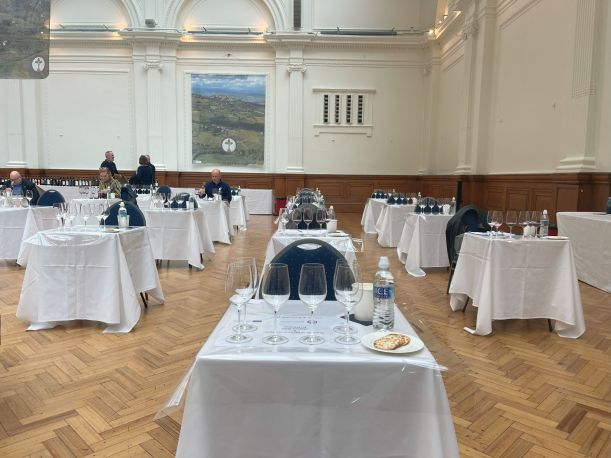
The seated format of the tasting was actually brilliant, no juggling of glass, catalogue (or e-catalogue on your phone) pen and pad, and no elbows required to push through the usual scrums that form around the popular tables – bliss!
It reminded me of how much I like Brunello and I was impressed by how approachable many of the wines were already on release. However with high acidity, fine sandy tannins and that concentrated red fruit they promise much more to come with bottle age. Many displayed classic sour cherry, dusty soft red fruits, bay leaf, dried herbs and a hint of black tea.
It was great to try and compare and contrast the impact of different soil types, those with more clay seeming to display riper fruit. Also to contrast the effect of using either Slavonian or French oak casks. Whilst the French oak did add a layer of spice and sometimes subtle toast, none of the wines I tried seemed overdone.
Of the many great wines on show a few stood out to me:
Argiano BdM – Lovely nose, balanced with a nice touch of spice.
Banfi Vigna Murrucheto BdM – Concentrated fruit and subtle toastiness.
Capanna BdM – Classic sour cherry, black tea and touch of wet stone.
Col d’ Orcia BdM – Intense riper red cherry and plum, dried herbs, bay leaf and a nice dusty finish.
Col d’ Orcia Poggio al Vento Riserva 2016 – Concentrated pot purri, raspberries, sour cherry, black tea, smoke and leather, super long.
Sesti BdM – Consistently fine, roses, sweet cherry, cranberry, dried oregano, black tea and freshly turned soil, amazing concentration.
Sesti Phenomina Reserva 2018 – Knock put too!
Uccelliera BdM – A big wine but still fresh with rich cherry tart, roasted herbs and a bit of toast.
Many thanks to Hunt and Speller and Consorzio del vino Brunello di Montalcino for organising this great tasting and providing so much interesting information about the wines in the catalogue.
By the way don’t forget the Rosso di Montalcino category of wines too. Supposedly entry level but many of the top estates produce what are effectively baby Brunello’s which represent great value for money and can be enjoyed sooner.
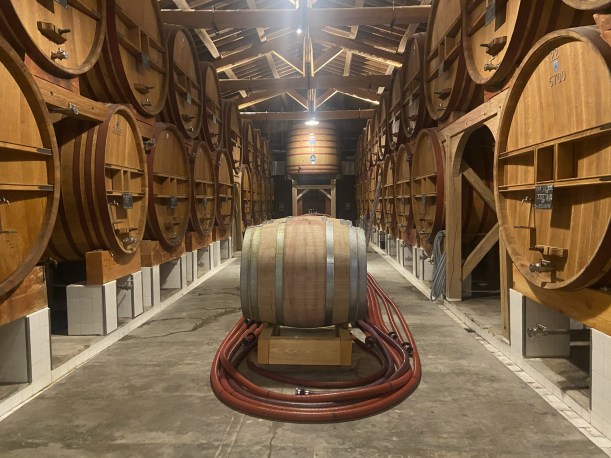
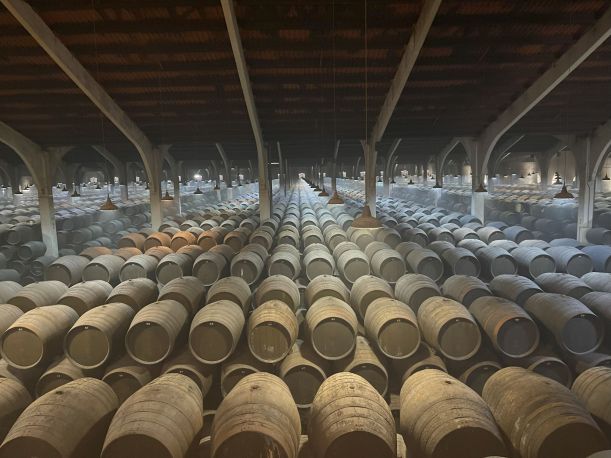
Jerez de la Frontera, so named as the boundary between warring Christians and Moors in the 13th Century is the home of bodegas Valdespino. And just look at this amazing cellar, in the dim light and controlled moisture haze it seems to go on as far as the eye can see!
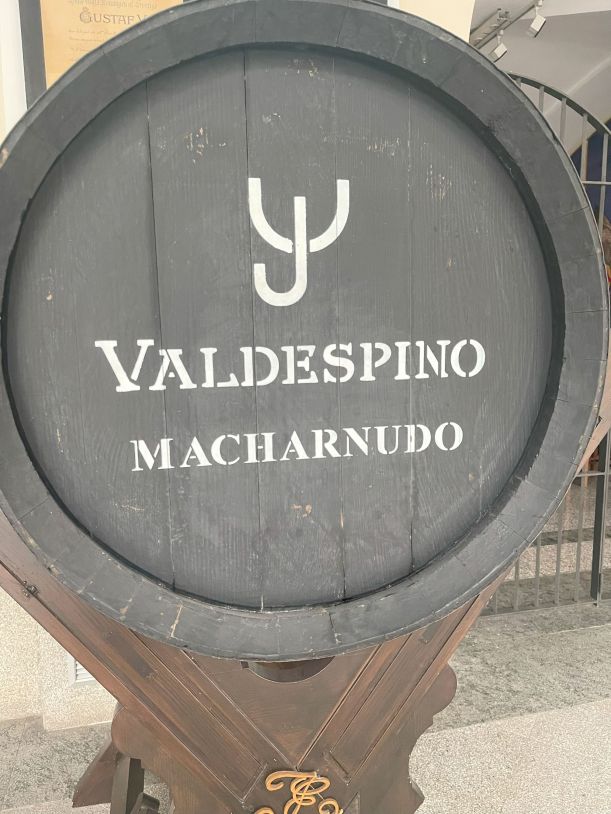
This is where the solera for the excellent Inocente Fino and the Tio Diego Amontillado live. Both contain wine made from the highest point of the Macharnudo Alto single vineyard.
Doors to the west open to allow the cool Poniente breeze in
The best vineyards in the sherry triangle have Albariza soils which are a mix of limestone, silica and clay. These soils absorb moisture in the winter and then form a crust during the dry growing season retaining moisture and slowly releasing it to the vines. The gently sloping vineyards have a series of troughs, called Asperpia, worked into them to catch water and let it soak into the soil.
The Macharnudo Alto vineyard has a little more elevation than elsewhere and so catches the cooling Poniente breeze from the Atlantic and the albariza soils here contain a particularly high level of limestone both contributing to more concentrated grapes.
In the cellar the solera systems sit side by side each with 10 criadera and the final tier of solera. The Inocente barrels all contain flor and as with all Finos the resulting wine has been fully matured under a layer of yeast. Wine is removed for bottling from the bottom solera layer, where the wines are oldest, each spring and autumn when the flor is thickest. The wines therefore have an average age of around 10 years. The barrels in the solera are then topped up successively each from the criadera above it until new wine is added to the first set of barrels. The nutrients within the fresh wine added helps to feed the flor yeast and keep it alive.
The first three criadera of the Tio Diego Amontillado solera system have flor and then more spirit is added fortifying the wines up to 17% ABV which kills it off. The wine matures in the remaining layers of the solera oxidatively resulting in a wine with both yeasty flor character and nutty, caramel type notes and a of course a darker colour. There is more evaporation without the floor and so the abv rises by another few degrees. Wine is only drawn off the solera once a year meaning that the average age of the Tio Diego is more like 17-18 years.
There is one other wine connected with these soleras and that is the Palo Cortado. Every now and then the wine maker recognises that one or two of the barrels ‘want to be’ Palo Cortado. It may be that the flor has died or the barrel displays some extra concentration or individual character. These barrels are moved over to join the Palo Cortado solera producing Viejo C.P. or even the PC VOS (Very Old Sherry).
There are 11 layers within these solera systems and there are 70 barrels in each making 770 in total. This sounds like a lot but less than 40% is taken out each year and with an average age of 10 and 17 years respectively it takes a lot of time and space not mention care and attention to make these fantastic wines.
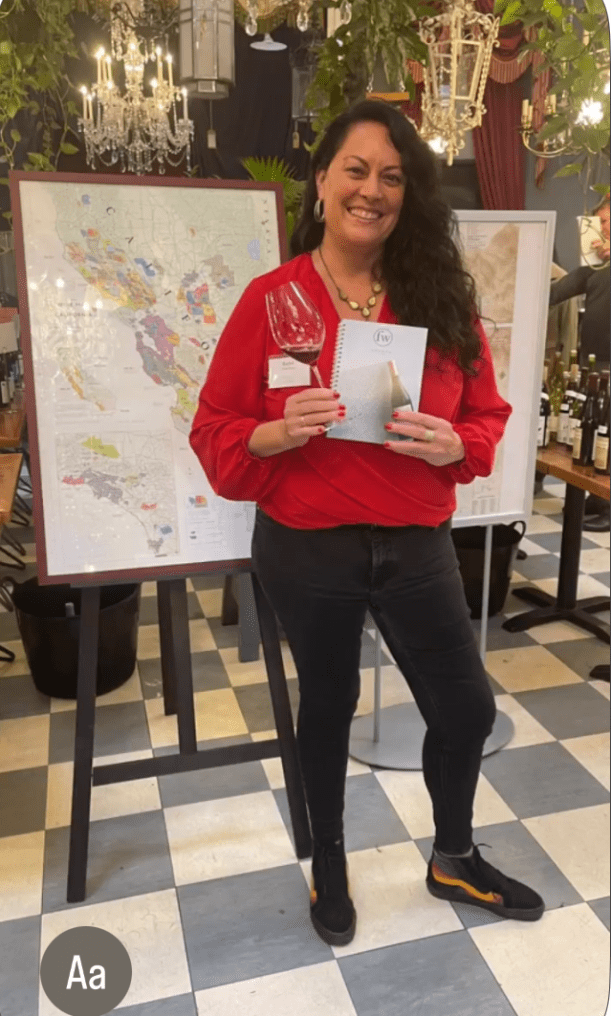
Flint Wines have a comprehensive portfolio of wines from the USA and to support a recent portfolio tasting they have put together an amazing American tasting booklet. It is packed full of maps, descriptions of each AVA’s character, climate, aspect, soils and detailed winery profiles.
Quality grapes in California are very much a product of one or more factors in the vineyard that moderate the otherwise warm climate. The cold Pacific sends cooling breezes and overnight fog far inland along the State’s various east west valleys that cut through the coast mountains and of course San Fransico Bay itself. Also vineyards planted at altitude on these mountain slopes also enjoy cooler nights.
Grapes as a result ripen more slowly, developing flavour and retaining more acid giving the wine maker lots of good material to work with. Growers of Pinot Noir, Chardonnay and even Syrah are particularly on the lookout for cool climate pockets. It was great to be able to visualise all this with aid of these maps.
The tasting was organised by region which allowed you to travel from one AVA to another comparing and contrasting and really see how wine makers are responding to the changing conditions.
Hats off to Rachel Dixon their USA Ambassador, who’s mission to educate about wines of American is certainly working!
For me standout wineries included:
Chanin Wines – Chardonnays & Pinots from Los Alamos, Santa Maria Valley
Christom Vineyards- Chardonnays & Pinots from Willamette Valley, Oregan
Tyler Winery – Chardonnays & Pinots from Santa Rita Hills, California.
Snowden Vineyards – Sauvignon Blanc & Cab Sauvignon from Napa Valley, California.
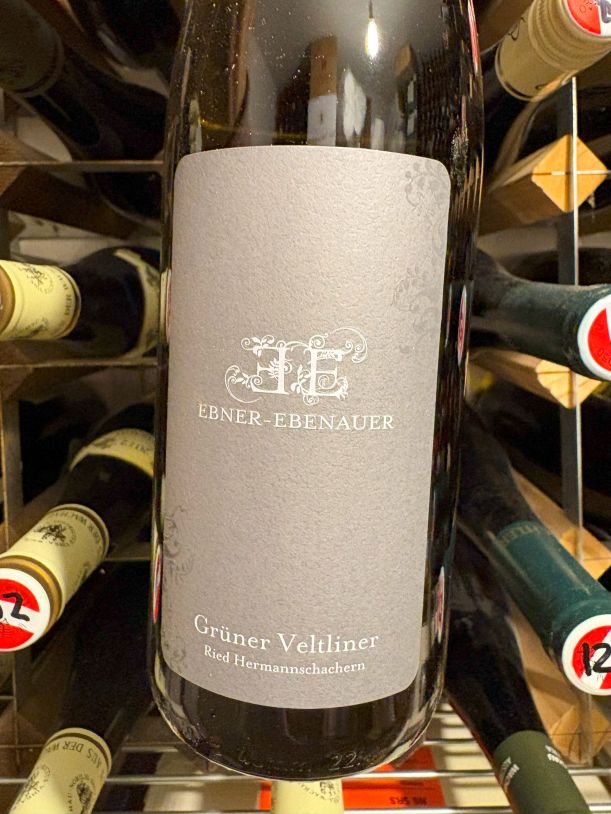
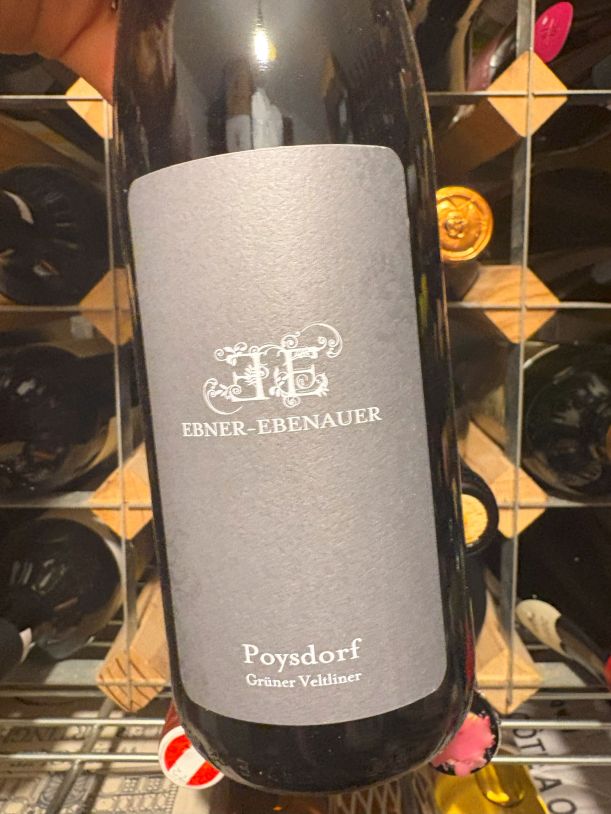
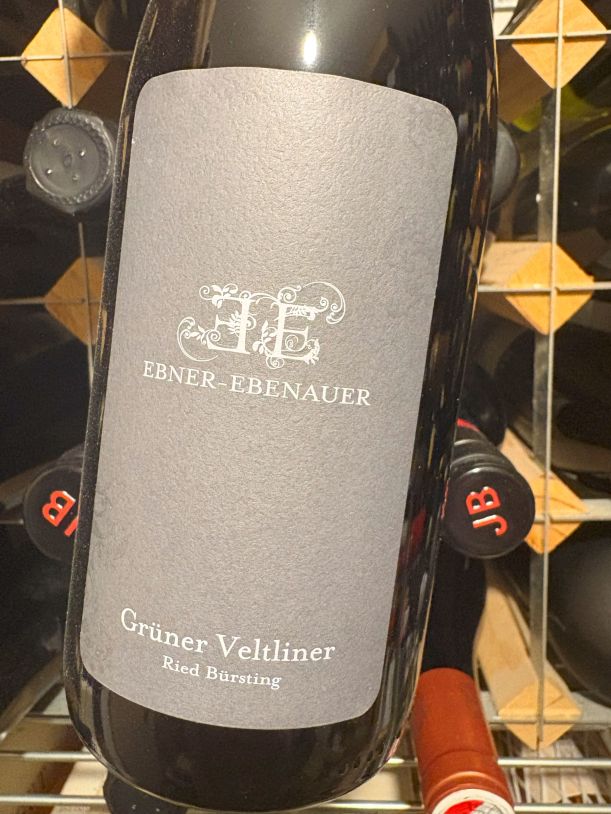
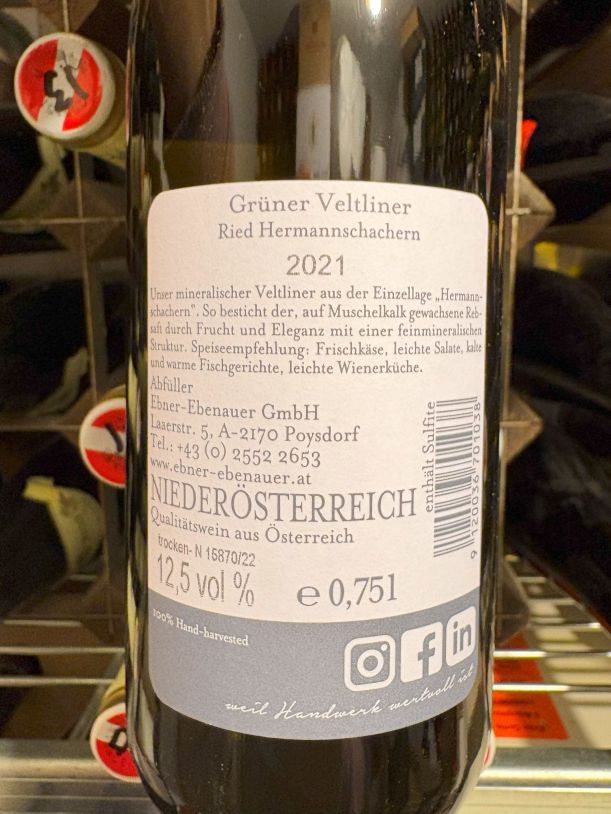
Ebner-Ebenauer make small amounts of biodynamic and organic wines from largely old vines in the north east of the Weinviertel region near Poysdorf. The charismatic Marion and her husband Manfred are making waves with their very late disgorged Blanc de Blancs and Noirs but it is their range of single vineyard Grüner Veltliners expressive the varied soils and aspects that we are focusing on there.
Ebner-Ebenauer Poysdorf Grüner Veltliner 2021. A blend from across their vineyards, spicy, with wet stone a touch of white pepper and crunchy orchard fruit. Refreshingly moreish, light but managing to sustain ones interest. Great value.
Ebner-Ebenauer Poysdorf Hermanschachern Grüner Veltliner 2021. From a single vineyard with limestone and fossil soils and 30 year + vines. Citrus, fresh pear and apple a touch of white peach, white pepper, herbs and wet stones. Mid weight with great focus and freshness this lasts long on the palate. Drinking now but will evolve over the years. My favourite and the pick for wine of the month.
Ebner-Ebenauer Poysdorf Bürsting Grüner Veltliner 2021. From a single vineyard of 50 year old vines, rich, spicy, juicy and complex, concentrated and full bodied. Decant or cellar for up to 10 years.
The 2021 vintage, by the way, across Austria really has a superb balance of fruit and freshness.
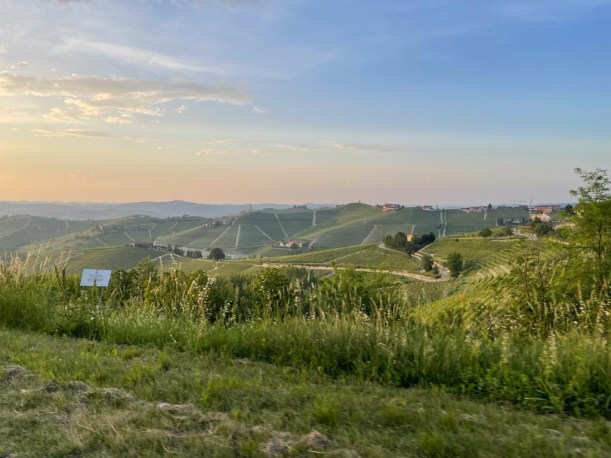
The weekends impending champions league final reminded us it was exactly a decade on to the day from our last wine trip to Piemonte.
We spent the May weekend of 2012 in Barolo and were escorted through the region by Roger Barlow of Gerard Seel.
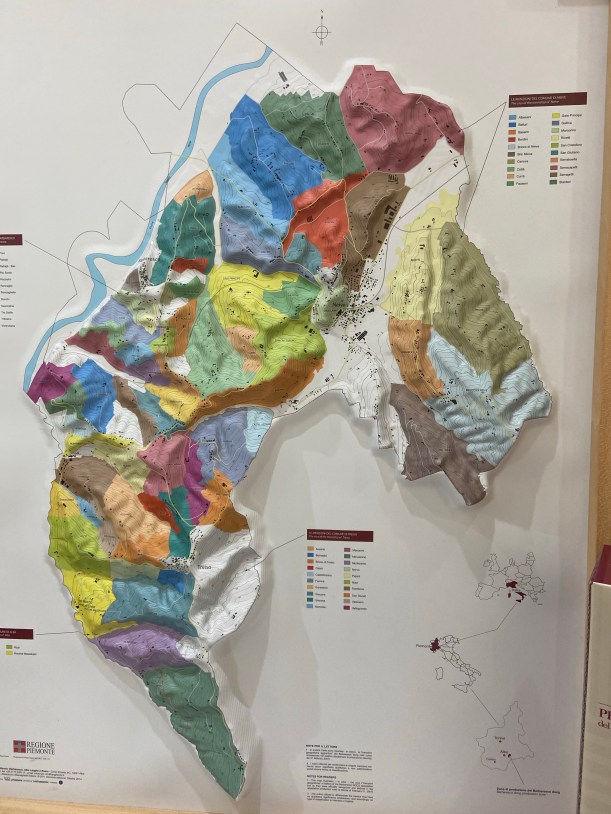
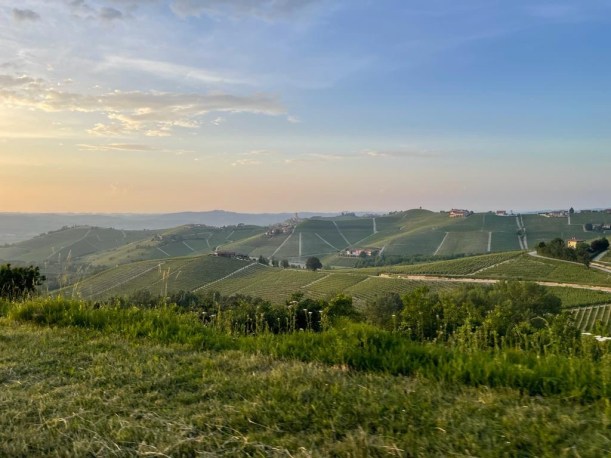
This time to Barbaresco, facilitated by our friend Mehul, a serious Italophile and lover of wines of this region.
The plan was to get a blind tasted overview of the 2019 vintage at Barbaresco a Tavola, then to indulge in the food and wine culture of Piemonte. We had arranged a few select winery visits.
Piemonte is renowned for 3 main red varietals, Nebbiolo of course, Barbera and Dolcetto. Their 3 main white grapes are Arneis. Cortese and Cortese.
We concentrated on Nebbiolo wines. They can be difficult to appreciate young due to their high tannins and acidity and the wines need patience.
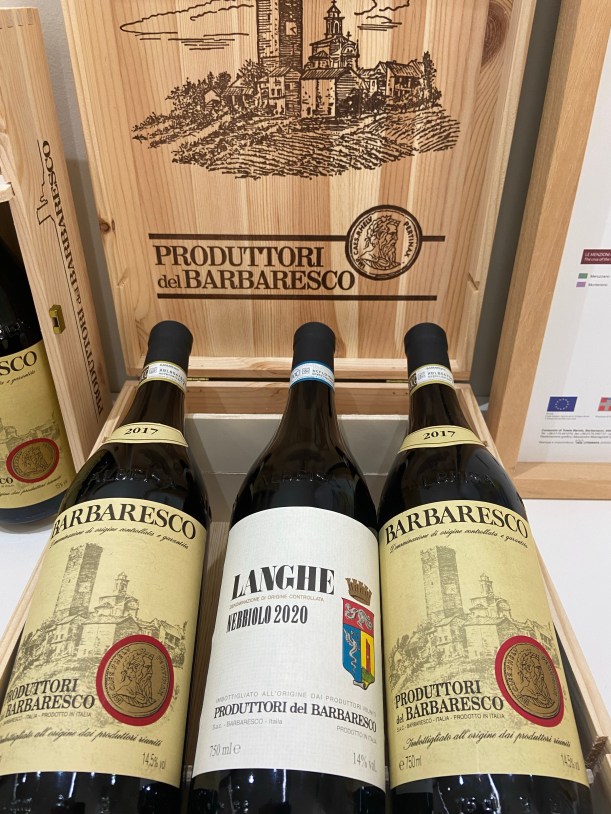
The Produttori del Barbaresco was founded in 1958. They now have 51 members and more than 100 hectares of Nebbiolo vineyards in Barbaresco. It is conveniently located in the small village of Barbaresco and wines can be tasted by just dropping in. They are well known for producing high quality and more affordable Barbaresco
Lange Nebiolo 2020.
On the nose: Aromatic, herbs, cut strawberry.
In the mouth: Nice balance, dusty tannin, fruit structure, medium in length. Approachable already. 14 euro very nicely made
Barbaresco 2018
On the nose a little volatile, rose, macerated strawberry, pot pourri
In the mouth: good balance, full body, sweet juicy fruit, little hot on end.
Barbaresco 2017.
Herbaceous nose, cinnamon, red tart fruit, cherries.
On the mouth: Rounded fruit, elegant structure, good fruit concentration, slightly puckering youthful tannin, long finish. Very good.
The 2019 although only recently bottled showed as one of the top 6 wines at the Tavola tasting. Confirming the consistent quality of the wines here.
The winery produces 50,000 bottles per annum and is 100% organic, The Ada Nada farmhouse is located in Treiso, near Alba. They have a beautiful Agroturismo with a lovely outdoor swimming pool with panoramic views of the rolling hills.
Cento
Golden green colour, made from 100% Nebbiolo. Grapes are green harvested then the wine is made following a method traditional and the aged for 24 months on lees.
On the nose citrus, lime zest, orange peel some cream, in the mouth sherbet, finishing slightly abruptly. Fresh and fun.
Dilva
This is another 100% Nebbiolo method classic but this time with zero dosage. Made with skin contact and fermented in barrique then and aged for 60 months on lees. The wine is not long enough in barrique to impart a woody character but allows micro oxygenation.
This is a more serious fizz. On the nose: toasted brioche, toffee, flint and smoke. In the mouth stewed spiced apple, nutty, long and persistent, slightly drying from a dusting of pleasant tannin which counteracts the citrus finish.
Neta Sauvignon Blanc 2021.
Grown on north facing slopes.
On the nose a touch of grass, green pepper, concentrated confected pear drops.
In the mouth rich ripe candied citrus, well balanced but finishes a touch warm.
Lange nebiollo Serena 2021
Made in Barbaresco but from youngest vineyard where the vines are 18 yrs old the wine is made to be approachable and for earlier drinking.
Nose: red cherries, raspberries, dried cherries, light herb.
On palate: strawberry chew, chewy tannin, a well made great food wine.
Classic Barbera Pierin 2020
made in large oak 2 year
Nose: Dark cherries, a whiff of polish, touch of sawdust then strawberries, ripe fruit, voilets. In the mouth blackberry as well as juicy red fruit, medium acidity, fuller body, medium length. Tasty! another good quaffing wine.
Barbaresco Valeirano 2019.
The vines here are over 50 years old.
Nose: Mint, bay leaf, celery, cut strawberry, herb, then floral notes. A delicate and complex nose.
In the mouth: medium plus body, tart cherry, savoury meat, liquorice, herbs. Elegant long excellent!
Barbaresco Rombone Elisa 2018. This vineyard was planted in 1947.
Nose: more expressive, soft red fruit, baked strawberry fruit tart, spices, touch of polish and scent of pot purri.
In the mouth: Full bodied, savoury, cooked fruit, sweetness then a ton of tannin, fine grained. The finish is dry but with a line of fruit that persists.
Barbaresco Cichin Reserva 2017.
Spends 3 years in large oak botti and 2 years in bottle before release. From the rombone vineyard planted in 1958.
The wine maker naturally concentrates the wine by letting 20% of the juice run off and leaving the rest to macerate and ferment on the skins.
On the nose: Leather, perfume, pot purri, polish, orange peel, incense very complex.
In the mouth: Rich, spice, leather, orange peel, firm present tannin but drinking. Very long excellent!
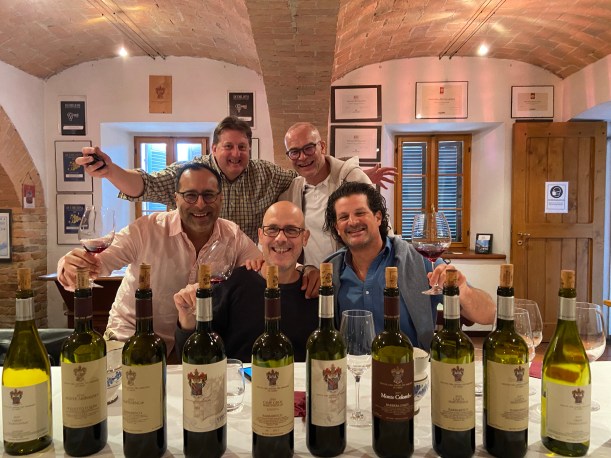
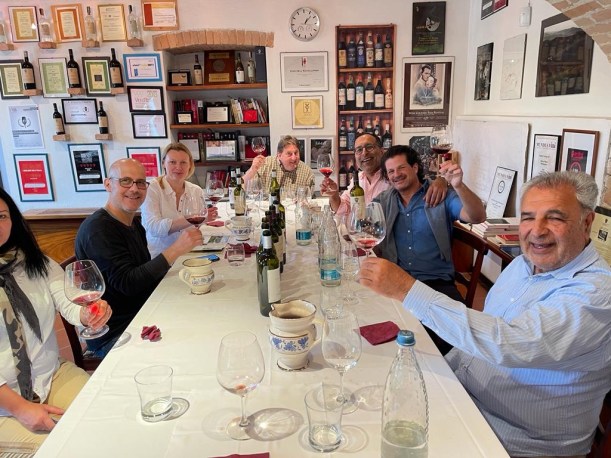
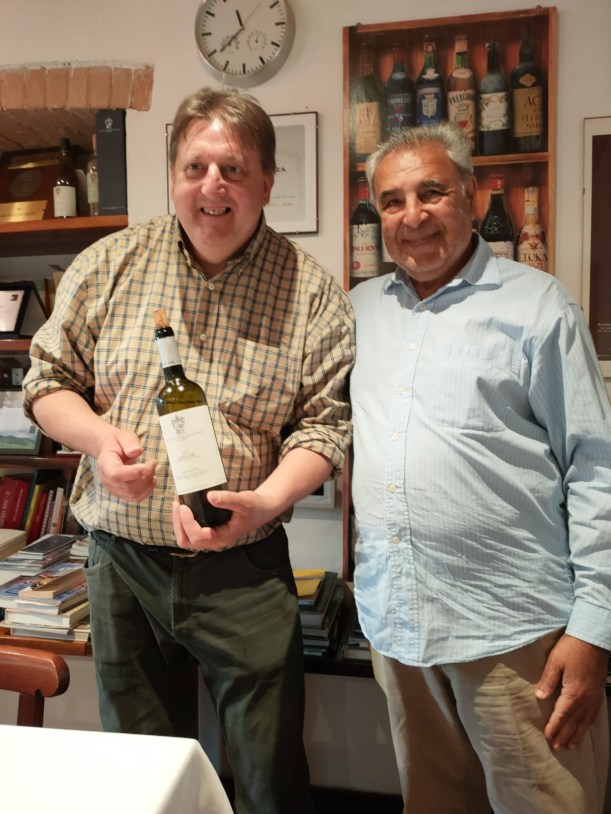
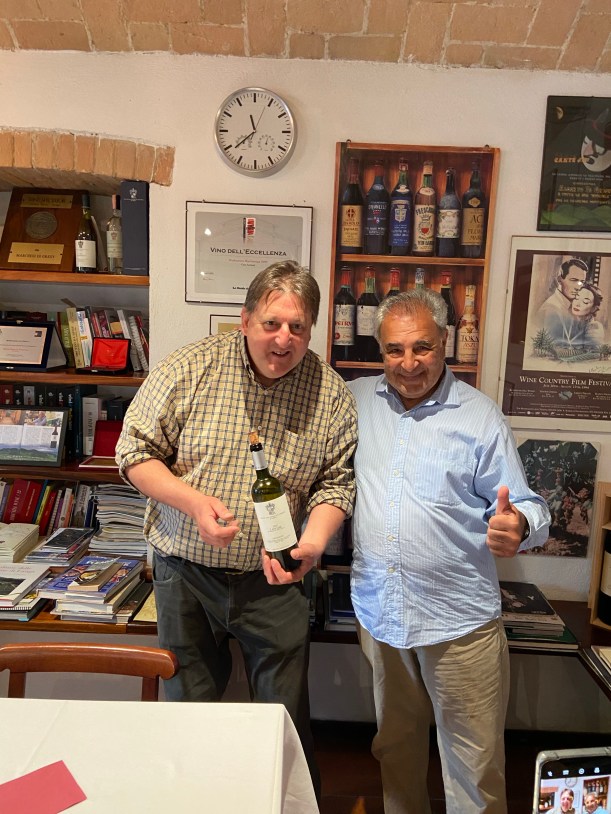
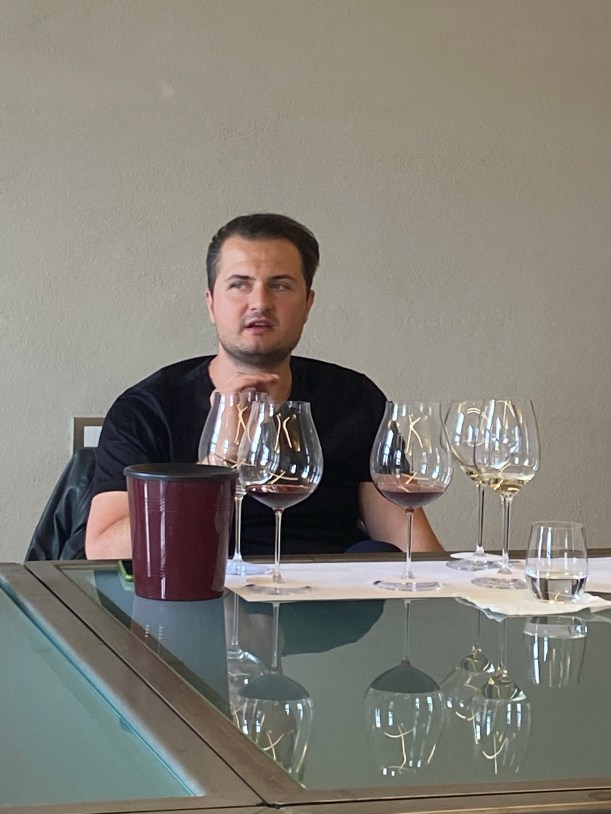
A memorable tasting hosted by the passionate Jeff at Marchesi di Gresy Barbaresco
The Cisa Asinari estates of the Marchesi di Grésy include four wineries located in the Langhe and Monferrato region.
2020 Marchesi di GrésyLanghe sauvignonblanc
Flinty smoky slightly sulfurous, reduced,. Bottled 1yr, green gage, nuts, briny, 7-8 mth stainless steel on lees Greengage, green pepper, tart lemon, mineral dust coating in mouth. Fairly full bodied, good finish
2016 Marchesi di Grésy langhe sauvignon blanc
Darker colour Lemon curd, sweet top note of peaches, salty, floral Fuller body, hint of peach, yellow plum? Reminds me of white bordeaux, thought a blend with semillon great finish, excellent acidity
2019 Marchesi di Grésychardonnay
Pale Ripe pear, maybe a little peach, great wood influence, vanilla, bit of smoke and toast, stone Tart apple, peach, great acidity, but drying, very elegant
2015 Marchesi di Grésy Chardonnay
Coal smoke And toast, roasted hazelnuts, white flower, Caramel, lemon, mineral, really balanced and elegant, acidity, linear
2019 Marchesi di GrésyDolcetto Monte Aribaldo
Cherry linctus, dark and red, strawberry, stem, slightly burned nose, possible reductive Savory and tannic, tart cherry, slight bitterness, savoury finish, med acidity
2015 Marchesi di Grésy Montecolombo Barbera
Treated like a barbaresco Turmeric and cumin nose, dark cherry, vanilla, toffee, Dark cherry, really drying, super acidity, a little hot, herbaceous, quite tannic in gums
2011 Marchesi di GrésyVirtus Langhe Rosso – Cab Sauv and Barbara 40/60
Green pepper Black currant leaf dark cherry, Blackcurrant, good acidity and tannin, balanced, mid palate missing
2007Marchesi di Grésy Virtus Langhe Rosso – Cab Sauv and Barbara 40/60
Much more developed, great mix of the barbera linctus with blackcurrant leaf Mushroom to start on the nose Great ripe balanced, fantastic wine,long… love it
2004 Marchesi di GrésyVirtus Langhe Rosso – Cab Sauv and Barbara 40/60
Green pepper Black currant mushroom caramel vanilla Another great balanced wine, finishes v very cab, very beautiful
2018 Marchesi di GrésyBarbaresco Martinenga
Mixed vintage Muted nose, slightly floral And herbaceous woody notes, tart cherry Drying, good intensity and length not showing yet but had very good potential based on finish
2017 Marchesi di GrésyBarbaresco Martinenga Gaiun Made from specific plots on the outer edge of the Martinenga cru, bordering Asili
Dark cherry strawberry cream pot pourri, roses Drying, intense dried flower, incense, tart cherry, liquorice, finish forever long, sexy, complete, wine for the long term. 2016 Marchesi di GrésyBarbaresco Martinenga Gaiun
Darker Sandalwood, Rose, macerated strawberry, white truffle, sapid More concentration, fruit intensity, liquorice tobacco, finish goes on forever An epic wine for the long term. Touched something deep inside me, literally brought tears to my eyes
2016 Marchesi di GrésyCamp Gros Martinenga Riserva
12 mths small barrel 18mths large barrel, 3 yrs total 6900 btls made
Dried rose, sandalwood, pot pourris dried cherry orange peel, spice – fascinating nose Drying, tart, regal tannins, stony, tight. Not showing itself, wait another 5-10yrs for this to emerge.
This iconic winery needs little introduction. We were fortunate to be hosted by the Giovanni, Angelo Gaja’s son.
He gave us a great insight into the wines and the challenges ahead. We looked out of the palatial Gaja headquarters to where the River Tanaro should be. Instead we say a dry cracked river bed with no water in sight. The Tanaro had dried up which is a worrying sign of things to come.
We tried a selection of their wines all made to perfection. Mehul requested a bottle of Sori Tildin (one of my desert Island wines) A vintage 2001 was duly decanted. A fitting finale to a memorable weekend in Barbaresco!
Kirsty Harmon is a local girl turned renowned winemaker.
She grew up across the road of Blenheim and is well acquainted with the local scene.
Her first degree was in microbiology. She then worked as an event and wedding planner and worked for the previous owner of the Trump winery. She stayed on, ultimately becoming head of winemaking and general manager.
She Trained in enology at UCL Davis and won various scholarship for internships.
This took her to Craggy Range in Hawkes Bay New Zealand part of then Family of 12.
She also gained experience at Domaine Faivlely in Burgundy. She was the first intern there since 1837!
Dave Matthew a local celebrity in country music owns Blenheim and many of the labels have his colourful artistic designs.
It’s boutique winery producing 5 to 8 000 cases.
Kirsty with her microbiology background initially had a service lab for testing wines and helped out local wineries.
She has pioneered her wines all under screw cap, somewhat unusual for the US, but having worked in New Zealand and learned of its merits prefers this method of closure.
Blenheim Sauvignon Blanc 2021
100% Sauvignon Blanc steel fermented
Aromatic
Somewhere between new and old world
Goooseberry reductive, some passion fruit and tropical nuances
Blenheim Albariño 2021
Peachy stone fruit
Saltiness mineral
Delicious Albariño very typical
Amazing it shows such typicity and saltiness after such a recent planting in such a new environment
Heavy red clay here with iron which I’d noted when I visited the Trump winery for lunch.
Blenheim gruner veltliner
An interesting story, it was planted very much by chance whentheir 800 vines of Teroldago didn’t bud and they were offered by the Gruner the nursery!
Slight gun flint
Lean reduced nice acidity
Blenheim Cabernet franc 2020
Interesting Fractal wine label especially liked by the mathematicians
Kirsty prefers to make lighter style red
Enjoys the fruitiness
Full of fruit
9 months barrels
Some whole cluster and natural carbonic
Painter Red Nlend
2019
Lots grapes fresh fruity blend
Tasting with Kirsty reminded me that the winemaking in this region is a mere 30 years old and they are very much finding their feet and don’t know yet exactly what’s going to work.
She has a great pioneer spirit and along with Albariño planting from Mencia in Galicia, (also has clay soils and high humidity).they have planted Garnega, Tempranillo Roussane and Gruner Veltliner are among many others being planted here.
It will be fascinating to see what the future holds. It certainly seems to be in good hands.
Jefferson vineyards
This is an historic site with vineyards first planted by Fillipo Mazzei,Italian architect with the backing of Thomas Jefferson whos Monticello estates is nearby.
Recent plantings date from 1981
I was kindly hosted by Chris Ritzcovan winemaker and met the current owner Attila.
This is Chris’s 10 th vintage. His father made home wine which may have sparked in him an interest.
He trained locally at the famous University of Virginia
Chris mentioned they have a lot of vintage variation and also described the challenges mentioned on other visits
Wines tasted
Jefferson Vineyard petit manseng 2021
Dry, Sugar gets high
Neutral oak
75 cases made (only 3 barrels)
Petit Manseng originally form Jurancon-aromatic, peach honey ginger
High acid
Lovely texture lees ageing
Good balance nice nutty feel almond
Great effort here and shows potential of this grape in the region.
Jefferson Vineyard estate reserve 2019
Viognier, barrel fermented for 9 months in new French oak barrels Petit Manseng 6%
Really rich, full bodied oily with stone fruits, apricot and peach
Slight bitter finish
Jefferson Vineyard 2019 Chardonnay
Barrel fermented 9 months in oak
25 years old vines
Lemon, some vanilla, butter, lees ageing new American, new French and Hungarian oak (lighter spicier influence than French or American)
Jefferson Vineyard 2017
Cabernet Franc
Great vintage, 9 months in oak barrels
Fruit bomb, blue fruits
Plenty of tannins
Mouth and gum tannins integrated, Not green or herbaceous
Jefferson Vineyard 2019 meritage
Merlot and Petit Verdot, cabernet franc Malbec
20 months in oak Hungarian French and American oak
Blue and black fruits good tannic structure
Quite drying tannins
May benefit from more time
Jefferson Vineyard Merlot Réserve 2019
Smooth tannins wrapped with fruit
Chocolate and plum slightly hot
Made with Older vines 100 % French oak
Chris is also growing some Tannat and shows the same enthusiasm for the region as fellow winemakers.
Summary
The wines from Virginia are somewhere between new and old world. They are quite European in style. They don’t have the opulence and power of California but they still have more fruit and aromatics than similar wine growing areas in Europe.
It still a young region and experimental.
The current notable varieties performing well are Chardonnay, Viognier, Petit Verdot . Cabernet Franc and Merlot.
However, watch out for new varietals including Albarinho, Petit Manseng and Nebbiolo.
I’d love to visit again and explore other areas, such as Rappahannock, an hour north of Monticello. Perhaps a few weeks earlier, in October to witness the full autumnal splendour.







































 WanderCurtis Wine