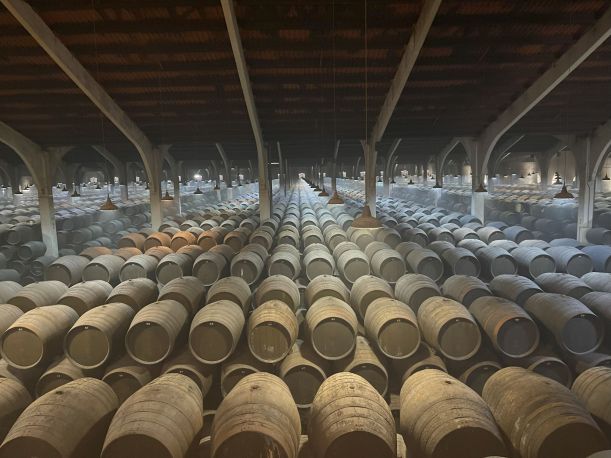
Jerez de la Frontera, so named as the boundary between warring Christians and Moors in the 13th Century is the home of bodegas Valdespino. And just look at this amazing cellar, in the dim light and controlled moisture haze it seems to go on as far as the eye can see!
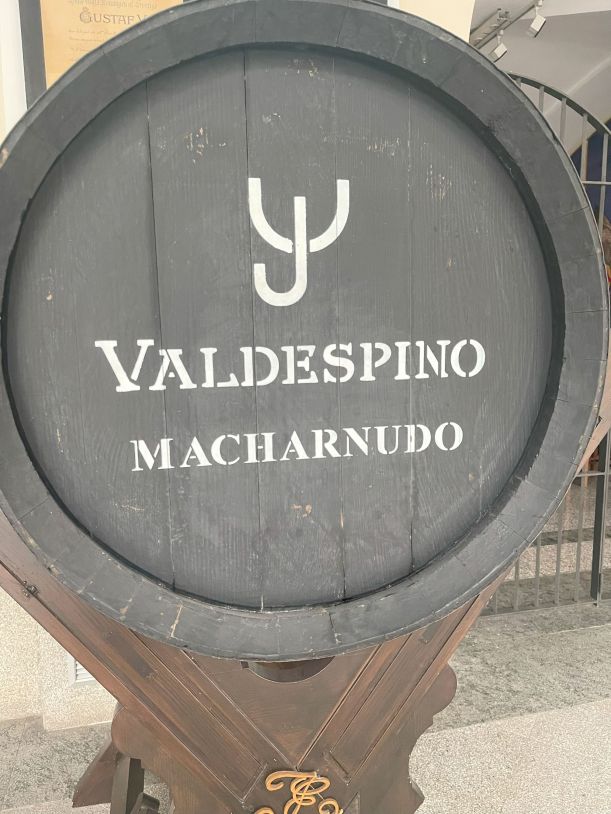
This is where the solera for the excellent Inocente Fino and the Tio Diego Amontillado live. Both contain wine made from the highest point of the Macharnudo Alto single vineyard.
Doors to the west open to allow the cool Poniente breeze in
The best vineyards in the sherry triangle have Albariza soils which are a mix of limestone, silica and clay. These soils absorb moisture in the winter and then form a crust during the dry growing season retaining moisture and slowly releasing it to the vines. The gently sloping vineyards have a series of troughs, called Asperpia, worked into them to catch water and let it soak into the soil.
The Macharnudo Alto vineyard has a little more elevation than elsewhere and so catches the cooling Poniente breeze from the Atlantic and the albariza soils here contain a particularly high level of limestone both contributing to more concentrated grapes.
In the cellar the solera systems sit side by side each with 10 criadera and the final tier of solera. The Inocente barrels all contain flor and as with all Finos the resulting wine has been fully matured under a layer of yeast. Wine is removed for bottling from the bottom solera layer, where the wines are oldest, each spring and autumn when the flor is thickest. The wines therefore have an average age of around 10 years. The barrels in the solera are then topped up successively each from the criadera above it until new wine is added to the first set of barrels. The nutrients within the fresh wine added helps to feed the flor yeast and keep it alive.
The first three criadera of the Tio Diego Amontillado solera system have flor and then more spirit is added fortifying the wines up to 17% ABV which kills it off. The wine matures in the remaining layers of the solera oxidatively resulting in a wine with both yeasty flor character and nutty, caramel type notes and a of course a darker colour. There is more evaporation without the floor and so the abv rises by another few degrees. Wine is only drawn off the solera once a year meaning that the average age of the Tio Diego is more like 17-18 years.
There is one other wine connected with these soleras and that is the Palo Cortado. Every now and then the wine maker recognises that one or two of the barrels ‘want to be’ Palo Cortado. It may be that the flor has died or the barrel displays some extra concentration or individual character. These barrels are moved over to join the Palo Cortado solera producing Viejo C.P. or even the PC VOS (Very Old Sherry).
There are 11 layers within these solera systems and there are 70 barrels in each making 770 in total. This sounds like a lot but less than 40% is taken out each year and with an average age of 10 and 17 years respectively it takes a lot of time and space not mention care and attention to make these fantastic wines.
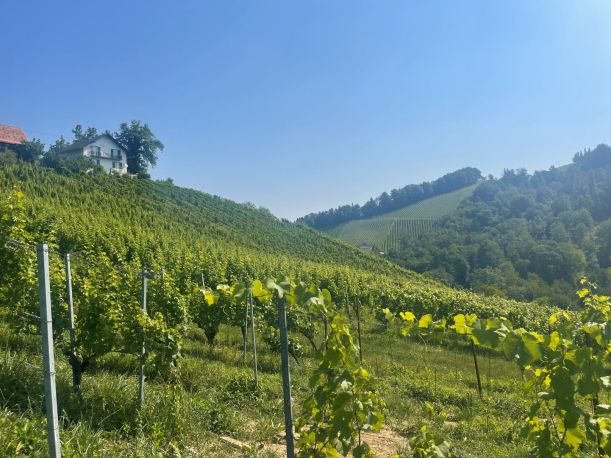
At BioWeingut Karl Renner, nestled in the rolling hills of Pössnitz in the Südsteiermark, sustainability is at the very heart of everything they do. For Karl and his family, who have stewarded this land since 1966, the focus is clear: create wines of character with minimal intervention, and protect the land for future generations.
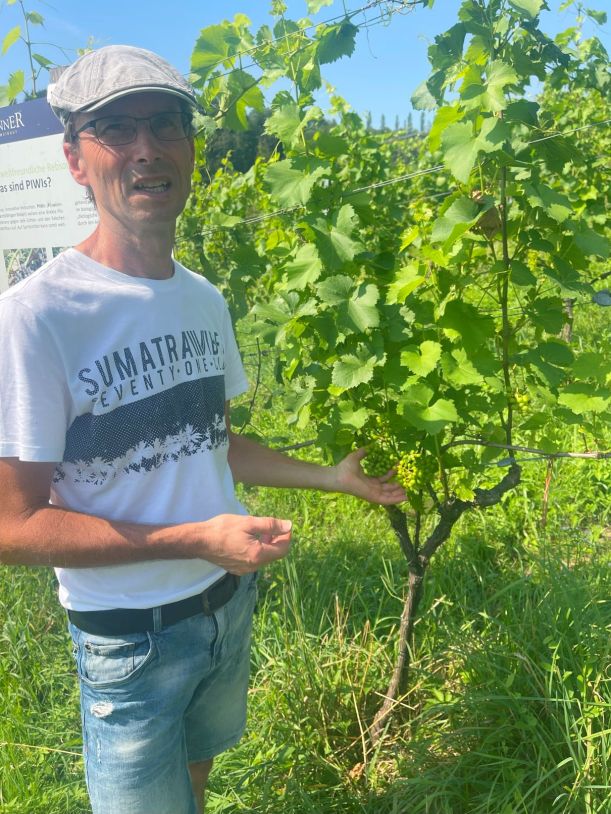
But even for the most committed organic growers, nature presents challenges. Karl points to oidium and downy mildew as the most persistent threats to viticulture in the Südsteiermark. These fungal diseases, brought to Europe in the 19th century, remain the main reason why vineyards, even organic ones, require frequent treatments. In some seasons, up to 20 copper sulphate sprays are needed to try and keep disease at bay. “It’s too much,” says Karl. “It leaves copper in the soil which builds up over time.”
That’s why Renner is turning toward PIWI or as he calls them “next generation” varieties, fungus-resistant hybrids bred to thrive with far fewer treatments. Since 2011, he’s been gradually replanting his vineyards with these innovative grapes, which make organic viticulture not only more effective but also more appealing for wider adoption in the wine industry.
The four main PIWI varieties Karl works with are:
Muscat Bleu – A mid-budding, early-ripening variety, Muscat Bleu is highly aromatic and serves as an early indicator in the vineyard: its berries turn a vivid blue before ripening to black. This allows Karl to closely monitor ripeness progression in the vineyard.
Chardonel – A hybrid of Chardonnay and Seyval Blanc, first developed in New York in 1953, Chardonel delivers both structure and finesse. It captures the familiar elegance of Chardonnay but thrives under organic management.
Souvignier Gris – A cross between Seyval Blanc and Zähringer, Souvignier Gris is one of Karl’s standout performers. It ripens later and retains excellent acidity. It also has some frost resistance.
Muscaris – This cross between Solaris and Gelber Muskateller produces an early-ripening, highly aromatic wine. Muscaris stands out for its expressive floral and spicy notes, making it useful for both varietal bottlings and blends.
These varieties are allowing Karl to dramatically reduce chemical inputs. Where conventional or even organic growers might spray upwards of 15–20 times per season, Renner’s PIWI vines typically need only 2–4 treatments. That reduction means less soil compaction from tractors, lower CO₂ emissions, and healthier microbial life in the vineyard. Cover crops further enhance soil structure and biodiversity, especially on the estate’s steep slopes.
In the winery there is a lot to learn, the wine making knowledge for the varieties traditionally grown; Sauvignon Blanc, Morillon (Chardonnay) and Pinot Blanc, that has been accumulated over generations must be learnt anew for this New Generation of varieties. Karl is experimenting with skin contact, barrel ageing, and unfiltered bottlings to explore the full potential of these newer grapes. He’s also trialling blends that include both PIWI and traditional varieties, giving wine drinkers something familiar while showcasing the potential of these robust hybrids.
Tasting notes:
Thirsch Chardonel 2020
Thirsch: historical name of the farm. First vintage 2011, still experimental.
Aged 2 years in barrel for stability.
Smoky, orange peel, peach, apricot, herbal and nutty notes.
Fermented on skins: Muscaris 2–3 weeks, Souvignier Gris 3 months.
Separate harvest dates.
Pear, banana, cider notes.
Slightly grippy mouthfeel, long finish.
At Weingut Renner, the message is clear: PIWI varieties represent a practical, scalable solution for making organic viticulture more successful. As climate change, disease pressure, and sustainability demands intensify, Karl’s approach offers a compelling model for other growers — not just in Austria, but across Europe and beyond.
As wine drinkers are we ready to expand our horizons and discover these new wines? Natural wines have found an audience, why not “next generation” varieties too?
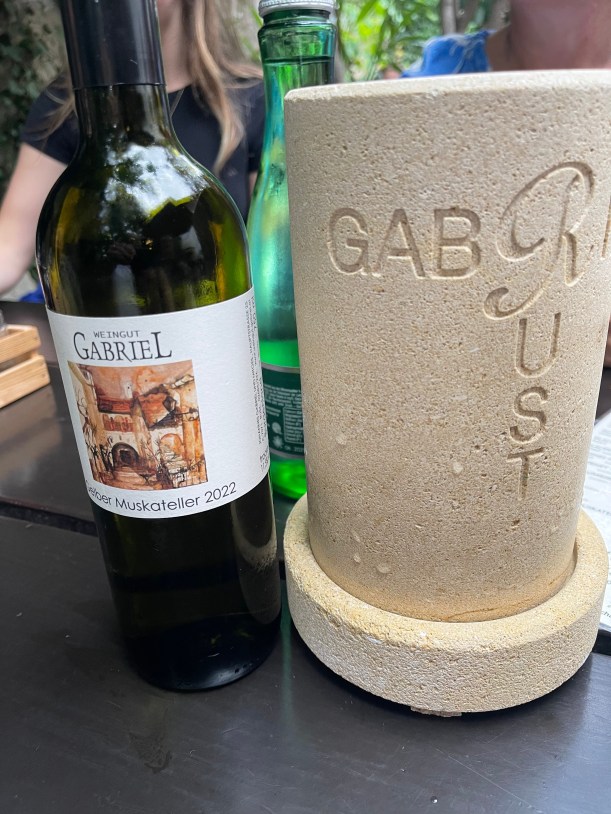
Gelber Muskateller is the golden-skinned member of the ancient Muscat family. Aka Muscat Blanc à Petit Grains. It is popular as a delicious summer aperitif in Austria and there is no better way to start an evening in a Heuriger off.
As you would expect from its parentage it has vibrant aromatics, floral, spicy, and citrus-tinged notes and is made into light, dry wines with real verve. Though often overshadowed by other varieties, its heritage runs deep, tracing back to the Mediterranean and among the oldest cultivated grapes. In Austria, plantings have steadily increased since the late 20th century, overtaking Muscat Ottonel in quality perception.
Enjoyed here in the courtyard of the Gabriel Heurige in Rust.
In the northern stretches of Piedmont, the DOCGs of Roero, Gattinara, and Ghemme offer a quieter yet distinctive take on the region’s hallmark grape, Nebbiolo. In Roero, sandy soils on the western bank of the Tanaro yield reds that are typically more perfumed and earlier-drinking than their Langhe cousins.
Gattinara and Ghemme, by contrast, lie further north in the Alpine foothills, where volcanic and alluvial soils produce wines of structure and longevity. Here, Nebbiolo, locally known as Spanna, just add a bit of confusion, is often blended with Vespolina or Bonarda to add spice and softness. Fermentation is typically followed by long aging, often in large neutral oak, allowing the grape’s natural tannins to settle and complex aromas to emerge. These are wines of precision and heritage, less showy than Barolo or Barbaresco but with a depth that rewards patient exploration.
It was great to visit Travaglini in Gattinara, Alto Piemonte and taste the lovely Nebbiolo wines this estate produces.
Their sparkling Metodo Classico Nebole a Blanc de Noir of 100% Nebbiolo was a wonderful surprise of honey, smoke and white flowers. They make this from the green cuttings off the grape bunches traditionally done to concentrate the remaining grapes for the red wine.
The Gattinara and Reservas also a delicious meld of soft red fruits, pot purri and balsamic notes. Look out for their distinctive bottle shape designed to act like a decanter and hold any sediment back when pouring!
Well worth looking out the wines of Gattinara, Ghemme and Boca Alto Piemonte regions.
Perched on the edge of the old Saxon shoreline in Appledore, Kent, Gusbourne Estate makes a compelling argument for the quality and potential of English wine. With 60 hectares under vine here and another 30 in West Sussex, Gusbourne has focused on a clear ambition since planting its first vines in 2004: to produce vintage wines of the highest calibre using only estate-grown fruit.
The vineyards are planted with Burgundian clones of Chardonnay, Pinot Noir, and Pinot Meunier, varieties well suited to the region’s unique microclimates. Yields are deliberately kept low, resulting in grapes of concentration and character. These form the foundation of a range that includes both still and sparkling wines, all made using traditional methods with a low-intervention ethos that carries through from vine to bottle.
A visit to the estate offers more than a picturesque setting. The winery tour is well-structured and informative, culminating in a tasting that includes the rare opportunity to sample base wines before moving on to the finished sparklers. This provides a valuable insight into the effects of lees ageing, adding texture and biscuity complexity, and how dosage lifts the bright citrus notes that are a hallmark of the house style.
Among a strong portfolio, the Blanc de Blancs 2018 stands out for its precision and poise. It’s joined by a limited series of museum releases and small-batch cuvées, including vintage Blanc de Meunier, all reinforcing Gusbourne’s position at the premium end of the market. The still wines, notably the Guinevere Chardonnay, demonstrate real depth and finesse, and make a persuasive case that 51 degrees north is no longer a viticultural outlier.
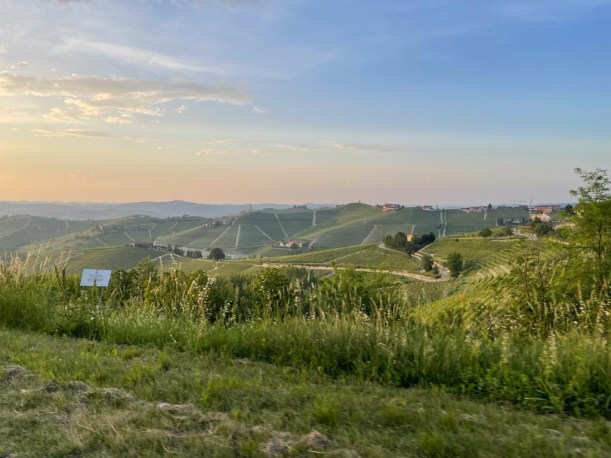
The weekends impending champions league final reminded us it was exactly a decade on to the day from our last wine trip to Piemonte.
We spent the May weekend of 2012 in Barolo and were escorted through the region by Roger Barlow of Gerard Seel.
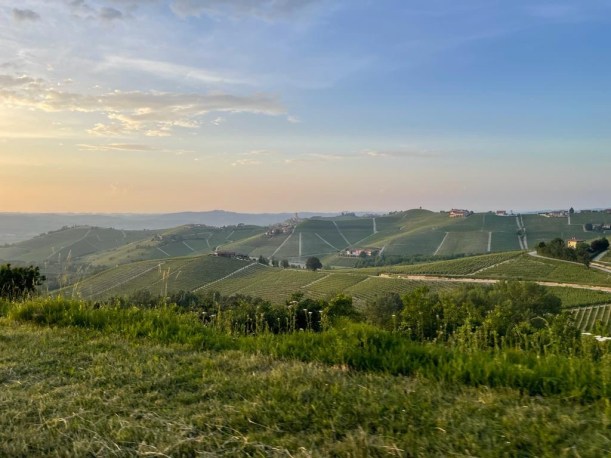
This time to Barbaresco, facilitated by our friend Mehul, a serious Italophile and lover of wines of this region.
The plan was to get a blind tasted overview of the 2019 vintage at Barbaresco a Tavola, then to indulge in the food and wine culture of Piemonte. We had arranged a few select winery visits.
Piemonte is renowned for 3 main red varietals, Nebbiolo of course, Barbera and Dolcetto. Their 3 main white grapes are Arneis. Cortese and Cortese.
We concentrated on Nebbiolo wines. They can be difficult to appreciate young due to their high tannins and acidity and the wines need patience.
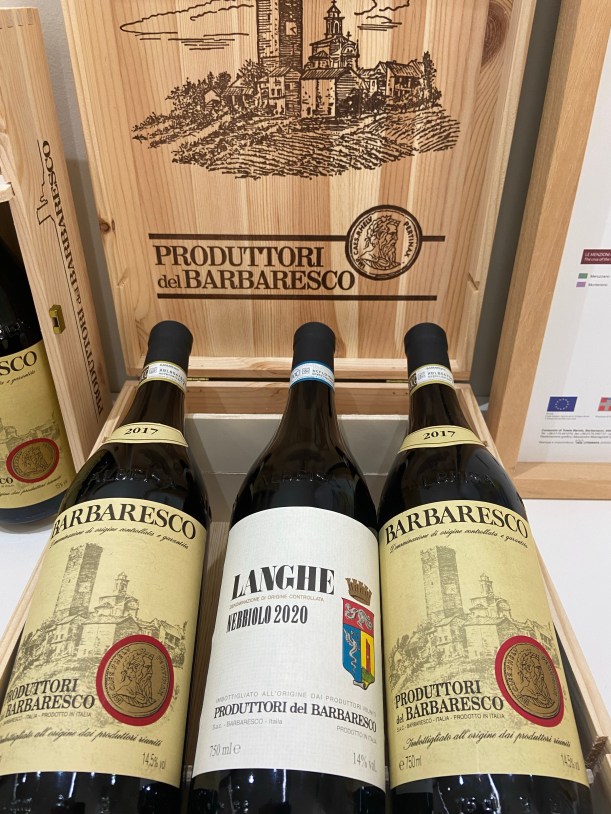
The Produttori del Barbaresco was founded in 1958. They now have 51 members and more than 100 hectares of Nebbiolo vineyards in Barbaresco. It is conveniently located in the small village of Barbaresco and wines can be tasted by just dropping in. They are well known for producing high quality and more affordable Barbaresco
Lange Nebiolo 2020.
On the nose: Aromatic, herbs, cut strawberry.
In the mouth: Nice balance, dusty tannin, fruit structure, medium in length. Approachable already. 14 euro very nicely made
Barbaresco 2018
On the nose a little volatile, rose, macerated strawberry, pot pourri
In the mouth: good balance, full body, sweet juicy fruit, little hot on end.
Barbaresco 2017.
Herbaceous nose, cinnamon, red tart fruit, cherries.
On the mouth: Rounded fruit, elegant structure, good fruit concentration, slightly puckering youthful tannin, long finish. Very good.
The 2019 although only recently bottled showed as one of the top 6 wines at the Tavola tasting. Confirming the consistent quality of the wines here.
The winery produces 50,000 bottles per annum and is 100% organic, The Ada Nada farmhouse is located in Treiso, near Alba. They have a beautiful Agroturismo with a lovely outdoor swimming pool with panoramic views of the rolling hills.
Cento
Golden green colour, made from 100% Nebbiolo. Grapes are green harvested then the wine is made following a method traditional and the aged for 24 months on lees.
On the nose citrus, lime zest, orange peel some cream, in the mouth sherbet, finishing slightly abruptly. Fresh and fun.
Dilva
This is another 100% Nebbiolo method classic but this time with zero dosage. Made with skin contact and fermented in barrique then and aged for 60 months on lees. The wine is not long enough in barrique to impart a woody character but allows micro oxygenation.
This is a more serious fizz. On the nose: toasted brioche, toffee, flint and smoke. In the mouth stewed spiced apple, nutty, long and persistent, slightly drying from a dusting of pleasant tannin which counteracts the citrus finish.
Neta Sauvignon Blanc 2021.
Grown on north facing slopes.
On the nose a touch of grass, green pepper, concentrated confected pear drops.
In the mouth rich ripe candied citrus, well balanced but finishes a touch warm.
Lange nebiollo Serena 2021
Made in Barbaresco but from youngest vineyard where the vines are 18 yrs old the wine is made to be approachable and for earlier drinking.
Nose: red cherries, raspberries, dried cherries, light herb.
On palate: strawberry chew, chewy tannin, a well made great food wine.
Classic Barbera Pierin 2020
made in large oak 2 year
Nose: Dark cherries, a whiff of polish, touch of sawdust then strawberries, ripe fruit, voilets. In the mouth blackberry as well as juicy red fruit, medium acidity, fuller body, medium length. Tasty! another good quaffing wine.
Barbaresco Valeirano 2019.
The vines here are over 50 years old.
Nose: Mint, bay leaf, celery, cut strawberry, herb, then floral notes. A delicate and complex nose.
In the mouth: medium plus body, tart cherry, savoury meat, liquorice, herbs. Elegant long excellent!
Barbaresco Rombone Elisa 2018. This vineyard was planted in 1947.
Nose: more expressive, soft red fruit, baked strawberry fruit tart, spices, touch of polish and scent of pot purri.
In the mouth: Full bodied, savoury, cooked fruit, sweetness then a ton of tannin, fine grained. The finish is dry but with a line of fruit that persists.
Barbaresco Cichin Reserva 2017.
Spends 3 years in large oak botti and 2 years in bottle before release. From the rombone vineyard planted in 1958.
The wine maker naturally concentrates the wine by letting 20% of the juice run off and leaving the rest to macerate and ferment on the skins.
On the nose: Leather, perfume, pot purri, polish, orange peel, incense very complex.
In the mouth: Rich, spice, leather, orange peel, firm present tannin but drinking. Very long excellent!
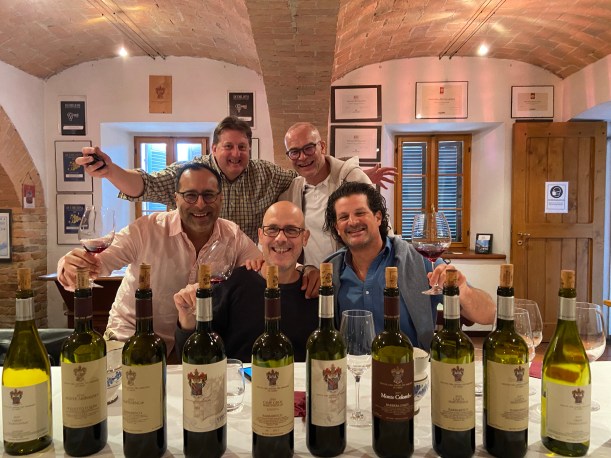
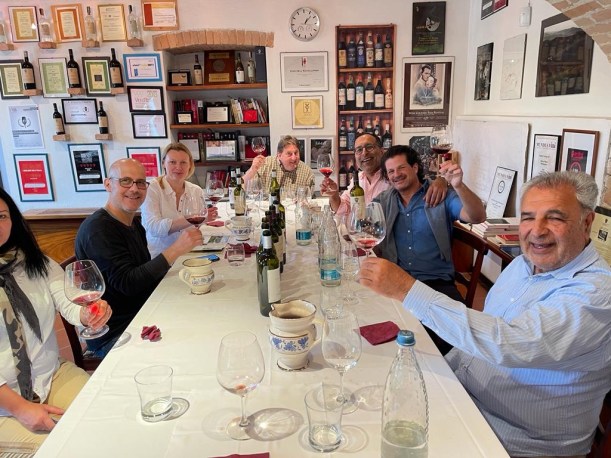
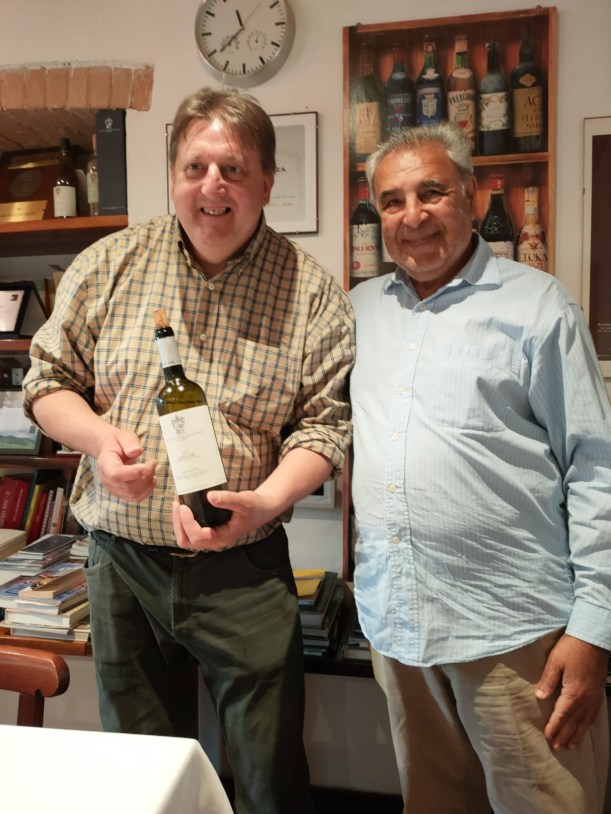
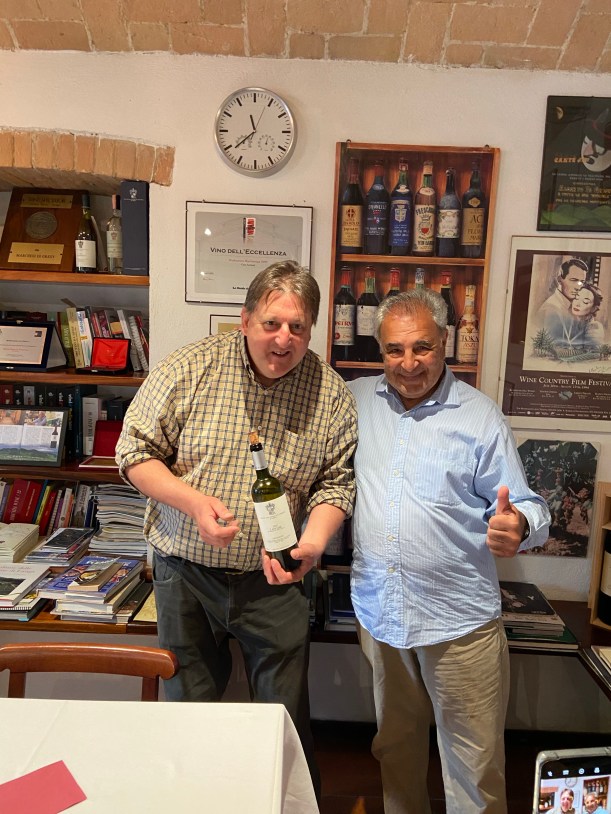
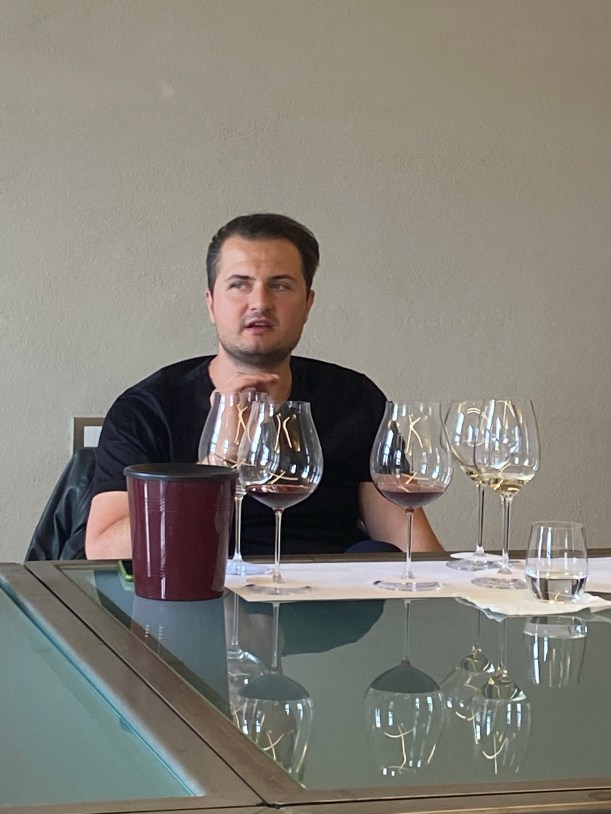
A memorable tasting hosted by the passionate Jeff at Marchesi di Gresy Barbaresco
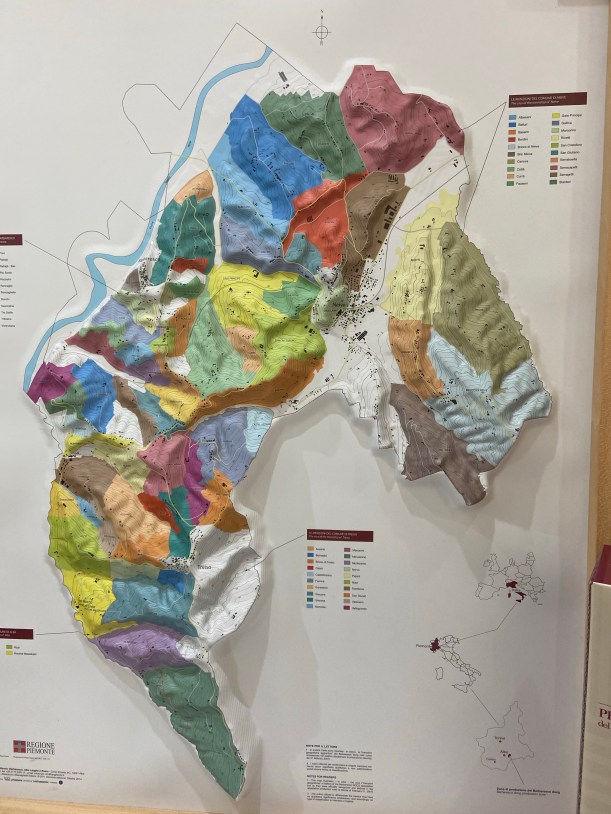
The Cisa Asinari estates of the Marchesi di Grésy include four wineries located in the Langhe and Monferrato region.
2020 Marchesi di GrésyLanghe sauvignonblanc
Flinty smoky slightly sulfurous, reduced,. Bottled 1yr, green gage, nuts, briny, 7-8 mth stainless steel on lees Greengage, green pepper, tart lemon, mineral dust coating in mouth. Fairly full bodied, good finish
2016 Marchesi di Grésy langhe sauvignon blanc
Darker colour Lemon curd, sweet top note of peaches, salty, floral Fuller body, hint of peach, yellow plum? Reminds me of white bordeaux, thought a blend with semillon great finish, excellent acidity
2019 Marchesi di Grésychardonnay
Pale Ripe pear, maybe a little peach, great wood influence, vanilla, bit of smoke and toast, stone Tart apple, peach, great acidity, but drying, very elegant
2015 Marchesi di Grésy Chardonnay
Coal smoke And toast, roasted hazelnuts, white flower, Caramel, lemon, mineral, really balanced and elegant, acidity, linear
2019 Marchesi di GrésyDolcetto Monte Aribaldo
Cherry linctus, dark and red, strawberry, stem, slightly burned nose, possible reductive Savory and tannic, tart cherry, slight bitterness, savoury finish, med acidity
2015 Marchesi di Grésy Montecolombo Barbera
Treated like a barbaresco Turmeric and cumin nose, dark cherry, vanilla, toffee, Dark cherry, really drying, super acidity, a little hot, herbaceous, quite tannic in gums
2011 Marchesi di GrésyVirtus Langhe Rosso – Cab Sauv and Barbara 40/60
Green pepper Black currant leaf dark cherry, Blackcurrant, good acidity and tannin, balanced, mid palate missing
2007Marchesi di Grésy Virtus Langhe Rosso – Cab Sauv and Barbara 40/60
Much more developed, great mix of the barbera linctus with blackcurrant leaf Mushroom to start on the nose Great ripe balanced, fantastic wine,long… love it
2004 Marchesi di GrésyVirtus Langhe Rosso – Cab Sauv and Barbara 40/60
Green pepper Black currant mushroom caramel vanilla Another great balanced wine, finishes v very cab, very beautiful
2018 Marchesi di GrésyBarbaresco Martinenga
Mixed vintage Muted nose, slightly floral And herbaceous woody notes, tart cherry Drying, good intensity and length not showing yet but had very good potential based on finish
2017 Marchesi di GrésyBarbaresco Martinenga Gaiun Made from specific plots on the outer edge of the Martinenga cru, bordering Asili
Dark cherry strawberry cream pot pourri, roses Drying, intense dried flower, incense, tart cherry, liquorice, finish forever long, sexy, complete, wine for the long term. 2016 Marchesi di GrésyBarbaresco Martinenga Gaiun
Darker Sandalwood, Rose, macerated strawberry, white truffle, sapid More concentration, fruit intensity, liquorice tobacco, finish goes on forever An epic wine for the long term. Touched something deep inside me, literally brought tears to my eyes
2016 Marchesi di GrésyCamp Gros Martinenga Riserva
12 mths small barrel 18mths large barrel, 3 yrs total 6900 btls made
Dried rose, sandalwood, pot pourris dried cherry orange peel, spice – fascinating nose Drying, tart, regal tannins, stony, tight. Not showing itself, wait another 5-10yrs for this to emerge.
This iconic winery needs little introduction. We were fortunate to be hosted by the Giovanni, Angelo Gaja’s son.
He gave us a great insight into the wines and the challenges ahead. We looked out of the palatial Gaja headquarters to where the River Tanaro should be. Instead we say a dry cracked river bed with no water in sight. The Tanaro had dried up which is a worrying sign of things to come.
We tried a selection of their wines all made to perfection. Mehul requested a bottle of Sori Tildin (one of my desert Island wines) A vintage 2001 was duly decanted. A fitting finale to a memorable weekend in Barbaresco!
Kirsty Harmon is a local girl turned renowned winemaker.
She grew up across the road of Blenheim and is well acquainted with the local scene.
Her first degree was in microbiology. She then worked as an event and wedding planner and worked for the previous owner of the Trump winery. She stayed on, ultimately becoming head of winemaking and general manager.
She Trained in enology at UCL Davis and won various scholarship for internships.
This took her to Craggy Range in Hawkes Bay New Zealand part of then Family of 12.
She also gained experience at Domaine Faivlely in Burgundy. She was the first intern there since 1837!
Dave Matthew a local celebrity in country music owns Blenheim and many of the labels have his colourful artistic designs.
It’s boutique winery producing 5 to 8 000 cases.
Kirsty with her microbiology background initially had a service lab for testing wines and helped out local wineries.
She has pioneered her wines all under screw cap, somewhat unusual for the US, but having worked in New Zealand and learned of its merits prefers this method of closure.
Blenheim Sauvignon Blanc 2021
100% Sauvignon Blanc steel fermented
Aromatic
Somewhere between new and old world
Goooseberry reductive, some passion fruit and tropical nuances
Blenheim Albariño 2021
Peachy stone fruit
Saltiness mineral
Delicious Albariño very typical
Amazing it shows such typicity and saltiness after such a recent planting in such a new environment
Heavy red clay here with iron which I’d noted when I visited the Trump winery for lunch.
Blenheim gruner veltliner
An interesting story, it was planted very much by chance whentheir 800 vines of Teroldago didn’t bud and they were offered by the Gruner the nursery!
Slight gun flint
Lean reduced nice acidity
Blenheim Cabernet franc 2020
Interesting Fractal wine label especially liked by the mathematicians
Kirsty prefers to make lighter style red
Enjoys the fruitiness
Full of fruit
9 months barrels
Some whole cluster and natural carbonic
Painter Red Nlend
2019
Lots grapes fresh fruity blend
Tasting with Kirsty reminded me that the winemaking in this region is a mere 30 years old and they are very much finding their feet and don’t know yet exactly what’s going to work.
She has a great pioneer spirit and along with Albariño planting from Mencia in Galicia, (also has clay soils and high humidity).they have planted Garnega, Tempranillo Roussane and Gruner Veltliner are among many others being planted here.
It will be fascinating to see what the future holds. It certainly seems to be in good hands.
Jefferson vineyards
This is an historic site with vineyards first planted by Fillipo Mazzei,Italian architect with the backing of Thomas Jefferson whos Monticello estates is nearby.
Recent plantings date from 1981
I was kindly hosted by Chris Ritzcovan winemaker and met the current owner Attila.
This is Chris’s 10 th vintage. His father made home wine which may have sparked in him an interest.
He trained locally at the famous University of Virginia
Chris mentioned they have a lot of vintage variation and also described the challenges mentioned on other visits
Wines tasted
Jefferson Vineyard petit manseng 2021
Dry, Sugar gets high
Neutral oak
75 cases made (only 3 barrels)
Petit Manseng originally form Jurancon-aromatic, peach honey ginger
High acid
Lovely texture lees ageing
Good balance nice nutty feel almond
Great effort here and shows potential of this grape in the region.
Jefferson Vineyard estate reserve 2019
Viognier, barrel fermented for 9 months in new French oak barrels Petit Manseng 6%
Really rich, full bodied oily with stone fruits, apricot and peach
Slight bitter finish
Jefferson Vineyard 2019 Chardonnay
Barrel fermented 9 months in oak
25 years old vines
Lemon, some vanilla, butter, lees ageing new American, new French and Hungarian oak (lighter spicier influence than French or American)
Jefferson Vineyard 2017
Cabernet Franc
Great vintage, 9 months in oak barrels
Fruit bomb, blue fruits
Plenty of tannins
Mouth and gum tannins integrated, Not green or herbaceous
Jefferson Vineyard 2019 meritage
Merlot and Petit Verdot, cabernet franc Malbec
20 months in oak Hungarian French and American oak
Blue and black fruits good tannic structure
Quite drying tannins
May benefit from more time
Jefferson Vineyard Merlot Réserve 2019
Smooth tannins wrapped with fruit
Chocolate and plum slightly hot
Made with Older vines 100 % French oak
Chris is also growing some Tannat and shows the same enthusiasm for the region as fellow winemakers.
Summary
The wines from Virginia are somewhere between new and old world. They are quite European in style. They don’t have the opulence and power of California but they still have more fruit and aromatics than similar wine growing areas in Europe.
It still a young region and experimental.
The current notable varieties performing well are Chardonnay, Viognier, Petit Verdot . Cabernet Franc and Merlot.
However, watch out for new varietals including Albarinho, Petit Manseng and Nebbiolo.
I’d love to visit again and explore other areas, such as Rappahannock, an hour north of Monticello. Perhaps a few weeks earlier, in October to witness the full autumnal splendour.
Mostly when I ask winemakers about what they are doing to be more sustainable and to reduce their environmental impact the answer is all about stewardship of the land; vineyard practice, avoidance of pesticides, and perhaps a bit of onsite recycling. All good stuff, but as the drive towards Net Zero Carbon builds obviously the wine industry also needs to step up and make a start down this road.
Challenging though it may be, without plotting a route and taking the first step, the target will never be reached. Equally we consumers need vote with our wallets and make it clear we care, not just about how tasty the wine in our glass is, but also about the journey has taken to get there.
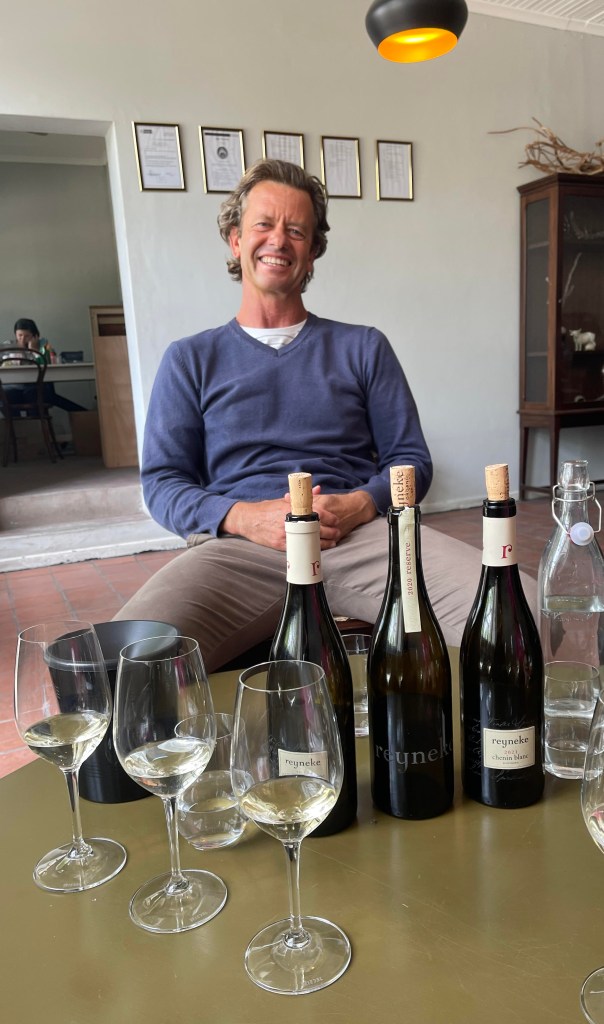
Happily, there are some great wineries out there, leading the way on sustainability and one of them is Reyneke Wines in Stellenbosch.
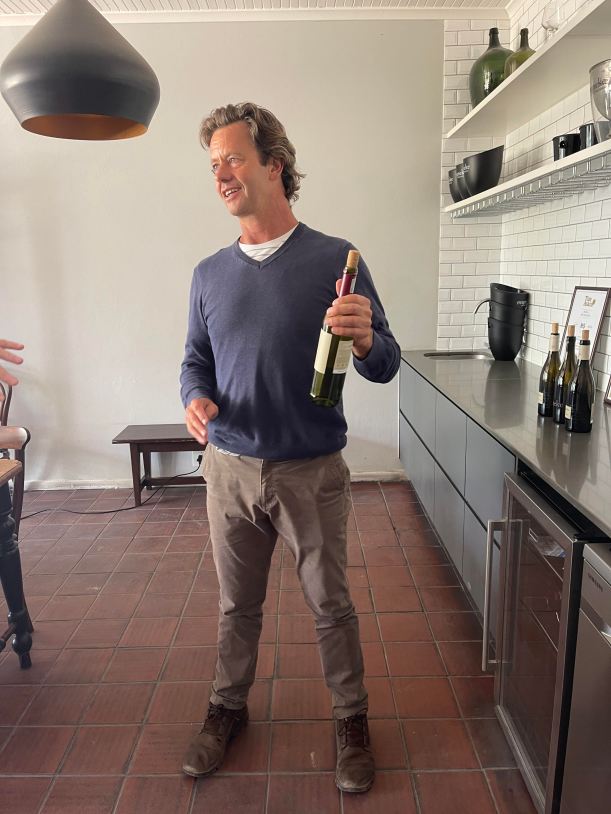
Since the early noughties Johan Reneke has been working towards achieving the three pillars of sustainability: environmental, social and economic. As he eloquently argues, how can a wine be beautiful if there is ugliness, in the form of glaring social inequity, involved in its making? He also makes the point that only a financially healthy business is going to be able to achieve any sort of environmental and social goals.
Johan sees Biodynamic farming as part of a larger picture of regenerative farming. Agriculture is one of top five contributors to climate change but regenerative agriculture actually provides the opportunity to turn this around. It can actually sequester carbon back into the earth by improving soil health and increasing humus content. Another win is by moving away from monoculture biodiversity can also be improved.
Reyneke works with nature to maintain vine health without recourse to chemical pesticides, herbicides and fertilizers. This ‘land caring’ element of the approach uses for example dandelions and other cover crops to provide a preferential home for pests. It also involves ducks trotting around the vineyards hoovering up snails.
Land within the farm is also ‘spared’ so that there are pockets of wilderness left between the vineyards which are rich in flora and fauna. The farm’s herd of cattle currently roaming in pasture below the winery, are let into the dormant vineyards over winter to fertilize them. In a lovely example of the vineyard’s circular like economy the winery produces feed for the cows in the form of the grape pressings which according to Yohan they love!
Looking back towards False Bay with the farm herd of cattle in the foreground.
Improved soil health and biodynamic farming has made the vines more resilient to pest, fungus and drought and so by extension perhaps some of the other effects of climate change?
As we visit the Reyneke wine farm is currently being extended into a neighbouring farm recently acquired. Some of the vineyards are being kept and some replanted. One can see where strips running along the contours of the hillside are being set side for biodiversity corridors between the vines. Old vines are piled up and will be turned into bio-charcoal that will be mixed in with the soil, locking in the carbon long term.
New vineyards in preparation. A pocket of Fynbos top left, horozontal lines on the hill side mark out future biodiversity corridors
When looking at the road to net zero carbon any organisation needs to look at its Scope 1, 2 and 3 emissions. Scope 1 emissions are C02 emissions arising from operations directly controlled by the organisation. Scope 2 are emissions up stream caused indirectly by the organisation when it buys in goods and services from elsewhere, for instance electricity or bottles. Finally scope 3 emissions are those downstream arising from the activities of distributors and consumers transporting, consuming and disposing of goods.
At Reyneke the farm is now carbon negative but Johan continues to look at the winery operations. He is investigating renewable energy in the form of photo voltaic (PV) panels, possibly in combination with electric tractors which could double up by providing some energy storage too. The Cape is lovely and sunny but electricity is currently rationed in ‘load shedding’ which adds another reason for moving off grid.
Reyneke is also trailing the use of Tetra Pak type packaging as an option, starting with their entry level organic wines in Scandinavian countries who seem more open to the idea. Clearly there is a challenge here in shifting negative consumer perceptions of ‘bag in a box’ type wine. Moving away from bottles would deliver valuable reductions in carbon footprint in terms of packaging and transport.
A non-interventionist approach follows through into the wine making. Instead of temperature controlled stainless steel and yeast inoculation at Reyneke wild fermentation in oak barrels is the order of the day. The wooden containers and smaller volumes successfully manages the temperature during fermentation in a passive way. The wild yeast and breathability of the oak also give a different character to the wines in particular the Sauvignon Blancs.
Johan’s story is so fascinating, and the challenges he and his team have taken on are so inspiring that this intro’ section could easily run on and on so let’s get to the wines, which do not disappoint!
Reyneke Sauvignon Blanc 2021
On the nose, hay, a touch of gooseberry, a whiff of custard. Good body with lovely balance and freshness. A nice supple mouth feel, white peach, exotic fruit pineapple, creamy gooseberry fool. Complex with good length a wine that evolves. Excellent. (Tasted at the farm and again back in London with consistent results)
Reyneke Reserve White 2020.
This is also 100% Sauvignon Blanc. The reserve is made from selected pockets of grapes within the vineyard which have their own character. It gets 24 hours on the skins and the new oak barriques.
More stone fruit on the nose also a bit of hay and a subtle touch of vanilla. Lovely textured mouth feel, more peach and bit of toast, rich but balanced, great length. Neither of these wines are your identikit new world SBs, much more interesting and complex.
Reyneke Chenin Blanc 2021
The vineyards here are part of the South African old vine project so more than 35 years old.
The nose is floral and nutty. In the mouth apricot, honey and a slightly salty finish. Vibrant.
Reyneke Syrah 2019
On the nose, sweet blackberry, dried herbs and crushed pepper. In the mouth dried black fruits, iodine, ripe tannins, full bodied but fresh. Long. (Tasted at the farm and again back in London where the wine benefited with time in the glass.)
Reyneke Reserve Red. 2019
The wine is 100% Syrah and again from selected parcels of the vineyard.
On the nose, blueberry pie, ripe fruit, pie crust, vanilla, coffee grounds, fresh garigue herbs. Iodine? Ripe blue and blackberries, powdery tannins, a herbal liquor note, savoury notes of grilled meat, full body and fresh acidity. Complex and very long. So good now that it will be hard to keep ones hands off this to let it mature! (Tasted at the farm and again back in London where again the wine benefited with time in the glass.)
Cornerstone 2019
A blend of Cabernet Franc and Cabernet Sauvignon in this vintage.
The wine is named after the Cornerstone project. Johan sees the workers as the cornerstone of the business, farm workers generally receive low wages as there is high unemployment and viticulture is the least profitable part of the industry. Scheme aims to empower workers with housing and education using profits from the winery.
Classic cassis, black current leaf, black current jam and a touch of sawdust on the nose. Austere at first, black fruits, green pepper, coffee grounds, slightly drying grainy tannins. Tasted again in London it opens up and fruit fills out the palate with bit of air. Still fairly primal at this young stage but good potential.
There is a vibrancy and depth to these wines which is compelling and it’s a quality that the Wander Curtis team have noticed on multiple occasions in other Biodynamic wines by producers such as Felton Road and Chateau Pontet-Canet. On every level there is definitely something to Biodynamic wine making.
Not only does wine making in South Africa go back a very long way but winemaking in the Cape actually has a birthday: 2 February 1659! On that day Jan van Riebeeck recorded in his diary “Today, praise be to God, wine was made for the first time from Cape grapes.’
Sent by the Dutch East India Company in 1652, to establish a staging post to supply ships on their way around the Cape of Good Hope, Van Riebeeck lost no time on the important business of planting vines and making wine. Apparently was essential to the treatment of sailors with scurvy. Yet more historical evidence of the health benefits of red wine!
Constantia
Constantia lays claim to have the oldest vineyards in the southern hemisphere dating from 1685 when Simon van der Stel, the Cape’s first Governor established a farm on the southern slopes of Table Mountain facing False Bay. False bay is of course a ‘real’ bay, it was just the wrong one from the point of view of sailors returning from India when they realised that they hadn’t quite reached the Cape Bay and still had to round the treacherous Cape of Good Hope.
Vin de Constance has since been revived by Klein Constantia and Groot Constantia also makes a sweet Grand Constance. However, the comparatively cool climate, elevated altitude and generous rainfall (twice that of London apparently) means that modern Constantia is now home to a wide range of red and white varieties.
Where Van Riebeeck’s relied on enthusiasm Van der Stel brought to bear some viticultural knowledge and his name is firmly stamped on the Cape winelands. Quite literally as he named Stellenbosch town after himself and the imposing back drop of Simonsberg mountain serves as an ever present reminder. The wines of Constantia attained international acclaim in the late 18th and early 19th C boosted by the war between France and England which made French wine hard to get hold of. Famously Napoleon’s suffering during his exile on St Helena was greatly eased by a steady supply of Vin de Constance. The wine at the time is thought to have been sweet and quite possibly fortified. Once there was peace and a trade agreement between England and France the market for Vin de Constance diminished and in the end the vineyards did not survive the onset of Phylloxera.
Groot Constantia
Groot Constantia (pronounce the G as if you are clearing your throat) is the largest part of the Van de Stel’s original farm. A trust now owns the estate and it is even a National Monument. The old Cape Dutch style farm house houses a museum which tells the story of the wine farm. Simon van der Stel’s mother was daughter of a freed Indian slave and after him Johannes Colijn, who heralded in the heyday of Vin de Constance in Europe, was also of mixed race. The exhibition gives a sobering understanding of the part that colonisation and slavery played in the history of the farm and Cape’s wider wine heritage.
An easy drive from Cape Town the history, wine, restaurants and beautiful setting make the estate well worth a visit.
Rose 2022
A blend of Cabernet Sauvignon, Merlot, Semillon and Sauvignon Blanc made with minimal grape skin contact. Pale orange pink colour. Nose of honey dew melon. Nice balance, peachy notes and good freshness. Easy drinking in the sunshine.
Sauvignon Blanc 2022
Constantia has a reputation for fresh Sauvignon Blanc. Floral nose with elderflower blossom and a touch of grassiness. Again good balance, melon and tropical fruits flavour, fullish body but with freshness.
Chardonnay 2021
Smokey vanilla nose. Lemon, vanilla, spicy wood, full boded mid-level acidity and medium length. Tasty ‘new world’ style.
Gouverneurs Reserve White 2020
A blend of Sauvignon Blanc and Semillon partly aged in new oak Barrique.On the nose green pepper, hay, meadow flowers, herbs, tarragon. Fullish body, mid-level acidity, dry herbs, hay, grapefruit pith. Complex with very good length and a lovely citrus persistence.
Lady of Abundance 2018
A red blend of Pinotage, Merlot, Shiraz and Tannat.Mixed macerated red and dark fruit nose. Ripe plum, blackberry, clove and toast favours with soft tannin. Easy drinking.
Merlot 2018
A nose of classic plum and milk chocolate and a whiff of vanilla. Ripe capsicum, red fruit, soft tannins, medium length. Tasty.
Cabernet Sauvignon 2019
Initially mulberry, then a leafy green aroma. Touch of strawberry, dried cranberries. In the mouth more dried fruit, nice chalky tannins, medium body, good acidity. Reasonable length. Give it a year or two and this should round out nicely.
Pinotage 2020
Baked dark plum with ferrous notes and a sprinkle of cake spice. Rounded full body but not flabby, more spicy baked blackberries, finishes with sweet fruit and is quite long.
Shiraz 2019
Plush fine oaky nose, iodine and dried cherry. Good balance and length, dark cherries, hint of blood, good length. Firm tannins sit squarely on the tongue, this should age quite nicely.
Gouverneurs Reserve 2028
A Bordeaux blend. Plums, cedar wood, milk chocolate, nice furniture polish. very Claret like. Mix of red and black fruit, Black Forest Gateaux, great balance and a long savoury finish! Excellent.
Grand Constance 2017
Made from Muscat d’Frontignan the white Muscat is complemented with a small percentage of red Muscat.
Burnt orange colour. On the nose orange peel, ginger powder, dried apple, cinnamon, cake spices, furniture polish. Lusciously sweet but with enough lift to keep it fresh. A strangely a floral note, rose water or something like that and more dried orange. Very long.
Hemel-en-Aarde
Hemel en Aarde is known for growing Burgundian grapes and is divided into three areas: Hemel-en-Aarde Valley, closest to Walker Bay, Upper Hemel-en-Aarde Valley further up the valley and Hemel-en-Aarde Ridge the highest area in terms of altitude. Each area has different soils and micro-climates.
The received wisdom is that in the lower section clay soils produce broader more structured Pinots, the decomposed granite in the Upper part results in a crunchy, elegant style and due to the altitude and recurrence of some clay the Ridge produces something in between. That said many other wines are also produced here including some crisp Sauvignon Blancs and Rhone blends.
Overall the region’s proximity to Walker Bay, the cold Benguela current as well as the prevailing Southeaster results in a particularly strong cooling maritime influence. Hemel-en-Aarde also has higher than average rainfall.
Hamilton Russell was the first winery in the area, the eponymous owner was looking for land and was attracted by the cooler climate. A risky move back in the 1970s as the vineyards had no quota for wine making under the then restrictive rules and so winemaking was technically illegal. Having planted a wind variety of grapes including Pinot and Chardonnay they eventually restricted wine making to just these two varietals. The winery has spawned several other neighbouring wineries as successive winemakers have left to set up their own ventures in the valley, these include Buchard Finlayson, Creation and Storm wineries.
The Wine Village, Hermanus.
At the bottom of the valley in the whale watching town of Hermanus is the Wine Village store with is a treasure trove of South African wines and will ship overseas.
Stephen was on the counter and let me taste Hamilton Russell Vineyards’ 2021 Chardonnay and Pinot Noir. Both from the Valley were beautiful rich, structured, and perfectly balances wines with lashings of fine oak. Immediately pleasurable for such young wines which for me puts them in the New World but with a level of Burgundian understatement.
Newton Johnson Family Vineyards
Newton Johnson is located in Upper Hemel-en-Aarde Valley located in a beautiful spot with spectacular views.
Resonance 2019
75% Sauvignon Blanc and 25% oaked Semillon. Flinty nose, gooseberry, Semillon gives the wine a nice body, good length with a slight toasty finish. Very nice.
Albariño 2021
The first planting of this grape in SA were here at Newton Johnson. Made 20% in old oak barrels. Floral notes with sea breeze, a nice saline note in the mouth, fresh. A bit more breadth than you would find in a Spanish version but no shortage in bracing acidity.
Family vineyard Pinot Noir 2020. 13.5%
A blend of several vineyards including Sea dragon and Windandsea each bringing different characteristics to the wine. On the nose red soft fruit, some nice vegetal notes. In the mouth sweet fruit, more herbs, delicious rounded body, good freshness, and a lovely long finish.
Full Stop Rock 2020
79% Syrah and the rest Grenache grown in decomposed rocky granite. The wine is aged in 5% new oak barrels and the rest used for18 months. Blackberry, ripe fruit forward nose. In the mouth ripe sandy, rounded tannins, very approachable now. Long.
Granum 2016.
A blend of 75% Syrah and Mouvedre. Darker colour. Black fruit, meatiness, oxo cubes on the nose. A nice stoniness, more ripe black fruit and savoury notes. Full bodied developing some earthy notes.
Boekenhoutskloof have also started making a Chardonnay and Pinot under their Cap Maritime label from vineyards in the valley. See the full review of this winery posted separately.
Wines of South Africa podcasts
Finaly just a quick shout out for the excellent series of podcasts that Jim Clarke and the Wines of South Africa (WOSA) have made. Packed with regional information, interviews with winemakers and some really interesting historical background these and Jim’s book really are essential further reading. To access the podcasts click on the link below.






















 WanderCurtis Wine