WanderCurtis Wine

Wine tastings, corporate events, reviews and recommendations


Leave a comment

Österreichischen Traditionsweingüter (ÖTW)

Have you ever wondered what the term ‘Erste Lage’ or 1 ÖTW on a bottle of wine from Austria means? I attended a seminar at the bi-annual Trade Austrian Wine tasting last week that explained the story behind the ÖTW and forthcoming changes coming into place.

First a quick overview of the current legal framework that applies to Austrian wine. Like other European wine producing countries a tiered classification system exists with specific labelling:

  • ‘Österreichischer Wein’ means that the wine is made from grapes grown anywhere in the country. The wine can be from a single grape variety but not certain protected varieties such as Blaufränkisch. There are also some not very challenging minimum and maximum limits on must weight and yield.
  • ‘Landwein’ means the wine is made from grapes from an area with Protected Geographical Indication (PGI). There are three: Weinland, Steirerland and Bergland. Each area has an approved list of grape varieties but the list is long and the areas are large.
  • ‘Qualitätswein’ is indicated by the red top with a white stripe through it. These wines are from grapes coming from an area with protected status (PDO). The wines are tasted and tested to ensure they display typical characteristics of the region and meet more stringent minimum standards including must weight and maximum yields.
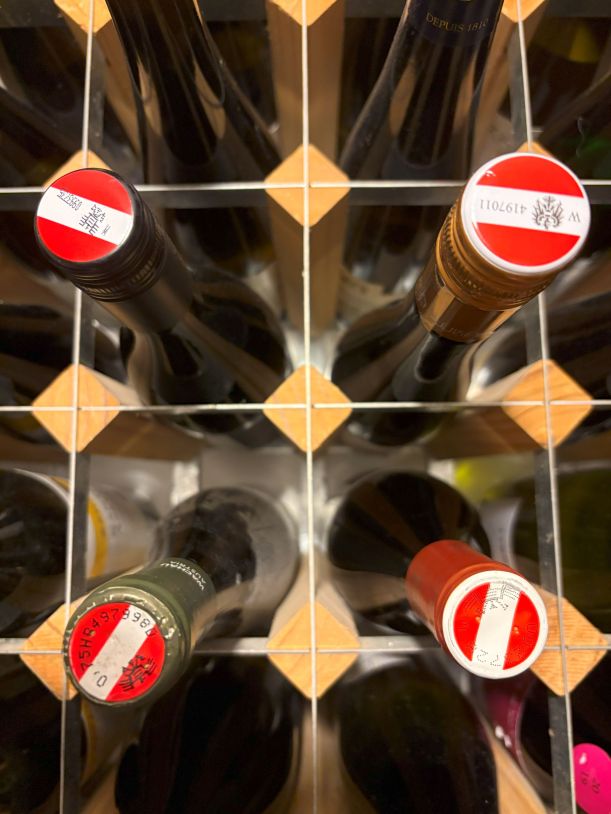
‘Qualitätswein’ can be labelled ‘Kabinett’ if it is not enhanced within the winery in any way and is less than 13% ABV. If labelled ‘Reserve’ the wine will be 13% ABV or over.

‘Qualitätswein’ may also be labelled Districtus Austriae Controllatus (DAC).  This means that it comes from one of 18 regionally typical controlled areas for example Weinviertel, Wachau or Leithaberg. Each DAC has quite a limited list of permitted grape varieties and the wines are tasted by a panel to approve typicity. Anything falling outside the scope or from a non-permitted variety can only be labelled Landwein.

Now within the DAC geographical area there are further spatial refinements: Gebietswein means it just corresponds the DAC area, Ortswein is from a particular village area and Riedenwein is from a single vineyard.

This is where the ÖTW comes in.

Founded in 1991 the ÖTW (oo – tay – vay) is a trade Association. It was set up to create a vineyard classification system designed to help consumers get an even better understanding of what to expect from the wine inside the bottle.  Anything that can help in this respect is of course a good thing. 
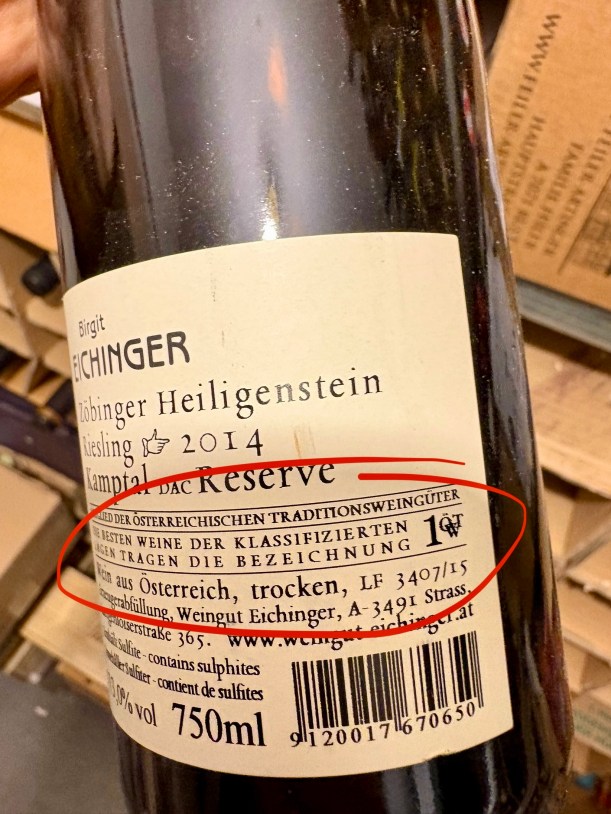
Started by a group of wineries in Kamptal and Kremstal the ÖTW splits the Riedenwein category down into three ascending subcategories: Ried Lage , Erste Lage and Grosse Lage. So far vineyards have only been classified as Erste Lage / 1 ÖTW but in time the intention is to elevate some of these to Grosse Lage.

The model is evidently similar to the classification of vineyards in Burgundy where distinct from village and lieu dit wines there are classified premier and grand cru vineyards. However as with the Bordeaux classification Chateaux in 1855 the vineyards in Burgundy were categorised back in the 19th Century according to the market value achieved of the wines, as a measure of quality and status.

So interestingly the ÖTW claims that vineyards in their system are not classified on the subjective bases of quality and price. Instead the ‘significance’ of the plot is measured using multiple parameters. These include: historical and cultural, physical characteristics, the number of wineries producing from the vineyard also average price and variance over time.  The wines produced are also evaluated via blind tastings by growers and international experts and the consistency of their performance over time.
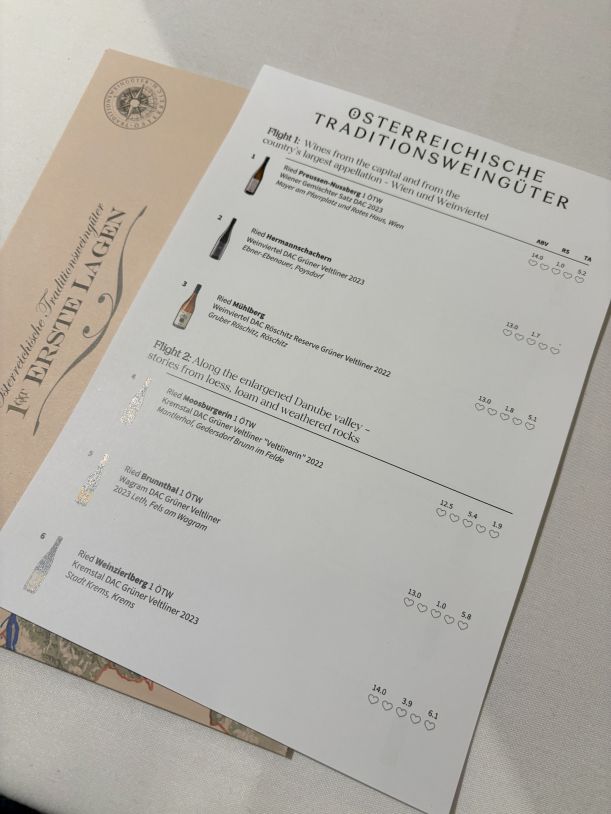
Anecdotally we tasted three wines from Ried Heiligenstein 1 ÖTW which were all Riesling but from three different producers: Birgit Eichinger 2022, Allram 2019 and Bründlmayer 2015. The wines were all of the highest quality with thrilling concentration and persistence. They were layered and complex and showed how age worthy they can be.

This was obviously too small a sample to be able to divine clear vineyard characteristics but the tasting certainly backed up my experience that 1 ÖTW on the label means that the winery has set out with serious intent to make a high quality wine that speaks of its origin.

The ÖTW system has expanded and is now used by members in Kamptal, Kremstal, Traisental, Wagram, Vienna, Carnuntum, Thermenregion and the Weinviertel.

A notable exception to this list is the Wachau and its not clear why the producers there don’t feel the need to participate.  Speculating, the region is perhaps more domestically and internationally well-known and they have their own quality hierarchy: Stienfeder, Federspiel and Smaragd so demand and recognition is probably already strong enough. Also many single vineyard wines are produced and I wonder if the number of monopole vineyards are sufficient to make vineyard classification less important than producer name? Research for another day.

The ÖTW is however on the up and has in principle be approved for adoption by the ministry of agriculture into law.  As with any change in wine law there are those that are not convinced and currently an appealed against adoption is being determined in the courts. Watch this space.
Leave a comment

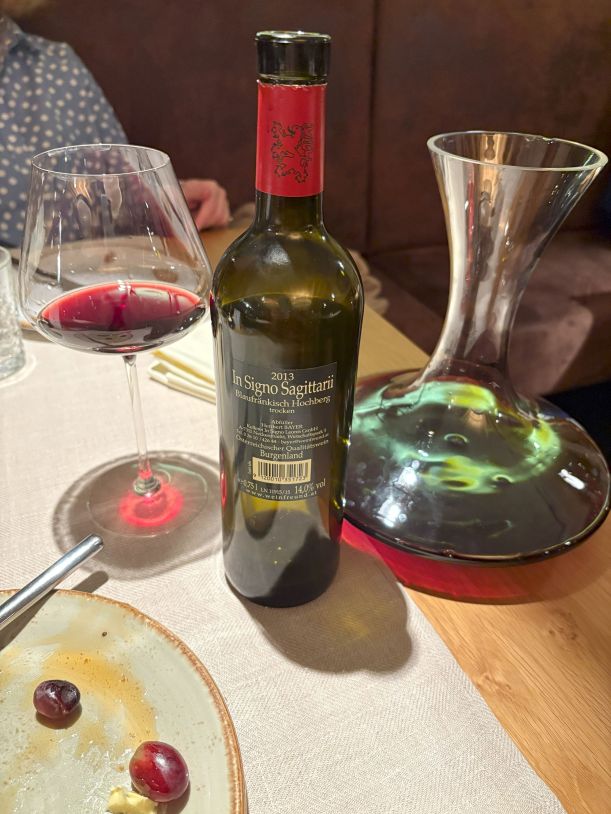
In Signo Sagittarii 2013 Blaufränkisch Neckenmarkter Hochberg, Mittelburgenland DAC, WG Herbert Bayer

In spite of its 12 years in bottle this Blaufränkisch, from 70 plus year old vines in the warmer middle part of Burgenland, needed time to open up in a decanter.  In fact left in the decanter for 24 hours the next day it remained incredibly vital with no hint of any oxidation.

On the nose the oak is immediately apparent expressing itself as sandalwood and toasted sawdust. However, underlying this plenty of black fruit remains and lovely notes of dried cherries, forest floor, tobacco and loam are present. Great intensity and balance and persistent finish.

A wine to savour now but with many years left in it. Pretty good value for a mature wine and back vintages are still available from the winery.


Leave a comment

Austrian Wine Regions

A one page summary of the: climate, topography, growing hazards, wine law, grape varieties, wine growing and making practices and the main wine producing regions.

Austria has come up a couple of times as a country in the D3 tasting exam. Key wines to look out for include:

  • Grüner Veltliner from the Wachau, Kamptal or Kremstal.
  • Blaufränkisch from Burgenland.
  • Trocken Beeren Auslese blend from Burgenland or Ruster Ausbruch.

Riesling from the same regions as Grüner is a possibility, but made in small quantities and also Zweigelt in an easy drinking style or barrique matured.

The Austrian Wine website has a huge amount of detailed information about the full range of Austrian grape varieties, regions and wineries.

Sources include: WSET Diploma Wines of the World, Oxford Wine Companion by Julia Harding and Jancis Robinson, Wine Austria.

Note this document is intended for personal use only not for commercial or promotional use. We accept no liability for any omissions or errors that may be contained in the document.


1 Comment

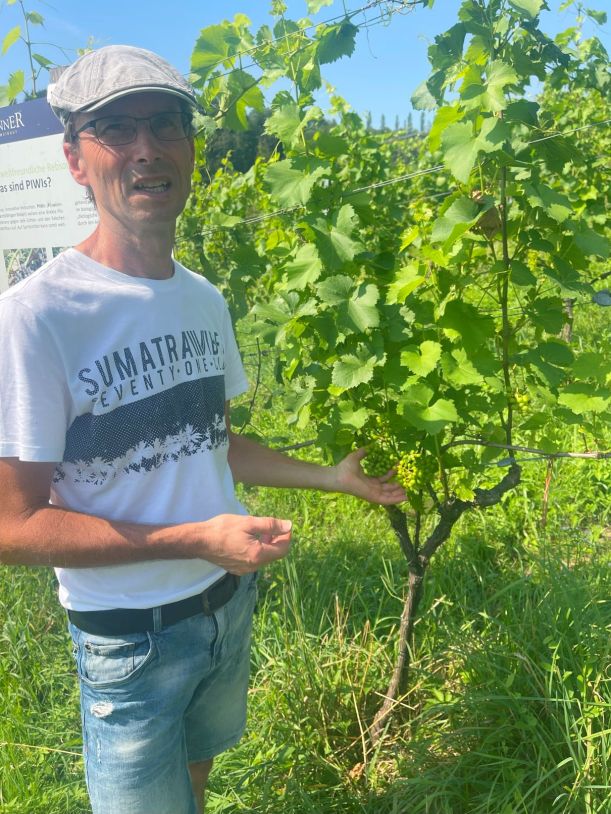
BioWeingut Karl Renner: Cultivating a new generation of grape varieties in the Südsteiermark, Austria.

At BioWeingut Karl Renner, nestled in the rolling hills of Pössnitz in the Südsteiermark, sustainability is at the very heart of everything they do. For Karl and his family, who have stewarded this land since 1966, the focus is clear: create wines of character with minimal intervention, and protect the land for future generations.

But even for the most committed organic growers, nature presents challenges. Karl points to oidium and downy mildew as the most persistent threats to viticulture in the Südsteiermark. These fungal diseases, brought to Europe in the 19th century, remain the main reason why vineyards, even organic ones, require frequent treatments. In some seasons, up to 20 copper sulphate sprays are needed to try and keep disease at bay. “It’s too much,” says Karl. “It leaves copper in the soil which builds up over time.”

That’s why Renner is turning toward PIWI or as he calls them “next generation” varieties, fungus-resistant hybrids bred to thrive with far fewer treatments. Since 2011, he’s been gradually replanting his vineyards with these innovative grapes, which make organic viticulture not only more effective but also more appealing for wider adoption in the wine industry.

The four main PIWI varieties Karl works with are:

  • Muscat Bleu – A mid-budding, early-ripening variety, Muscat Bleu is highly aromatic and serves as an early indicator in the vineyard: its berries turn a vivid blue before ripening to black. This allows Karl to closely monitor ripeness progression in the vineyard.
  • Chardonel – A hybrid of Chardonnay and Seyval Blanc, first developed in New York in 1953, Chardonel delivers both structure and finesse. It captures the familiar elegance of Chardonnay but thrives under organic management.
  • Souvignier Gris – A cross between Seyval Blanc and Zähringer, Souvignier Gris is one of Karl’s standout performers. It ripens later and retains excellent acidity. It also has some frost resistance.
  • Muscaris – This cross between Solaris and Gelber Muskateller produces an early-ripening, highly aromatic wine. Muscaris stands out for its expressive floral and spicy notes, making it useful for both varietal bottlings and blends.

These varieties are allowing Karl to dramatically reduce chemical inputs. Where conventional or even organic growers might spray upwards of 15–20 times per season, Renner’s PIWI vines typically need only 2–4 treatments. That reduction means less soil compaction from tractors, lower CO₂ emissions, and healthier microbial life in the vineyard. Cover crops further enhance soil structure and biodiversity, especially on the estate’s steep slopes.

In the winery there is a lot to learn, the wine making knowledge for the varieties traditionally grown; Sauvignon Blanc, Morillon (Chardonnay) and Pinot Blanc, that has been accumulated over generations must be learnt anew for this New Generation of varieties.  Karl is experimenting with skin contact, barrel ageing, and unfiltered bottlings to explore the full potential of these newer grapes. He’s also trialling blends that include both PIWI and traditional varieties, giving wine drinkers something familiar while showcasing the potential of these robust hybrids.

Tasting notes:

Thirsch Chardonel 2020

  • Thirsch: historical name of the farm. First vintage 2011, still experimental.
  • Aged 2 years in barrel for stability.
  • Smoky, orange peel, peach, apricot, herbal and nutty notes.
  • Textured mouthfeel, long finish.

Souvignier Gris 2020

  • Smoky with tropical notes: peach, banana, nuts.
  • Medium body, high acidity.
  • Creamy mouthfeel, nutty and delicious.

Souvignier & Pinot Blanc Thirsch 2021 – Barrel Sample (Souvignier Gris 60% / Pinot Blanc 40%)

  • Slightly cloudy, natural wine style.
  • Aromas: marzipan, floral, sour gooseberry, banana.
  • Medium body, medium alcohol, medium+ acidity.
  • Balanced with a long finish. Sweet and savoury interplay. Love this one.

Thirsch Muscaris 2020

  • Short skin contact, fermented in stainless steel.
  • Highly aromatic: blossom, roses, pink grapefruit, peach.
  • Dry, medium+ acidity.
  • Fresh citrus, orchard, and stone fruits.
  • Textured with a slight prickle.

(For a full tasting notes follow this link)

Amber 2020 Winburg (65% Muscaris / 35% Souvignier Gris)

  • Fermented on skins: Muscaris 2–3 weeks, Souvignier Gris 3 months.
  • Separate harvest dates.
  • Pear, banana, cider notes.
  • Slightly grippy mouthfeel, long finish.

At Weingut Renner, the message is clear: PIWI varieties represent a practical, scalable solution for making organic viticulture more successful. As climate change, disease pressure, and sustainability demands intensify, Karl’s approach offers a compelling model for other growers — not just in Austria, but across Europe and beyond.

As wine drinkers are we ready to expand our horizons and discover these new wines? Natural wines have found an audience, why not “next generation” varieties too?


Leave a comment

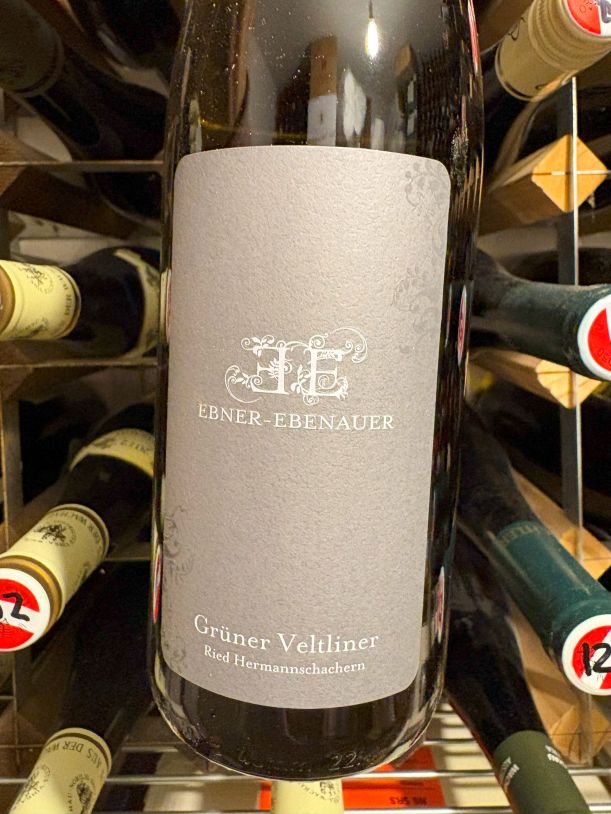
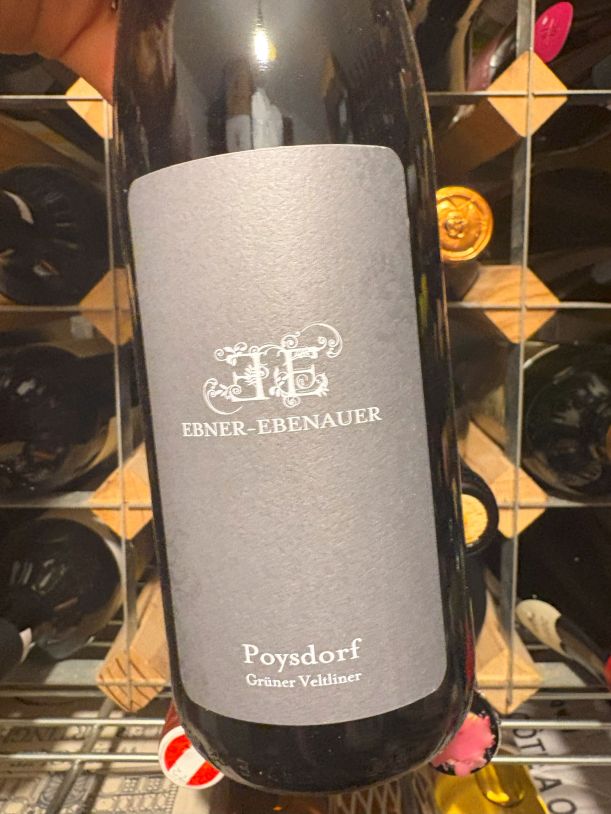
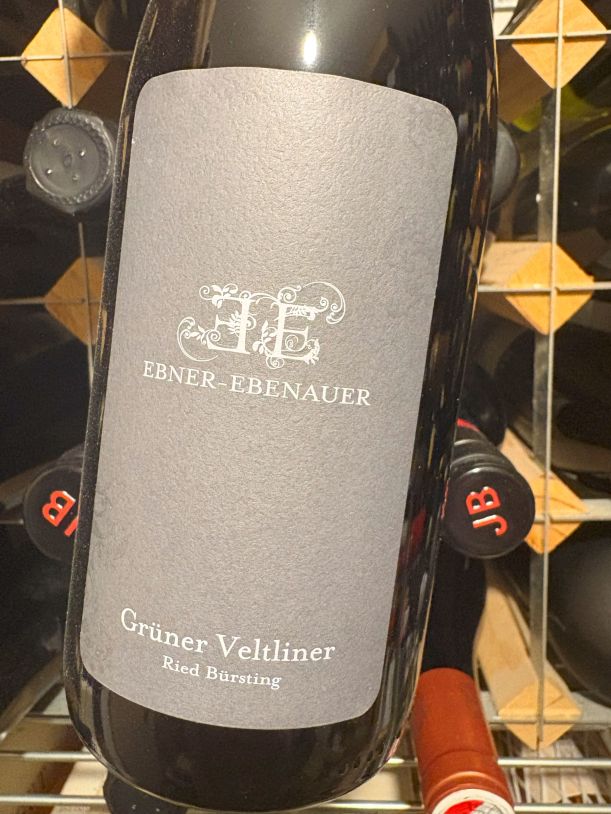
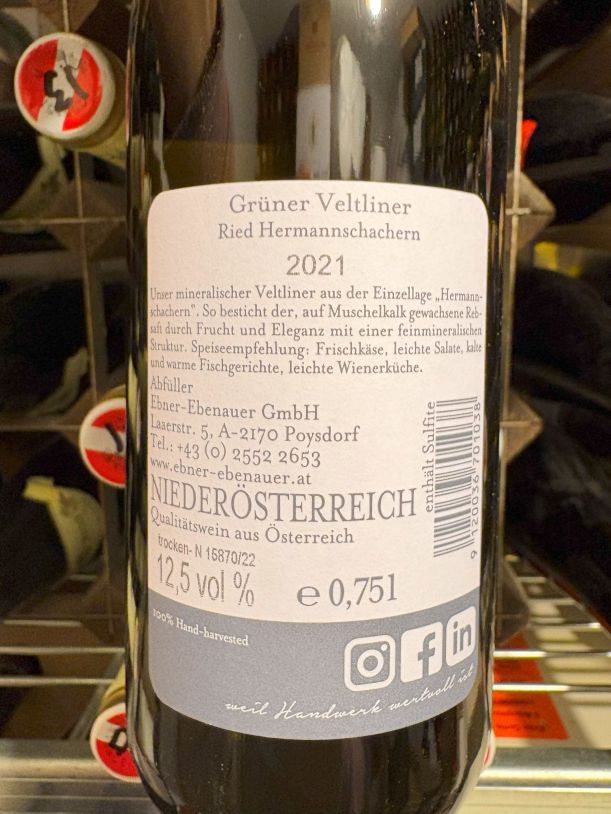
Ebener Ebenauer Poysdorf Hermanschachern Grüner Veltliner 2021.

Ebner-Ebenauer make small amounts of biodynamic and organic wines from largely old vines in the north east of the Weinviertel region near Poysdorf.  The charismatic Marion and her husband Manfred are making waves with their very late disgorged Blanc de Blancs and Noirs but it is their range of single vineyard Grüner Veltliners expressive the varied soils and aspects that we are focusing on there.

Ebner-Ebenauer Poysdorf Grüner Veltliner 2021. A blend from across their vineyards, spicy, with wet stone a touch of white pepper and crunchy orchard fruit. Refreshingly moreish, light but managing to sustain ones interest. Great value.

Ebner-Ebenauer Poysdorf Hermanschachern Grüner Veltliner 2021. From a single vineyard with limestone and fossil soils and 30 year + vines. Citrus, fresh pear and apple a touch of white peach, white pepper, herbs and wet stones.  Mid weight with great focus and freshness this lasts long on the palate. Drinking now but will evolve over the years. My favourite and the pick for wine of the month.

Ebner-Ebenauer Poysdorf Bürsting Grüner Veltliner 2021. From a single vineyard of 50 year old vines, rich, spicy, juicy and complex, concentrated and full bodied. Decant or cellar for up to 10 years.

The 2021 vintage, by the way, across Austria really has a superb balance of fruit and freshness.


Leave a comment

The Many Faces of Zweigelt

Full disclosure, I have a very soft spot for Austrian wine.  It is undoubtably through my partner, who is Austrian, that I have grown to love the many and varied delights that the country and its people have to offer. It’s fair to say that family Curtis pulls its weight when it comes to consumption of Schnitzels, quaffing of Greuner Veltliner and bashing of mogul pistes. Oh, and it goes without question that Semmel are the best bread rolls ever and nobody makes better ryebread.

Anyway, we’ve written at length about Austria’s fabulous white wines: Greuners and Rieslings from the Wachau, Kamptal and increasingly from Traisental along with the characterful Sauvignon Blancs from SudSteirmark, but not enough about the country’s excellent red wines.   My suspicion is that a lot of Austrian red wine just doesn’t make it out of the country because demand at home is so healthy. So, I was delighted be invited to a lunch spotlighting Zweigelt and the grape’s many faces organised Neusiedlersee DAC.

Zweigelt is the most planted red grape variety in Austria, second only to Gruener Veltliner in terms of vineyard area. It is a cross between Austria’s other two main red grapes, Blaufraenkisch and St. Laurent, the former, late ripening with high acidity and firm tannins and the later early ripening with delicate fruit and moderate tannins.  The result, it is argued, is a wine that displays the best of both and is fruit forward, with gentle acidity and soft tannin. It can be made in a forward fruity style at a great price point or through selection and sometimes aging in barrique as a more structured reserve wine capable of many years bottle age.

Neusiedlersee DAC (designated area of origin) is located to the east of the Neusiedlersee a large lake on the boarder between Austria and Hungary.  The designation is only for the production of Zweigelt and sweet wines although most of the winemakers in the area also produce a variety of other wines too.

Some nice Burgenlaendlisch drinking slang!

To demonstrate this the aperitif served before lunch was a Welschriesling Voll Freude 2021 by Georg Preisinger.  Fresh with citrus and apple served gespritzt.  The perfect refresher: half wine and half sparkling mineral water.

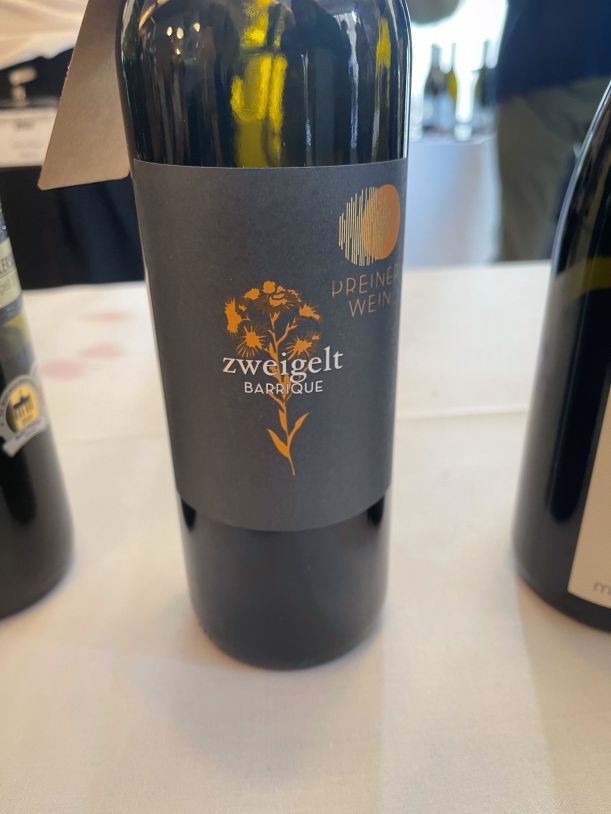
Next a young 2021 Zweiglet by Preiner Wein, served with an autumnal mushroom risotto. 

Very fruit forward with accessible berries and a whiff of spice on the nose. A nice midweight body, soft tannins and good freshness. Well balanced and a collaborative partner to the delicate risotto flavours. Tasty!

The main course of grilled sweetbread was served with single vineyard Zweigelt by Gebrueder Nittnaus, Zweigelt Golser Ried Luckenwald 2004.

The wine demonstrated how well the variety can develop in the bottle in the right hands.

On the nose cut strawberries, damp forest floor, a touch of vanilla from the Barriques. It retained a lovely juiciness on the palate with complex tertiary notes of mulch and mushroom.  Great length. Excellent and it held its own against the richness of the sweetbread.

Finally with a desert of baked apple and vanilla cream a TBA Welschriesling Siddartha 2018 by Johannes Muenzenrieder.  Wow a delicious nose of peach, roasted nut and honey, more of the same in the mouth, lovely balance and length. Sweet wines from near the Neusiedlersee benefit from the morning mist and afternoon sun and somehow retain great freshness.

The line up of Zweigelts on the free pour table displayed a spectrum of wines most of which were juicy and tasty from the off with some cellared samples that had developed lovely complexity. There were nice examples by Artisan Wines, Weingut Kummer, Keringer, Preiner Wein, Hannes Reeh, Salzl Seewinkelhof and Allacher.

Hopefully we’ll start seeing some of these lovely Zweigelts appearing in shelves in the UK soon!


Leave a comment

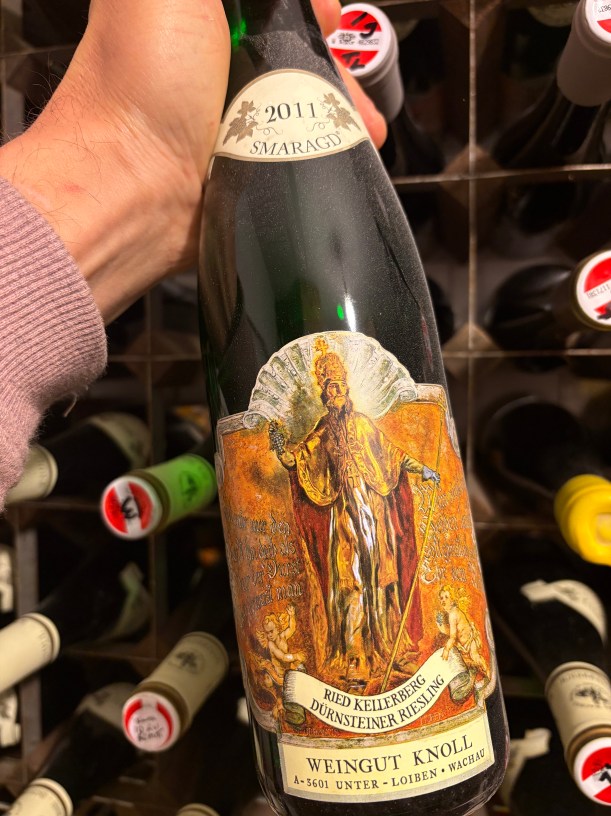
Ried Kelleberg Riesling Smaragd. Weingut Knoll 2011 

Golden colour & clear and bright.

On the nose waxy honeycomb, pear, apricot jam, tangerine rind, perhaps a hint of white flowers. 

A wine with bit of age on show. 

In the mouth, medium plus to full body, acidity courses down the centre of the tongue and builds as you taste the wine. Rich but remaining fresh. There is a nice semi viscous mouth feel. 

Finishes on a mineral note with a slightly bitter (phenolic) touch, and the finish is long and lingering. 

Well balanced, lovely an outstanding wine.  Developed but will continue to age well. 


Leave a comment

Zweigelt from the Neusiedlersee DAC Wine Growing Region

A recent lunch and tasting organised by the DAC showcased the wines of the region with the aim of promoting Zweigelt as the leading grape for producing red wine in the area.

Neusiedlersee DAC is located in Burgenland, near the Hungarian border. It surrounds Lake Neusiedl, a large, shallow body of water that significantly influences the local climate. The region has a long winemaking history and became a DAC (Districtus Austriae Controllatus) in 2012, specifically red wines made from Zweigelt and sweet wines made with Welschriesling.

The lake acts as a heat reservoir, moderating temperatures and reducing the risk of frost. The Pannonian climate brings hot summers, mild winters, and long, sunny autumns, ideal for ripening grapes. Humidity from the lake also fosters noble rot, making the area famous for its sweet wines.

Zweigelt is the dominant grape variety, producing structured, fruit-forward red wines with vibrant cherry and spice notes. Other varieties, including Blaufränkisch, St. Laurent, and international grapes, are also grown. Winemaking practices emphasize ripe fruit expression, often employing modern techniques such as stainless steel fermentation and oak aging. The resulting Zweigelt wines span the range from youthful and juicy to complex, barrel-aged styles with depth and longevity. In addition to reds, Neusiedlersee is known for its luscious botrytized sweet wines, particularly Ausbruch and Beerenauslese.

Zweigelt, Austria’s most planted red grape, was created in 1922 by Dr. Fritz Zweigelt through a cross of Blaufränkisch and St. Laurent. It is popular among growers due to its adaptability, high yields, and disease resistance. The variety does well in Neusiedlersee, where warm conditions enhance its ripeness and balance.

There were two styles evident from the tasting an unoaked style with soft tannins, bright acidity, juicy cherry and plum fruit and a spicy, slightly peppery finish. These wines are for easy drinking whilst young and are good value.  The second style is aged in oak barrels for a richer, more structured expression. These more premium versions are more complex and can mature well in bottle developing dried fruit and earthy and chocolatey notes with time.


Leave a comment

Achtung Blaufränkisch!

Alert! Austria’s other great grape Blaufränkisch turns out, like its sister Grüner Veltliner, to be an amazing food wine.

This was beautifully demonstrated at a recent lunch hosted by Leithaberg DAC paired a selection of the region’s top wines with HKK Hakkasan’s equally top Chinese tasting menu.

Where, you may be wondering is Leithaberg (pronounced Light-a-bear -gh)…… in Austria of course as I’m sure our well healed readers know only too well.  The appellation (DAC) is at the far eastern end of the country close to lake Neusiedler & the Hungarian border. Not to be confused with Neusiedlersee DAC which is on the other side of the lake and also boarders Hungary.  The Neusiedlersee is of course the lake that provides the perfect conditions for noble rot allowing wine makers Alois Kracher and Feiler Artinger to produce amazing sweet wines of international repute.   However don’t be confused as these don’t fall into either DAC region and are normally just labelled from Burgenland.

Link to map of wine region

Anyway now that that is all clear the important thing to remember is that the wines of Leithaberg are delicious and astonishingly good with Asian cuisine.  Austria’s wunderkind Gruener Veltliner now regularly appears on restaurant wine lists in the capital because it is so versatile with food, but look beyond this grape and you will find that Weissburgunder (pinot blanc) and Blaufränkisch (one of Austria’s indigenous reds) are equally great food wines.   This was amply demonstrated at the lunch hosted by Leithaberg DAC at HKK Hakkasan’s restaurant in the City.img_7943

Leithaberg DAC produces Chardonnay, Greuner Veltliner, Neuburger, Weissburgunder & Blaufränkisch but the wines that shone for me were the last two grape varieties.

Weissburgunder is made in a range of styles from simple unoaked, dry full bodied wine with citrus, mineral & sometimes slightly salty character to more complex, textured, spicy and flinty offerings from old vines that may have seen the inside of large old oak barrels.  The range of wines on offer at this tasting all had a good twist of acidity and wet stone character no doubt thanks to the schist & shelly lime stone hills and cool nights thanks to the lake.

Blaufränkisch comes in many styles and is often blended with other grapes but I was delighted to find that the majority of the wines on show were 100% Blaufränkisch and only subtly oaked if at all.  For me this pure style shows the grape’s delicious rounded fruit & savoury spice character lifted by freshness at its best.  I love the entry level blended wines which are so approachable and reliably tasty but the grape also produces great single vineyard wines with more structure and plenty of layers of fruit, spice, wet stones and sometimes blood.  These wines age well too as the wines at lunch showed.

The lunch:

img_7940Michelin-starred Head Chef Tong Chee Hwee and his kitchen at HKK put on a great menu to showcase their super refined Chinese cuisine.

Dongji Wagyu beef mushroom, shiitake mushrooms with pickled vegetables, onion, mooli .

Chardonnay Leithaberg DAC 2015, Weingut Esterhazy.

A concentrated citrus chardonnay that stood up to the pickled vegetables.

Gruener Veltliner Himmelreich 2013, Weingut Sommer.

Fresh but with some body and great structure, nice mineral wet stone and grapefruit pith. This wine worked as a brilliant foil to the doughy fake mushroom filled with beef and the real fungi.

Zhang Dim sum Trilogy. Prawn and seaweed dumpling, king crab and dry scallop dumpling, label Rouge chicken and pickled Chinese leaves puff.

Weissburgunder Golden Erd 2012, Weingut Tinhof.

Floral medium body, with a bit of spice which resonated with the Asian spices in the dumplings.

Weissburgunder Leithaberg 2010, Weingut Heinrich.

A lovely structured wine with great tension and lift but the body to cope with the delicious seafood flavours of the Dim sum.  This outstanding combination was over far too quickly & is now firmly lodged in the memory.  This is obviously why Pinot Blanc exists!

Signature Cherry Wood Peking Duck. Chef Tong’s speciality served in three parts, smoked crispy skin, outer meat with hoi sin sauce & rich inner meat.

Blaufränkisch Altenberg 2012, Weingut Hans & Christine Nittnaus.

Floral, ripe plum, great balance and a savoury, spicy finish. Wow these wines are the perfect pair to hoi sin duck!  The savoury & plumb flavours in both the wine & dish complement each other but the wine has enough structure &  lift to cope with the fatty meat.

Blaufränkisch Leithaberg 2010, Weingut Nehrer.

Mushrooms, white pepper, red and black fruits on the nose, good body and more fruit and spice in the mouth, complex & delicious the just resonates with the smoky crispy duck skin.

Served on their own

img_7936Blaufränkisch Goldberg 2005, Weingut Prieler

Nice development, cherry, baked fruit, good balance, soft tannins, engaging & long. Shows how well these approachable and friendly wines mature & develop in complexity.

Blaufränkisch Leithaberg 2006, Weingut Anita & Hans Nittnaus.

Characteristic ripe plum and cake spice, enjoyable but not sure if 2006 was a particularly strong year?

Lamb cannon with water chestnut, salted egg yolk and lotus root.

Blaufränkisch Gritschenberg, Weingut 2008 Altenberger

Mature, spicy a wide spectrum of fruit, freshness and rounded tannins, the age & tertiary notes work well with the subtle flavours of the lamb dish.

Blaufränkisch Leithaberg 2010, Weingut Wagentristl

Mature, cloves, stewed rhubarb, stewed plum, spices.  Again the aged notes work well with the dish.

What a great demonstration of how well wine can be paired with Chinese food.  No more beer or jasmine tea for me!


Leave a comment

Austria’s best kept wine secret: The Südsteiermark

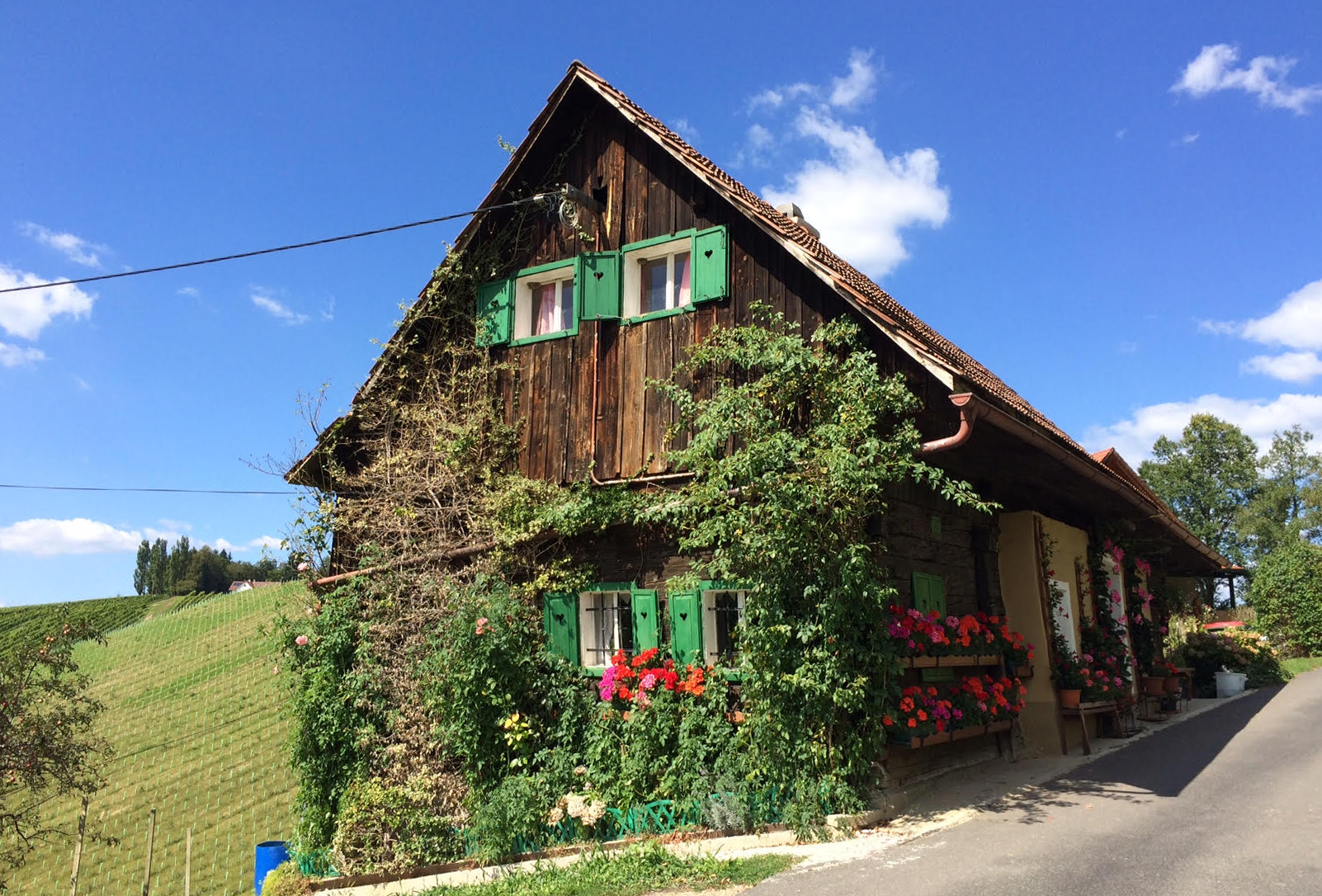
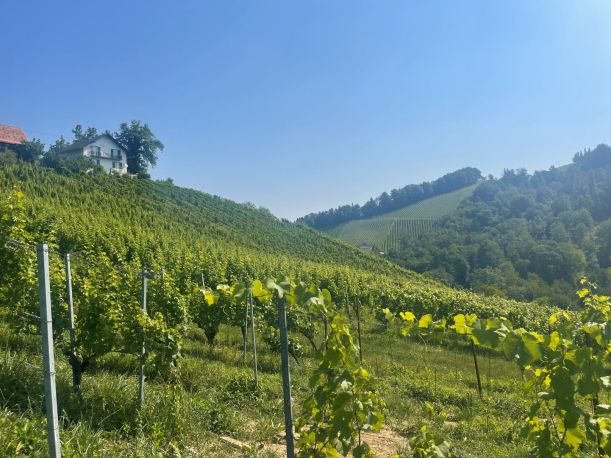
The Südsteiermark (Southern Styria)is a stunning region in south-east Austria. Here picturesque hills and valleys are carpeted in vineyards punctuated only by the occasional field of pumpkins and shady patch of woodland.

sudstier vineyardsThe region is perhaps Austria’s best kept wine secret with the vast majority of its wine is consumed on home turf & only a handful of pioneering producers exporting overseas. Südsteiermark’s premium wines are much appreciated by Viennese restaurants & wine collectors but I’m pretty sure that the majority of these tasty wines are consumed on site in the numerous wineries themselves that occupy prime hill top locations whilst enjoying picture postcard views and tucking into local culinary treats.

The region’s beauty really gives Tuscany a run for its money and offers a similarly seductive synthesis of food and wine and scenery. Whilst many serious wines are produced here wine is very much part of a wider offering.


Wineries have always been open to visitors serving their own wines in outdoor gardens overlooking the vineyards.  Traditionally these Buschenschank (taverns) were only allowed to pour their own wines and serve food grown and made on the premises. However since I first visited the region 25 years ago Brettljause, a simple platter of cold meats, cheeses & pickled vegetables with rye bread, was pretty much the staple fayre.  However menu’s in even the most basic Buschenschank have now been expanded to include such delights as fresh salads dressed with local pumpkin seed oil & the local speciality Stierische Backhendl (fried breaded chicken made from ‘happy’ local hens).  Look out too for a range of super dishes made with Eierschwammerl (chanterelle mushrooms). Many of the wineries also let rooms on a bed and breakfast basis so that you can stay right in the heart of the action and there are an increasing number of boutique hotels with gourmet restaurants perched on prime spots for those seeking a bit more luxury.skoffThe Südsteiermark is best known wines for white wines and in particular Sauvignon Blanc which seems to sit in a satisfying spot somewhere between the steel & mineral of the Loire and the greater florality & fruitiness of New Zealand.  Traditional whites include the fragrant & fresh early drinking Gelber Muskateller, a perfect aperitif especially when made into a sparkler, Welschriesling, another fresh food friendly white, Weissburgunder (Pinot blanc) with more body but good acidity and the perfect fit for Backhendl and of course a bit of Gruener Veltliner.  Chardonnay seems to do well and often comes with a bit of oak too. There are also tasty reds too often blends of indigenous grapes like Blaufränkisch and Zweigelt with international varieties like Cabernet Sauvignon & Merlot.unnamed (1)
The vineyards go up to about 400m above sea level and although continental enjoy a long ripening season thanks to an increasingly pronounced range between daytime and night time temperatures reaching up to 18 degrees towards harvest.


With so many Buschenschank and Weingut to visit each offering so much good eating and drinking the Styrian tourist board have helpfully joined the dots on the map up with a series of picturesque wine trails.  The main Weinstraßefarmhouse runs from Leutschach to Gamlitz & Ehrenhausen. Running largely along a ridge it connects many of the best winemakers and the loveliest locations.  Instead of driving the route far nicer choice is to ramble along one of the many walking routes also mapped out which allow one to pass right through the vineyards & by quaint farmhouses complete clucking chickens & vintage tractors.
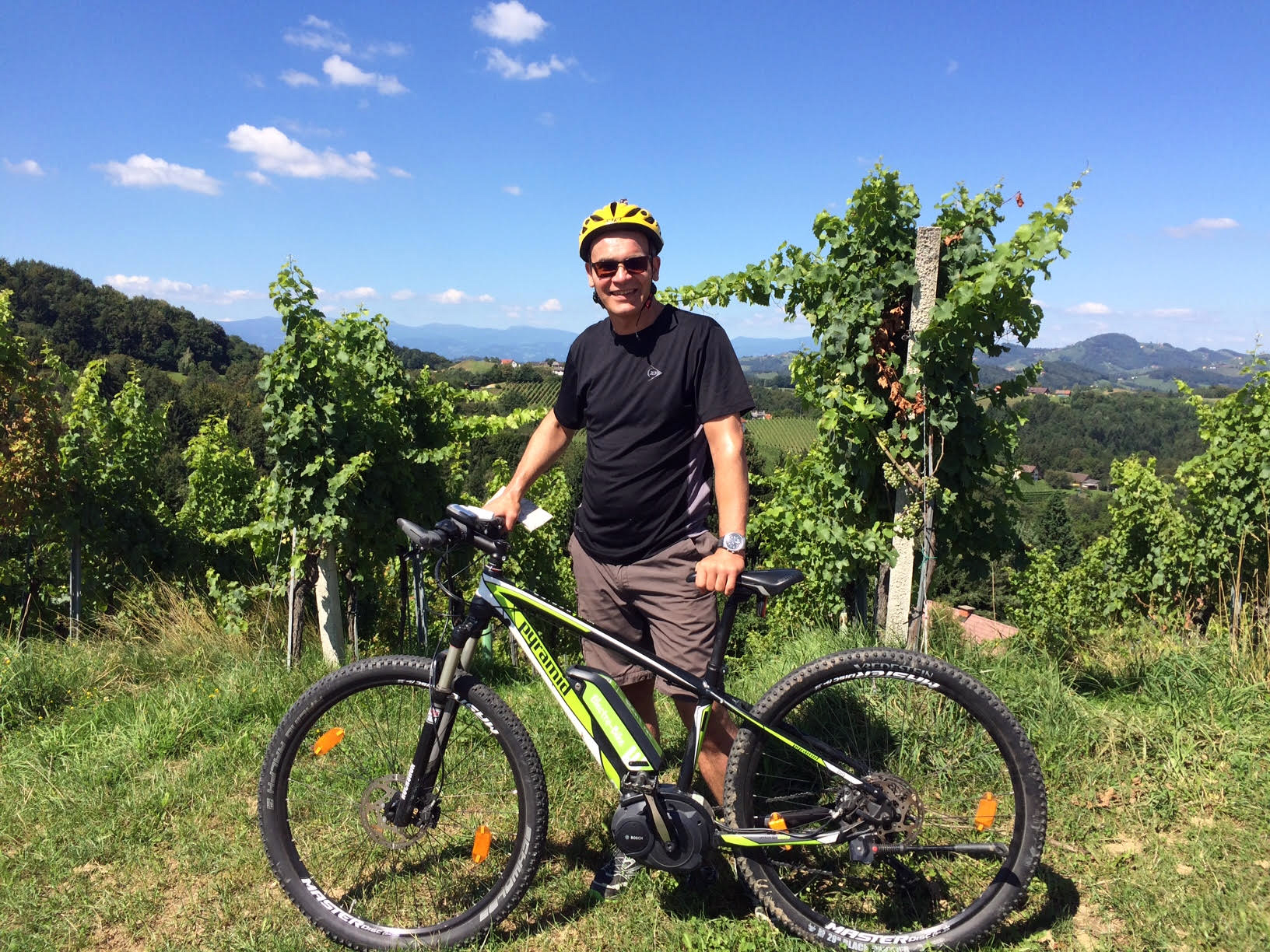
ebikeHowever to cover a wider sweep of the area there is no better form of transport than the e-bike.  Modern electric bikes flatten out the many steep hill climbs but take nothing away from the pleasure of rolling through this fabulous country side following part of the Weinstrassen Tour for bikes.  Maps of all three types of trail are widely available and extremely well sign posted on the ground making it super user friendly.

Accommodation.

We’ve stayed in three places over the years and enjoyed them all:

Weingut & Buschenschank Tinnauer picturesquely situated on the bike route near Gamlitz. http://www.weingut-tinnauer.at/

Skoff Original, the home of Sauvignon Blanc and right on the spectacular Weinstraße. Stunning panoramic views & great food. http://skofforiginal.com/?lang=en

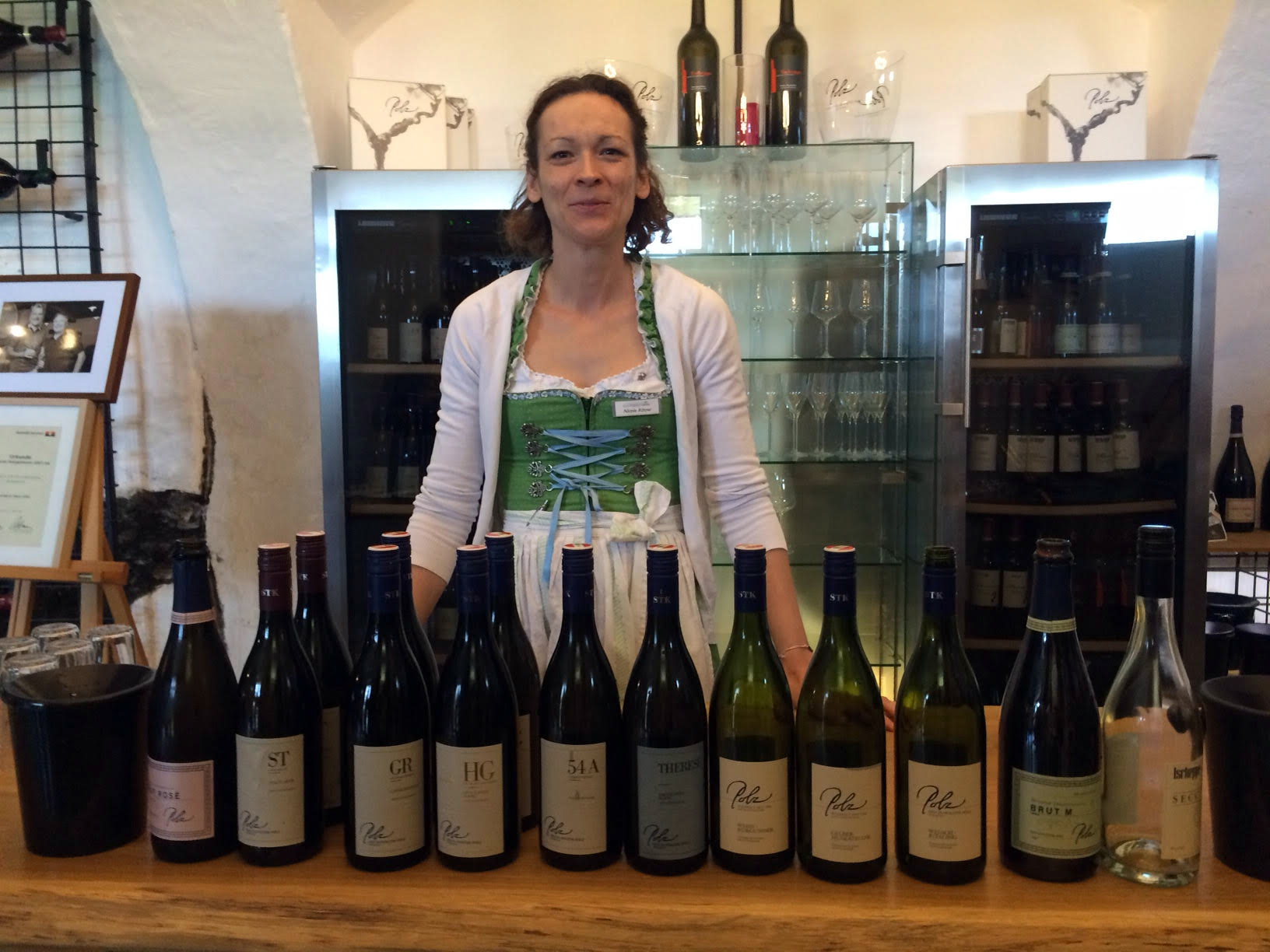
bird scarerHotel Gut Pössnitzberg.  A stylish hotel with heated outdoor pool & cool glass box dining room overlooking the vineyards. The hotel is owned by the Polz Winery and there is a tasting of their wines, including some great traditional method fizz, for guests at 5.00pm each day.  E bikes available. http://www.poessnitzberg.at/
Winzerhotel Wurzenberg is a modern hotel in a spectacular location but we haven’t visited it yet!

Places to eat:

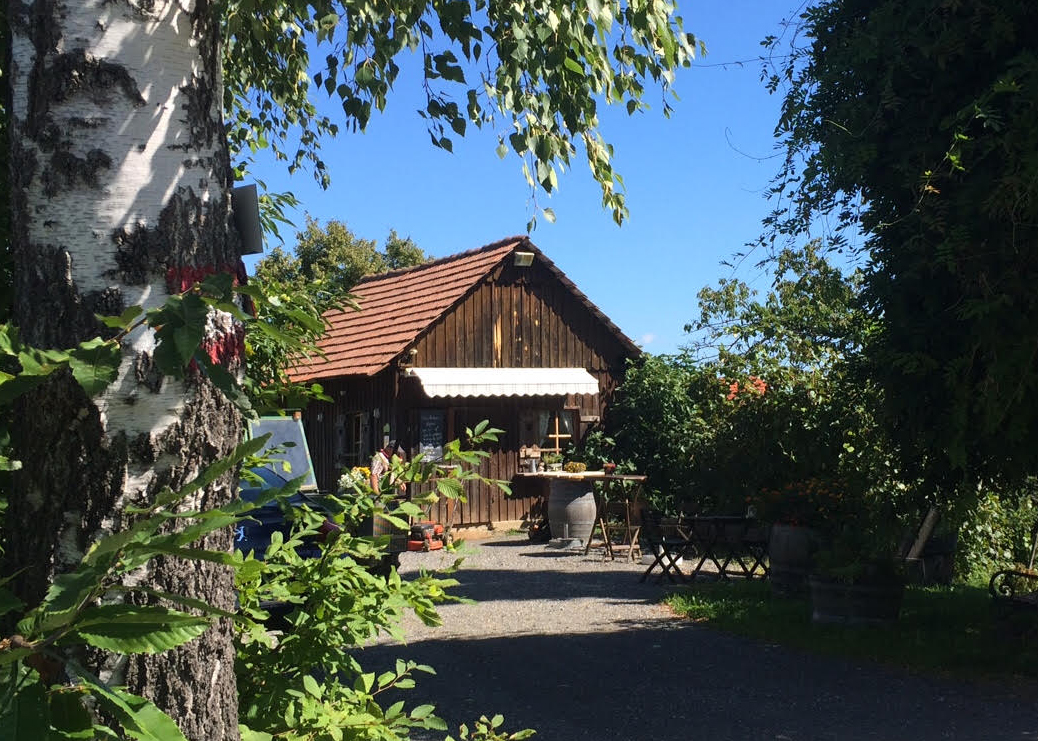
All the above serve great food.  However a visit to the Südsteiermark should definitely include a traditional spit and sawdust buschenschank.

There are many to choose from and it’s worth asking for a local recommendation. We enjoyed Eory Buschenschank. Great location, traditional fayre and friendly landlord.

buschenschank01

For more information visit:

Tourist information:  http://www.steiermark.com/en/styria/regions/southern-western-styria

For accommodation, restaurants & wineries: http://www.suedsteirischeweinstrasse.at/


On the wine region: http://www.austrianwine.com/our-wine/wine-growing-regions/steiermark-styria/unnamed (16)

Getting there:

It’s about a 2 ½ hour drive from Vienna

Or 45 minutes from Graz international airport.

ENJOY!