On the nose wild strawberries, dried rose petals and earthy aromas and a classic tar note on the nose.
Very dry and super mouth-watering. Dusty grainy tannin around mouth and the upper lip. Even with such a firm structure the wine is lifted and elegant.
As it opens up there are more sour cherry fruit notes in the mouth with orange peel. It is perhaps beginning to fade a little but still a nice long lingering finish. Time to drink up.
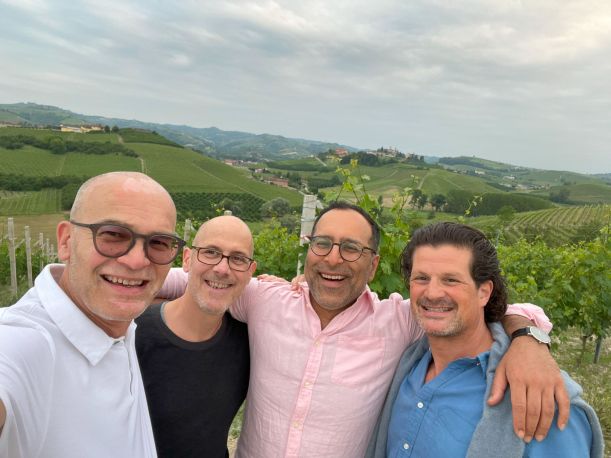
A good wine friend organised a trip to Barbaresco this May to join the annual Tavola festival and taste the new release of the 2019 vintage. There is of course no better way to experience and fall in love with the wines of a particular place than to taste them in situ and you can find tasting notes and photos to make you envious, in our write up of the trip.
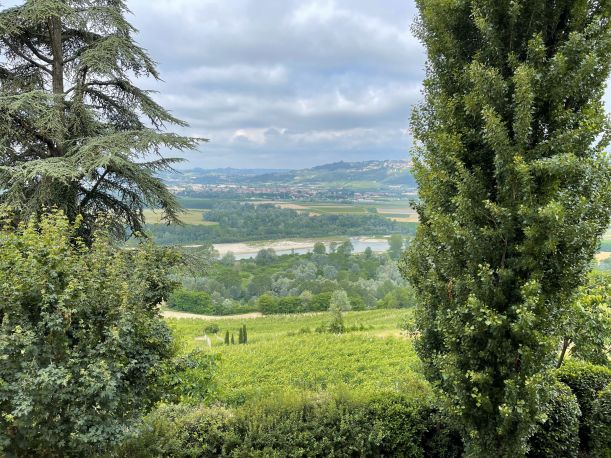
The Tanaro River
Our friend is a great fan of Italian wines but particularly loves the wines of Barbaresco favouring them even over the noble wines of Barolo. So here I thought it would be interesting to compare the wine making regions of Barbaresco and Barolo. Both prestigious they of course have many similarities but also a few key differences that give each a distinct character.
Barbaresco DOCG, lies in the heart of Piedmont, northeast of the Barolo DOCG. It is known for producing wines of finesse, elegance, and exceptional aging potential, exclusively from the Nebbiolo grape. While Barbaresco and Barolo share similarities, significant differences in climate, topography, and winemaking regulations distinguish the two appellations.
Climate and Topography
Barbaresco’s climate is continental with notable influences from the Tanaro River winding through the region and helping to moderate temperature extremes. Compared to Barolo, Barbaresco has a slightly lower elevation, typically between 200 and 400 meters above sea level, resulting in a milder microclimate. Nebbiolo ripens earlier here contributing to wines that are more approachable at a younger age compared to Barolo’s often more austere structure in youth.
On the rolling hillsides of the region many of the best vineyards face south or southwest, allowing optimal sunlight exposure, however variations in altitude and orientation create diverse terroirs across the region’s key communes: Barbaresco, Neive, Treiso, and a small portion of Alba.
Soils and Terroir
Barbaresco’s soils are primarily composed of marl, a mixture of clay, limestone, and sand. This composition is thought to result in wines with refined tannins and a more delicate structure than those of Barolo, which generally has a higher proportion of sandstone, contributing to its more powerful, tannic profile. The relatively fertile and compact nature of Barbaresco’s soils encourages a softer expression of Nebbiolo with floral, red fruit, and spice-driven aromatics.
Wine Laws and Grape Varieties
Under DOCG regulations, Barbaresco wines must be made from 100% Nebbiolo and undergo a minimum aging period of two years, with at least nine months in oak. Barbaresco Riserva requires at least four years of aging. This contrasts with Barolo, which mandates three years for standard wines and five years for Riserva, further reinforcing Barbaresco’s reputation for earlier drinkability.
Barbaresco vs. Barolo
Clearly both appellations produce amazing wines and the wine makers approach, whether traditional or modern also has a big influence, but Barbaresco’s wines are typically lighter in body, more perfumed, and approachable sooner than Barolo’s. Whilst comparatively more delicate they can still be very long lived and developing great complexity with time in the bottle.
Aged Barolo and Barbaresco live up to their international reputation but lesser known local varieties such as Arneis, Dolcetto and Barbera can be fantastic value in the hands of great wine makers.
Thirty-two guests attended this tasting, which was held at Giovanni Rana’s swish and airy new restaurant, in the Regents Place development on Euston Road. The tasting was designed to give an overview of the various wines of Piedmont. Most people have heard of Barolo (made from 100% Nebbiolo), arguably the region’s most famous wine and one that inspires wine buffs to launch into rapturous praise of its unique character, complexity and aging potential. But the region is also host to a range of other grape varieties that produce great value delicious drinking wines and the evening set out to show some of these too.
Rebecca Nightingale of Montforte Wines and Roger Barlow of Gerard Seel kindly introduced the region and presented the wines on the evening. The restaurant provided a superb selection of antipasti and some memorable pasta dishes that complimented the wines perfectly, proving just what food friendly wines these are.
The first wine sampled was a white Arneis from Roero by the fabulously named Gigi Rosso. This wine was fresh with a persistent lingering and unique flavour. Aromas of flowers and unripe pear, really very well balanced with a long finish. Lovely and very popular amongst the guests.
Round 1: Dolcetto (introduced by Rebecca)
Dolcetto d’Alba ‘Duset’ 2010 by Le Vigne di Ca Nova. Fresh, with morello cherries and savoury notes. A wine to drink in his youth as a light and refreshing lunchtime drink.
Dolcetto d’Alba Rutuin 2007 by Caibot Berton. Slightly older, this wine was less fruity but slightly more complex on the palate with a note of golden Virginia tobacco. At five years old, it’s probably reaching its peak. A lovely, tasty, moreish drop. These wines have fairly low tannin but are nevertheless fresh and good with food.
Round 2: Barbera (introduced by Rebecca, contrasting oaked and unoaked)
Barbera d’Alba 2010 by La Licenziana. Fresh with lots of acidity, a wine that really reacted well to the prosciutto and salami on the table. On the nose, fresh, light strawberry and red fruits. Again, a wine for drinking in its youth.
Barbera superiore ‘Bric de Maschi’ 2007 by Le Vigne di Ca Nova. Delivered a slightly smoky nose with vanilla, perhaps chocolate and still plenty of cherry fruit. Absolutely delicious on the palate with sticky crust of cherry tart and savoury notes. Fantastic value for money and a delicious drop of wine from 2007.
Round 3: Barolo (introduced by Roger)
Barolo Roggeri 2007 by Caibot Berton. In Piedmont, where Barolo has a reputation for huge tannins that need many years in the bottle to tame, 2007 is thought to be a very approachable and friendly year with lovely soft integrated tannins. The Roggeri proves the rule with absolutely delicious complex notes of fruit, classic tar and floral aromas on the nose. In the mouth, again gorgeous, still plenty of tannin but smooth and tasty. This wine has structure and hints of how it may develop in complexity with age. No wonder Decanter gave this five stars and rated it top for value for money in recent review of Barolo 2007.
Barolo Serralunga d’Alba 2007 by Fontanafredda. Also a 2007 and if it if anything even more approachable with notes of tobacco and mushrooms and a little liquorice on the nose. On the palate nice, fresh and fruity with a bit of spice and very soft integrated tannins. Perhaps a little brief but a really approachable and tasty Barolo. In fact a wine that many people found easier to enjoy than the slightly more structured Roggeri.
These lines were accompanied by a great range of pasta including pappardelle al ragù d’anatra (duck) and porcini ravioli, again proving how well these winds even in relative youth go with food.
Round 4: Style and Age – Barbaresco and Barolo
The final round of wines contrasted a Barbaresco with an older Barolo. Barbaresco wines are considered again to be more approachable more soft and feminine softer and less fiercely tannic. On the other hand Barolo is famed for the way it delivers a delicate cocktail of aromas and flavours once the tannin has reduced with age.
Barbaresco Bric Balin 2005 by Moccagatta. This single vineyard Nebbiolo has lovely savoury notes then toffee, condensed milk some floral scents perhaps a little bit of the famous tar, complex. In the mouth, long, savoury, sweet and delicious. Really an outstanding wine. Still young, but with beautifully integrated tannins and that great long future ahead of it.
Barolo Carobric, 1997 by Paulo Scavino. A big name in Barolo and a blend of three of their best vineyards. Stealing the show and providing a brilliant lesson in just what the Barolo can deliver, but even at 15 years of age it still needed time to open up in the glass. Notes of tar, earthiness, a bit of mushroom and a whiff of violets on top complex notes. In the mouth, still quite tannic but slowly opening up and providing more of those savoury sweet notes with a core of ripe fruit bellow. Changing flavours, complex and persistent still, with many years ahead of it. Fantastic.
We finished the evening with a glass of Moscato d’Asti 2010, Santa Vittoria. Another white, lightly fizzy and sweet, but also fresh to cleanse the palate and end a hedonistic evening.
Kiran’s wines of the evening
Barolo Carobric, 1997 by Paulo Scavino (£86.00 – Fine & Rare)
Barbaresco Bric Balin 2005 by Moccagatta. (£32.75 – Gerrard Seel)
Kiran’s best value wines
Barbera superiore ‘Bric de Maschi’ 2007 by Le Vigne di Ca Nova (£12.25 Montforte Wines)



 WanderCurtis Wine