WanderCurtis Wine

Wine tastings, wine school, corporate events, reviews and recommendations


Leave a comment

An Evening with Château des Jacques – October 15th 2026

Please join us for our next Wandercurtis Wine Dinner at Frederick’s Restaurant, Islington, on Thursday 15th October at 6:30pm, hosted by Olivier Gasselin, Jadot & Chadwick Family Estates Ambassador.

For this dinner, we’ll be exploring the beautiful wines of Château des Jacques — one of Beaujolais’ most prestigious estates and a key part of the Louis Jadot family for more than 20 years.

This is Beaujolais with a difference. Forget everything you think you know about light, fruity Beaujolais. Château des Jacques’  wines are serious, age-worthy and wonderfully expressive, revealing the depth and character that Gamay and Chardonnay can achieve when it is shaped by exceptional terroir and individual vineyards.
🍇 The Wine Journey

Aperitif
Beaujolais Blanc — 2024
Unoaked, fresh and vibrant

Starter
Beaujolais Blanc Clos de Loyse
Richness and complexity from oak

Main Course
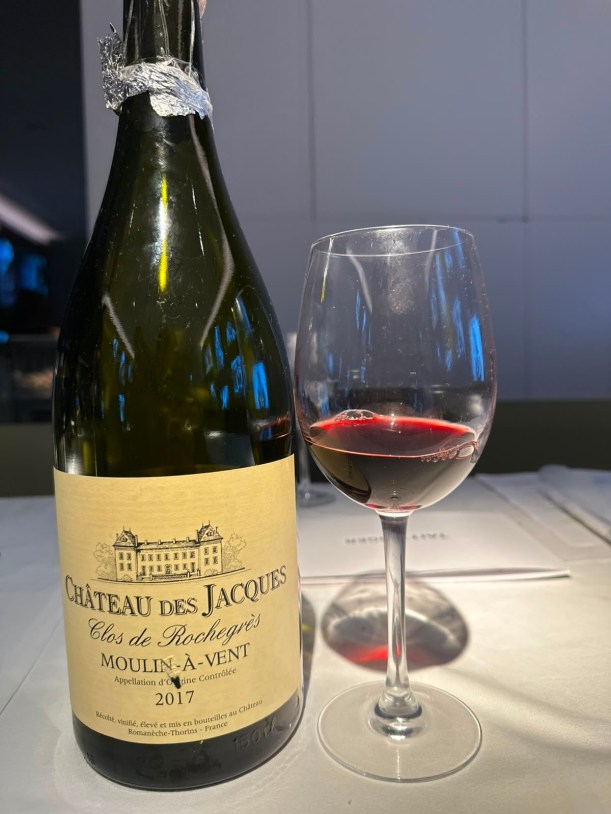
Moulin-à-Vent Clos de Rochegrès — 2021
&
Moulin-à-Vent Clos du Grand Carquelin — 2020, Magnum

Two exceptional single-vineyard expressions, showcasing the remarkable differences between the estate’s historic clos.

Dessert
Morgon Côte du Py — 2020

At the heart of Château des Jacques is a deep belief in terroir, single vineyards, age and the extraordinary DNA of Gamay. The estate’s 20.4 hectares and five individual clos are vinified separately to express their unique personalities.

Expect dark cherries, spice, earthy and leathery notes, structure and surprising Burgundy-like depth — a fascinating opportunity to discover a very different side of Beaujolais.

Please book now

Tickets are priced at £95  per person, inclusive of  five wines and a three-course dinner at Frederick’s. Places are limited and this evening is expected to sell out quickly.

To secure your place, please mail adam@wandercurtis.com

We look forward to welcoming you.

The WanderCurtis Team  Adam, Kiran and Stuart


Leave a comment

If you like Pinot Noir try Beaujolais Crus

This is a piece of advice that I’ve often been given over the years but have normally been disappointed when taken until recently.

In our last blinders Stuart and I were convinced that a wine Adam had brought was a pinot noir. Not only that but one with concentrated fruit, spice, savoury notes, lifted aromatics and aging potential.  Too savoury probably to be a new world example and perhaps not concentrates enough to be Central Otago so quite possibly a very good village Burgundy.

Well it turned out to the a Morgon Beaujolais Cru!

Situated just south of Burgundy, the Beaujolais wine region is renowned for its Gamay-based wines, offering a range of styles from light and fruity to complex and age-worthy. The region’s climate is semi-continental, with warm summers and cool winters, creating ideal conditions for grape cultivation.

Beaujolais’ landscape is defined by rolling hills and diverse soils, which significantly influence wine quality. The northern part is home to the Beaujolais Crus, where vineyards are planted on granite and schist slopes, producing more structured and complex wines. Notable Crus include Moulin-à-Vent and Morgon, known for their aging potential and Burgundian finesse. In contrast, the southern part of the region is flatter, with more fertile clay-limestone soils. This area produces Beaujolais AOC and Beaujolais-Villages wines, which are typically lighter and designed for early drinking.

Most Beaujolais and Beaujolais-Villages wines are made using semi-carbonic maceration, a technique that enhances the wine’s fruitiness and freshness. Whole grape clusters are placed in tanks, where fermentation begins inside the berries, resulting in wines with bright red fruit aromas, low tannins, and a lively, juicy character but often a slight bubble gum / banana taste.

In contrast, the winemaking approach in for the Crus employs more Burgundian techniques, including traditional fermentation, oak aging, and longer maceration periods. This produces wines with greater complexity, depth, and aging potential. Moulin-à-Vent offers firm tannins and spice, while Morgon is known for its fuller body and earthy character.

Climate change and investment are clearly having an impact on this regions ability to produce outstanding quality wines at compared to its northern neighbour very reasonable prices. For instance check out the Wine Society’s 150th Anniversary Moulin-à-Vent 2019.