WanderCurtis Wine

Wine tastings, corporate events, reviews and recommendations


Leave a comment

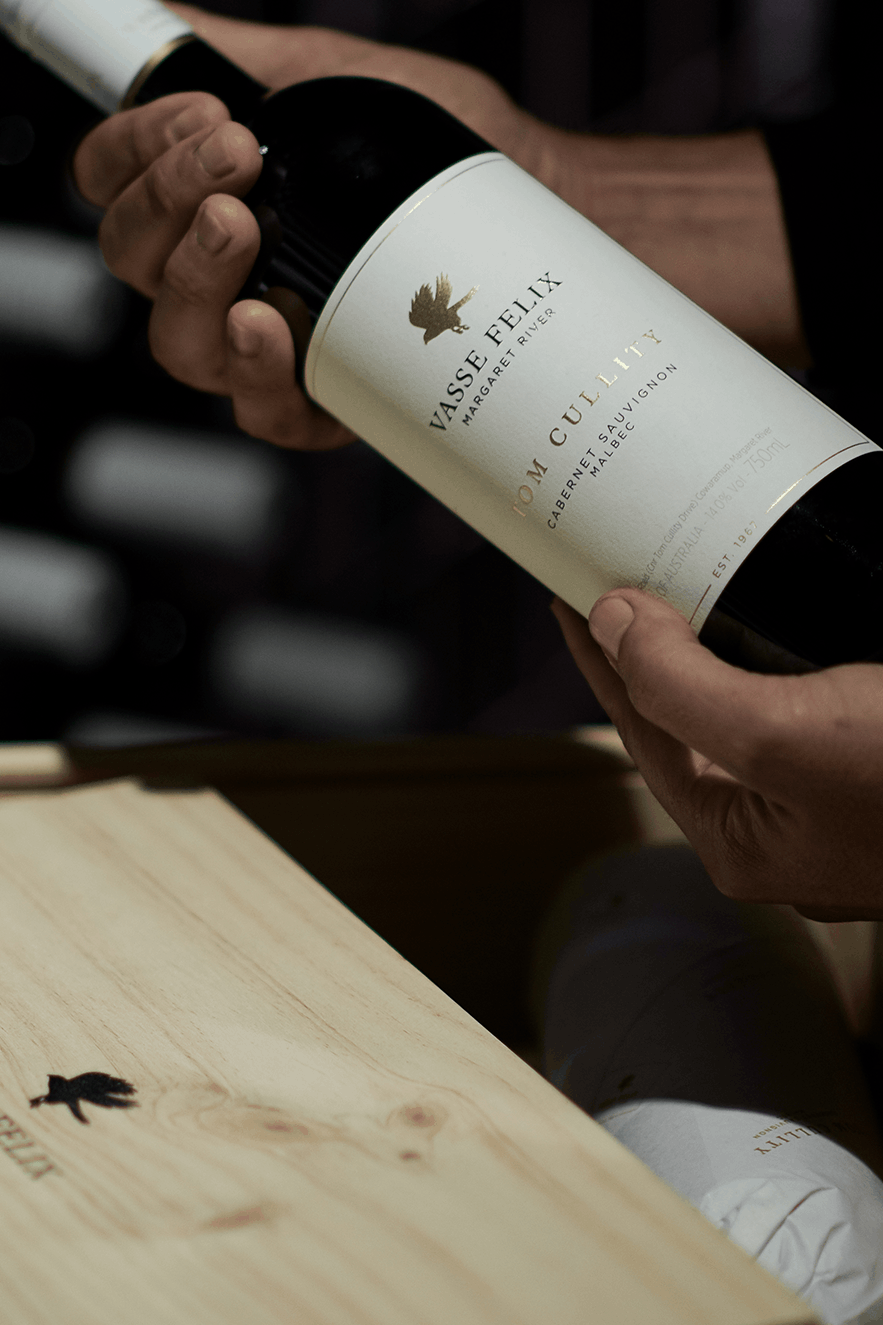
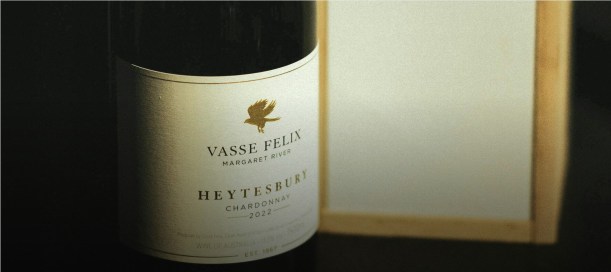
Book now for our wine dinner with Vasse Felix, Margaret River’s founding wine estate. Wednesday 26th November at Fredericks, Islington.

Famous for its elegant Bordeaux style reds and increasingly for Chardonnays that rival Burgundy, Margaret River produces only 2% of Australia’s wine but around 25% of its premium wine.

In other words the region is all about fine wine and this, in large part, is thanks to Dr Tom Cullity, an English lover of Bordeaux, who established Vasse Felix the first winery in Margaret River back in 1967.

We have an amazing line up of five of their top wines for you to try which include both of the estates flagship wines:

The 2021 Heytesbury Chardonnay, a stunning vintage and the award winning Tom Cullity Bordeaux blend. We’ll be pouring the 2016 vintage which is maturing beautifully.

We’ll also try the Premier Chardonnay and Premier Cabernet, all matched with a delicious three course dinner in Frederick’s private club room.

And to kick things off with a sparkle a glass of Idée Fixe Premier Brut.

Ryan Hancock, Vasse Felix’s man in Europe, will be on hand to tell the story of this pioneering wine estate and to present the wines.

Don’t miss what is shaping up to be a memorable evening.

Tickets are £120 on Eventbrite or £110 by emailing adam@wandercurtis.com and then paying by BACS.


Kiran, Adam & Stuart.

Images courtesy of Vasse Felix ©


Leave a comment

Leoville Barton 2005

The second half of a recently Coravin’d 75cl bottle, decanted for an hour before trying. The first half was magical, hoping for the same again…

Mid ruby, hint of orange around the rim. Legs abundantly coating the glass telling me there is more fun ahead!

Nose is dark cherry, macerated strawberry, ripe blackberry, really ripe to overripe plum and cassis syrup encompassed in a lightly mushroomy, damp forest floor and cedar envelope. There are accents of spicy clove, menthol, vanilla pod, burnt toast and some newly sawn wood providing beautiful contrast between the ripe dark fruit and the lifted spiciness. I could just sit and inhale this all day (but that would defeat the purpose of the tasting note…)

The first thing you experience on the palate is bright red and black fruit, tart acidity and very refined yet abundant mouth filling tannins. The lingering flavours deepen into a menthol covered dark cherry, black currant and plum coulis with a hint of smokey dark chocolate. The finish is long, approaching the 45 second mark to still get the fruit elements and well beyond to still feel the structural aftermath of this very complete wine. As the wine continues to open, the fruit sweetens and darkens further in the mouth while the tannins are ever present and lingering. The bright acidity keeps this whole wine perfectly in balance. My estimation is this wine will easily go another 25 years if stored well.

A true Bordeaux classic from a top notch Chateau.


Leave a comment

Un petit Tour de France – harvest time 2023

The onset of 2024 has left me reflecting on my inherent Francophilia. This got the better of me towards the end of last year. I had been meaning to visit Alsace for years. It took so long partly because of my preference for red wine and more recently due to Covid.

My favourite varietal though is Gewürztraminer. This is very much a marmite love or hate grape. For me it’s love. The most textured, succulent, floral powerhouse of a wine I’ve ever tasted was a Matawherho Gewürztraminer from Gisborne in New Zealand. It was an early 1990’s vintage tasted at a masterclass with my boss of the time Dr David Durham at his home next to Cloudy Bay, Marlborough New Zealand in 1995.

The 1976 Hugel Gewürztraminer with a nose distinctly reminiscent of cannabis was a highlight of many years of wine tasting.

This grape has mesmerised me since. I also have great appreciation of the other white Alsatian varieties. Well made Pinot Gris is also beautifully textured and aromatic. Riesling whilst not my first go to drink due to its high acidity playing havoc with my gastrointestinal equilibrium is still a wine I highly regard.

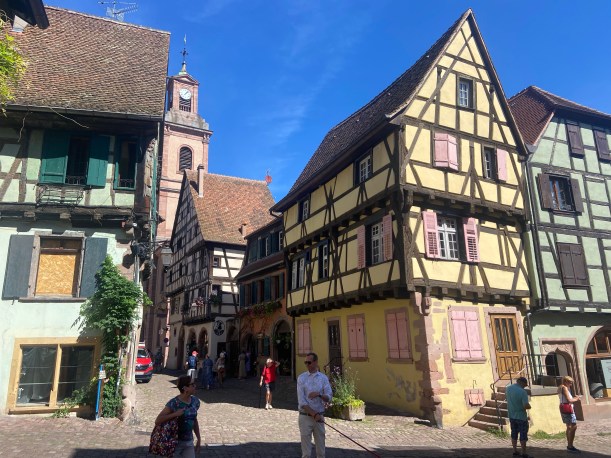
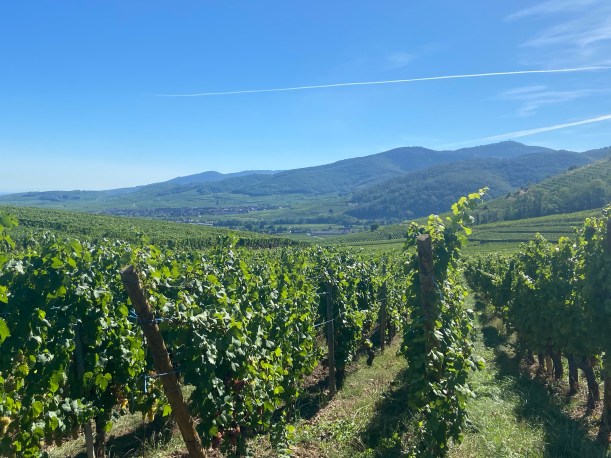
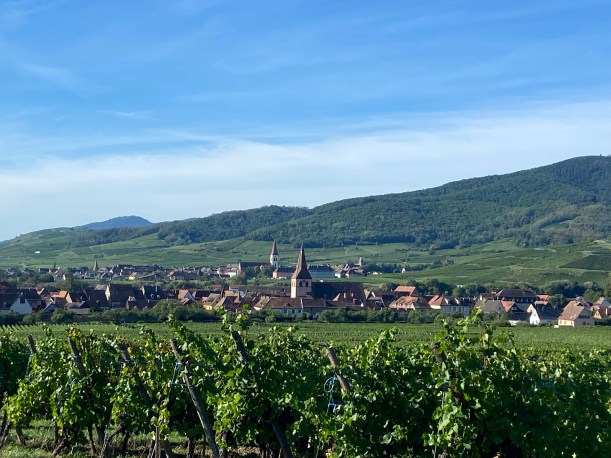
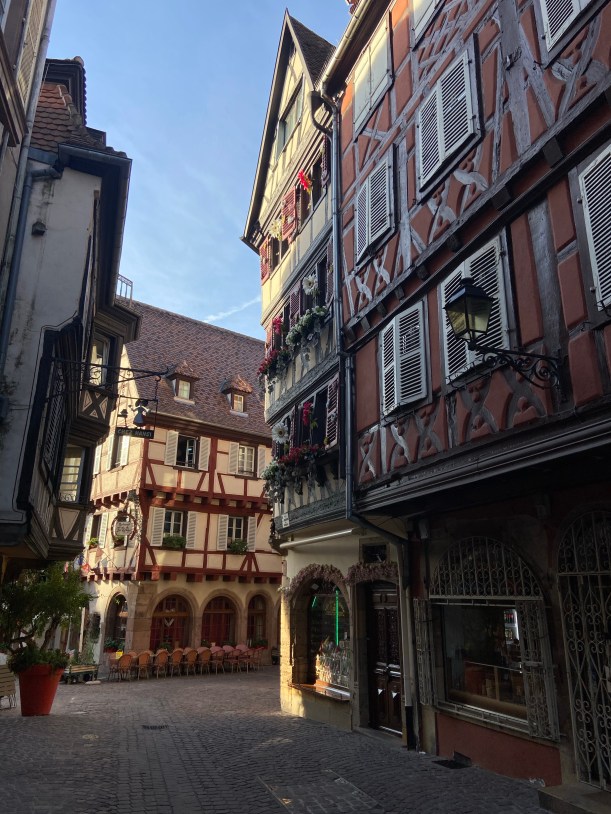
So I finally made it to Alsace, and the  wait was worth it. Not only for the wines but for the delightfully preserved chocolate box towns and villages such as Colmar, Riquewihr and Ribeauville. It really feels  like an amalgamation of France and Germany as its geography and history suggest.

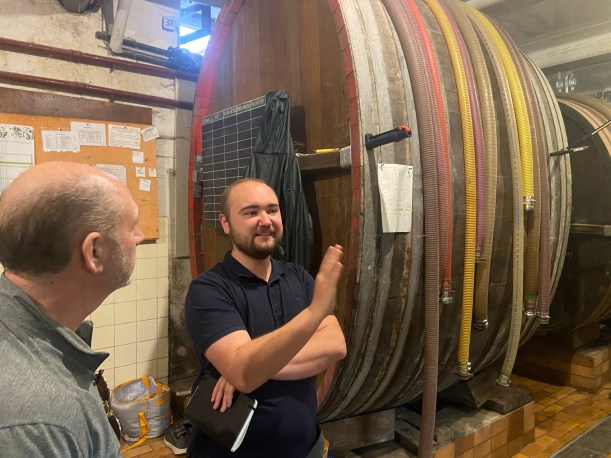
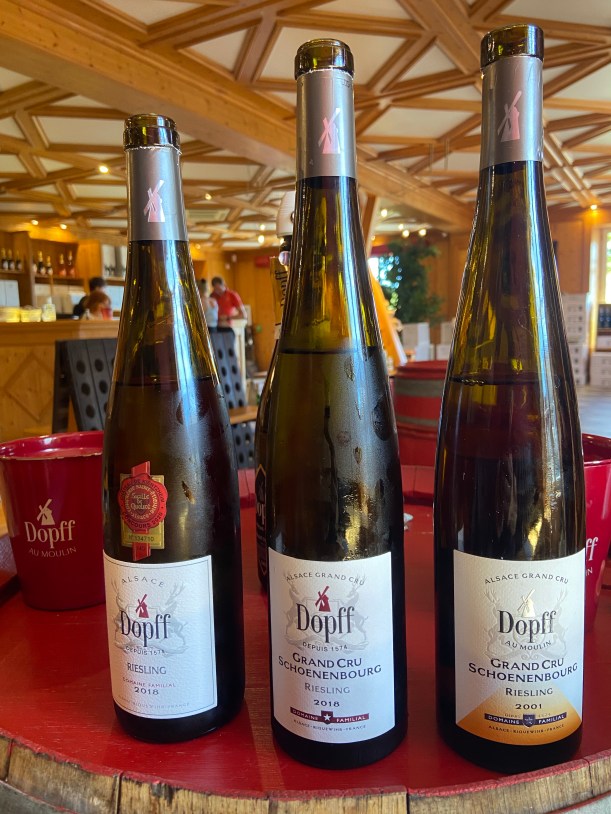
I was lucky enough to visit some of the top producers. See my interviews with Jean Frederic Hugel, Etienne Dopff, Jean Trimbach and Eddie Faller.

I stayed in central Colmar at the Hotel Le Colombier. This is very conveniently located centrally and  for the electric bike store on the same street. This is an excellent way to explore the region as there are many dedicated wine cycle routes throughout the area.

I wasn’t wild about the food, quite pork base and Germanic. They do an interesting pizza type of thing called a Tarte Flambee in French and FlammeKueche in German.


Then I hopped on a flight to Bordeaux.

Chateau Coutet, Barsac France

Visit to Chateau Coutet in Barsac, Bordeaux

It was the first day of the Rugby World Cup so the flight was awash with excited fans.

I’d had also long wished to visit Chateau Coutet in Barsac having met Aline Baly on many occasions in London. I’m also a fan of dessert wines, again not everyone’s taste. Aline was in Paulliac but generously arranged the Maitre du Chai, Laurier Girardot to entertain us.

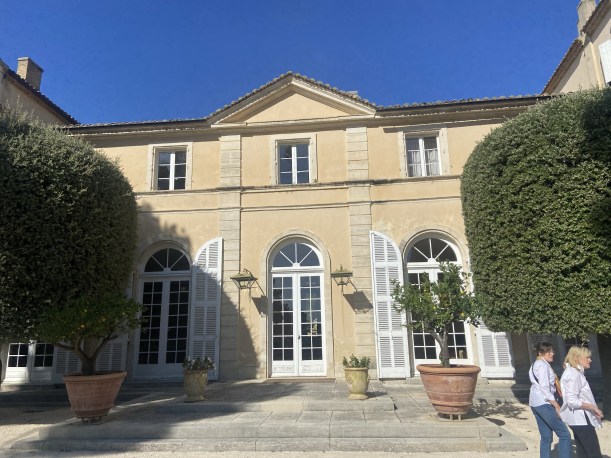
We started in the vineyards surrounding the pristine opulent Chateau.

Laurier discussed the terroir, which is slightly different to Sauternes and a little further from the River Garonne. The style here being a little less unctuous than Sauternes and perhaps less botrytis. They also make a dry white. The wines as ever, were finely balanced, long and delicious with complexity evident in older vintages.


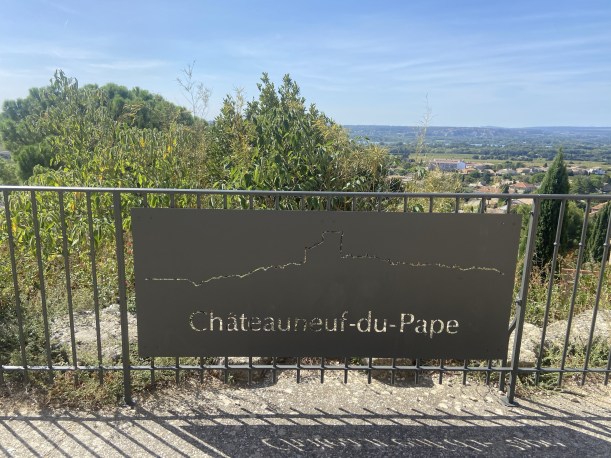
Châteauneuf-du-Pape

Next up a flight to Marseille, en route to another region I’ve longed to visit, Châteauneuf-du-Pape.

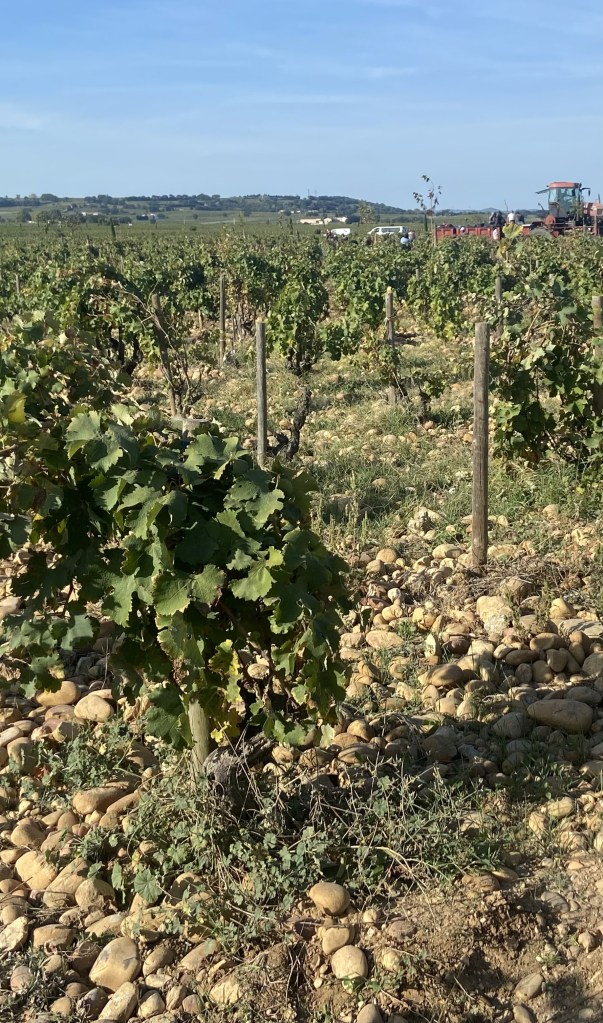
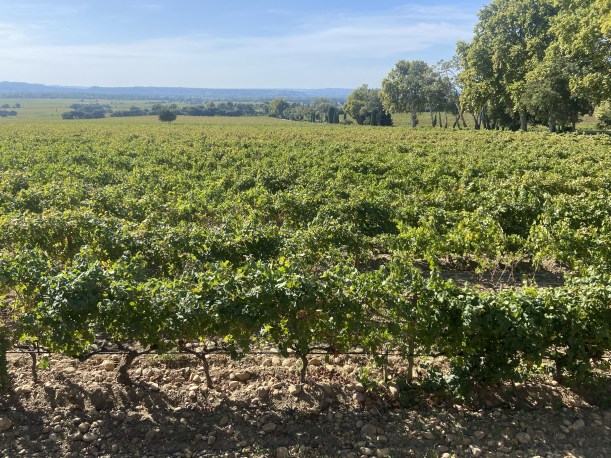
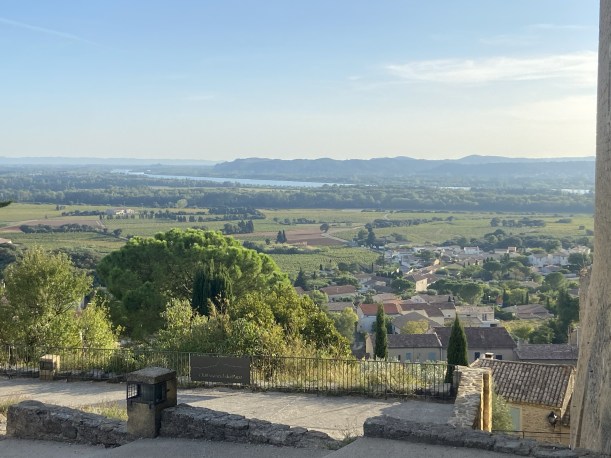
It’s one thing reading about the ‘Galets’ (larger pebbles/ smooth rocks) which are characteristic of the area. it’s another thing to see them. The entire vineyards are literally covered with layers of Galets with virtually no soil evident. These rocks have been washed down from the Alps over millions of years dating to when the area was the bed of the Rhone river.

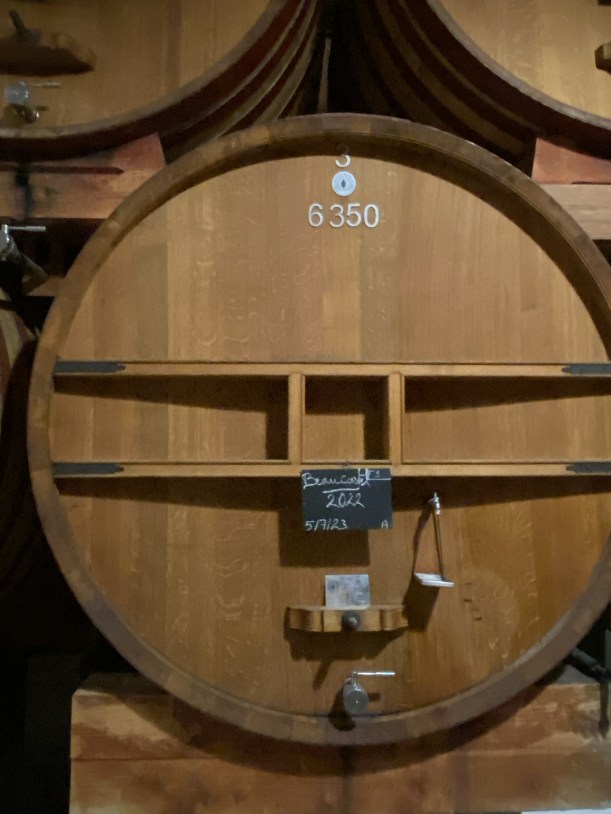
First visit, the famous Chateau de Beaucastel owned by the Perrin family.

Beaucastel were in the midst of the most fascinating new build. They had a competition amongst world renowned architects who tendered for the job. It was finally won by and Indian based firm. In keeping with Beaucastel organic and biodynamic sustainability, the new structure is being built with products of excavation.

The excavated earth for the new cellar is gently crushed and then taken to a large vertical mold and compressed. This creates the large slabs to build the new winery. It already looks amazing and effortlessly blends in with the environment.

We tasted the 2008 and 2019 Beaucastel and also a 100% Roussane of which little is made. The wines as expected were spotlessly balanced and full of fine grained tannins.

En route to Château La Nerthe we popped into Chateau Mont Redon

I was impressed by the Chateau Mont Redon range, especially with their most moderately priced Lirac which is full of fruit but also has a lovely mouthfeel. I have been buying en primeur Mont Redon from the wine society for many years.

Final visit of the day was to a very welcoming and passionate Antoine at Chateau La Nerthe.

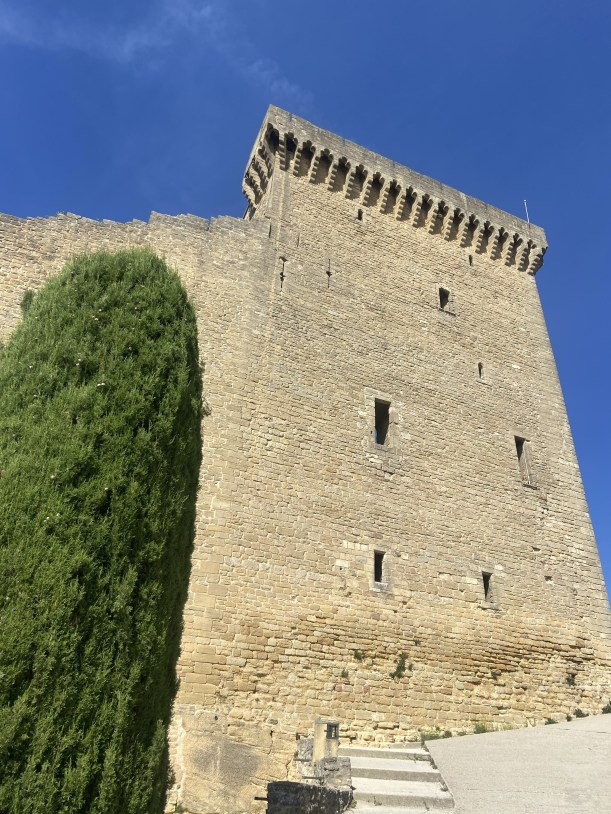
He gave us the historical background. There have been grapes here since Roman times. More recently they were one of the pioneers of the Appelation Controlle system

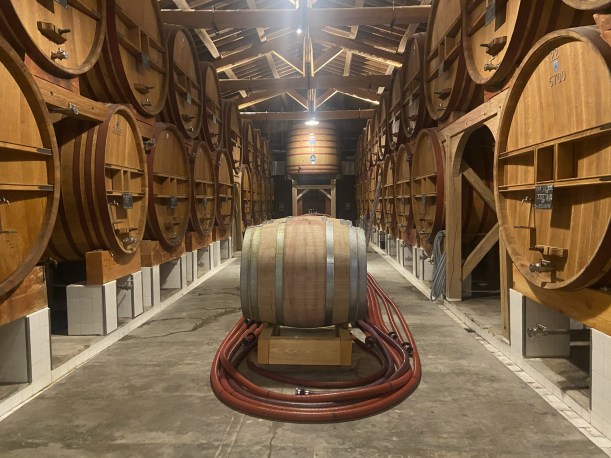
This a stunning chateau with views reaching far and wide. We toured the cellars and we were lucky enough to witness a live ‘remontage’ and sample 4 day old Mourvèdre from the tank. It was surprisingly delicious given its age.

Wine tasting here can be a little confusing as 13 grape varieties are permitted.

 6 white grape varieties: Grenache blanc, Clairette, Roussanne, Bourboulenc, Picpoul and Picardan. Grenache blanc, a mutation of Grenache noir, is the most commonly used grape variety. Red grapes: Grenache, Syrah, Mourvèdre, Cinsault, Vaccarèse, Terret, Counoise, Muscardin.

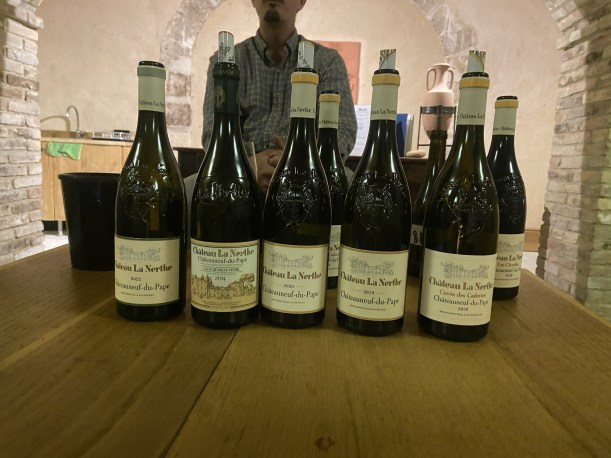
We tasted a range of their wines including

Château la Nerthe 2014 Clos de Beauvenir – it had an oxidised nose, almond, nice freshness and texture Good food wine

Château la Nerthe  Barrel sample, Syrah amazing for only 4 weeks old! Full of  fruit Soft tannins Delicious!!!

2020 Château la Nerthe Châteauneuf du Pape 25% Mourvèdre, Balanced, good year, plenty of fresh fruit alcohol well integrated

2019  Château la Nerthe Châteauneuf du Pape . 35 %Mourvèdre Syrah 31 %Grenache 33 % about a third each  A bit more serious than 2020 and probably need more ageing to develop complexity

2020  Château la Nerthe Châteauneuf du Pape Cuvee des Cadettes which is made from their  best grapes 9.000 bottles only GSM blend

2019 Château la Nerthe Châteauneuf du Pape Cadettes 55 % Mourvèdre floral earthy savoury serious big wine.

Antoine then brought out a blind wine which I immediately described as Pinotesque. I was happy to be correct in my deduction that it was one of their very limited production 100% Grenache.

This tasting was one of the highlights of many years of different wine trips. Thanks to @bossofthewine, Bruce Baldinger and the New Yorkers. We had serendipitously met them on the tour of the old Synagogue in Carpentras the day before and tagged along to this visit.


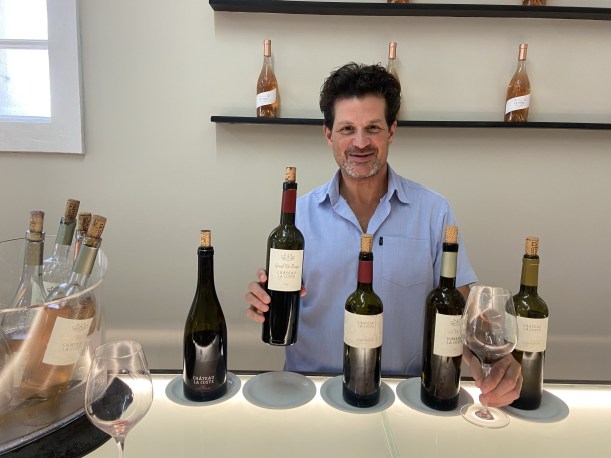
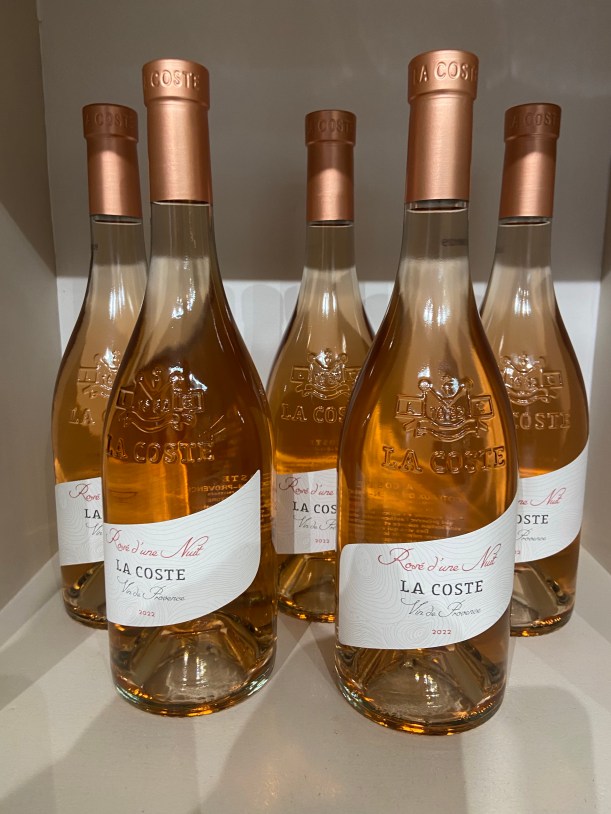
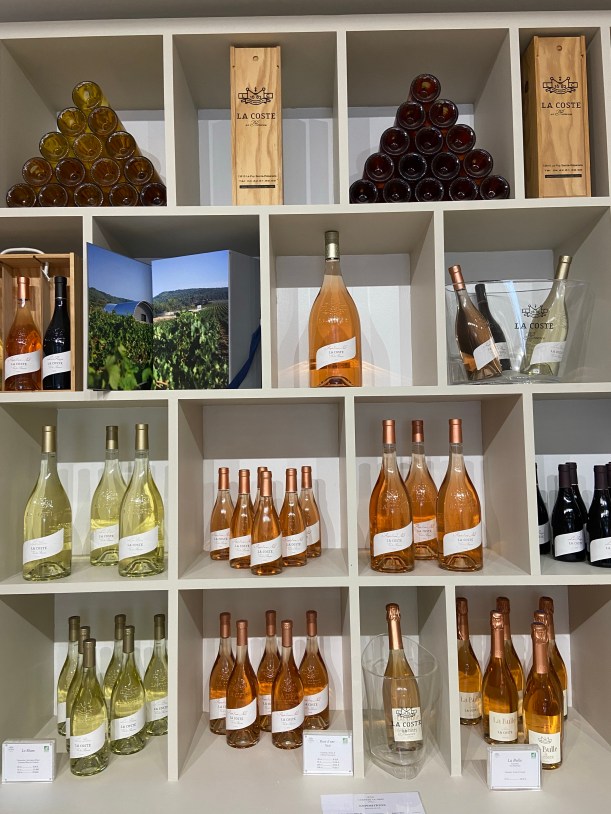
Finally I must  not forget the opulent Chateau La Coste in Provence. It was a short drive south from our accommodation in Lourmarin  through the beautiful countryside towards Aix en Provence near the village of Le Puy-Sainte – Reparade.

This is a real destination owned by Irish property magnate Paddy Mckillen. It has its own art and architecture walk, 600 acre sculpture park, a luxury hotel Villa La Coste multiple very high end  restaurants and excellent wine.

Despite the breadth and depth and quality of wines across the world, there’s nothing quite like returning to La Belle France!


Leave a comment

Bordeaux 2019 value pick.

Earlier this week I popped along to the Bordeaux Grand Crus Classes tasting 2018 to 2021. 

General impression was the 2019 and 2020 are both very good vintages, 21 a bit pale in comparison and 2018 forward and inviting, perhaps a bit ‘big’ in the right bank merlot based wines. 

The wines of Comtes von Neipperg were great as usual and I particularly liked the 2019s across the range.  La Mondotte is astonishingly good but eye wateringly expensive however I also loved the 2019 Chateau d’Aiguihle a Cote Castillon at the other end of his range.  

The 2019 has ripe dark fruit, coffee, coco powder and smoke but more tension and longer finish than the 2018. Drink dates are 2023 – 39 according to wine searcher but I thought it (along with a lot of the 18 & 19 wines) was quite approachable already if given a good decant.

Look out for a forthcoming offer for subscribers.


Leave a comment

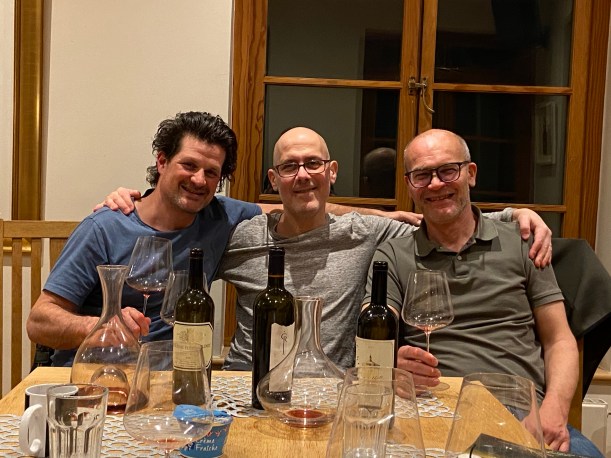
Blind Tasting, an exploration of Bordeaux Varietals. Can you tell Cabernet Sauvignon from Cabernet Franc or Merlot?

Stuart’s challenge this week was blind reds, Bordeaux varietals predominant, a blend but had to be >65% of one of the main current Bordeaux varietals – Cab Sauvignon, Merlot, Cab Franc, Petit Verdot, excluding Malbec, any age and from anywhere.

We would have to draw upon our favourite tome ‘Beyond Flavour’ by Nick Jackson MW and remind ourselves of some key distinguishing features of the varietals.

Cabernet Sauvignon has medium to high levels of fine grained tightly knit tannins, always felt on the gums not the tongue. (Hole in the middle of palate) The sleek tannin structure is linear with a strong sense of direction enhanced by good retention of acidity.

Merlot’s fine grained tannins are also felt on the gums but they are fruit wrapped and can sometimes feel a bit sticky/clayey.

They are so richly fruited that the tannins are often less obtrusive in Merlot than Cabernet Sauvignon. Furthermore the feel of the tannins can lead to a more square sensation rather than the linearity of Cabernet Sauvignon. Also there is no hole in the mid palate as Merlot has such rich ripe fruit concentration. As opposed to Cabernet Sauvignon it can quickly lose its acidity and require acidification.

Cabernet Francs grainy stalky moderate tannins are also felt on the gums. It preserves its acidity well and has savoury red fruits and obvious pyrazines with a strong herbaceous streak.

Carmenere is described as green on green

Malbec has intense colourmay display high ‘lockjaw tannins’ especially at the angle of the jaw, with sweet fruit ending dry.

Petit Verdot is  often perfumed with floral violet notes

The natural woody cedar flavours of the Bordeaux varietals enable them to blend so well with oak maturation also allowing gentle oxidation.

We had initially explored this theme a few months ago (including Malbec) tasting notes  below.

Blind tasting Bordeaux varietals January 2021

Kiran’s wine

Musty, leather, earthy, cedar, perfume, boot polish, menthol.

Complex nose, very fine resolved tannins, powdery, not at angle of jaw, sweetness, black fruit medium + acid Med + Savoury persistent drying tannins. Delicious complex savoury balanced wine

We thought 15 to 20 years old as mainly tertiary notes no particular pyrazines and suggested a Malbec.

2006 Jean-Luc Baldes Clos Triguedina ‘Probus’, Cahors, France 100% Malbec

Adam’s wine

Green pepper, herbs, black currant leaf.

Herbaceous green pointing to S America for Stu re green and herbaceous

Stu getting lockjaw tannins

Marked acidity with our mouth’s still watering.

The greenness and acidity pointed us to Cabernet Franc, though not particularly red fruited.

Cabernet  Franc Valdivieso 2015 chile

Stuart’s

Bell pepper, pyrazines, floral hint of volatile acidity, dried lilies, red fruits  some cassis, woody cedar and savoury.

Lovely balance and  length with complexity resolved tannins horseshoe profile

We felt this must be old world.

Grand Puy Lacoste 2000

75% Cabernet Sauvignon 20% Merlot 5% Petit Verdot

Blind tasting Bordeaux varietals April 19th 2021

Kiran’s wine

Medium to deep garnet clearly showing some age, on the nose  Kiran detected baked plums and milk chocolate , Stu – Spices plum compote possible strawberry.

Adam got more spiced wood  cedar also an oxidative nose, finishes a little Savoury/salty no pyrazine of note

On the palate soft resolved tannins very fine powdery dusty gum tannins mainly, medium plus acidity.

We were pretty certain this was a Merlot dominant right bank Bordeaux of probably premier cru level St Emillion of about 15 to 20 years old

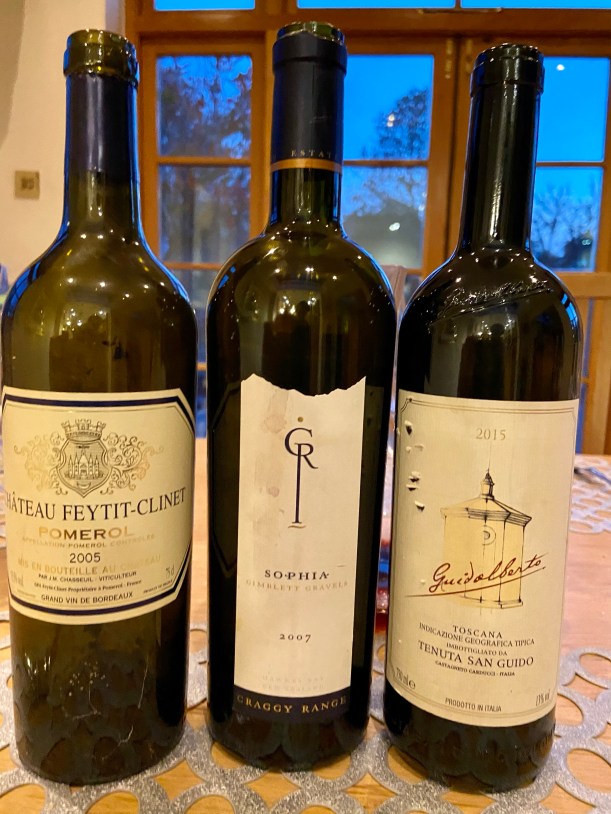
2007 Sophia Gimblett Gravels Hawkes Bay New Zealand

Merlot dominated Cabernet Franc Petit Verdot blend

This surprised us, though Hawkes Bay is pretty much as close as you can get for this style in the New world and I’m sure Steve Smith MW who we’ve done many tastings with will be delighted to know the outcome of our blind tasting thoughts.

I visited Craggy Range last year and saw the dedicated winery built just for Sophia.

Stu’s wine

Initially charred smoky charcoals cloves spices herbaceous

Smooth soft ripe tannins sweetness.

Full lush perfumed nose, black pepper, incense, sandalwood, young cedar sap from tree

Juicy fruity  slightly sticky feel in the mouth

Kiran gets green pepper pyrazine no one mentioned fruit.

Fresh pour some green pepper stalky

Lavished with oak

Delicious aromatic

Reminds me of Pomerol for no more a reason than I really loved it, an Emotional memory of previous Pomerols often shared with Stuart

Château Feytit clinet 2005 Pomerol

(95% Merlot and 5% Cabernet Franc)

Adams wine

Sweet fruit, strawberry plum fruit forward blackberry

Spiciness, Smoky cloves barrel

Stu got Jammy baked fruit

Stu sure dried fruit warm climate and found raisins

Tannin on the gums drying medium plus acidity

Guidealberto Tenuta San Guido IGT 2015

Cabernet Sauvignon dominated cab Merlot blend from the famous Sassicaia winery in Bolgheri.

Learning points

Focusing on tannins is invaluable. Merlots certainly felt sweeter fruit wrapped and sticker

New Zealand and other New world regions with age can very closely resemble the old world. If in doubt lack of any pyrazines(herbaceous bell pepper blackcurrant leaf cassis notes) unlikely to be Bordeaux

Pyrazines are more often found with Cabernet Sauvignon and Cabernet Franc less so with Merlot which has lusher fruitier spectrum with softer tannins and no hole in the palate


Leave a comment

Chateau Haut Condissas – punching well above its weight!

It’s really not that hard to find great wines: go for a prestigious region, select one of the big names, just check that it has a good score from an international critic or two and bingo! As long as of course you don’t mind paying through the nose……  And in Bordeaux the wines have steadily been extracting larger and larger amounts through said nasal passage to the point at which they are now truly eye watering.

Which is why I have been a fan of ChateIMG_9919au Rollan de By for many years, it is a reliably delicious Cru Bourgeois from the Medoc, worthy of aging for a few years and sold at a very fair price.  So I was intrigued to hear that proprietor Jean Guyon (who also owns Chateau Greysac & a few others) also makes a more ambitious wine at Chateau Haut Condissas with the aim of rivalling the classified growths.

Arriving at a recent vertical tasting of the wines the very air in the room was scented with plums, cigar box and coco powder, a very promising start and the wines did not disappoint.

IMG_9922Wine maker Olivier Dauga (who used to work at Sociando de Mallet another of my favourite Medoc producers) explained that his goal is to achieve fine tannins by avoiding too much extraction, the fruit should be in the fore with the wood in a supporting role & not the other way around. His philosophy is that good grapes make good wine very good grapes make very good wines. The vineyards of Haut Condissas are to the very north of the Medoc near the Atlantic on the plateau de By close to the river bar.

These are rich merlot driven wines but have an unusually high proportion of around 20 % Petit Verdot.  This gives the wines colour & spice and extra freshness but they have to be careful as PV can give green tannins. Made without aeration or filtration in a very pure way with 100% new oak of which 10% American. The chateaux believe that affordability is important for high quality wines in the Medoc.

Haut Condissas 1999. Nice cigar box nose with red fruit berries. In the mouth medium body, fresh, light red fruit, more cedar, soft slightly powdery tannins & medium length. At its peak I would have thought but still full of life. Lifted & Refined. Very good. Returning later vegetal notes had developed.

Haut Condissas 2009. A hot year. Ripe plums, red fruit, faint cloves and smoke on the nose. Full body, medium + acid, more plums, cooked red fruit, some more cloves, coco powder, toasty, ripe soft tannin, and a long finish. 14% alcohol so a big wine but finely balanced. Excellent.

Haut Condissas 2010. Beautiful scented nose of red fruit, cedar and smoke, clove. On the palate: lovely & cool balanced, medium body, good fruit, lifted, tasty lashings of toast and spice. Very long. Excellent.  Returning later ground coffee & forest fruit compote.

Haut Condissas 2013. A Kosher wine – This is made in a different way observing the Sabbath & according to Judaism’s dietary laws.

There was a lot of rain in 2013 the wine is light in colour and intensity. More fruit driven nose with black plum & coco. Lighter body fruit, some toast and vanilla, slightly more angular tannin. Very drinkable. Very good.

Haut Condissas 2014. On the nose red fruit, some black berries, spice, smoke. In the mouth great balance, lifted and fresh, full fruit, nice spice, ripe tannin. Long a Lovely wine. Excellent.

Haut Condissas 2005.60% Merlot, 20% Petit Verdot,10% Cabernet Sauvignon, 10% Cabernet Franc. On the nose rich ripe fruit, smoky, coco & vanilla, forest floor an intense & complex nose. On the palate: lovely texture, medium plus body, more opulent than others, developed with mature flavours, leather, loam etc. with a lovely fruit core, holt chocolate. Very complex & vibrant. Great length and good freshness.  Gorgeous! An outstanding wine.

The chateau bottled a small quantity of single varietal wines from each of the grape varieties in the 2005 blend and in a brilliant twist to the normal wine tasting invited us to produce our own blend.IMG_9921

2005 100% Merlot. Dusty coco and plum nose, not particularly intense. Gorgeous fruit pie and chocolate shake, full body, powdery coating tannins. Medium acid.

2005 100% Cabernet Sauvignon. Clove, indistinct fruit on nose. Cool, refined great structure, high acid, full body, long.

2005 100% Cabernet Franc. More delicate fruit raspberries etc. Bit of smoke. Beautiful fruit, fresh, refined, long & lifted wow! Light tannin and light structure.

2005 100% Petit Verdot. Spicy slightly funky with dark and stewed intense fruit, clove & lots of tannin.

My blend: 25% Merlot 25% CS, 40% CF, 10% PV. Slightly less open than actual blend, showing the austerity of CS and lighter fruit & high notes of CF.

It was fascinating to taste each varietal in its mature state and experiment with how each component adds to the blend.  Interestingly the only wine which really stood on its own two was the Cabernet Franc & the 2005 blend was far and away greater than the sum of its parts.

The 2005 and 2010 are still available at around £30- £35 per bottle by the case which for back vintages of an outstanding wine is great value!


Leave a comment

Selling a bottle or two…

First world problems

It seems that, just occasionally, I must have been a little over enthusiastic in my wine purchases because I’ve noticed that there are a few more bottles in the cellar than I strictly need. When I recently looked into the options to off load some of this excess stock I found there to be quite a few well established forums for private owners to sell their wine. Clearly I am not alone in having eyes bigger than my palate.

cellarWhen you consider that one is often buying wines, at the finer end of the scale ten or more years ahead of their optimal drinking windows it is perhaps not surprising that one can end up with case or two too many of a particular type of wine or vintage. Also one’s tastes evolve over time and so the dream cellar your younger self worked so hard to assemble might not match that of your ungrateful older self. Whatever the case the good news is that there are a number of ways in which one can create some room in the cellar whilst at the same time some cash in the bank.

The easiest wines to trade are those that are still in storage by the case In Bond. In Bond means that the duty and VAT due on wine when imported and sold have not yet been paid and it is possible to store the wine indefinitely in a special Bonded Warehouse in this state of limbo, only incurring the tax when you have it delivered home. Investment grade wines tend to be traded in Bond and the fact that they are stored in these specialist temperature and humidity controlled warehouses provides some assurance of their condition.

Fine wine merchants

The traditional broking services that fine wine merchants provide have in recent years been expanded and to a degree automated to allow wines other than the just investment wines to the traded. Berry Brothers and Bordeaux Index both run exchanges that allow customers to list wines for sale. BBR appear to allow customers to choose any asking price they like whilst BI encourage customers to choose price within a range of their calculated average market price. Both merchants charge a 10% commission on any sale which seems to include or not be liable to VAT.

I’ve tried both platforms found them easy to use and they bring your wine to the attention of all their other customers. The main disadvantage is that you need to have the wine stored with the merchant already. BI allows you to transfer wine into storage with them but BBR only allow wines bought and stored with them to be traded. Also if the merchant has the same wine in stock already then it will list its own before any that it is broking.

Before listing anything its worth looking to see if any cases of the same wine are on offer and what the asking prices are. So far I’ve managed to sell two cases of 05 Bordeaux that I bought through BBR both for a fair price and another two cases of wine through BI again at more or less market prices. As the merchant is essentially broking the wine it’s great because there is nothing more to do but wait for the funds to appear on your account, which could happen a little quicker.

Independent on line trading platforms

An alternative to broking your wine through your existing wine merchant is to use a purpose built on line trading platform. There are two that I have come across: Cavex and Wine Owners.

Cavex appears to be aimed at the investor collector and is set up as a trading platform allowing one to monitor the fine wine market and buy from and sell to others registered on the platform, however only wine stored In Bond can be traded.   Cavex charge only 3% commission on any sale which is attractive but also charge the buyer a premium of 3% + VAT (so 3.6% all up) too to its worth considering this when setting prices.

Setting up an account is free and one can upload details of any wines you might consider trading including the price you paid for them. This can be done manually, which is reasonable quick because there is something akin to a predictive text function that recognises most wines and then allows you to choose the vintage etc. Alternatively if you have your collection on something like Excel one can export and upload a csv file and Cavex will set up your cave for you.

Once your wines are listed the platform automatically shows the lowest price that the same wine is offered on the exchange and also the highest bids that may have been made. Once on the exchange all one’s wines are listed whether offered for sale or not and the exchange allows other members to bid on all wines listed. An email notifies one of any bid within 10% of the offer price and one can then accept it or counter by modifying the price. The web site is reasonably easy to use but kept crashing while I uploaded my wines.IMG_1478

So far I have sold one case of Bordeaux 2009. After a round of bid and counter offer it went at just below the ‘market’ price but with the benefit of the low commission rate. Interestingly this was not an ‘investment’ grade wine so clearly users are not just speculators. One thing to bear in mind is that once a bid has been accepted one has to organise the transfer of the wine to the buyer’s bonded warehouse. This is not difficult to do but may result in some charges in the region of £10-£20 if they don’t happen to use the same one as yours. If the wine is being shipped abroad and apparently a lot goes to the Far East then the costs are borne by the buyer. The funds which had been held by Cavex arrived in my account from quite quickly after the wine had been transferred.

The Wine Owners platform is similar in principle but offers much more in the way of cellar management. The platform encourages one to upload your entire wine collection and does not restrict it to wines stored IB. This is an excellent feature particularly if you have wine stored Duty Paid with the Wine Society or even at home in a wine cellar. Again Wine Owners offer to upload your wine collection for you if you send it to them.

Once uploaded the website provides information on the current & historic value of the wine, drinking dates, critics scores plus a record of the information you provided on the storage location, price paid, quantity remaining etc.  The website is very user friendly and has some brilliant features such as the ability to search through your cellar by region, vintage, readiness to drink etc.

One can offer wine for sale on the exchange and also other users can make speculative bids on any of the wines you have uploaded. The trading fees are 6.5% + VAT (7.8% all up) sellers fee and buyers also pay a fee of 2.5% + VAT (3%). For a charge Wine Owners will inspect the condition of your wine thereby allowing cases cellared at home to be traded. I imagine that once a transaction has been agreed there will be costs involved in transferring or delivering the wine although it is not clear from the tutorials to who they fall.

Although I’ve received numerous bids on wines both offered and un-offered they have unfortunately so far been all cheeky bids well below the market price. So as yet it’s difficult to judge how effective a trading platform it is. I have noticed however that at least one of the cases that I have listed with them appears on the wine-searcher website so they are in reaching a larger audience of buyers than just those registered on the site.

On line wine actions.

When it comes to selling on a few bottles of wine from the cellar at home there are a couple of options. If one had enough to make up an interesting mixed case, which included a few attention grabbing trophy wines, then it would be possible to consign the wine to an auction house like Bonhams. I’ve bought wine from Bonhams on several occasions but to date have never attempted to sell anything in this way.

unnamedI have however recently been using UK online auction platform BidforWine with some success. Bidforwine works in a very similar way to eBay; one writes a description of the wine, takes photos of the bottles and gives information on its condition and provenance. The lot can be offered with or without a reserve price, one can set the start the price & choose the duration of the auction. Buyers have the option to collect the wine themselves or to pay for having it shipped. Sellers generally promise to pack bottles in ‘Polysafe’ type polystyrene tubes for safety and use a tracked delivery provider like Parcel Force. Like EBay there is a system of feedback to allow buyers to assess seller’s past performance. Sellers pay a small listing fee which depends on whether one sets a starting or reserve price and an 8.5% + VAT (10.2%) commission on any sales.

I’ve listed 3 lots to date, the first, a pair of bottles of mature Bordeaux from a well-known chateau, had 8 bidders competing for it and sold for a fair price. The second a mixed case of lesser known Bordeaux chateaux but from stellar vintages which generated less interest and sold very cheaply. I had listed both of these with no reserve and a starting price of a pound but I wasn’t prepared to sell the third lot, two quite expensive bottles of another well-known Bordeaux, at a loss so I listed at a fair starting reasoning that if they didn’t sell I would have lost nothing. The auction is still running but there is already a bid for over the this price. On can search the results of past auctions in order to see what prices a wine one is considering selling has achieved which is obviously helpful in deciding whether to sell and what to set the starting price at.

Unsurprisingly it appears that popular wines are easier to sell for a fair price than more obscure but equally good wines, so better to drink them up and trade the usual suspects. Ultimately when I have bought via auction the attraction has been the opportunity to pick up more mature wines at a bit of a discount to the current market price so it’s worth bearing this in mind in deciding to sell.

Comparing costs

So what would price would one set with each of these options if one wanted to receive say £200 net from the sale?

  • BI/BBR – £220 (less 10% commission, with no transfer fee because the wine stays in storage with the merchant)
  • Cavex – £223.47 (less 3.6% gross commission but assuming a £15 warehouse transfer fee)
  • Wine Owners – £231.92 (less 7.8% gross commission and assuming a £15 warehouse transfer fee)
  • Bid for Wine – £222.74 (less 3.6% gross commission).

On the face of it, it is cheapest for the purchaser to buy via the merchants as they only pay £220, then Bid for Wine at £222.74, Cavex at £230.47 and then Wine Owners at £239.90. However there would either be a transfer or delivery fee to pay with Bid for Wine which would make it similar to Wine Owners.

Final thought.

Probably the most effective and easiest way I’ve found to exchange wine has been direct with wine friends of mine. Provided the wine is good, splitting a case purchased or buying and selling a few bottles at the price originally paid always works a treat.

And with money in the bank and space in the cellar there’s only one thing to do……………

Links

Bordeaux Index

Berry Brothers & Rudd

CaveX

Wine Owners

Bid for wine

Wine-searcher.

Bonhams


Leave a comment

Bordeaux Noughtie Tasting

Date – February 13th 7.30 Pm , Highgate

The first BYO format tasting and certainly not the last.

As usual all wines (12 in all) were served blind but with the twist of putting the person who brought the wine in the driving seat. They were invited to present the wine, share critic reviews, their own experience of the wine and to lay a trial of tantalising clues for the assembled tasters.  Lots of entertaining discussion and great fun for all.

A lovely selection with a predominant Left Bank theme but some delightful elegant Pomerol’s including Lafleur and Vieux Chateau Certain.

Educational as ever this format really focuses on issues such as quality, drinking pleasure, value, winery reputation and vintage.  For me, surprise of the night – how well many of the 2002s were drinking in spite of the vintage’s poor reputation, confirmation of the night – just how much pleasure a ‘comparatively good value’ wine like Grand Puy-Lacoste reaching maturity from a good year like 2000 can give!

Thanks to all who attended for generously bringing such a great selection of wines and of course to the Kellys for hosting once again in their wonderful dining room.

Started with Bollinger , Louis Roederer . Delighted to have in attendance , UK Champagne Ambassador, Tim Hall of Scala Wines

Tasting Notes  courtesy of Tim Hall  Scala Wines

1) Chateau Leoville Barton , St Julien 2002

St Julien, 2nd growth 1855, 72CS, 20M, 8CF

Garnet-deep; maturing edge. Intense ripe aroma, lots of new oak; svelte and classy.  Some chewy dry tannin on the end. Dense but lean bodied spare-fleshed.  Impressive elegant wine. Thought Left Bank (LB) 04.  Not fleshy enough for a great year.

2) Chateau Phelan Segur 2005

St Estephe, Cru Bougeois (when this made) but now with break-away group and boycotting the classification.  55CS, 45M

Deep core; touch of brick. Cream and slight vanilla and varnish nose; high char oak, perhaps a bit dolled up. Astringent dry tannin on the end.  Good wine, trying very hard, perhaps a bit much. Thought LB 04.

3) Chateau Charmail 2000

Haut-Medoc, Cru Bougeois, 48M, 30CS, 20CF, 2PV

Deep core. Some age on the rim, quite tiled. Touch green on nose,  not wholly ripe fruit.  Meaty, savoury, quite evolved. Needs drinking. Rather austere.

4) Chateau Pontet-Canet 2001

Pauillac, 5th growth 1855.  62CS, 32M, 5CF, 1PV

Deep core; some orange bricking. Very seductive big hit of exotic dried peel and new oak, gloriously met with pressing red berry fruit. Very classy indeed.  Succulent, medium weight but not fat, great finesse.  Thought Paulliac 05 and thrilled this property made such q good wine in this mediocre year.  Top wine of the night for me.

5) Chateau Talbot 2003

St Julien, 4th growth 1855.  66CS, 26M, 8PV

Mid-deep. Quite a rim. Sweet nose, gorgeous and opulent; Christmas cake. Round, big, soft tannin. Lots of new oak.  A big hug of a wine. Tasty and seductive. Considered right bank (RB). Forgot 2003 made such plump soft wine on the LB in this warm year. I would get on with this.

6) Chateau Lafleur 2004

Pomerol, with a great reputation.  50M, 50CF

Deep core; brick rim. Very drying tannin on end. But candied peel and fig full fruit, yet a mild green component too. Complex and tantalising jostle of elements. Not completely harmonious but opened beautifully in the glass. Does this need more time?  Impressive.

Boeuf Bourguignon , baked camembert

7) Vieux Chateau Certan 2002

Pomerol, a very high ranker. 60M, 30CF, 10CS

Deep core, wideish rim.  Very spicy nose, cumin and pencil shavings; classy integrated oak.  Medium intensity yet reticent and a bit passive on the mid-palate.  Softish but ultra charming.  A good long carry  to the end, leaving moss and cinnamon and red cherry notes.  Drinking well, no need to keep longer but good for a few years.

8) Chateau Senejac 2002

 Haut Medoc, Cru Bourgeois when this made, but not now.  48CS, 37M, 11CF, 4PV

Mid-pale, broad rim.  Very sweetish fruit nose and extraction but pretty evolved and a green streak going through, in fact herbaceous but forgiven by a residue of fruit brightness.  Pleasant enough, perhaps better a few years ago. Upright, four-square and needs drinking up.

9)Léoville-Lascases 2002

St Julien, 2nd growth 1855.  65CS, 24M, 10CF 1PV

dense.  Evidently a light version of a tip top property, with cedar, coffee and a whole gamut black fruit and spicy but reticent oak. Stately stuff.

10) Grand Puy -Lacoste 2000

Pauillac, 5th growth 1855.  75CS, 20M, 5CF

Deepish purple, quite open with charming easy and open fruit and spice.  Mellifluous, succulent and serious.  Medium range stuff, in middle age, but good poise and all still holding together.  Delicious.

11)Yon-Figeac 2002

St Emilion, Grand Cru Classé  80M, 20CF

Mid-colour, wide core, pretty evolved and slightly unfocused.  But oh so supple and drinkable in its roundness and green plum and currant cake character.  A savoury note that made it attractive and not too loose-limbed.   Nice RB contrast to prior LB wine.

12)Vieux Chateau Gaubert 2006

Graves AOC.  50M, 50CS

Medium colour and orange rim. Fruit left but losing it to the structure so finishing a little austere and dry. But much good fruity weight. Fairly short range wine, pleasant, not enough chewy intensity for old bones.  Drink now.

Raymond Blanc’s Tarte Aux Pommes

Doisy-Daene 2005    

Sauternes, 2nd growth 1855 (although divided since then) 86S, 14SB

A lovely muscovado sweetness but then complexity of hay and tobacco on the nose.  Quite a hit and then light, gorgeous botrytic note. Very fresh and lightly-poised and not cloying.  Excellent and stylish.

And all finished off with Tim’s excellent Champagne Lacourte-Godbillon Brut NV , full details of where to get this will be mailed out .


Wine of the week

Leave a comment

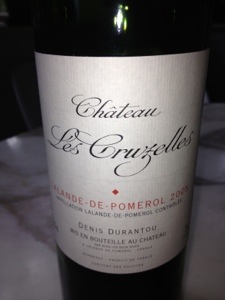
20130905-171529.jpg

Les Cruelles Lalande de Pomerol 2005 by superb wine maker Denis Durantou famous for L’Eglise Clinet. Humble in comparison to the grand vin this wine delivers way above its price mark especially in a great year like 05. More hedonistic than cerebral but nothing wrong with that. When tried 18 months ago it was closed but is now coming around again. The 09 and 10 were superb at en primeur tastings too…..

Leave a comment

Web site launch

20130227-221912.jpg

To celebrate hand over of the new WC website an old bottle of Pauillac 1970 Croizet Bages still fruit, slightly burnt notes, liquorice, amazingly lively. Now onto the last bottle of Varoilles 1er cru Gervrey Chambertain 02…….