WanderCurtis Wine

Wine tastings, corporate events, reviews and recommendations


Leave a comment

Albury Organic Vineyard leaf stripping and green harvest volunteer day.

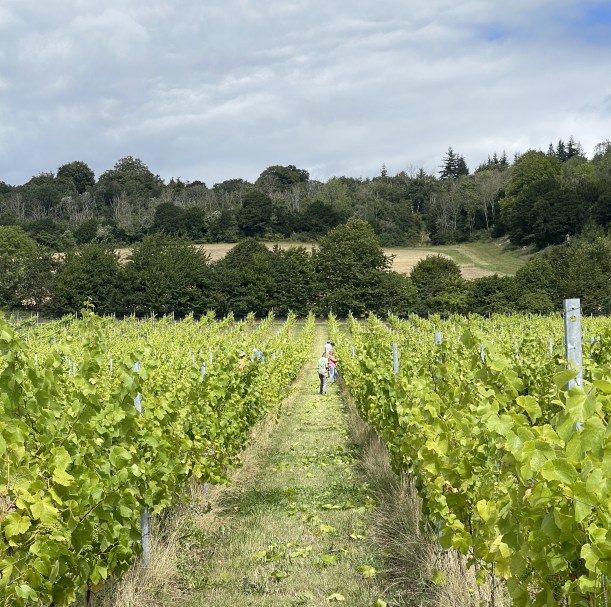
Nestled below woodland on the gentle slopes of the Surrey Hills is Albury Organic Vineyard.
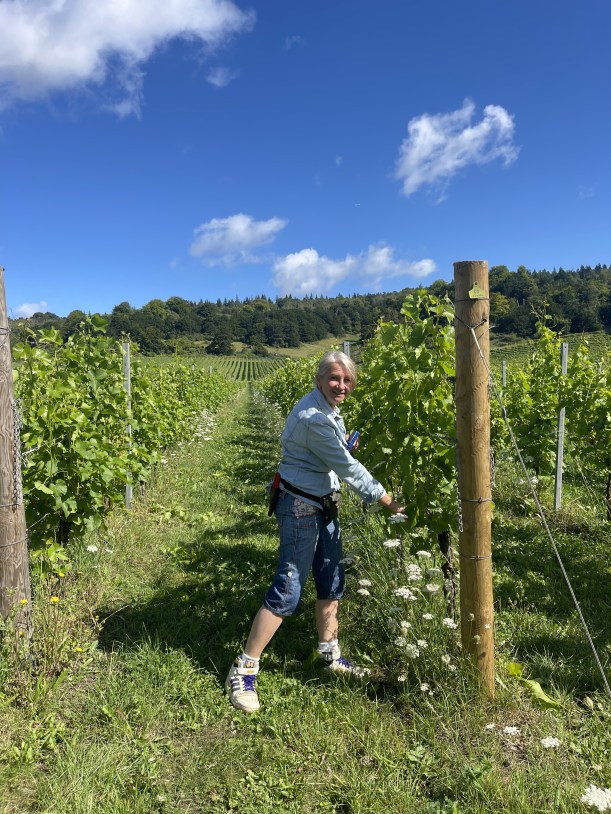
The dynamic Alex Valsecchi manages the estate with her team where they grow organically, biodynamically and use regenerative viticulture practices to make wine as sustainably and environmentally friendly as they can.

Alex admits that she and Nick Wenman, the owner, must be ‘a bit mad’ to take on the challenge of growing wine in this way in the damp and fickle English climate.

But really what they’re doing is showing just what amazing results can be achieved when you have a vision (no doubt determination and a lot of hard work come into it too!).

On a sunny day the vineyards are idyllic. A carpet of flowering clovers, herbs, legumes, orchids, yarrows, grasses and even wild strawberries, which are all native to the chalk hills of Surrey, has been allowed to colonise the space between the vine rows.

This along with a wildlife pond and wild flower meadow creates a diversity of habitats for beneficial insects and wildlife. 

By having diverse plants with their roots in the ground and by using only light tillage, Alex’s aim has also been to improve soil health and biodiversity below ground.
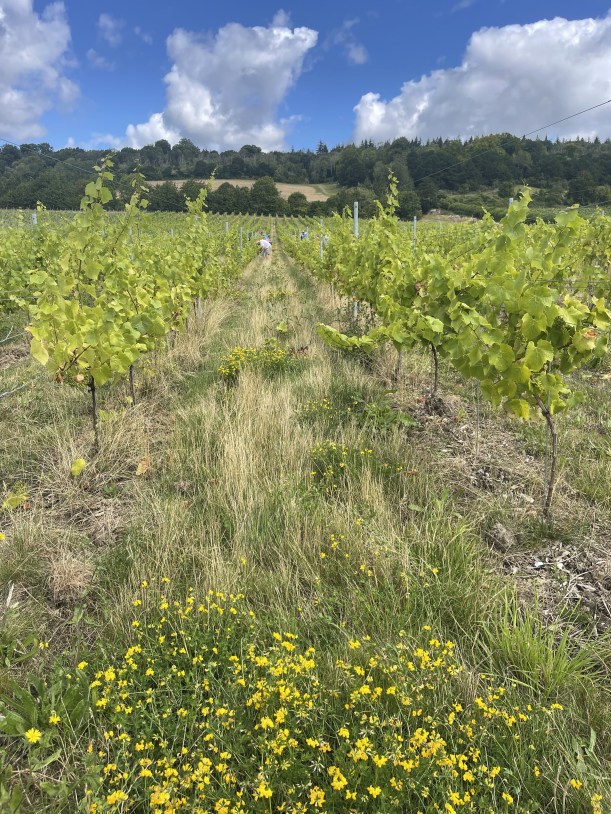
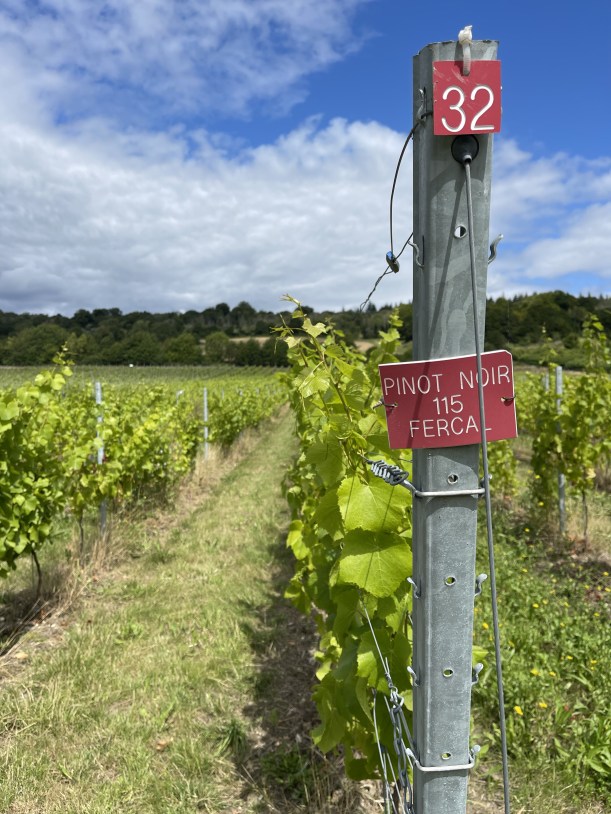
All this is on London’s doorstep and Albury welcome volunteers through the season to help out in the vineyard and experience it all first hand.

I spent a day in July helping leaf strip and green harvest in the newest section of the vineyard. Planted in 2022 these young vines need this type of tough love to strengthen them up for the future.

I can thoroughly recommend joining in and there’s a refreshing glass of Seyval Blanc fizz (tasting note bellow) and some lunch to keep you going. Harvest will most likely be in the first two weeks of October and will be an amazing opportunity to get in involved. You can sign up on their website.

Albury Estate Seyval Blanc 2021

Very pale, with fine bubbles. Blossom, hawthorn, jasmine, lemon verbena, green and yellow apple, pear, quince, thyme and a lovely touch of biscuit and croissant. Crisp acidity but rounded out by the apple & pastry flavours which linger nicely. Invigorating and Refreshing at a pleasing 11%.

I didn’t try Attila’s bite, she was at the vet!


Leave a comment

Sparkling Wines Traditional Method, England & Wales

A condensed summary of English sparkling wine including history,  regions, growing environment, vineyard management, grape varieties, wine making, styles, wine law and business.

Sources include: WSET Diploma Wines of the World, Oxford Wine Companion by Julia Harding and Jancis Robinson, various producer websites.

Note this document is intended for personal use only not for commercial or promotional use. We accept no liability for any omissions or errors that may be contained in the document.

© Kiran Curtis 2023. Personal use only not to be used for commercial or promotional purposes.


Leave a comment

Gusbourne Estate, Kent, Premium English Sparkling

Perched on the edge of the old Saxon shoreline in Appledore, Kent, Gusbourne Estate makes a compelling argument for the quality and potential of English wine. With 60 hectares under vine here and another 30 in West Sussex, Gusbourne has focused on a clear ambition since planting its first vines in 2004: to produce vintage wines of the highest calibre using only estate-grown fruit.

The vineyards are planted with Burgundian clones of Chardonnay, Pinot Noir, and Pinot Meunier, varieties well suited to the region’s unique microclimates. Yields are deliberately kept low, resulting in grapes of concentration and character. These form the foundation of a range that includes both still and sparkling wines, all made using traditional methods with a low-intervention ethos that carries through from vine to bottle.

A visit to the estate offers more than a picturesque setting. The winery tour is well-structured and informative, culminating in a tasting that includes the rare opportunity to sample base wines before moving on to the finished sparklers. This provides a valuable insight into the effects of lees ageing, adding texture and biscuity complexity, and how dosage lifts the bright citrus notes that are a hallmark of the house style.

Among a strong portfolio, the Blanc de Blancs 2018 stands out for its precision and poise. It’s joined by a limited series of museum releases and small-batch cuvées, including vintage Blanc de Meunier, all reinforcing Gusbourne’s position at the premium end of the market. The still wines, notably the Guinevere Chardonnay, demonstrate real depth and finesse, and make a persuasive case that 51 degrees north is no longer a viticultural outlier.

Thanks to WSET for organising the visit.