

The onset of 2024 has left me reflecting on my inherent Francophilia. This got the better of me towards the end of last year. I had been meaning to visit Alsace for years. It took so long partly because of my preference for red wine and more recently due to Covid.
My favourite varietal though is Gewürztraminer. This is very much a marmite love or hate grape. For me it’s love. The most textured, succulent, floral powerhouse of a wine I’ve ever tasted was a Matawherho Gewürztraminer from Gisborne in New Zealand. It was an early 1990’s vintage tasted at a masterclass with my boss of the time Dr David Durham at his home next to Cloudy Bay, Marlborough New Zealand in 1995.

This grape has mesmerised me since. I also have great appreciation of the other white Alsatian varieties. Well made Pinot Gris is also beautifully textured and aromatic. Riesling whilst not my first go to drink due to its high acidity playing havoc with my gastrointestinal equilibrium is still a wine I highly regard.
So I finally made it to Alsace, and the wait was worth it. Not only for the wines but for the delightfully preserved chocolate box towns and villages such as Colmar, Riquewihr and Ribeauville. It really feels like an amalgamation of France and Germany as its geography and history suggest.
I was lucky enough to visit some of the top producers. See my interviews with Jean Frederic Hugel, Etienne Dopff, Jean Trimbach and Eddie Faller.

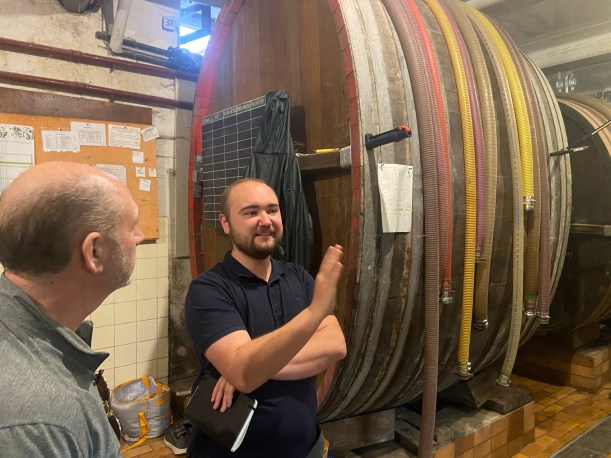


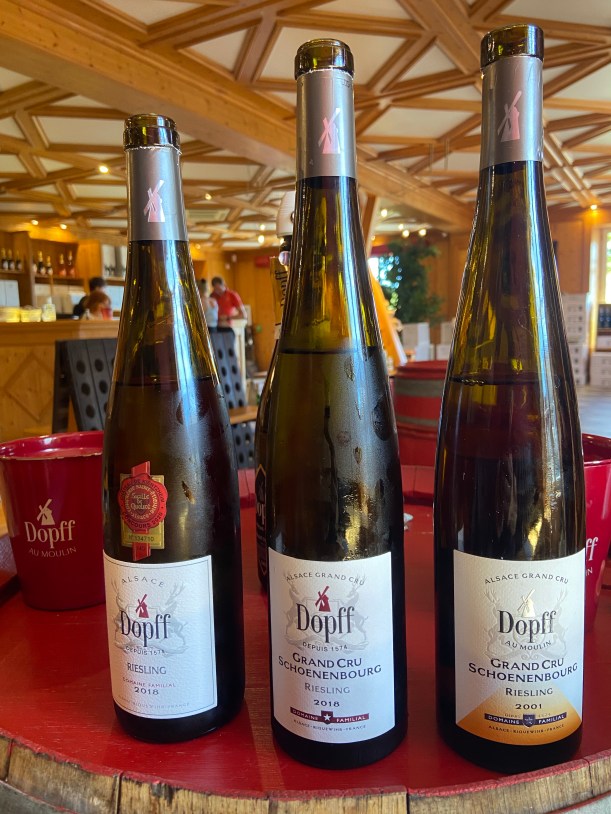
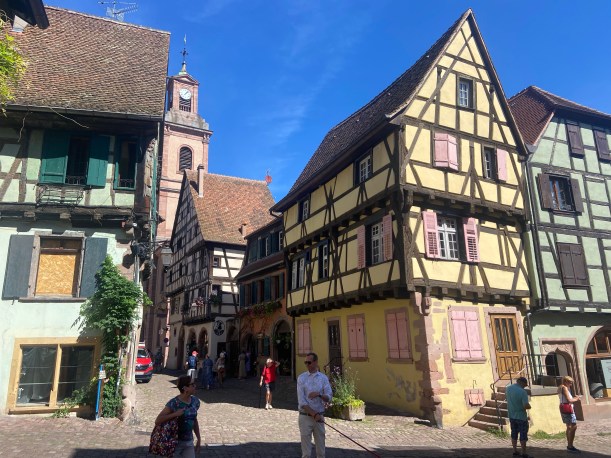
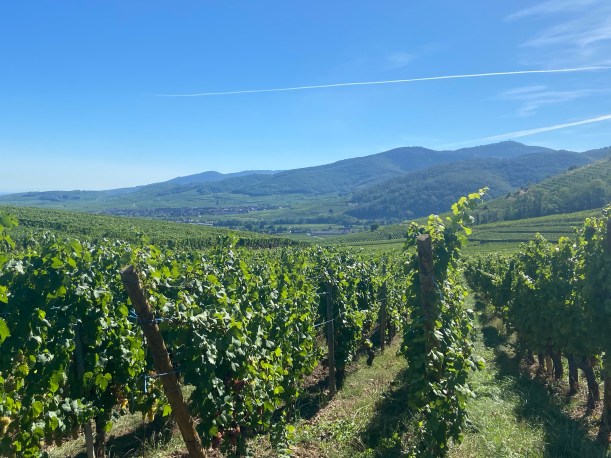


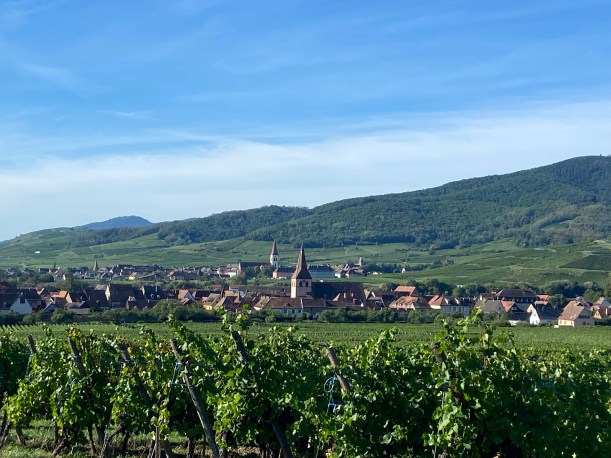
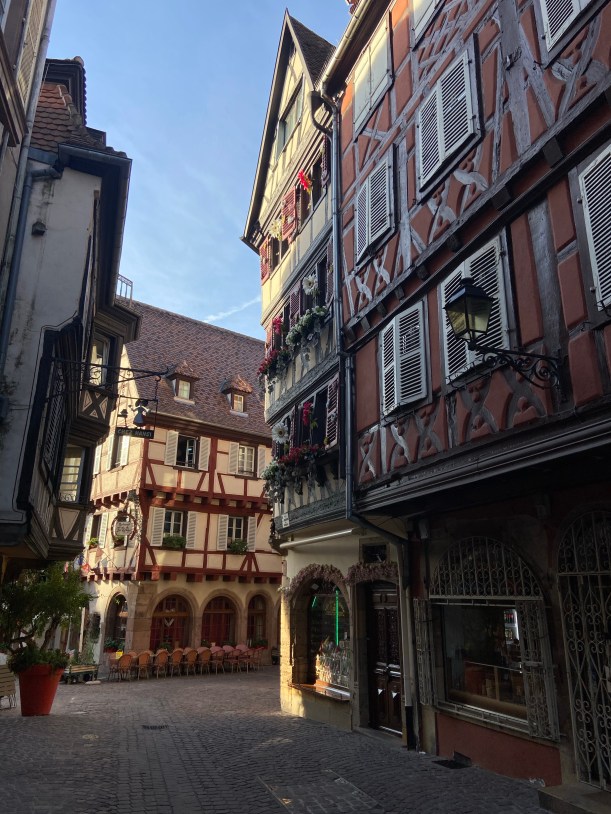
I stayed in central Colmar at the Hotel Le Colombier. This is very conveniently located centrally and for the electric bike store on the same street. This is an excellent way to explore the region as there are many dedicated wine cycle routes throughout the area.
I wasn’t wild about the food, quite pork base and Germanic. They do an interesting pizza type of thing called a Tarte Flambee in French and FlammeKueche in German.
Then I hopped on a flight to Bordeaux.
Chateau Coutet, Barsac France

It was the first day of the Rugby World Cup so the flight was awash with excited fans.
I’d had also long wished to visit Chateau Coutet in Barsac having met Aline Baly on many occasions in London. I’m also a fan of dessert wines, again not everyone’s taste. Aline was in Paulliac but generously arranged the Maitre du Chai, Laurier Girardot to entertain us.

We started in the vineyards surrounding the pristine opulent Chateau.

Laurier discussed the terroir, which is slightly different to Sauternes and a little further from the River Garonne. The style here being a little less unctuous than Sauternes and perhaps less botrytis. They also make a dry white. The wines as ever, were finely balanced, long and delicious with complexity evident in older vintages.
Châteauneuf-du-Pape
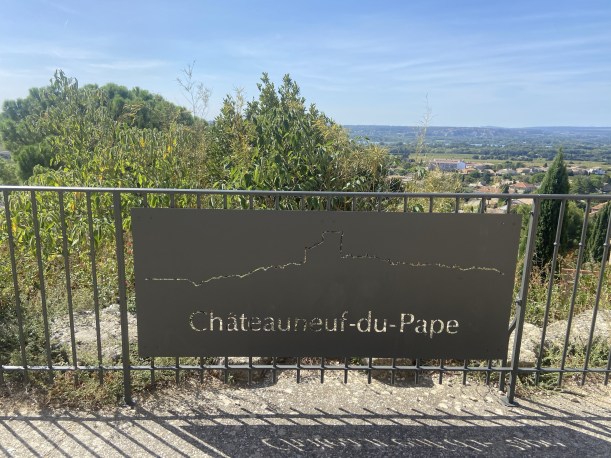
Next up a flight to Marseille, en route to another region I’ve longed to visit, Châteauneuf-du-Pape.
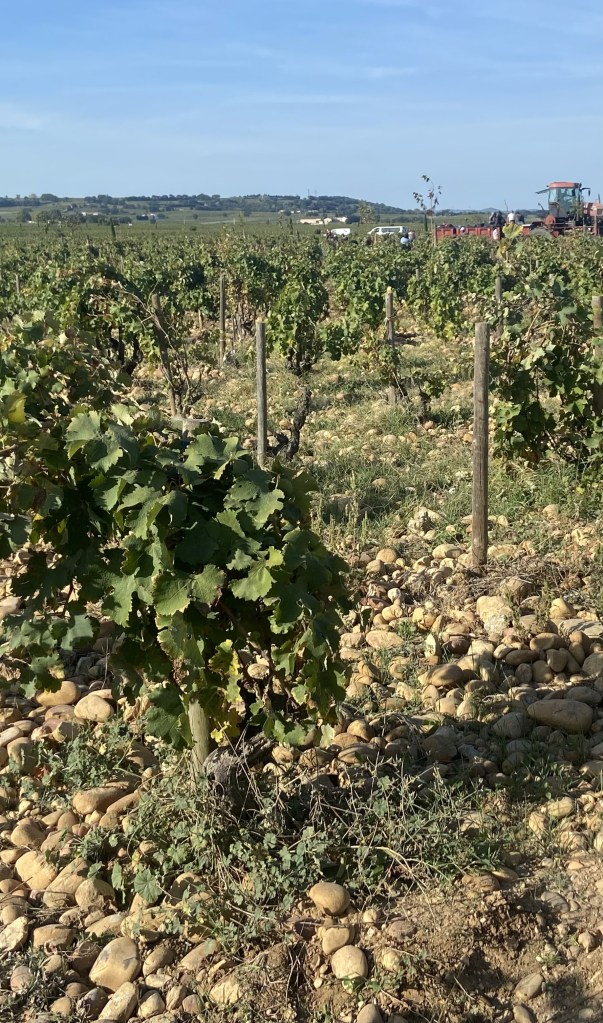
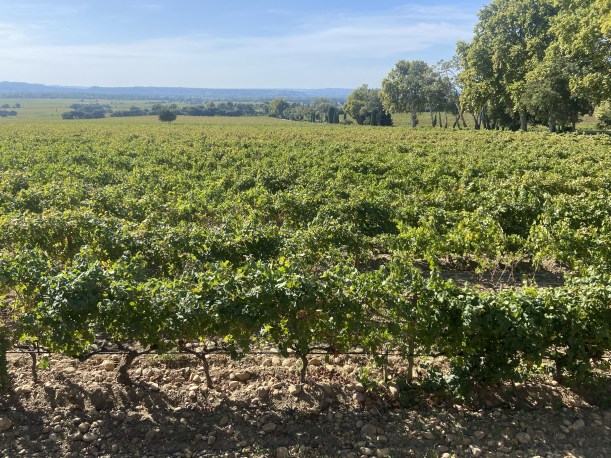
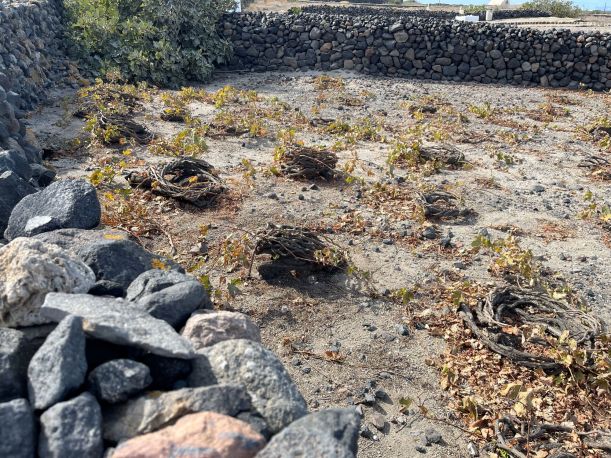
It’s one thing reading about the ‘Galets’ (larger pebbles/ smooth rocks) which are characteristic of the area. it’s another thing to see them. The entire vineyards are literally covered with layers of Galets with virtually no soil evident. These rocks have been washed down from the Alps over millions of years dating to when the area was the bed of the Rhone river.
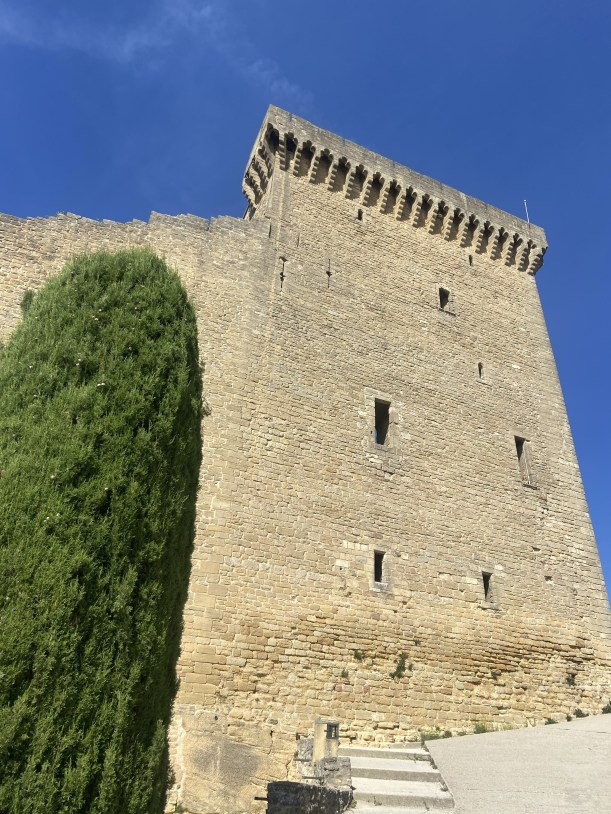




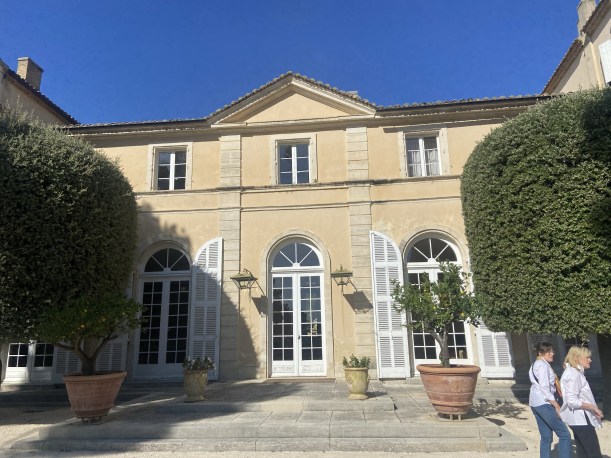
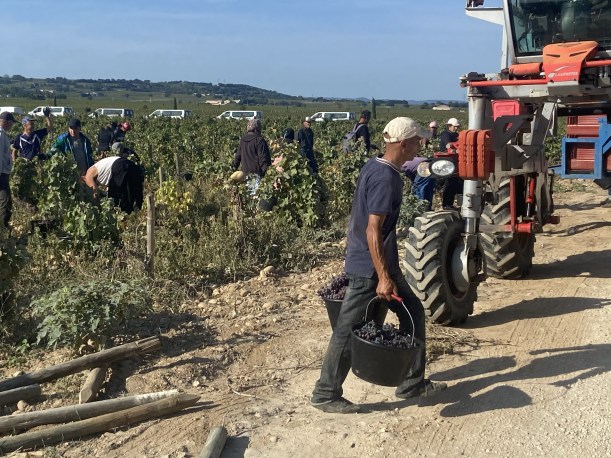




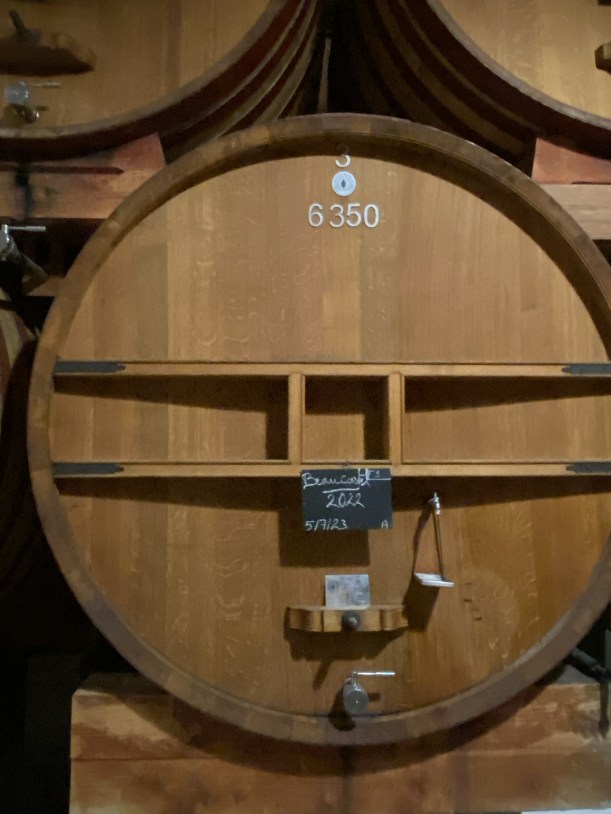

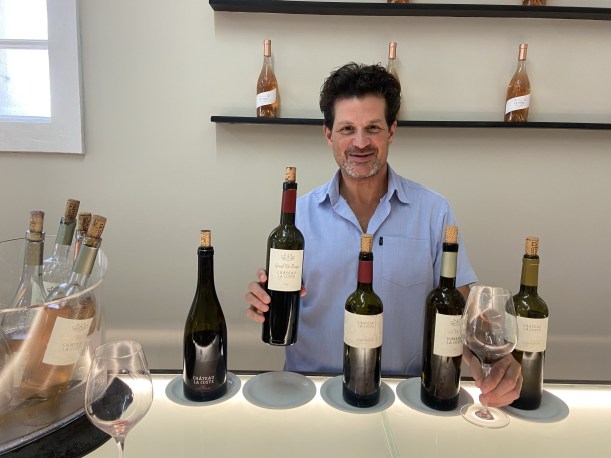
First visit, the famous Chateau de Beaucastel owned by the Perrin family.
Beaucastel were in the midst of the most fascinating new build. They had a competition amongst world renowned architects who tendered for the job. It was finally won by and Indian based firm. In keeping with Beaucastel organic and biodynamic sustainability, the new structure is being built with products of excavation.
The excavated earth for the new cellar is gently crushed and then taken to a large vertical mold and compressed. This creates the large slabs to build the new winery. It already looks amazing and effortlessly blends in with the environment.
We tasted the 2008 and 2019 Beaucastel and also a 100% Roussane of which little is made. The wines as expected were spotlessly balanced and full of fine grained tannins.
En route to Château La Nerthe we popped into Chateau Mont Redon
I was impressed by the Chateau Mont Redon range, especially with their most moderately priced Lirac which is full of fruit but also has a lovely mouthfeel. I have been buying en primeur Mont Redon from the wine society for many years.
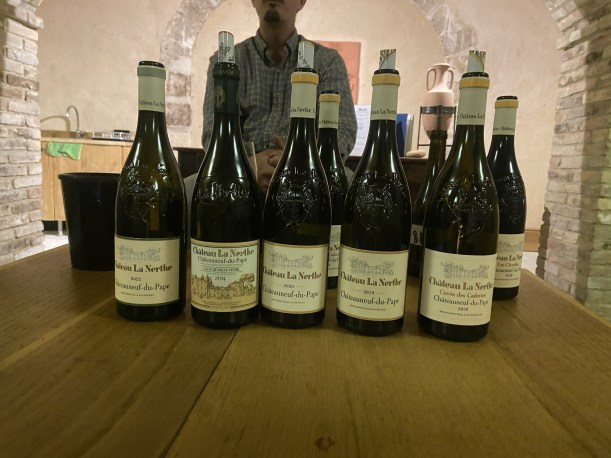
Final visit of the day was to a very welcoming and passionate Antoine at Chateau La Nerthe.
He gave us the historical background. There have been grapes here since Roman times. More recently they were one of the pioneers of the Appelation Controlle system
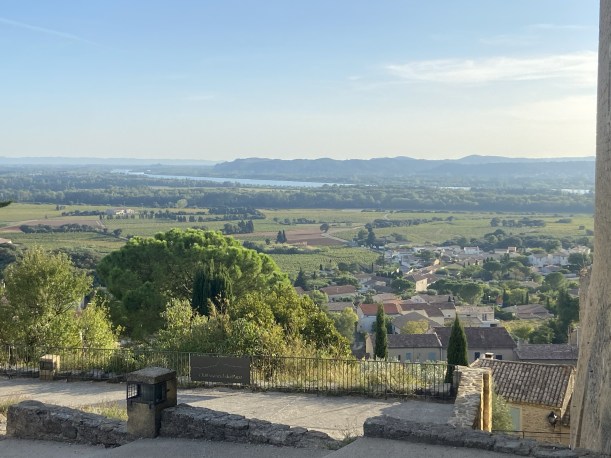
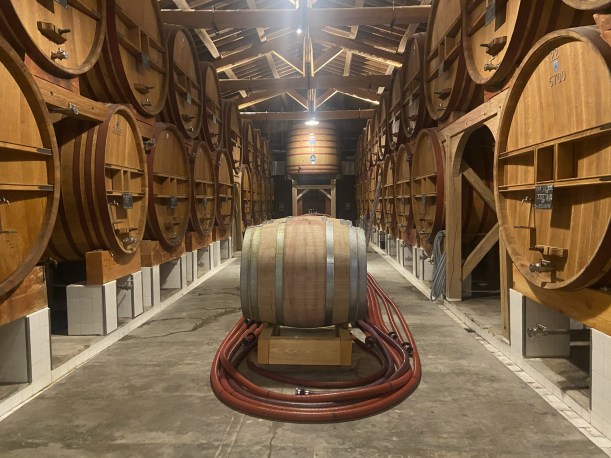
This a stunning chateau with views reaching far and wide. We toured the cellars and we were lucky enough to witness a live ‘remontage’ and sample 4 day old Mourvèdre from the tank. It was surprisingly delicious given its age.
Wine tasting here can be a little confusing as 13 grape varieties are permitted.
6 white grape varieties: Grenache blanc, Clairette, Roussanne, Bourboulenc, Picpoul and Picardan. Grenache blanc, a mutation of Grenache noir, is the most commonly used grape variety. Red grapes: Grenache, Syrah, Mourvèdre, Cinsault, Vaccarèse, Terret, Counoise, Muscardin.
We tasted a range of their wines including
Château la Nerthe 2014 Clos de Beauvenir – it had an oxidised nose, almond, nice freshness and texture Good food wine
Château la Nerthe Barrel sample, Syrah amazing for only 4 weeks old! Full of fruit Soft tannins Delicious!!!
2020 Château la Nerthe Châteauneuf du Pape 25% Mourvèdre, Balanced, good year, plenty of fresh fruit alcohol well integrated
2019 Château la Nerthe Châteauneuf du Pape . 35 %Mourvèdre Syrah 31 %Grenache 33 % about a third each A bit more serious than 2020 and probably need more ageing to develop complexity
2020 Château la Nerthe Châteauneuf du Pape Cuvee des Cadettes which is made from their best grapes 9.000 bottles only GSM blend
2019 Château la Nerthe Châteauneuf du Pape Cadettes 55 % Mourvèdre floral earthy savoury serious big wine.
Antoine then brought out a blind wine which I immediately described as Pinotesque. I was happy to be correct in my deduction that it was one of their very limited production 100% Grenache.
This tasting was one of the highlights of many years of different wine trips. Thanks to @bossofthewine, Bruce Baldinger and the New Yorkers. We had serendipitously met them on the tour of the old Synagogue in Carpentras the day before and tagged along to this visit.
Finally I must not forget the opulent Chateau La Coste in Provence. It was a short drive south from our accommodation in Lourmarin through the beautiful countryside towards Aix en Provence near the village of Le Puy-Sainte – Reparade.


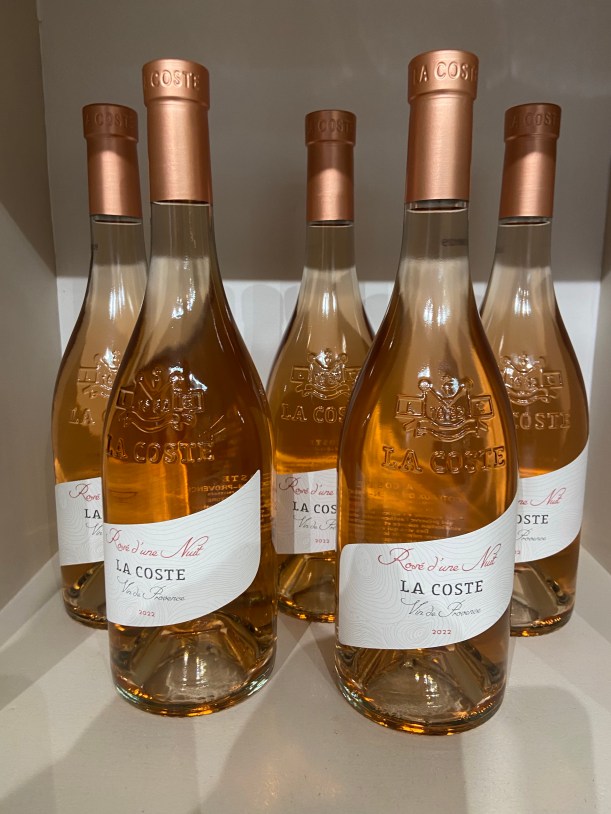

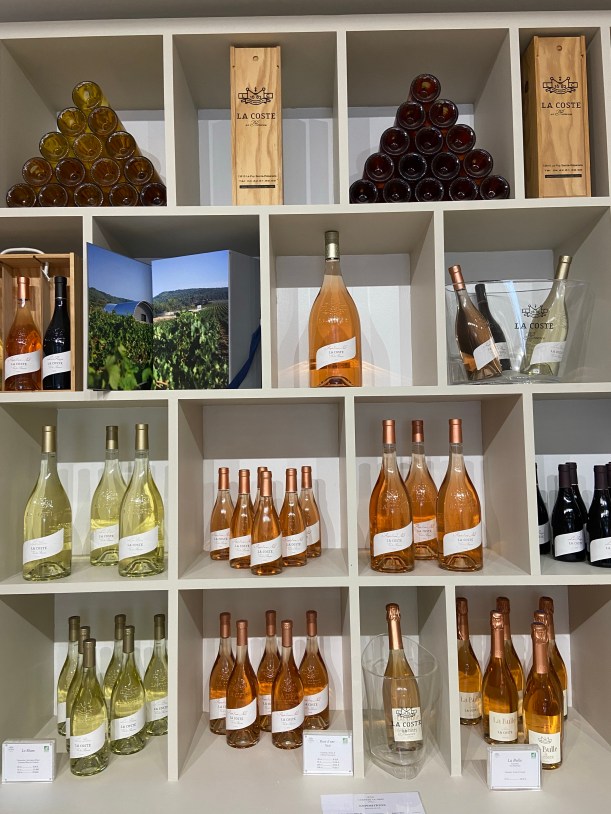


This is a real destination owned by Irish property magnate Paddy Mckillen. It has its own art and architecture walk, 600 acre sculpture park, a luxury hotel Villa La Coste multiple very high end restaurants and excellent wine.
Despite the breadth and depth and quality of wines across the world, there’s nothing quite like returning to La Belle France!

 WanderCurtis Wine