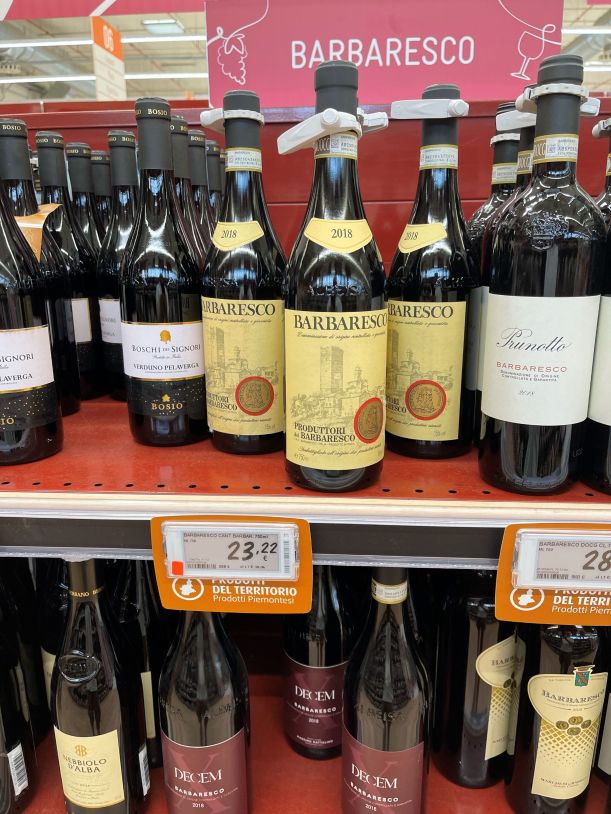
This very longstanding co-op in Piemonte produces a range of excellent wines. Along with the many single vineyard offerings this wine is a blend across the winegrowers’ parcels and consistently provides great value for money. Look at the price here in the village of Barbaresco in Euros for the 2018 vintage, even landed in the UK its a smart buy.
Released in the spring of the third year after harvest this characteristically pale wine already shows some bricking on the rim. There is rose and strawberry , wet stone some cake spice and a touch of dried cherry and earth on the nose. Everything is in balance and although the acidity, tannin and alcohol of this Nebbiolo is characteristically high it feels light and supple in the mouth. The finish is persistent ending on a nice stoney dried cherry note. Superb!
2019 was a more classic vintage not as feted as the excellent 2016 but fresher than 2018. See our article on the annual Barbaresco Tavola.
Here’s a little bottle of joy that’s as far from serious, brooding reds or oaky whites as you can get, Massolino’s Moscato d’Asti 2021 is the wine equivalent of springtime in a glass. Hailing from the hills of Roero in Piemonte, this lightly sparkling, low-alcohol sweet wine is as fragrant and playful as a picnic in a wildflower meadow.
Pale lemon in the glass, it’s all about the aromatics from the moment you pop the cork. The nose bursts with an enchanting mix of orange blossom, rose petals, elderflower and honeysuckle. Beneath the florals, there’s ripe green apple, fresh grape, and juicy pear, all lifted by a zesty flash of pink grapefruit and rounded out by more exotic notes of lychee, peach and honeydew melon. It’s pronounced, perfumed, and completely irresistible.
On the palate, the gentle fizz gives it a creamy mousse that tickles rather than fizzes aggressively. It’s sweet, yes, but the sweetness is beautifully balanced by a wash of fresh acidity that keeps things lively rather than cloying. That aromatic fruit carries through with clarity, grapey, floral, and mouthfilling, with just enough citrus to keep it fresh. At only 5% alcohol, it’s feather-light in every way except flavour.
The finish is medium-plus, pleasant and fruity, though it doesn’t linger for ages. That said, this isn’t a wine made for deep contemplation or cellaring. It’s made to be drunk now, in its youth, when its delicate floral and fruity charm is at its most expressive.
Ever underestimated Moscato? This bottle might just change your mind.
The weekends impending champions league final reminded us it was exactly a decade on to the day from our last wine trip to Piemonte.
We spent the May weekend of 2012 in Barolo and were escorted through the region by Roger Barlow of Gerard Seel.
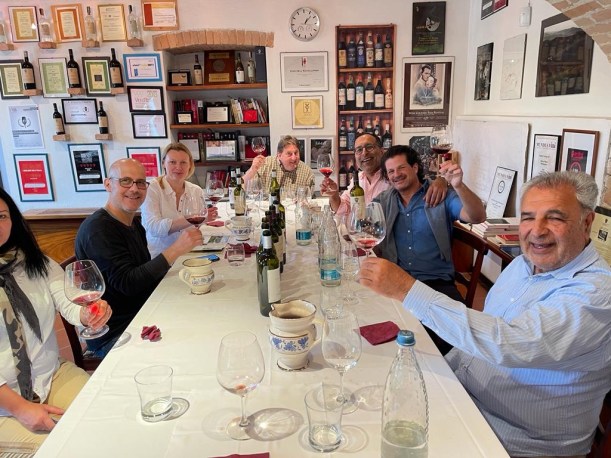
This time to Barbaresco, facilitated by our friend Mehul, a serious Italophile and lover of wines of this region.
The plan was to get a blind tasted overview of the 2019 vintage at Barbaresco a Tavola, then to indulge in the food and wine culture of Piemonte. We had arranged a few select winery visits.
Piemonte is renowned for 3 main red varietals, Nebbiolo of course, Barbera and Dolcetto. Their 3 main white grapes are Arneis. Cortese and Cortese.
We concentrated on Nebbiolo wines. They can be difficult to appreciate young due to their high tannins and acidity and the wines need patience.
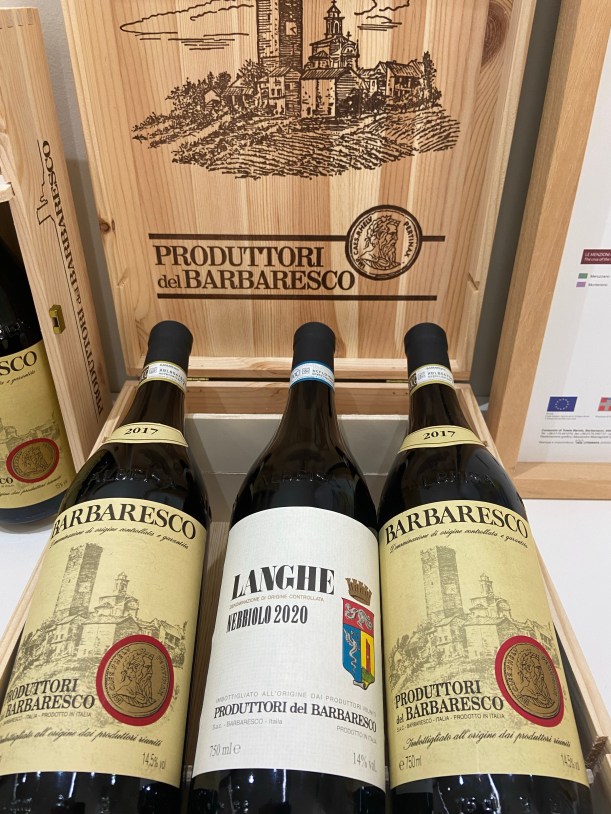
The Produttori del Barbaresco was founded in 1958. They now have 51 members and more than 100 hectares of Nebbiolo vineyards in Barbaresco. It is conveniently located in the small village of Barbaresco and wines can be tasted by just dropping in. They are well known for producing high quality and more affordable Barbaresco
Lange Nebiolo 2020.
On the nose: Aromatic, herbs, cut strawberry.
In the mouth: Nice balance, dusty tannin, fruit structure, medium in length. Approachable already. 14 euro very nicely made
Barbaresco 2018
On the nose a little volatile, rose, macerated strawberry, pot pourri
In the mouth: good balance, full body, sweet juicy fruit, little hot on end.
Barbaresco 2017.
Herbaceous nose, cinnamon, red tart fruit, cherries.
On the mouth: Rounded fruit, elegant structure, good fruit concentration, slightly puckering youthful tannin, long finish. Very good.
The 2019 although only recently bottled showed as one of the top 6 wines at the Tavola tasting. Confirming the consistent quality of the wines here.
The winery produces 50,000 bottles per annum and is 100% organic, The Ada Nada farmhouse is located in Treiso, near Alba. They have a beautiful Agroturismo with a lovely outdoor swimming pool with panoramic views of the rolling hills.
Cento
Golden green colour, made from 100% Nebbiolo. Grapes are green harvested then the wine is made following a method traditional and the aged for 24 months on lees.
On the nose citrus, lime zest, orange peel some cream, in the mouth sherbet, finishing slightly abruptly. Fresh and fun.
Dilva
This is another 100% Nebbiolo method classic but this time with zero dosage. Made with skin contact and fermented in barrique then and aged for 60 months on lees. The wine is not long enough in barrique to impart a woody character but allows micro oxygenation.
This is a more serious fizz. On the nose: toasted brioche, toffee, flint and smoke. In the mouth stewed spiced apple, nutty, long and persistent, slightly drying from a dusting of pleasant tannin which counteracts the citrus finish.
Neta Sauvignon Blanc 2021.
Grown on north facing slopes.
On the nose a touch of grass, green pepper, concentrated confected pear drops.
In the mouth rich ripe candied citrus, well balanced but finishes a touch warm.
Lange nebiollo Serena 2021
Made in Barbaresco but from youngest vineyard where the vines are 18 yrs old the wine is made to be approachable and for earlier drinking.
Nose: red cherries, raspberries, dried cherries, light herb.
On palate: strawberry chew, chewy tannin, a well made great food wine.
Classic Barbera Pierin 2020
made in large oak 2 year
Nose: Dark cherries, a whiff of polish, touch of sawdust then strawberries, ripe fruit, voilets. In the mouth blackberry as well as juicy red fruit, medium acidity, fuller body, medium length. Tasty! another good quaffing wine.
Barbaresco Valeirano 2019.
The vines here are over 50 years old.
Nose: Mint, bay leaf, celery, cut strawberry, herb, then floral notes. A delicate and complex nose.
In the mouth: medium plus body, tart cherry, savoury meat, liquorice, herbs. Elegant long excellent!
Barbaresco Rombone Elisa 2018. This vineyard was planted in 1947.
Nose: more expressive, soft red fruit, baked strawberry fruit tart, spices, touch of polish and scent of pot purri.
In the mouth: Full bodied, savoury, cooked fruit, sweetness then a ton of tannin, fine grained. The finish is dry but with a line of fruit that persists.
Barbaresco Cichin Reserva 2017.
Spends 3 years in large oak botti and 2 years in bottle before release. From the rombone vineyard planted in 1958.
The wine maker naturally concentrates the wine by letting 20% of the juice run off and leaving the rest to macerate and ferment on the skins.
On the nose: Leather, perfume, pot purri, polish, orange peel, incense very complex.
In the mouth: Rich, spice, leather, orange peel, firm present tannin but drinking. Very long excellent!
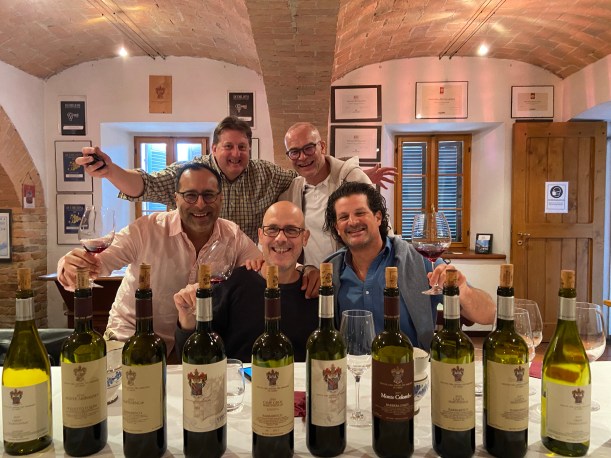
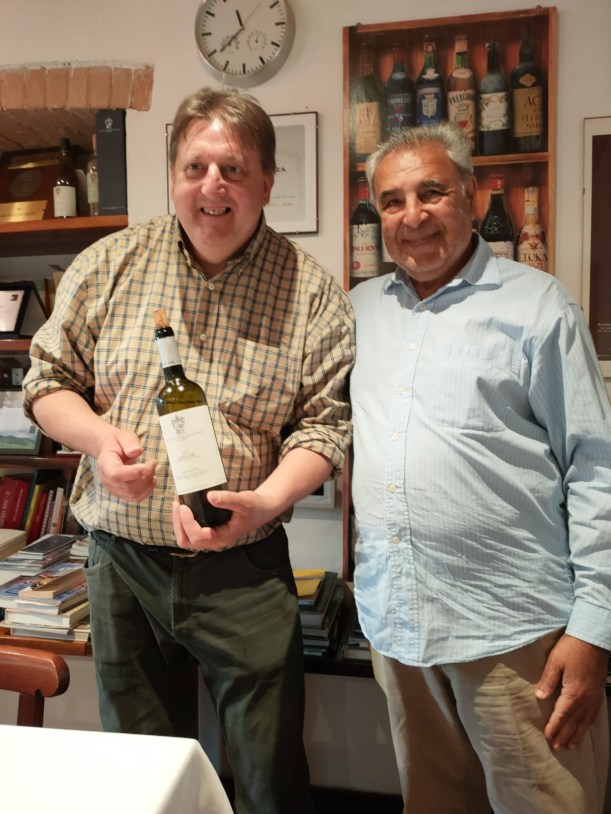
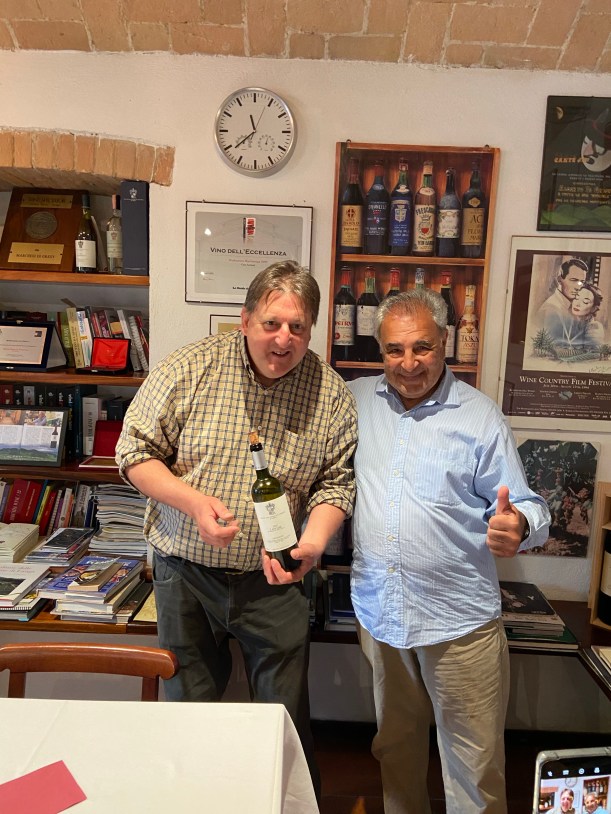
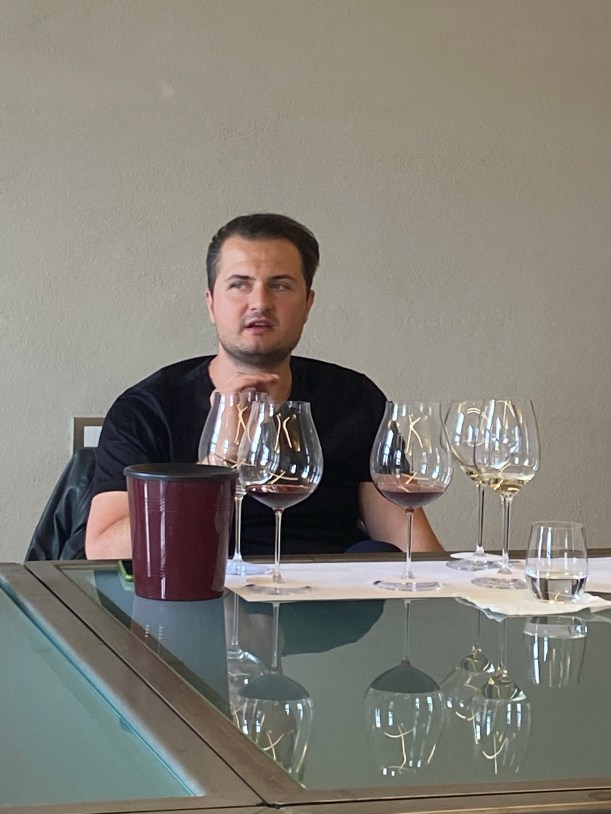
A memorable tasting hosted by the passionate Jeff at Marchesi di Gresy Barbaresco
The Cisa Asinari estates of the Marchesi di Grésy include four wineries located in the Langhe and Monferrato region.
2020 Marchesi di GrésyLanghe sauvignonblanc
Flinty smoky slightly sulfurous, reduced,. Bottled 1yr, green gage, nuts, briny, 7-8 mth stainless steel on lees Greengage, green pepper, tart lemon, mineral dust coating in mouth. Fairly full bodied, good finish
2016 Marchesi di Grésy langhe sauvignon blanc
Darker colour Lemon curd, sweet top note of peaches, salty, floral Fuller body, hint of peach, yellow plum? Reminds me of white bordeaux, thought a blend with semillon great finish, excellent acidity
2019 Marchesi di Grésychardonnay
Pale Ripe pear, maybe a little peach, great wood influence, vanilla, bit of smoke and toast, stone Tart apple, peach, great acidity, but drying, very elegant
2015 Marchesi di Grésy Chardonnay
Coal smoke And toast, roasted hazelnuts, white flower, Caramel, lemon, mineral, really balanced and elegant, acidity, linear
2019 Marchesi di GrésyDolcetto Monte Aribaldo
Cherry linctus, dark and red, strawberry, stem, slightly burned nose, possible reductive Savory and tannic, tart cherry, slight bitterness, savoury finish, med acidity
2015 Marchesi di Grésy Montecolombo Barbera
Treated like a barbaresco Turmeric and cumin nose, dark cherry, vanilla, toffee, Dark cherry, really drying, super acidity, a little hot, herbaceous, quite tannic in gums
2011 Marchesi di GrésyVirtus Langhe Rosso – Cab Sauv and Barbara 40/60
Green pepper Black currant leaf dark cherry, Blackcurrant, good acidity and tannin, balanced, mid palate missing
2007Marchesi di Grésy Virtus Langhe Rosso – Cab Sauv and Barbara 40/60
Much more developed, great mix of the barbera linctus with blackcurrant leaf Mushroom to start on the nose Great ripe balanced, fantastic wine,long… love it
2004 Marchesi di GrésyVirtus Langhe Rosso – Cab Sauv and Barbara 40/60
Green pepper Black currant mushroom caramel vanilla Another great balanced wine, finishes v very cab, very beautiful
2018 Marchesi di GrésyBarbaresco Martinenga
Mixed vintage Muted nose, slightly floral And herbaceous woody notes, tart cherry Drying, good intensity and length not showing yet but had very good potential based on finish
2017 Marchesi di GrésyBarbaresco Martinenga Gaiun Made from specific plots on the outer edge of the Martinenga cru, bordering Asili
Dark cherry strawberry cream pot pourri, roses Drying, intense dried flower, incense, tart cherry, liquorice, finish forever long, sexy, complete, wine for the long term. 2016 Marchesi di GrésyBarbaresco Martinenga Gaiun
Darker Sandalwood, Rose, macerated strawberry, white truffle, sapid More concentration, fruit intensity, liquorice tobacco, finish goes on forever An epic wine for the long term. Touched something deep inside me, literally brought tears to my eyes
2016 Marchesi di GrésyCamp Gros Martinenga Riserva
12 mths small barrel 18mths large barrel, 3 yrs total 6900 btls made
Dried rose, sandalwood, pot pourris dried cherry orange peel, spice – fascinating nose Drying, tart, regal tannins, stony, tight. Not showing itself, wait another 5-10yrs for this to emerge.
This iconic winery needs little introduction. We were fortunate to be hosted by the Giovanni, Angelo Gaja’s son.
He gave us a great insight into the wines and the challenges ahead. We looked out of the palatial Gaja headquarters to where the River Tanaro should be. Instead we say a dry cracked river bed with no water in sight. The Tanaro had dried up which is a worrying sign of things to come.
We tried a selection of their wines all made to perfection. Mehul requested a bottle of Sori Tildin (one of my desert Island wines) A vintage 2001 was duly decanted. A fitting finale to a memorable weekend in Barbaresco!
The WanderCurtis team were delighted to have been invited to attend our first Barbaresco a Tavola dinner on Friday May 27th 2022. For the unacquainted, this is an annual tradition held by the region’s winemakers to showcase their latest bottled vintage. Held over three successive weekends in different restaurants, wine makers from across the area bring and pour their latest bottled vintage to other wine makers, members of the trade, journalists and others, to give a sense of how the vintage has turned out.
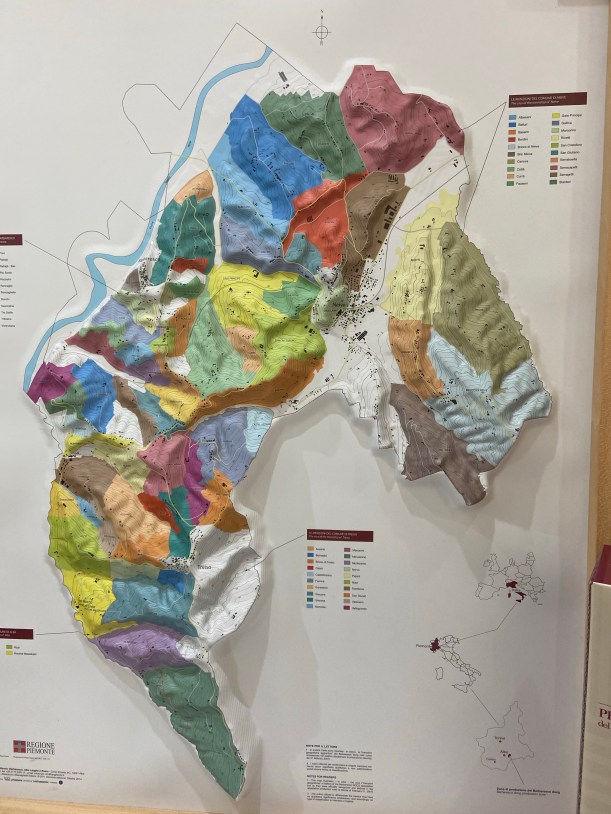
For those who have yet to encounter the Barbaresco region, well, the best thing to say is that what is commonly referred to as one region is comprised of the three regions of Barbaresco, Neive and Treiso, that collectively work under the single communal name of Barbaresco DOCG. While the star of the show must be made from 100% Nebbiolo, aged for a minimum of 12 months in oak with a further 9 months of bottle ageing, the region is also widely planted to Barbera, Dolcetto, Arneis and many other international varietals that can be bottled and sold under the Langhe DOC label. This affords the local winemakers an opportunity to honour more ancient traditions of blends, provides an outlet for the wines made from young vines and gives opportunities to experiment with more international varietals such as Chardonnay, Sauvignon Blanc and Merlot.
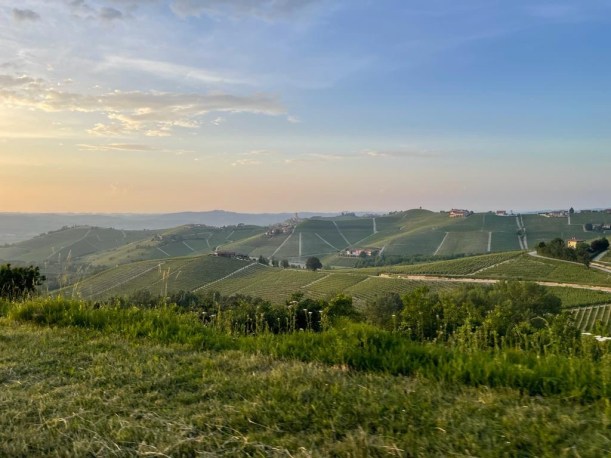
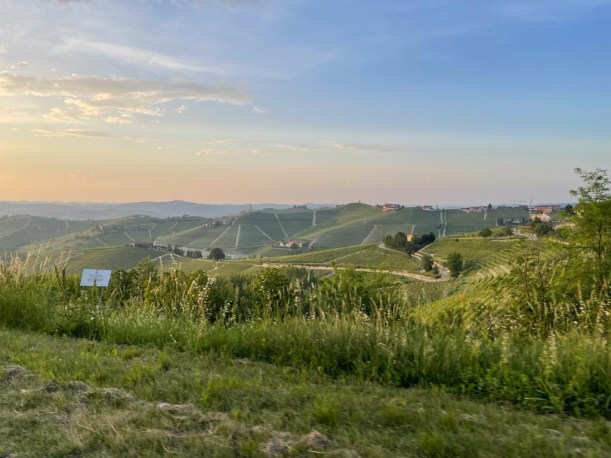
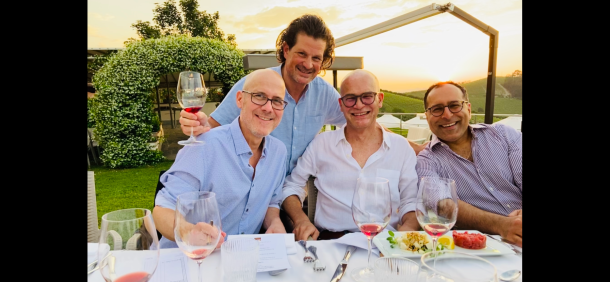
We attended the third of the three Tavola dinners, held at the restaurant Casa Nicolini in Tre Stelle. Set on one of many sensational ridges that run across the top of the vineyards, we were greeted with breath-taking views of key Barbaresco vineyards such as Asili, Rabaja, Rio Sordo and Martinenga. The potent aromas of ripe jasmine, although enticing, made it difficult find some of the finer edges of the aromas in these very young wines. We were the guests of Jeff Chilcott, Kiwi cellar master of Marchesi di Gresy, who we visited on Sunday for an amazing tasting (more on this later).
The format of the dinner is simple: 20 wines are set up on a central table, labelled 1-19, and you are invited to taste and score your way through the wines. Later in the evening, the wines are revealed, and you find out that most of people pouring the wines are the wine makers themselves. Over the course of the evening, we were served a typical and delicious multi-course regional meal. As the light faded, our palates tingling from the young vintage’s tannins and acidity, we left feeling full, fortunate to have taken part and maybe just a little tipsy.
The wines uncovered
Impression of the vintage
The 2019 vintage has been described by many as pure, energetic, and authentic with good fruit expression, fine abundant tannins and elevated levels of acidity – all typical characteristics of strong vintages. Our tasting left an impression of a vintage of balance, elegance and with good bones for the long haul. We would caveat this to say that with many having been bottled within a few weeks of the dinner, there was a high degree of wood on show, with many wines showing baking spice characteristics of cinnamon, and nutmeg, with a muted fruit expression. There were a range of wine making styles on show, with many made in the traditional neutral oaked manner and some showing the signs of flashy new barriques. We scored all the wines fully blind on a scale of 1-20, and frequently returned to wines that, on discussion, proved either hard to understand or sparked an interest.
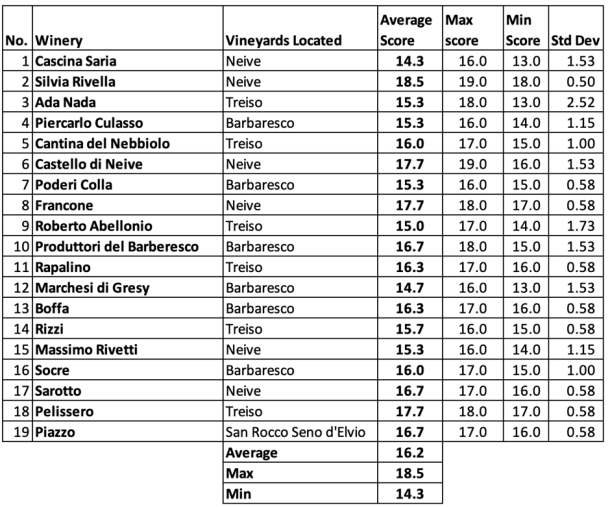
I have put our scores together in a table by wine, with our average, maximum, minimum and standard deviation scores listed (for those who like a bit of statistical wine geekiness).
Casa Nicolini Barbaresco
Tasting note comments
On balance, you will see that our average across all wines from the evening scores a 16.2 out of 20, which one could normally interpret as representing an average to good vintage. In context, however, given the extraordinarily young, freshly bottled wines, and examining the structural characteristics (acidity and tannin) and winemaking styles on show, I believe these wines will be showing beautifully in the medium term, and will reward the patient given their exquisite balance and structure.
In terms of individual wines, there was much debate on which of these was our favourite on the night. Initially, we were besotted with number 18 (Pelissero), a producer that clearly likes the full barrique approach, creating a ravishing, fuller bodied version of Barbaresco. On reflection and discussion, we marked it down on the basis that vanilla is not something that we feel belongs so overtly in Barbaresco of any age.
While our collective scores of number 12, the Marchesi di Gresy Barbaresco Martinenga, was rather low, our tasting on Sunday showed just how wonderful their wines are with a bit more age, and we therefore conclude that this wine was being a little shy. We would say the same for number 3 from Ada Nada, which split opinions, and whom we visited the next afternoon and had a wonderful tasting.
Our clear favourite, number 2 from Silvia Rivella, shone out as both an approachable yet structured newer style barrique-aged wine with potential to age into something truly beautiful. Other strong showings included the Castello di Neive (6), the ever-dependable Produttori del Barbaresco (10) and the Francone (8) which all stood out.
It’s a bit cheeky putting this as wine of the month. Firstly it’s a couple of hundred pounds a bottle and secondly it should be wine of the year.
Hard to find the right words but haunting, ethereal, sensual, evocative and deeply alluring come to mind. A wine you just want to keep smelling and can’t put down.
A wine that takes you to another place. Maybe a Christmas treat if you get a good bonus!
Smokey, soft, rounded, blackberry and red berry fruits, smooth soft and sweet tannins. From the large Fontanafreda estate. Great value and quality. Available from Wine Direct and Enotria.
Aged Barolo and Barbaresco live up to their international reputation but lesser known local varieties such as Arneis, Dolcetto and Barbera can be fantastic value in the hands of great wine makers.
Thirty-two guests attended this tasting, which was held at Giovanni Rana’s swish and airy new restaurant, in the Regents Place development on Euston Road. The tasting was designed to give an overview of the various wines of Piedmont. Most people have heard of Barolo (made from 100% Nebbiolo), arguably the region’s most famous wine and one that inspires wine buffs to launch into rapturous praise of its unique character, complexity and aging potential. But the region is also host to a range of other grape varieties that produce great value delicious drinking wines and the evening set out to show some of these too.
Rebecca Nightingale of Montforte Wines and Roger Barlow of Gerard Seel kindly introduced the region and presented the wines on the evening. The restaurant provided a superb selection of antipasti and some memorable pasta dishes that complimented the wines perfectly, proving just what food friendly wines these are.
The first wine sampled was a white Arneis from Roero by the fabulously named Gigi Rosso. This wine was fresh with a persistent lingering and unique flavour. Aromas of flowers and unripe pear, really very well balanced with a long finish. Lovely and very popular amongst the guests.
Round 1: Dolcetto (introduced by Rebecca)
Dolcetto d’Alba ‘Duset’ 2010 by Le Vigne di Ca Nova. Fresh, with morello cherries and savoury notes. A wine to drink in his youth as a light and refreshing lunchtime drink.
Dolcetto d’Alba Rutuin 2007 by Caibot Berton. Slightly older, this wine was less fruity but slightly more complex on the palate with a note of golden Virginia tobacco. At five years old, it’s probably reaching its peak. A lovely, tasty, moreish drop. These wines have fairly low tannin but are nevertheless fresh and good with food.
Round 2: Barbera (introduced by Rebecca, contrasting oaked and unoaked)
Barbera d’Alba 2010 by La Licenziana. Fresh with lots of acidity, a wine that really reacted well to the prosciutto and salami on the table. On the nose, fresh, light strawberry and red fruits. Again, a wine for drinking in its youth.
Barbera superiore ‘Bric de Maschi’ 2007 by Le Vigne di Ca Nova. Delivered a slightly smoky nose with vanilla, perhaps chocolate and still plenty of cherry fruit. Absolutely delicious on the palate with sticky crust of cherry tart and savoury notes. Fantastic value for money and a delicious drop of wine from 2007.
Round 3: Barolo (introduced by Roger)
Barolo Roggeri 2007 by Caibot Berton. In Piedmont, where Barolo has a reputation for huge tannins that need many years in the bottle to tame, 2007 is thought to be a very approachable and friendly year with lovely soft integrated tannins. The Roggeri proves the rule with absolutely delicious complex notes of fruit, classic tar and floral aromas on the nose. In the mouth, again gorgeous, still plenty of tannin but smooth and tasty. This wine has structure and hints of how it may develop in complexity with age. No wonder Decanter gave this five stars and rated it top for value for money in recent review of Barolo 2007.
Barolo Serralunga d’Alba 2007 by Fontanafredda. Also a 2007 and if it if anything even more approachable with notes of tobacco and mushrooms and a little liquorice on the nose. On the palate nice, fresh and fruity with a bit of spice and very soft integrated tannins. Perhaps a little brief but a really approachable and tasty Barolo. In fact a wine that many people found easier to enjoy than the slightly more structured Roggeri.
These lines were accompanied by a great range of pasta including pappardelle al ragù d’anatra (duck) and porcini ravioli, again proving how well these winds even in relative youth go with food.
Round 4: Style and Age – Barbaresco and Barolo
The final round of wines contrasted a Barbaresco with an older Barolo. Barbaresco wines are considered again to be more approachable more soft and feminine softer and less fiercely tannic. On the other hand Barolo is famed for the way it delivers a delicate cocktail of aromas and flavours once the tannin has reduced with age.
Barbaresco Bric Balin 2005 by Moccagatta. This single vineyard Nebbiolo has lovely savoury notes then toffee, condensed milk some floral scents perhaps a little bit of the famous tar, complex. In the mouth, long, savoury, sweet and delicious. Really an outstanding wine. Still young, but with beautifully integrated tannins and that great long future ahead of it.
Barolo Carobric, 1997 by Paulo Scavino. A big name in Barolo and a blend of three of their best vineyards. Stealing the show and providing a brilliant lesson in just what the Barolo can deliver, but even at 15 years of age it still needed time to open up in the glass. Notes of tar, earthiness, a bit of mushroom and a whiff of violets on top complex notes. In the mouth, still quite tannic but slowly opening up and providing more of those savoury sweet notes with a core of ripe fruit bellow. Changing flavours, complex and persistent still, with many years ahead of it. Fantastic.
We finished the evening with a glass of Moscato d’Asti 2010, Santa Vittoria. Another white, lightly fizzy and sweet, but also fresh to cleanse the palate and end a hedonistic evening.
Kiran’s wines of the evening
Barolo Carobric, 1997 by Paulo Scavino (£86.00 – Fine & Rare)
Barbaresco Bric Balin 2005 by Moccagatta. (£32.75 – Gerrard Seel)
Kiran’s best value wines
Barbera superiore ‘Bric de Maschi’ 2007 by Le Vigne di Ca Nova (£12.25 Montforte Wines)











 WanderCurtis Wine