Many of the wineries in the Margaret River region have excellent restaurants but these are normally only open at lunchtime. Great for combining a visit to the winery, a taste through the wines and a scenic lunch in the Vineyard, but what do you do in the evening?
The answer turned out to The Settlers Tavern in the town of Margaret River itself. It is very popular so you need to book but once you’re in, there’s a great menu ranging from something light like fish tacos (if you’ve already had a big lunch) through to a 300 g rump steak if you need it. Best of all they have an incredible fine wine list with a large number served by the glass either from their enomatic machine or via Coravin for their list of ‘Premium and Iconic’ wines.
I had a glass of Cullen ‘Grace Madeline’ Wilyabrup Sauvignon Blanc and Semillon blend. At a Liberty Wines tasting in London Vanya Cullen explained that this wine was inspired by Haut-Brion Blanc which counts as one of the most amazing whites I’ve ever been lucky enough to try. This homage is stunning; aromatic but smoky, full of energy but also substance and delicious.
I also had a glass of Cullen ‘Diana Madeline, 2012 which was still perfumed, with black currant and capsicum and lovely earth and leathery notes.
We didn’t manage to visit Cullen winery and I love their wines and their biodynamic and carbon neutral approach to wine making. This made up for it though!
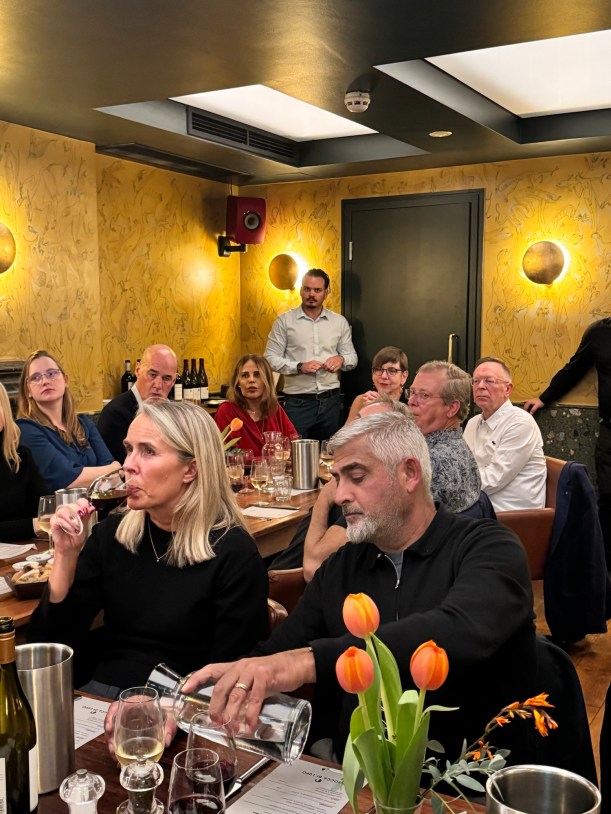
We welcomed Michele Fazari, DWWA judge and Prestige Account Manager at Jackson Family Wines of California on Wednesday October 30th at 7pm
Jackson Family Wines are based in Sonoma County – in the heart of California’s wine country. Their flagship brand is Kendall-Jackson but their portfolio now includes 40 brands, sourced from vineyards and wineries in California, Oregon and many other wine regions worldwide. They produce wines with broad appeal including some of the world’s best Cabernet Sauvignon. They are very focused on sustainability. Their founder Jess Jackson said, “Take care of the land and it will take care of you.”
We tasted a selection of five wines from the finest Californian wine regions served with a three-course dinner in the newly refurbished private room of the award-winning Bocca Di Lupo restaurant in Soho on Wednesday 30th October at 7pm.
The wines served include one of Napa Valley’s best Cabernet Sauvignon’s – Mt. Brave Mount Veeder see tasting note in our Wines of the month
The story of Kumeu River (pronounced: Koo-MEE-oo River) Wines is intertwined with the origins of New Zealand’s wine industry itself. From its early pioneering days as Croation immigrants who established a vineyard to its current reputation for producing world-class Chardonnay, the Brajkovich family has been at the forefront, earning international acclaim for their exceptional wines.
In 2015 Stephen Browett of Farr Vintners, organised a series of blind tastings against some of the finest Premier Cru and Village white Burgundies. The events brought together top critics, sommeliers, and wine writers to assess the wines side by side. In an upset to the established order Kumeu’s Maté’s, Coddington, Hunting Hill, and Estate Chardonnays triumphed in every flight except one, where they placed joint first with a leading Burgundy. This achievement cemented Kumeu River’s reputation for incredible quality and value wines.
The winery’s 30 hectares of vineyards, located on clay-rich soils with a sandstone base, play a vital role in their success. These soils retain enough moisture at depth to keep the vines hydrated through the dry summer months, eliminating the need for irrigation. This ensures the vines produce grapes of great concentration and balance.
With Auckland’s urban sprawl encroaching on vineyard land, Kumeu expanded in 2017, acquiring the Rays Road vineyard in Hawke’s Bay. Here, they have planted Chardonnay, alongside Sauvignon Blanc and Pinot Noir, on limestone slopes, adding further diversity to their portfolio.
In the winery, grapes are meticulously hand-harvested and sorted before whole-bunch pressing. Fermentation takes place in French oak barrels, the mix of new and old is tailored to the vintage and vineyard plots. Wild yeast is always used to enhance the wines’ complexity.
A recent tasting of the 2023 vintage confirmed once again that these refined, elegant Chardonnays rival the best in the world.
From vineyards close to False Bay in Stellenbosch, South Africa. There is a noticeable cooling effect from breezes, in this part of the region, that push inland from the cold waters of the Bay really slowing the ripening season down and allowing concentrated and flavourful grapes to grow.
Founded in 1756 Meerlust Estate does call into question the use of the term ‘New World’ when comes to the wines of South Africa (see our review of Constancia which tells the story of how wine growing started in the country). On the other hand it is fair to say that the birth, or probably rebirth, of quality wine production only properly got under way after the fall of apartheid in 1994.
The idea of ‘crossing the Rubicon’, at which point there was no turning back for Julius Ceasar, inspired the name of the wine. Nico Myburgh, part of the founding family, created the wine from Cabernet Sauvignon, Merlot and Cabernet Franc, inspired by the use of blending in Bordeaux crossing the line and helping to establish the style in South Africa.
Indeed this wine is easy to mistake for a classic right back Bordeaux when tasted blind, there is something about the way that the growing conditions in Stellenbosch allow restrained and elegant wines to be made that whilst ripe retain notes of capsicum and black currant leaf characteristic of classic Claret.
This wine already shows some bricking on the garnet rim. The nose is expressive with ripe black currant, capsicum, black pepper, baked blackcurrant tart, smoke, toast and coffee grounds, signifying use of French Oak. It also has nice notes of earth and leather from the years in bottle.
In the mouth it is fresh, with ripe but firm tannin, the body is full but the alcohol well integrated. Elegant and well balanced with a very long tasty finish. This wine is widely available and great value for a wine showing enough maturity to drink now but with capacity to develop further.
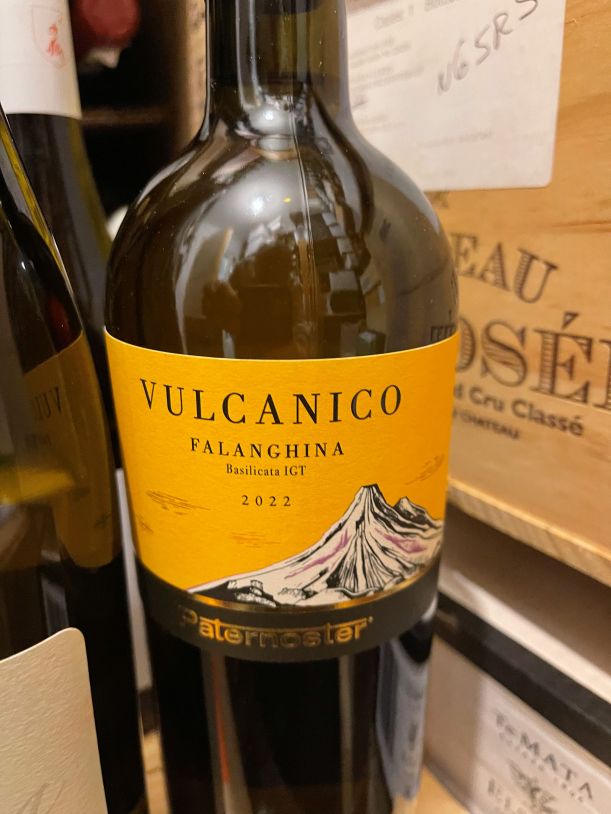
I must admit to not being very familiar with this grape variety until my Diploma studies and so I was happy to find this example in a wine shop at the airport in Verona to pick up and try.
The Campagnia region is better known for the Falanghina grape variety, grown on the slopes of Vesuvious near Naples. However this example is from Basilicata slightly further south which also has volcanic soils and a bit of elevation. Falanghina is disease resistant and so was traditionally used to reliably produce everyday drinking wines but wine makers are increasingly producing more interesting wines from lower yielding plots.
The colour is rich lemon and with some coaxing there are floral notes of honeysuckle, some citrus, orchard fruit, a touch of nectarine and some dried herbs. Its dry with a full body as you would expect from southern Italy but there a good amount of acidity keeping it fresh which is also a common characteristic of indigenous Italian white varieties. Finally there is pleasing note of olive brine on the finish that lingers pleasantly. The wine is not overly complex but has great balance both structurally and between fruity and savoury flavours making it work well with food.
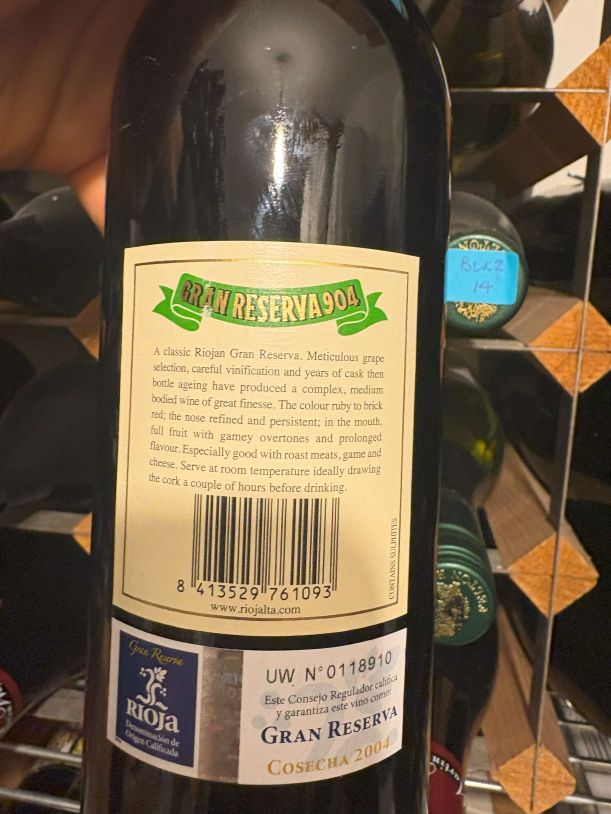
The 10% Graciano in this wine (the rest Tempranillo) adds a perfumed lift to the beautiful aromas and extra freshness on the palate. Although low yielding, late ripening and prone to mildew interest in the grape and plantings have recovered in Rioja and there are some exceptional single varietal bottlings (see our note on Contino).
La Rioja Alta always far exceed the minimum aging requirements set by the DOCA (the highest of the protected origin denominations) in this case after fermentation the wine was matured in old American oak barrels for 5 years and then a further 2 years in bottle before release.
The traditional classification system has come under the criticism that simply aging a wine for successively longer periods, from Crianza to Reserva and finally Gran Reserva, does not necessarily mean that you are getting a higher quality of wine. Also, there an increasing number of Chateau style wineries focusing on wines from a single place, vineyard or grape rather than the traditional approach of blending and barrel aging. This approach is certainly producing some great wines for instance the single vineyard and varietal wines of Contino.
However, the Gran Reserva 904 exemplifies the beauty of the traditional approach. 10 years ago, upon release this wine was already drinking wonderfully with a rich array of primary fruit, secondary barrel flavours and complex tertiary notes from long aging. Today the wine has developed further into something extraordinary.
The nose is a heady concoction of plum, raspberry, cinnamon, and smoke along with dried fruits, leather armchair and moist earth. The tell for me on this wine are the characteristic notes of balsamic vinegar and coconut. On the palate fresh, a mid-weight agile body, fine grained tannins that dust your cheeks and underwrite the still intense fruit. The wine is complex and giving with a superb long finish of dried fruits and wet leaves.
Long may Rioja produce amazing traditional wines like this!
Te Mata Estate is New Zealand’s oldest winery, dating from the early 1890’s. Vines were first planted at Te Mata Estate in 1892. The original three vineyards produce its most famous wines: Coleraine, Awatea and Elston.
It is a New Zealand family-owned winery, based in Hawkes Bay, North Island. John & Wendy Buck have been co-owners of Te Mata Estate since 1978. Te Mata’s wines are renowned as the country’s finest.
They produce a stunning array of red and white wines including Coleraine and Awatea Cabernet/Merlots, Bullnose Syrah, Elston Chardonnay, and Cape Crest Sauvignon Blanc.
Coleraine was first made in 1982 vintage. It is a Bordeaux style wine described by Decanter magazine as “New Zealand’s First Growth”. It is made from their finest selections of Cabernet Sauvignon, Merlot, and Cabernet Franc. It is one of New Zealand’s iconic wines.
We were delighted to welcome Toby Buck, the son of the owner, over from New Zealand. Toby talked us through the history and his family wines.
We had a selection of five wines including Coleraine, served with a three-course dinner in the private room of the award-winning Boca Di Lupo restaurant in Soho.Tickets were priced is £95pp. We had a full house of 32 people.
Te Mata Estate Sauvignon Blanc 2021
Rigatoni with ricotta, broad beans & basil
Te Mata Estate Chardonnay 2023
Tagliata (served on sharing platters) Potatoes garlic & rosemary
Te Mata Bullnose Syrah 2019
Te Mata Coleraine Cab/Merlot 2018
Dessert
Te Mata Estate Gamay Noir 2023
Te Mata Wines Hawkes Bay New Zealand
Some readings of the best wine descriptions of the night
Our first time at Bocca Di Lupo was a great success. The Tagliata (Thin slices of perfectly cooked beef tenderloin) was so good it almost overwhelmed the wines! Te Mata wines lived up to their expectations and previous tastings. Beautifully crafted and immaculately balanced.
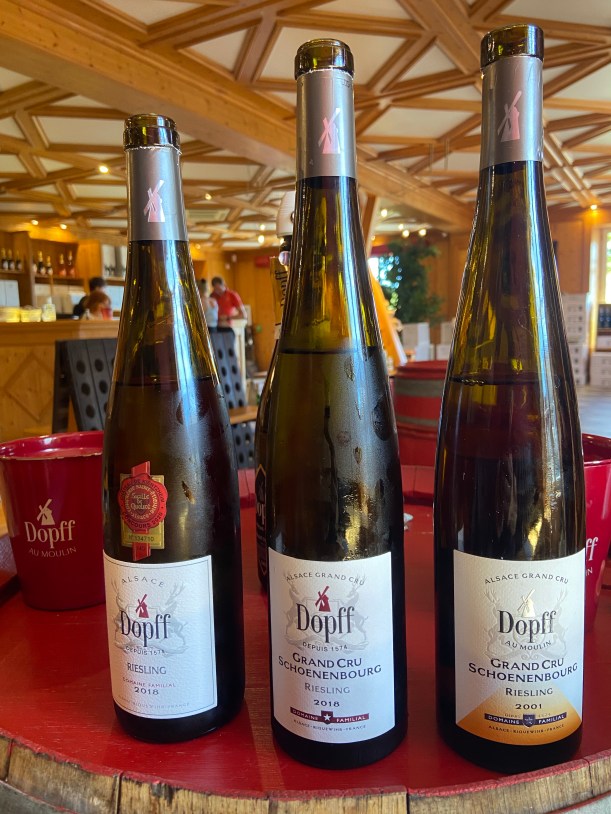
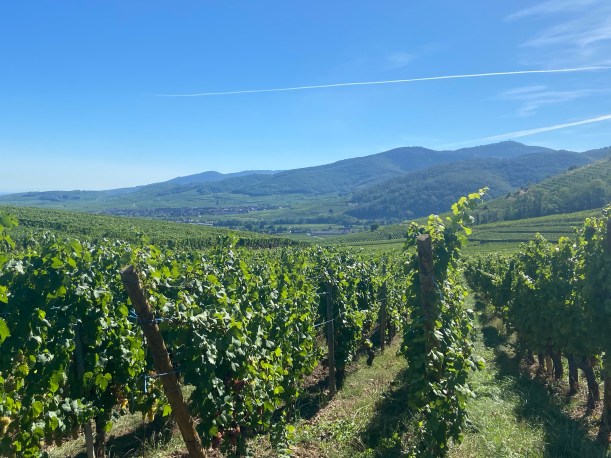
The onset of 2024 has left me reflecting on my inherent Francophilia. This got the better of me towards the end of last year. I had been meaning to visit Alsace for years. It took so long partly because of my preference for red wine and more recently due to Covid.
My favourite varietal though is Gewürztraminer. This is very much a marmite love or hate grape. For me it’s love. The most textured, succulent, floral powerhouse of a wine I’ve ever tasted was a Matawherho Gewürztraminer from Gisborne in New Zealand. It was an early 1990’s vintage tasted at a masterclass with my boss of the time Dr David Durham at his home next to Cloudy Bay, Marlborough New Zealand in 1995.
The 1976 Hugel Gewürztraminer with a nose distinctly reminiscent of cannabis was a highlight of many years of wine tasting.
This grape has mesmerised me since. I also have great appreciation of the other white Alsatian varieties. Well made Pinot Gris is also beautifully textured and aromatic. Riesling whilst not my first go to drink due to its high acidity playing havoc with my gastrointestinal equilibrium is still a wine I highly regard.
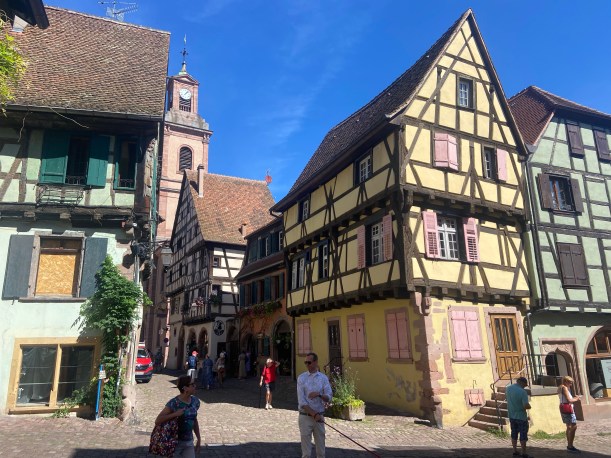
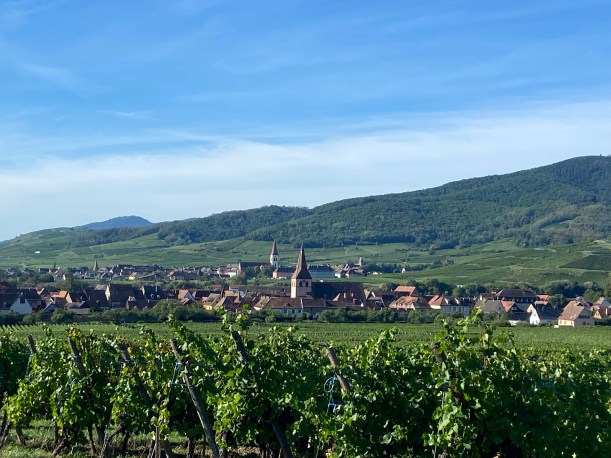
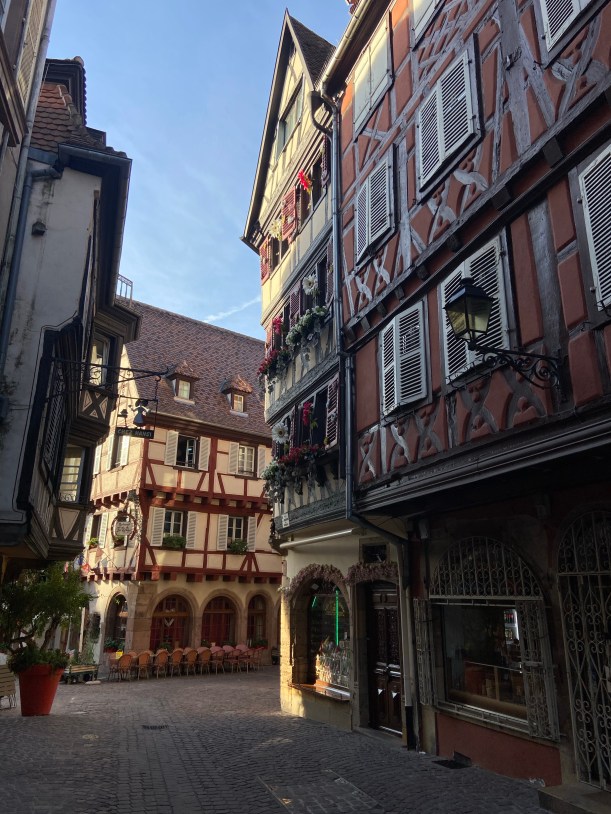
So I finally made it to Alsace, and the wait was worth it. Not only for the wines but for the delightfully preserved chocolate box towns and villages such as Colmar, Riquewihr and Ribeauville. It really feels like an amalgamation of France and Germany as its geography and history suggest.
I stayed in central Colmar at the Hotel Le Colombier. This is very conveniently located centrally and for the electric bike store on the same street. This is an excellent way to explore the region as there are many dedicated wine cycle routes throughout the area.
I wasn’t wild about the food, quite pork base and Germanic. They do an interesting pizza type of thing called a Tarte Flambee in French and FlammeKueche in German.
It was the first day of the Rugby World Cup so the flight was awash with excited fans.
I’d had also long wished to visit Chateau Coutet in Barsac having met Aline Baly on many occasions in London. I’m also a fan of dessert wines, again not everyone’s taste. Aline was in Paulliac but generously arranged the Maitre du Chai, Laurier Girardot to entertain us.
We started in the vineyards surrounding the pristine opulent Chateau.
Laurier discussed the terroir, which is slightly different to Sauternes and a little further from the River Garonne. The style here being a little less unctuous than Sauternes and perhaps less botrytis. They also make a dry white. The wines as ever, were finely balanced, long and delicious with complexity evident in older vintages.
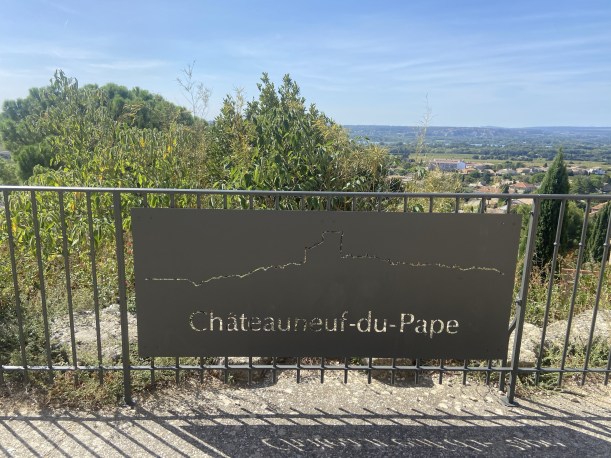
Châteauneuf-du-Pape
Next up a flight to Marseille, en route to another region I’ve longed to visit, Châteauneuf-du-Pape.
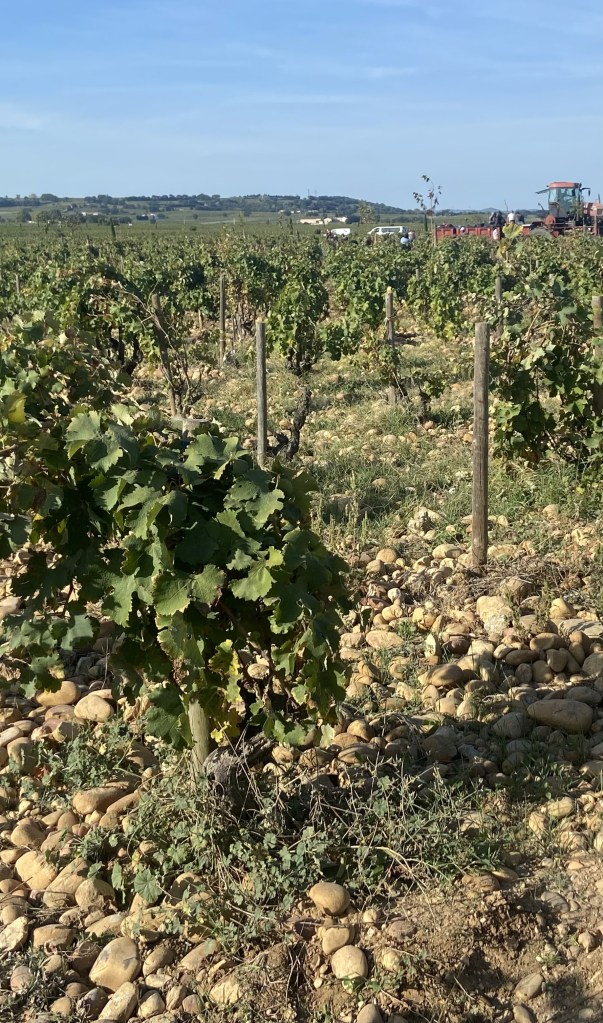
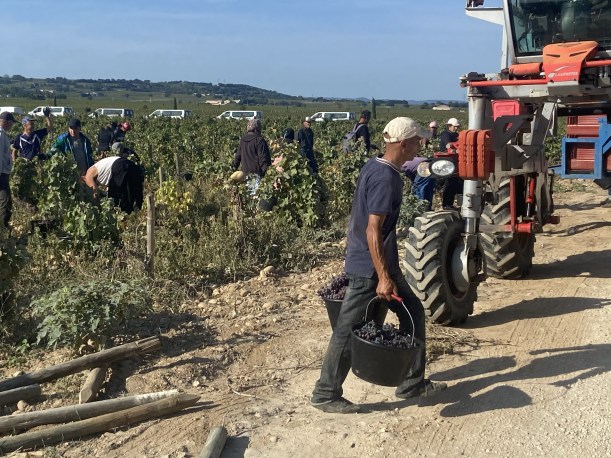
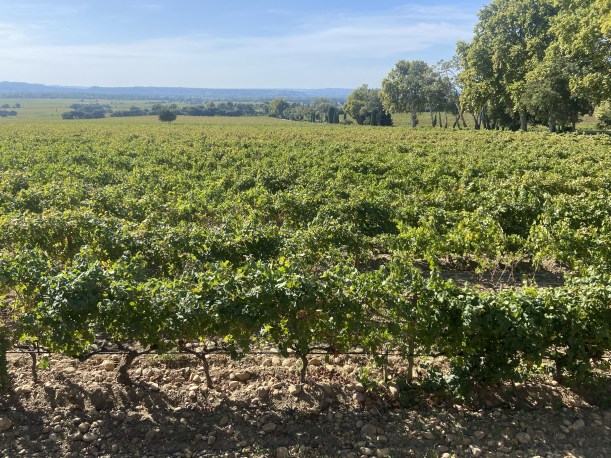
It’s one thing reading about the ‘Galets’ (larger pebbles/ smooth rocks) which are characteristic of the area. it’s another thing to see them. The entire vineyards are literally covered with layers of Galets with virtually no soil evident. These rocks have been washed down from the Alps over millions of years dating to when the area was the bed of the Rhone river.
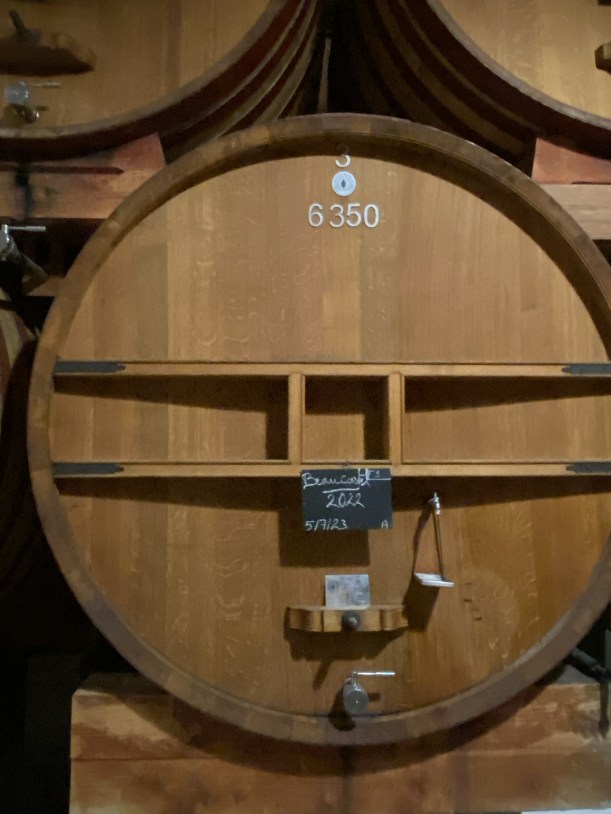
Beaucastel were in the midst of the most fascinating new build. They had a competition amongst world renowned architects who tendered for the job. It was finally won by and Indian based firm. In keeping with Beaucastel organic and biodynamic sustainability, the new structure is being built with products of excavation.
The excavated earth for the new cellar is gently crushed and then taken to a large vertical mold and compressed. This creates the large slabs to build the new winery. It already looks amazing and effortlessly blends in with the environment.
We tasted the 2008 and 2019 Beaucastel and also a 100% Roussane of which little is made. The wines as expected were spotlessly balanced and full of fine grained tannins.
I was impressed by the Chateau Mont Redon range, especially with their most moderately priced Lirac which is full of fruit but also has a lovely mouthfeel. I have been buying en primeur Mont Redon from the wine society for many years.
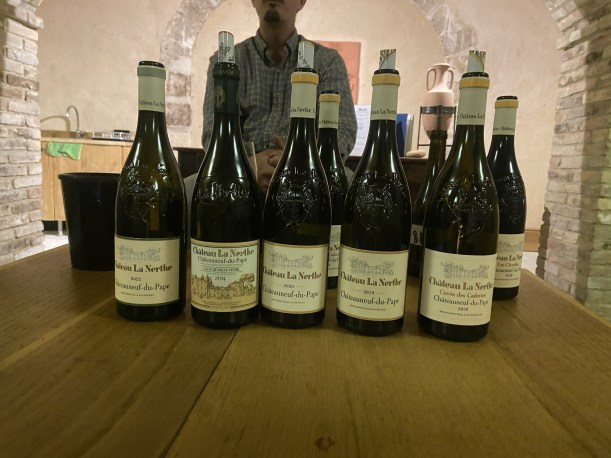
Final visit of the day was to a very welcoming and passionate Antoine at Chateau La Nerthe.
He gave us the historical background. There have been grapes here since Roman times. More recently they were one of the pioneers of the Appelation Controlle system
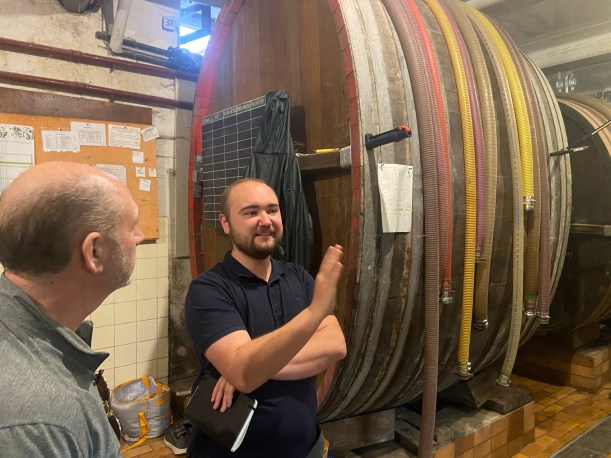
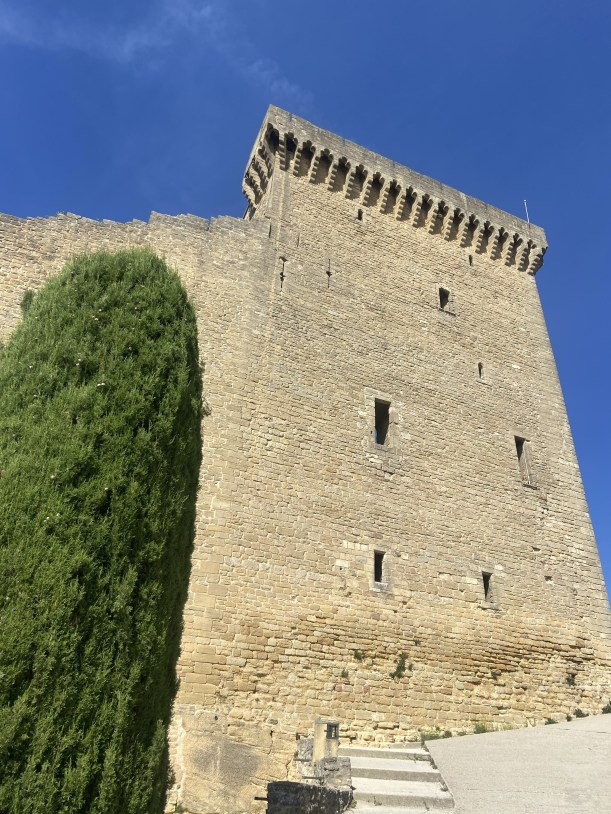
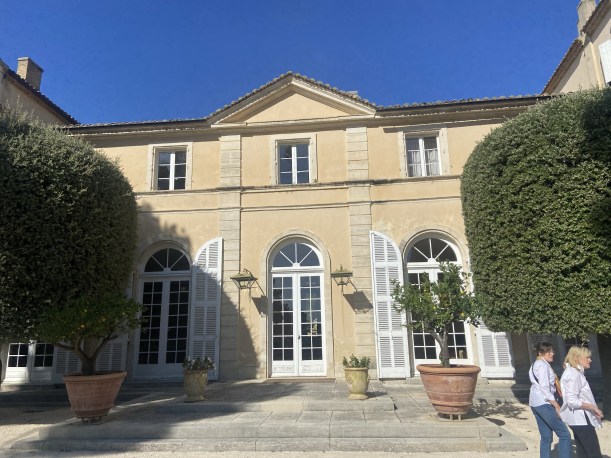
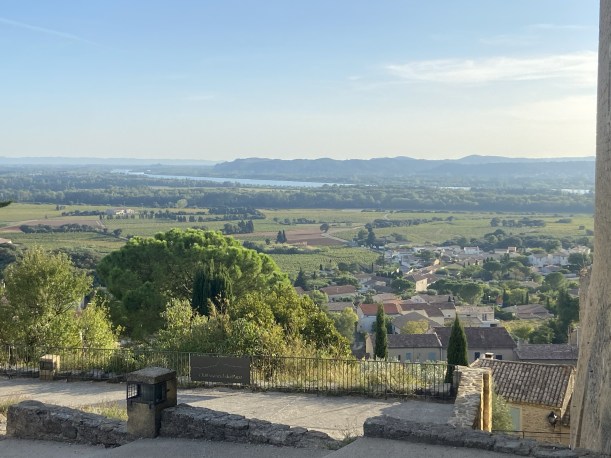
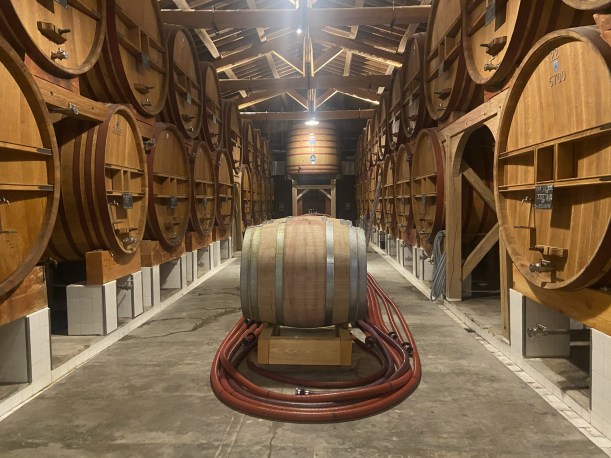
This a stunning chateau with views reaching far and wide. We toured the cellars and we were lucky enough to witness a live ‘remontage’ and sample 4 day old Mourvèdre from the tank. It was surprisingly delicious given its age.
Wine tasting here can be a little confusing as 13 grape varieties are permitted.
6 white grape varieties: Grenache blanc, Clairette, Roussanne, Bourboulenc, Picpoul and Picardan. Grenache blanc, a mutation of Grenache noir, is the most commonly used grape variety. Red grapes: Grenache, Syrah, Mourvèdre, Cinsault, Vaccarèse, Terret, Counoise, Muscardin.
We tasted a range of their wines including
Château la Nerthe 2014 Clos de Beauvenir – it had an oxidised nose, almond, nice freshness and texture Good food wine
Château la Nerthe Barrel sample, Syrah amazing for only 4 weeks old! Full of fruit Soft tannins Delicious!!!
2020 Château la Nerthe Châteauneuf du Pape 25% Mourvèdre, Balanced, good year, plenty of fresh fruit alcohol well integrated
2019 Château la Nerthe Châteauneuf du Pape . 35 %Mourvèdre Syrah 31 %Grenache 33 % about a third each A bit more serious than 2020 and probably need more ageing to develop complexity
2020 Château la Nerthe Châteauneuf du Pape Cuvee des Cadettes which is made from their best grapes 9.000 bottles only GSM blend
2019 Château la Nerthe Châteauneuf du Pape Cadettes 55 % Mourvèdre floral earthy savoury serious big wine.
Antoine then brought out a blind wine which I immediately described as Pinotesque. I was happy to be correct in my deduction that it was one of their very limited production 100% Grenache.
This tasting was one of the highlights of many years of different wine trips. Thanks to @bossofthewine, Bruce Baldinger and the New Yorkers. We had serendipitously met them on the tour of the old Synagogue in Carpentras the day before and tagged along to this visit.
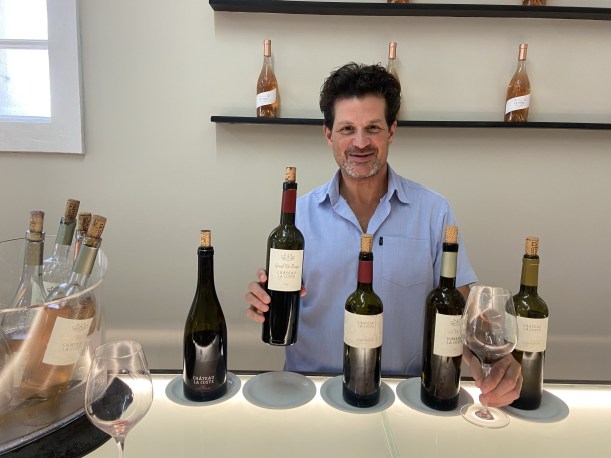
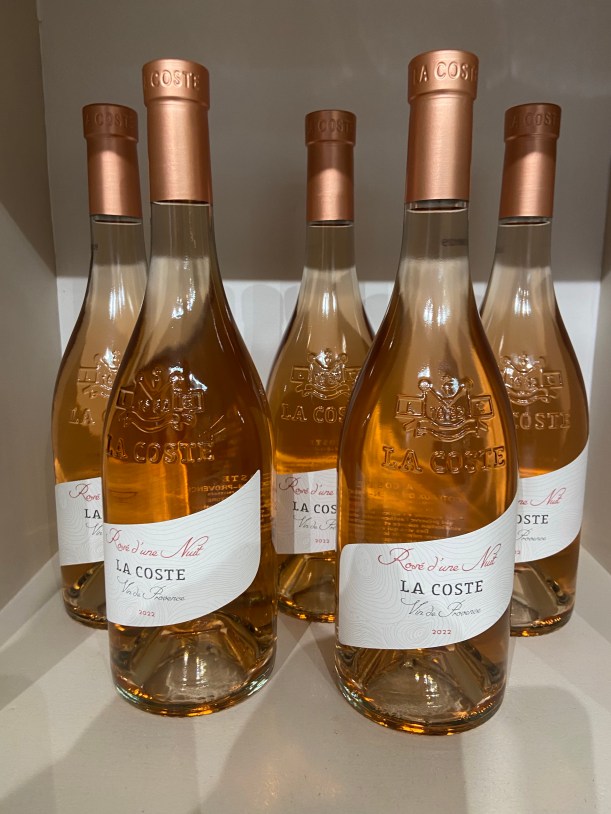
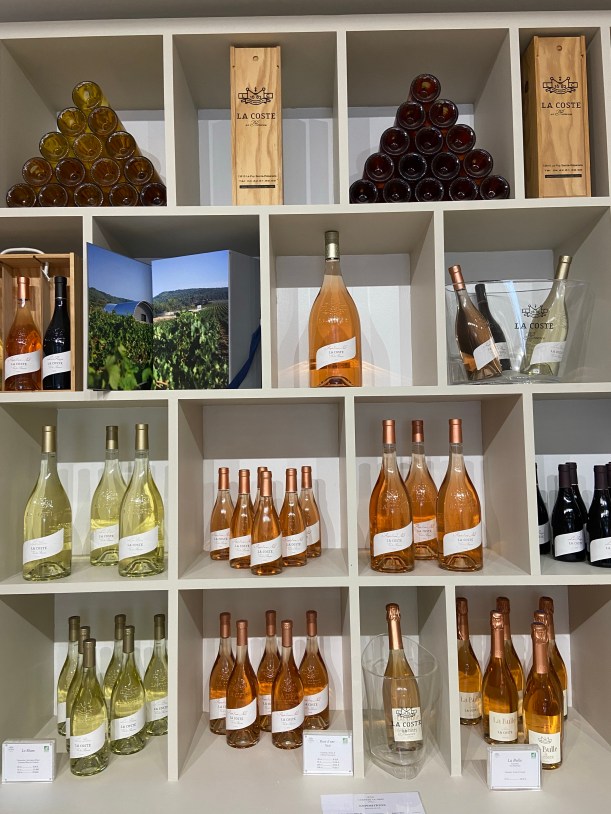
Finally I must not forget the opulent Chateau La Coste in Provence. It was a short drive south from our accommodation in Lourmarin through the beautiful countryside towards Aix en Provence near the village of Le Puy-Sainte – Reparade.
This is a real destination owned by Irish property magnate Paddy Mckillen. It has its own art and architecture walk, 600 acre sculpture park, a luxury hotel Villa La Coste multiple very high end restaurants and excellent wine.
Despite the breadth and depth and quality of wines across the world, there’s nothing quite like returning to La Belle France!
En Primeur, the sale of wines as futures, was until a few years ago a method of sale for premium Bordeaux and Burgundy but now it is increasingly being used for fine wines from other regions.
In this tasting the wines are pre-release but not by much. Brunello di Montalcino must be matured for a minimum of 5 years, including at least two in barrel, before being released to the market. These wines are already in bottle, rather than barrel samples and due out in 2025. So this EP seems to be more about marketing and to generate some expert reviews and promotional activity amongst the merchants.
For the customer the days of buying a future wine to help the wine makers cash flow and enjoying a slight discount in exchange are largely long gone. Now EP seems to be more about securing an allocation of rare or prestigious wines.
Brunello di Montalcino is a DOCG south of Siena within Tuscany. It is warmer and drier than Chianti producing more powerful concentrated expressions of Sangiovese. Its not far from the coast so parts receive some cooling breezes and inland the beautiful rolling hills provide a little elevation. Both of these factors help slow ripening down, which helps develop flavour and maintain freshness in the wines.
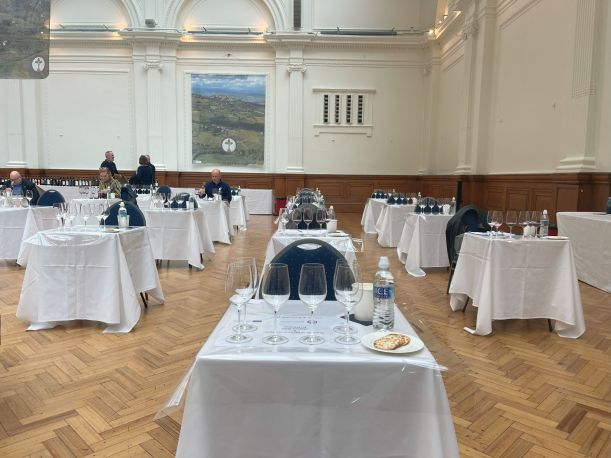
The seated format of the tasting was actually brilliant, no juggling of glass, catalogue (or e-catalogue on your phone) pen and pad, and no elbows required to push through the usual scrums that form around the popular tables – bliss!
It reminded me of how much I like Brunello and I was impressed by how approachable many of the wines were already on release. However with high acidity, fine sandy tannins and that concentrated red fruit they promise much more to come with bottle age. Many displayed classic sour cherry, dusty soft red fruits, bay leaf, dried herbs and a hint of black tea.
It was great to try and compare and contrast the impact of different soil types, those with more clay seeming to display riper fruit. Also to contrast the effect of using either Slavonian or French oak casks. Whilst the French oak did add a layer of spice and sometimes subtle toast, none of the wines I tried seemed overdone.
Of the many great wines on show a few stood out to me:
Argiano BdM – Lovely nose, balanced with a nice touch of spice.
Banfi Vigna Murrucheto BdM – Concentrated fruit and subtle toastiness.
Capanna BdM – Classic sour cherry, black tea and touch of wet stone.
Col d’ Orcia BdM – Intense riper red cherry and plum, dried herbs, bay leaf and a nice dusty finish.
Col d’ Orcia Poggio al Vento Riserva 2016 – Concentrated pot purri, raspberries, sour cherry, black tea, smoke and leather, super long.
Sesti BdM – Consistently fine, roses, sweet cherry, cranberry, dried oregano, black tea and freshly turned soil, amazing concentration.
Sesti Phenomina Reserva 2018 – Knock put too!
Uccelliera BdM – A big wine but still fresh with rich cherry tart, roasted herbs and a bit of toast.
Many thanks to Hunt and Speller and Consorzio del vino Brunello di Montalcino for organising this great tasting and providing so much interesting information about the wines in the catalogue.
By the way don’t forget the Rosso di Montalcino category of wines too. Supposedly entry level but many of the top estates produce what are effectively baby Brunello’s which represent great value for money and can be enjoyed sooner.
Rutherglen Muscat is one of the wine world’s most distinctive and underrated treasures, and Stanton & Killeen’s Classic 12-Year-Old is a fine example of the style at its most expressive and poised.
This wine is made from a unique local mutation of Muscat à Petits Grains Rouge, commonly referred to as Rutherglen Brown Muscat. Harvested in passes over several months to give a mix of fresher and shrivelled and sugar-laden berries, the grapes are crushed and start fermentation on the skins. Once enough flavour has been extracted it is fortified with grape spirit, halting the process and preserving intense natural sweetness. From there, the wine enters a slow, warm maturation process, typically in old oak barrels housed in tin sheds exposed to Victoria’s sweltering summers and cool winters. Over many years, this environment promotes oxidation and concentration, developing the deep, caramelised, nutty and savoury complexity for which the style is known. Each component is carefully blended from solera-like systems to achieve harmony and depth in the final multi vintage wine.
Image by Stanton & Killeen
In the glass this wine is deep brown, almost mahogany, with a faint greenish glint at the rim, a quiet visual reminder that, despite its richness, this is technically a white wine. The nose has dried rose petals and potpourri, cooked apple, and layers of warming spice, cinnamon, nutmeg, even a touch of savoury soy. From there it deepens into a swirl of sticky dates, fig, raisin and brown sugar, underpinned by a rich seam of chocolate, caramel, and toffee.
On the palate, the wine is full-bodied and unmistakably sweet, though a brisk, well-judged acidity keeps everything in check. It’s intensely flavoured, concentrated and unctuous — a wine that seems to coat the tongue but finishes clean and long, echoing its medley of dried fruits, spices and oxidative notes. The alcohol is moderate by fortified standards, and neatly integrated.
This is an extraordinary wine not just for its complexity and texture, but for the way its elements are held in such fine balance. It’s layered, richly flavoured and confidently made, delivering depth without heaviness, and showcasing the unique aged style that Rutherglen delivers.





























 WanderCurtis Wine