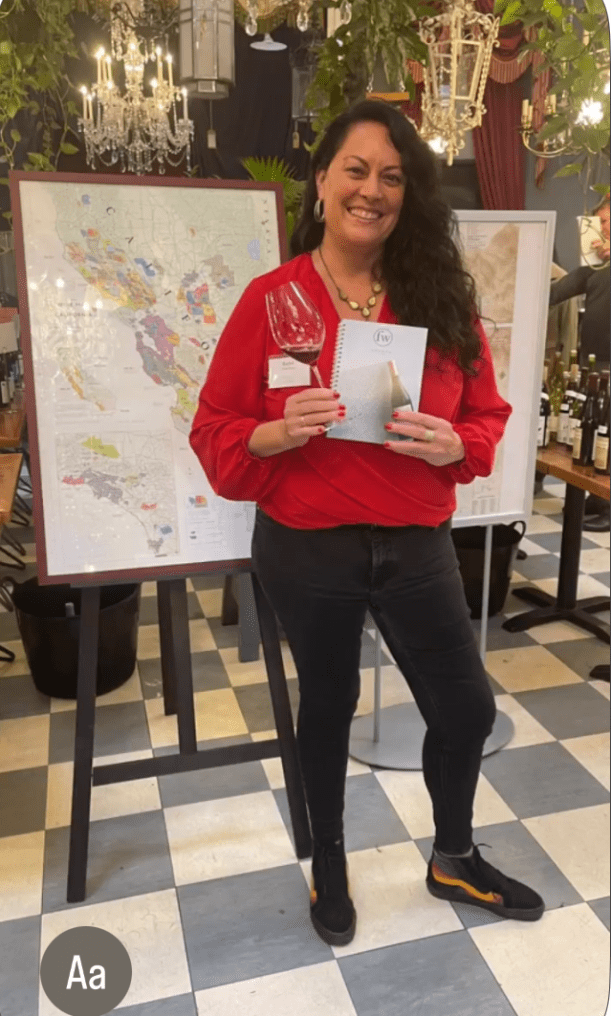
Flint Wines have a comprehensive portfolio of wines from the USA and to support a recent portfolio tasting they have put together an amazing American tasting booklet. It is packed full of maps, descriptions of each AVA’s character, climate, aspect, soils and detailed winery profiles.
Quality grapes in California are very much a product of one or more factors in the vineyard that moderate the otherwise warm climate. The cold Pacific sends cooling breezes and overnight fog far inland along the State’s various east west valleys that cut through the coast mountains and of course San Fransico Bay itself. Also vineyards planted at altitude on these mountain slopes also enjoy cooler nights.
Grapes as a result ripen more slowly, developing flavour and retaining more acid giving the wine maker lots of good material to work with. Growers of Pinot Noir, Chardonnay and even Syrah are particularly on the lookout for cool climate pockets. It was great to be able to visualise all this with aid of these maps.
The tasting was organised by region which allowed you to travel from one AVA to another comparing and contrasting and really see how wine makers are responding to the changing conditions.
Hats off to Rachel Dixon their USA Ambassador, who’s mission to educate about wines of American is certainly working!
For me standout wineries included:
Chanin Wines – Chardonnays & Pinots from Los Alamos, Santa Maria Valley
Christom Vineyards- Chardonnays & Pinots from Willamette Valley, Oregan
Tyler Winery – Chardonnays & Pinots from Santa Rita Hills, California.
Snowden Vineyards – Sauvignon Blanc & Cab Sauvignon from Napa Valley, California.
Greece’s wine story is ancient, its golden age between 500–300 BCE saw Hellenic culture and viticulture spread across the Mediterranean. Wines were often infused with pine resin, herbs or honey, more for preservation than flavour. But centuries of upheaval, from Roman rule to civil wars, meant Greek wine lost ground. Until fairly recently, it was largely defined by Retsina. However, since the 1980s, quality-driven estate bottlings have steadily redefined the landscape. Today, with rising exports and a growing reputation, Greece is quietly producing some seriously characterful and delicious wines.
The country’s geography plays a vital role. A warm Mediterranean climate dominates, though elevation and coastal influences bring vital moderation. Summers can be punishingly hot; Santorini, for example, sees as little as 200mm of annual rainfall. Inland regions swing to harsh winters, while strong island winds can challenge growers.
Greece’s mountainous terrain and low-fertility soils yield naturally limited, quality-focused harvests. Many international varieties are also grown which are still favoured by the domestic market. But around 90% of vineyards are planted with indigenous varieties, some 300 in total, many with real identity and resilience.
Assyrtiko, originally from Santorini, is a flagship white, prized for its tension between ripe fruit and taut acidity. Savatiano and Roditis are widely planted; when grown with care, they offer surprisingly refined expressions. Moschofilero and Malagousia add aromatic flair and freshness.
Among reds, Agiorgitiko is versatile and plush-fruited, while Xinomavro, from Macedonia’s Naoussa PDO, is more structured, with a profile not unlike Barolo.
Increasingly mainstream, Greece is now firmly on the map for thoughtful drinkers seeking something distinct, grounded in tradition, yet confidently modern.
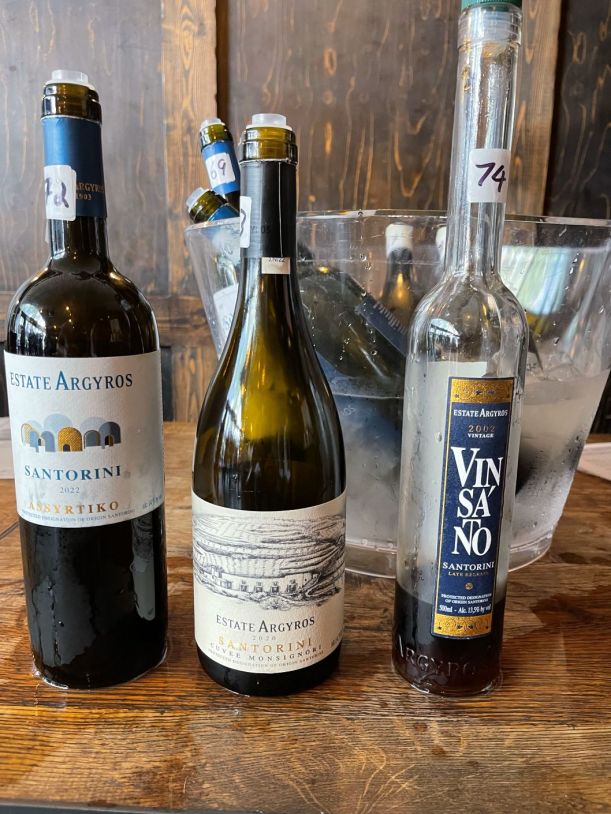
I was delighted to find an old favourite the Argyros Estate Assyrtiko 2020
Made from a blend of vineyards with 100 year old vines, the wine spends 3-4 months on lees. On the nose, stone fruit, sea air and an undertone of herb; tarragon or cut grass. The fruit is ripe, there is cooked lemon with a salty tingling long finish in the mouth. The body is full and acidity bracing. This wine is made for food especially Greek dips, fetta and grilled fish. Delicious.
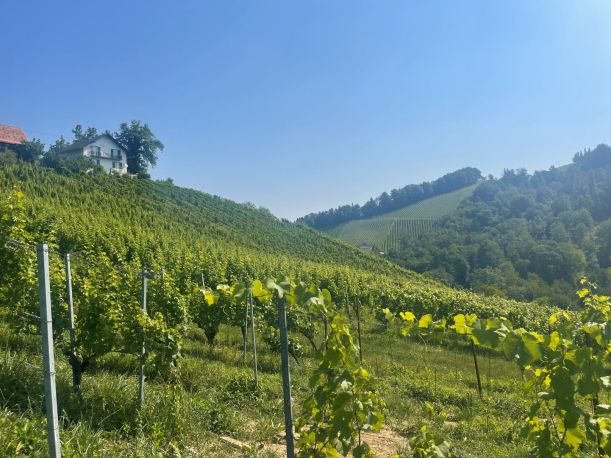
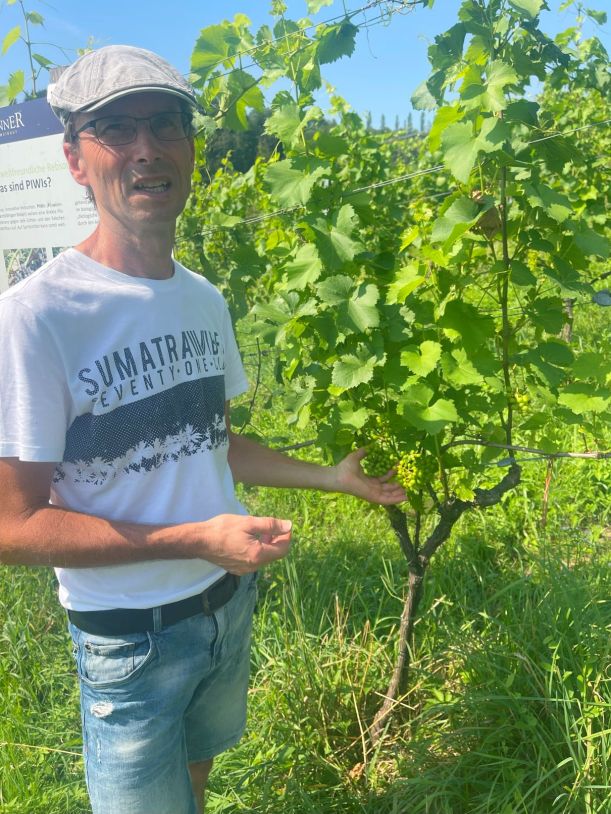
At BioWeingut Karl Renner, nestled in the rolling hills of Pössnitz in the Südsteiermark, sustainability is at the very heart of everything they do. For Karl and his family, who have stewarded this land since 1966, the focus is clear: create wines of character with minimal intervention, and protect the land for future generations.
But even for the most committed organic growers, nature presents challenges. Karl points to oidium and downy mildew as the most persistent threats to viticulture in the Südsteiermark. These fungal diseases, brought to Europe in the 19th century, remain the main reason why vineyards, even organic ones, require frequent treatments. In some seasons, up to 20 copper sulphate sprays are needed to try and keep disease at bay. “It’s too much,” says Karl. “It leaves copper in the soil which builds up over time.”
That’s why Renner is turning toward PIWI or as he calls them “next generation” varieties, fungus-resistant hybrids bred to thrive with far fewer treatments. Since 2011, he’s been gradually replanting his vineyards with these innovative grapes, which make organic viticulture not only more effective but also more appealing for wider adoption in the wine industry.
The four main PIWI varieties Karl works with are:
Muscat Bleu – A mid-budding, early-ripening variety, Muscat Bleu is highly aromatic and serves as an early indicator in the vineyard: its berries turn a vivid blue before ripening to black. This allows Karl to closely monitor ripeness progression in the vineyard.
Chardonel – A hybrid of Chardonnay and Seyval Blanc, first developed in New York in 1953, Chardonel delivers both structure and finesse. It captures the familiar elegance of Chardonnay but thrives under organic management.
Souvignier Gris – A cross between Seyval Blanc and Zähringer, Souvignier Gris is one of Karl’s standout performers. It ripens later and retains excellent acidity. It also has some frost resistance.
Muscaris – This cross between Solaris and Gelber Muskateller produces an early-ripening, highly aromatic wine. Muscaris stands out for its expressive floral and spicy notes, making it useful for both varietal bottlings and blends.
These varieties are allowing Karl to dramatically reduce chemical inputs. Where conventional or even organic growers might spray upwards of 15–20 times per season, Renner’s PIWI vines typically need only 2–4 treatments. That reduction means less soil compaction from tractors, lower CO₂ emissions, and healthier microbial life in the vineyard. Cover crops further enhance soil structure and biodiversity, especially on the estate’s steep slopes.
In the winery there is a lot to learn, the wine making knowledge for the varieties traditionally grown; Sauvignon Blanc, Morillon (Chardonnay) and Pinot Blanc, that has been accumulated over generations must be learnt anew for this New Generation of varieties. Karl is experimenting with skin contact, barrel ageing, and unfiltered bottlings to explore the full potential of these newer grapes. He’s also trialling blends that include both PIWI and traditional varieties, giving wine drinkers something familiar while showcasing the potential of these robust hybrids.
Tasting notes:
Thirsch Chardonel 2020
Thirsch: historical name of the farm. First vintage 2011, still experimental.
Aged 2 years in barrel for stability.
Smoky, orange peel, peach, apricot, herbal and nutty notes.
Fermented on skins: Muscaris 2–3 weeks, Souvignier Gris 3 months.
Separate harvest dates.
Pear, banana, cider notes.
Slightly grippy mouthfeel, long finish.
At Weingut Renner, the message is clear: PIWI varieties represent a practical, scalable solution for making organic viticulture more successful. As climate change, disease pressure, and sustainability demands intensify, Karl’s approach offers a compelling model for other growers — not just in Austria, but across Europe and beyond.
As wine drinkers are we ready to expand our horizons and discover these new wines? Natural wines have found an audience, why not “next generation” varieties too?
At this year’s bi-annual Austrian wine tasting in London Adam & I came across the charismatic Marion Ebner-Ebenauer of Weingut Ebner-Ebenauer and their wonderful range of wines. The Weinviertel is Austria’s most northern region, an expansive, windswept area that borders the Czech Republic. There is a lot of variation in soils and climate across the region and historically it has a reputation for easy drinking characteristically peppery Grüner Veltliner, falling rather in the shadow of the Danube regions like the Wachau. However it looks like Ebner-Ebenauer are well on the way to demonstrating just what serious age and worthy wines the region is capable of producing.
At the helm of this historic family estate are Marion and Manfred Ebner-Ebenauer, their winery, based in the town of Poysdorf, has been producing wine for over 400 years.
The backbone of their philosophy lies in single-vineyard bottlings that aim to reflect the unique voice of each plot. Their 20 hectares are scattered like puzzle pieces across a patchwork of soils, originally a safeguard against hail, now a key asset with some of these vineyards boast old vines over 70 years of age.
In the vineyard, everything is farmed organically, with grapes picked entirely by hand at optimal ripeness. Careful handling, minimal oxidation, and small harvest bins preserve the clarity and integrity of the fruit.
Down in their 400 year old cellar, a low-intervention approach prevails with wines fermenting spontaneously. Alongside the single vineyard wines they make a range of cuvées called the Black Edition which includes a Grüner Veltliner, using extended skin contact and fermentation in barrique to coax out texture and complexity.
Their méthode traditionelle Sekt, aged on lees for years and disgorged only when truly ready, has been turning heads abroad, winning international awards for its finesse and depth.
A quick search of the web and social media and Ebner-Ebenauer crop up repeatedly, this an image savvy couple who make great wine in a great way, what’s not to love?
Founded in 1776, Boekenhoutskloof can be found way down the scenic Franschhoek valley. The farm’s name means “ravine of the Boekenhout” (pronounced Book-n-Howed). Boekenhout is an indigenous Cape Beech tree greatly prized for furniture making. Hence the 7 wooden chairs that the wine labels feature.
As with many wineries there was a change of ownership and reboot in the early 1990s and new vineyards were planted including Syrah, Cabernet Sauvignon, Cabernet Franc, Grenache, Semillon and Viognier.
The winery also produces a number of brands: Porcupine Ridge, The Chocolate Blick, The Wolftrap. Producing 7 million bottles a year it is one of the biggest wineries.
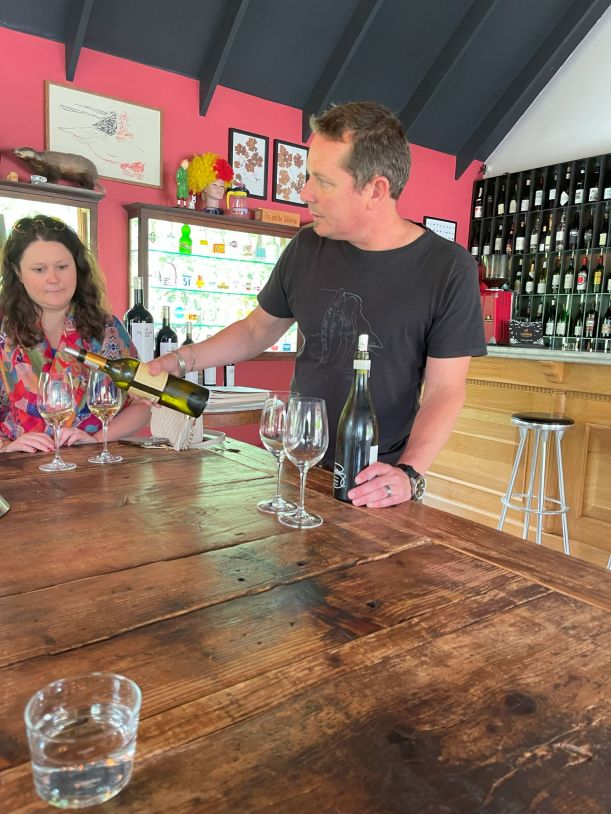
One needs to book about 6 months in advance to visit and taste at the estate but it quite a special experience hosted by Godfried Mocke the wine maker in Franschhoek.
Godfried explained that they now have vineyards in Swartland home of the famous Porseleinsberg Syrah, for Rhone varietals. The grow Cabernet Sauvignon in Franschhoek and Stellenbosch and Semillion in Franschhoek. They’ve set up a fairly new venture to grow and make Burguindian varieties in Hemel en Aarde called Cap Maritime.
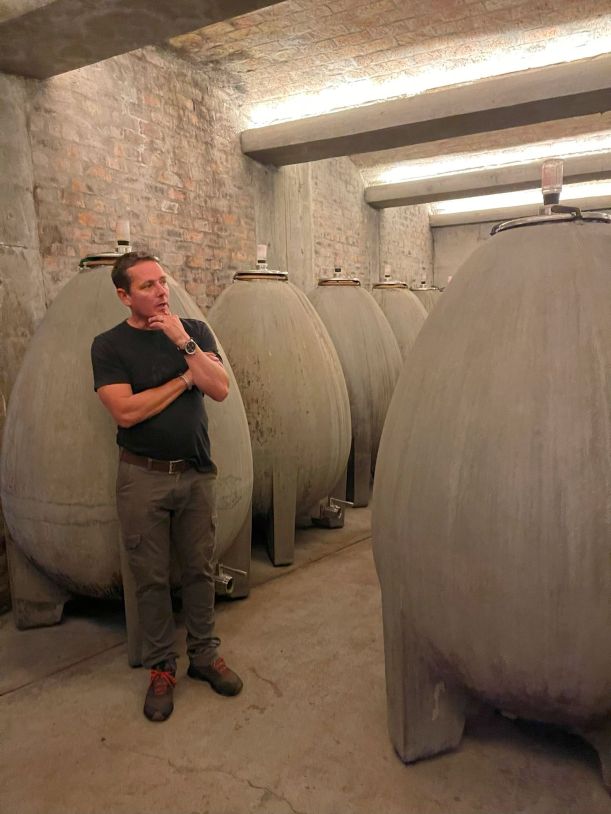
A tour through the winery revealed further details of their approach to wine making. They generally let wild yeast take care of fermentation. For red wine the concrete vessels used have rough surface that encourages a flora of yeast and so the cellar itself imparts a particular character in the same way that a cheesemakers cellar does. A part of the terrior.
Concrete eggs are used to ferment the whites, the egg shape makes vortex which moves wine around, stirring the lees and it is also gently oxidative too.
However they often ferment some in barrique and blend to achieve the final wines.
Boekenhautskloof are also using amphora made of clay fired at high temperature so this format doesn’t breath they use it for muscat.
Reds are matured in barrels. Large Foudre for Syrah to slow oxidation. Barrique for the Cabernets.
Interestingly Boekenhautskloof do not acidify their wines which is actually widely practiced to achieve balance in the wines of South Africa.
Tasting notes:
Cap Maritime 2020, Chardonnay Hemel en Aarde
Creamy, toasty, smoky with citrus zest. Great balance, full but firm body, nice structure, long.
Semillon 2019
Made from old vines the youngest planted in 1942 which are more resilient to the droughts recently experienced. Bit of polish, wax, bit of smoke, pleasant petrol aroma. Nice elastic mouth feel, baked lemon, slightly salty tang, some smoke. Capable of bottle aging and developing great complexity. Think Hunter Valley.
Cap Maritime Pinot Noir 2020
Difficult year not much energy to ripen so needed whole bunch to give a lift. Cherry, green herbs. Sweet red fruit, good lift medium body.
The Chocolate Block 2021 (1 M bottles!)
Made from 5 varieties the lend percentages always shift and change. Blind tasted to pick best but will always reflect the vintage characteristics.
Mix if red crunchy berries, dark black current then brambles, a touch of vanilla. Good balance, structured, high acid, medium body, clayey tannins present. Fruity with a tough of menthol. Med length.
Syrah 2019
Grown on blue schist in Swartland. Nose of crushed raspberries, blueberries, light spice. Fruit forward creamy texture, clove ripe fruit finish. Long.
Cabernet Sauvignon 2017
Stellenbosch fruit. Dark fruit, iodine and black current. Ripe fruit, lots of nice powdery tannin. High acid, dry savoury finish.
These are amazing age worthy, high quality wines representing superb value!
Nestled on the slopes of Simonsberg Mountain, Kanonkop Wine Estate is a proud custodian of South African winemaking heritage. Now in the hands of fourth-generation brothers Paul and Johann Krige, the estate produces around three million bottles annually, with sales evenly split between domestic and international markets. Known exclusively for its red wines, Kanonkop champions two hero grapes: Cabernet Sauvignon and Pinotage. The estate’s flagship wines are meticulously matured in French oak barrels, incorporating a portion of new wood to enhance complexity and elegance.
The Kadette range, meanwhile, showcases fruit sourced from 30 local farmers, with Kanonkop’s own viticulturalist overseeing the growing process to ensure quality and consistency,. The estate traces its name to a nearby hill (or kop) where, in the 17th and 18th centuries, a cannon (kanon) thundered to signal the arrival of ships in Table Bay. This booming call once rallied local farmers to race their wagons to the harbor, laden with fresh produce.
Since bottling its first wine in 1973, Kanonkop has become a benchmark for South African reds, carrying forward the legacy of the visionary Paul Sauer.
Tasting notes:
Kadette Range – A Young soldier ready for action!
Kadette dry Pinotage rose 2022
Short skin contact, blush colour and burst of floral notes.
50% Pinotage plus Cabernet Sauvignon and Cabernet Franc, 14% ABV.
Nice brambly nose with a bit of smoke, an inky note and touch of vanilla.
Lovely juicy fruit, fullish body but good lift and spicy finish, good length.
Pinotage 2020 14%
100% Pinotage 14% ABV. Really sweet red and black berries, touch of vanilla.
More fruit on palate, soft chewy tannins, medium acidity, good length. Slight herbal finish. Very tasty
Cabernet Sauvignon 2020 14%
Classic blackberry and black currant leaf on the nose.
Nice dry fruit, herbal, savoury, nice grainy tannin, medium length. Lovely and great value.
Estate wine Pinotage 2020
Old vineyards with 60 year old bush vines. Pinotage is dry farmed
Matured in 80% new oak. Classy barrel room notes of toast and spice.
Lovely balance, and structure, brambly fruit, coffee notes, lots of length.
Estate Cab Sauvignon 2020
Classic blackcurrant leaf and whiff of smoke.
Blackberry is ripe but not over ripe ,mineral notes, very fine ripe tannin, lingering length. Long savoury finish!
Estate Paul Sauer 2020
70% Cabernet Sauvignon, 15% Merlot and 15% Cab Franc. Matured in 100% new oak for 2 years.
More of everything. Black plum, coco powder and spice.
More talcum powdery ripe and super soft tannins. Lovely rounded fruit breadth. Very long.
In recent years Kanonkop have experienced very consistent vintages harvesting at same time of year but it is always a race against time to harvest everything as it ripens all at once. They have not apparently noticed much effect in terms of global warming.
The Willamette Valley is Oregon’s most celebrated wine region, renowned for producing world-class Pinot Noir, Chardonnay, and Pinot Gris. While vines were planted in the region as early as the 19th century, modern winemaking began in the 1960s, when pioneering wine makers like David Lett of Eyree Vineyards took a risk on the marginal climate as a place to grow Burgundian Pinot Noir. Today, the region is home to over 700 wineries, the majority of which are small, family-owned estates dedicated to sustainable farming and minimal-intervention winemaking.
The Willamette Valley benefits has warm summers but cool air is drawn in from the Pacific through gaps in the coast range, altitude can also provide cool nights further extending the growing season. Rainfall is concentrated in winter and spring, allowing grapes to ripen slowly and develop complexity while retaining natural acidity. The valley’s diverse soils, ranging from ancient marine sediment to volcanic basal, further enhance the character of the wines, contributing to their depth and sense of place.
Clonal selection has proved to be key to successfully growing both Pinot Noir and Chardonnay and once the move was made away from those suitable in California to mainly Dijon clones both varieties have thrived. Pinot Noir yields wines of elegance and balance, often marked by red fruit, floral aromatics, and earthy minerality. Chardonnay, once an afterthought, has emerged as a serious contender, showcasing crisp acidity, restrained fruit, and a Burgundian sense of structure. Pinot Gris, also gets a look in.
The Willamette Valley AVA encompasses several smaller sub-AVAs, each with distinct characteristics.
Dundee Hills: The birthplace of Oregon Pinot Noir, this region is slightly warmer and has red volcanic soils that retain water through the growing season and advantage as water is scarce and most smaller wineries dry farm.
Eola-Amity Hills: Cooled by coastal winds through the Van Duzer Corridor.
Yamhill-Carlton: Defined by a south facing bowl formation and free draining marine sedimentary soils.
Ribbon Ridge: A tiny but highly regarded AVA on 200m high ridge.
Chehalem Mountains: A varied region at the north end of the valley with the largest area of plantings.
Van Duzer Corridor AVA: A break in the coastal range makes this one of the coolest and windiest areas.
A recent tasting organised by the Oregan Wine Board at the American Embassy provided a great chance to sample the excellent wines being produced in Willamette Valley and the wider Oregan region. Although it was hard to discern clear sub-regional characteristics from this sample, there were many wines of great quality and individuality and many passionate and engaging winemakers presenting them.
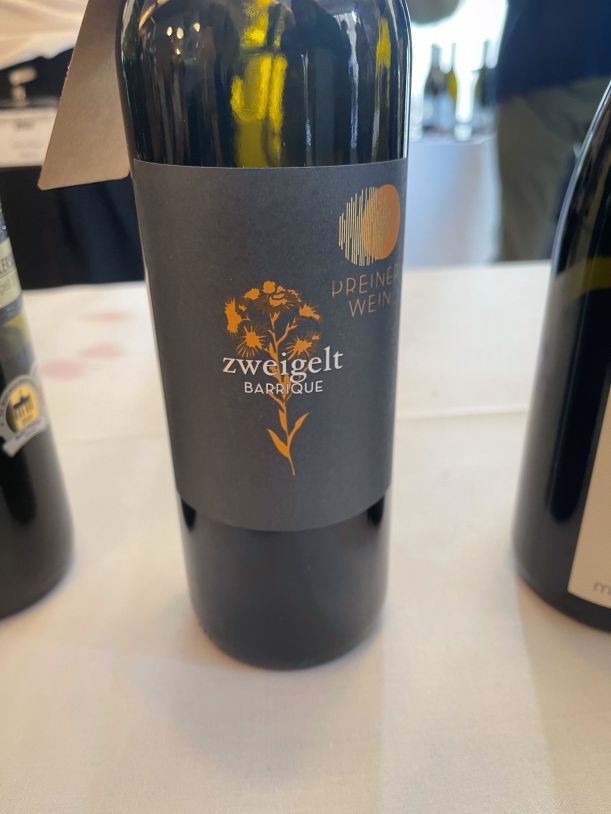
A recent lunch and tasting organised by the DAC showcased the wines of the region with the aim of promoting Zweigelt as the leading grape for producing red wine in the area.
Neusiedlersee DAC is located in Burgenland, near the Hungarian border. It surrounds Lake Neusiedl, a large, shallow body of water that significantly influences the local climate. The region has a long winemaking history and became a DAC (Districtus Austriae Controllatus) in 2012, specifically red wines made from Zweigelt and sweet wines made with Welschriesling.
The lake acts as a heat reservoir, moderating temperatures and reducing the risk of frost. The Pannonian climate brings hot summers, mild winters, and long, sunny autumns, ideal for ripening grapes. Humidity from the lake also fosters noble rot, making the area famous for its sweet wines.
Zweigelt is the dominant grape variety, producing structured, fruit-forward red wines with vibrant cherry and spice notes. Other varieties, including Blaufränkisch, St. Laurent, and international grapes, are also grown. Winemaking practices emphasize ripe fruit expression, often employing modern techniques such as stainless steel fermentation and oak aging. The resulting Zweigelt wines span the range from youthful and juicy to complex, barrel-aged styles with depth and longevity. In addition to reds, Neusiedlersee is known for its luscious botrytized sweet wines, particularly Ausbruch and Beerenauslese.
Zweigelt, Austria’s most planted red grape, was created in 1922 by Dr. Fritz Zweigelt through a cross of Blaufränkisch and St. Laurent. It is popular among growers due to its adaptability, high yields, and disease resistance. The variety does well in Neusiedlersee, where warm conditions enhance its ripeness and balance.
There were two styles evident from the tasting an unoaked style with soft tannins, bright acidity, juicy cherry and plum fruit and a spicy, slightly peppery finish. These wines are for easy drinking whilst young and are good value. The second style is aged in oak barrels for a richer, more structured expression. These more premium versions are more complex and can mature well in bottle developing dried fruit and earthy and chocolatey notes with time.
Sclavos winery takes a minimum intervention approach to wine making and is transitioning to biodynamic practices in the vineyards.
Their goal is to craft natural organic wines that showcase the unique characteristics of local grape varieties, influenced by their microclimate. After harvest, grapes undergo careful hand-sorting to remove any unsuitable fruit. Vinification employs modern techniques, including stainless steel tanks, pneumatic presses with nitrogen environments, and oak fermenters.
Mavrodaphne is traditionally made as a sweet wine on Kefalonia and in order to protect the PDO classification dry versions are actually not allowed to be labelled as Mavrodaphne! Sclavos along with others, has long advocated for the recognition of red dry wines from this variety. The winery is introducing new expressions of Mavrodaphne Kefallinia, continuing its pioneering efforts in dry vinification and aging, a practice initiated 25 years ago.
The Mavrodaphne variety undergoes three weeks of fermentation, followed by over a year of aging in French oak barrels of varying sizes (225L, 500L, and large oak tanks).
The winery has 14 hectares of their own vineyards, but buys some grapes in to produce 160, 000 bottles annually.
The wines:
Alchymiste 2020 Mavrodaphne and Moschatela grapes picked relatively early. This wine is made in stainless steel tanks producing a rose colour wine. On the nose crushed raspberries and chalk dust. A nice fruit mix with a smoky slightly animal note – goaty! also malt loaf. It is fresh and medium bodied with soft powdery tannins.
Orgion 2020 Mavrodaphne aged partly in French oak barrels. There is a floral jasmine note also smoke and again malt loaf. The oak is very subtle and fills it all out the wine making it a bit rounder. Very nice.
Xinodos Biodaynamic 2020 From old vine Mavrodaphne + 17% Vostilidi, co-vinified. Matured for one year in big barrels. The wine is dark and concentrate. It is dry with red and blue fruits and has the tannin and acidity to age well.
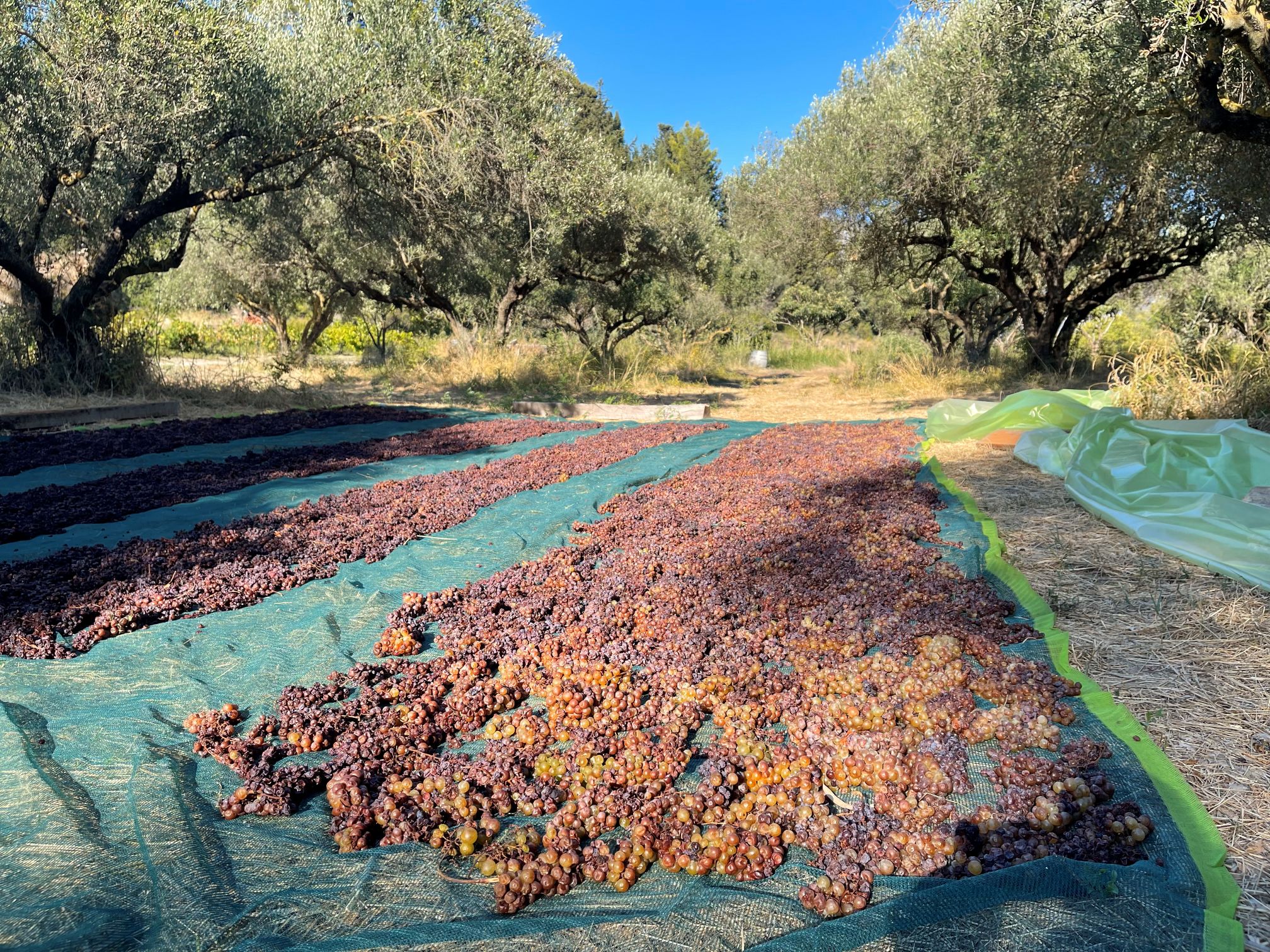
Vin Doux Du Soleil 2020 Made from sun dried Moschato grapes. Intense concentrated fruit, good acidity, very long.
A good wine friend organised a trip to Barbaresco this May to join the annual Tavola festival and taste the new release of the 2019 vintage. There is of course no better way to experience and fall in love with the wines of a particular place than to taste them in situ and you can find tasting notes and photos to make you envious, in our write up of the trip.
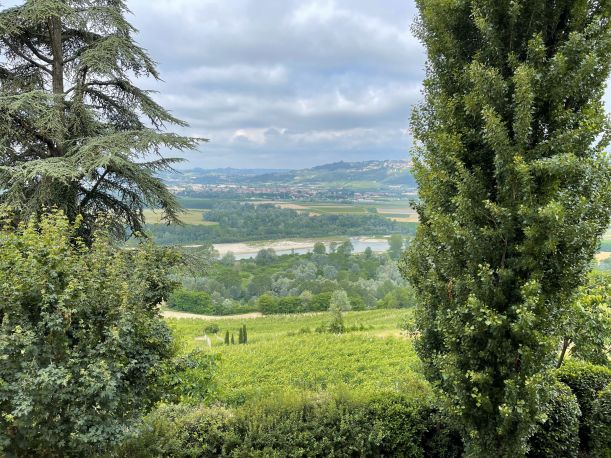
The Tanaro River
Our friend is a great fan of Italian wines but particularly loves the wines of Barbaresco favouring them even over the noble wines of Barolo. So here I thought it would be interesting to compare the wine making regions of Barbaresco and Barolo. Both prestigious they of course have many similarities but also a few key differences that give each a distinct character.
Barbaresco DOCG, lies in the heart of Piedmont, northeast of the Barolo DOCG. It is known for producing wines of finesse, elegance, and exceptional aging potential, exclusively from the Nebbiolo grape. While Barbaresco and Barolo share similarities, significant differences in climate, topography, and winemaking regulations distinguish the two appellations.
Climate and Topography
Barbaresco’s climate is continental with notable influences from the Tanaro River winding through the region and helping to moderate temperature extremes. Compared to Barolo, Barbaresco has a slightly lower elevation, typically between 200 and 400 meters above sea level, resulting in a milder microclimate. Nebbiolo ripens earlier here contributing to wines that are more approachable at a younger age compared to Barolo’s often more austere structure in youth.
On the rolling hillsides of the region many of the best vineyards face south or southwest, allowing optimal sunlight exposure, however variations in altitude and orientation create diverse terroirs across the region’s key communes: Barbaresco, Neive, Treiso, and a small portion of Alba.
Soils and Terroir
Barbaresco’s soils are primarily composed of marl, a mixture of clay, limestone, and sand. This composition is thought to result in wines with refined tannins and a more delicate structure than those of Barolo, which generally has a higher proportion of sandstone, contributing to its more powerful, tannic profile. The relatively fertile and compact nature of Barbaresco’s soils encourages a softer expression of Nebbiolo with floral, red fruit, and spice-driven aromatics.
Wine Laws and Grape Varieties
Under DOCG regulations, Barbaresco wines must be made from 100% Nebbiolo and undergo a minimum aging period of two years, with at least nine months in oak. Barbaresco Riserva requires at least four years of aging. This contrasts with Barolo, which mandates three years for standard wines and five years for Riserva, further reinforcing Barbaresco’s reputation for earlier drinkability.
Barbaresco vs. Barolo
Clearly both appellations produce amazing wines and the wine makers approach, whether traditional or modern also has a big influence, but Barbaresco’s wines are typically lighter in body, more perfumed, and approachable sooner than Barolo’s. Whilst comparatively more delicate they can still be very long lived and developing great complexity with time in the bottle.










 WanderCurtis Wine