Here is a condensed two page summary of the WSET Diploma D3 material on the central regions of Italy.
The regions include: Tuscany and Lazzio which sit on the western side of the Apennines and have largely Mediterranean climates. Umbria straddles the Apennines and is Mildly Continental. Marche and Abruzzo sit on the eastern side of the mountains bordering the Adriatic. These both have a largely Mediterranean climate except for inland parts of Marche which are mildly Contental.
Again the notes are organised into the key subject areas of: climate, topography, growing hazards, wine law, grape varieties, wine growing and wine making practices.
Note this document is intended for personal use only not for commercial or promotional use. We accept no liability for any omissions or errors that may be contained in the document.
Margaret River only produces 3% of Australia’s wine but produces a large proportion of its premium offerings.
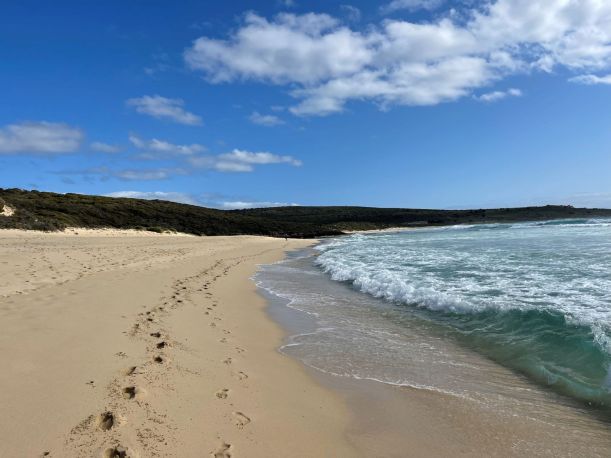
Though a young wine region, Margaret River is recognised globally for its premium wines, particularly its elegant Cabernet Sauvignon, refined Chardonnay, and crisp white Bordeaux-style blends. Located in Western Australia, this remote yet picturesque region benefits from a unique climate and ancient soils, creating exceptional conditions for grape growing.
Margaret River’s wine story began in 1967, when Dr. Tom Cullity planted the first commercial vineyard at Vasse Felix, inspired by Harold Olmo, a University of California viticulture professor who identified the region’s potential for fine wine production. Soon after another medic Dr. Kevin Cullen and his wife founded Cullen Wines, further establishing the region’s credibility. By the 1970s, the area attracted the attention of Robert Mondavi, the legendary Napa Valley winemaker. His technical expertise and influence were pivotal in guiding Leeuwin Estate towards planting Chardonnay, which was still rare in Australia at the time. Under his mentorship, Leeuwin’s Art Series Chardonnay became one of the nation’s most celebrated wines, proving Margaret River’s potential on the world stage.
Situated at 34 degrees latitude, Margaret River’s climate should be warm to hot. However, it enjoys a cooler maritime influence due to the Cape Current, which hugs the Indian Ocean coastline surrounding the peninsula. This cooling current moderates the summer temperatures, preventing the vines from overheating and allowing for a long, gentle ripening season essential for producing wines with complexity and balance.
The region’s rainfall pattern is also significant. With high winter rainfall and dry, warm summers, Margaret River experiences a low disease pressure growing season, reducing the need for chemical intervention. The region’s red gravelly loam soils, formed over ancient granite and gneiss bedrock, are low in nutrients, naturally restricting vine vigour and promoting concentrated, high-quality fruit.
The absence of phylloxera allows Margaret River’s vineyards to have been propagated from selected heritage cuttings, preserving and enhancing the region’s clones.
Margaret River’s Cabernet Sauvignon thrives in the region’s free-draining, gravelly soils. The extended ripening period ensures full tannin maturity, resulting in wines with dark fruit flavours, fine structure, and great aging potential.
Chardonnay, often made from the region’s signature Gingin clone, performs exceptionally well in the cool maritime climate. This clone produces small, loose bunches with berries of varying sizes, resulting in wines with concentrated citrus, stone fruit, and tropical flavours, complemented by vibrant acidity.
The region’s Sauvignon Blanc and Semillon blends, inspired by white Bordeaux, flourish in the cool conditions, offering zesty citrus, passionfruit, and herbaceous notes with crisp acidity and freshness.
There is also a vibrant wine and gastronomic culture driven by visitors from nearby affluent Perth and international tourists are also drawn by the amazing coastal landscape and ancient gum tree forests.
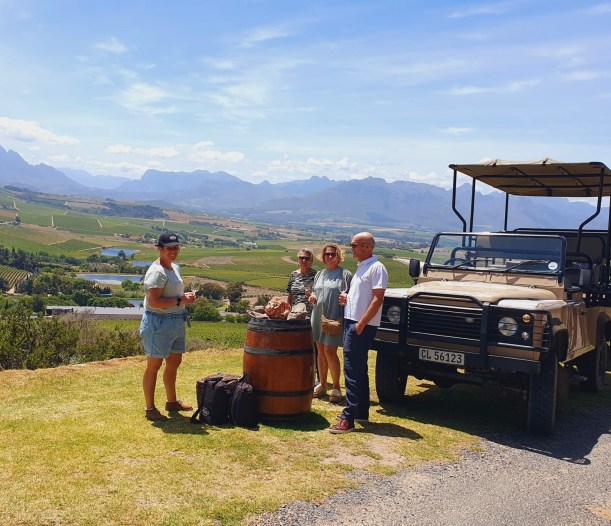
We loved the innovative safari, bumping along the dirt tracks through the vineyards at Jordan Winery in Stellenbosch. We travelled in a safari-style open topped Land Rover up to the top of the hillside to take in amazing views in one direction out to Table Top Mountain and Table Bay and the other towards False Bay. One the way we stopped for what has to be the most scenic venue for a wine tasting ever, looking out across Stellenbosch towards Simonsberg.
Along the way, we encountered the rich flora and fauna of the Cape Winelands, while gaining insight into Jordan’s unique terroir. The estate’s vineyards span altitudes from 160 to 410 meters above sea level, with slopes facing all four compass directions. Benefiting from cool coastal breezes and maritime fog, the vines thrive in soils ranging from ancient Cape Granite clay-loam to gravelly, sandy duplex. The trip finished off in the cellar with a tour and with more wine samples enjoyed in the on the sunlit restaurant terrace overlooking the lake, a great place for lunch. —a true celebration of Jordan’s exceptional terroir.
Try the Blanc de Blanc special cuve 2017 11%
Matured on lees for 54 months. Greenish gold in colour. Lovely chalky citrus notes, fresh cut granary loaf and a touch of ground almonds. Fresh, tight body, grapefruit pith and a long steely finish.


 WanderCurtis Wine