
New Latitude Winemaking at Monsoon Valley, Thailand
If you were asked to name the least likely place on earth to grow grapes, Thailand would probably be high on the list. Located between roughly 5° and 20° north of the equator, with most vineyards clustered around 13–15°N, it lies far outside what we have traditionally considered viable viticultural territory. Tropical, relentlessly hot and humid, with monsoon rains, blazing sun, unpredictable seasons and constant disease pressure, this requires viticulture played on expert mode.
And yet, Thailand is making wine. Not just novelty wine, but increasingly serious, drinkable and diverse wine that challenges our assumptions about where viticulture belongs.
My first encounter with Thai wine came almost by accident: a bottle from Monsoon Valley slipped into a Decanter ‘lucky dip’ box. Later, during a visit to Thailand, I tasted more of their range and was genuinely surprised by the quality, and I was intrigued to find out more. Initial curiosity quickly turned into fascination, how on earth do you grow grapes, let alone make good wine in a climate like theirs?
New Latitude Winemaking
The answer lies in what is now known as ‘New Latitude Winemaking’: wine production outside the traditional 30–50° latitude bands of the northern and southern hemispheres. These regions break almost every classical rule of viticulture and rely on intense human intervention, scientific adaptation and constant experimentation to succeed.
To understand this first-hand, I travelled to Monsoon Valley to meet their winemaker and viticulturist, Suppached Sasomsin. Suppached graduated in Biochemistry, followed by a master’s degree in Viticulture and Wine. He subsequently worked in different winemaking areas including New Zealand, France and Germany. His combination of passion, technical knowledge and practical ingenuity is central to the current project.
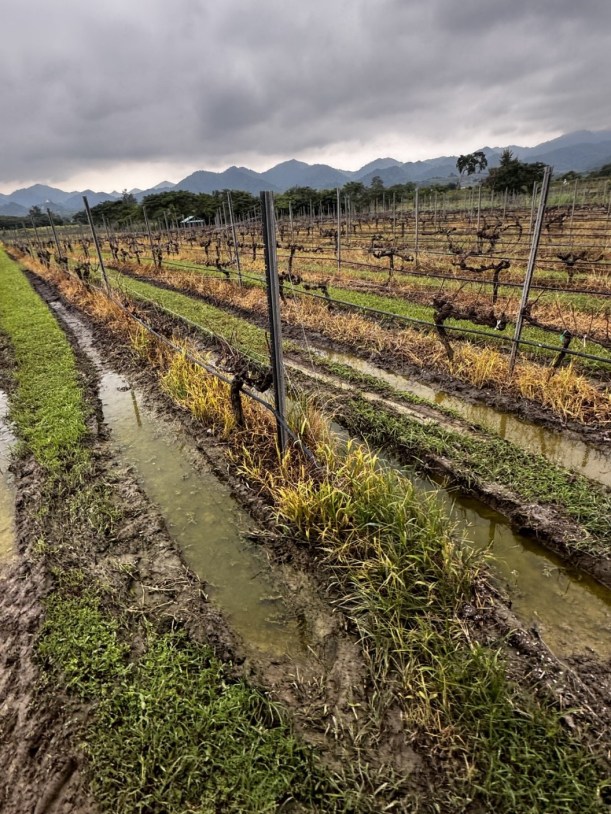
Monsoon Valley is on the Malay Peninsula, two hours south of Bangkok and 35 km from the seaside town of Hua Hin. The estate is unexpectedly grand: 110 hectares in total, with 48 hectares planted to vines. I arrived in late November, expecting sunshine and lush tropical vineyards, but was struck instead by waterlogged soils, heavy humidity and low, rain-filled cloud. The monsoon had overstayed its welcome.
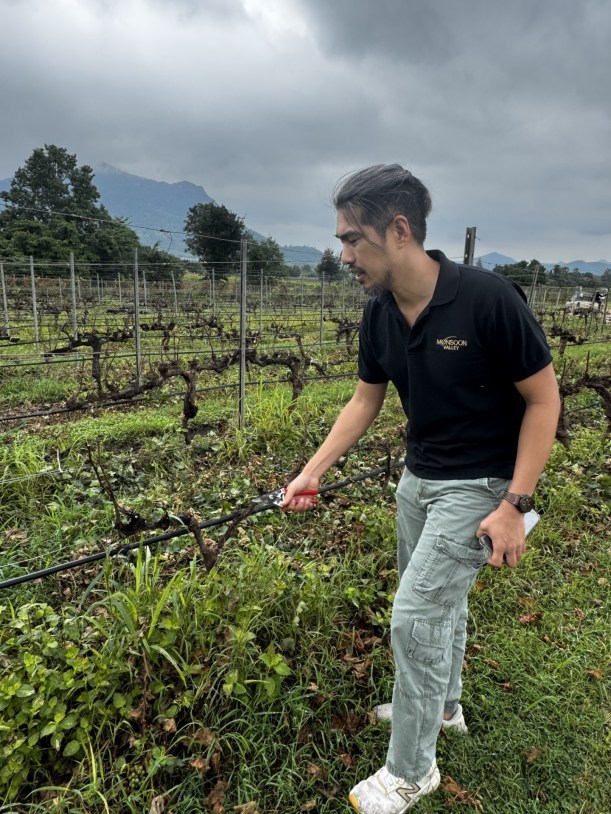
Suppached looked worried. He explained that the usual November pruning had to be delayed this year because it was simply too wet. Pruning now would not only be technically challenging but a disease risk. However, if the pruning was delayed too long then harvest would be pushed forward to the rainy season. At this latitude, temperatures never fall below 0°C so vines never really shut down and experience winter dormancy. As a result, they simply keep growing, producing vast amounts of foliage. If left unchecked, it leads to poor fruit quality. The solution is extreme pruning. Vines here are pruned twice a year, heavily, once in April, when they are cut right back, and again in November.
Thai producers traditionally harvested twice a year, but here they have moved to a single higher quality harvest during the spring dry season. In Monsoon valley, this is usually mid-February to late March.
Viticulture without a rulebook
One of the most fascinating aspects of the visit was the nursery. Monsoon Valley is experimenting with new clones and crossings specifically adapted to tropical conditions. Some of the vines don’t even have names yet. This is long-term, highly complex work: crossing varieties, observing disease resistance, vigour, fruit quality and resilience to heat and drought. It is viticulture at its most experimental, driven by necessity rather than tradition.
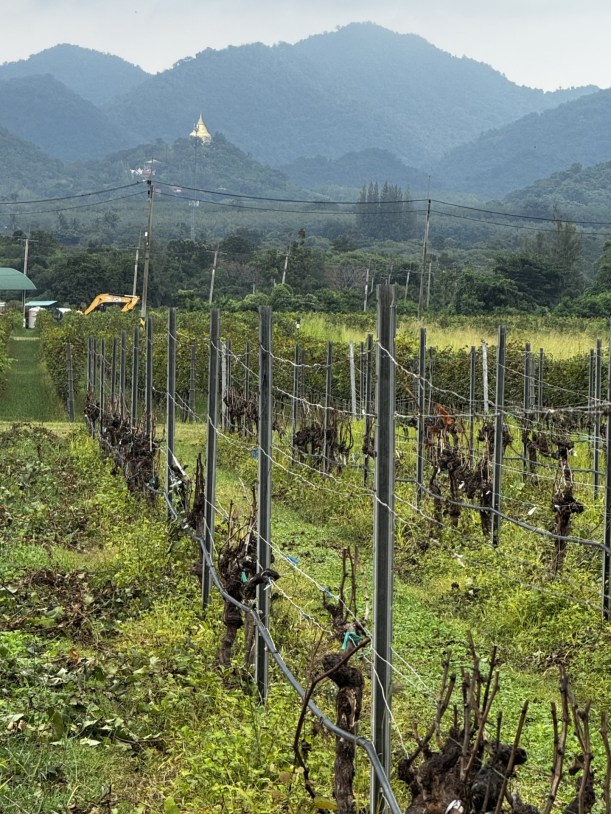
Disease pressure is relentless, and there is no illusion about organic farming here: some judicious spraying is essential. That said, innovation is everywhere. One particularly striking technique involves crushing mussel shells into an ultra-fine powder and spraying it onto the vines. Under a microscope, the particles resemble millions of tiny daggers, physically deterring certain insects and pests. It was the first time I had seen this method used in a vineyard.We toured the estate by safari vehicle, rolling through vineyards framed by one of the most arresting backdrops imaginable: a vast Buddhist temple rising above the hills. It was a powerful reminder that this wine is grown in a completely different cultural and geographical context. Elevated vineyards benefit from a gentle breeze that moves up the slopes, moderating heat and reducing disease pressure. It is a small climatic advantage but, in this environment, every advantage counts.
Training systems include the V-shape or Lyra system, which is a split-canopy trellising method used to manage vine vigour, improve fruit quality, and reduce disease pressure. This is particularly good in high growth or humid environments. By splitting the foliage, the divided canopy improves air circulation around the fruit. The system increases the vine’s productive surface area and photosynthetic capacity compared to traditional vertical systems. Soils are generally sandy loam.
In one plot, Sangiovese vines had recently been pulled up after dying during an exceptionally dry spell with plans to replant with Syrah, one of the estate’s key grapes. Syrah, Chenin Blanc and Colombard dominate here, alongside some intriguing plantings of Solaris and Muscaris
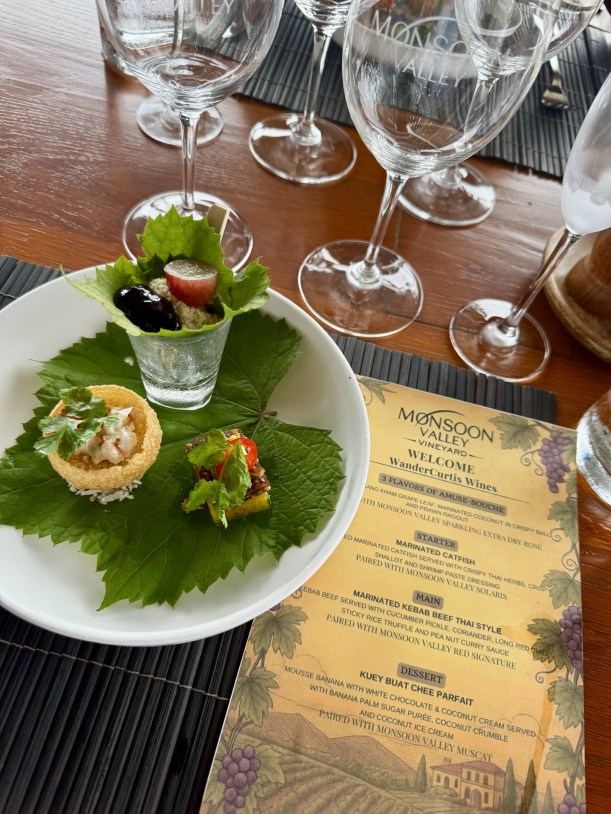
I concluded the visit by tasting the wines at Monsoon Valley’s restaurant, perched above the vineyards with sweeping views of the estate. Given the conditions, the heat, the rain, the pressure from every conceivable disease, the quality was remarkable. These are not wines pretending to be Bordeaux or the Rhône, they are wines that accept where they come from, work intelligently with it and are proud of the results.
New latitude wine making is not about romance or tradition. It is about control, science, adaptation and resilience. And in Thailand, against all the odds, it seems to be working.
A shorter version of this article appeared in the March edition of Decanter Magazine 2026.
Tasting Notes: Monsoon Valley
Monsoon Valley Sparkling Extra Dry Rosé 2025
This was an immediately charming way to begin. Bright, refreshing raspberry flavours, underpinned by around 15g/L of residual sugar that softens the edges without tipping into sweetness. There’s a pleasing snap of acidity making it balanced and highly drinkable. Particularly notable is the fact that this was the assistant winemaker’s first wine, an impressive debut.
Monsoon Valley Solaris 2024
Solaris is a fascinating choice here. Bred for cold climates and prized in Scandinavia for its short growing season, developed at the Freiburg wine institute, Germany. It might seem an unlikely candidate for Thailand, yet its disease resistance and adaptability make it surprisingly well suited to tropical conditions. In the glass, it offers fresh gooseberry and citrus notes, with a clean, vibrant profile.
Monsoon Valley Chenin Blanc 2024
A wood-aged expression, spending seven months in barrel, this Chenin strikes an appealing balance between freshness and texture. Crisp acidity frames subtle citrus aromas, while the oak adds gentle breadth rather than dominance.
Monsoon Valley Signature Red 2024
A blend of Shiraz and Dornfelder, with the components vinified separately before blending. Thermovinification is sometimes used. This involves gently heating the grape must to around 60°C helping to extract colour, tannins and flavour compounds. This wine then spends 12 months in a mix of new and large-format oak casks. Suppached noted that it can be a challenging wine in the cellar, with a tendency toward reduction, but that effort is rewarded with depth and structure.
Monsoon Valley Cuvée de Siam Rouge 2021
Dominated by Shiraz (85%), Sangiovese once played a role in this blend but succumbed to drought and was replaced by other cultivars, a reminder that variety choice in Thailand is never static. The wine shows ripe plum, cherry and blackberry fruit, layered with gentle spice and rounded by ageing in French oak barrels.
Muscat of Hamburg (Pink-Skinned), Late Harvest 2025
A fittingly exuberant finale. Perfumed and intensely floral, this late harvest Muscat is fortified to 15% alcohol and carries around 120g/L of residual sugar. Lush and expressive rather than heavy, it celebrates aromatic intensity while retaining enough freshness to remain balanced.
 WanderCurtis Wine