WanderCurtis Wine

Wine tastings, corporate events, reviews and recommendations


Leave a comment

Austria’s best kept wine secret: The Südsteiermark

The Südsteiermark (Southern Styria)is a stunning region in south-east Austria. Here picturesque hills and valleys are carpeted in vineyards punctuated only by the occasional field of pumpkins and shady patch of woodland.
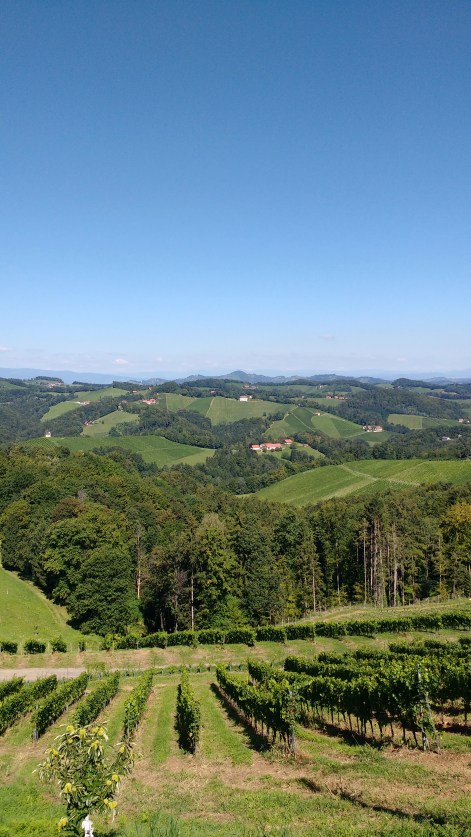
sudstier vineyardsThe region is perhaps Austria’s best kept wine secret with the vast majority of its wine is consumed on home turf & only a handful of pioneering producers exporting overseas. Südsteiermark’s premium wines are much appreciated by Viennese restaurants & wine collectors but I’m pretty sure that the majority of these tasty wines are consumed on site in the numerous wineries themselves that occupy prime hill top locations whilst enjoying picture postcard views and tucking into local culinary treats.

The region’s beauty really gives Tuscany a run for its money and offers a similarly seductive synthesis of food and wine and scenery. Whilst many serious wines are produced here wine is very much part of a wider offering.


Wineries have always been open to visitors serving their own wines in outdoor gardens overlooking the vineyards.  Traditionally these Buschenschank (taverns) were only allowed to pour their own wines and serve food grown and made on the premises. However since I first visited the region 25 years ago Brettljause, a simple platter of cold meats, cheeses & pickled vegetables with rye bread, was pretty much the staple fayre.  However menu’s in even the most basic Buschenschank have now been expanded to include such delights as fresh salads dressed with local pumpkin seed oil & the local speciality Stierische Backhendl (fried breaded chicken made from ‘happy’ local hens).  Look out too for a range of super dishes made with Eierschwammerl (chanterelle mushrooms). Many of the wineries also let rooms on a bed and breakfast basis so that you can stay right in the heart of the action and there are an increasing number of boutique hotels with gourmet restaurants perched on prime spots for those seeking a bit more luxury.skoffThe Südsteiermark is best known wines for white wines and in particular Sauvignon Blanc which seems to sit in a satisfying spot somewhere between the steel & mineral of the Loire and the greater florality & fruitiness of New Zealand.  Traditional whites include the fragrant & fresh early drinking Gelber Muskateller, a perfect aperitif especially when made into a sparkler, Welschriesling, another fresh food friendly white, Weissburgunder (Pinot blanc) with more body but good acidity and the perfect fit for Backhendl and of course a bit of Gruener Veltliner.  Chardonnay seems to do well and often comes with a bit of oak too. There are also tasty reds too often blends of indigenous grapes like Blaufränkisch and Zweigelt with international varieties like Cabernet Sauvignon & Merlot.unnamed (1)

The vineyards go up to about 400m above sea level and although continental enjoy a long ripening season thanks to an increasingly pronounced range between daytime and night time temperatures reaching up to 18 degrees towards harvest.


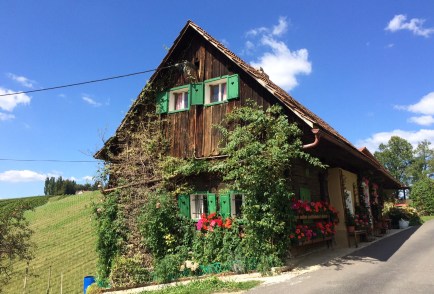
With so many Buschenschank and Weingut to visit each offering so much good eating and drinking the Styrian tourist board have helpfully joined the dots on the map up with a series of picturesque wine trails.  The main Weinstraßefarmhouse runs from Leutschach to Gamlitz & Ehrenhausen. Running largely along a ridge it connects many of the best winemakers and the loveliest locations.  Instead of driving the route far nicer choice is to ramble along one of the many walking routes also mapped out which allow one to pass right through the vineyards & by quaint farmhouses complete clucking chickens & vintage tractors.
ebikeHowever to cover a wider sweep of the area there is no better form of transport than the e-bike.  Modern electric bikes flatten out the many steep hill climbs but take nothing away from the pleasure of rolling through this fabulous country side following part of the Weinstrassen Tour for bikes.  Maps of all three types of trail are widely available and extremely well sign posted on the ground making it super user friendly.

Accommodation.

We’ve stayed in three places over the years and enjoyed them all:

Weingut & Buschenschank Tinnauer picturesquely situated on the bike route near Gamlitz. http://www.weingut-tinnauer.at/

Skoff Original, the home of Sauvignon Blanc and right on the spectacular Weinstraße. Stunning panoramic views & great food. http://skofforiginal.com/?lang=en
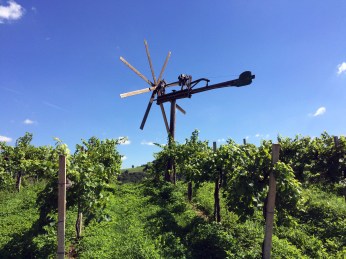
bird scarerHotel Gut Pössnitzberg.  A stylish hotel with heated outdoor pool & cool glass box dining room overlooking the vineyards. The hotel is owned by the Polz Winery and there is a tasting of their wines, including some great traditional method fizz, for guests at 5.00pm each day.  E bikes available. http://www.poessnitzberg.at/

Winzerhotel Wurzenberg is a modern hotel in a spectacular location but we haven’t visited it yet!

Places to eat:

All the above serve great food.  However a visit to the Südsteiermark should definitely include a traditional spit and sawdust buschenschank.

There are many to choose from and it’s worth asking for a local recommendation. We enjoyed Eory Buschenschank. Great location, traditional fayre and friendly landlord.

buschenschank01

For more information visit:

Tourist information:  http://www.steiermark.com/en/styria/regions/southern-western-styria

For accommodation, restaurants & wineries: http://www.suedsteirischeweinstrasse.at/


On the wine region: http://www.austrianwine.com/our-wine/wine-growing-regions/steiermark-styria/unnamed (16)

Getting there:

It’s about a 2 ½ hour drive from Vienna

Or 45 minutes from Graz international airport.

ENJOY!

Leave a comment

Adam wins this year’s Wine Australia’s Tasting Blind Club 2015-16

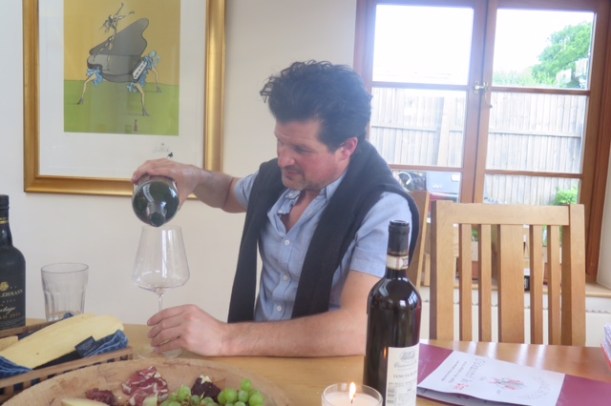
For as long as I can remember whenever Adam & I get together outside work we’ve always served wine blind to each other.   Tasting blind forces you to really focus on the wine and sharpens your appreciation of it.  But most of all blind tasting is a great leveller: the wine’s pedigree, whether humble or aristocratic, is left by the door, the whisper of critics is silent, and one is blissfully ignorant the size of the hole, large or small, it would make in your bank account.  It’s also fun to try and work out what the wine is!

So I’m particularly delighted to announce that Adam’s great tasting skills have been recognised as Winner of this year’s Wine Australia’s Tasting Blind Club.

adam01

The monthly Tasting Blind Club presents 20 wines (19 Australian with one imposter) arranged in flights by theme and served blind.  Participants from the wine trade include sommeliers, educators & wine students. The challenge is to answer a list of questions identifying the wines’ features & the year’s best taster wins a place on a trade visit to Australia’s wine regions.

Look out for Adam’s blog on the trip this autumn.


1 Comment

Dom Pérignon P2: ‘does exactly what is says on the tin.’

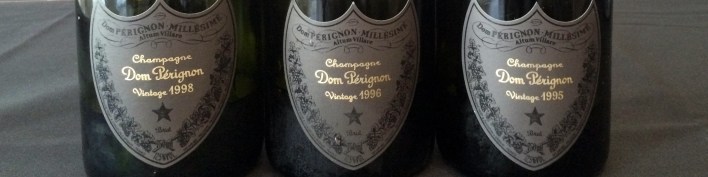
dp05Take a moment to consider what ‘Plénitude’ means:
‘A state which is at its highest level of development, which is in full force and intensity, is complete.’

and one might think choosing it as the new name for Dom Pérignon’s Oenothèque champagne a touch immodest, all be it easier to pronounce! Especially so along side  the claim that DP reaches this exalted state not once but no less than three times over the course of its long life!

However having been lucky enough to recently taste a selection of extraordinary P2 vintages I would have to agree that DP’s Plénitude simply ‘does exactly what is says on the tin.’

Dp01

Chef de cave Richard Geoffrey

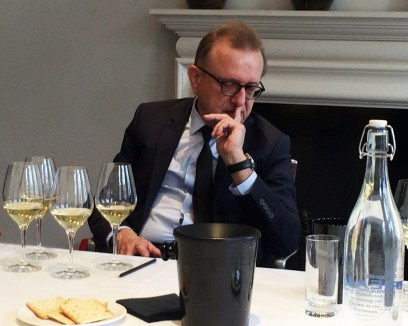
Presenting a vertical tasting of Dom Pérignon’s P2 wines chef de cave Richard Geoffrey reveals his physician’s mind using the metaphor of a double helix to describe the way successive plenitudes of the wine come to the fore during its development. The first after about 8 years when the vintage is first released, the second after a further eight to ten years when P2 is released and finally after about 30 years P3. We stray further into a discussion of how time at Dom Pérignon is non-linear, which is why as DP develops it reaches a series of relatively stable plateaux, and this along with the strikingly elemental marketing imagery contributes to a fleeting vision of Richard the alchemist bending space & time to create these phenomenal wines in the silence of DP’s cellars.

Whether or not there is any magic involved the key factor in creating P2 is extended active yeast maturation over the first vintage release. Richard believes this process preserves the wines energy & intensity and makes it more integrated and elongated. He makes a clear distinction between power and intensity; the latter is never weighty and is lingering and memorable. The prime contribution of the yeast is to fight oxidation and the wine actually eats up the lees gaining depth and profundity.

The tasting notes:

DP 1998 P2

A nose of white flowers, acacia, Hawthorne, patisserie, ripe lemon, toast, smoke, very complex and persistent.

In the mouth, med high acidity, more pastry, a great minerality, tart citron, med body. This is beautifully subtle with great elegance and length.  A really seductive wine.

DP 1996 P2

More pronounced citrus fruit on the nose, some lemon, some orange peel, roasted nuts and a spectrum of floral notes.

On the palate more powerful flavours of nut tart, praline, citrus, a faint touch of the vegetal and then smoky notes. The wine has a taught mineral back bone and has great length and persistence. Really complex and characterful.dp02

DP 1995 P2

On the nose: smoke, baked lemons, then a complex succession of pastry aromas, white flowers and cake spices.

On the palate great balance, fresh acidity and plenty of body. Complex with an endless succession of, fruit salad, smoke, minerals & underlying pastry notes. For a wine of this age it is extraordinarily vibrant yet with the full depth of its many years of development. Superb!

DP 1993 P2

This wine was disgorged in 2006 so has ten years of bottle age too.

On the nose aromas of dried porcini mushrooms, bit of chalk, a touch of acacia honey, with underlying patisserie & bread. An incredible complex & heady nose.

In the mouth again great vibrancy, intensity it takes up residence on the tongue and just stays there. So integrated that it is hard to separate out the individual characteristics of dried mushroom, delicate citrus, bread etc. Taste and silky mouth feel meld into an intensely pleasurable experience. Subtle minerality is the lasting impression.

Richard says an element of oxidity has sneaked in a little extra sweetness & body at the loss of some complexity which is just fine by me! Where the 1995 is a more cerebral pleasure the 93 is much more sensual. For me this wine was the peak of an amazing tasting!

dp04a

Current Dom Pérignon vintages are: DP P1: 2006, DP P2: 1998 and there are P3 1997 & 1983.


2 Comments

Do you have a Wine Mind Palace?

IMG_0135

There seem to be two main components to identifying a wine when tasting blind.

Firstly analytical where by identifying the wine’s key characteristics: visual appearance, body, acidity, tannin, alcohol level, primary & secondary flavour profile etc. one can by process of elimination narrow down the possible grape variety and wine making techniques to a short list of potential regions & wine makers.

Secondly by comparing these characteristics to a database of taste memories, what Sherlock might call a ‘Wine Mind Palace’.

This is the part I have to admit I find most tricky.  I can remember the smell of a blackcurrant or elder flower with the best of them but I struggle to say that I can recall the ‘taste’: aromas, structure & mouth-feel of individual wines as a combined memory as some tasters claim to.

Part of the problem is that a good bottle of wine unfolds and develops in the glass over the course of an evening constantly morphing and transforming like the flames of a log fire. If it’s a great wine there’s simply too much going on to remember!

The other thing causes my Wine Mind Palace classification system to fall somewhat short of Dewy Decimal standards of efficiency is quite frankly the alcohol! Whilst ethanol may not actually kill off brain cells it’s widely accepted that it does inhibit memory formation!


Leave a comment

Bodegas y Viñedos Codorníu Raventós

A tremendous evening of wine and tapas with Codorniu Raventos at Iberica Marylebone.

Oscar Urrutia presented the wines and gave us an insight into three of Spain’s most important regions, a super opportunity to compare and contrast.  However some common feature ran through all the wines: the high standard of the winemaking and their superb value! IMG_5005

Here are the tasting notes:

 Anna de Codorniu Blanc de Blancs Reserva, NV.

A fresh sparkler with citrus & ripe stone fruits and a nice touch of toasty pastry made with chardonnay by the champagne method.

 Vina Pomal Rioja Blanco, 2014. 70 % Viura and 30 % Malvasía.

Nose a little subdued. Citrus notes, nice mouthfeel and a touch of toast from the American and French barrels the wine was aged in. Not particularly long.

Legaris Roble, Ribera del Duero, 2014. 100% Tinto Fino (Tempranillo).

Roble wines are intended for earlier drinking and with less oak and bottle aging tend as in this case to be more fruit focused. Balanced with nice high altitude freshness there is never the less a lick of coconut and vanilla that adds interest.  Very drinkable & great value!

Scala Dei Garnatxa, Priorat, 2014. Grenache.

Fresh red fruits on the nose, I loved the bright crunchiness that the high acidity gives this wine, great balance, and definite mineral / stoney notes no doubt from Priorat’s famous licorella slate. A superbly made wine, one of my favourite wines of the evening.

La Vicalanda Reserva, Bodegas Bilbaínas, Rioja, 2010. 100% Tempranillo from the Rioja Alta region.
This wine was wine of the month recently and for good reason. Lovely smoky, toasty notes on the nose then dark fruit, blueberry & cherries, smooth soft round tannins on the palate, more fruit and tasty hoisin and balsamic savoury flavours.  Long and very delicious.

Legaris Reserva, Ribera del Duero, 2011. 100% Tinto Fino 

Aged for 18 months in French oak barrels, 50% new and 50% old, then a further 2 years in the bottle before being released. This wine is definitely the roble’s big brother, darker and more powerful with concentrated dark fruit, combined with toast & coffee on the palate. Full bodied with firm but ripe tannin and great length.

Scala Dei Prior, Scala Dei, Priorat, 2013. Cabernet, Grenache & Syrah.

Dark colour from the cabernet and Syrah, Black fruit, pepper, spice & herbs on the nose, More concentrated dark fruit in the mouth, with forward mouth coating tannins and very full body, good overall balance and very long. Needs decanting or a few more years of bottle age to really unfold its many layers.oscar 02

Septima Tardio, Mendoza, 2103, Argentina 100% Gewürztraminer.

This is a late harvest wine made 1,050 metres above sea level in the Southern hemisphere. Lovely floral notes mixed with an interesting whiff of vanilla and smoke on the nose.  Sweet dried & exotic fruits on the palate, again with a lick of vanilla from the American oak barrels, rich without being flabby, linger nicely.


Leave a comment

La Vicalanda Reserva 2009

Another wine from Cordoniu Raventos: La Vicalanda Reserva 2009.  A Rioja by Bodegas Bilbainas from 100% Tempranillo.  Sweet, savoury and rounded.


1 Comment

Prior Scala Dei 2013, Priorat Spain

Ahead of our Cordoniu Raventos tasting in January Kiran and Adam taste Prior Scala Dei 2013. Made from old vine Garnacha  with some Cariñena, Cabernet Sauvignon and Syrah.  Deliciously concentrated!


Leave a comment

Bouchard Finlayson Hannibal 2013, Walker Bay South Africa

Kiran & Adam taste this month’s wine: Hannibal.


Leave a comment

Interview with Count Francesco Marone Cinzano of Col D’Orcia, Brunello di Montalcino.

Just before our memorable Col D’Orcia wine dinner at Fredericks Count Francesco Marone Cinzano told us of the estates long history, his love of Sangiovese and extended an invitation to the winery to all our followers.

The storey of Col D’Orcia

The Count talks about what makes Sangiovese so special in Brunello di Montalcino.

Thoughts on the magnificent 2010 vintage and an invitation.


Leave a comment

Nigel Greening of Felton Road in conversation

Ahead of our Felton Road tasting at Season Kitchen earlier this week owner and producer Nigel Greening shared his story and thoughts on past and current vintages.

Nigel recounts how he went from wine enthusiast to owner and producer of some of the worlds finest wines.

The million dollar question: the secret of Felton Road’s success:

Nigel’s thoughts on the 2014 vintage:

Built for the long haul some of Nigel’s favourite older vintages: