A recent tasting of wines from New South Wales by Wine Australia I tasted some very unique Semillon wines from the Hunter Valley. Hunter valley is near the east coast of Australia and at between 30 and 33 degrees of latitude hot during the day and with intense levels of sunlight. In fact the climate is classified as sub-tropical! So how does this region produce high acid fresh and lean and age worthy Semillons?
Viticulture and Winemaking
The region’s warm, humid climate is moderated by coastal breezes and morning mists, reducing disease pressure and allowing for slow, steady ripening. The secret to the distinctive style of Hunter Valley Semillon is that the grapes are often harvested early, sometimes with alcohol levels as low as 10-11%, to preserve acidity and freshness. Also sandy, well-drained soils contribute to the grape’s signature crispness.
In the winery, Hunter Valley Semillon is made with minimal intervention. Fermentation occurs in stainless steel to maintain purity, and oak is rarely used. The result is a wine which is very lean. In its youth it can be somewhat closed and a little undemonstrative featuring citrus notes and green apple, with high acidity and a light, delicate texture.
Bottle Aging Potential
The surprise is that despite its austere youth, Hunter Valley Semillon is famed for its extraordinary aging ability. Over time, often 10 to 20 years, the wines develop complex flavours of honey, toast, and nuts without any oak influence, while retaining their vibrant acidity.
These lovely characteristics emerge after about 8 or 9 years and a number of wine makers hold wines back only releasing them once they are mature.
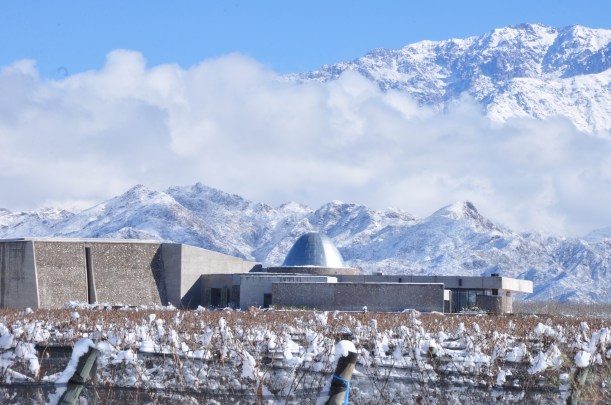
Alberto Zuccardi, planted the first Zuccardi vines in a small plot in the Maipu region in 1963. Located in the Uco Valley, Mendoza which is at the foothills of the Andes Mountains in Argentina
They were voted The World’s Best Vineyard in 2020. Sebastián Zuccardi the third generation of the family, continues the family business and is one of South America’s finest winemakers. He added a Research and Development Wing in the family winery, to learn and analyse more about the terroirs.
They are known to produce some of the highest quality of wines in South America. The vineyards enjoy the benefits of altitude and a cool dry climate throughout the year. They are high-altitude wines (from grapes grown at least 500 metres above sea level). At high-altitudes, vines get more sun during the day and are cool at night. This diurnal variation intensifies the flavour of the grapes. Zuccardi’s San Pablo vineyards are situated 1500m above sea level. Their Paraje Altamira vineyards are at 1,100 metres altitude.
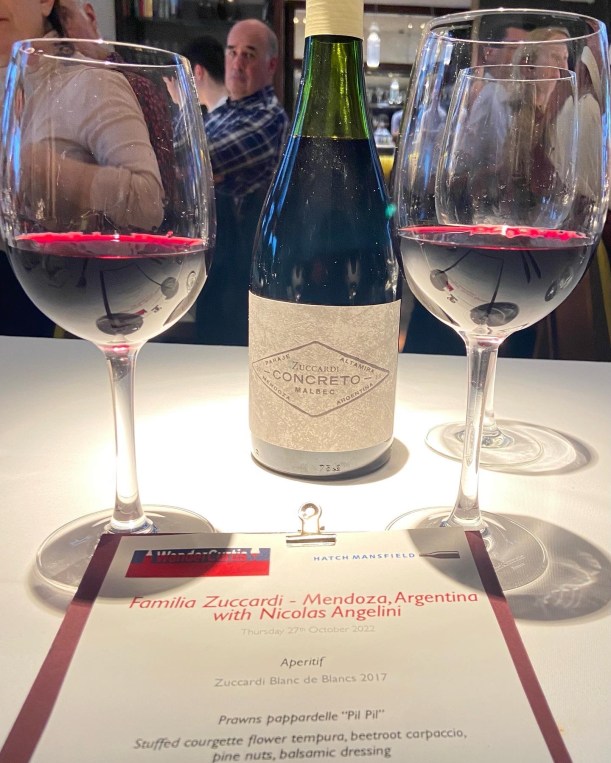
We had a selection of their brilliant wines including their single-varietal estate wines primarily made from Malbec with a matched three course menu.
Our next Wine Event with Zuccardi wines October 27th 2022
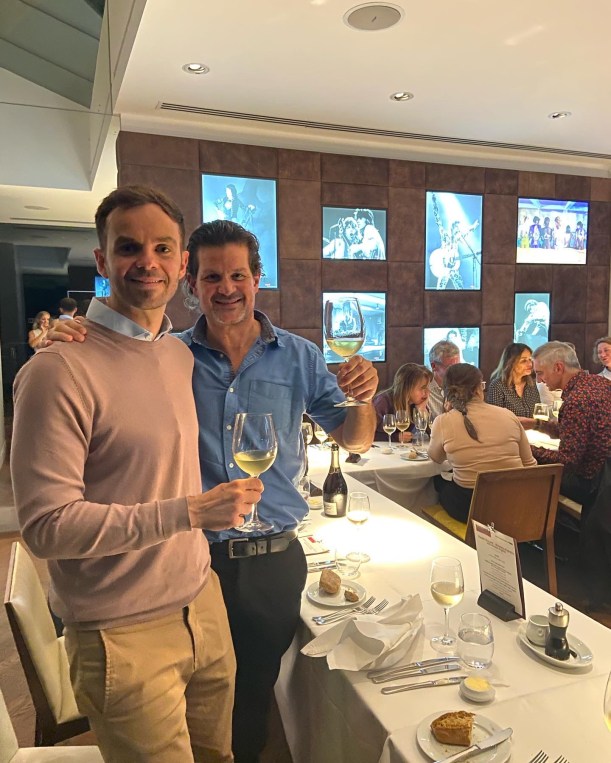
Nico had flown in that morning from Mendoza. Zuccardi had been elected for the Hall of fame the night before. He gave a great introduction into Zuccardi and amongst other things discussed ageing in new concrete eggs.
Zuccardi Blanc de Blancs 2017 Delicious, very Champagne like, autolytic with a lovely freshness
Zuccardi Valles Torrontes 2020 Beautiful florality and fruit. A perfect match for the gentle spice of the prawn piri paparadelle
Zuccardi Q Chardonnay 2018 lovely mouthfeel balanced oaked influence and good length
Zuccardi Tito Malbec Cabernet Franc 2017 Concrete then oak aged, plenty of ripe fruit nicely balanced with a touch of spice and vanilla
Zuccardi Concreto Malbec 2019 delicious Malbec with rich fruits and no oak influence
Zuccardi Malamado Fortified Malbec NV well matched with Tiramasu brought out hints of chocolate and mocha.
The WanderCurtis team were delighted to have been invited to attend our first Barbaresco a Tavola dinner on Friday May 27th 2022. For the unacquainted, this is an annual tradition held by the region’s winemakers to showcase their latest bottled vintage. Held over three successive weekends in different restaurants, wine makers from across the area bring and pour their latest bottled vintage to other wine makers, members of the trade, journalists and others, to give a sense of how the vintage has turned out.
For those who have yet to encounter the Barbaresco region, well, the best thing to say is that what is commonly referred to as one region is comprised of the three regions of Barbaresco, Neive and Treiso, that collectively work under the single communal name of Barbaresco DOCG. While the star of the show must be made from 100% Nebbiolo, aged for a minimum of 12 months in oak with a further 9 months of bottle ageing, the region is also widely planted to Barbera, Dolcetto, Arneis and many other international varietals that can be bottled and sold under the Langhe DOC label. This affords the local winemakers an opportunity to honour more ancient traditions of blends, provides an outlet for the wines made from young vines and gives opportunities to experiment with more international varietals such as Chardonnay, Sauvignon Blanc and Merlot.
We attended the third of the three Tavola dinners, held at the restaurant Casa Nicolini in Tre Stelle. Set on one of many sensational ridges that run across the top of the vineyards, we were greeted with breath-taking views of key Barbaresco vineyards such as Asili, Rabaja, Rio Sordo and Martinenga. The potent aromas of ripe jasmine, although enticing, made it difficult find some of the finer edges of the aromas in these very young wines. We were the guests of Jeff Chilcott, Kiwi cellar master of Marchesi di Gresy, who we visited on Sunday for an amazing tasting (more on this later).
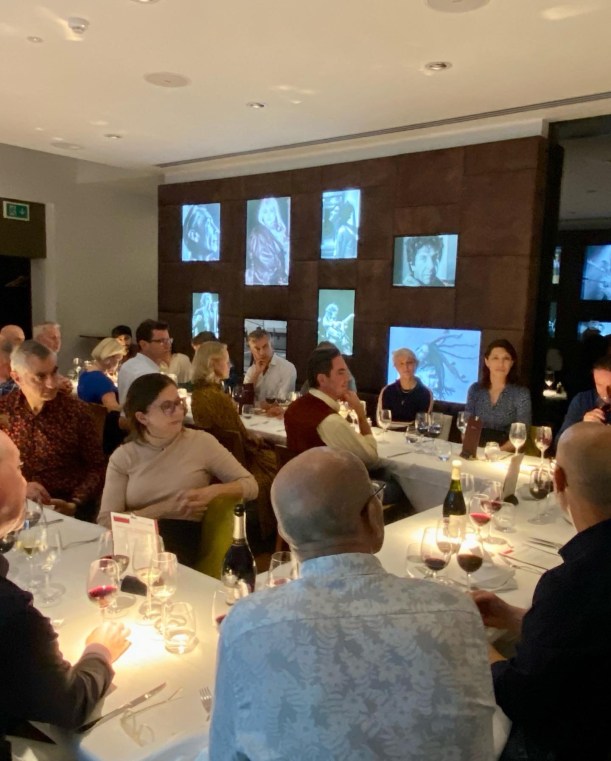
The format of the dinner is simple: 20 wines are set up on a central table, labelled 1-19, and you are invited to taste and score your way through the wines. Later in the evening, the wines are revealed, and you find out that most of people pouring the wines are the wine makers themselves. Over the course of the evening, we were served a typical and delicious multi-course regional meal. As the light faded, our palates tingling from the young vintage’s tannins and acidity, we left feeling full, fortunate to have taken part and maybe just a little tipsy.
The wines uncovered
Impression of the vintage
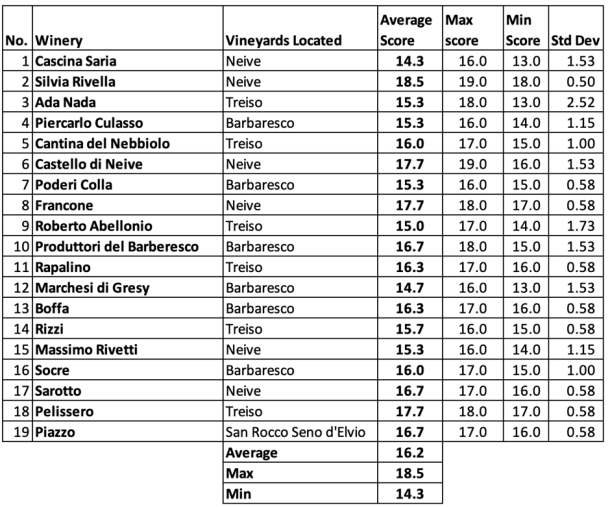
The 2019 vintage has been described by many as pure, energetic, and authentic with good fruit expression, fine abundant tannins and elevated levels of acidity – all typical characteristics of strong vintages. Our tasting left an impression of a vintage of balance, elegance and with good bones for the long haul. We would caveat this to say that with many having been bottled within a few weeks of the dinner, there was a high degree of wood on show, with many wines showing baking spice characteristics of cinnamon, and nutmeg, with a muted fruit expression. There were a range of wine making styles on show, with many made in the traditional neutral oaked manner and some showing the signs of flashy new barriques. We scored all the wines fully blind on a scale of 1-20, and frequently returned to wines that, on discussion, proved either hard to understand or sparked an interest.
I have put our scores together in a table by wine, with our average, maximum, minimum and standard deviation scores listed (for those who like a bit of statistical wine geekiness).
Casa Nicolini Barbaresco
Tasting note comments
On balance, you will see that our average across all wines from the evening scores a 16.2 out of 20, which one could normally interpret as representing an average to good vintage. In context, however, given the extraordinarily young, freshly bottled wines, and examining the structural characteristics (acidity and tannin) and winemaking styles on show, I believe these wines will be showing beautifully in the medium term, and will reward the patient given their exquisite balance and structure.
In terms of individual wines, there was much debate on which of these was our favourite on the night. Initially, we were besotted with number 18 (Pelissero), a producer that clearly likes the full barrique approach, creating a ravishing, fuller bodied version of Barbaresco. On reflection and discussion, we marked it down on the basis that vanilla is not something that we feel belongs so overtly in Barbaresco of any age.
While our collective scores of number 12, the Marchesi di Gresy Barbaresco Martinenga, was rather low, our tasting on Sunday showed just how wonderful their wines are with a bit more age, and we therefore conclude that this wine was being a little shy. We would say the same for number 3 from Ada Nada, which split opinions, and whom we visited the next afternoon and had a wonderful tasting.
Our clear favourite, number 2 from Silvia Rivella, shone out as both an approachable yet structured newer style barrique-aged wine with potential to age into something truly beautiful. Other strong showings included the Castello di Neive (6), the ever-dependable Produttori del Barbaresco (10) and the Francone (8) which all stood out.
A good wine friend organised a trip to Barbaresco this May to join the annual Tavola festival and taste the new release of the 2019 vintage. There is of course no better way to experience and fall in love with the wines of a particular place than to taste them in situ and you can find tasting notes and photos to make you envious, in our write up of the trip.
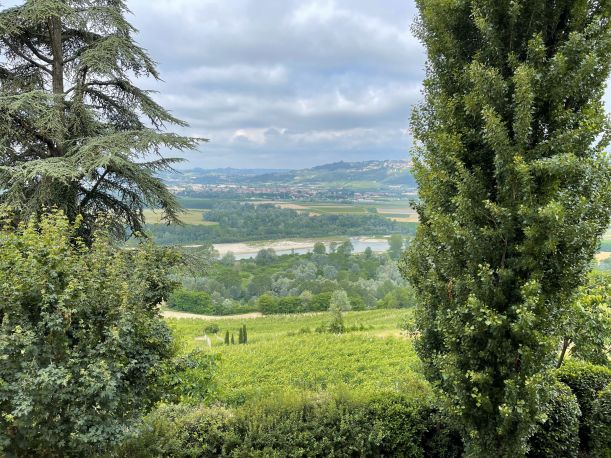
The Tanaro River
Our friend is a great fan of Italian wines but particularly loves the wines of Barbaresco favouring them even over the noble wines of Barolo. So here I thought it would be interesting to compare the wine making regions of Barbaresco and Barolo. Both prestigious they of course have many similarities but also a few key differences that give each a distinct character.
Barbaresco DOCG, lies in the heart of Piedmont, northeast of the Barolo DOCG. It is known for producing wines of finesse, elegance, and exceptional aging potential, exclusively from the Nebbiolo grape. While Barbaresco and Barolo share similarities, significant differences in climate, topography, and winemaking regulations distinguish the two appellations.
Climate and Topography
Barbaresco’s climate is continental with notable influences from the Tanaro River winding through the region and helping to moderate temperature extremes. Compared to Barolo, Barbaresco has a slightly lower elevation, typically between 200 and 400 meters above sea level, resulting in a milder microclimate. Nebbiolo ripens earlier here contributing to wines that are more approachable at a younger age compared to Barolo’s often more austere structure in youth.
On the rolling hillsides of the region many of the best vineyards face south or southwest, allowing optimal sunlight exposure, however variations in altitude and orientation create diverse terroirs across the region’s key communes: Barbaresco, Neive, Treiso, and a small portion of Alba.
Soils and Terroir
Barbaresco’s soils are primarily composed of marl, a mixture of clay, limestone, and sand. This composition is thought to result in wines with refined tannins and a more delicate structure than those of Barolo, which generally has a higher proportion of sandstone, contributing to its more powerful, tannic profile. The relatively fertile and compact nature of Barbaresco’s soils encourages a softer expression of Nebbiolo with floral, red fruit, and spice-driven aromatics.
Wine Laws and Grape Varieties
Under DOCG regulations, Barbaresco wines must be made from 100% Nebbiolo and undergo a minimum aging period of two years, with at least nine months in oak. Barbaresco Riserva requires at least four years of aging. This contrasts with Barolo, which mandates three years for standard wines and five years for Riserva, further reinforcing Barbaresco’s reputation for earlier drinkability.
Barbaresco vs. Barolo
Clearly both appellations produce amazing wines and the wine makers approach, whether traditional or modern also has a big influence, but Barbaresco’s wines are typically lighter in body, more perfumed, and approachable sooner than Barolo’s. Whilst comparatively more delicate they can still be very long lived and developing great complexity with time in the bottle.
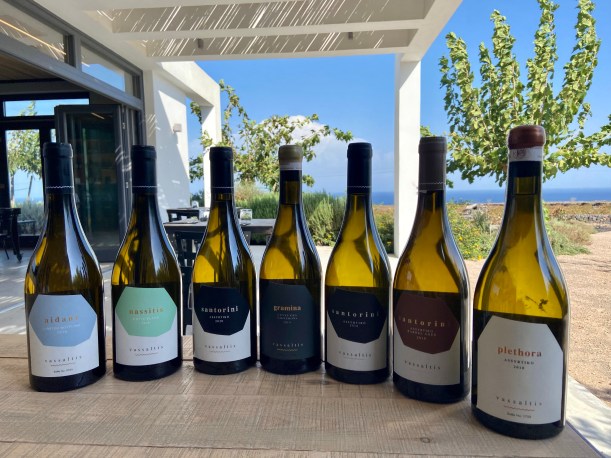
When my good friend Richard, founder of Wanderlust wines knew I was off to Santorini he insisted I go to Vassaltis. ‘Best wines on the Island’ he told me. Started by Yannis Valambous a former financier in London. It is Santorini’s newest winery, outside the village of Vourvoulus. The winery is sleek modern light and spacious with excellent views over his vineyards to the sea.The first wines from Vassaltis were released in 2015. We were lucky enough to meet their two highly talented winemakers, Elias Roussakis and Yiannis Papaeconomou.
Richard was bang on.
The wines are fabulous. The restaurant menu excellent too and the vibe atmosphere and service of the staff lived up to all expectations. Definitely a highlight of our vinous tour of Santorini
Tasting notes below courtesy of Kiran
Aidani 2020
Aged for up to 2 – 3 years
The label design is shape of a volcanic stone.
Nice floral nose.
Fresh with peachy and citrus notes some jasmine florality and medium body with high acidity but less than Assyrtiko A lovely aperitif style wine.
Nassitis 2020
A blend of 3 whites Aidani, about 30% Assyrtiko and Athiri.
Lemon sorbet and wet stone on the nose.
More lemon zest, mineral and lovely salty tangy phenolic bitter finish. A great food wine.
Santorini 2020
100% Assyrtiko a blend of grapes from different vineyards all over Santorini 24 eur.
12 months on lees then bottled.
Immediate hit of dried herbs, rosemary thyme etc. then some lemon zest. Then emerging hyacinth quite floral.
Quite full bodied tannins felt on gums high cripsp acid nice long salty finish.
Gramina 2019
Gramina means field so this is a single vineyard wine from Vourvoulos the village nearby. 100% Assyrtiko grapes are handpicked early morning and the wine spends 12 months on lees and 12 months in bottle.
On the nose an attractive petrolic whiff with an undertow of herbs and wet stones
Full bodied, smooth texture with dried green herbs, fresh acidity and a long lingering salty stony finish. Excellent.
Santorini 2016
Darker richer in colour than the 2020.
A much more complex nose: petrol, honey, baked lemon, over ripe honey dew melon then salted almonds, really interesting.
Lovely silky texture, very complex ripe with some sweetness and nuttiness the saltiness is still there but less aggressive softened out by the other flavours and age. A superb wine showing how well Assyrtiko can age.
Santorini barrel aged. 2019
Smokey lemon and lime sorbet hint of petrol faint tarragon
Taught and almost austere structured wine herbs minerals and sea salt. Long.
Santorini barrel aged 2017
On the nose smoke a bit of vanilla and over ripe mango AKA petrol.
The nuts honey, increasingly complex.
Lovely full body with a silky elastic texture, sweet notes, complex softening out the austerity found in the 2019 Gramina. Very long and persistent. Another fantastic wine.
Laterals would be an aged Riesling or a grand cru Chablis with a few years. In other words, premium wines of complexity and character.
Open to debate but generally the non oaked versions seem to retain more of a unique assertyko character although the oaked versions are extraordinarily well made wines.
Plethora 2018
The outstanding Plethora from Vassaltis- a truly remarkable wine
Late harvest Assyrtiko 6 months on lees then 8 months in old vinsanto barrels which are 60 years old then 2 years in bottle. A gap is left on top and sometimes flor grows.
This closest to Nykteri approach that Vassaltis has.
Nose is reminiscent of a vinsanto, roasted nuts, smoke, hint of caramel, touch of balsamic. Very complex, a hint of Christmas.
Rich mouth feel, spices, orange peel and a characteristic sea salt and wet stone tang. Very very long. An outstanding wine, extraordinary.
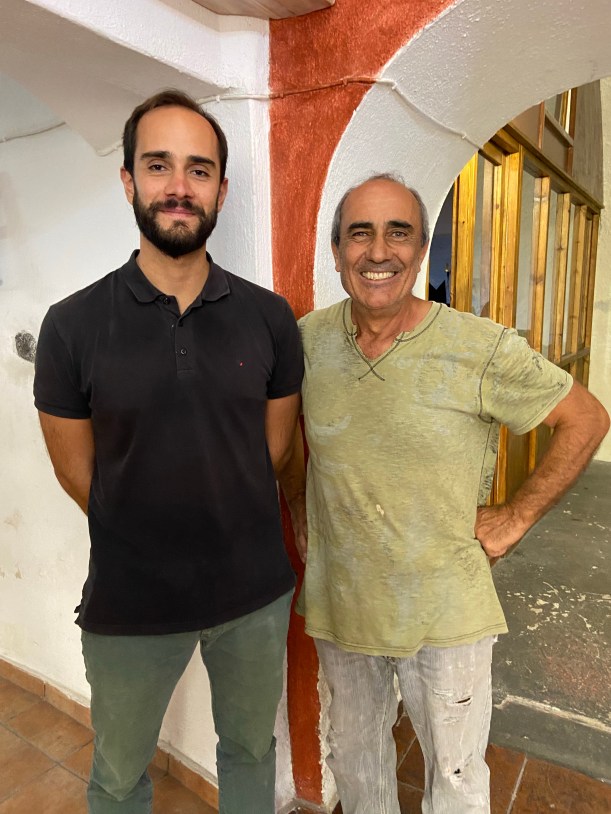
The passionate Vagelis Gavalas stands proudly with his father George
Gavalas winery
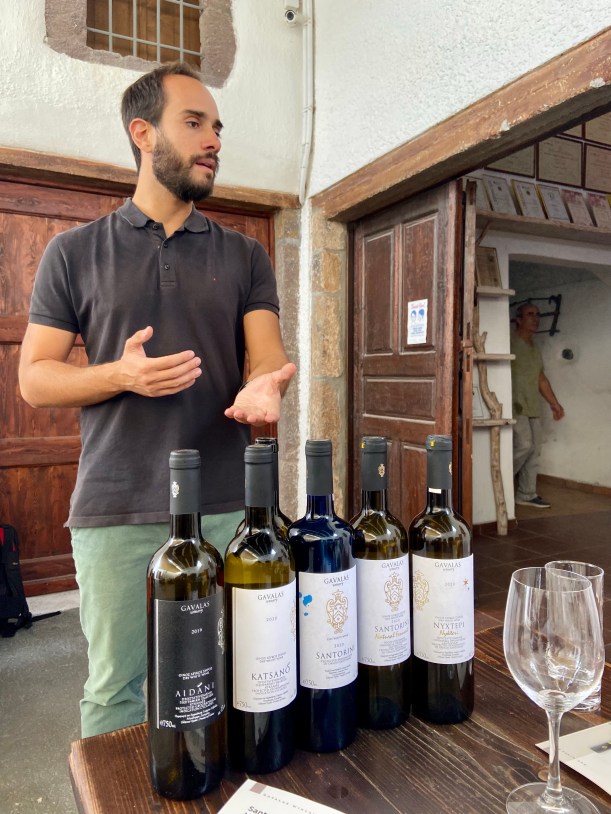
Gavalas was established in 1895 making it one of the oldest in the Cyclades. It is still family run with the fifth generation Vagelis taking on the realms. It is situated in the very beautiful hilltop village of Megalochori. Our Toyota Aygo almost ended up wedged into a tiny narrow street. We would recommend parking up and exploring the delights of Megalochori prior to tasting. We were fortunate to be hosted by Vagelis Gavalas who if he’d had his way would have kept us there all day! They have a broad range of styles and have some lesser known varieties such as Katsano
Wines tasted with Vagelis Gavalas
Aidani 2019
In the past vineyards used to be mostly assyrtiko but other grape varieties mingled in including Aidani. So many wines labelled Assyrtiko were effectively field bends. However, although the PDO still allows a percentage of other varietals all the serious wine makers now select to bottle 100% assyrtiko wines. At least as far as possible.
So as a result there is a fair amount of old vine Aidani and a 100% bottling appears on a number of wine makers lists. Its not made for aging and is best at around 2-3 years
The winemaking includes a cold soak, fermentation in temperature controlled stainless steel tanks and 3- 4 months on lees with batonage , typical for aromatic type grapes.
Indeed, the wine is more aromatic and less acidic than assyrtiko. There is an aroma of rolling tobacco and ripe honey dew melon.
It has medium body, medium acidity, flavours of stone fruit, mineral, citrusy with a bitter lemon pip finish.
Vagelis Gavalas the wine maker explains that Aidani does have a bitter characteristic which the lees aging softens out.
Katsano 2020
This wine is a blend of two rare local grape varieties Katsano 85% and Gaidoura 15%. Made in a similar way to the Aidani and at 12% alcohol a lighter wine.
A floral nose, hyacinth with a green tinge of dried herbs, potpourri quite delicate
Lighter body, higher acidity, floral, green and refreshing. Similar profile to a gavi di gavi
Santorini 2020
100% assyrtiko in a distinctive blue bottle.
Blend of different parcels from across the island all vinified separately
Classically austere in style. Lemon sorbet, a green florality, wet stone and citrus pith.
This is my type of wine, fresh and clean with crisp acidity. More lemon, lemon pith and with a phenolic, herbal tingling finish on upper gums. Great balance the freshness masks the 14% alcohol. Really lovely!
Santorini Natural Ferment. 2020 14%
Made from old vines of 50 plus years and with wild yeasts. Slightly riper grapes with a bit more residual sugar. Some of the harvest matured in old oak barrels then a proportion blended back in.
A wine with a richer flavour and more texture from the longer lees aging. Lime, lemon pith, wet stones, fresh green herbs. A lovely characteristic salty tang on the finish. Excellent!
Nykteri 202014.5%
This is a barrel aged Assyrtiko using the best late harvest grapes using first run juice from grapes treaded into the night.
Vagelis explains that the old style Nykteri were heavy and oxidative wines made from the last batches of grapes, made in often partially filled barrels and intended for the wine makers own consumption. But now better more controlled wine making techniques are used to prevent over oxidation.
A smoky, volcanic nose with a hint of vanilla.
Ripe stone fruit, mineral salty and intense, full bodied but nicely balanced.
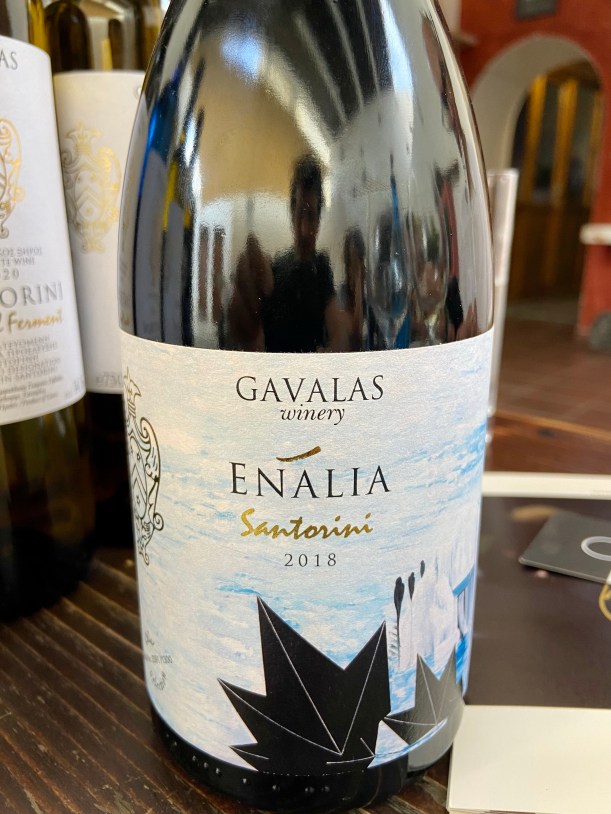
Enalia Santorini 2018
Even older vines at 120 years plus 18 months lees aging.
A pleasant whiff of petrol on the nose, more dried herbs.
A very intense palate, concentrated baked lemon, with a focused sweetness followed salty wet stones, goes on for ever wow!
Full body well balanced by high acidity which masks the alcohol level of 14.5%.
Vinsanto 2013
280 grams residual sugar.
Vinsanto is aging a minimum of 6 years, this one actually 7 years.
A real Corker!
Figs and dates with a hint of crème caramel on the nose.
Luscious velvety mouth feel with more soft dried figs and medjoule dates with faint toffee notes. Obviously sweet but with great lift and balance. Surprisingly low alcohol at 11%.
This lasts and lasts. Complex and delicious!
We could easily have stayed all afternoon, such was the quality of the Gavalas wines and the passion of Vagelis but we were already an hour late for our booking at the highly recommended Metaxi Mas restaurant .
Venetsanos Winery
Venetsanos winery perched spectacularly on the edge of the Megalochori Caldera
Venetsanos is one of the oldest wineries in Santorini founded by George Venetsanos in 1947. The winery was excavated vertically inside the volcanic rock. They used gravity for the wine making process. The wine flowing down pipes more than 300m down, to be loaded in the ships in the port of Athinios. The wine was exported to France, Russia and Egypt.The tasting was held on on a rocky terrace with the stunning caldera below and overlooking the port All wines are single vineyard with low production and high quality.
Santorini
Assyrtiko 100%,Crisp acid lemon grapefruit lingering bitterness and salinity
Nykteri
Vanilla whisky creamy texture Rich wine, Nykteri harvest at night, late harvest with oak ageing
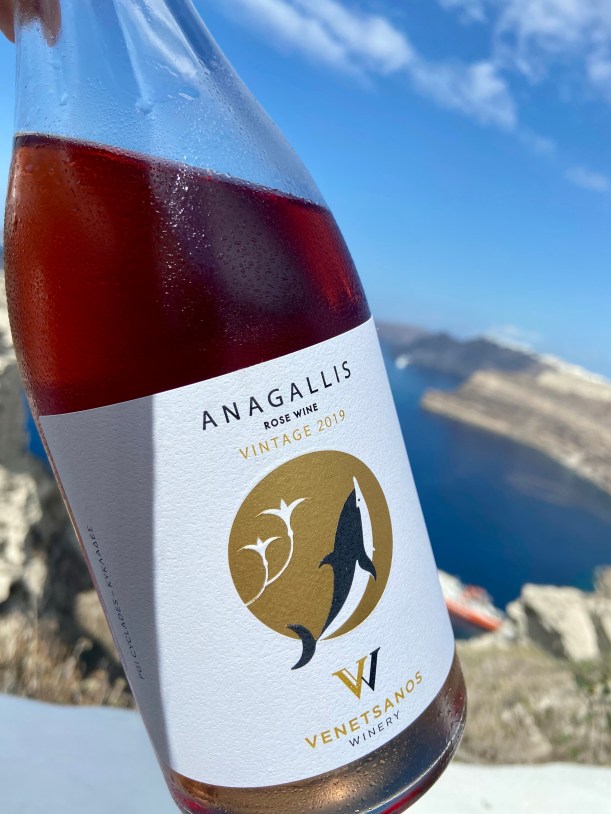
Anagallis
Rose wine deep pink colour ferment with 2 white grapes and mandilaria red.
Delightful perfumed red fruit candied strawberry and red cherry nose
Hint of residual sugar. A crowd pleaser more American in style Mandilaria
Red grapes not overly complex drying tannins all over mouth reminders of an Italian wine possibly Barbera
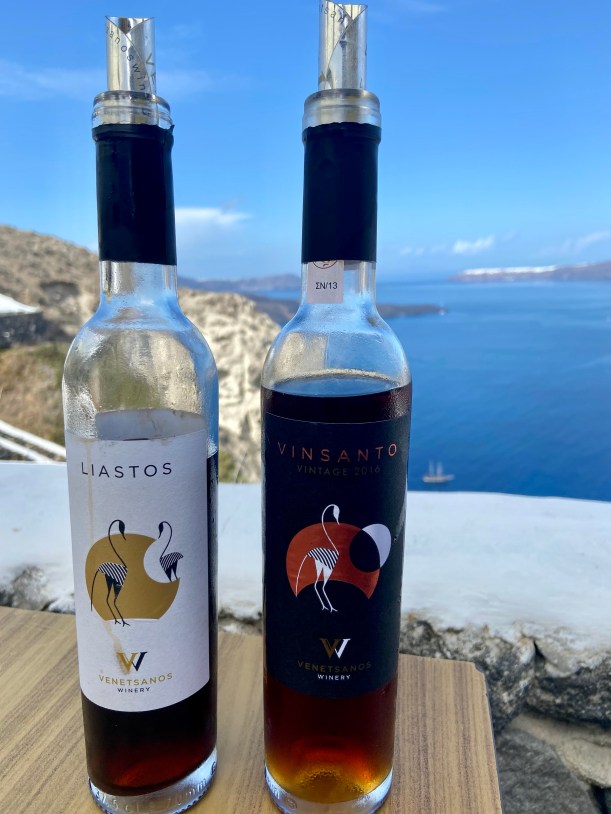
Vin Santo
Assyrtiko10 to 15 days drying grape, Luscious very sweet some oxidation nuttiness, fig, date, prune and vanilla
View from Venetsanos restaurant overlooking the port of Athinios
Founded in 1879 Bodegas C.V.N.E. (Compañía Vinicola del Norte de España) is still owned and run by the Real de Asua family.
There are four brands under C.V.N.E umbrella.
CVNE – (coonay) the flagship brand , made every year,classic Rioja made in the traditional style.
Imperial-rich, full-bodied Riojas, with the Reservas and Grand Reservas being some of the most long-lived in the region today. Excellent for aging and only made in the best years.First made in the 1920’s benchmark style of classic Rioja.
Vina Real- more fruit forward with a stronger new oak component more modern in style with a higher percentage of Garnacha made in a state of the art no expense spared winery outside Logrono
Contino- single vineyard brand established 1973 in Rioja Alavesa more fruit forward than Imperial or Vina real
This was a great way to welcome in 2022. We had a packed crowd of 34 wine lovers for this wine dinner hosted by Quentin Sadler. The wines were fabulous. Favourites were the deliciously textured delicately oaked Contino Blanco. The Rioja Reserva’s were fantastic with the Welsh lamb and the Contino Gran Reserva 2011 finished things off in style.
There was no better way to celebrate our first wine dinner since the start of the Covid pandemic than with the inimitable wines of Michel Chapoutier.
Maison Chapoutier was founded in 1808 and Michel Chapoutier took charge in 1988, he became the seventh generation of his family to run the Domaine. All his vineyards are farmed biodynamically.
We were lucky enough to meet the eccentric and amiable Michel at a party in his Maison when we arrived in Tain Hermitage some years ago. His wines are extremely high quality.
They have vineyards in the best sites including Hermitage, Crozes-Hermitage, Saint-Joseph, St Peray, Côte-Rôtie, Condrieu and Châteauneuf-du-Pape.
They also produce in other areas of France such as Roussillon and outside France including Australia Portugal and Germany
Guillaume Lafragette, Brand Manager of M.Chapoutier presenting excellent wines
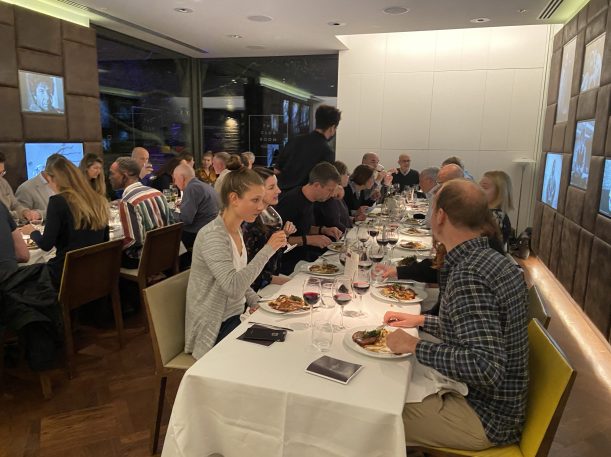
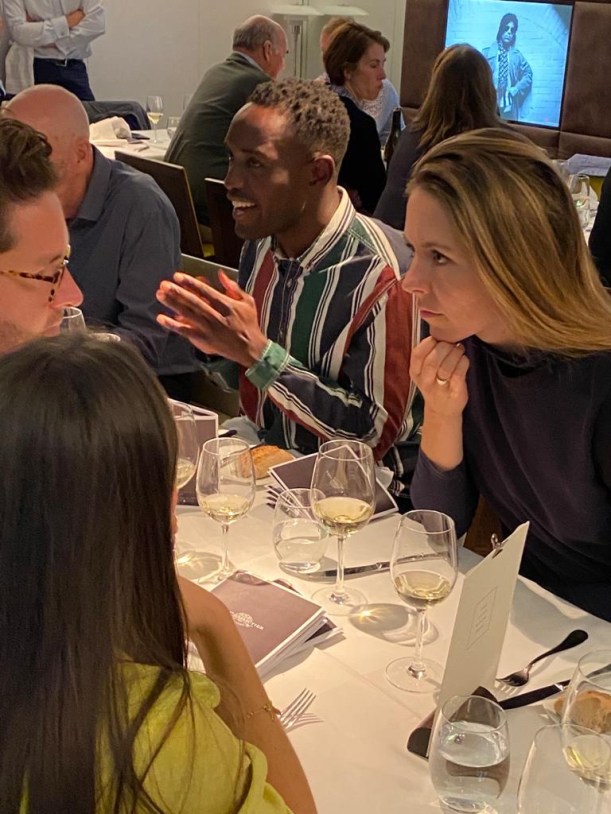
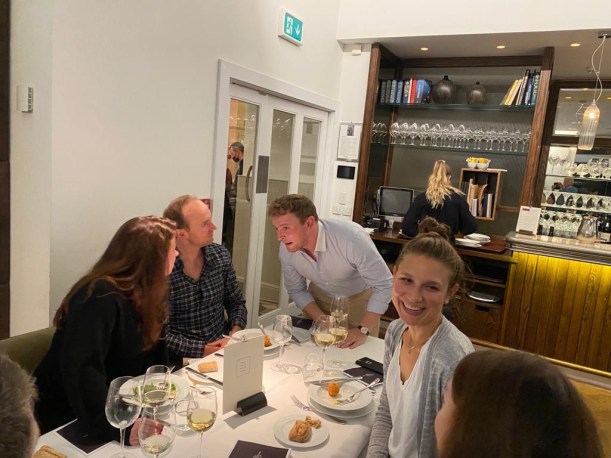
The atmosphere in the Club room at Frederick’s marked the occasion. A packed crowd on 34 wine lovers included new recruits including a cohort of wine enthusiasts, currently doing their WSET exams. We started with an introduction of Chapoutier. Guillaume Lafragette Chapoutier brand manager was equally as excited to be back to live events as our attendees
The wines showed incredibly well. Stuart’s Tasting notes below-
Esteban, Domaine de la Combe Pilate, VDF, Sparkling, White
Made using methode ancestralle where there is only a single fermentation which is stopped while the wines are put in a capped bottle to finish without any added yeast or sugar (unlike methode champenoise/traditionelle).
Light bubbles, bready, with a faint apricot nose. Opened up as it warmed up to expose more Viognier character. 9% ABV, very drinkable, not overly complex.
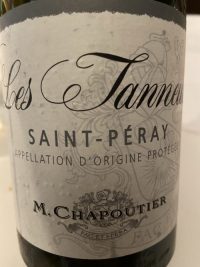
M. Chapoutier Les Tanneurs, Saint-Péray, White
100% Marsanne made in stainless steel. Apples, citrus fruit, mineral nose. Body medium +, acidity med +, very good balance between the fruit and acidity, with a lingering saline and slightly bitter finish. Very elegant, long and worthy of its place.
M. Chapoutier Mathilde Duché d’Uzès Southern rhone blend
A fuller wine made from a blend of Viognier, Grenache blanc, Marsanne and Roussane, fermented and aged in stainless steel, from clay-limestone soils. Apricots and other ripe fruit, some white flowers (Viognier), balanced with the cut of acidity from the Marsanne and Roussane, creating a beautiful blend that somehow balanced all the different weights and flavours.
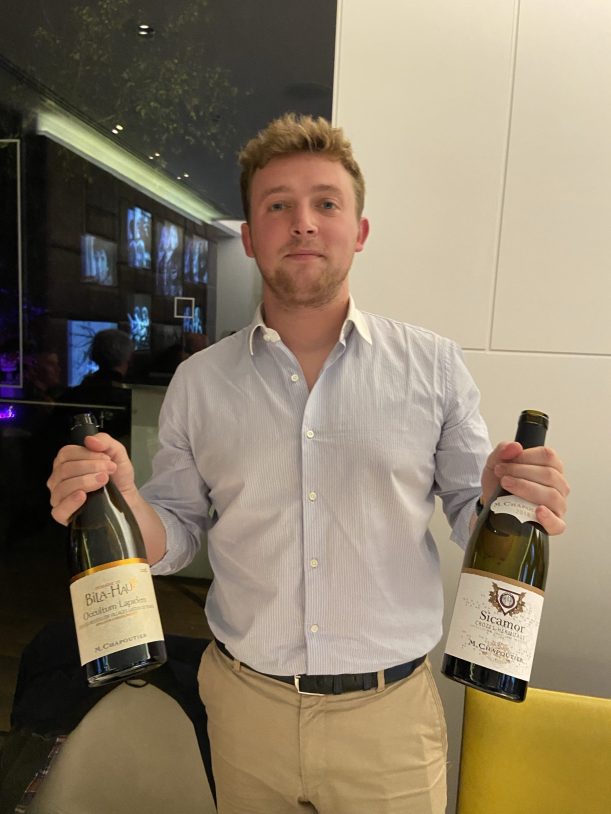
M. ChapoutierSicamor, Crozes-Hermitage, Red
100% Syrah from Crozes Hermitage, made in concrete tanks. A very typical Syrah nose of leather, spices, pepper, and black fruit, with great balance. Showing some meaty notes as the wine opened up, with a penetrating fruit concentration, fine tannins and lovely overall balance. A very classic example of Crozes.
Bila-Haut Occultum Lapidem Cotes de Roussillon
Blend of Grenache, Syrah and Carignan from Roussillon. A brute of a wine, dark in colour, exploding with garrigue and dried dark fruit, very herbaceous and spicy nose. On the palate, the wine overwhelms, with a bit of fiery bite, biting tannins as you get a sense of the individual parts of this wine as well as a good dollop of the 14.5% ABV. The wine is still quite primary, not quite knit, but based on experience, will evolve into a balanced beautiful expression of the terroir. Give it 5-7 yrs same to tame and settle.
M. Chapoutier Bila-Haut Banyuls
Made from 100% Grenache noir, fermentation stopped by the addition of alcohol to create this 17% sweet and elegant dessert wine. Chocolate powder notes with kirsch, liquer dipped cherries. Smooth and delicious with both the chocolate pot and surprisingly, the Stilton. From 500cl bottles
My favourites on the night were the St Peray 100% Marsanne for it smooth full body and texture. Stuart was more of a fan of the Clos d’uzes Mathilde and the fruit packed well balanced Sicamor Crozes Hermitage.
I was pining for mature cheese with the Banyuls rather than the chocolate dessert. True to form my father delved into his travel bag and delivered a selection of mature cheeses including Michel Chapoutier personal favorite Blue Stilton.
We would like to especially thank the excellent Hatch Mansfield for their great assistance with this dinner.
Stuart’s challenge this week was blind reds, Bordeaux varietals predominant, a blend but had to be >65% of one of the main current Bordeaux varietals – Cab Sauvignon, Merlot, Cab Franc, Petit Verdot, excluding Malbec, any age and from anywhere.
We would have to draw upon our favourite tome ‘Beyond Flavour’ by Nick Jackson MW and remind ourselves of some key distinguishing features of the varietals.
Cabernet Sauvignon has medium to high levels of fine grained tightly knit tannins, always felt on the gums not the tongue. (Hole in the middle of palate) The sleek tannin structure is linear with a strong sense of direction enhanced by good retention of acidity.
Merlot’s fine grained tannins are also felt on the gums but they are fruit wrapped and can sometimes feel a bit sticky/clayey.
They are so richly fruited that the tannins are often less obtrusive in Merlot than Cabernet Sauvignon. Furthermore the feel of the tannins can lead to a more square sensation rather than the linearity of Cabernet Sauvignon. Also there is no hole in the mid palate as Merlot has such rich ripe fruit concentration. As opposed to Cabernet Sauvignon it can quickly lose its acidity and require acidification.
Cabernet Francs grainy stalky moderate tannins are also felt on the gums. It preserves its acidity well and has savoury red fruits and obvious pyrazines with a strong herbaceous streak.
Carmenere is described as green on green
Malbec has intense colourmay display high ‘lockjaw tannins’ especially at the angle of the jaw, with sweet fruit ending dry.
Petit Verdot is often perfumed with floral violet notes
The natural woody cedar flavours of the Bordeaux varietals enable them to blend so well with oak maturation also allowing gentle oxidation.
We had initially explored this theme a few months ago (including Malbec) tasting notes below.
Complex nose, very fine resolved tannins, powdery, not at angle of jaw, sweetness, black fruit medium + acid Med + Savoury persistent drying tannins. Delicious complex savoury balanced wine
We thought 15 to 20 years old as mainly tertiary notes no particular pyrazines and suggested a Malbec.
Medium to deep garnet clearly showing some age, on the nose Kiran detected baked plums and milk chocolate , Stu – Spices plum compote possible strawberry.
Adam got more spiced wood cedar also an oxidative nose, finishes a little Savoury/salty no pyrazine of note
On the palate soft resolved tannins very fine powdery dusty gum tannins mainly, medium plus acidity.
We were pretty certain this was a Merlot dominant right bank Bordeaux of probably premier cru level St Emillion of about 15 to 20 years old
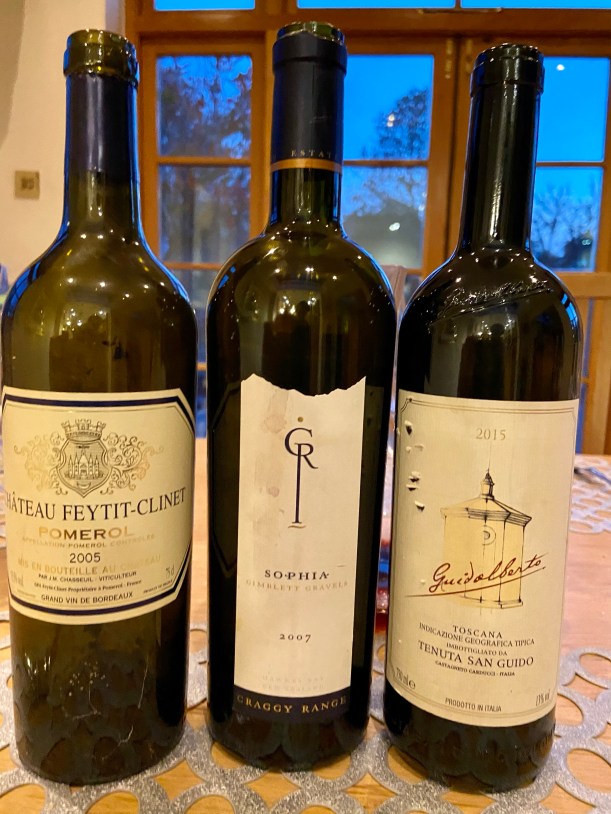
Merlot dominated Cabernet Franc Petit Verdot blend
This surprised us, though Hawkes Bay is pretty much as close as you can get for this style in the New world and I’m sure Steve Smith MW who we’ve done many tastings with will be delighted to know the outcome of our blind tasting thoughts.
I visited Craggy Range last year and saw the dedicated winery built just for Sophia.
Cabernet Sauvignon dominated cab Merlot blend from the famous Sassicaia winery in Bolgheri.
Learning points
Focusing on tannins is invaluable. Merlots certainly felt sweeter fruit wrapped and sticker
New Zealand and other New world regions with age can very closely resemble the old world. If in doubt lack of any pyrazines(herbaceous bell pepper blackcurrant leaf cassis notes) unlikely to be Bordeaux
Pyrazines are more often found with Cabernet Sauvignon and Cabernet Franc less so with Merlot which has lusher fruitier spectrum with softer tannins and no hole in the palate
Kiran’s choice this week, and it was to be our first non blind tasting for over a year. Kiran was seeking an exploration of Chianti, one of his blind spots. After listening to the excellent Guild of Sommeliers podcast on Sangiovese it further inspired this weeks theme.
A trio of Chianti wines
It was a little disconcerting arriving with uncovered bottles but it had its own merits and still presented us with many learning points.
Of course we had pre read the indispensable ‘Beyond flavour’ by Nick Jackson MW which primed us into what structure to expect. However there were some revelations in store.
Kiran’s wine
Monte Bernardi Sa’etta Chianti Classico riserva 2016
100% Sangiovese single vineyard oak 24 months bottle 1 year
Appearance– Medium ruby
Nose– tart cherry thyme tobacco spice savoury profile
Taste-Very drying gum tannins fine sand or chalky. Clearly felt in the gums medium + and med + acidity
Med acid very dry dusty no real sweetness
Savoury salty flavour profile cherry strawberry
No tertiary aromas
This felt like a typical Chianti and was crying out for a tomato pasta dish
Adam’s wine
Brolio Barone Ricasoli 2013 Chianti Classico Riserva
Very different nose clearly pyrazine blackcurrant, blackcurrant leaf
Herbaceous, chocolate vanilla yoghurt smoother ? Oak influence
Smooth sweeter softer tannins mainly gums
If Tasted blind we all said we would have thought this was a Cabernet based wine. Tannic quality a little different but on the nose clear pyrazine.
Sangiovese 80% Merlot 15% Cabernet Sauvignon 5% aged in barrique and tonneaux for 16 months
Learning points
Small amounts of other varietals can make a profound difference
Chianti Classico wines can vary enormously
Stuart’s wine.
Il Carbonaione 2016 Podere Poggii Scalette
Sangiovese 100% IGT from older vines planted in 1928 from the rare Sangiovese di lamole clone
Red fruits dried and jammy some dark fruit cinnamon stick Vanilla tobacco Tinned cola
Mouth more powerful wine
Notable oak vanilla
Gummy distribution tannins finish savoury
This was a more robust expression of Sangiovese again showing the great diversity of Chianti. In some ways this provides greater interest in other you don’t know quite what to expect.
As with all Italian wines food is needed, fortunately, Kiran hade made a delectable Confit duck and red cabbage