WanderCurtis Wine

Wine tastings, corporate events, reviews and recommendations


Leave a comment

New Zealand Wine Tour, Hawke’s Bay, January 2020

The Hawke’s Bay is perfectly placed as New Zealand’s second largest wine region.  Known for being one of the hottest and driest regions of New Zealand, it is the fruit basket bay on the East coast of the North island – producing tonnes of delicious fruit, especially apples for international export on a small flat coastal plan and surrounding hill terraces.

The region might not yet be as world renowned as its NZ Southern wine neighbours and their international successes (Sauvignon Blanc in Marlborough, Pinot Noir in Central Otago), but it is New Zealand’s oldest wine region and steeped a rich wine growing history from the late 1800s.  Each of the vineyards we visited had current links to early New Zealand wine pioneers (Marist religious brothers, Anthony Vidal (1905), Tom Macdonald) and late 19th  century established plantings (Esk valley terraces, Te Mata estate).  After a period of settling and experimentation, the region has now focused on what it grows and produces well – Chardonnay, Syrah and Cabernet Sauvignon/Merlot blends.

There are now over 200 vineyards planted over  about 5,000 hectares mainly on the Heretuanga plains which includes the famed Gimblett gravels and Bridge pa triangle which are essentially terraces left behind by Ngaruroro River. The Gimblett gravels pure gravel beds arise from the changed course of the river in 1867. The ground is ideal for top quality viticulture, good drainage and the vine roots have to struggle through the gravels for nutrients.


Mission estate

Mission Estate is steeped in history being New Zealand’s oldest winery dating back to 1851, the first commercial sales began in 1870.

It was set up by Missionaries, Marist priests left who France in1836 landing in 1838. It is still owned by the order of St Mary Church. Their current winemaker is Paul Mooney, the first non priest to have this role. Fruit is acquired from lots growers in Hawke’s Bay including Marlborough and Central Otago.

Categories of wines go from Estate, entry level volume: Vineyard selection cellar door only, Reserve wines low crop fruit thinning, more concentrated wine more in barrel more new oak. Jewelstone top wine only in most exceptional parcels in great years

My friend Aaron remembers when he was brought here on a school residential in 1987. They offered him the opportunity to train to be a priest which he politely declined.


Wine tasting hosted by Phillip Van Der Walt

Mission Estate fête Hawkes Bay

Pinot Gris 94% Chardonnay 6% charmat method pear nutty almond

Mission Estate Old vine 40 years semilon small block

Likes heat too cool generally in nz Hawkes bay warm enough to produce tropical pineapple characters

Citrus moderate acid, I didn’t find classic semillon characteristics

Mission Estate Jewelstone Rose  2019

First ever jewelstone Rose 2019 only 3 barrels made Gimblett Gravels 80 Merlot 20 can sav plenty fresh red fruit, really good rose

Mission Estate Jewelstone Pinot noir 2018

Red cherry straight fire nice balance from Central Otago

Mission Estate 2018 Syrah Gimblet gravels

Spice pepper mod tannins lighter style Ground black and green peppercorns

Mission Estate Late harvest Riesling 2018

Sometimes botyrtis tiny amount blended with Viognier and arneis 106 g l,Juicy ripe apricot

Mission Estate Barrel sample Huchet Chardonnay

2018 sl nutty a bit oxidised almond hazelnut nice texture Dry texture barrel older barrels


Leave a comment

New Zealand Wine Tour January 2020, Part 3, Hawke’s Bay, Te Awanga Coastal Region

Tim Turvey owner of Clearview demonstrating his new wiring system

Te Awanga is on the coast, south of Napier and benefits  from the moderating effects of the Pacific ocean. It is ideally situated for white, cooler climate varietals. We visited Elephant Hill and Clearview Estate.

Clearview Estate


From the moment of meeting the owner of Clearview, Tim Turvey, it was obvious that he knows how to grow stuff (pineapples, pine trees, avocado, juniper berries, olives basically everything you can think of) He has the determination and stamina to both work hard and play hard to make his success.   Tim purchased a small plot of bare land in the mid 1980 with a view to doing what he knows best, and it wasn’t long before he used his skills to grow grapes and producing wine from this bare patch. Looking around the olive and avocado shaded restaurant, the name “Clearview” no longer suits the heavily planted property. Tim has literally dug every post hole and strained every new wire. He discovered a small plaque whilst digging which revealed that this was the second site of the original Vidal vineyard.

Tim’s enthusiasm and commitment to his endeavour was obvious. He was quick to show us his recently innovations including a new steel post system to replace hours of back breaking hole digging. His best recent story was the accidental discovery that sheep let loose in the vines, leaf strip to the perfect height without eating the berries (and saving the cost and boredom of employing humans to do this)

He now has a small product of typical styles of the region and other more experimental follies. We enjoyed lunch in the shaded gardens while Tim brought out pairs of wine for us to try. I was too focused on the delicious the 28 day aged ribeye to make formal tasting notes.


Wines tasted

Tim makes six Chardonnays we tried 3 of these and the highly rated top of the range endeavour chardonnay made with extremely low yields, they were fruit driven wines with lovely balance. The Rose had good colour and lovely red fruits, more traditional style rather than the newer vogue for more subtle barely coloured Rose. Interestingly it is made with Chambourcin an unusual hybrid grape with red flesh.The Endeavour red 2016 is only made in exceptional years revealed the quality of fruit here.We finished with Sea Red – a lightly fortified red wine made from cane cut grapes to increase the sugar content. None of the wine is cellared and mostly sells to the NZ market or at the cellar door, at reasonable prices given the high quality of wine.

Tim was too generous and passionate to leave it there. We were taken went to his authentic winery to taste a selection of barrel samples. I noticed an unusual brown cladding to some of his fermentation tanks which is a material derived from his surf board making days. Tim said it’s the best insulator he’s found. We finished with a sample from a tiny barrel of botrytized Chardonnay painstakingly made from very small quantities of noble rotted fruit. It was phenomenal and a fitting end to one of the best wine experiences I’ve had over the years.

Elephant Hill

The magnificent no expense spared winery at Elephant Hill

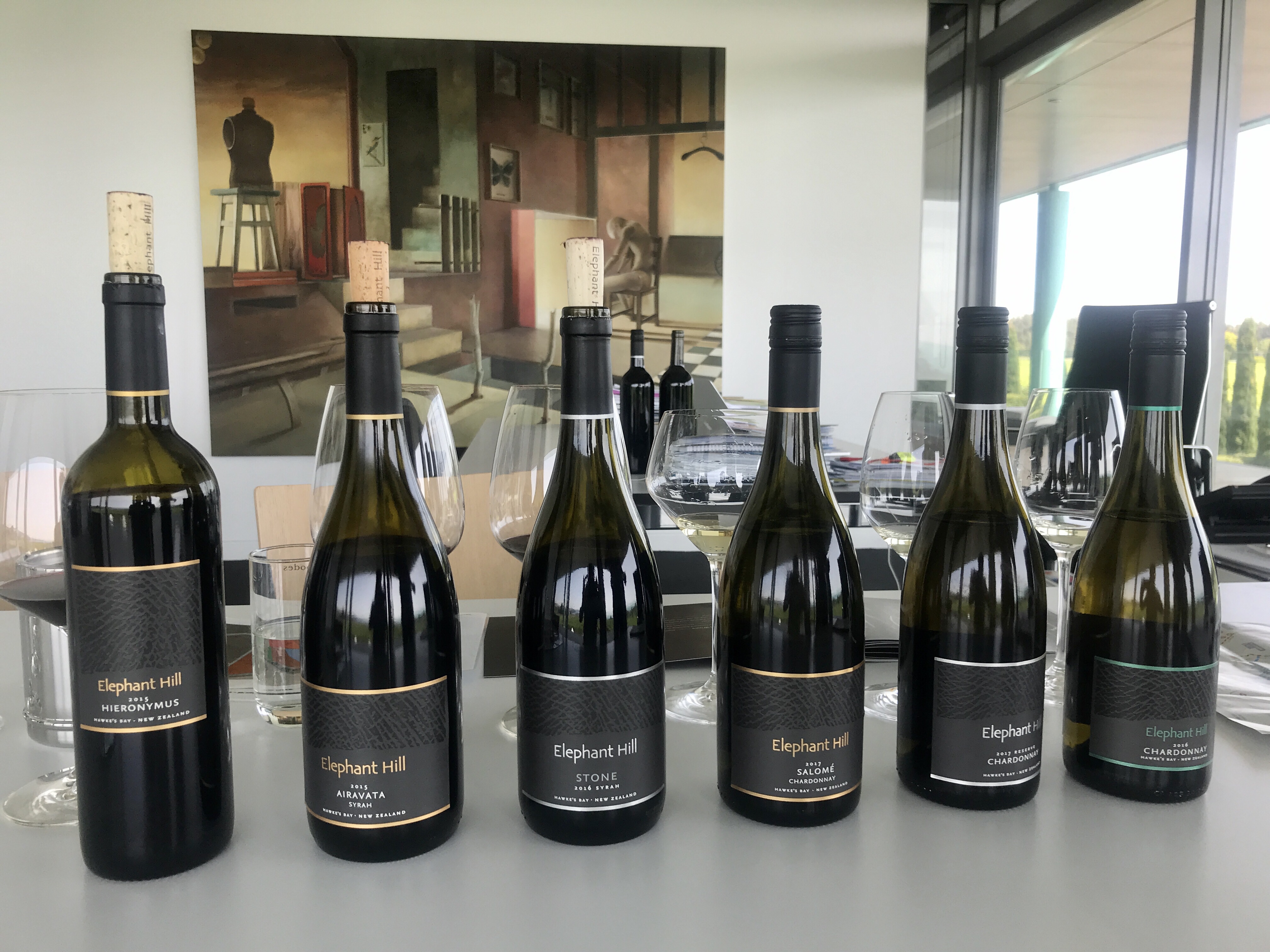
Elephant Hill is a new comer to the region with high tech new facilities officially opened in 2008. The focus is on low yield from top quality sites. It was originally set up by the late founder Roger Weiss  and is now led by his son Andreas.The winery is stunning, designed by architect John Blair. It is Bauhaus, clean lined  covered with beautiful turquoise coloured copper which during a  four and a half year process it was oxidized in Germany to give this effect. It blends in seamlessly with the colours of the sea off Cape Kidnappers.

They have 62 hectares  including holdings in the Bridge Pa triangle and Gimblett Gravels and Te Awanga on the coast, and are one of the top 5 Syrah producers in New Zealand. Categories of wines go from Estate to Reserve to Limited edition and Ultimately Icons


Wines Tasted


Elephant Hill Estate Chardonnay 2016

pickled lemon, citrus, fresh, some smoke barrel influence texture

Elephant Hill Reserve Chardonnay 2017

More smoke flintiness wood vanilla possible salinity r(ight by the Pacific and sometimes the sea washes up to vineyard) No or minimal malo, hazelnut almond on the palate not overtly buttery Very nice length

Elephant Hill Icon Salome 2017 after Maria Salome family history dating to 1700’s

Rich well seasoned barrel, First year T5 Malo 35% pineapple, mango,, nuttiness saltiness long long on plate and sides mouth

Elephant Hill Stone 2016 Syrah

Black fruit lovely soft ripe tannins flinty stony good acid ,1% Viognier

Elephant Hill Airavata Syrah 2015

70 Gimblett gravels 30% Te awanga, fruit, soft silky tannins, floral soft fruit tone cherry and spice black pepper

Elephant Hill Hieronymus 2015

Full bodied delicious black fruit tannin and chocolate 41 cs 22 merlot 17 cab franc Malbec 8 Tempranillo, smoky leathery Structured tannins. Needs a few more years


Special thanks to Aaron O’Connell for his help writing this post and his companionship during many days of hard work in Hawke’s Bay

This slideshow requires JavaScript.


Leave a comment

New Zealand Wine Tour January 2020, Part 3, Hawke’s Bay, Taradale

Church Road


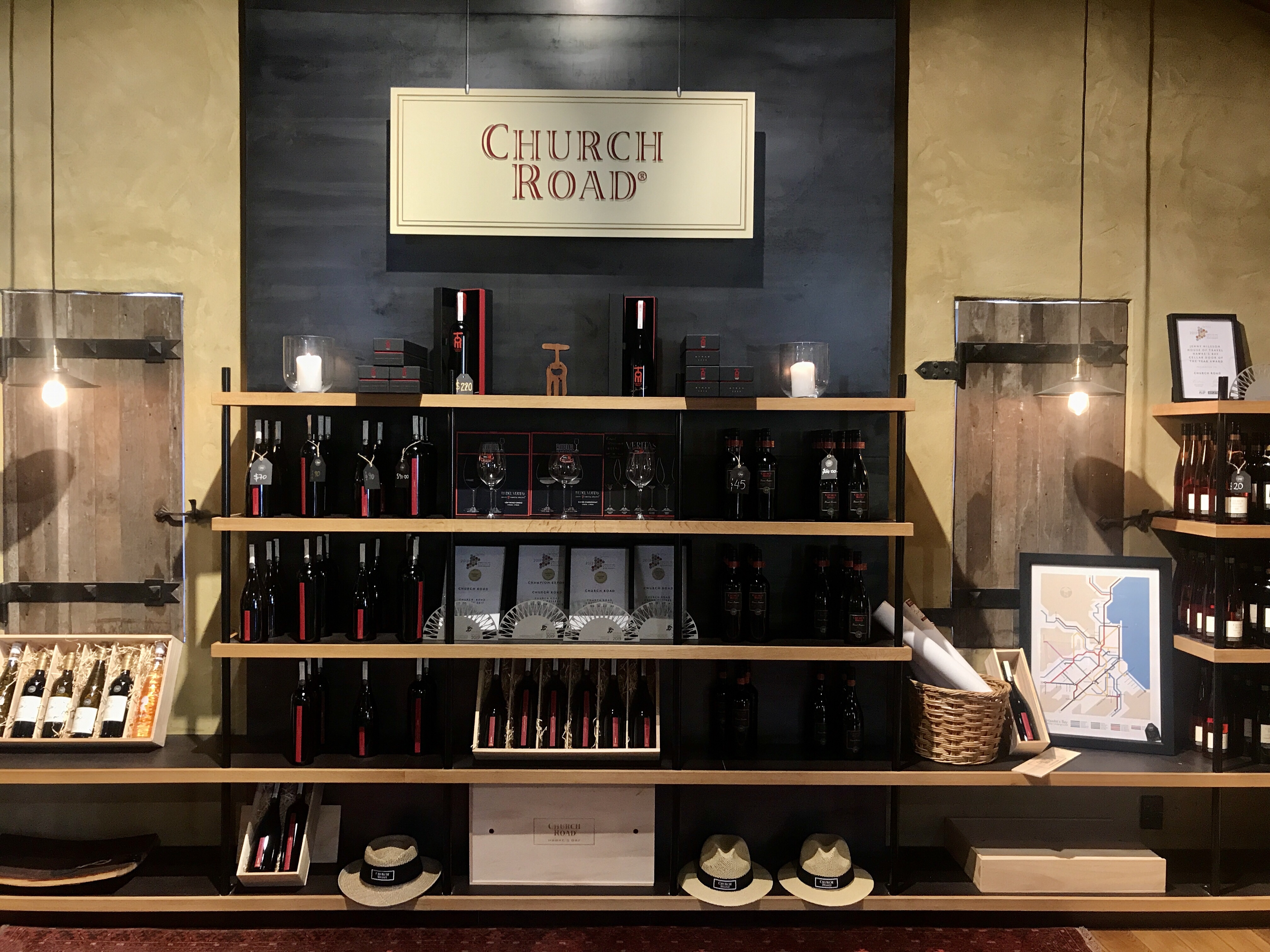
We reached Church Road winery via a lovely, easy, flat, dedicated bike trail from Napier which hugs the coast, initially going past the harbour full of commercial logs ready for export to China. It then goes via the wetlands created when the ground rose by over 6 feet during the devastating earthquake of 1931, it was initially the harbour. Church Road has a long history dating back to 1897 when a former member of the Mission founded Taradale Vineyards on a 2 hectare site. Tom McDonald who worked since age 14 on the vines and in charge of property aged only 19. It later became McDonald wines. Tom pioneered some of New Zealand’s earliest wines receiving an OBE in 1976. Now owned by Pernod Ricard the range is diverse including unusual varietals such as Marzemino and Sauvugnon Gris. The Grand Reserve and flagship TOM are only made in the best years.


Church Road Pinot Gris Gwen 2019

Smooth textured sl tropical fruit guava

Church Road 1 Chardonnay 2018

Smoky flinty Chardonnay Juliette said smells of twiglets I think reflecting the lees ageing smoky savoury texture

Church Road Gwen Rose 2019

Merlot 92% Tempranillo 7% Malbec 1% more subtle Provence style Rose

Church Road Rose 2019

Californian style, red cherry raspberry fruit forward

Church Road Marzemino 2018 (grape from Trento Alto Adige, Italy)

Nice soft tannin dry good acid back bone

Church Road Tempranillo 2017

3 other growers of Tempranillo in Hawkes bay, blue fruits hint mocha

Church Road Grand réserve Syrah 2017

Lighter elegant style Syrah floral red fruit, as a few people have commented this is our Hawke’s Bay pinot.

Church Road Tom Syrah 2015

Flagship Syrah named after  Tom McDonald.  black fruits but tasted Slightly Porty ?oxidised

Church Road TOM Cabernet Sauvignon  Merlot 2015

Grand Reserve Cabernet from Bridge Pa site 66%  Merlot 23% from Gimblett Gravels TOM +++ best wine yet of Hawke’s Bay tastings but $220 per bottle! Only at cellar door or duty free.

Brilliant…Just after telling Aaron these super premium wines are wines not worth it I took a swirl of this in my mout and told him I take back everything I just said!. Amazingly concentrated long complex plum black cherry violet cedar vanilla with beautifully integrated fine grained ripe tannins fruit oak and intensity, long long on palate one to age for a long time


Leave a comment

New Zealand Wine Tour January 2020, Part 3, Hawke’s Bay, Havelock North

Craggy Range

My visit to Craggy Range was well overdue. Their wines have long been one of my favourites. My first experience of them was a Craggy Range Le Sol back in 2004 at a wine society tasting in London with my French brother in law Seb. We were instantly struck by the concentration and intensity of this wine. So good was the Le Sol, we acquired a bottle that same evening and took as a BYO to the nearest Steakhouse. Kiran and I have long been fans of their excellent Bordeaux blend, Sophia, and have enjoyed many vintages over the years. The overall commitment to excellence shines through in their wines which we know well having hosted wine dinners over the years with Steve Smith MW. Steve has now left and set up his own business with American Brian Sheth (Smith and Sheth)
Craggy Range is owned by The Peabody family who have put it in a 1,000 year trust so it can never be sold, with the intention of creating a true legacy. The winery is a no expense spared tome to wine, set in magnificent gardens at the foot Te Mata peak.
The modern beautifully designed  winery is purely for Sophia. The other wines are made in a different site. We had the wine tasting in the garden enjoying the Hawke’s Bay summer.

Wines Tasted

Craggy Range Chardonnay 2019 kidnappers bay
Lemon citrus good acid fresh minerality
Craggy Range Les Beaux Cailloux 2017
This has not been made for a few years due to lead roll virus destroying the vineyards which have since been replanted.
Mineral soft textured smoky with beautiful balance. Pete the head somm rubbed together the stones found in the vineyard. The resulting aroma reflected some of the smoky minerals flinty nature of the wine. I couldn’t help myself in licking the stones which had a salty smoky taste, surprisingly delicious!
Craggy Range Te muna Road 2016 Pinot Noir
From Vineyards in Martinborough, Lovely ripe fruit cherry plum soft tannins
Craggy Range Te muna Aroha 2017 Pinot Noir
Sources from Vineyards in Martinborough Rich ++ complex perfume gamey wild berries could splash it on soft silky tannins ++ fantastic quality Pinot Noir displaying why this grape is so intoxicating.Aroha means love a very fitting name for this wine.
Abel clone gumboot clone ? origin from DRC clones smuggled back to NZ and confiscated.
Craggy Range Le sol 2016
100% Syrah20% whole bunch rich smooth blueberry long lovely tannins
Unidimensional at this stage, needs time to develop
Craggy Range Sophia 2011 and 2016
2016
Merlot dominant cab sav cab franc
Tannins beautiful acid lovely fruit beautiful wine+  mocha
2011 more complex but hint of oxidation
As expected the wines were fantastic reflecting the philosophy and investment here. Peter explained that after years of research based on blind tastings of screw caps, Diam and cork that everything from now will be bottled with screw cap. A trend that is understandably becoming more universal.


Leave a comment

New Zealand Wine Tour January 2020, Part 2- Northland – Doubtless Bay


Dancing Petrel Wines

Whilst sitting enjoying coffee at Waterfront bar in Mangonui, I spotted some beautiful vineyards on the slopes at the far side of the harbour. These are the vines of the newly founded Dancing Petrel Wines named after the Storm Petrel, which pirouettes across the waves. I was hosted by the very welcoming owner, Kim Gilkinson who has lived here since 2012 and bought the vineyards in 2018. She says the vines were not in the best condition. However she has put a lot of work in since. The plantings include a small planting of Tannat and recently Gewürztraminer. The wines are made at Marsden winery.

Wines Tasted

Dancing Petrel Viognier 2018

Carbonated, fresh apple apricot floral nice balance easy drinking

Dancing Petrel Viognier 2018

not overtly floral, apricot in the finish, dried apricot chews nice balance length sl saltiness

Dancing Petrel Viognier 2018 (Oaked) slight nutty on the nose

Dancing Petrel Pinot Gris

some fruit pear subtle

Dancing Petrel Rose

Syrah and Cabernet Franc hints of red fruits


This is not the easiest place are to produce grapes given the high rainfall and predominantly clay soils. However, given the amount of warmth and the North facing slopes, there is some potential. The stunning location on Paewhenua Island with 360 degree panoramic views over Mangonui harbour and the tourism should aid a new wine business.


Leave a comment

New Zealand Wine Tour January 2020, Part 2- Northland – Marsden Estate

Marsden Estate, Kerikeri, Bay of Islands, Northland, New Zealand


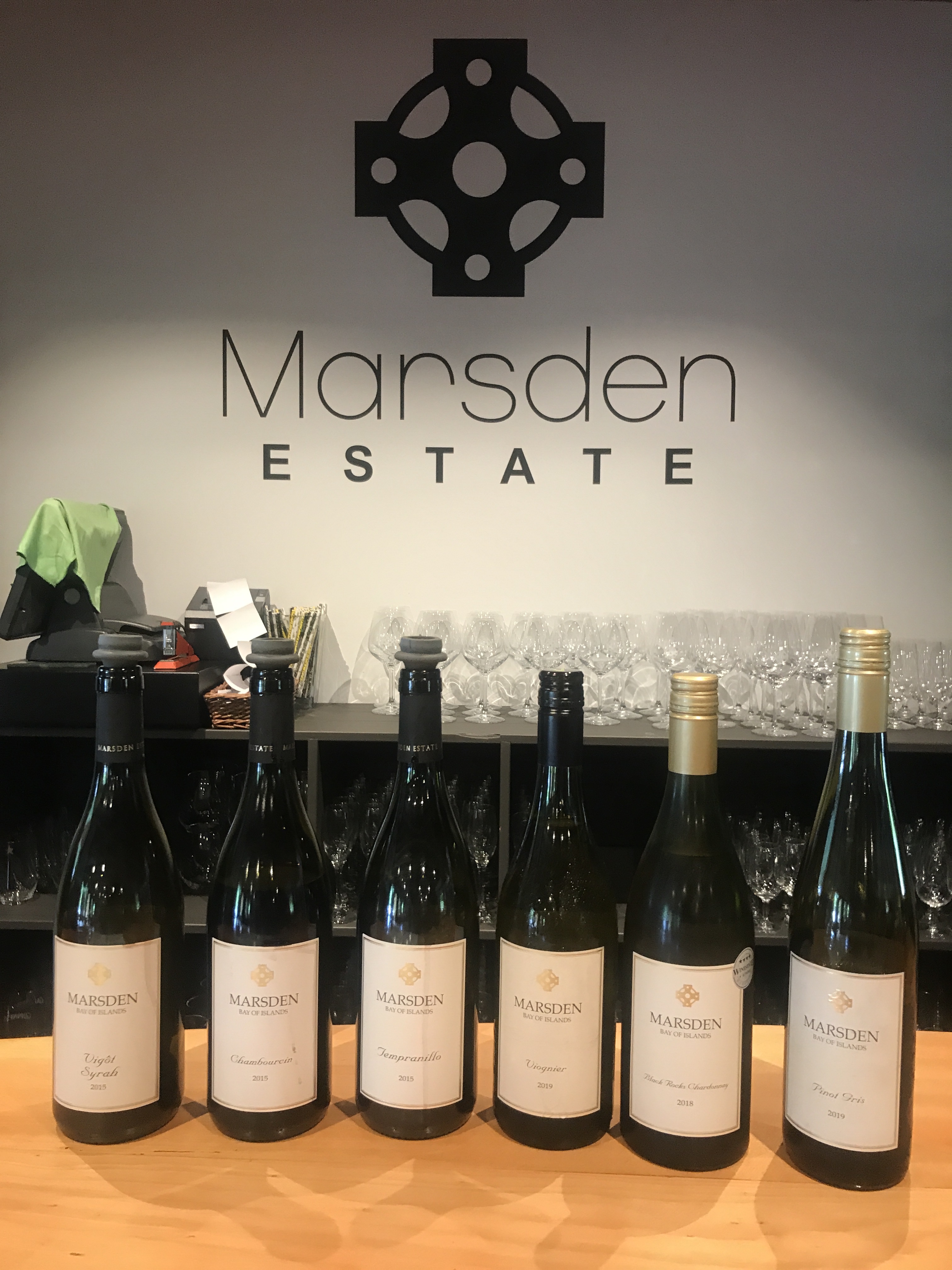
Rod Macivor founder of Marsden was preparing for his earliest harvest on record. So early that he was having trouble acquiring the yeast supply. Never in the 27 years since commencing Marsden has the harvest been this early. It had been a particularly dry few months. How much may be down to global warming is unknown, but this felt like an ominous sign. I had travelled to Marsden in Kerikeri near The Bay of Islands having heard about Marsden’s quality and the award winning Black Rocks Chardonnay. I was lucky enough to be hosted by Rod despite him being immersed in work. They had one of their grape growers field day/workshops today. Marsden works a bit like a Co-op with Rod making wine for over 40 individual growers. This reflects the scattered nature of Northlands wine growing areas over a large distance, the remoteness and low volumes produced. It’s not the easiest place to grow grapes with the high rainfall and humidity increasing risks such as fungal disease.

I was lucky enough to meet Mark Nobilo who with his many years of knowledge and wisdom advises local growers and winemakers in his own time. I also met Ben Byrne, winemaker at the expansive and heavily invested property; The Landing, which is making quite a name for itself.


Wines Tasted

Marsden Pinot Gris 2019

Floral pear textured slight spicy finish

Marsden Black Rocks Chardonnay 2018 +

Lovely buttery malo nose vanilla toasty peach. lees contact, smooth toasty oak long vanilla finish 30 % new oak lees few months

Marsden Viognier 2019

apricot tinned peach, bitterness good acidity

Marsden Tempranillo 2015

Red berry, chocolate yoghurt oak soft tannins 12 months oak cellar savoury

Marsden Chambourcin 2015

 American French hybrid recently commercial, salami nose peppery

Cured meats spice smooth good acidity

Marsden Syrah Vigot 2015 +

Mixture ripe blackberries spices turmeric pepper, lovely wine. I had to buy a bottle as well as the Chardonnay and Pinot Gris!

Barrel sample tannat

Blueberry and good tannin excellent development and approachability despite being a barrel sample.


The wines are made very well. I particularly enjoyed the Syrah and it was good to try a wine with 5 years of age.

It was interesting to try the Chambourcin, something more unusual which is adapted for the climate up here.

I enjoyed meeting Rod who exudes generosity, passion and ability which is reflected in his excellent wines.


This slideshow requires JavaScript.


Leave a comment

New Zealand Wine Tour January 2020 – Part 1 Auckland Region, Mangere

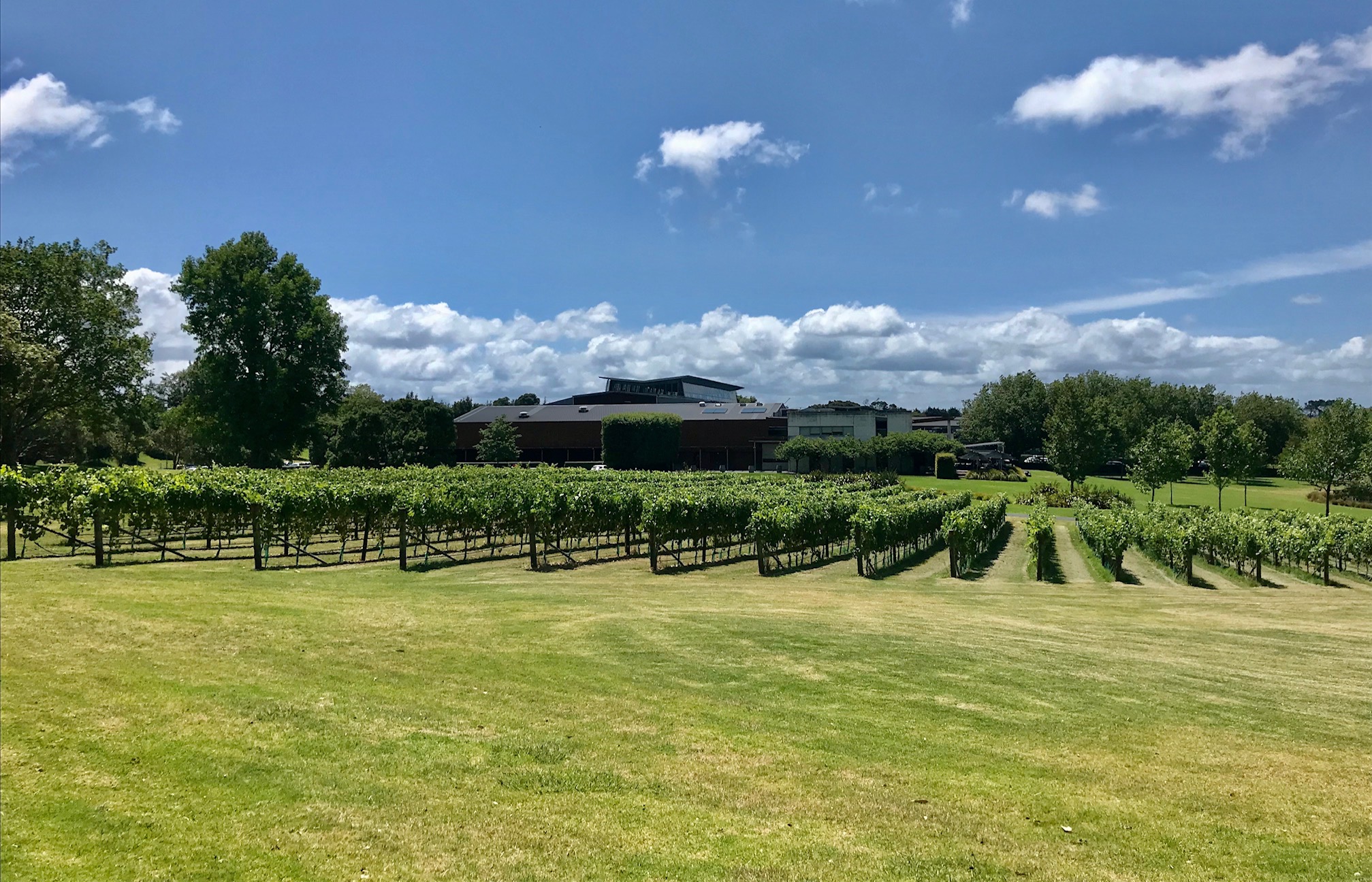
Villa Maria Estate was founded by George Fistonich, now Sir George, in the 1960’s and is still family run. They have extensive holdings in Auckland, Marlborough and Hawkes Bay. The 40 hectare site sits on an extinct volcano, the crater creating a natural amphitheatre. They hold summer concerts, past performers include Simply Red, Radiohead, Rona Keating, Simple Minds, Tom Jones. In March Aha and Rik Astley are booked, a great excuse to prolong my stay!

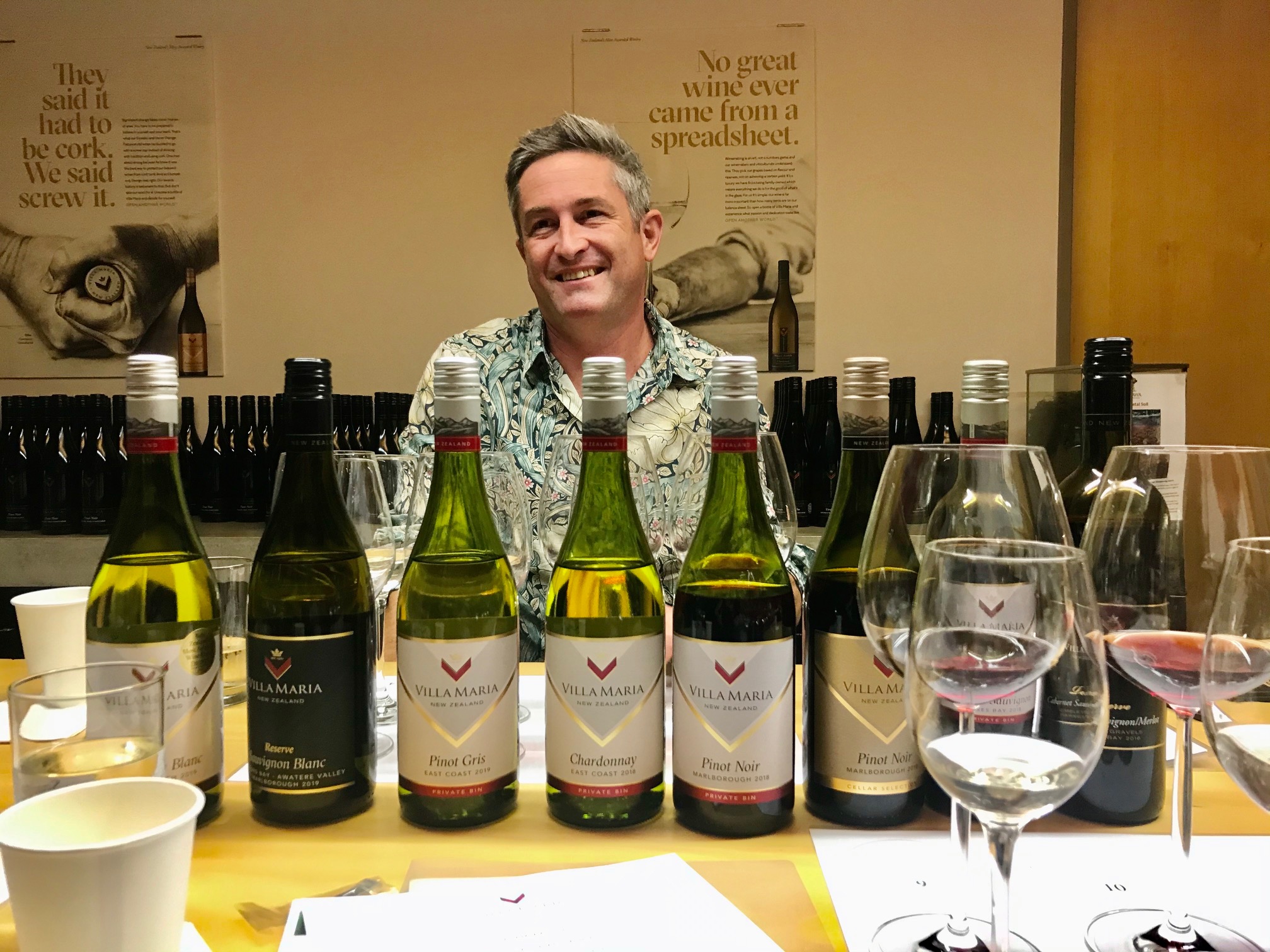
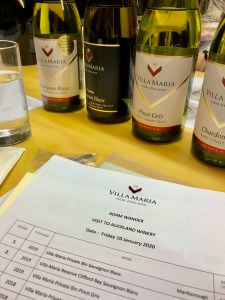
We were guided through their wines by winemaker David Roper in their aged cellar. Categories of wine start with Private Bin, then Cellar selection, Platinum (recently introduced) and their best wines are the Reserve selection.

Villa Maria Private Bin Sauvignon Blanc 2019
Nice texture not in your face Sauvignon, David explained this was a warm year thus the added roundness to the fruit.
More subtle gooseberry, passion fruit, classic Marlborough, flagship seller (1 million cases)
Villa Maria Reserve Clifford Bay Sauvignon Blanc 2019
Sl smokiness really smooth texture
More texture, passion fruit stone fruit herbaceous about 6 months lees ageing real  smoothness excellent wine ++
Quantity only 6000 to 10000 cases
Villa Maria Private Pinot Gris 2019
 Pear drop, blend of fruit north and south Island, ripe pears guava
Nice texture too 5 g residual. A nice example of NZ Pinot Gris
Villa Maria Private Bin Chardonnay 2018
Blend of both islands more fruit from North Hawkes Bay and Gisbourne
toast, smoke, some Malo oak from addition can be staves/chips/dust
17,000 cases
Villa Maria Private Bin Pinot Noir 2018
Simple red cherryfruit Pinot not much length or finish neutral barrels
Villa Maria Cellar sélection Pinot Noir 2018
More smoke earthiness savouriness oak
Villa Maria Private Bin Merlot/Cabernet Sauvignon 2018
Lots of fruit black and red and plums and smokiness soft mellow tannins food friendly Merlot dominated
85% rule re labelling
Villa Maria Reserve Merlot/Cabernet Sauvignon 2016
Perfumed violets floral ripe black fruit concentrated black fruit
Really ripe and lovely texture


I was really impressed by Villa Maria’s quality and consistency and price range. The 2019’s have only recently been bottled but were drinking beautifully.

We had a lovely lunch in their restaurant outside, overlooking the vines and tried a few more wines, including their excellent Albarino which had a distinctive saltiness. Then a walk in the Albarino vines with David Roper who had managed to put up with our company for 3 hours.


Leave a comment

New Zealand Wine Tour January 2020 – Part 1 Auckland Region – Kumeu


A Seat at the Table?

This is the title of the excellent, recently released film poses the question –  Has New Zealand earned a seat at the table  as a maker of the worlds best wines?

I think so, but I am biased. I’ve loved everything about New Zealand since I worked as a Junior Doctor here, at the Wairau Hospital in Marlborough a quarter of a century ago. It was then a fledgling region with most of the land in the Wairau and Awatere valley bare and full of sheep. How I wish I’d bought a few acres! A lot has changed since then with New Zealand showing itself as a world class producer of Pinot Noir and Chardonnay not just a mass producer of its most widely planted grape Sauvignon Blanc.

I had decided to take a sabbatical from work and what better place to be than in  New Zealand for Summer. My tour will span major regions in North Island, starting in Auckland, then to Northland, Hawkes Bay and ending up in Waiheke Island. I plan to review my favourite wines and give an up to date picture of the latest trends in the New Zealand wine industry.

Kumeu River Wines


The quality of Kumeu River Chardonnay is well know and I’ve been buying it for years from the wine society. The blind tasting in 2015  arranged by Stephen Browett of Farr Vintners in London confirmed their excellence when they scored higher than famed Burgundies.
This was one of the visits I was most looking forward to in New Zealand. The estate is close to Auckland city which is causing problems.
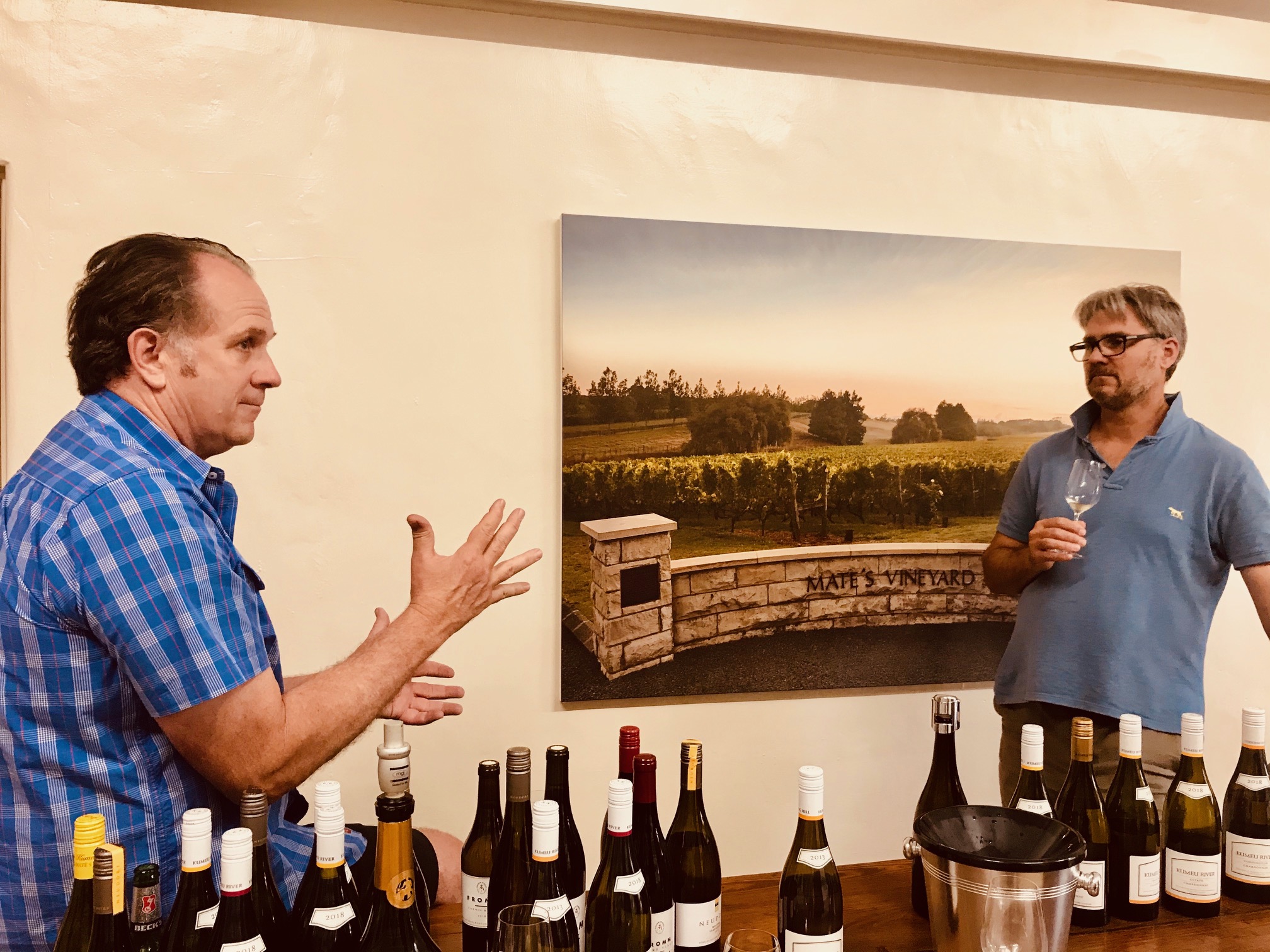
Paul Brajkovich our host for the afternoon explained that many local vineyards which used to supply fruit have been sold for property development from the encroaching city.
He talked us through the family history and how his grandfather escaping conscription into the army (Croatia was part of the Austro Hungarian empire) arrived in New Zealand in the early 1900s and starting planting grapes on this site.
We were lucky enough to be joined at the tasting by Paul’s brother Michael Brajkovich MW,New Zealand’s first Master of Wine and briefly met Melba the late Matés wife.
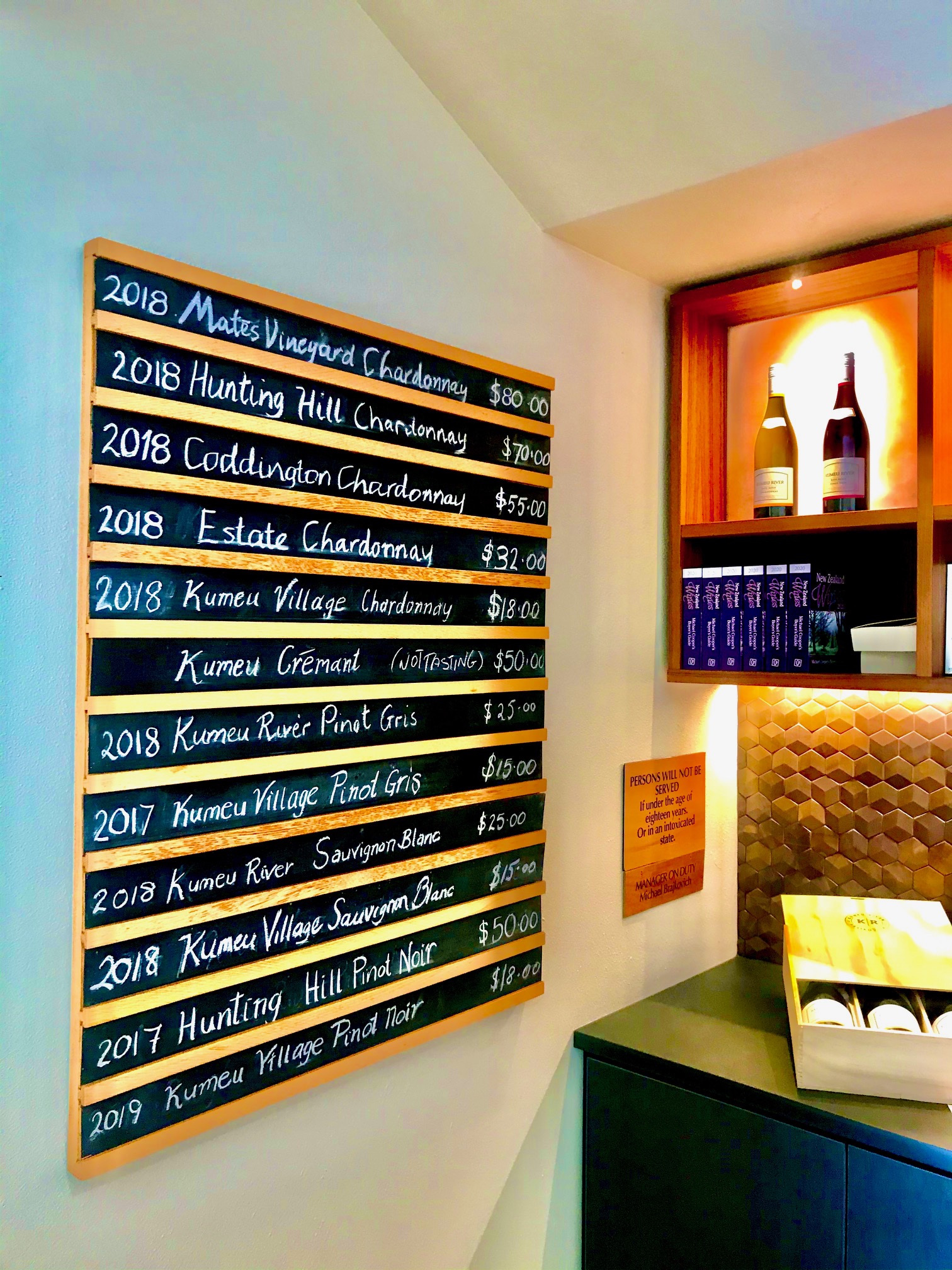
We tried the whole range of 2018 wines and a few treats to follow.
I was too busy speaking to Paul and Michael to make  tasting notes on all the wines. They were all of excellent quality, as Suzi demonstrated, they were too good to spit!
Kumeu River Estate Pinot Gris 2018
I really liked the texture here lovely textured mouthfeel with aromatics, florality and stone fruit.
Kumeu River Estate Chardonnay 2018
Well balanced citrus, stone fruit silky texture, consistently good and very good value
Kumeu River Hunting Hill Chardonnay 2018
More complexity with hint of florality citrus and stone fruit lovely texture and length too
 
Kumeu Village Pinot Noir 2019
This is the first vintage from Rays Road Hawkes Bay fruit
Lovely bright red cherry aromas red fruit on the palate nicely balanced
A very good value Pinot
Kumeu River Hunting Hill Pinot noir 2017
Classic Pinot nose with earth and gaminess but still some red fruits good length and mouthfeel
 
Kumeu River Hunting Hill Chardonnay 2103
This showed ageing potential of these wines after 7 years still plenty of citrus and freshness with added complexity and hazelnuts
The attention to detail and low intervention with techniques such as  hand harvesting, whole bunch pressing, barrel fermentation use of wild yeast, gentle racking and oak ageing really shines through and there is no doubt these wines are every bit as good as top Burgundy.


Leave a comment

Valpolicella, Veneto, North East Italy October 2019

Valpolicella, Veneto, North East Italy October 2019

 Being a fan of full bodied, fruit driven and bold wines, I have always wanted to visit the Valpolicella region of Italy, to witness the appassimento process. This involves drying of the grapes on wooden racks (fruttaio) for the production of Amarone. This area is easily accessible. Only 15 minutes drive from Verona airport. It is also only a short distance East of Lake Garda. Bardolino and Soave are nearby leading to a cornucopia of wine styles in this area. A range of wines are produced in Valpolicella, from the light, fresh, easy drinking red fruity Valpolicella through to the monolithic rich Amarone. Somewhere in between are the wines of Valpolicella Classico and Ripasso wines which are refermented on the lees of grapes used in Amarone production. Reccioto is the sweet version of Amarone.More recently Valpolicella Superiore has emerged. This is made from grapes harvested later(sovramaturazione) or partially dried to produce a wine of greater colour body and alcohol. Valpolicella contains two sun-zones : Classico and Valpantena.


We chose to stay in the heart of the hilly vineyards in Sant Ambrogio di Valpolicella. Corte Formigar in Graganago is an 18th century house, tastefully restored and run by the incredible Jessica who could not be more helpful. I highly recommend basing yourself here in the heart of the region. Access to their selection of bikes including electric allow you to gain altitude via the many roads through the vineyards and appreciate the magnificent views and explore the area.

The first night we walked to the local Trattoria dai Fasolini to sample some typical cuisine of the area. Horse is typical of the Veneto region but perhaps not appreciated by British palates. However the home made tagliatelle with black  truffle and parmesan hit the spot. This  matched well with Recchia Le Muraie Valpolicella Classico 2015 made using the ripasso process with Recciotto lees.

 Cantina di Negrar, October 12th


 Cantina di Negrar is a well known cooperative winery on the outskirts of Negrar. They have 230 members providing grapes from the Valpolicella region and produce  8 million bottles.This is the birthplace of Amarone. In 1936, by accident a reccioto wine was left to ferment to dryness. The president at the time Gaetano dall’ora quite enjoyed it, called it the bitter one and named  it Amarone (Amaro – bitter in Italian)It was interesting to witness the arrival of a tractor full of grapes being tested for sugar levels and quality by a rather crude machine. A large cylinder of metal with an internal drill was inserted into the grapes, it  macerates a sample of them and analyses the content for sugar levels. If not of sufficient levels the grapes will be rejected.
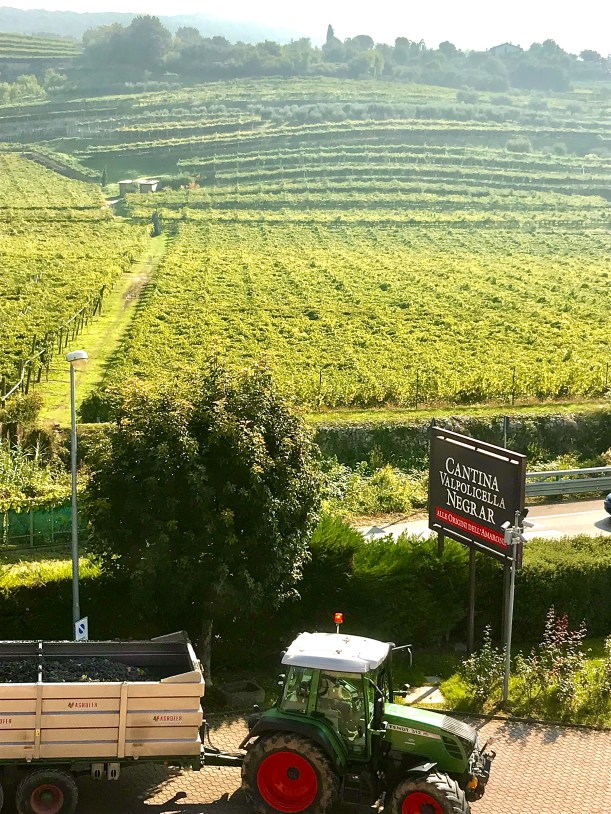
We had our wine tasting with Sara Albertini who is hugely knowledgeable, having just spent a year in Bordeaux and mid her masters in wine business

 Domini Veneti la Casseta Ripasso Valpolicella Ripasso Classico Superiore 2016  30 th Anniversary

14 months oak casks Recciotto skins, from grapes grown on Clay soil, Unfortunately this was somewhat reduced sulphurous smoky

Domini Veneti 2016 Valpolicella Superiore Verjago 15.5% 40 days of appassimento

Rich blueberry and violet Soft but silky tannins coffee chocolate cocoa dark cherry bit of raisin smells sweet ripe meaty savoury spicy

 Domini Veneti Amarone 2015

15.5%, Best vintage for many years Described by our host… as like dark chocolate cherry 🍒 liquors. garnet intense nose legs ++ coffee cocoa dust powder raisins spice black pepper

 Domini Veneti Recioto 2016

Sweet cherry not complex recioto

 We had dinner in St Giorgio di Valpolicella high up in the hills overlooking lake Garda at Trattoria Dalla Rosa Alda.

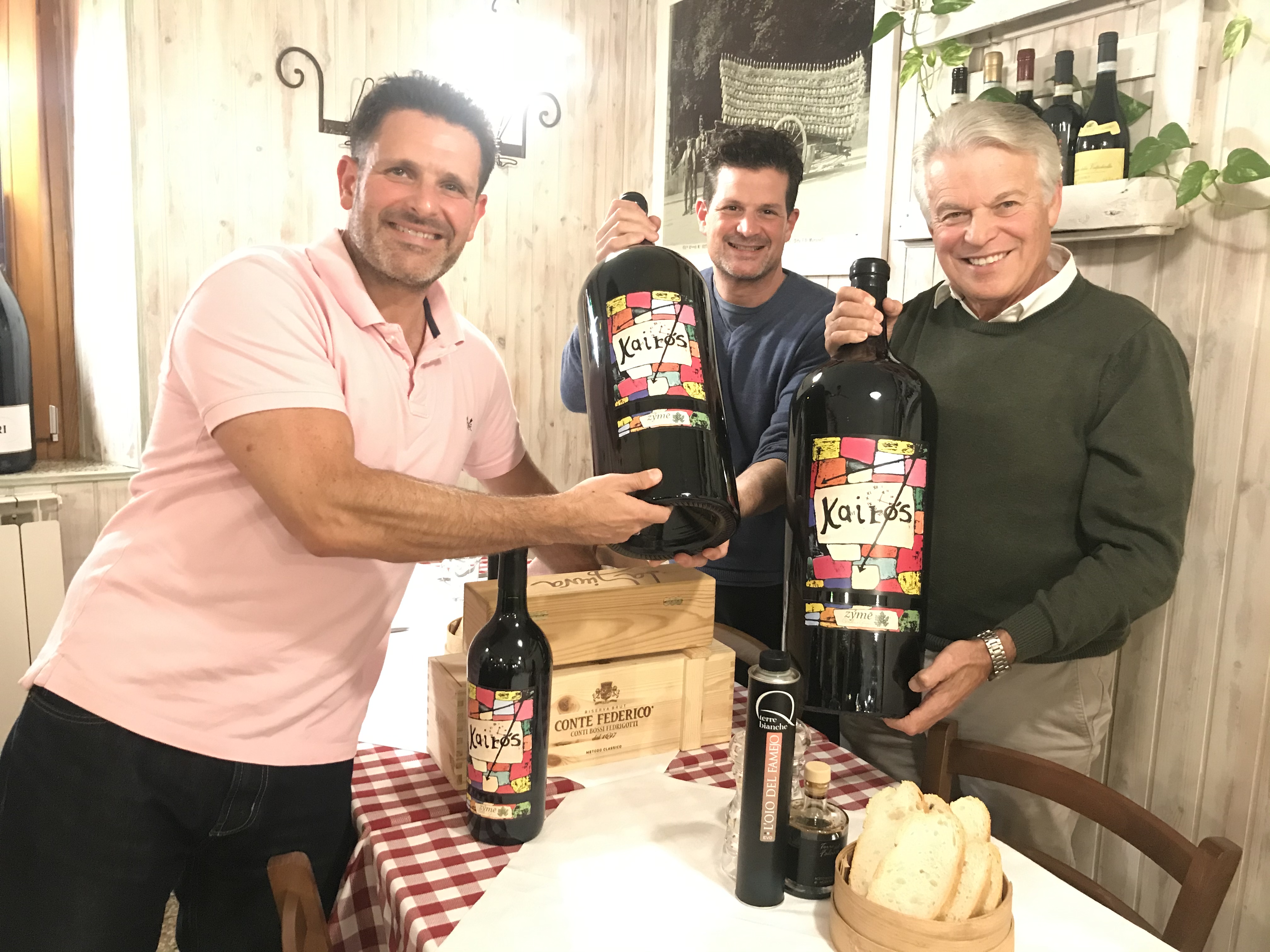
This is a cosy family run restaurant with the mother, father, uncle and  2 sons all working together. The wine choice  was from Zyme, the owner is married to the daughter of the famous Giuseppe Quintarelli.
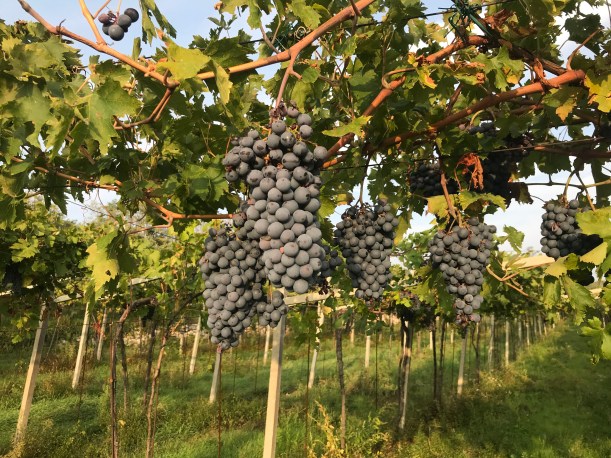
 

Corte Fornaledo Winery Azienda Agricola Borghetti di Giacomo e Francesco – Sunday October 13th

 The land here is documented in books dating back to 908 AD. The current family have been in residence from 1800 and own 5 hectares in Marano di Valpolicella 450m above sea level, making only 15,000 bottles most of which is sold to private buyers.

 Wines tasted with c0-owner Giacomo Borghetti –

Corte Fornaledo Valpolicella Classico superiore 2014

Fresh red cherry 40% corvina 40%corvinone molinara 5% rondinella 15%

 Corte Fornaledo  Valpolicella ripasso Classico superiore 2015 DOC

14.5% fresh red cherry richer good acidity length all aged in 500l tonneaux

 Corte Fornaledo , Vitae IGT Rosso Verona 2013

2 months aged grapes, aged in Chilean oak barrels IGT all Volcanic soils

mineral savoury spicy oxidation

 Corte Fornaledo , Amarone Della Valpolicella Classico 2015

3 months drying 3. 5 yrs barrels and then 1 year bottles

Raisins fig full sweet chocolate alcohol!

 Corte Fornaledo Amarone Della Valpolicella Riserva  2009

8 years in barrels one in bottle  oak vanilla chocolate coffee 1000 L Slavonian oak

 Corte Fornaledo, Recioto della Valpolicella 2015

made first by Romans 2000 years ago

Sweet cherry chew 10 g/l


Val Polis Cellae wine and food and art festival – Sunday Oct 13th

Azienda Agricola Novaia Cantina Biologica This organic estate high up in the Marano valley was our first stop on the Val Polis Cellae tour. This day long, art, wine and gastronomy festival enables entry to 15 wineries in the area.

Then on to Le Marognole ( names after local stone walls) 6 hectares boutique winery

The harvest had just ended and we were greeted to the smell of fermenting must making the roses Their Amarone 2015 was one of my favourites of the tour tasting of cedar, prunes dates and dried fruits with a power and finesse


Dinner in the evening lived up to previous Trips to Italy –

 Osteria Numero Uno is a beautiful authentic Osteria in the village of Fumane


Antipasti 

insalata di gallina in saor

Insalata di rape Rossi, mêle, Ruccola gorgonzola anacardi 

Primi

Fettuccine al ragu d’anatra

Tortellini radicchio rosso, burro al miele e scamorza affumigata 

Secondi 

Guancia di Manzo All Amarone con polenta

Scottata di tonno du cavalo nero 

Dessert 

Torta die mêle e fichi secci


All washed down with recioto from the local winery and a harsh cleanse of Grappa. This delicious feast was a fitting end to our trip to the Valpolicella area. Italy cannot be beaten for wine and gastronomy.Before even departing Verona, my brother and father already booked our trip to Sicily next year!


Our wine style of choice was the Ripasso’s. The basic Valpolicella was too light and simple for our taste, Amarone at the other end of the spectrum is often too big powerful and alcoholic. The Ripasso is a welcome half way house adding a much-needed richness but not to the level of Amarone. The pricing of Ripasso wines also adds to their attraction.

This slideshow requires JavaScript.


Leave a comment

California Part II – Wine, willingness and wisdom

California Part II – Wine, willingness and wisdom, October 2018

A lot can happen in a decade.  Precisely ten years ago, at the time of an American crisis (September 2008, global economic crisis – Lehman Brother’s collapse), two Kiwis and Englishman rekindled their early adult friendships with a 10-day wine exploration of Napa Valley.  Now exactly 10 years later, and again right smack in the middle of another American crisis (sexual crisis Senate Judiciary Committee investigation into Judge Kavanaugh, September 2018), we set off to explore the Central Coast Californian wine growing regions of Santa Cruz, Carmel Valley, Santa Barbara, and Paso Robles).


So off we went, without an immediate awareness of how much we had matured or what this new wine holiday was going to become – not stuck in the anxious past and needing to relive our 2009 Napa fun, not needing to fixation on hedonistic days of the Blenheim vineyards circa 1994, or even rigidly adhering the antics of Miles and Jack in the Santa Ynez Valley Sideways movie.


This holiday vacation experience was to become something new, vibrate and refreshingly uncomfortable.  In the process of reflecting upon our past 10 years, both the day-to-day existences and to the extremes of family deaths, personal tragedies and significant life changes, we discovered what was of key importance and meaningful for us as individuals and what connected us as friends.  We found meaning in the suffering and pain of our daily existences, and this holiday was not an escape from any of this, but a reminder of something beyond the highs of a wine drinking holiday.


The wine tour ‘started’ with a pre-wine weekend of pleasure in Santa Cruz.  We drove across the redwood forests of the Santa Cruz mountain range for a hosted visit to the Ridge Vineyard, made famous for its role in the Judgement of Paris wine competition.


Upon collecting Nick from nearby San Francisco airport, we promptly dispelled the cliché that three-is-a-crowd – possibly because the three of us have been a tight group of friends for many years, but also due to the massive roomy interior of our SUV Cadillac, with plenty of room to lounge about as we blatted down the 101 freeway, straight on to the small community of Carmel Valley. Just like the Napa Valley experiences of small town California, we quickly made meaningful connections with the locals and enjoyed immersing ourselves in the village wine tasting houses  by day, and then  dive bars by night.  There was something wonderfully magical about our meeting of strangers in California.  We would arrive from a relaxed days of winery tasting to then sit in awesome bars and meet wonderful people like Paul-from-New-Zealands’ brother, underwater photographers with names that were anagrams of Jane Fonda and an influential local designer and architect.  One friendly stranger overheard me mouthing off about the highly developed sommelier skills of my good friend Adam – to then produce a Le Nez Du Vin wine aroma kit and challenging us to hours of fun banter as we identified the various aromas from small viles (I correctly identified “mouldy bathroom” from my experiences in my student flats, but struggled to pinpoint the familiar smell of cinnamon).  One of the more lasting connections was the chance meeting with Katy – our language guide (correct American pronunciation you don’t say the “T” Monterey or in Katy), entertainment guide (we were intrigued and obsessed night after night with a fast bar-top dice- gambling game), tour guide (good Big Sur cafe sitting in chairs) and wine guide (recommending the essential Carmel Valley wine tasting highlights and the beachside wine tasting houses of Santa Barbara). But Katy also played into Aaron’s irreverence and cynicism by turning the 2am bar conversation to religion and spirituality.  Much to Nick and Adam’s shock, Aaron took an early morning challenge to be hosted by the congregation of St Dunstan’s Episcopal Church and received a refreshing spiritual burst at 10am the same morning – probably attending to his wish for adventure, curiosity, and a connection to others, rather than any legitimate religious needs.


There must have been something in the Carmel Valley water, as by the second night in the village Aaron and Nick wandered the streets singing the Pink Floyd classic “Wish You Were Here”. The lyrics are not strictly in keeping with our focus on being present and mindful, but maybe 50 year old holiday makers needed some reminiscing as they deal with too many late nights in a row and the impact of late afternoon caffeinated energy drinks.


Like crossing the Golden Gate Bridge during the Napa trip, no visit to the central coast could miss the tourist highlight of Big Sur – the coastal wildness region and famous narrow cliff side Pacific Coast Highway.  The Big Sur drive was made into a key friendship moment by blasting and singing the 1960’s classics such as She’ Not There (the band are not actually from California, but from St Albans where I used to live in the UK!) as the cold sea mist raced up the cliff face and onto the road (this is apparent an important feature of wine growing!).


Our third wine region of Santa Barbara was a mixture of the urban tasting rooms in the inner city centre and then the surrounding rural valley’s making up the six American Viticulture Areas (AVAs) within Santa Barbara County.  At this mid-stage of the wine tour, I forgot my commitment to avoid needing to replicate the accomplishments of the Napa trip, anxious that we weren’t going to match the high number of winery visits ten years earlier.  It was already day five of the central coast trip and only five formal wine related visits so far and some mysterious inner force was making judgements on our performance and stamina (thanks to Aaron’s competitive mind).  But then Adam and Nick in their wisdom introduced me to something that was important to them and took me to the early morning swimming and vigorous exercise at the hotel facilities – and I discovered that this could be an important part of my daily routine if I was willing to make it happen (fast forward 7 months – I have attend the gym regularly, and have connected my need for adventure with becoming physically fit).


We exited the city of Santa Barbara north to the dry wine region valleys, to be hosed at the  Margerun Wine Company  in the Santa Ynez Valley and then onto the Bien Nacido Vineyards & Solomon Hills Estates in the Santa Maria Valley.   The whole time Adam coaching and commenting on the different winemaking philosophies, noting the contrasts between those that achieved incredible balance by expert blending and those that let the purity of the soil express their wine.  I was also coaching my friends on a newly discovered approach to wellbeing by being present with the moment (“here we are now, having a time together”), taking action toward what is important (early morning gym workouts) and opening up to unwanted feelings (an especially effective strategic response to feeling ‘homesick’ mid vacation).  Nick has a more subtle coaching style, preferring to demonstrate his skills by casually mentioning that he learned to swim in his mid twenties as he swam 40 lengths of the hotel pool and then working hard on his business tax returns during our downtime in the hotel.


After a long day of car travel discussions on wine making, values and life anecdotes we arrived at our fourth and final wine region of Paso Robles.   Walking around the small town and village square, we were reminded of Blenheim New Zealand, sharing a history of developing into a major wine growing industry in the 1970s, and then becoming recognised as a specialise region of a grape variety.  Blenheim internationally known for Sauvignon blanc, but Paso Robles now known for the Rhône varieties – transforming in the late 1990s by the “Rhone Rangers”.  Like Blenheim, there are an intense concentration of vineyards, wineries and tasting cellars within the town and within an easy bike ride of the township. and again, I was invited to join Adam and Nick’s fondness for physical exercise by biking the 30 miles needed as we stepped up to complete our wine tasting requirements on that day.  Although assisted by electric bikes that day, I’ve since harnessed the pleasant memories of warm central coast wine vistas to motivate my spin class exercise.


By the second day full day of visits in Paso Robles region, we thought we were at ‘peak wine holiday’ – completing the tour with hosted visits to the Santa Margarita AVA and experiencing and observing some of the theory and winemaking philosophies Adam had spoken about earlier in trip.   Seeing some wineries working to stay true to the traditional blends and tastes of Europe, others letting their local soils and climate guide their wine variety, or branching out and blending what you want away from the strict expectations of tradition (producing Bordeaux and Rhône Blends!).  The après-wine activities in Paso Robles  adding to this sense of a holiday high – more blending with the locals and other tourists playing pool in the dive bars, random introductions to the guitar making legend Gary Kramer, finally discovering real coffee in American at Spearhead Coffee, and being hosted by a winemaker in her boutique shop for after-work-drinks at the shop counter.


The holiday wasn’t the pinnacle of an experience – not ‘peak wine’ or a great holiday memory, but true to the cliché, just part of a journey.  We love California and small town California.  And meeting people in California.  And drinking wine.  We loved it the first time and we loved at the second time (I suspect I told many late night bar patrons this many times).  But the second time with less attachment to the past or future expectations, well connected with our friends and strangers at that very moment, and with a growing ability to articulate and really know what mattered.  And since then returning home to life struggles and tragedies and highs and lows – but now with a great ability to make meaning from these.


This piece is dedicated to my wine loving (hedonistic) mother in-law and the one person in my life who would have taken the most interest in this blog – but died before she could read it.  I miss her, but I wrote this for her.

Blog courtesy of Aaron O’Connell