Regenerative Viticulture (RV) is quietly revolutionising how some of the world’s most thoughtful winegrowers approach their craft. It’s more philosophy than prescription, rooted in ecology and driven by a desire to transform vineyards into thriving self-sustaining ecosystems now and for generations to come.
At its heart, RV aims to restore soil health, improve resilience to climate extremes, reduce chemical inputs, sequester carbon, and nurture biodiversity. These are lofty ambitions, but for many growers, they’re fast becoming the only way forward.
Why Regenerative Viticulture?
The motivations behind RV vary. For some, it’s about producing better wine with less interference. Others are adapting to the escalating challenges of climate change; heatwaves, erratic rainfall, and soil erosion. Toby Buck of Te Mata is looking toward the horizon: “Our estate has to be sustainable for there to be a viable legacy.”
RV also speaks to the growing desire among wine drinkers for transparency, ecological integrity, and authenticity. In a world increasingly wary of greenwashing, it’s no surprise that many pioneers of organic and biodynamic win, like Tablas Creek and Felton Road, see RV as the next evolution.
But what makes RV different isn’t just the list of things it avoids. It’s the things its doing to build the growing environment back up.
The Methods
Rather than following a fixed set of rules, RV offers a toolbox of practices. Growers adapt methods to their particular environment, soils, and climate, to create resilient, biodiverse agro-ecosystems with healthier vines and deeper-rooted sustainability.
Soil First
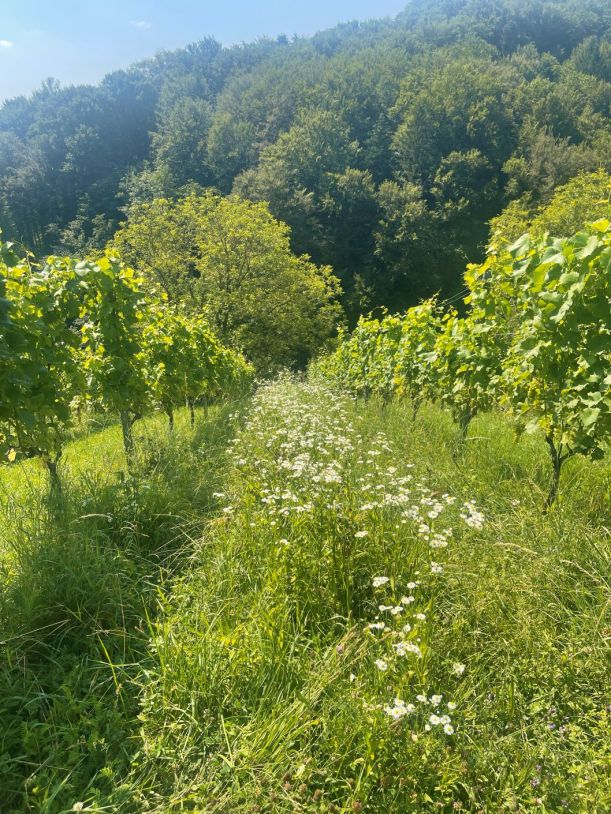
Soil health is the cornerstone. Cover crops are sown between vine rows, preventing erosion, locking in moisture, and supporting underground networks of fungi and microbes. These relationships, vital to nutrient cycling and carbon storage, create a self-sustaining system beneath the vines.
Legumes fix nitrogen. Grasses manage vine vigour. Compost (including grape pomace, manure, and even biochar from prunings) replenishes nutrients and increases humus. This aids water retention and carbon sequestration. Johan Reyneke, whose South African vineyard was an early adopter, says humus levels have risen significantly thanks to high-density cattle grazing in the dormant season and careful composting.
Designing with Nature
Regenerative vineyards are often shaped at a landscape level. Incorporating trees and permanent wild habitat attracts predatory insects, supports biodiversity, and buffers weather extremes. Trees help cool vineyards during heatwaves and provide modest frost protection, but they must be carefully placed to avoid shading vines.
Water management, too, is critical. Techniques like keyline planting slow runoff and help retain moisture.
Integrating Animals
Animals, ducks, sheep, and cattle, are another key component. They manage weeds, fertilise the soil, and reduce the need for mechanical inputs. Reyneke uses ducks to tackle snails, and a herd of cattle in winter. Trellising systems can be adapted to allow grazing even during the growing season.
From Chemicals to Complexity
RV reduces reliance on synthetic inputs, especially pesticides and herbicides, which often damage beneficial biodiversity. Alternatives include organic-approved treatments and the cultivation of disease-resistant Piwi hybrids, which dramatically reduce the need spray against mildew. But organic practices like tilling can damage soil structure and release carbon, so many regenerative growers aim for minimal or no tillage, using mulches and interrow planting instead.
RV doesn’t pretend to be a silver bullet. Some growers still use herbicides, or till occasionally. But the emphasis is on long-term soil health, not short-term fixes.
The Costs and the Payoff
Transitioning to RV takes time, skill, and often money. Johan Reyneke openly speaks of the “school fees to pay”, yield drops during early experimentation, the need for new equipment, and a steep learning curve. Managing a vineyard as a living ecosystem means more complexity, more hands-on work, and more multidisciplinary knowledge.
Certification can also be costly and fragmented. Still, frameworks like Regenified offer tiered pathways that make entry more accessible.
On the other hand, RV can reduce dependence on costly external inputs like fertilisers and fuel, whose prices have soared in recent years. Tablas Creek believes improved soil health will extend vineyard lifespans beyond the usual 25-year cycle, reducing replanting costs and boosting profitability.
Yields may initially dip, but often recover, and some growers report even better quality grapes and more reliable harvests in extreme conditions. Extended ripening seasons, preserved acidity, and lower alcohol levels are just a few of the benefits Reyneke and others have observed.
Building a Business and a Legacy
Beyond the balance sheet, RV aligns with a growing desire to create purposeful, resilient wine businesses. Tablas Creek embraced ROC certification for its inclusion of social fairness. Felton Road is pushing towards net zero carbon. RV is simply one part of a larger mission.
In the end
Regenerative Viticulture won’t save the planet on its own. But as the wine world increasingly looks at lifecycle carbon footprints, packaging, distribution, winery energy, it’s clear RV is an important piece of a larger sustainability puzzle.
It offers something compelling: a way of farming that puts the ecosystem first, builds resilience, and returns power to the soil. It’s a way of producing authentic wines and perhaps these wines are just better too? Give them a try and see what you think……….
This article is based upon my independent research project for the WSET diploma.





 WanderCurtis Wine