WanderCurtis Wine

Wine tastings, corporate events, reviews and recommendations


Leave a comment

Österreichischen Traditionsweingüter (ÖTW)

Have you ever wondered what the term ‘Erste Lage’ or 1 ÖTW on a bottle of wine from Austria means? I attended a seminar at the bi-annual Trade Austrian Wine tasting last week that explained the story behind the ÖTW and forthcoming changes coming into place.

First a quick overview of the current legal framework that applies to Austrian wine. Like other European wine producing countries a tiered classification system exists with specific labelling:

  • ‘Österreichischer Wein’ means that the wine is made from grapes grown anywhere in the country. The wine can be from a single grape variety but not certain protected varieties such as Blaufränkisch. There are also some not very challenging minimum and maximum limits on must weight and yield.
  • ‘Landwein’ means the wine is made from grapes from an area with Protected Geographical Indication (PGI). There are three: Weinland, Steirerland and Bergland. Each area has an approved list of grape varieties but the list is long and the areas are large.
  • ‘Qualitätswein’ is indicated by the red top with a white stripe through it. These wines are from grapes coming from an area with protected status (PDO). The wines are tasted and tested to ensure they display typical characteristics of the region and meet more stringent minimum standards including must weight and maximum yields.
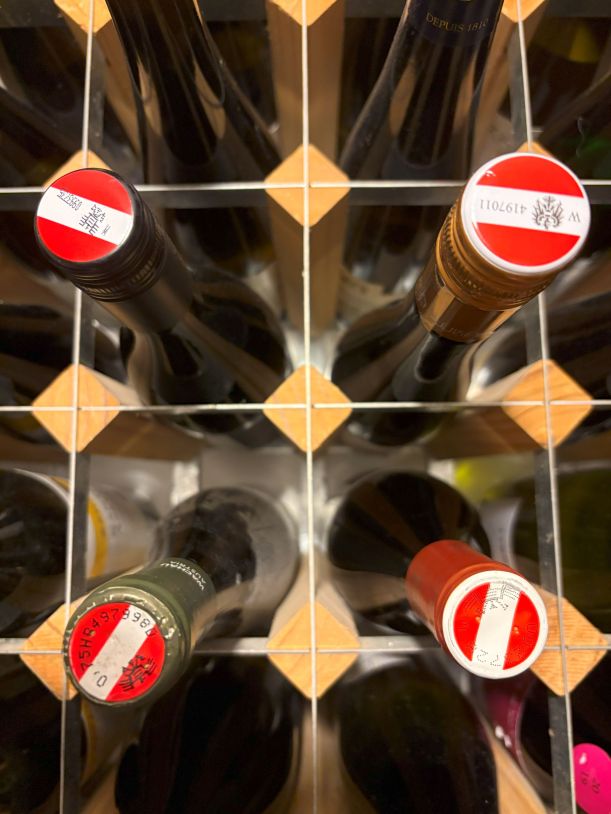
‘Qualitätswein’ can be labelled ‘Kabinett’ if it is not enhanced within the winery in any way and is less than 13% ABV. If labelled ‘Reserve’ the wine will be 13% ABV or over.

‘Qualitätswein’ may also be labelled Districtus Austriae Controllatus (DAC).  This means that it comes from one of 18 regionally typical controlled areas for example Weinviertel, Wachau or Leithaberg. Each DAC has quite a limited list of permitted grape varieties and the wines are tasted by a panel to approve typicity. Anything falling outside the scope or from a non-permitted variety can only be labelled Landwein.

Now within the DAC geographical area there are further spatial refinements: Gebietswein means it just corresponds the DAC area, Ortswein is from a particular village area and Riedenwein is from a single vineyard.

This is where the ÖTW comes in.

Founded in 1991 the ÖTW (oo – tay – vay) is a trade Association. It was set up to create a vineyard classification system designed to help consumers get an even better understanding of what to expect from the wine inside the bottle.  Anything that can help in this respect is of course a good thing. 
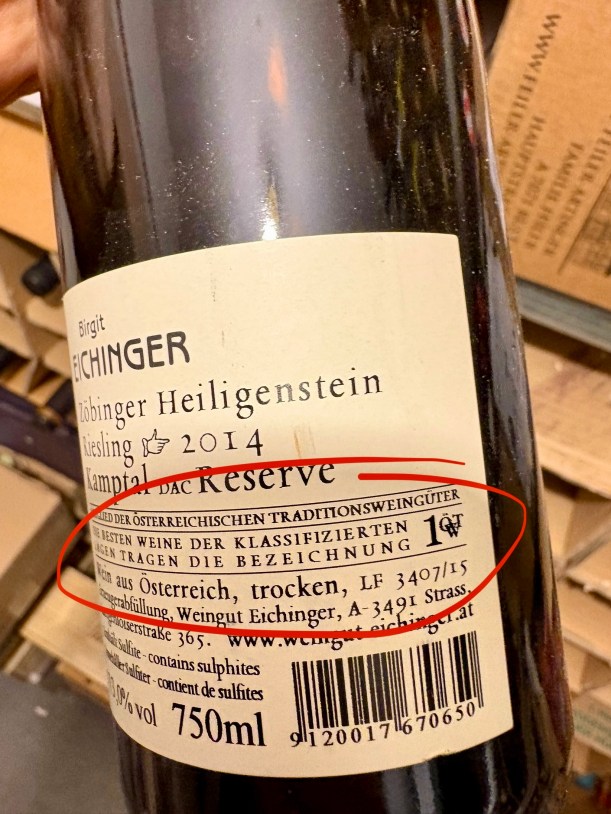
Started by a group of wineries in Kamptal and Kremstal the ÖTW splits the Riedenwein category down into three ascending subcategories: Ried Lage , Erste Lage and Grosse Lage. So far vineyards have only been classified as Erste Lage / 1 ÖTW but in time the intention is to elevate some of these to Grosse Lage.

The model is evidently similar to the classification of vineyards in Burgundy where distinct from village and lieu dit wines there are classified premier and grand cru vineyards. However as with the Bordeaux classification Chateaux in 1855 the vineyards in Burgundy were categorised back in the 19th Century according to the market value achieved of the wines, as a measure of quality and status.

So interestingly the ÖTW claims that vineyards in their system are not classified on the subjective bases of quality and price. Instead the ‘significance’ of the plot is measured using multiple parameters. These include: historical and cultural, physical characteristics, the number of wineries producing from the vineyard also average price and variance over time.  The wines produced are also evaluated via blind tastings by growers and international experts and the consistency of their performance over time.
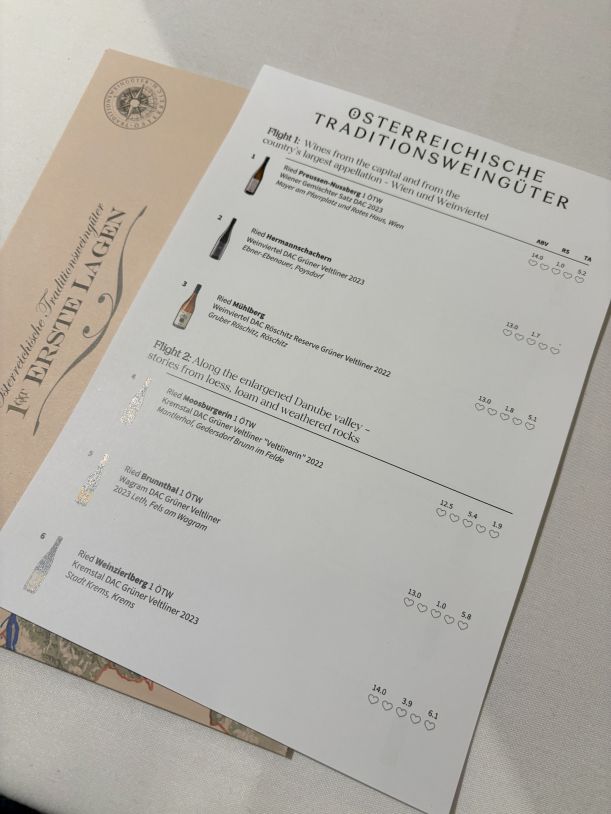
Anecdotally we tasted three wines from Ried Heiligenstein 1 ÖTW which were all Riesling but from three different producers: Birgit Eichinger 2022, Allram 2019 and Bründlmayer 2015. The wines were all of the highest quality with thrilling concentration and persistence. They were layered and complex and showed how age worthy they can be.

This was obviously too small a sample to be able to divine clear vineyard characteristics but the tasting certainly backed up my experience that 1 ÖTW on the label means that the winery has set out with serious intent to make a high quality wine that speaks of its origin.

The ÖTW system has expanded and is now used by members in Kamptal, Kremstal, Traisental, Wagram, Vienna, Carnuntum, Thermenregion and the Weinviertel.

A notable exception to this list is the Wachau and its not clear why the producers there don’t feel the need to participate.  Speculating, the region is perhaps more domestically and internationally well-known and they have their own quality hierarchy: Stienfeder, Federspiel and Smaragd so demand and recognition is probably already strong enough. Also many single vineyard wines are produced and I wonder if the number of monopole vineyards are sufficient to make vineyard classification less important than producer name? Research for another day.

The ÖTW is however on the up and has in principle be approved for adoption by the ministry of agriculture into law.  As with any change in wine law there are those that are not convinced and currently an appealed against adoption is being determined in the courts. Watch this space.

Leave a comment

More than Grüner: other Austrian white varieties.

Grüner Veltliner has found its way onto many a restaurant wine list, supermarket shelf and specialist merchant worldwide and I am a long term fan of all the different expressions that the Winzers of Austria capably produce, from crisp easy drinking summer wines to structured treasures that bloom after a decade or two in the cellar.

But what about the other indigenous and traditional white grape varieties that Austria has to offer?  Well there are plenty including the following:

  • Welschriesling (confusingly not related to Riesling, makes easy drinking dry whites but comes into its own on the humid shores of the Neusiedlersee where its thin skins invite noble rot and where superb sweet wines are made).
  • Weissburgunder (although it is white it is not Chardonnay but actually Pinot Blanc probably originating in Burgundy).
  • Neuburger (a natural crossing of Roter Veltliner and Sylvaner).
  • Gelber and Roter Muskateller (an aromatic and ancient variety).
  • Frühroter Veltliner (another natural crossing of Roter Veltliner and Sylvaner).
  • Traminer (Savagnin): Roter Traminer, Gewürtztraminer and Gelbe Traminer (Named after the Tyrolian town on Tramin and coming in red, pink and yellow hued grapes respectively).
  • Bouvier (A cultivated crossing between Gelber Muskateller and Pinot Blanc).
  • Roter Veltliner (parent of many other but not Grüner Veltliner!).
  • Rotgipfler (Natural crossing between Roter Veltliner and Traminer).
  • Zierfandler/ Spätrot (Another natural crossing between Roter Veltliner and one of the Traminers).
  • Sylvaner/ Grüner Sylvaner (Actually an autochthonous (I know not enough vowels surely!, basically means originating from the place or indigenous) variety that made its way from Austria to Germany and Alsace but plantings have all but disappeared in its home land pushed aside by easier to grow Grüner Veltliner).

Over the last year I have been expanding my horizons by seeking out three of these in particular.

Roter Veltliner

Historically grown in Kamptal, Wagram and Kremstal often as part of a field blend this variety was largely uprooted in the 1950s and 60s as part of a shift to single varietal vineyards.  The grape is challenging to grow being prone to frost, botrytis and mould das it ripens late. Grüner Veltliner by contrast is hardier and ripens earlier and so was the favoured variety for replanting and now accounts for over 30% of all area under vine.  

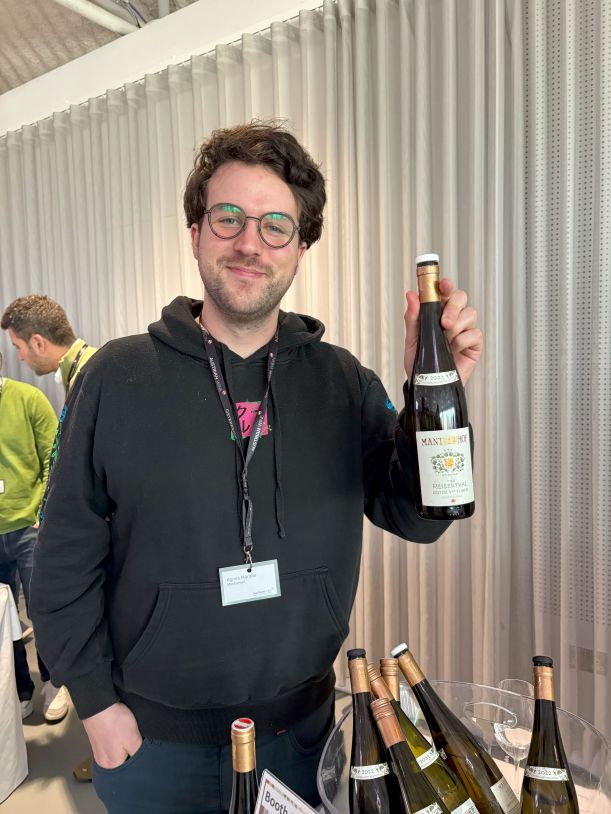
Roter Veltliner has continued to dwindle over the last couple of decades but, according to Jospeh Mantler of family Weingut Mantlerhof in Kremstal who wrote a dissertation on the variety, is making something of a resurgence as a single varietal wine.

As the climate has changed hazards such as drought, sunburn and heat stress are becoming as important if not more so than frost and fungal diseases.  It turns out that Roter Veltliner handles lack of water and heat rather well and the natural reddish pink colour of the skins means it doesn’t have to reach for the factor 50 in the sun.

So what are the wines like? The wines are not aromatic but have subtle orchard fruit, herbal and sweet root vegetable aromas. They have a broad textured mouth feel and whilst fresh have  soft acidity making them a great contrast to Grüner Veltliner.  There are two broad wine making approaches: a high yield, easy drinking style and a more concentrated textured and age worthy style that requires several passes of the vineyard to pick the grapes at optimum ripeness.

Weingut Leth of Wagram makes both styles. Their Roter Veltliner Fells Klassik 2023 has muted aromas of apple, pear, dried herbs and a touch of sweet spice. On the palate it is quite textured but with nice freshness. A nice uncomplicated partner to richer Austrian or Asian dishes.

Weingut Mantlerhof only make a reserve style from a single vineyard.  The Roter Veltliner Ried Gedersdorfer Reisenthal 2023 has notes of ripe yellow apple, pear, celeriac, parsnip and white pepper. In the mouth its actually just off dry which balances the acidity, there is a creamy mouth feel and a long persistent finish.  Joseph recommends bottle aging this wine to allow it to develop more notes of spice and dried fruit.

Rotgipfler & Zierfandler

These two varieties are largely grown in the Thermenregion particularly around Gumpoldskirchen on the hillsides of the Wienerwald just south of Vienna. The area’s volcanic springs were popular with the Romans and so of course wine has been grown there ever since. It’s a little warmer than the other parts of Niederösterreich but not as warm as Burgendland to the east.

Rotgipfler is made as a single variety but also often blended with Zierfandler for balance as it retains more acidity when ripe.  Both display some of aromatic and tropical fruit Traminer characteristics and both are textural and full bodied with sweet spicy notes.  Late harvested Zierfandler is also used to make sweet wines. High quality examples apparently mature well in bottle.

Stift Klosterneuburg’s 2023 Cuvee Gumpoldskirchen is a blend of both.  Ripe tropical fruit on the nose, with banana, cinnamon and cake spices. The body is full and alcohol high, off dry but balanced with a nice long finish.

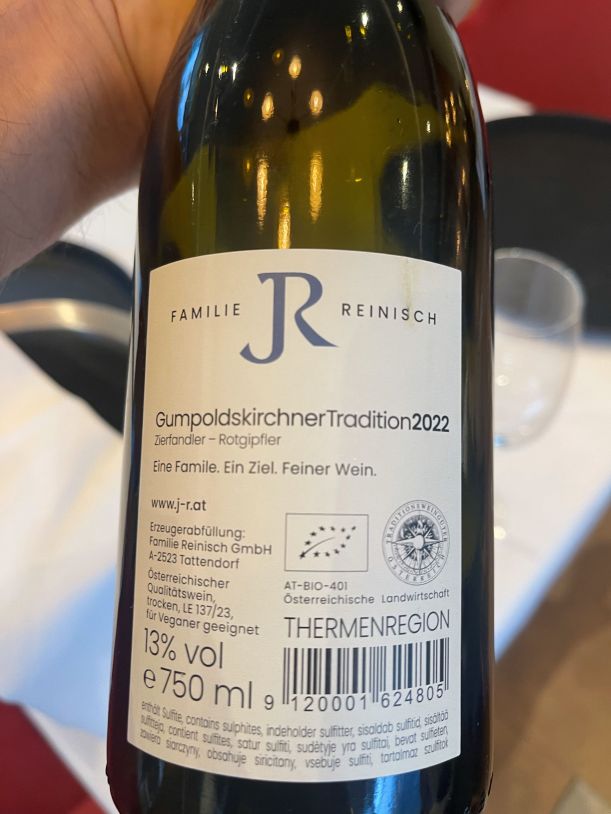
Familie Reinish Gumpoldskirchner Tradition 2022. Also a blend. Exotic, ripe stone and tropical fruit salad with sweet spices on the nose. Rich creamy mouth feel, some sweetness but overall manages to be remain fresh with a long finish.

Do try these varieties when you come across them!

AustrianWine.com has an excellent website packed full of useful information on the wines and regions and vineyards. It also provides super regional maps and contact details for wineries for when you visit. The featured image above is a photo of a great summary fact sheet provided by the association at a recent tasting in London.


Leave a comment

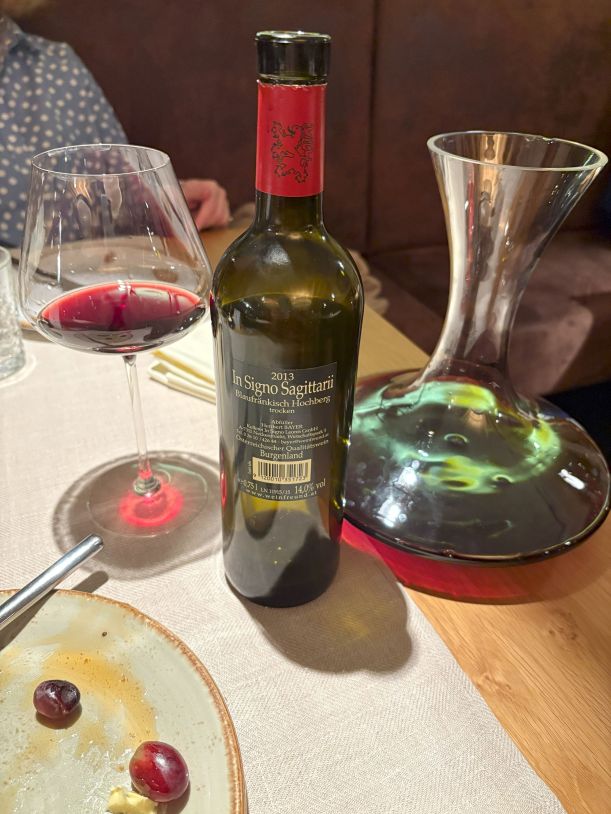
In Signo Sagittarii 2013 Blaufränkisch Neckenmarkter Hochberg, Mittelburgenland DAC, WG Herbert Bayer

In spite of its 12 years in bottle this Blaufränkisch, from 70 plus year old vines in the warmer middle part of Burgenland, needed time to open up in a decanter.  In fact left in the decanter for 24 hours the next day it remained incredibly vital with no hint of any oxidation.

On the nose the oak is immediately apparent expressing itself as sandalwood and toasted sawdust. However, underlying this plenty of black fruit remains and lovely notes of dried cherries, forest floor, tobacco and loam are present. Great intensity and balance and persistent finish.

A wine to savour now but with many years left in it. Pretty good value for a mature wine and back vintages are still available from the winery.


Leave a comment

Austrian Wine Regions

A one page summary of the: climate, topography, growing hazards, wine law, grape varieties, wine growing and making practices and the main wine producing regions.

Austria has come up a couple of times as a country in the D3 tasting exam. Key wines to look out for include:

  • Grüner Veltliner from the Wachau, Kamptal or Kremstal.
  • Blaufränkisch from Burgenland.
  • Trocken Beeren Auslese blend from Burgenland or Ruster Ausbruch.

Riesling from the same regions as Grüner is a possibility, but made in small quantities and also Zweigelt in an easy drinking style or barrique matured.

The Austrian Wine website has a huge amount of detailed information about the full range of Austrian grape varieties, regions and wineries.

Sources include: WSET Diploma Wines of the World, Oxford Wine Companion by Julia Harding and Jancis Robinson, Wine Austria.

Note this document is intended for personal use only not for commercial or promotional use. We accept no liability for any omissions or errors that may be contained in the document.


1 Comment

Weingut Renner ‘New Generation’ wines.

Two wines this month!

Renner ‘Thirsch’ Muscaris 2020. Südsteiermark, Austria

Highly aromatic with an expressive bouquet of floral notes—honeysuckle, orange blossom—alongside dried orange peel, grapefruit pith, ripe peach, nectarine, and melon. There’s a subtle herbal edge and a muscat-like character with a touch of gamey complexity.

Dry, with medium-plus acidity, medium alcohol, and a medium-plus body. The texture is creamy with a slight tang from skin contact, plus a hint of tannin. On the palate, it delivers slightly fresher fruit tones mingled with dried citrus peel and a nutty nuance. Long, lingering finish.

A really complex and intriguing wine.

Thirsch Souvignier Gris & Pinot Blanc Blend 2021. Südsteiermark, Austria

Slightly cloudy in the glass. Aromas of apple, pear, bruised apple, banana, marzipan, nuts, and a touch of smokiness and yeast.

The palate shows more fruit intensity, with a dry profile, medium-plus acidity, medium alcohol, and a full body. Textural and grippy with a bold mouthfeel. Finishes long, leaving notes of apricot, marzipan, and nuts.

Ric and intense both of these wines are great food wines with the body and texture to cope well with richer dishes whilst still providing plenty of freshness and lift.  


Leave a comment

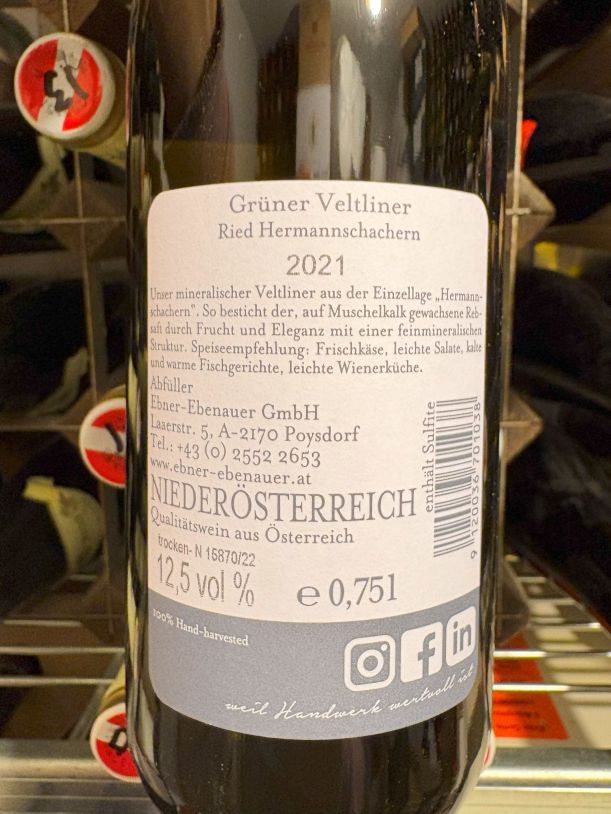
Ebener Ebenauer Poysdorf Hermanschachern Grüner Veltliner 2021.

Ebner-Ebenauer make small amounts of biodynamic and organic wines from largely old vines in the north east of the Weinviertel region near Poysdorf.  The charismatic Marion and her husband Manfred are making waves with their very late disgorged Blanc de Blancs and Noirs but it is their range of single vineyard Grüner Veltliners expressive the varied soils and aspects that we are focusing on there.

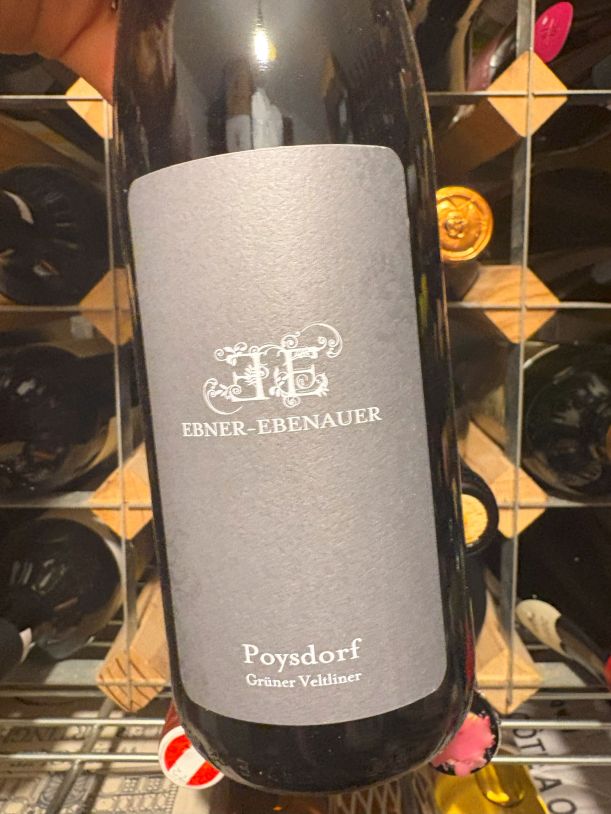
Ebner-Ebenauer Poysdorf Grüner Veltliner 2021. A blend from across their vineyards, spicy, with wet stone a touch of white pepper and crunchy orchard fruit. Refreshingly moreish, light but managing to sustain ones interest. Great value.

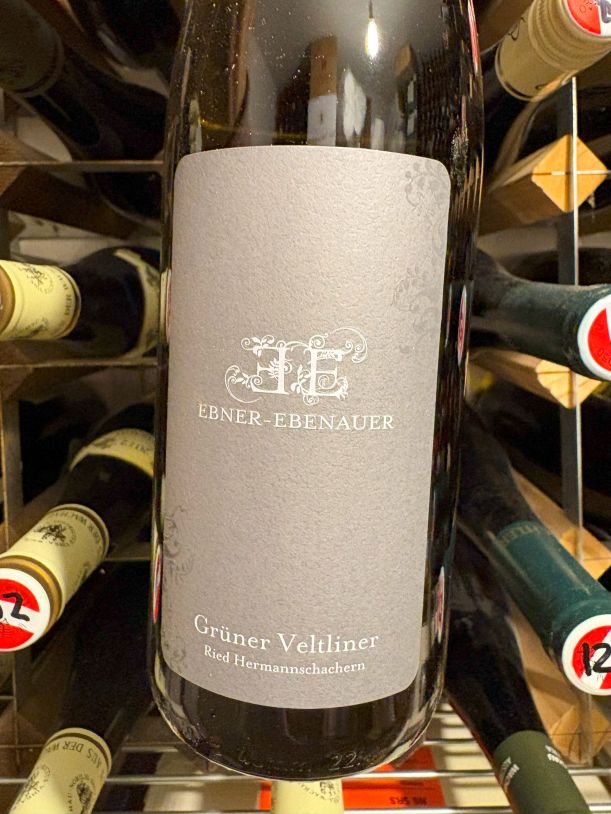
Ebner-Ebenauer Poysdorf Hermanschachern Grüner Veltliner 2021. From a single vineyard with limestone and fossil soils and 30 year + vines. Citrus, fresh pear and apple a touch of white peach, white pepper, herbs and wet stones.  Mid weight with great focus and freshness this lasts long on the palate. Drinking now but will evolve over the years. My favourite and the pick for wine of the month.

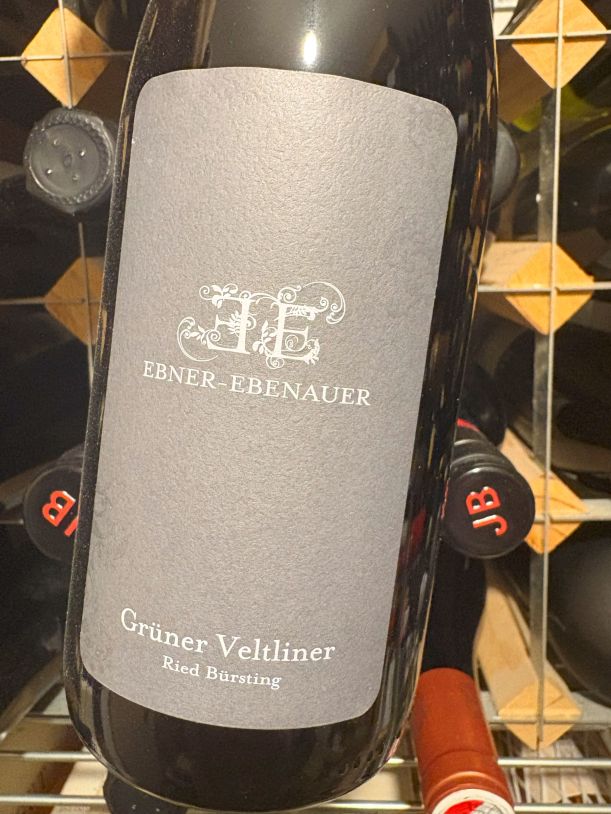
Ebner-Ebenauer Poysdorf Bürsting Grüner Veltliner 2021. From a single vineyard of 50 year old vines, rich, spicy, juicy and complex, concentrated and full bodied. Decant or cellar for up to 10 years.

The 2021 vintage, by the way, across Austria really has a superb balance of fruit and freshness.


Leave a comment

Weingut Ebner-Ebenauer – an exciting discovery from the Weinviertel, Austria

At this year’s bi-annual Austrian wine tasting in London Adam & I came across the charismatic Marion Ebner-Ebenauer of Weingut Ebner-Ebenauer and their wonderful range of wines. The  Weinviertel is Austria’s most northern region, an expansive, windswept area that borders the Czech Republic.  There is a lot of variation in soils and climate across the region and historically it has a reputation for easy drinking characteristically peppery Grüner Veltliner, falling rather in the shadow of the Danube regions like the Wachau.  However it looks like Ebner-Ebenauer are well on the way to demonstrating just what serious age and worthy wines the region is capable of producing.

At the helm of this historic family estate are Marion and Manfred Ebner-Ebenauer, their winery, based in the town of Poysdorf, has been producing wine for over 400 years.

The backbone of their philosophy lies in single-vineyard bottlings that aim to reflect the unique voice of each plot. Their 20 hectares are scattered like puzzle pieces across a patchwork of soils, originally a safeguard against hail, now a key asset with some of these vineyards boast old vines over 70 years of age.

In the vineyard, everything is farmed organically, with grapes picked entirely by hand at optimal ripeness. Careful handling, minimal oxidation, and small harvest bins preserve the clarity and integrity of the fruit.

Down in their 400 year old cellar, a low-intervention approach prevails with wines fermenting spontaneously. Alongside the single vineyard wines they make a range of cuvées called the Black Edition which includes a Grüner Veltliner, using extended skin contact and fermentation in barrique to coax out texture and complexity.

Their méthode traditionelle Sekt, aged on lees for years and disgorged only when truly ready, has been turning heads abroad, winning international awards for its finesse and depth.

A quick search of the web and social media and Ebner-Ebenauer crop up repeatedly, this an image savvy couple who make great wine in a great way, what’s not to love?


Leave a comment

The Many Faces of Zweigelt

Full disclosure, I have a very soft spot for Austrian wine.  It is undoubtably through my partner, who is Austrian, that I have grown to love the many and varied delights that the country and its people have to offer. It’s fair to say that family Curtis pulls its weight when it comes to consumption of Schnitzels, quaffing of Greuner Veltliner and bashing of mogul pistes. Oh, and it goes without question that Semmel are the best bread rolls ever and nobody makes better ryebread.

Anyway, we’ve written at length about Austria’s fabulous white wines: Greuners and Rieslings from the Wachau, Kamptal and increasingly from Traisental along with the characterful Sauvignon Blancs from SudSteirmark, but not enough about the country’s excellent red wines.   My suspicion is that a lot of Austrian red wine just doesn’t make it out of the country because demand at home is so healthy. So, I was delighted be invited to a lunch spotlighting Zweigelt and the grape’s many faces organised Neusiedlersee DAC.

Zweigelt is the most planted red grape variety in Austria, second only to Gruener Veltliner in terms of vineyard area. It is a cross between Austria’s other two main red grapes, Blaufraenkisch and St. Laurent, the former, late ripening with high acidity and firm tannins and the later early ripening with delicate fruit and moderate tannins.  The result, it is argued, is a wine that displays the best of both and is fruit forward, with gentle acidity and soft tannin. It can be made in a forward fruity style at a great price point or through selection and sometimes aging in barrique as a more structured reserve wine capable of many years bottle age.

Neusiedlersee DAC (designated area of origin) is located to the east of the Neusiedlersee a large lake on the boarder between Austria and Hungary.  The designation is only for the production of Zweigelt and sweet wines although most of the winemakers in the area also produce a variety of other wines too.

Some nice Burgenlaendlisch drinking slang!

To demonstrate this the aperitif served before lunch was a Welschriesling Voll Freude 2021 by Georg Preisinger.  Fresh with citrus and apple served gespritzt.  The perfect refresher: half wine and half sparkling mineral water.

Next a young 2021 Zweiglet by Preiner Wein, served with an autumnal mushroom risotto. 

Very fruit forward with accessible berries and a whiff of spice on the nose. A nice midweight body, soft tannins and good freshness. Well balanced and a collaborative partner to the delicate risotto flavours. Tasty!

The main course of grilled sweetbread was served with single vineyard Zweigelt by Gebrueder Nittnaus, Zweigelt Golser Ried Luckenwald 2004.

The wine demonstrated how well the variety can develop in the bottle in the right hands.

On the nose cut strawberries, damp forest floor, a touch of vanilla from the Barriques. It retained a lovely juiciness on the palate with complex tertiary notes of mulch and mushroom.  Great length. Excellent and it held its own against the richness of the sweetbread.

Finally with a desert of baked apple and vanilla cream a TBA Welschriesling Siddartha 2018 by Johannes Muenzenrieder.  Wow a delicious nose of peach, roasted nut and honey, more of the same in the mouth, lovely balance and length. Sweet wines from near the Neusiedlersee benefit from the morning mist and afternoon sun and somehow retain great freshness.

The line up of Zweigelts on the free pour table displayed a spectrum of wines most of which were juicy and tasty from the off with some cellared samples that had developed lovely complexity. There were nice examples by Artisan Wines, Weingut Kummer, Keringer, Preiner Wein, Hannes Reeh, Salzl Seewinkelhof and Allacher.

Hopefully we’ll start seeing some of these lovely Zweigelts appearing in shelves in the UK soon!


Leave a comment

Bioweinbau Obermann in Grinzing, Vienna

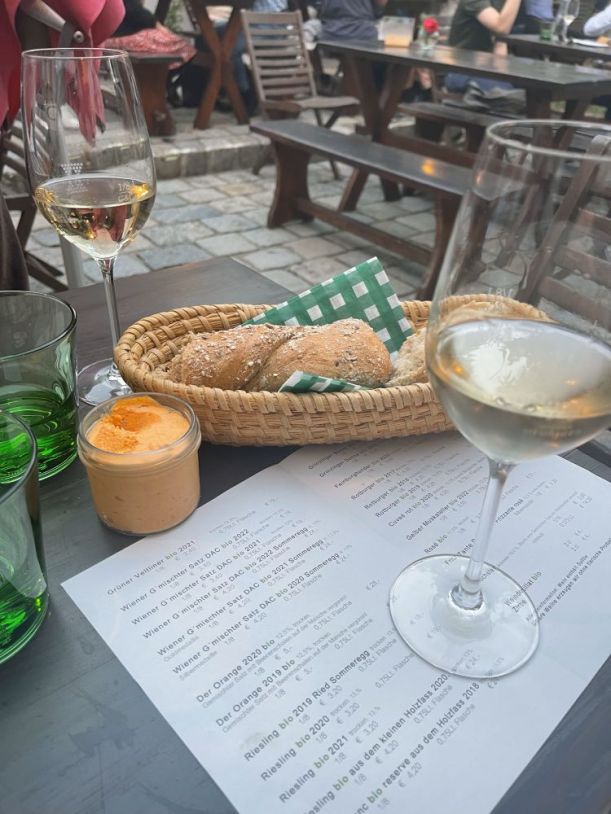
Another great Heurigen evening this time at Bioweinbau Obermann in Grinzing on the edge of Vienna. Here the specialty is Wiener #Gemischtersatz to wash down a selection of meats, spreads, cheeses and salads from the buffet. 

🍇 Weiner Gemischter Satz is traditional white made from a field blend of grape varieties harvested and co-fermented together. 

🌟 Normally its a mix which includes Grüner Veltliner, Riesling, Pinot Blanc & Chardonnay and to ensure the wine is genuinely ‘gemischt’ no one variety can make up more than 50% and the variety that is third largest must be at least 10%! 

😋 The wines range from crisp and zingy through to more concentrated age-worthy single vineyard bottlings showing stone fruit and spice but always racy acidity. 

🥂 Great wine in a great setting.