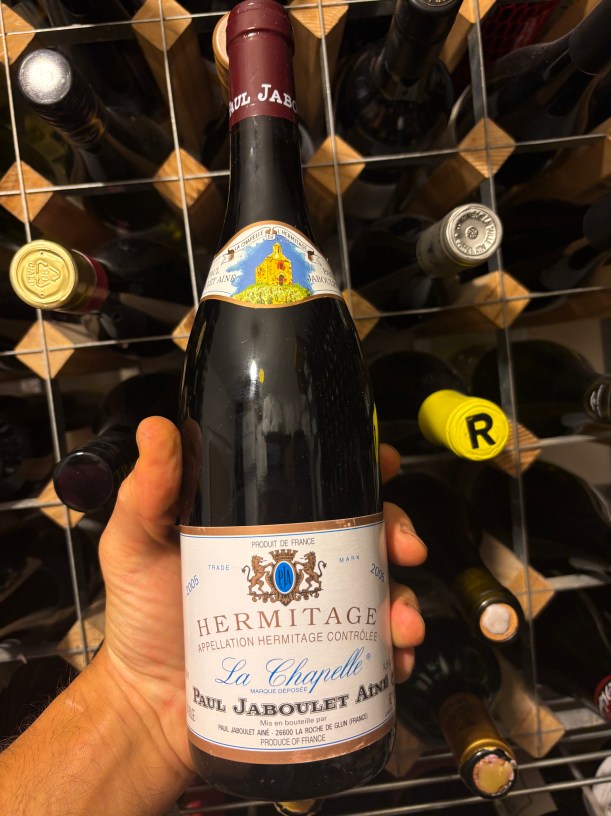
A memorable wine dinner moment was when Marcel Orford-Williams, the then Wine Society buyer for the Rhone, turned up to our Domaine Paul Jaboulet Aine dinner with two bottles of the 1991 La Chapelle, from his own cellar, to generously share. At 22 years old the wine was amazingly vigorous and layered and has stayed in the memory ever since. So I was excited to take the 2005 La Chapelle along to a recent blind tasting dinner and see what it was like.
The colour was very deep garnet with a brick rim. On the nose: violets in bloom, red & black cherry, baked blackberry tart and toast. A touch of classic ground black pepper, then earth, dried Iberico ham and a whiff of polish.
In the mouth it was bone dry, with bags of refreshing acidity, plenty of ripe fine grained tannin. These were felt on the gums and cheeks but also as a knot on the tongue. There was subtle oak so probably mostly old oak with a smaller proportion of new. The wine was concentrated and the fruit fresh and still prominent after 20 years. There were more dried herbs and pepper corns on palate and hints of loamy earth and chestnut mushrooms seemed to only grudgingly speak of the wine’s maturity. The finish was long and savoury.
What balance! even with 14.5% alcohol the wine remained cool and classy. This wine has developed at a glacial pace, earlier bottles only opening up after many hours of decanting and only now is it reaching maturity. Still the core of fruit and abundant freshness and tannic grip mean it should happily go on for another decade.
It’s widely reported that the quality of La Chapelle diminished after the 1991 vintage but then gradually recovered once Caroline Frey of Chateau La Lagune took over in 2006. The 2005 must have still been in barrel so perhaps benefited from Frey’s hand in the final blend if not the subsequent conversion of the vineyards to organic and biodynamic practices and the change to Bordeaux style French oak barrels in later vintages. Whatever the case the 2005 wine is superb!
By the way you won’t find La Chapelle under the Jaboulet name any more it has now been turned into a separate winery called Domaine de la Chapelle.
Tasting wines with contrasting aromatic and structural qualities side-by-side is a great way of calibrating your palette and improving your tasting skills. But training yourself to recognise the characteristics of a particular grape variety or blend is another matter.
The excellent Guild Som’ has a series of podcasts on blind tasting. In the episode called ‘Study methods for improving your blind tasting’ they suggest that to really get to know a particular grape variety or regional blend you should line up as many samples and taste them non blind side by side.
Sounds obvious right? But normally when tasting a wine one is focusing on what if anything makes it unique and interesting. Here one is looking for common characteristics and similarities. By making detailed notes you can then look for any consistent ‘tells’ to help identify the variety. It is still worth looking at the differences to help understand what the range of tolerance for a grape variety is. I guess the process also helps embed a personal taste memory that can be triggered when you come across it again.
So at a recent Big Rhone Tasting by the excellent Yapp Brothers I decided to try this out and see what I could learn. First the whites here and then the reds will follow.
Part 1: White Rhone
White Southern Rhone
Cotes du Rhone Chateauneuf du Papes. Well these are tricky! So many different grape varieties and combinations and not really enough of a sample on this occasion to make generalisations about. They all had similar structure: medium acidity, full body & highish alcohol and varying levels of viscous mouth feel.
White Northern Rhone – Croze Hermitage, Saint Joseph and Hermitage.
These but can be 100% either. These wines were also full bodied but were fresher and more structured. The texture was viscous but somehow firmer. Whilst there were floral notes and ripe stone fruit they were in essence savoury and many had a saline note. Use of oak was evident to varying degrees. (Wow the Jean-Loius Chave wines were amazing!)
White Northern Rhone – Condrieu
Made from 100% Viognier these wines all had a lot in common. Although sometimes toasty oak masked the nose there were pretty consistent distinct floral notes of cut flowers and blossom. Interestingly although the level of acidity was only medium the wines managed to have a freshness about them that balanced the full body and oily, viscous texture. (George Vernay really does produce a great range of Viogniers.)
These wines were all fruitier on the nose than the palate where they tended to be more savoury certainly on the finish.
Detailed White RhoneTasting Notes
Côtes du Rhône Villages Sablet: Domaine Saint Gayan ‘L’Oratory’ 2023 13%
A blend of Viognier, Bourboulenc, Clairette, Roussanne and Grenache Blanc. Very pale watery lemon in colour, ripe apple a floral note peach and some green herbs. Dry with medium acid a viscous elastic quality to the texture, less fruity on the pallet. There are more vegetal and rooty notes and spice on the palate. Medium plus in length.
Lirac: Domaine Maby ‘La Fermade’ Blanc 2023 14.5%
Grenache Blanc (55%) Clairette (25%), Piquepoul (15%) and Ugni Blanc (5%). Very pale watery lemon colour, reflective. White flower, orchard fruit, ripe pear, white peach on the nose. Dry with medium acidity and a full body more creamy texture more citrus and vegetable notes on the palate than the nose a little grip? Medium plus length.
Châteauneuf du Pape: Le Vieux Donjon Blanc 2023. 14%
Clairette, Roussanne. Super pale lemon colour. Medium plus intensity nose quite tight and a bit closed. Some floral notes, ripe apple and pear and a mineral and saline quality. Dry with medium acid full body definitely high alcohol there’s a thick creamy firm texture and again a savoury dominance to the palate with wet stones and a salty note. There is some grip to the sides of the cheek.
Crozes-Hermitage: Alain Graillot Blanc 2023. 13%
Marsanne with some Roussanne. Pale but slightly more lemon colour. The legs are medium but quite quick. On the nose there is orchard fruit, herbs and spicy notes. It is dry with medium acid and has an elastic viscous mouth feel. Again orchard fruit, some peach, herbs and a touch of brine with a dry long finish.
100% Roussanne. Pale and watery lemon colour with medium legs. Some florality, citrus, pear, peach all ripe in character and definite vanilla and toast notes. It’s dry, savoury with medium acid, full body and has an elastic viscous texture. The finish is spicy and a bit salty with a long toasty note.
100% Marsanne. Again medium lemon colour with a watery rim and medium slow legs. The nose has some floral notes smoke, toast, ripe peach and verging on tropical notes. It is dry with medium plus acid, full body and high alcohol but beautifully balanced. It has a silky viscous mouth feel and a slight salty note.
80% Marsanne and 20% Roussanne. Medium yellow colour with a watery rim, slow and thick legs. Immediately one notices the toast, smoke and oak notes, then ripe peach, some tropical pineapple notes and vanilla. The pallet is dry with medium acid. It’s rich and concentrated, full-bodied and has a thick viscous mouth feel. Super concentrated, obviously high alcohol but well integrated and it’s very long finishing with some nice salty notes.
Condrieu & Viognier
IGP Collines Rhodaniennes: Domaine Georges Vernay ‘Le Pied de Samson’ 2023. 14.5%
So floral: cut flowers in bloom, peach blossom. The wine has thick and slow legs. It’s dry with medium acidity, medium + body, an oily viscous texture, but balanced with enough freshness to carry it through.
Condrieu: Domaine Georges Vernay ‘Les Terrasses de l’Empire’ 2023. 14%.
Pale colour, slow thick legs. Blossom ripe pear and just ripe peach. On the pallet dry medium acidity, full body with an oily, viscous texture but again a balanced lifted quality.
Condrieu: Domaine Georges Vernay ‘Les Chaillées de l’Enfer’ 2023. 12.5%
Honeysuckle peach and some spice on the nose again, pale but with medium legs. It is dry with medium to medium plus acid medium + body with a silky texture. On the pallet one can still taste cut flowers, its fresher with peach and some spice, it has a long finish.
Condrieu: Domaine Georges Vernay ‘Coteau de Vernon’ 2022. 14%
Pale lemon in colour with thick legs. The florality here is more subtle but there are still cut flowers ripe pear, some peach and a little smoke. It is dry with medium to medium acid and an oily, viscous mouth feel. On the pallet one notices the ripe fruit, peach and pear, herbs and also a touch of toast and smoke. Long finish.
Condrieu: ‘La Carthery’ 2019 Chateau Grillet. 15%
Very pale and watery appearance with thick slow legs. Immediately one notices toast spice then some floral notes and peach but added in with green dried herbs and more smoke. On the pallet it is dry with medium to medium plus acid, full body an oily, viscous and elastic texture. This is an intense and concentrated wine with great balance. It finishes on a long smoky peachy note.
The second half of a recently Coravin’d 75cl bottle, decanted for an hour before trying. The first half was magical, hoping for the same again…
Mid ruby, hint of orange around the rim. Legs abundantly coating the glass telling me there is more fun ahead!
Nose is dark cherry, macerated strawberry, ripe blackberry, really ripe to overripe plum and cassis syrup encompassed in a lightly mushroomy, damp forest floor and cedar envelope. There are accents of spicy clove, menthol, vanilla pod, burnt toast and some newly sawn wood providing beautiful contrast between the ripe dark fruit and the lifted spiciness. I could just sit and inhale this all day (but that would defeat the purpose of the tasting note…)
The first thing you experience on the palate is bright red and black fruit, tart acidity and very refined yet abundant mouth filling tannins. The lingering flavours deepen into a menthol covered dark cherry, black currant and plum coulis with a hint of smokey dark chocolate. The finish is long, approaching the 45 second mark to still get the fruit elements and well beyond to still feel the structural aftermath of this very complete wine. As the wine continues to open, the fruit sweetens and darkens further in the mouth while the tannins are ever present and lingering. The bright acidity keeps this whole wine perfectly in balance. My estimation is this wine will easily go another 25 years if stored well.
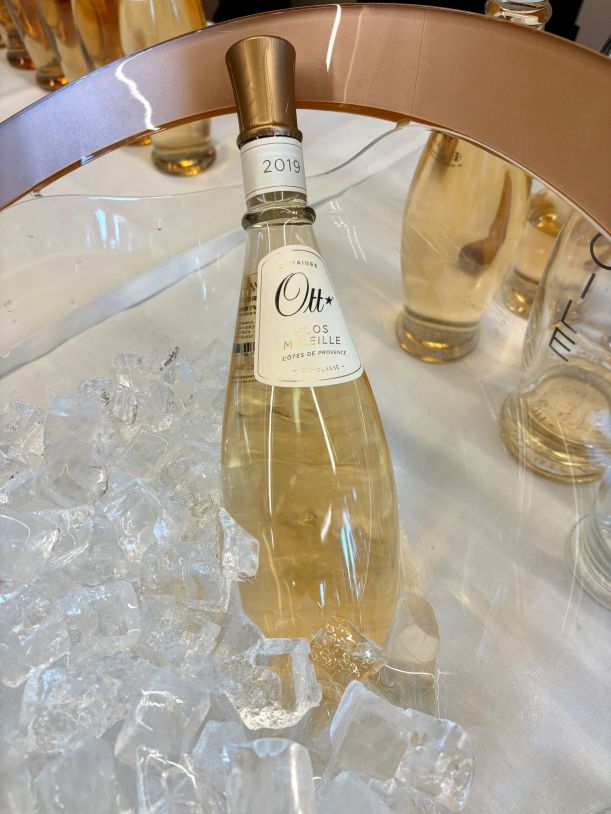
Jean-Francois Ott led a recent vertical tasting of the Domaines’ rose wines to show case their ability to age and the Maisons Marques et Domaines Portfolio Tasting
Domaines Ott⋆ part of the Roederer group is a prestigious collection of three estates in the Var department of southern France, producing exceptional wines across two renowned appellations: AOC Côtes de Provence and AOC Bandol.
The Estates
Château de Selle (AOC Côtes de Provence) Founded in 1912 by Marcel Ott, this estate is located in Taradeau on limestone hills. Its 93 hectares of vineyards grow on gypsum, red clay, gravel, and stone soils, yielding elegant, mineral-driven wines.
Clos Mireille (AOC Côtes de Provence) Situated near the Mediterranean Sea in La Londe, this 174-hectare estate includes 56 hectares of vineyards planted on schist and quartz soils. The maritime influence imparts freshness and salinity to the wines.
Château Romassan (AOC Bandol) Located in Le Castellet, this estate features an 18th-century château and 83 hectares of vineyards on arid, gravelly soils rich in limestone and marl. The warm days and cool sea breezes create ideal conditions for Mourvèdre.
The Wines
Clos Mireille Rosé (AOC Côtes de Provence)vintages 2019, 2022 and 2023. A blend of Grenache (80%), Cinsault (15%), and Rolle (5%), occasionally complemented by Syrah. The 2019 had pretty floral nose with roses, strawberries, raspberries, a touch of peach. A fresh herb note and wet stone too. There is also nice additional note of Pine needle. Whilst interesting the younger 2022 and 2023 vintages outshone this with more intense florality, ripper fruit, again peach notes but also a green cut flower character. With green herbs and along finish with a saline note.
Château Romassan Rosé (AOC Bandol) Composed of Mourvèdre (50%), Cinsault (30%), and Grenache (20%), The 2020 was more closed with some red soft fruits a little bit of peach but mostly wet stone and dry cinders. The 2023 was still a little inexpressive which may be due to the dominance of the Mourvèdre. It was super dry and overall more savoury with herbal notes, more structured with fuller body and a nice texture to the mouth feel.
Étoile (Vin de France) A blend of 85% Grenache and 15% Mourvèdre, partially aged in spherical ceramic vats to enhance purity. This cuvée combines fruit from all three estates. The 2020 out of magnum was subtle on the nose, with florality, red fruit, peach herbs and even a little banana. In the mouth grapefruit appears and there is a nice roundness and a long fruity finish. The 2022 was a little closed and a bit less generous with cut flower and saline notes to the fore. The 2023 the most expressive with florality, soft red fruit and wet stone. Dry, fresh, nice body and a slight grip at finish which is long and lingering with fruit wet stone and a nice saline note. Beautiful!
My feeling which was echoed by a MW in the room was that whilst interesting the older vintages were out gunned by the delicious younger wines which displayed an elegant balance between fruit and wet stone and saline notes and were just a bit more vigorous.
At a recent Alliance Wine/H2Vin tasting I was delighted to find the wines of Jura represented by Domaine Berthet-Bondet. Jura, tucked between Burgundy and the Swiss border, is home to one of France’s most fascinating wines: Vin Jaune. Produced exclusively from the Savagnin grape, this golden-hued wine is the result of an extraordinary winemaking process and a true reflection of the region’s terroir.
Jura’s climate isn’t for the faint of heart. Winemakers here battle heavy rainfall and the constant threat of spring frosts, making each vintage a labour of love. The region’s distinctive local varieties—Savagnin, Poulsard, and Trousseau—thrive in the marl and limestone soils, giving rise to wines with remarkable complexity. But it’s Savagnin that truly shines in Vin Jaune production.
An ancient variety, Savagnin is a genetic powerhouse. It’s the parent of some of the world’s most renowned grapes, including Pinot Noir, Chenin Blanc, Grüner Veltliner, Sauvignon Blanc, Silvaner, Trousseau, and Petit Manseng. Despite its heritage, Savagnin remains a relative rarity, thriving in Jura’s cool climate where it retains its bright acidity and rich aromatics.
What makes Vin Jaune so distinctive is its biological aging. After fermentation, the wine is transferred to old oak barrels and left untouched for a minimum of six years. During this time, a delicate layer of yeast known as voile (meaning “veil”) forms on the surface. This yeast blanket protects the wine from oxidation while contributing complex nutty, spicy, and saline flavours. The result is a wine with striking aromas of walnuts, almonds, curry spice, and dried fruit, all balanced by piercing freshness.
Due to the extended aging process, evaporation takes its toll, all that is left from one litre of wine is 62 cl which is why Vin Jaune is bottled in the distinctive clavelin, a squat 62 cl bottle. This is also the reason why it is relatively expensive. Although quite often wine makers will bottle wines matured sous voile earlier which offer much of the character and are a little more accessible.
On the table, Vin Jaune is a great match with the local Comté cheese and works well with rich spicy food. And while it’s fascinating young, Vin Jaune is built to age, developing even more complexity over decades.
The Domaine Berthet-Bondet, Chateau Chalon 2016 was floral, chamomile, with bruised apples, bread dough notes, orange peel and nutty notes. Really complex. There is something in common with a Fino sherry but Vin Jaune is quite distinctive with more fruit at its core and of course the wines are lighter. It was dry with quite high acidity and full body, finishing with a very long nutty saline note. Amazing.
A one-page summary of the: climate, topography, growing hazards, wine law, grape varieties, wine growing and making practices and the main wine producing sub-regions.
Sources include: WSET Diploma Wines of the World, Oxford Wine Companion by Julia Harding and Jancis Robinson, various producer maps and aerial photography.
Note this document is intended for personal use only not for commercial or promotional use. We accept no liability for any omissions or errors that may be contained in the document.
A one page summary of the Crus of the Cote d’Or illustrating the key differences in topography, soils and aspect.
Sources include: WSET Diploma Wines of the World, Oxford Wine Companion by Julia Harding and Jancis Robinson, various producer wine maps and aerial photography.
Note this document is intended for personal use only not for commercial or promotional use. We accept no liability for any omissions or errors that may be contained in the document.
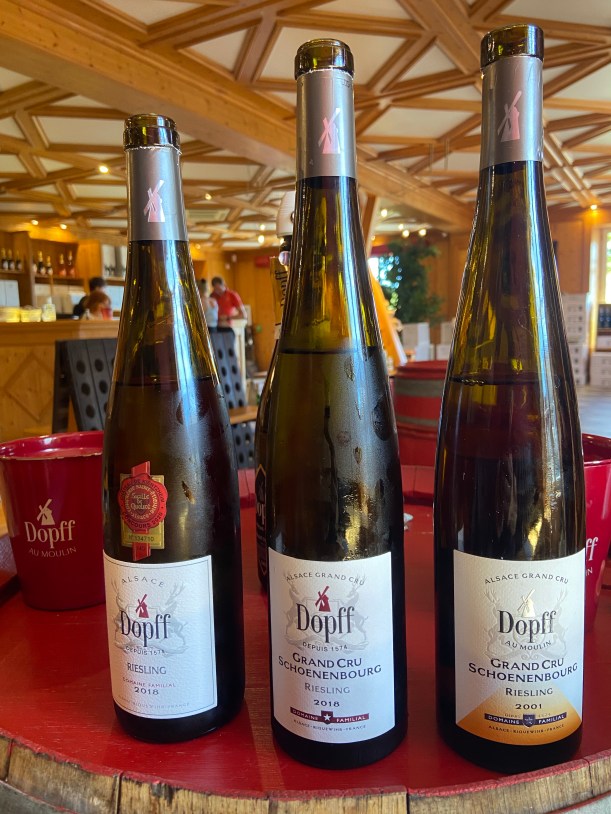
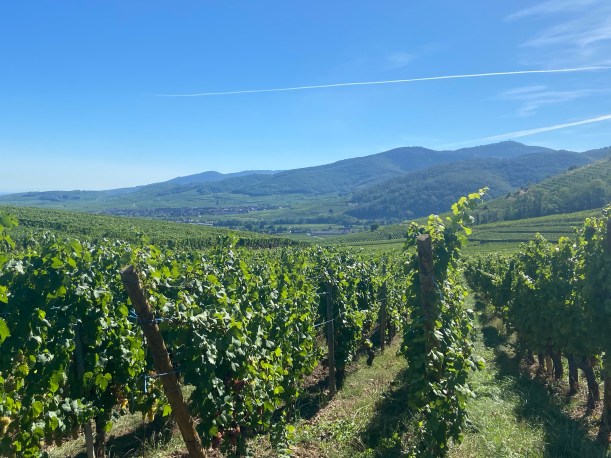
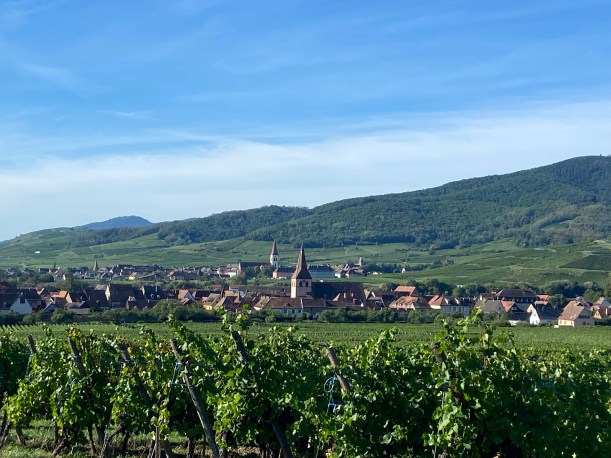
The onset of 2024 has left me reflecting on my inherent Francophilia. This got the better of me towards the end of last year. I had been meaning to visit Alsace for years. It took so long partly because of my preference for red wine and more recently due to Covid.
My favourite varietal though is Gewürztraminer. This is very much a marmite love or hate grape. For me it’s love. The most textured, succulent, floral powerhouse of a wine I’ve ever tasted was a Matawherho Gewürztraminer from Gisborne in New Zealand. It was an early 1990’s vintage tasted at a masterclass with my boss of the time Dr David Durham at his home next to Cloudy Bay, Marlborough New Zealand in 1995.
The 1976 Hugel Gewürztraminer with a nose distinctly reminiscent of cannabis was a highlight of many years of wine tasting.
This grape has mesmerised me since. I also have great appreciation of the other white Alsatian varieties. Well made Pinot Gris is also beautifully textured and aromatic. Riesling whilst not my first go to drink due to its high acidity playing havoc with my gastrointestinal equilibrium is still a wine I highly regard.
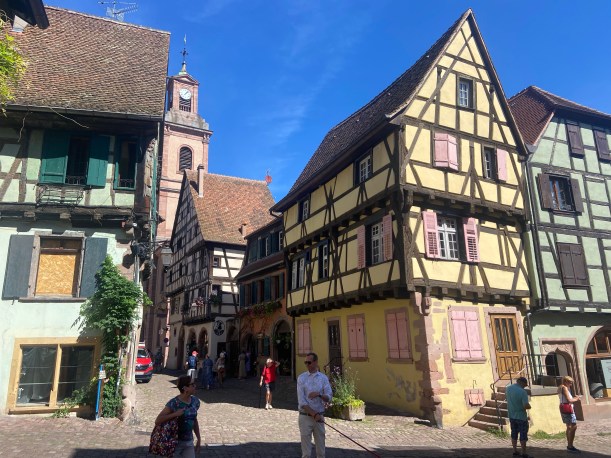
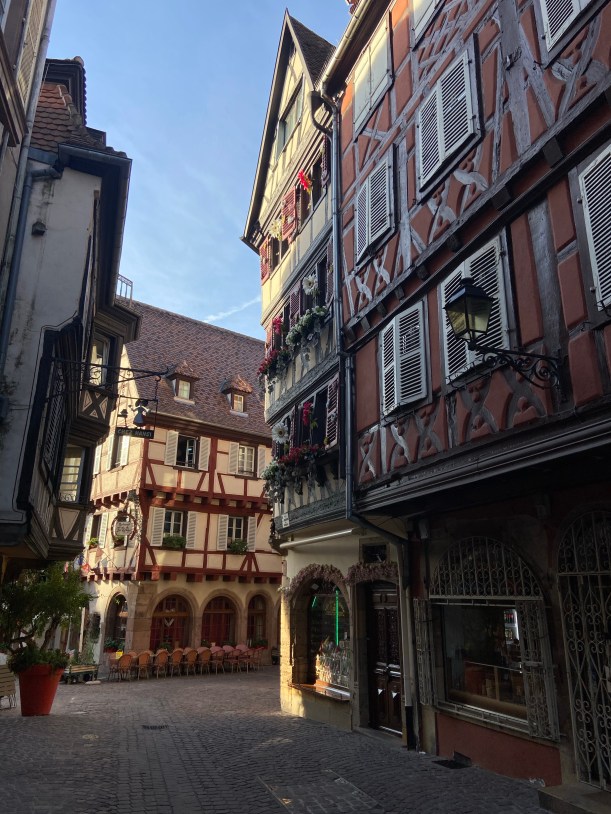
So I finally made it to Alsace, and the wait was worth it. Not only for the wines but for the delightfully preserved chocolate box towns and villages such as Colmar, Riquewihr and Ribeauville. It really feels like an amalgamation of France and Germany as its geography and history suggest.
I stayed in central Colmar at the Hotel Le Colombier. This is very conveniently located centrally and for the electric bike store on the same street. This is an excellent way to explore the region as there are many dedicated wine cycle routes throughout the area.
I wasn’t wild about the food, quite pork base and Germanic. They do an interesting pizza type of thing called a Tarte Flambee in French and FlammeKueche in German.
It was the first day of the Rugby World Cup so the flight was awash with excited fans.
I’d had also long wished to visit Chateau Coutet in Barsac having met Aline Baly on many occasions in London. I’m also a fan of dessert wines, again not everyone’s taste. Aline was in Paulliac but generously arranged the Maitre du Chai, Laurier Girardot to entertain us.
We started in the vineyards surrounding the pristine opulent Chateau.
Laurier discussed the terroir, which is slightly different to Sauternes and a little further from the River Garonne. The style here being a little less unctuous than Sauternes and perhaps less botrytis. They also make a dry white. The wines as ever, were finely balanced, long and delicious with complexity evident in older vintages.
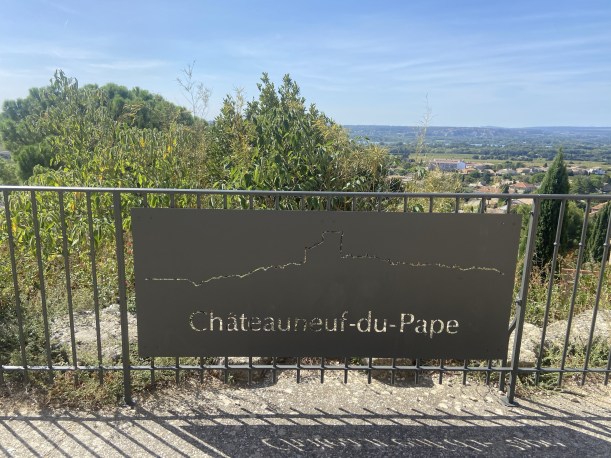
Châteauneuf-du-Pape
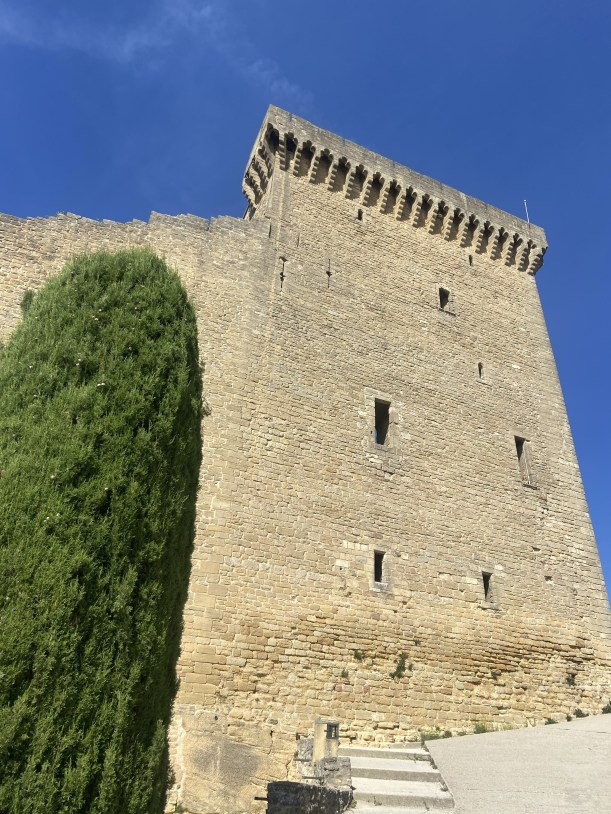
Next up a flight to Marseille, en route to another region I’ve longed to visit, Châteauneuf-du-Pape.
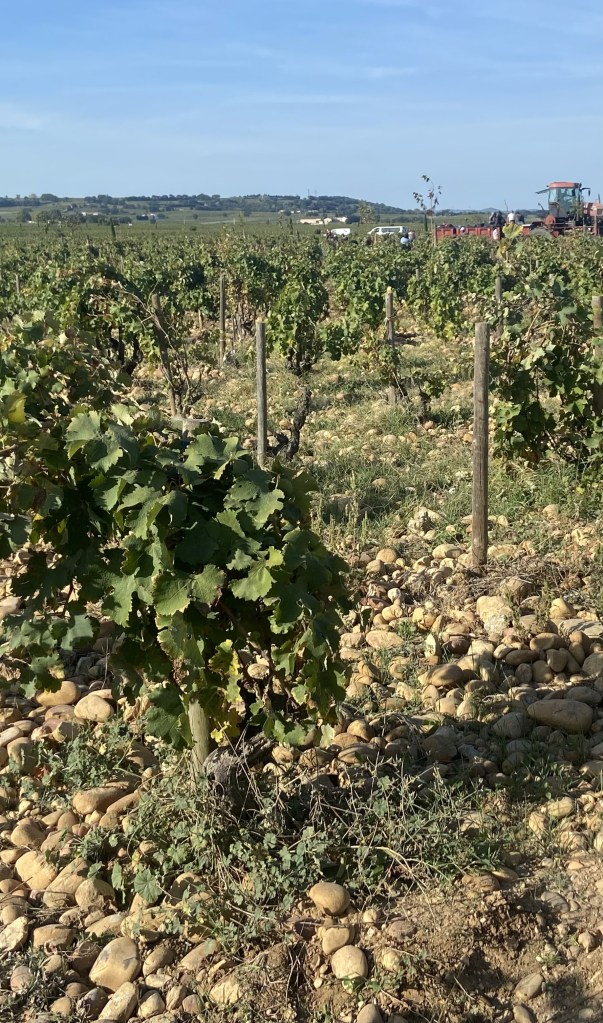
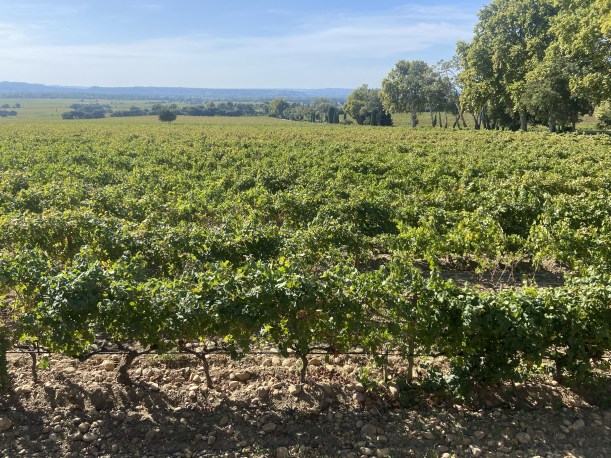
It’s one thing reading about the ‘Galets’ (larger pebbles/ smooth rocks) which are characteristic of the area. it’s another thing to see them. The entire vineyards are literally covered with layers of Galets with virtually no soil evident. These rocks have been washed down from the Alps over millions of years dating to when the area was the bed of the Rhone river.
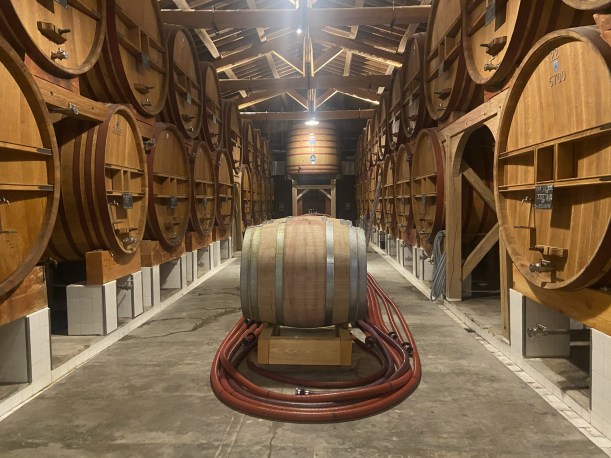
Beaucastel were in the midst of the most fascinating new build. They had a competition amongst world renowned architects who tendered for the job. It was finally won by and Indian based firm. In keeping with Beaucastel organic and biodynamic sustainability, the new structure is being built with products of excavation.
The excavated earth for the new cellar is gently crushed and then taken to a large vertical mold and compressed. This creates the large slabs to build the new winery. It already looks amazing and effortlessly blends in with the environment.
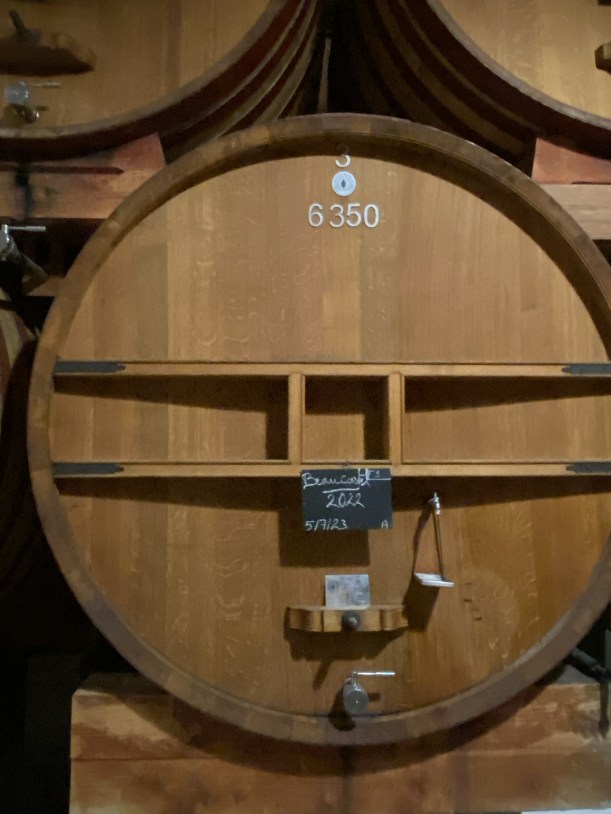
We tasted the 2008 and 2019 Beaucastel and also a 100% Roussane of which little is made. The wines as expected were spotlessly balanced and full of fine grained tannins.
I was impressed by the Chateau Mont Redon range, especially with their most moderately priced Lirac which is full of fruit but also has a lovely mouthfeel. I have been buying en primeur Mont Redon from the wine society for many years.
Final visit of the day was to a very welcoming and passionate Antoine at Chateau La Nerthe.
He gave us the historical background. There have been grapes here since Roman times. More recently they were one of the pioneers of the Appelation Controlle system
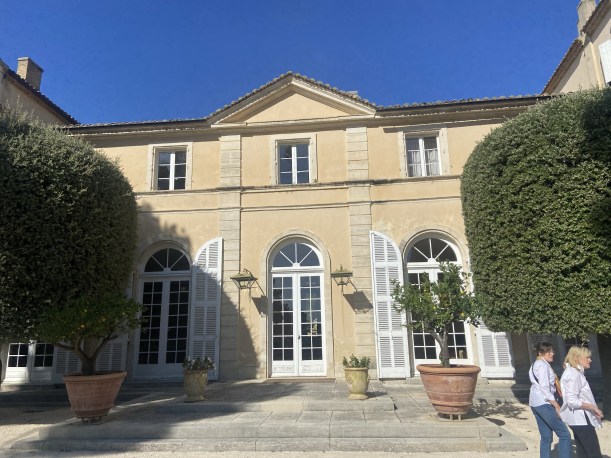
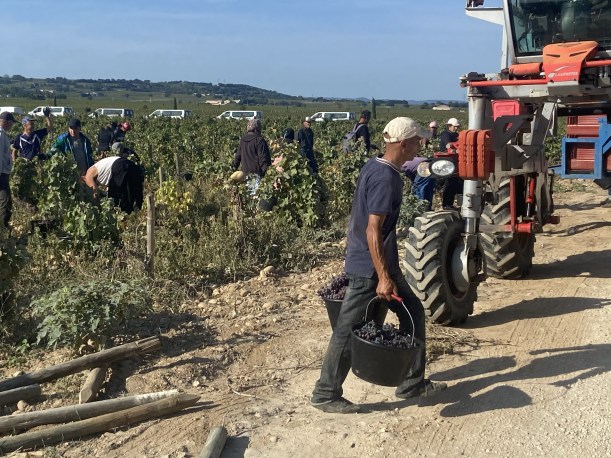
This a stunning chateau with views reaching far and wide. We toured the cellars and we were lucky enough to witness a live ‘remontage’ and sample 4 day old Mourvèdre from the tank. It was surprisingly delicious given its age.
Wine tasting here can be a little confusing as 13 grape varieties are permitted.
6 white grape varieties: Grenache blanc, Clairette, Roussanne, Bourboulenc, Picpoul and Picardan. Grenache blanc, a mutation of Grenache noir, is the most commonly used grape variety. Red grapes: Grenache, Syrah, Mourvèdre, Cinsault, Vaccarèse, Terret, Counoise, Muscardin.
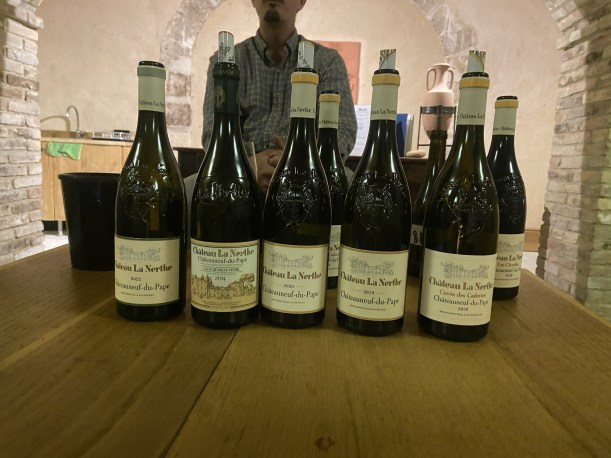
We tasted a range of their wines including
Château la Nerthe 2014 Clos de Beauvenir – it had an oxidised nose, almond, nice freshness and texture Good food wine
Château la Nerthe Barrel sample, Syrah amazing for only 4 weeks old! Full of fruit Soft tannins Delicious!!!
2020 Château la Nerthe Châteauneuf du Pape 25% Mourvèdre, Balanced, good year, plenty of fresh fruit alcohol well integrated
2019 Château la Nerthe Châteauneuf du Pape . 35 %Mourvèdre Syrah 31 %Grenache 33 % about a third each A bit more serious than 2020 and probably need more ageing to develop complexity
2020 Château la Nerthe Châteauneuf du Pape Cuvee des Cadettes which is made from their best grapes 9.000 bottles only GSM blend
2019 Château la Nerthe Châteauneuf du Pape Cadettes 55 % Mourvèdre floral earthy savoury serious big wine.
Antoine then brought out a blind wine which I immediately described as Pinotesque. I was happy to be correct in my deduction that it was one of their very limited production 100% Grenache.
This tasting was one of the highlights of many years of different wine trips. Thanks to @bossofthewine, Bruce Baldinger and the New Yorkers. We had serendipitously met them on the tour of the old Synagogue in Carpentras the day before and tagged along to this visit.
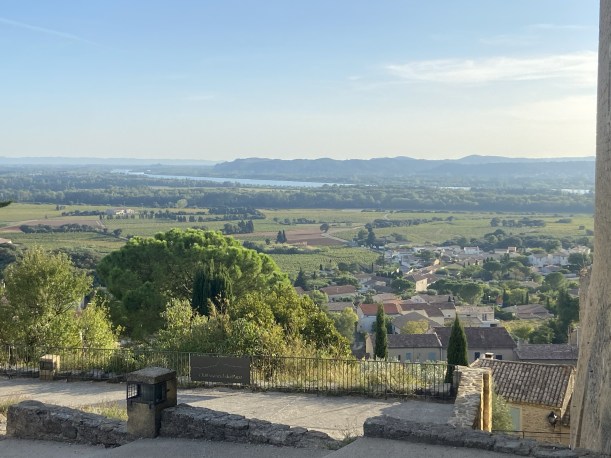
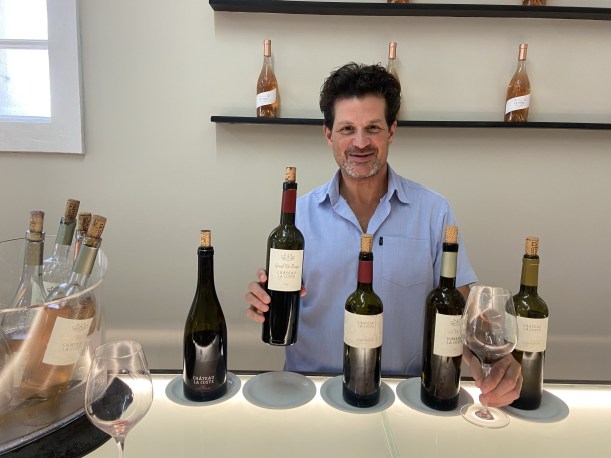
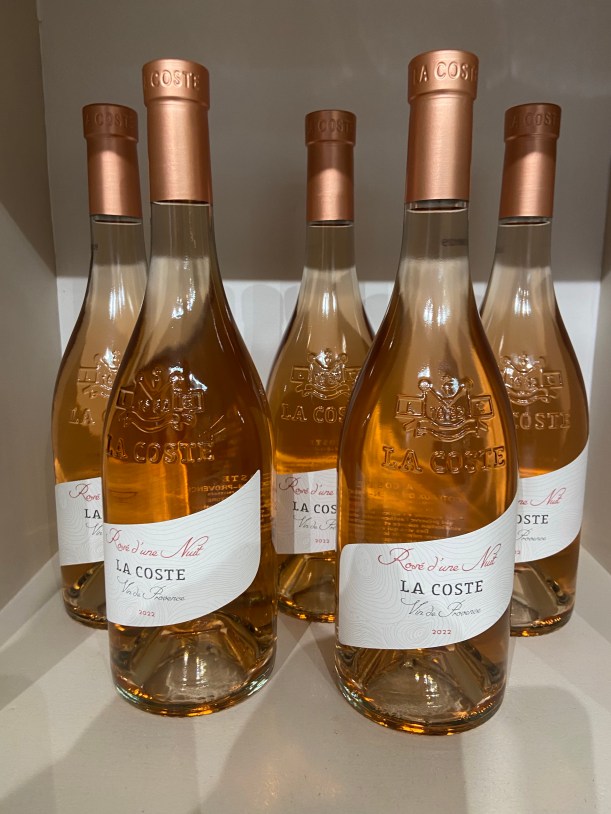
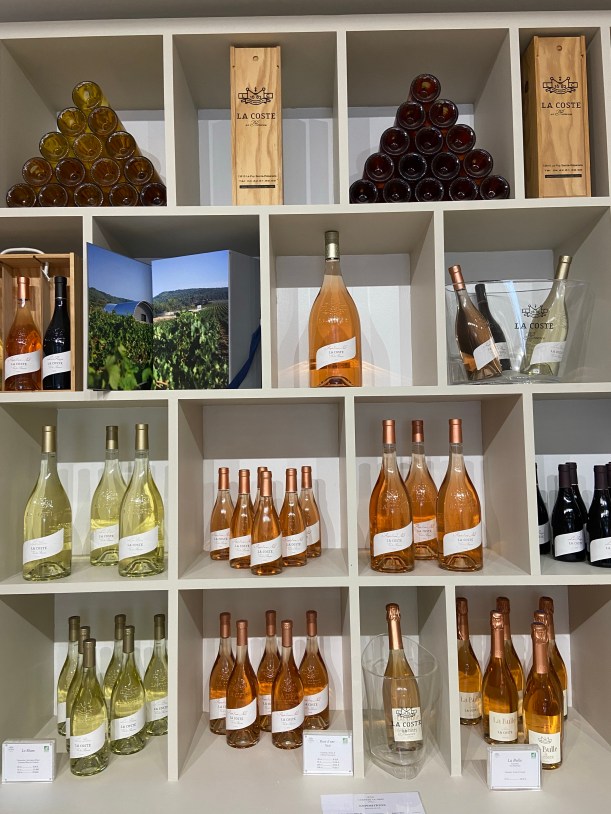
Finally I must not forget the opulent Chateau La Coste in Provence. It was a short drive south from our accommodation in Lourmarin through the beautiful countryside towards Aix en Provence near the village of Le Puy-Sainte – Reparade.
This is a real destination owned by Irish property magnate Paddy Mckillen. It has its own art and architecture walk, 600 acre sculpture park, a luxury hotel Villa La Coste multiple very high end restaurants and excellent wine.
Despite the breadth and depth and quality of wines across the world, there’s nothing quite like returning to La Belle France!


























 WanderCurtis Wine