WanderCurtis Wine

Wine tastings, corporate events, reviews and recommendations


Leave a comment

Beyond the Bottle: Rethinking Wine Packaging for a Sustainable Future

This week’s Vessel Sustainable Wine Fair in Islington gave me pause for thought. I meet wine makers and distributors equally passionate about wine and sustainability and I tasted some great wines.  I wondered whether I (I suspect like many other wine lovers) have been too quick to dismiss wine packaged in alternative formats?
The image of a glass wine bottle, corked, labelled, and gently sweating in a cool cellar, is ingrained in our collective wine consciousness. But while beautiful, the traditional bottle is far from benign. In fact, the production and shipping of glass bottles contribute a disproportionately high share of wine’s overall carbon footprint. Heavy, fragile, and energy-intensive to produce, glass packaging is one of the most environmentally taxing aspects of modern winemaking. As the industry searches for greener alternatives, a host of smart, sustainable packaging solutions are gaining traction, not just for the planet, but for our pockets and lifestyles, too.

Here’s an overview:

PET Bottles
Lightweight, shatterproof and recyclable, PET (polyethylene terephthalate) bottles dramatically cut emissions during transport, thanks to being up to 90% lighter than glass, and cost significantly less to produce. However, their permeability to oxygen means they’re best suited to wines designed for short-term enjoyment, typically within 6–12 months of bottling. The Wine Society, after extensive trials of alternative formats, now offers flat PET bottles for several of its wines, optimising both shelf space and environmental impact. While they still carry a perception hurdle with traditionalists, PET bottles are gaining favour among everyday drinkers seeking lighter footprints without sacrificing flavour.

Aluminium Cans
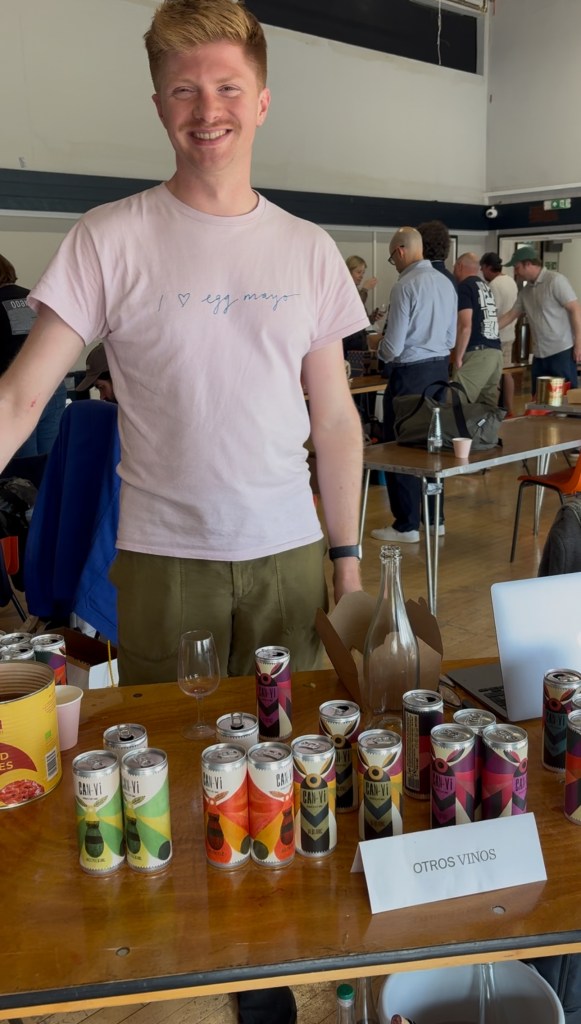
Wine in a can might still raise eyebrows among purists, but the popularity of their eye catching graphics, especially with younger and casual drinkers, is undeniable. Cans are ultra-light, fully recyclable, and offer the ultimate in portion control and portability. They chill quickly and are perfect for picnics, concerts, and midweek sipping without committing to a full bottle. Shelf life typically ranges from 12–18 months, ideal for most fresh, fruit-driven styles. While fine Burgundy in a can may never catch on, this format has found a clear place in the modern wine landscape, breaking down barriers with its convenience and accessibility.

Bag-in-Box
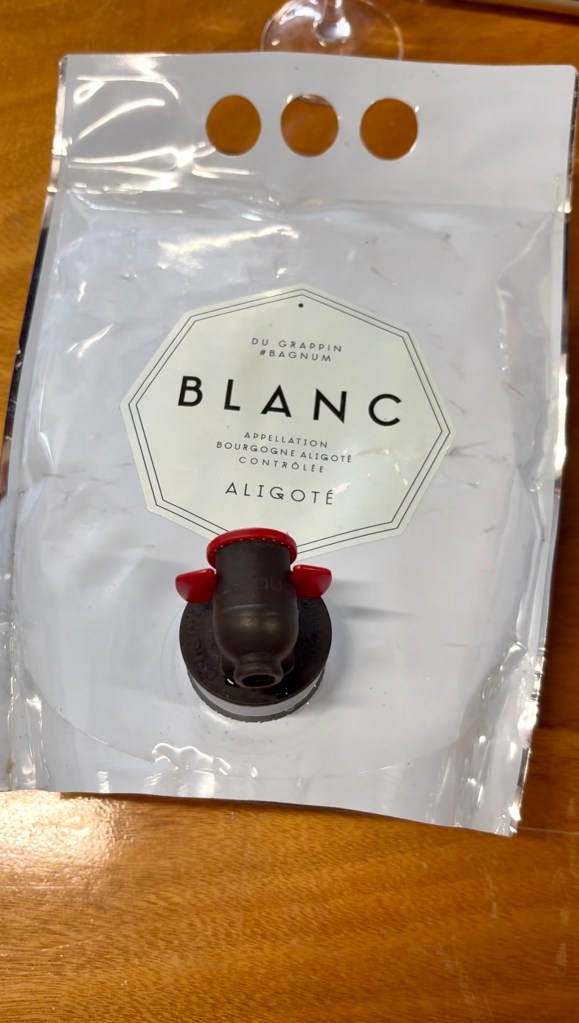
Once a symbol of bargain-basement wine, bag-in-box (BiB) has undergone a quiet revolution. Today’s BiB wines are often well-sourced, thoughtfully made, and remarkably sustainable. The format consists of a plastic bladder inside a cardboard box, which collapses as wine is dispensed, minimising oxidation and keeping wine fresh for up to six weeks after opening, brilliant for drinking a glass at time. Unopened, they can last 6–12 months. However I tasted a pinot noir that had been stored for 2 years at Vessel and it was in great shape. With lower packaging-to-wine ratios and reduced transport emissions, BiB is one of the greenest ways to package wine. The Wine Society now offers an impressive range of BiB wines, showing that good wine doesn’t need glass to deliver quality. Consumer perception is shifting too, especially among environmentally aware and value-driven buyers.  At Vessel Le Grappin were showing a range of delicious Burgundy wines in a very smart looking ‘Bagnum’, basically the bag without the box.
Tetra Pak
Tetra Paks, paper-based cartons familiar from juice aisles, are becoming a practical option for entry-level wines. Lightweight, compact, and cheap to produce, they offer a low-impact alternative to glass. Their recyclability depends on local infrastructure, which can be a drawback, but their portability and convenience are appealing. Shelf life is 6-12 months. While still limited in consumer popularity, they’re gaining ground among producers aiming to reach new, sustainability-minded markets.

Kegs
Mostly found in restaurants and wine bars, reusable stainless steel kegs eliminate packaging waste almost entirely. A single keg can replace dozens of bottles and dramatically reduce cost and emissions over time. Wines stay fresh for up to two months once tapped, making them ideal for by-the-glass service. Though upfront investment and dispensing equipment are required, kegs are making appearances at refill shops and festivals. As the infrastructure grows, we may see this model expand into more consumer-facing settings.

The truth is, only 10–15% of wines globally are made for long-term aging. The vast majority are intended for enjoyment within a year or two of bottling, at their freshest, brightest and most expressive. For these wines, the traditional bottle is more about habit than necessity. By embracing more sustainable packaging like PET, cans, BiB, and Tetra Paks, we can preserve the pleasure of wine while reducing its environmental impact, and often, the cost. The future of wine doesn’t need to be corked and glassed. It just needs to be thoughtful, delicious, and a little lighter on the Earth.

After all the most important wine vessel is actually a nice long stemmed wine glass for most wine how it got there is less important.

For more about Vessel Sustainable Wine Fair follow this link.

Leave a comment

Regenerative Viticulture: Farming for the Future

Regenerative Viticulture (RV) is quietly revolutionising how some of the world’s most thoughtful winegrowers approach their craft. It’s more philosophy than prescription, rooted in ecology and driven by a desire to transform vineyards into thriving self-sustaining ecosystems now and for generations to come.

At its heart, RV aims to restore soil health, improve resilience to climate extremes, reduce chemical inputs, sequester carbon, and nurture biodiversity. These are lofty ambitions, but for many growers, they’re fast becoming the only way forward.

Why Regenerative Viticulture?

The motivations behind RV vary. For some, it’s about producing better wine with less interference. Others are adapting to the escalating challenges of climate change; heatwaves, erratic rainfall, and soil erosion. Toby Buck of Te Mata is looking toward the horizon: “Our estate has to be sustainable for there to be a viable legacy.”

RV also speaks to the growing desire among wine drinkers for transparency, ecological integrity, and authenticity. In a world increasingly wary of greenwashing, it’s no surprise that many pioneers of organic and biodynamic win, like Tablas Creek and Felton Road, see RV as the next evolution.

But what makes RV different isn’t just the list of things it avoids. It’s the things its doing to build the growing environment back up.

The Methods

Rather than following a fixed set of rules, RV offers a toolbox of practices. Growers adapt methods to their particular environment, soils, and climate, to create resilient, biodiverse agro-ecosystems with healthier vines and deeper-rooted sustainability.

Soil First

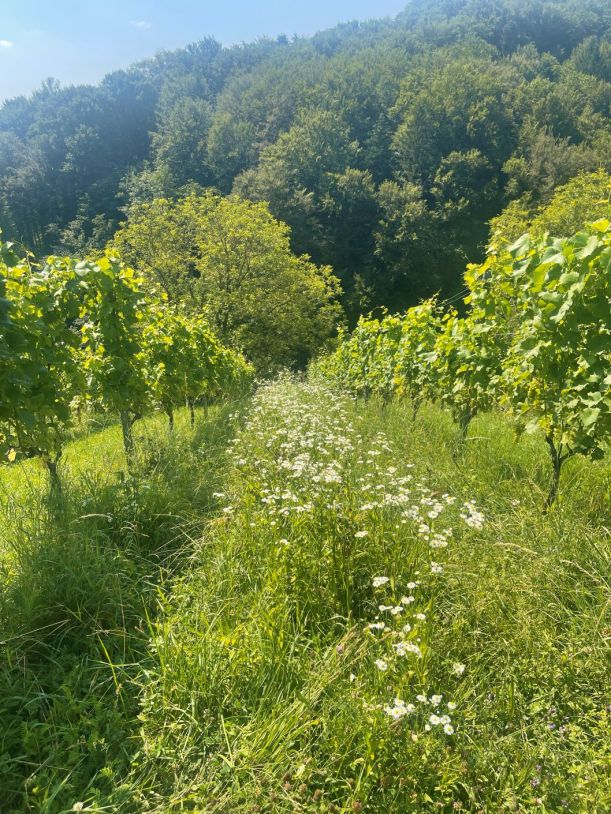
Soil health is the cornerstone. Cover crops are sown between vine rows, preventing erosion, locking in moisture, and supporting underground networks of fungi and microbes. These relationships, vital to nutrient cycling and carbon storage, create a self-sustaining system beneath the vines.

Legumes fix nitrogen. Grasses manage vine vigour. Compost (including grape pomace, manure, and even biochar from prunings) replenishes nutrients and increases humus. This aids water retention and carbon sequestration. Johan Reyneke, whose South African vineyard was an early adopter, says humus levels have risen significantly thanks to high-density cattle grazing in the dormant season and careful composting.

Designing with Nature

Regenerative vineyards are often shaped at a landscape level. Incorporating trees and permanent wild habitat attracts predatory insects, supports biodiversity, and buffers weather extremes. Trees help cool vineyards during heatwaves and provide modest frost protection, but they must be carefully placed to avoid shading vines.

Water management, too, is critical. Techniques like keyline planting slow runoff and help retain moisture.

Integrating Animals

Animals, ducks, sheep, and cattle, are another key component. They manage weeds, fertilise the soil, and reduce the need for mechanical inputs. Reyneke uses ducks to tackle snails, and a herd of cattle in winter. Trellising systems can be adapted to allow grazing even during the growing season.

From Chemicals to Complexity

RV reduces reliance on synthetic inputs, especially pesticides and herbicides, which often damage beneficial biodiversity. Alternatives include organic-approved treatments and the cultivation of disease-resistant Piwi hybrids, which dramatically reduce the need spray against mildew. But organic practices like tilling can damage soil structure and release carbon, so many regenerative growers aim for minimal or no tillage, using mulches and interrow planting instead.

RV doesn’t pretend to be a silver bullet. Some growers still use herbicides, or till occasionally. But the emphasis is on long-term soil health, not short-term fixes.

The Costs and the Payoff

Transitioning to RV takes time, skill, and often money. Johan Reyneke openly speaks of the “school fees to pay”, yield drops during early experimentation, the need for new equipment, and a steep learning curve. Managing a vineyard as a living ecosystem means more complexity, more hands-on work, and more multidisciplinary knowledge.

Certification can also be costly and fragmented. Still, frameworks like Regenified offer tiered pathways that make entry more accessible.

On the other hand, RV can reduce dependence on costly external inputs like fertilisers and fuel, whose prices have soared in recent years. Tablas Creek believes improved soil health will extend vineyard lifespans beyond the usual 25-year cycle, reducing replanting costs and boosting profitability.

Yields may initially dip, but often recover, and some growers report even better quality grapes and more reliable harvests in extreme conditions. Extended ripening seasons, preserved acidity, and lower alcohol levels are just a few of the benefits Reyneke and others have observed.

Building a Business and a Legacy

Beyond the balance sheet, RV aligns with a growing desire to create purposeful, resilient wine businesses. Tablas Creek embraced ROC certification for its inclusion of social fairness. Felton Road is pushing towards net zero carbon. RV is simply one part of a larger mission.

In the end

Regenerative Viticulture won’t save the planet on its own. But as the wine world increasingly looks at lifecycle carbon footprints, packaging, distribution, winery energy, it’s clear RV is an important piece of a larger sustainability puzzle.

It offers something compelling: a way of farming that puts the ecosystem first, builds resilience, and returns power to the soil. It’s a way of producing authentic wines and perhaps these wines are just better too?  Give them a try and see what you think……….

This article is based upon my independent research project for the WSET diploma.


1 Comment

BioWeingut Karl Renner: Cultivating a new generation of grape varieties in the Südsteiermark, Austria.

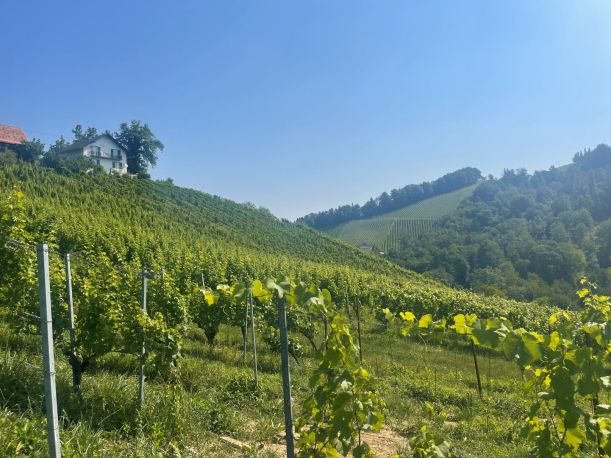
At BioWeingut Karl Renner, nestled in the rolling hills of Pössnitz in the Südsteiermark, sustainability is at the very heart of everything they do. For Karl and his family, who have stewarded this land since 1966, the focus is clear: create wines of character with minimal intervention, and protect the land for future generations.

But even for the most committed organic growers, nature presents challenges. Karl points to oidium and downy mildew as the most persistent threats to viticulture in the Südsteiermark. These fungal diseases, brought to Europe in the 19th century, remain the main reason why vineyards, even organic ones, require frequent treatments. In some seasons, up to 20 copper sulphate sprays are needed to try and keep disease at bay. “It’s too much,” says Karl. “It leaves copper in the soil which builds up over time.”

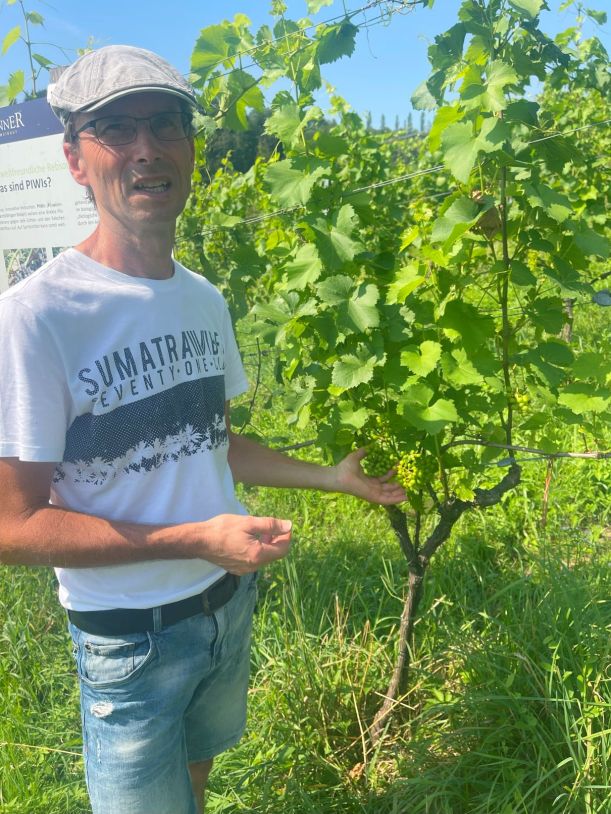
That’s why Renner is turning toward PIWI or as he calls them “next generation” varieties, fungus-resistant hybrids bred to thrive with far fewer treatments. Since 2011, he’s been gradually replanting his vineyards with these innovative grapes, which make organic viticulture not only more effective but also more appealing for wider adoption in the wine industry.

The four main PIWI varieties Karl works with are:

  • Muscat Bleu – A mid-budding, early-ripening variety, Muscat Bleu is highly aromatic and serves as an early indicator in the vineyard: its berries turn a vivid blue before ripening to black. This allows Karl to closely monitor ripeness progression in the vineyard.
  • Chardonel – A hybrid of Chardonnay and Seyval Blanc, first developed in New York in 1953, Chardonel delivers both structure and finesse. It captures the familiar elegance of Chardonnay but thrives under organic management.
  • Souvignier Gris – A cross between Seyval Blanc and Zähringer, Souvignier Gris is one of Karl’s standout performers. It ripens later and retains excellent acidity. It also has some frost resistance.
  • Muscaris – This cross between Solaris and Gelber Muskateller produces an early-ripening, highly aromatic wine. Muscaris stands out for its expressive floral and spicy notes, making it useful for both varietal bottlings and blends.

These varieties are allowing Karl to dramatically reduce chemical inputs. Where conventional or even organic growers might spray upwards of 15–20 times per season, Renner’s PIWI vines typically need only 2–4 treatments. That reduction means less soil compaction from tractors, lower CO₂ emissions, and healthier microbial life in the vineyard. Cover crops further enhance soil structure and biodiversity, especially on the estate’s steep slopes.

In the winery there is a lot to learn, the wine making knowledge for the varieties traditionally grown; Sauvignon Blanc, Morillon (Chardonnay) and Pinot Blanc, that has been accumulated over generations must be learnt anew for this New Generation of varieties.  Karl is experimenting with skin contact, barrel ageing, and unfiltered bottlings to explore the full potential of these newer grapes. He’s also trialling blends that include both PIWI and traditional varieties, giving wine drinkers something familiar while showcasing the potential of these robust hybrids.

Tasting notes:

Thirsch Chardonel 2020

  • Thirsch: historical name of the farm. First vintage 2011, still experimental.
  • Aged 2 years in barrel for stability.
  • Smoky, orange peel, peach, apricot, herbal and nutty notes.
  • Textured mouthfeel, long finish.

Souvignier Gris 2020

  • Smoky with tropical notes: peach, banana, nuts.
  • Medium body, high acidity.
  • Creamy mouthfeel, nutty and delicious.

Souvignier & Pinot Blanc Thirsch 2021 – Barrel Sample (Souvignier Gris 60% / Pinot Blanc 40%)

  • Slightly cloudy, natural wine style.
  • Aromas: marzipan, floral, sour gooseberry, banana.
  • Medium body, medium alcohol, medium+ acidity.
  • Balanced with a long finish. Sweet and savoury interplay. Love this one.

Thirsch Muscaris 2020

  • Short skin contact, fermented in stainless steel.
  • Highly aromatic: blossom, roses, pink grapefruit, peach.
  • Dry, medium+ acidity.
  • Fresh citrus, orchard, and stone fruits.
  • Textured with a slight prickle.

(For a full tasting notes follow this link)

Amber 2020 Winburg (65% Muscaris / 35% Souvignier Gris)

  • Fermented on skins: Muscaris 2–3 weeks, Souvignier Gris 3 months.
  • Separate harvest dates.
  • Pear, banana, cider notes.
  • Slightly grippy mouthfeel, long finish.

At Weingut Renner, the message is clear: PIWI varieties represent a practical, scalable solution for making organic viticulture more successful. As climate change, disease pressure, and sustainability demands intensify, Karl’s approach offers a compelling model for other growers — not just in Austria, but across Europe and beyond.

As wine drinkers are we ready to expand our horizons and discover these new wines? Natural wines have found an audience, why not “next generation” varieties too?


Leave a comment

Wine Australia Tour November 2016 Mclaren Vale (II)

Mclaren Vale Shiraz exhibits a range of sub-regional styles . They are typically medium to full bodied with vibrant pure fruit,blueberry, chococlate and spice . Sustainability is an increasingly important issue here especially regarding water availability . A trip to Battle of Bosworth demonstrated a trend to organic wine production.

The day started early in the Serafino Cellar room with a ‘speed dating’ Shiraz session.

Tintara with Paul Carpenter

img_0310These wines had a lovely tannin structure aided by open fermentation, basket press, hand plunging.
Tintara- Upper Tintara  Shiraz 2013

Only 500 cases made delicious sweet berry nose , 25% new oak, good  acid tannin  balance chocolate coffee blackberry

Eileen hardy 2013

112 yrs old vineyard  dead arm is a  problem  approx. $110 dollars/bottle  dark Berry complex +++


img_0314


Serafino with Russell Gallagher and Charles Whish

Serafino Sorrento  3 km from coast

Their entry level shiraz, fruit forward savoury herb sage spice

Serafino Black Label

Spice nutmeg  soft fruit cinnamon , spice,  chocolate baking spice , clove length complexity +

Coriole with Alex Sherrah

img_0318Coriole Shiraz 2014  app $30 dollars soils are  600 million year limestone with just one foot of topsoil
Black berry fruit spice liquorice pepper

Lloyd Shiraz 2013

100 year old   vines planted in 1919, hand picked

Deep ++ dark spice open fermentation more oxidative piégeage  pump over.

Very complex- dark chocolate, coffee, pepper, soft lush ripe tannins , long finish,  baking spices blue berry , barrel 2 yrs French oak non irrigation, yield 2 tonnes per acre ,a few bottles per vine if you’re lucky. +

D’Arenberg with Jack Walton

The laughing magpie 2012 Shiraz viognierimg_0320

Foot treading co fermentation basket pressed app $30

Concentrated fruit, 450 acres biodynamic vineyards, coffee, chocolate, spice, blue fruits grippy tannins, fruit abundant

The Dead Arm 2013  app $60

Great balance persistence tannins,15- 20 mins foot treading at 4 Baume ,basket pressed

Brad Rey , Zontes Footstep

img_0323Chocolate factory chocolate core coffe mocha decadent

blackberry and blueberry pie star anise nutmeg.

As part of their sponsorship of Legacy club South Australia

Zonte’s Footstep donates a proportion of each bottle of Z-Force ,

in tribute to the bravery of members of the Z Special Unit


Sam Temme -Wirra Wirra

Cool climate area, boundaries Adelaide Hillsimg_0324

Catapult Shiraz 200 m above sl, fragrant  viognier french oak juicy berry perfumed aromatic style blueberries

Whaite Old Block scarce  earth programme,1975 Blewitt Springs

floral perfume tannin structure

RSW 2014  Flagship  wine named after the  original owner, grown on  sandy soils with bit of black clay

Elegance balance floral hand picked open ferment ,4 day cold soak , basket press French oak30% new,8 /9 days ferment

Blood iron power elegance  still a baby 2014.

Battle of Bosworth with Joch Bosworth

img_0327Puritan Shiraz 2016 no added sulfur,organic

Raspberries violets pretty floral purple sl reductive joven style it is filtered not natural

Battle of Bosworth Shiraz 2014

Floral elegant closed some smoke coffee

Learning points -less oak less time less new, fine grain.

Site specification leading to more elegance and  structure

Soursop weeds encouraged help  strip surface moisture.


A truly indulgent lunch with Steve Maglieri and winemakers  at Serafino’s fine winery restaurant.


Visit to  Battle of Bosworth, Sustainability session.

img_0350Location bordering Adelaide Hills , single vineyard wines
Settled 1836 first grapes 1838 lots organic viticulture the climate is ideal

Underground water  used for drip irrigation.

Sustainable , optimum watering needs worked out by hydrologist.

Also reclaimed water from Southern suburbs Adelaide  50% water for vineyard

600 mm / year rainfall

Soursop bulbs encouraged (South African weed helps aerate soils)We together with fungal hyphae


We had a live demonstration of Joch’s drone used to scare off birds and reduce reliance on netting.

Tasting of  Chardonnay , Rose Shiraz, Cab Sauvignon and some interesting varietals –

Touriga Nacional floral ++vibrant red berries   8 yrs on 30 yr old rootsimg_0367

Lovely, Med bodied Med tannins ripe soft mod acidity +++

Graciano salty savoury herbal  cherry medicinal

White boar Amarone style  dried on vine cane cut Shiraz Cabernet amarone style 2012 rich lush.

It was a very informative and informal afternoon with the lovely Louise and Joch

which was rounded off perfectly with Louise’s delicious homemade scones!


Dinner Horta on the beach at  Port Noarlunga

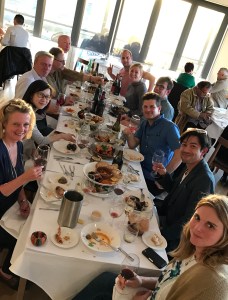
Just in case we hadn’t had enough calories today,we  made a trip to Hortas overlooking the Ocean with Seafood, gambas calamari  and spiced Portuguese fish.

Some of the many wine highlights included the  Clonakilla Riesling and the 2007 Tasmanian méthode traditionnelle,7 yrs on lees, and a wide range of the SC Pannell wines.