WanderCurtis Wine

Wine tastings, corporate events, reviews and recommendations


Leave a comment

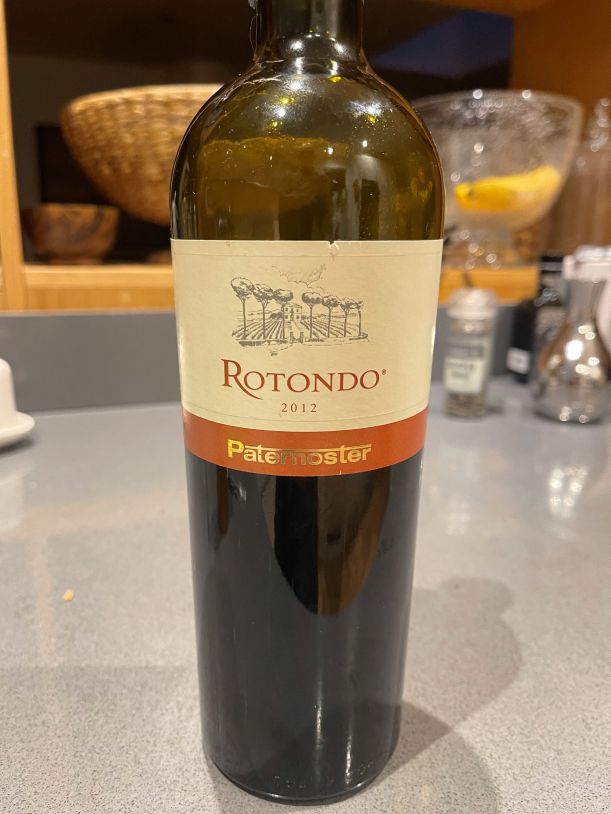
Rotondo Aglianico del Vulture 2012

From the Basilicata region in the south of Italy just where the ankle would be of whoever is wearing the uncomfortably high healed boot.

It is warm and mediterranean here but the slopes of Monte Vulture provide some cooling altitude to slow the growing season down allowing flavour to develop in the grapes. These mineral rich soils of volcanic ash and limestone over clay drain well but retain moisture which is also needed  for the grapes to grow in the warm climate.  

Aglianico is the other key ingredient here known as the Nebbiolo of the south.  This grape variety thrives in these harsh volcanic soils, ripening very late and retaining high levels of acidity. This along with a powerful tannic structure and concentrated fruit can create wines with great aging potential.

This wine by Paternoster which is 100% Aglianico has a deep colour displaying its bottle age. Out of the glass jump black berries, black cherries and herbal notes of dried thyme and liquorice. It’s seen some newish oak evident from the touch of vanilla, coffee and smoke and there are lovely mature aromas of prune, prosciutto and tobacco.

In the mouth it is definitely full bodied but has great balance, the abundant tannins are firm but ripe and fine grained. It remains fresh through the long finish and there is not a hint of heat. In fact, 14% seems pretty restrained in these times when a lot of pinot noirs are coming in at 14.5%.

Look at for this grape variety from Vulture DOC and the more premium Superiore DOCG version.  It is also the major component of wines from Taurasi in Campagnia where it is generally softened with a little Piedirosso in the blend.


Leave a comment

Wine Dinner with Te Mata Wines of Hawkes Bay, New Zealand, with Toby Buck at Bocca Di Lupo Restaurant, Soho London April 16th 2024

Te Mata Estate is New Zealand’s oldest winery, dating from the early 1890’s. Vines were first planted at Te Mata Estate in 1892. The original three vineyards produce its most famous wines: Coleraine, Awatea and Elston.

It is a New Zealand family-owned winery, based in Hawkes Bay, North Island. John & Wendy Buck have been co-owners of Te Mata Estate since 1978. Te Mata’s wines are renowned as the country’s finest.

They produce a stunning array of red and white wines including Coleraine and Awatea Cabernet/Merlots, Bullnose Syrah, Elston Chardonnay, and Cape Crest Sauvignon Blanc.

Coleraine was first made in 1982 vintage. It is a Bordeaux style wine described by Decanter magazine as “New Zealand’s First Growth”. It is made from their finest selections of Cabernet Sauvignon, Merlot, and Cabernet Franc. It is one of New Zealand’s iconic wines.

We were delighted to welcome Toby Buck, the son of the owner, over from New Zealand. Toby talked us through the history and his family wines.

We had a selection of five wines including Coleraine, served with a three-course dinner in the private room of the award-winning Boca Di Lupo restaurant in Soho.Tickets were priced is £95pp. We had a full house of 32 people.

Te Mata Estate Sauvignon Blanc 2021

Rigatoni with ricotta, broad beans & basil

Te Mata Estate Chardonnay 2023

Tagliata (served on sharing platters) Potatoes garlic & rosemary

Te Mata Bullnose Syrah 2019

Te Mata Coleraine Cab/Merlot 2018

Dessert

Te Mata Estate Gamay Noir 2023

Te Mata Wines Hawkes Bay New Zealand
Some readings of the best wine descriptions of the night

Our first time at Bocca Di Lupo was a great success. The Tagliata (Thin slices of perfectly cooked beef tenderloin) was so good it almost overwhelmed the wines! Te Mata wines lived up to their expectations and previous tastings. Beautifully crafted and immaculately balanced.


Leave a comment

Do low yields really make for better wines?

There’s a romantic allure to the idea that if vines put all their energy into fewer grapes, flavours concentrate, skins thicken and wines of depth and character will follow. It’s a story winemakers often tell, and it’s one that underpins much of European wine law. But does lower yield really mean higher quality in the glass? Or is it more complicated than that?

In the AOC system (Appellation d’Origine Contrôlée), maximum yields are tightly regulated. As you move up the hierarchy, the permitted output drops. For example, in IGP Pays d’Oc, where mass-market Merlots and Syrahs are made, yields can reach 100 hL/ha. But in Bandol, home to intense Mourvèdre reds, the limit is just 40 hL/ha.

Many wineries proudly talk about their yield-reducing techniques: bud rubbing, green harvesting, shoot thinning, all in pursuit of better fruit. But how real is the link between fewer grapes and better wine?

Grape quality.

It’s true that lower yields often result in higher-quality grapes, smaller berries with more concentrated flavours and better balance between sugars and acids. In red grapes, that also means a higher skin-to-juice ratio, which is crucial for extracting colour, tannin, and aroma. This can lead to wines that are more structured, more complex, and more age-worthy.

Conversely, when a vine carries too much fruit, the result can be diluted, insipid wine. The vine simply can’t ripen everything well. Sugar may build, but flavour lags behind, and acid levels drop, leaving wines flat or unbalanced. This is particularly noticeable with more delicate varieties that struggle to retain their identity under high cropping.

But this isn’t a one-size-fits-all rule. Some varieties are more sensitive than others. Pinot Noir, with its thin skin and delicate nature, thrives on low yields. Push it too hard, and it quickly loses character. Grenache, on the other hand, can crop more generously and still produce juicy, expressive wines, particularly in warm, dry climates where ripening is less of a challenge.

Correlation isn’t the same as causation

In Burgundy, Grand Cru vineyards like Echezeaux are restricted to 35 hL/ha, and the wines are often sublime. But low yields alone don’t guarantee greatness. In Bordeaux, some legendary vintages; 1982, 2005, 2010 delivered both high quality and high volume. And in tough years like 2013 or 2017, yields were low, but this certainly didn’t make them great vintages.

The issue is this: yields can be low for many reasons, frost, hail, drought, disease. These stresses can reduce volume, but they don’t necessarily improve grape quality. In fact, they often have the opposite effect, leaving berries under-ripe or damaged. Low yield, in these cases, is more of a symptom of vineyard struggle than a sign of excellence.

It’s about balance

What really matters is how much fruit a vine can properly ripen. This sweet spot depends on grape variety, vine age, and, critically, location. A vine in the cool Mosel will struggle to ripen Cabernet Sauvignon no matter the yield. In contrast, in warm, dry areas like Châteauneuf-du-Pape, Grenache can yield generously and still reach full flavour.

This is why a balanced vine is everything. A healthy canopy, well-matched to the fruit load, allows grapes to ripen slowly and evenly. Sunlight must reach the bunches without overexposure. Dr. Richard Smart’s research highlights the importance of the leaf-to-fruit ratio. If the canopy is managed well, through pruning, training, and shoot thinning, the vine can support both ripeness and complexity, even at higher yields.

Beyond yield: The bigger picture

Yield is just one piece of the quality puzzle. Soil structure, drainage, and mineral content shape a vine’s health and its capacity to ripen its fruit. Climate, both macro and micro, dictates ripening windows, acidity levels, and the development of flavour compounds.

Then comes vineyard management: irrigation, pest control, canopy structure. And let’s not forget the winemaking itself. Gentle handling, fermentation temperature, ageing choices all can make or break a wine, regardless of what happened in the vineyard.

So yes, lower yields can help, particularly with sensitive varieties and in cooler climates. But  plenty of mediocre wines come from low-yielding vintages, just as some brilliant bottles emerge from vines that carried more fruit.

Practical limits

Growers do have tools to influence yield like green harvesting and bud removal, but they’re not without risk. Pruning too early invites frost damage. Cutting bunches mid-season may encourage larger grapes, lowering that all-important skin-to-juice ratio.

In practice, especially in regulated regions, if harvest looks too big, grapes are often simply left on the vine or dropped before picking to meet AOC rules. That might tick the legal box, but it doesn’t always improve quality, especially in mechanically harvested vineyards, where sorting isn’t as selective.

Dr. Smart argues that growers have more control over ripeness than yield. By managing the canopy to avoid shading and encourage even ripening, growers can often improve both the quality and the quantity of grapes. When a vine is in balance for the site in question, the result is often better than any number dictated by regulation.

The verdict.

So, does low yield mean better wine? Well sometimes……..

Great wine comes from thoughtful choices: matching grape to place, nurturing healthy vines, managing the canopy, harvesting at the right moment. Yield matters, yes, but quality is about balance, timing, and a touch of artistry.

Leave a comment

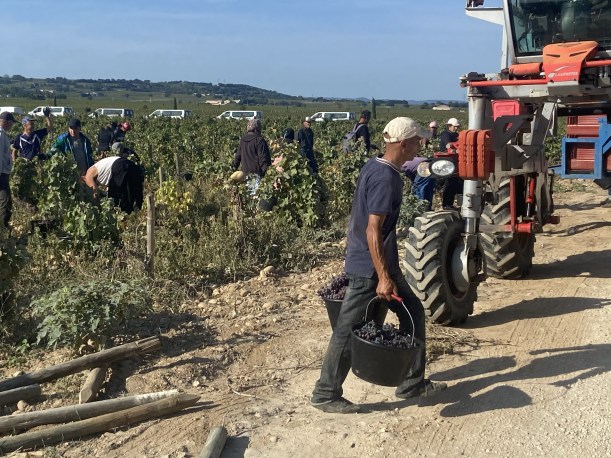
Un petit Tour de France – harvest time 2023

The onset of 2024 has left me reflecting on my inherent Francophilia. This got the better of me towards the end of last year. I had been meaning to visit Alsace for years. It took so long partly because of my preference for red wine and more recently due to Covid.

My favourite varietal though is Gewürztraminer. This is very much a marmite love or hate grape. For me it’s love. The most textured, succulent, floral powerhouse of a wine I’ve ever tasted was a Matawherho Gewürztraminer from Gisborne in New Zealand. It was an early 1990’s vintage tasted at a masterclass with my boss of the time Dr David Durham at his home next to Cloudy Bay, Marlborough New Zealand in 1995.

The 1976 Hugel Gewürztraminer with a nose distinctly reminiscent of cannabis was a highlight of many years of wine tasting.

This grape has mesmerised me since. I also have great appreciation of the other white Alsatian varieties. Well made Pinot Gris is also beautifully textured and aromatic. Riesling whilst not my first go to drink due to its high acidity playing havoc with my gastrointestinal equilibrium is still a wine I highly regard.

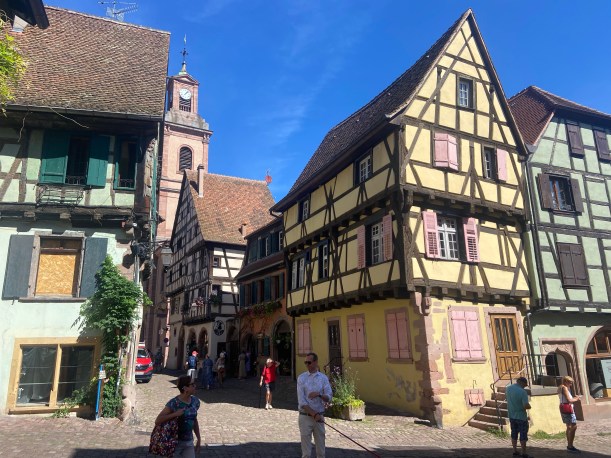
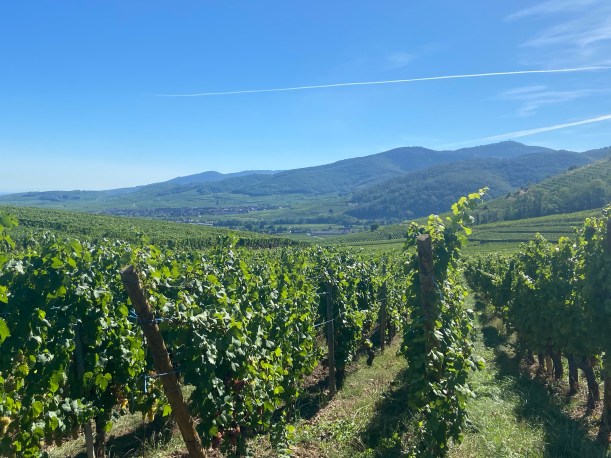
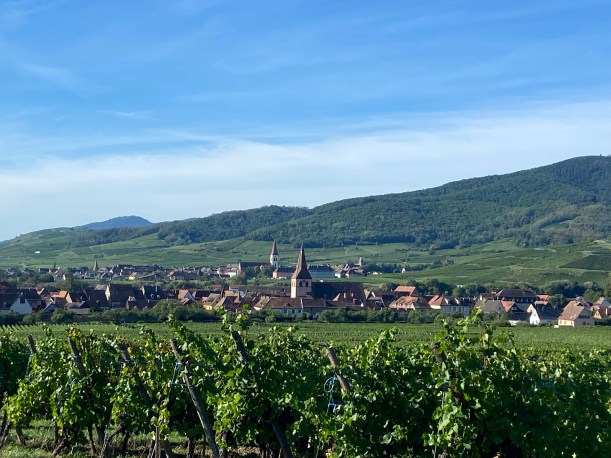
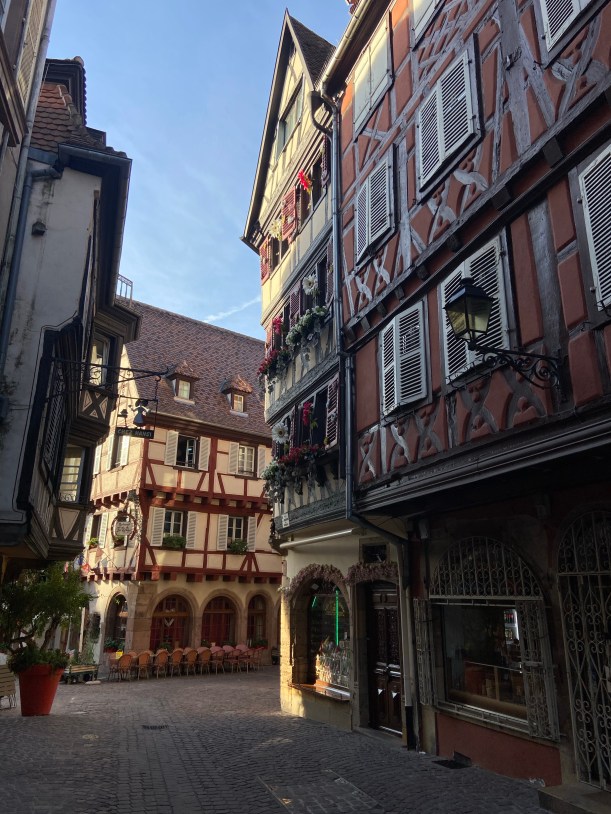
So I finally made it to Alsace, and the  wait was worth it. Not only for the wines but for the delightfully preserved chocolate box towns and villages such as Colmar, Riquewihr and Ribeauville. It really feels  like an amalgamation of France and Germany as its geography and history suggest.

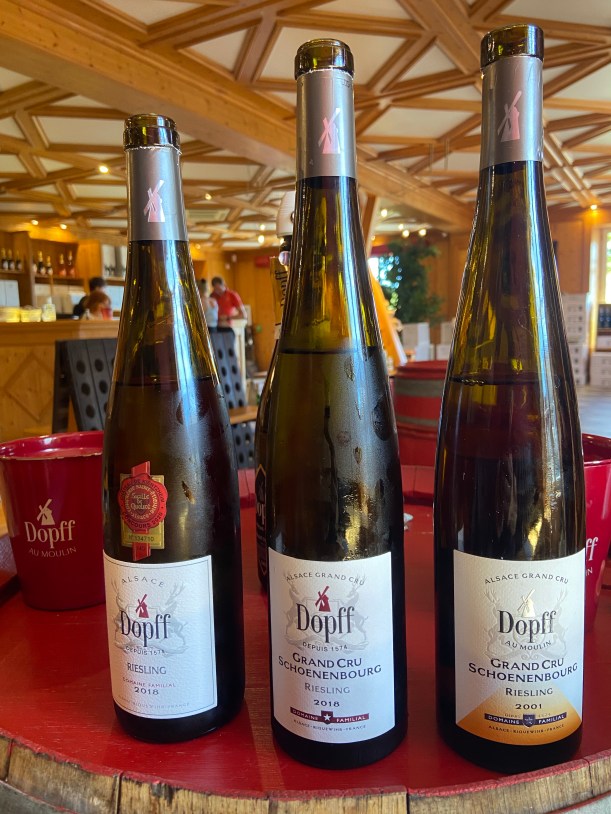
I was lucky enough to visit some of the top producers. See my interviews with Jean Frederic Hugel, Etienne Dopff, Jean Trimbach and Eddie Faller.

I stayed in central Colmar at the Hotel Le Colombier. This is very conveniently located centrally and  for the electric bike store on the same street. This is an excellent way to explore the region as there are many dedicated wine cycle routes throughout the area.

I wasn’t wild about the food, quite pork base and Germanic. They do an interesting pizza type of thing called a Tarte Flambee in French and FlammeKueche in German.


Then I hopped on a flight to Bordeaux.

Chateau Coutet, Barsac France

Visit to Chateau Coutet in Barsac, Bordeaux

It was the first day of the Rugby World Cup so the flight was awash with excited fans.

I’d had also long wished to visit Chateau Coutet in Barsac having met Aline Baly on many occasions in London. I’m also a fan of dessert wines, again not everyone’s taste. Aline was in Paulliac but generously arranged the Maitre du Chai, Laurier Girardot to entertain us.

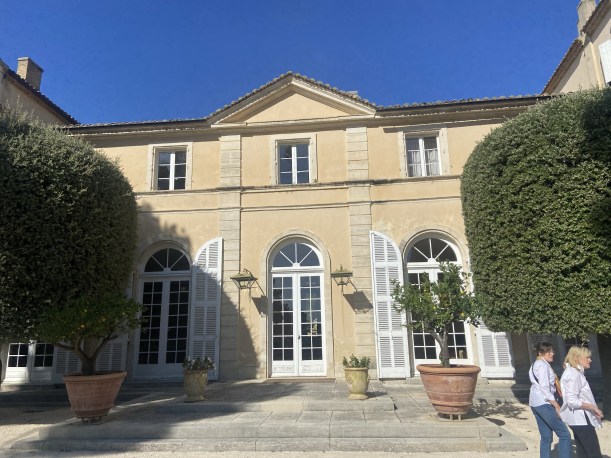
We started in the vineyards surrounding the pristine opulent Chateau.

Laurier discussed the terroir, which is slightly different to Sauternes and a little further from the River Garonne. The style here being a little less unctuous than Sauternes and perhaps less botrytis. They also make a dry white. The wines as ever, were finely balanced, long and delicious with complexity evident in older vintages.


Châteauneuf-du-Pape

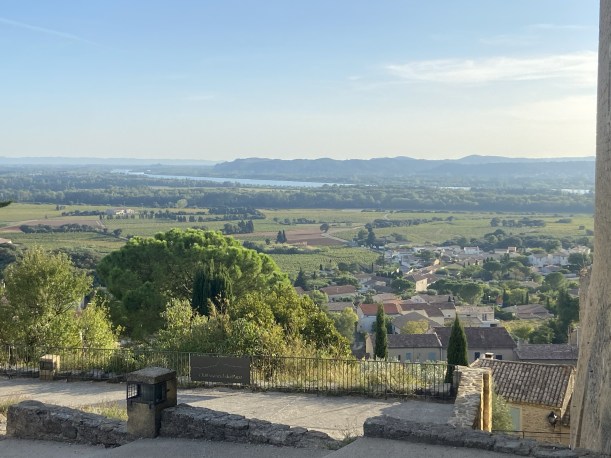
Next up a flight to Marseille, en route to another region I’ve longed to visit, Châteauneuf-du-Pape.

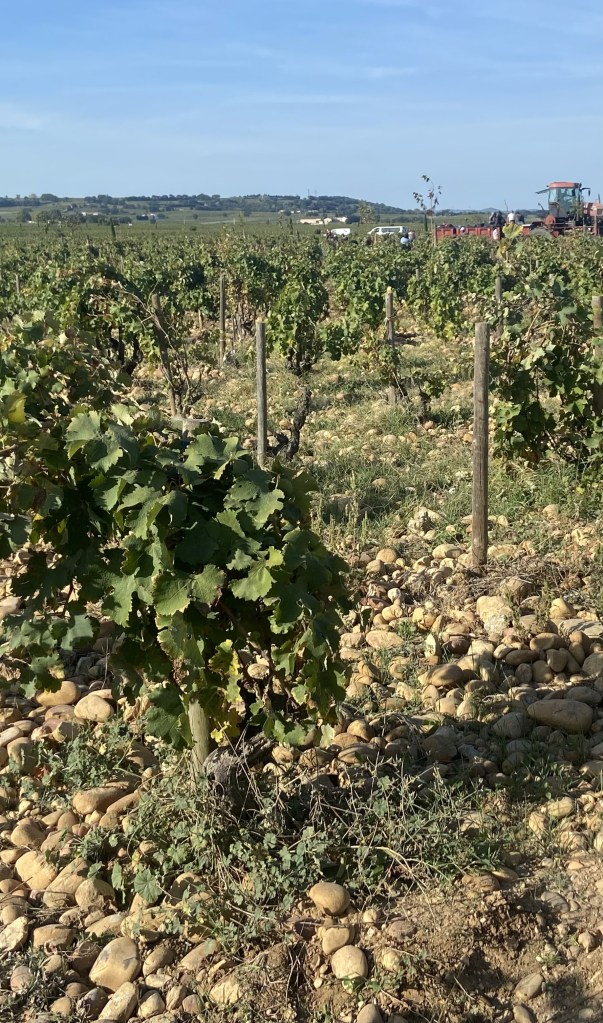
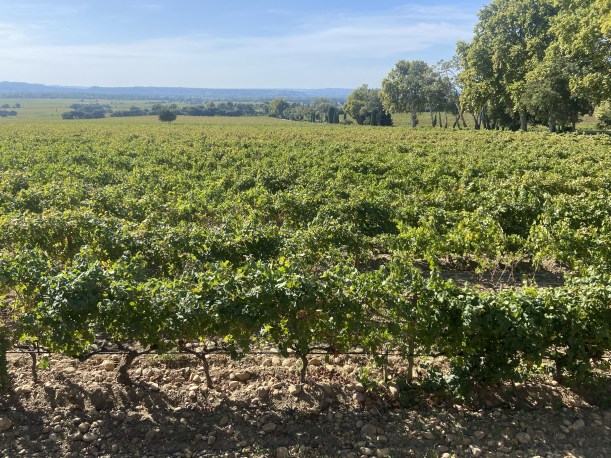
It’s one thing reading about the ‘Galets’ (larger pebbles/ smooth rocks) which are characteristic of the area. it’s another thing to see them. The entire vineyards are literally covered with layers of Galets with virtually no soil evident. These rocks have been washed down from the Alps over millions of years dating to when the area was the bed of the Rhone river.

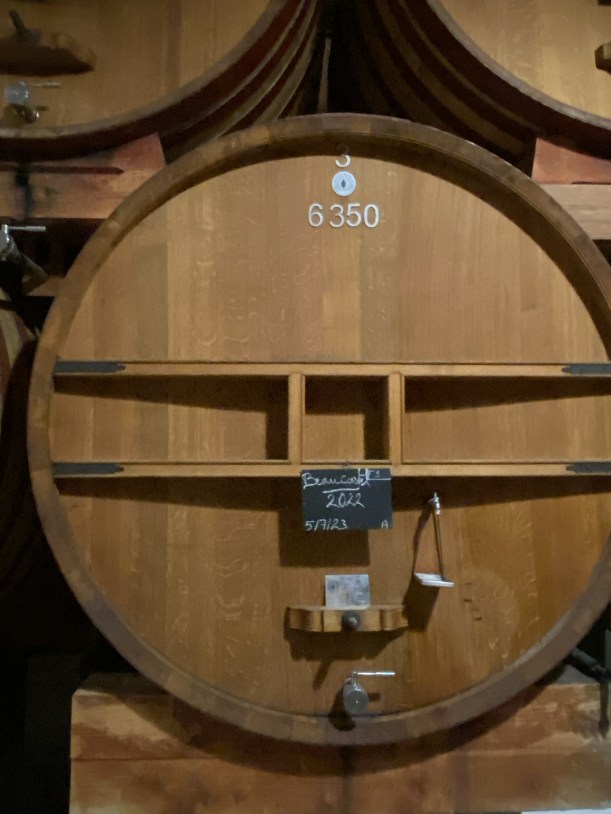
First visit, the famous Chateau de Beaucastel owned by the Perrin family.

Beaucastel were in the midst of the most fascinating new build. They had a competition amongst world renowned architects who tendered for the job. It was finally won by and Indian based firm. In keeping with Beaucastel organic and biodynamic sustainability, the new structure is being built with products of excavation.

The excavated earth for the new cellar is gently crushed and then taken to a large vertical mold and compressed. This creates the large slabs to build the new winery. It already looks amazing and effortlessly blends in with the environment.

We tasted the 2008 and 2019 Beaucastel and also a 100% Roussane of which little is made. The wines as expected were spotlessly balanced and full of fine grained tannins.

En route to Château La Nerthe we popped into Chateau Mont Redon

I was impressed by the Chateau Mont Redon range, especially with their most moderately priced Lirac which is full of fruit but also has a lovely mouthfeel. I have been buying en primeur Mont Redon from the wine society for many years.

Final visit of the day was to a very welcoming and passionate Antoine at Chateau La Nerthe.

He gave us the historical background. There have been grapes here since Roman times. More recently they were one of the pioneers of the Appelation Controlle system

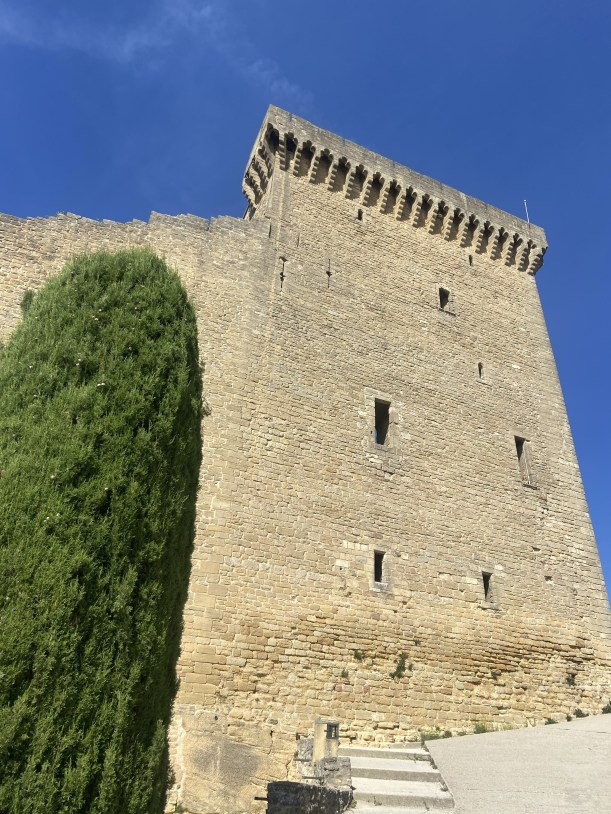
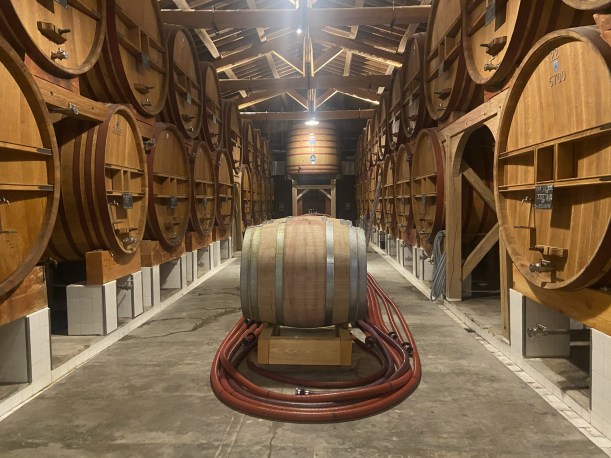
This a stunning chateau with views reaching far and wide. We toured the cellars and we were lucky enough to witness a live ‘remontage’ and sample 4 day old Mourvèdre from the tank. It was surprisingly delicious given its age.

Wine tasting here can be a little confusing as 13 grape varieties are permitted.

 6 white grape varieties: Grenache blanc, Clairette, Roussanne, Bourboulenc, Picpoul and Picardan. Grenache blanc, a mutation of Grenache noir, is the most commonly used grape variety. Red grapes: Grenache, Syrah, Mourvèdre, Cinsault, Vaccarèse, Terret, Counoise, Muscardin.

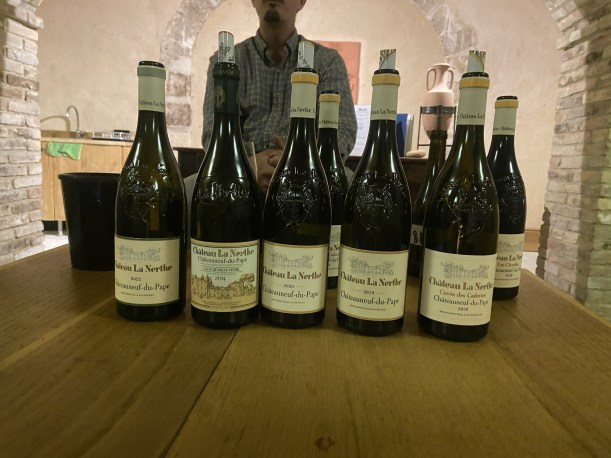
We tasted a range of their wines including

Château la Nerthe 2014 Clos de Beauvenir – it had an oxidised nose, almond, nice freshness and texture Good food wine

Château la Nerthe  Barrel sample, Syrah amazing for only 4 weeks old! Full of  fruit Soft tannins Delicious!!!

2020 Château la Nerthe Châteauneuf du Pape 25% Mourvèdre, Balanced, good year, plenty of fresh fruit alcohol well integrated

2019  Château la Nerthe Châteauneuf du Pape . 35 %Mourvèdre Syrah 31 %Grenache 33 % about a third each  A bit more serious than 2020 and probably need more ageing to develop complexity

2020  Château la Nerthe Châteauneuf du Pape Cuvee des Cadettes which is made from their  best grapes 9.000 bottles only GSM blend

2019 Château la Nerthe Châteauneuf du Pape Cadettes 55 % Mourvèdre floral earthy savoury serious big wine.

Antoine then brought out a blind wine which I immediately described as Pinotesque. I was happy to be correct in my deduction that it was one of their very limited production 100% Grenache.

This tasting was one of the highlights of many years of different wine trips. Thanks to @bossofthewine, Bruce Baldinger and the New Yorkers. We had serendipitously met them on the tour of the old Synagogue in Carpentras the day before and tagged along to this visit.


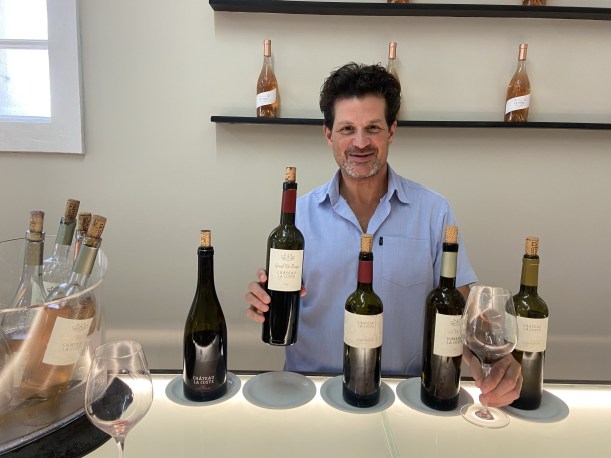
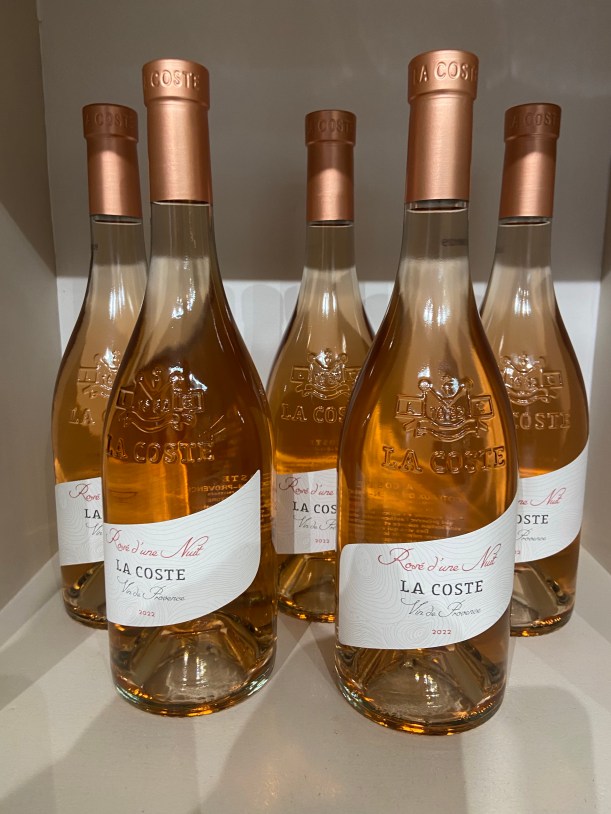
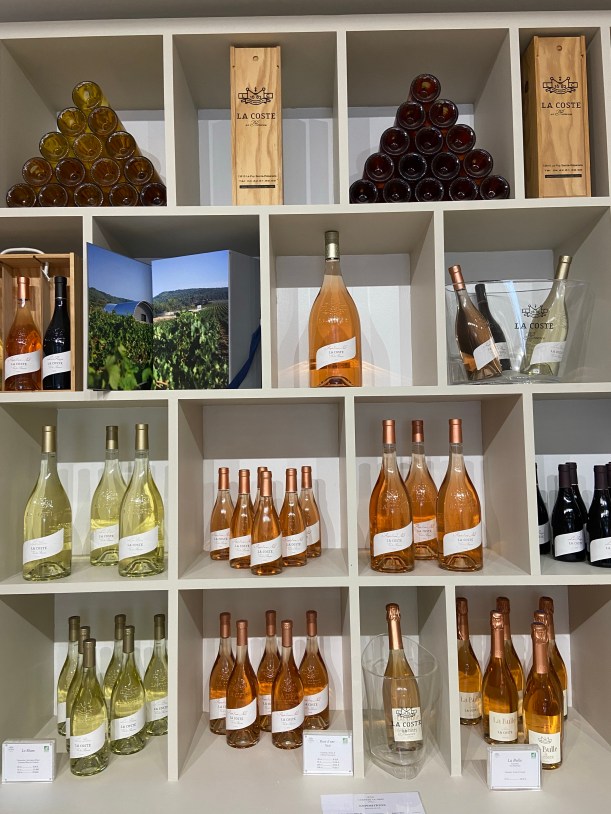
Finally I must  not forget the opulent Chateau La Coste in Provence. It was a short drive south from our accommodation in Lourmarin  through the beautiful countryside towards Aix en Provence near the village of Le Puy-Sainte – Reparade.

This is a real destination owned by Irish property magnate Paddy Mckillen. It has its own art and architecture walk, 600 acre sculpture park, a luxury hotel Villa La Coste multiple very high end  restaurants and excellent wine.

Despite the breadth and depth and quality of wines across the world, there’s nothing quite like returning to La Belle France!


Leave a comment

Brunello di Montalcino 2019 En Primeur – under exam conditions!

En Primeur, the sale of wines as futures, was until a few years ago a method of sale for premium Bordeaux and Burgundy but now it is increasingly being used for fine wines from other regions. 

In this tasting the wines are pre-release but not by much.  Brunello di Montalcino must be matured for a minimum of 5 years, including at least two in barrel, before being released to the market.  These wines are already in bottle, rather than barrel samples and due out in 2025. So this EP seems to be more about marketing and to generate some expert reviews and promotional activity amongst the merchants.

For the customer the days of buying a future wine to help the wine makers cash flow and enjoying a slight discount in exchange are largely long gone.  Now EP seems to be more about securing an allocation of rare or prestigious wines.

Brunello di Montalcino is a DOCG south of Siena within Tuscany. It is warmer and drier than Chianti producing more powerful concentrated expressions of Sangiovese. Its not far from the coast so parts receive some cooling breezes and inland the beautiful rolling hills provide a little elevation. Both of these factors help slow ripening down, which helps develop flavour and maintain freshness in the wines.

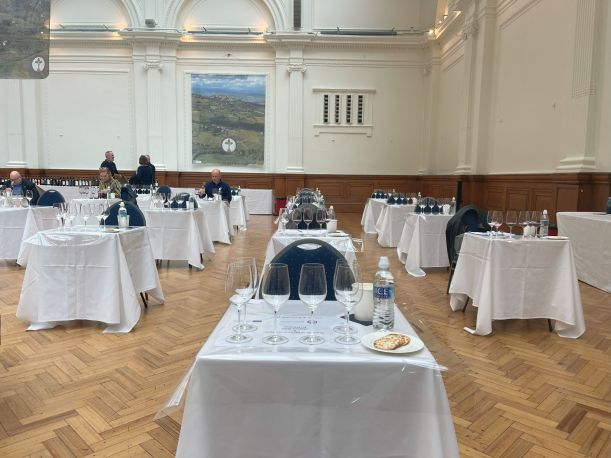
The seated format of the tasting was actually brilliant, no juggling of glass, catalogue (or e-catalogue on your phone) pen and pad, and no elbows required to push through the usual scrums that form around the popular tables – bliss!

It reminded me of how much I like Brunello and I was impressed by how approachable many of the wines were already on release. However with high acidity, fine sandy tannins and that concentrated red fruit they promise much more to come with bottle age. Many displayed classic sour cherry, dusty soft red fruits, bay leaf, dried herbs and a hint of black tea.  

It was great to try and compare and contrast the impact of different soil types, those with more clay seeming to display riper fruit. Also to contrast the effect of using either Slavonian or French oak casks. Whilst the French oak did add a layer of spice and sometimes subtle toast, none of the wines I tried seemed overdone. 

Of the many great wines on show a few stood out to me:

  • Argiano BdM – Lovely nose, balanced with a nice touch of spice.
  • Banfi Vigna Murrucheto BdM – Concentrated fruit and subtle toastiness.
  • Capanna BdM – Classic sour cherry, black tea and touch of wet stone.
  • Col d’ Orcia BdM – Intense riper red cherry and plum, dried herbs, bay leaf and a nice dusty finish.
  • Col d’ Orcia Poggio al Vento Riserva 2016 – Concentrated pot purri, raspberries, sour cherry, black tea, smoke and leather, super long. 
  • Sesti BdM – Consistently fine, roses, sweet cherry, cranberry, dried oregano,  black tea and freshly turned soil, amazing concentration. 
  • Sesti Phenomina Reserva 2018 – Knock put too!
  • Uccelliera BdM – A big wine but still fresh with rich cherry tart, roasted herbs and a bit of toast. 

Many thanks to Hunt and Speller and Consorzio del vino Brunello di Montalcino for organising this great tasting and providing so much interesting information about the wines in the catalogue.

By the way don’t forget the Rosso di Montalcino category of wines too. Supposedly entry level  but many of the top estates produce what are effectively baby Brunello’s which represent great value for money and can be enjoyed sooner.

For more information on the region see our Brunello di Montalcino trip tasting notes.


Leave a comment

Stanton & Killeen Classic Rutherglen Muscat 12YO, Victoria

Rutherglen Muscat is one of the wine world’s most distinctive and underrated treasures, and Stanton & Killeen’s Classic 12-Year-Old is a fine example of the style at its most expressive and poised.

This wine is made from a unique local mutation of Muscat à Petits Grains Rouge, commonly referred to as Rutherglen Brown Muscat. Harvested in passes over several months to give a mix of fresher and shrivelled and sugar-laden berries, the grapes are crushed and start fermentation on the skins. Once enough flavour has been extracted it is fortified with grape spirit, halting the process and preserving intense natural sweetness. From there, the wine enters a slow, warm maturation process, typically in old oak barrels housed in tin sheds exposed to Victoria’s sweltering summers and cool winters. Over many years, this environment promotes oxidation and concentration, developing the deep, caramelised, nutty and savoury complexity for which the style is known. Each component is carefully blended from solera-like systems to achieve harmony and depth in the final multi vintage wine.

Image by Stanton & Killeen

In the glass this wine is deep brown, almost mahogany, with a faint greenish glint at the rim, a quiet visual reminder that, despite its richness, this is technically a white wine. The nose has dried rose petals and potpourri, cooked apple, and layers of warming spice, cinnamon, nutmeg, even a touch of savoury soy. From there it deepens into a swirl of sticky dates, fig, raisin and brown sugar, underpinned by a rich seam of chocolate, caramel, and toffee.

On the palate, the wine is full-bodied and unmistakably sweet, though a brisk, well-judged acidity keeps everything in check. It’s intensely flavoured, concentrated and unctuous — a wine that seems to coat the tongue but finishes clean and long, echoing its medley of dried fruits, spices and oxidative notes. The alcohol is moderate by fortified standards, and neatly integrated.

This is an extraordinary wine not just for its complexity and texture, but for the way its elements are held in such fine balance. It’s layered, richly flavoured and confidently made, delivering depth without heaviness, and showcasing the unique aged style that Rutherglen delivers.


Leave a comment

Wines of Greece Annual Tasting

Greece’s wine story is ancient, its golden age between 500–300 BCE saw Hellenic culture and viticulture spread across the Mediterranean. Wines were often infused with pine resin, herbs or honey, more for preservation than flavour. But centuries of upheaval, from Roman rule to civil wars, meant Greek wine lost ground. Until fairly recently, it was largely defined by Retsina. However, since the 1980s, quality-driven estate bottlings have steadily redefined the landscape. Today, with rising exports and a growing reputation, Greece is quietly producing some seriously characterful and delicious wines.

The country’s geography plays a vital role. A warm Mediterranean climate dominates, though elevation and coastal influences bring vital moderation. Summers can be punishingly hot; Santorini, for example, sees as little as 200mm of annual rainfall. Inland regions swing to harsh winters, while strong island winds can challenge growers.

Greece’s mountainous terrain and low-fertility soils yield naturally limited, quality-focused harvests. Many international varieties are also grown which are still favoured by the domestic market. But around 90% of vineyards are planted with indigenous varieties, some 300 in total, many with real identity and resilience.

Assyrtiko, originally from Santorini, is a flagship white, prized for its tension between ripe fruit and taut acidity. Savatiano and Roditis are widely planted; when grown with care, they offer surprisingly refined expressions. Moschofilero and Malagousia add aromatic flair and freshness.

Among reds, Agiorgitiko is versatile and plush-fruited, while Xinomavro, from Macedonia’s Naoussa PDO, is more structured, with a profile not unlike Barolo.

Increasingly mainstream, Greece is now firmly on the map for thoughtful drinkers seeking something distinct, grounded in tradition, yet confidently modern.

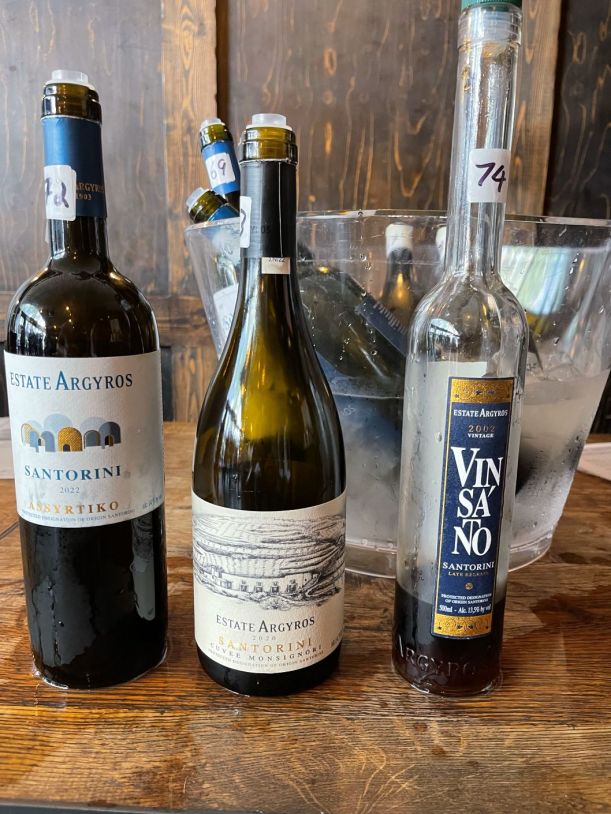
I was delighted to find an old favourite the Argyros Estate Assyrtiko 2020

Made from a blend of vineyards with 100 year old vines, the wine spends 3-4 months on lees. On the nose, stone fruit, sea air and an undertone of herb; tarragon or cut grass. The fruit is ripe, there is cooked lemon with a salty tingling long finish in the mouth. The body is full and acidity bracing. This wine is made for food especially Greek dips, fetta and grilled fish. Delicious.

For my full tasting notes of the Argyros range see Adam’s article on the winery.


1 Comment

BioWeingut Karl Renner: Cultivating a new generation of grape varieties in the Südsteiermark, Austria.

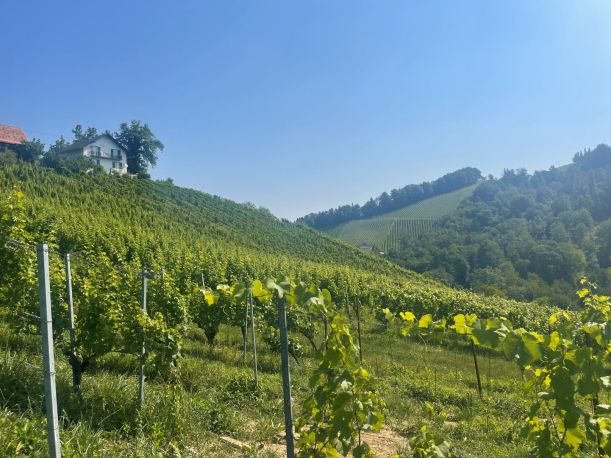
At BioWeingut Karl Renner, nestled in the rolling hills of Pössnitz in the Südsteiermark, sustainability is at the very heart of everything they do. For Karl and his family, who have stewarded this land since 1966, the focus is clear: create wines of character with minimal intervention, and protect the land for future generations.

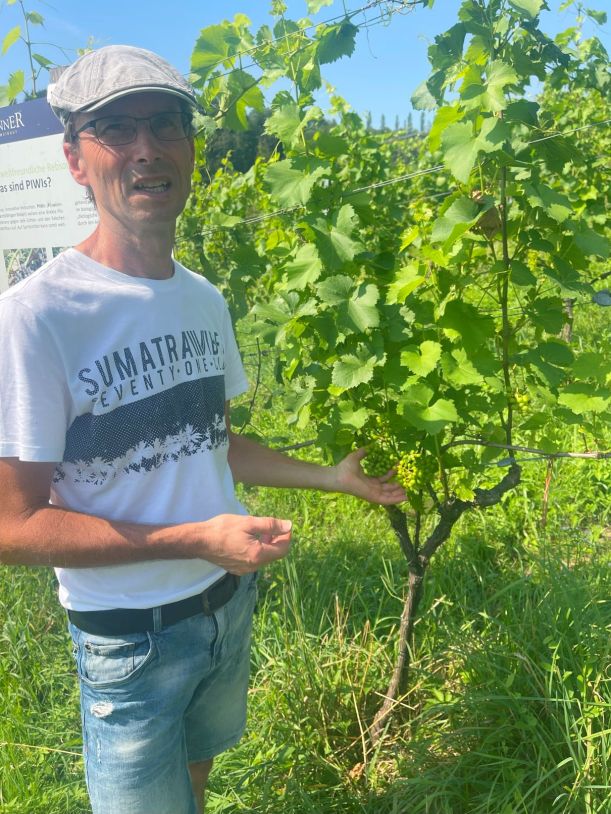
But even for the most committed organic growers, nature presents challenges. Karl points to oidium and downy mildew as the most persistent threats to viticulture in the Südsteiermark. These fungal diseases, brought to Europe in the 19th century, remain the main reason why vineyards, even organic ones, require frequent treatments. In some seasons, up to 20 copper sulphate sprays are needed to try and keep disease at bay. “It’s too much,” says Karl. “It leaves copper in the soil which builds up over time.”

That’s why Renner is turning toward PIWI or as he calls them “next generation” varieties, fungus-resistant hybrids bred to thrive with far fewer treatments. Since 2011, he’s been gradually replanting his vineyards with these innovative grapes, which make organic viticulture not only more effective but also more appealing for wider adoption in the wine industry.
The four main PIWI varieties Karl works with are:

  • Muscat Bleu – A mid-budding, early-ripening variety, Muscat Bleu is highly aromatic and serves as an early indicator in the vineyard: its berries turn a vivid blue before ripening to black. This allows Karl to closely monitor ripeness progression in the vineyard.
  • Chardonel – A hybrid of Chardonnay and Seyval Blanc, first developed in New York in 1953, Chardonel delivers both structure and finesse. It captures the familiar elegance of Chardonnay but thrives under organic management.
  • Souvignier Gris – A cross between Seyval Blanc and Zähringer, Souvignier Gris is one of Karl’s standout performers. It ripens later and retains excellent acidity. It also has some frost resistance.
  • Muscaris – This cross between Solaris and Gelber Muskateller produces an early-ripening, highly aromatic wine. Muscaris stands out for its expressive floral and spicy notes, making it useful for both varietal bottlings and blends.

These varieties are allowing Karl to dramatically reduce chemical inputs. Where conventional or even organic growers might spray upwards of 15–20 times per season, Renner’s PIWI vines typically need only 2–4 treatments. That reduction means less soil compaction from tractors, lower CO₂ emissions, and healthier microbial life in the vineyard. Cover crops further enhance soil structure and biodiversity, especially on the estate’s steep slopes.

In the winery there is a lot to learn, the wine making knowledge for the varieties traditionally grown; Sauvignon Blanc, Morillon (Chardonnay) and Pinot Blanc, that has been accumulated over generations must be learnt anew for this New Generation of varieties.  Karl is experimenting with skin contact, barrel ageing, and unfiltered bottlings to explore the full potential of these newer grapes. He’s also trialling blends that include both PIWI and traditional varieties, giving wine drinkers something familiar while showcasing the potential of these robust hybrids.

Tasting notes:

Thirsch Chardonel 2020

  • Thirsch: historical name of the farm. First vintage 2011, still experimental.
  • Aged 2 years in barrel for stability.
  • Smoky, orange peel, peach, apricot, herbal and nutty notes.
  • Textured mouthfeel, long finish.

Souvignier Gris 2020

  • Smoky with tropical notes: peach, banana, nuts.
  • Medium body, high acidity.
  • Creamy mouthfeel, nutty and delicious.

Souvignier & Pinot Blanc Thirsch 2021 – Barrel Sample (Souvignier Gris 60% / Pinot Blanc 40%)

  • Slightly cloudy, natural wine style.
  • Aromas: marzipan, floral, sour gooseberry, banana.
  • Medium body, medium alcohol, medium+ acidity.
  • Balanced with a long finish. Sweet and savoury interplay. Love this one.

Thirsch Muscaris 2020

  • Short skin contact, fermented in stainless steel.
  • Highly aromatic: blossom, roses, pink grapefruit, peach.
  • Dry, medium+ acidity.
  • Fresh citrus, orchard, and stone fruits.
  • Textured with a slight prickle.

(For a full tasting notes follow this link)

Amber 2020 Winburg (65% Muscaris / 35% Souvignier Gris)

  • Fermented on skins: Muscaris 2–3 weeks, Souvignier Gris 3 months.
  • Separate harvest dates.
  • Pear, banana, cider notes.
  • Slightly grippy mouthfeel, long finish.

At Weingut Renner, the message is clear: PIWI varieties represent a practical, scalable solution for making organic viticulture more successful. As climate change, disease pressure, and sustainability demands intensify, Karl’s approach offers a compelling model for other growers — not just in Austria, but across Europe and beyond.

As wine drinkers are we ready to expand our horizons and discover these new wines? Natural wines have found an audience, why not “next generation” varieties too?


Leave a comment

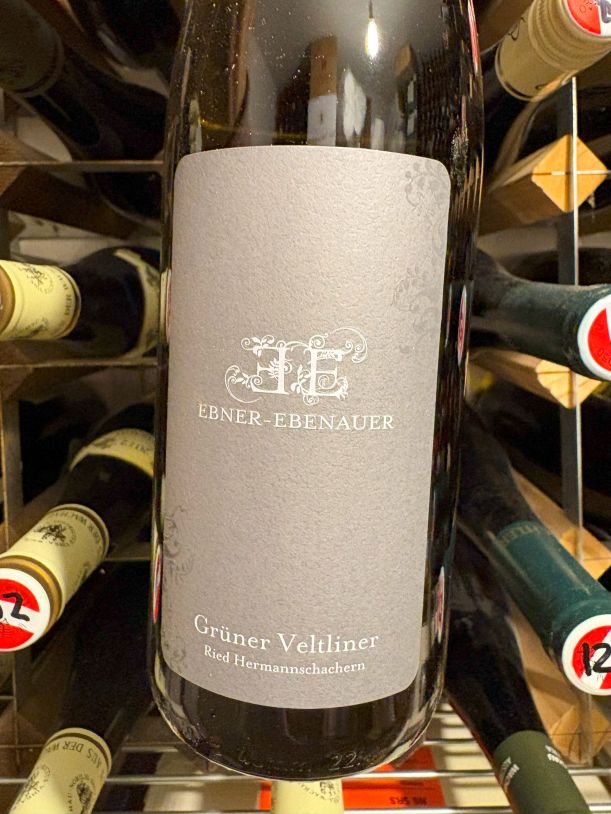
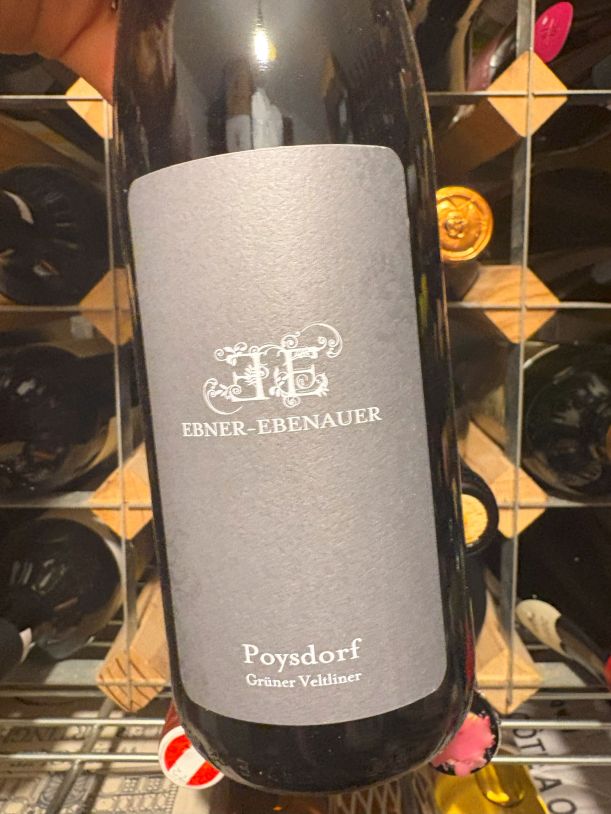
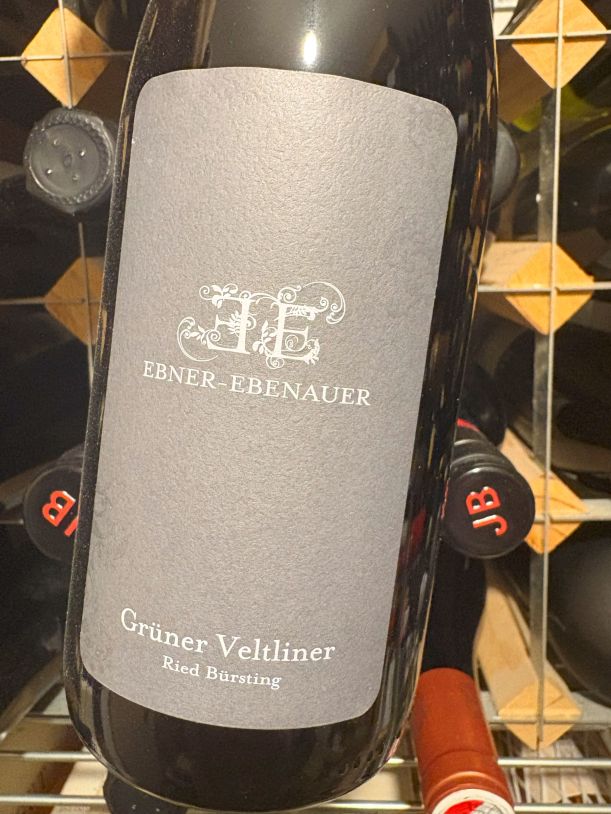
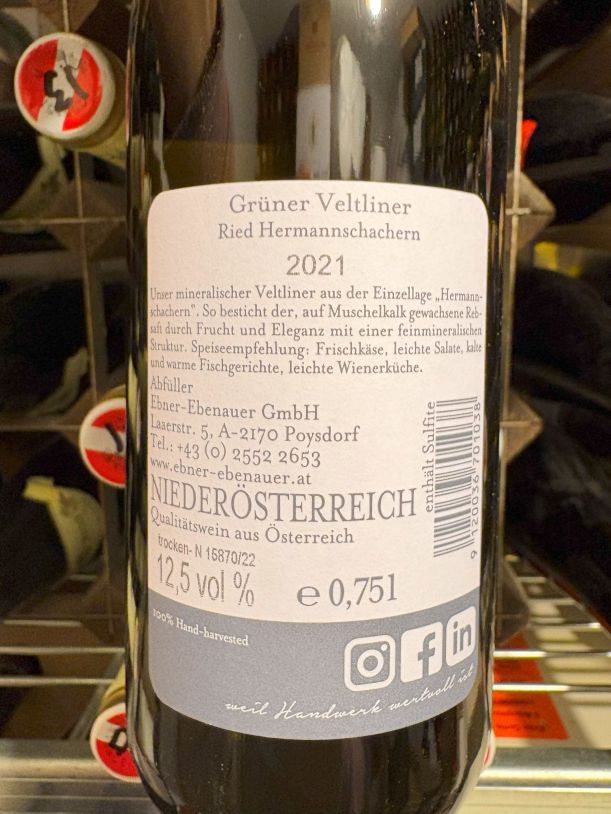
Ebener Ebenauer Poysdorf Hermanschachern Grüner Veltliner 2021.

Ebner-Ebenauer make small amounts of biodynamic and organic wines from largely old vines in the north east of the Weinviertel region near Poysdorf.  The charismatic Marion and her husband Manfred are making waves with their very late disgorged Blanc de Blancs and Noirs but it is their range of single vineyard Grüner Veltliners expressive the varied soils and aspects that we are focusing on there.

Ebner-Ebenauer Poysdorf Grüner Veltliner 2021. A blend from across their vineyards, spicy, with wet stone a touch of white pepper and crunchy orchard fruit. Refreshingly moreish, light but managing to sustain ones interest. Great value.

Ebner-Ebenauer Poysdorf Hermanschachern Grüner Veltliner 2021. From a single vineyard with limestone and fossil soils and 30 year + vines. Citrus, fresh pear and apple a touch of white peach, white pepper, herbs and wet stones.  Mid weight with great focus and freshness this lasts long on the palate. Drinking now but will evolve over the years. My favourite and the pick for wine of the month.

Ebner-Ebenauer Poysdorf Bürsting Grüner Veltliner 2021. From a single vineyard of 50 year old vines, rich, spicy, juicy and complex, concentrated and full bodied. Decant or cellar for up to 10 years.

The 2021 vintage, by the way, across Austria really has a superb balance of fruit and freshness.


Leave a comment

Vine Morphology and Physiology

I am sharing notes that I’ve made during my Diploma on these pages for anyone studying a formal WSET course or just interested in learning. 

These notes are absolutely not a substitute for the course books provided by WSET or indeed any other reference books. However I have found it helpful to condense information and present it visually in a way that tries to draw out the what, how and why that links things together or the similarities and contrasts that can help to make sense of everything.  These note are very much prompts to the memory rather than full or detailed explanations.

I am revisiting these notes over time to improve them and iron out the no doubt many inaccuracies and inconsistencies that they contain. However in the meantime please beware there may be errors and if you spot any do let me know.

The notes are free to down load are intended for personal use only all you need to do is sign up to our newsletter.

Vine Morphology

Vine morphology refers to the form and structure of the vine and vine physiology is the science of how the vine functions. Understanding how the vine works is key to viticulturists and wine professionals, as these characteristics determine vine growth, grape quality, and ultimately, the wine’s expression. The grapevine (Vitis vinifera) is a perennial, deciduous plant that has proved to be highly adaptable evolving to thrive in a wide variety of climates. As natural tree climbers, vines rely on tendrils to support their upward growth, using their fruit to attract animals that help spread their seeds.

Vine Morphology: Structure and Form

A grapevine consists of several key anatomical components: the roots, trunk, canes, shoots, leaves, flowers, and fruit.

Roots: The root system anchors the vine and absorbs water and nutrients. Depending on soil type and cultivation practices, roots can extend several meters deep, allowing the vine to access essential minerals and moisture.

Trunk: The permanent woody structure of the vine, the trunk supports the upper growth and serves as a conduit for nutrient and water transport.

Canes and Shoots: Canes are mature, lignified shoots from the previous growing season, while current-season shoots emerge from buds and contain the leaves, flowers, and tendrils.

Leaves: Vital for photosynthesis, leaves convert sunlight into energy, producing sugars that fuel vine growth and grape ripening. Leaf shape and size vary by variety and impact transpiration and canopy management.

Tendrils: These curling structures help the vine climb and support itself, essential for its natural growth habit.

Flowers and Fruit: The vine’s inflorescence develops into clusters of grapes after fertilization. The number, size, and composition of the fruit are influenced by vine balance, climate, and vineyard management.

Vascular System: The vine’s vascular system, composed of xylem and phloem, is responsible for transporting water, nutrients, and sugars throughout the plant. The xylem carries water from the roots to the leaves, while the phloem distributes sugars produced during photosynthesis to support growth and fruit development.