WanderCurtis Wine

Wine tastings, wine school, corporate events, reviews and recommendations


Leave a comment

Do low yields really make for better wines?

There’s a romantic allure to the idea that if vines put all their energy into fewer grapes, flavours concentrate, skins thicken and wines of depth and character will follow. It’s a story winemakers often tell, and it’s one that underpins much of European wine law. But does lower yield really mean higher quality in the glass? Or is it more complicated than that?
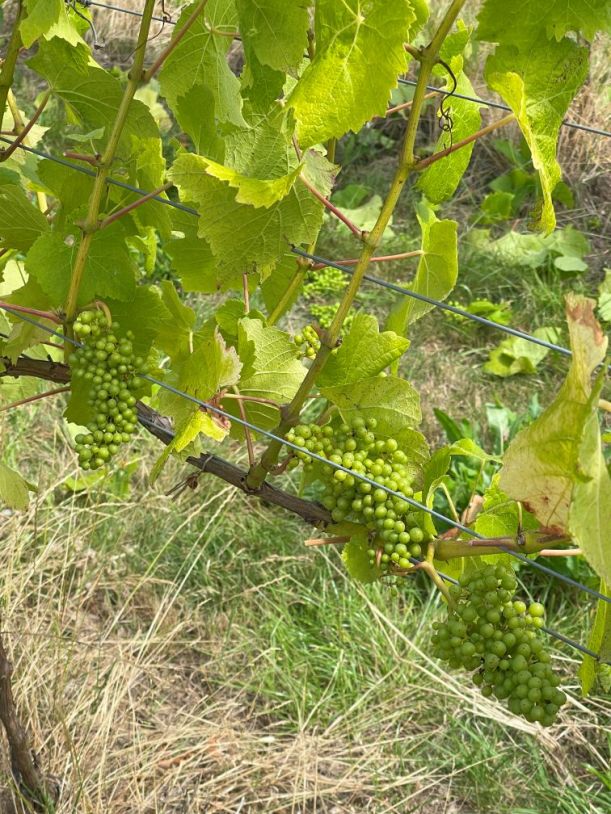
In the AOC system (Appellation d’Origine Contrôlée), maximum yields are tightly regulated. As you move up the hierarchy, the permitted output drops. For example, in IGP Pays d’Oc, where mass-market Merlots and Syrahs are made, yields can reach 100 hL/ha. But in Bandol, home to intense Mourvèdre reds, the limit is just 40 hL/ha.

Many wineries proudly talk about their yield-reducing techniques: bud rubbing, green harvesting, shoot thinning, all in pursuit of better fruit. But how real is the link between fewer grapes and better wine?

Grape quality.

It’s true that lower yields often result in higher-quality grapes, smaller berries with more concentrated flavours and better balance between sugars and acids. In red grapes, that also means a higher skin-to-juice ratio, which is crucial for extracting colour, tannin, and aroma. This can lead to wines that are more structured, more complex, and more age-worthy.

Conversely, when a vine carries too much fruit, the result can be diluted, insipid wine. The vine simply can’t ripen everything well. Sugar may build, but flavour lags behind, and acid levels drop, leaving wines flat or unbalanced. This is particularly noticeable with more delicate varieties that struggle to retain their identity under high cropping.

But this isn’t a one-size-fits-all rule. Some varieties are more sensitive than others. Pinot Noir, with its thin skin and delicate nature, thrives on low yields. Push it too hard, and it quickly loses character. Grenache, on the other hand, can crop more generously and still produce juicy, expressive wines, particularly in warm, dry climates where ripening is less of a challenge.

Correlation isn’t the same as causation

In Burgundy, Grand Cru vineyards like Echezeaux are restricted to 35 hL/ha, and the wines are often sublime. But low yields alone don’t guarantee greatness. In Bordeaux, some legendary vintages; 1982, 2005, 2010 delivered both high quality and high volume. And in tough years like 2013 or 2017, yields were low, but this certainly didn’t make them great vintages.

The issue is this: yields can be low for many reasons, frost, hail, drought, disease. These stresses can reduce volume, but they don’t necessarily improve grape quality. In fact, they often have the opposite effect, leaving berries under-ripe or damaged. Low yield, in these cases, is more of a symptom of vineyard struggle than a sign of excellence.

It’s about balance

What really matters is how much fruit a vine can properly ripen. This sweet spot depends on grape variety, vine age, and, critically, location. A vine in the cool Mosel will struggle to ripen Cabernet Sauvignon no matter the yield. In contrast, in warm, dry areas like Châteauneuf-du-Pape, Grenache can yield generously and still reach full flavour.

This is why a balanced vine is everything. A healthy canopy, well-matched to the fruit load, allows grapes to ripen slowly and evenly. Sunlight must reach the bunches without overexposure. Dr. Richard Smart’s research highlights the importance of the leaf-to-fruit ratio. If the canopy is managed well, through pruning, training, and shoot thinning, the vine can support both ripeness and complexity, even at higher yields.

Beyond yield: The bigger picture

Yield is just one piece of the quality puzzle. Soil structure, drainage, and mineral content shape a vine’s health and its capacity to ripen its fruit. Climate, both macro and micro, dictates ripening windows, acidity levels, and the development of flavour compounds.

Then comes vineyard management: irrigation, pest control, canopy structure. And let’s not forget the winemaking itself. Gentle handling, fermentation temperature, ageing choices all can make or break a wine, regardless of what happened in the vineyard.

So yes, lower yields can help, particularly with sensitive varieties and in cooler climates. But  plenty of mediocre wines come from low-yielding vintages, just as some brilliant bottles emerge from vines that carried more fruit.

Practical limits
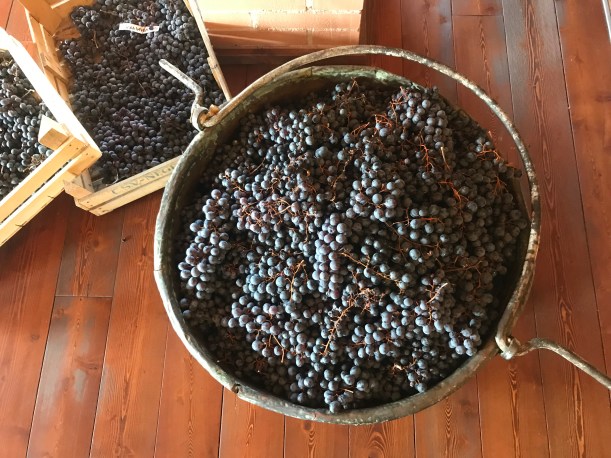
Growers do have tools to influence yield like green harvesting and bud removal, but they’re not without risk. Pruning too early invites frost damage. Cutting bunches mid-season may encourage larger grapes, lowering that all-important skin-to-juice ratio.

In practice, especially in regulated regions, if harvest looks too big, grapes are often simply left on the vine or dropped before picking to meet AOC rules. That might tick the legal box, but it doesn’t always improve quality, especially in mechanically harvested vineyards, where sorting isn’t as selective.

Dr. Smart argues that growers have more control over ripeness than yield. By managing the canopy to avoid shading and encourage even ripening, growers can often improve both the quality and the quantity of grapes. When a vine is in balance for the site in question, the result is often better than any number dictated by regulation.

The verdict.

So, does low yield mean better wine? Well sometimes……..

Great wine comes from thoughtful choices: matching grape to place, nurturing healthy vines, managing the canopy, harvesting at the right moment. Yield matters, yes, but quality is about balance, timing, and a touch of artistry.

Leave a comment

Weingut Ebner-Ebenauer – an exciting discovery from the Weinviertel, Austria

At this year’s bi-annual Austrian wine tasting in London Adam & I came across the charismatic Marion Ebner-Ebenauer of Weingut Ebner-Ebenauer and their wonderful range of wines. The  Weinviertel is Austria’s most northern region, an expansive, windswept area that borders the Czech Republic.  There is a lot of variation in soils and climate across the region and historically it has a reputation for easy drinking characteristically peppery Grüner Veltliner, falling rather in the shadow of the Danube regions like the Wachau.  However it looks like Ebner-Ebenauer are well on the way to demonstrating just what serious age and worthy wines the region is capable of producing.

At the helm of this historic family estate are Marion and Manfred Ebner-Ebenauer, their winery, based in the town of Poysdorf, has been producing wine for over 400 years.

The backbone of their philosophy lies in single-vineyard bottlings that aim to reflect the unique voice of each plot. Their 20 hectares are scattered like puzzle pieces across a patchwork of soils, originally a safeguard against hail, now a key asset with some of these vineyards boast old vines over 70 years of age.

In the vineyard, everything is farmed organically, with grapes picked entirely by hand at optimal ripeness. Careful handling, minimal oxidation, and small harvest bins preserve the clarity and integrity of the fruit.

Down in their 400 year old cellar, a low-intervention approach prevails with wines fermenting spontaneously. Alongside the single vineyard wines they make a range of cuvées called the Black Edition which includes a Grüner Veltliner, using extended skin contact and fermentation in barrique to coax out texture and complexity.

Their méthode traditionelle Sekt, aged on lees for years and disgorged only when truly ready, has been turning heads abroad, winning international awards for its finesse and depth.

A quick search of the web and social media and Ebner-Ebenauer crop up repeatedly, this an image savvy couple who make great wine in a great way, what’s not to love?


Leave a comment

The Art of Basket Training: Santorini’s Ancient Answer to a Harsh Climate.

A delicious bottle of Estate Argyros Assyrtiko 2021 made me think of the just how extreme the growing environment on Santorini and admire once again how the combination of unique growing techniques and the special qualities of the Assyrtiko grape variety come to together to produce stunning wines.

Santorini Instagram central of the Aegean, is home to some of the world’s most unique and resilient vineyards. Here, where volcanic soils and fierce winds challenge even the hardiest of grapevines, local winegrowers have perfected a centuries-old training method known as kouloura—the basket training system.

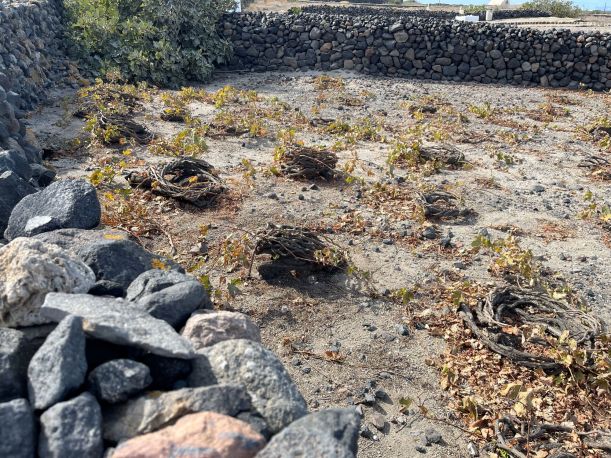
Unlike the neatly trellised rows seen in most wine regions, Santorini’s vines grow in a low, circular shape, woven carefully by hand into protective nests close to the ground. This technique requiring huge amount of highly skilled labour in the vineyard, is vital to the survival of the island’s vineyards.

One of the primary threats to grapevines on Santorini is the island’s relentless winds, which sweep in from the sea with punishing force. The basket structure shields the delicate grape clusters within its coils, preventing wind damage and reducing the risk of berries drying out or breaking prematurely. This natural windbreak ensures that the vines can thrive despite the extreme conditions.

Moisture retention is another crucial benefit of basket training. Santorini receives minimal rainfall, but the volcanic pumice-rich soil has an extraordinary ability to absorb and store the scarce water available. It does mean vines are planted at very low densities so that there is enough water to go around. At night, humidity from the Aegean condenses on the vine leaves and trickles down into the soil. The low, coiled structure of the vines helps trap this precious moisture, ensuring slow, steady hydration.

This ancient technique, passed down through generations is one to the key factors behind the unique, concentrated and structured expressions of Assyrtiko that the Island produces.


Leave a comment

Sclavos Winery, Kefalonia.

Sclavos winery takes a minimum intervention approach to wine making and is transitioning to biodynamic practices in the vineyards.

Their goal is to craft natural organic wines that showcase the unique characteristics of local grape varieties, influenced by their microclimate. After harvest, grapes undergo careful hand-sorting to remove any unsuitable fruit. Vinification employs modern techniques, including stainless steel tanks, pneumatic presses with nitrogen environments, and oak fermenters.

Mavrodaphne is traditionally made as a sweet wine on Kefalonia and in order to protect the PDO classification dry versions are actually not allowed to be labelled as Mavrodaphne!  Sclavos along with others, has long advocated for the recognition of red dry wines from this variety.  The winery is introducing new expressions of Mavrodaphne Kefallinia, continuing its pioneering efforts in dry vinification and aging, a practice initiated 25 years ago.

The Mavrodaphne variety undergoes three weeks of fermentation, followed by over a year of aging in French oak barrels of varying sizes (225L, 500L, and large oak tanks).
The winery has 14 hectares of their own vineyards, but buys some grapes in to produce 160, 000 bottles annually.
The wines:
Alchymiste 2020 Mavrodaphne and Moschatela grapes picked relatively early. This wine is made in stainless steel tanks  producing a rose colour wine. On the nose crushed raspberries and chalk dust. A nice fruit mix with a smoky slightly animal note – goaty! also malt loaf.  It is fresh and medium bodied with soft powdery tannins.

Orgion 2020 Mavrodaphne aged partly in French oak barrels. There is a floral jasmine note also smoke and again malt loaf. The oak is very subtle and fills it all out the wine making it a bit rounder. Very nice.

Xinodos Biodaynamic 2020 From old vine Mavrodaphne + 17% Vostilidi, co-vinified. Matured for one year in big barrels. The wine is dark and concentrate. It is dry with red and blue fruits and has the tannin and acidity to age well.

Vin Doux Du Soleil 2020 Made from sun dried Moschato grapes. Intense concentrated fruit, good acidity, very long.