At this year’s bi-annual Austrian wine tasting in London Adam & I came across the charismatic Marion Ebner-Ebenauer of Weingut Ebner-Ebenauer and their wonderful range of wines. The Weinviertel is Austria’s most northern region, an expansive, windswept area that borders the Czech Republic. There is a lot of variation in soils and climate across the region and historically it has a reputation for easy drinking characteristically peppery Grüner Veltliner, falling rather in the shadow of the Danube regions like the Wachau. However it looks like Ebner-Ebenauer are well on the way to demonstrating just what serious age and worthy wines the region is capable of producing.
At the helm of this historic family estate are Marion and Manfred Ebner-Ebenauer, their winery, based in the town of Poysdorf, has been producing wine for over 400 years.
The backbone of their philosophy lies in single-vineyard bottlings that aim to reflect the unique voice of each plot. Their 20 hectares are scattered like puzzle pieces across a patchwork of soils, originally a safeguard against hail, now a key asset with some of these vineyards boast old vines over 70 years of age.
In the vineyard, everything is farmed organically, with grapes picked entirely by hand at optimal ripeness. Careful handling, minimal oxidation, and small harvest bins preserve the clarity and integrity of the fruit.
Down in their 400 year old cellar, a low-intervention approach prevails with wines fermenting spontaneously. Alongside the single vineyard wines they make a range of cuvées called the Black Edition which includes a Grüner Veltliner, using extended skin contact and fermentation in barrique to coax out texture and complexity.
Their méthode traditionelle Sekt, aged on lees for years and disgorged only when truly ready, has been turning heads abroad, winning international awards for its finesse and depth.
A quick search of the web and social media and Ebner-Ebenauer crop up repeatedly, this an image savvy couple who make great wine in a great way, what’s not to love?
A very nice habit has started to form since our trip to the Barbaresco tavola last year. Whenever Geoff from Marchesi di Grésy is in town we get together for a dinner and blind tasting. This weekend our good friend Mehul hosted and it was quite a night to remember.
Among the highlights were three bottles that Geoff brought all from the legendary Martinenga vineyard.
Few sites in Barbaresco carry the quiet weight of history and pedigree quite like Martinenga. A monopole vineyard which is rare in Piedmont and rarer still in Barbaresco, it has belonged to the Cisa Asinari di Grésy family since 1797. Hidden in a natural amphitheatre in the heart of the appellation, Martinenga is one of the key crus that has defined the reputation of the region, on par with the likes of Pajoré and Sorì San Lorenzo.
Marchesi di Grésy approach their craft with restraint and clarity of purpose. Farming across four estates in Langhe and Monferrato, their focus is always the vineyard first. At Martinenga, careful site
selection and a deep respect for Nebbiolo allow them to produce wines that express elegance over power. Vinification is deliberately hands-off, designed not to overshadow what the vines already say, but to draw out the identity of place with quiet precision.
The wines we tasted were:2020 Marchesi di Grésy Barbaresco Martinenga . The estate’s classic Barbaresco.
2017 Marchesi di Grésy Barbaresco Martinenga Gaiun Single-vineyard selection from within Martinenga and is produced only in the best vintages
2018 Marchesi di Grésy Camp Gros Martinenga Riserva. Is the top bottling from a specific east-facing parcel called Camp Gros within Martinenga.
These are stunning wines to rival the best in Barbaresco and will age beautifully over the next decade or two. Seek them out.
For full tasting notes of these wine see Stuarts notes from our visit.
Mostly when I ask winemakers about what they are doing to be more sustainable and to reduce their environmental impact the answer is all about stewardship of the land; vineyard practice, avoidance of pesticides, and perhaps a bit of onsite recycling. All good stuff, but as the drive towards Net Zero Carbon builds obviously the wine industry also needs to step up and make a start down this road.
Challenging though it may be, without plotting a route and taking the first step, the target will never be reached. Equally we consumers need vote with our wallets and make it clear we care, not just about how tasty the wine in our glass is, but also about the journey has taken to get there.
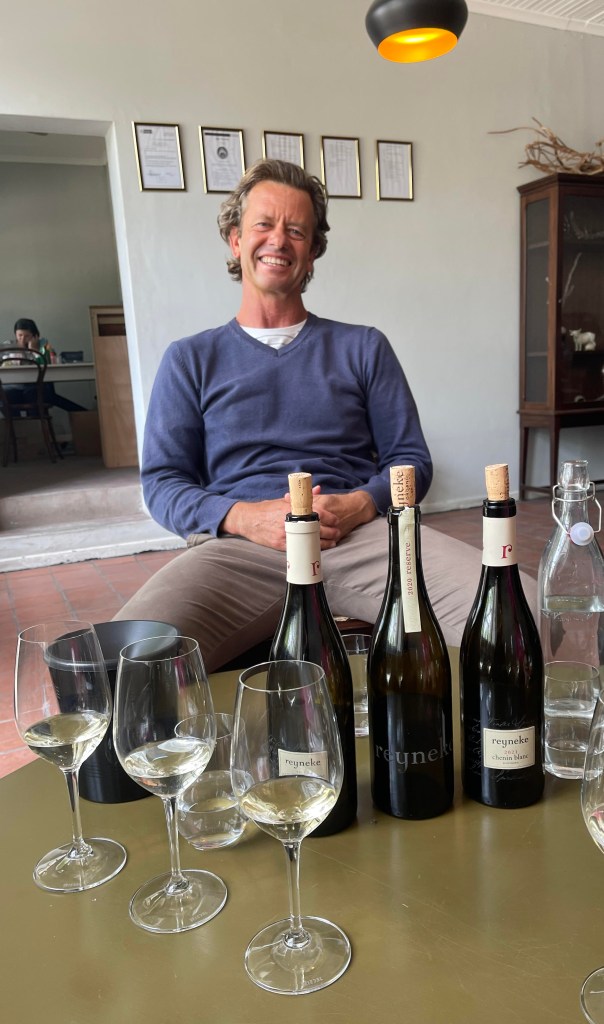
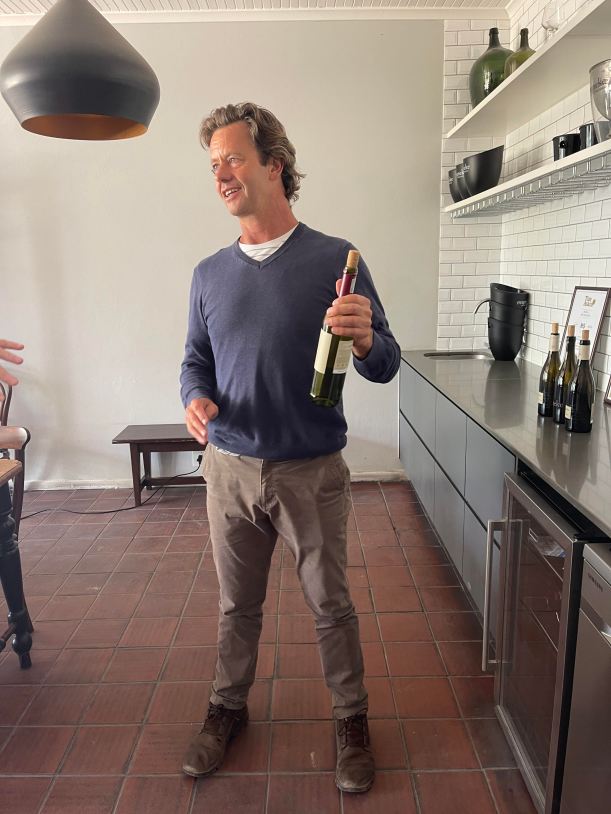
Happily, there are some great wineries out there, leading the way on sustainability and one of them is Reyneke Wines in Stellenbosch.
Since the early noughties Johan Reneke has been working towards achieving the three pillars of sustainability: environmental, social and economic. As he eloquently argues, how can a wine be beautiful if there is ugliness, in the form of glaring social inequity, involved in its making? He also makes the point that only a financially healthy business is going to be able to achieve any sort of environmental and social goals.
Johan sees Biodynamic farming as part of a larger picture of regenerative farming. Agriculture is one of top five contributors to climate change but regenerative agriculture actually provides the opportunity to turn this around. It can actually sequester carbon back into the earth by improving soil health and increasing humus content. Another win is by moving away from monoculture biodiversity can also be improved.
Reyneke works with nature to maintain vine health without recourse to chemical pesticides, herbicides and fertilizers. This ‘land caring’ element of the approach uses for example dandelions and other cover crops to provide a preferential home for pests. It also involves ducks trotting around the vineyards hoovering up snails.
Land within the farm is also ‘spared’ so that there are pockets of wilderness left between the vineyards which are rich in flora and fauna. The farm’s herd of cattle currently roaming in pasture below the winery, are let into the dormant vineyards over winter to fertilize them. In a lovely example of the vineyard’s circular like economy the winery produces feed for the cows in the form of the grape pressings which according to Yohan they love!
Looking back towards False Bay with the farm herd of cattle in the foreground.
Improved soil health and biodynamic farming has made the vines more resilient to pest, fungus and drought and so by extension perhaps some of the other effects of climate change?
As we visit the Reyneke wine farm is currently being extended into a neighbouring farm recently acquired. Some of the vineyards are being kept and some replanted. One can see where strips running along the contours of the hillside are being set side for biodiversity corridors between the vines. Old vines are piled up and will be turned into bio-charcoal that will be mixed in with the soil, locking in the carbon long term.
New vineyards in preparation. A pocket of Fynbos top left, horozontal lines on the hill side mark out future biodiversity corridors
When looking at the road to net zero carbon any organisation needs to look at its Scope 1, 2 and 3 emissions. Scope 1 emissions are C02 emissions arising from operations directly controlled by the organisation. Scope 2 are emissions up stream caused indirectly by the organisation when it buys in goods and services from elsewhere, for instance electricity or bottles. Finally scope 3 emissions are those downstream arising from the activities of distributors and consumers transporting, consuming and disposing of goods.
At Reyneke the farm is now carbon negative but Johan continues to look at the winery operations. He is investigating renewable energy in the form of photo voltaic (PV) panels, possibly in combination with electric tractors which could double up by providing some energy storage too. The Cape is lovely and sunny but electricity is currently rationed in ‘load shedding’ which adds another reason for moving off grid.
Reyneke is also trailing the use of Tetra Pak type packaging as an option, starting with their entry level organic wines in Scandinavian countries who seem more open to the idea. Clearly there is a challenge here in shifting negative consumer perceptions of ‘bag in a box’ type wine. Moving away from bottles would deliver valuable reductions in carbon footprint in terms of packaging and transport.
A non-interventionist approach follows through into the wine making. Instead of temperature controlled stainless steel and yeast inoculation at Reyneke wild fermentation in oak barrels is the order of the day. The wooden containers and smaller volumes successfully manages the temperature during fermentation in a passive way. The wild yeast and breathability of the oak also give a different character to the wines in particular the Sauvignon Blancs.
Johan’s story is so fascinating, and the challenges he and his team have taken on are so inspiring that this intro’ section could easily run on and on so let’s get to the wines, which do not disappoint!
Reyneke Sauvignon Blanc 2021
On the nose, hay, a touch of gooseberry, a whiff of custard. Good body with lovely balance and freshness. A nice supple mouth feel, white peach, exotic fruit pineapple, creamy gooseberry fool. Complex with good length a wine that evolves. Excellent. (Tasted at the farm and again back in London with consistent results)
Reyneke Reserve White 2020.
This is also 100% Sauvignon Blanc. The reserve is made from selected pockets of grapes within the vineyard which have their own character. It gets 24 hours on the skins and the new oak barriques.
More stone fruit on the nose also a bit of hay and a subtle touch of vanilla. Lovely textured mouth feel, more peach and bit of toast, rich but balanced, great length. Neither of these wines are your identikit new world SBs, much more interesting and complex.
Reyneke Chenin Blanc 2021
The vineyards here are part of the South African old vine project so more than 35 years old.
The nose is floral and nutty. In the mouth apricot, honey and a slightly salty finish. Vibrant.
Reyneke Syrah 2019
On the nose, sweet blackberry, dried herbs and crushed pepper. In the mouth dried black fruits, iodine, ripe tannins, full bodied but fresh. Long. (Tasted at the farm and again back in London where the wine benefited with time in the glass.)
Reyneke Reserve Red. 2019
The wine is 100% Syrah and again from selected parcels of the vineyard.
On the nose, blueberry pie, ripe fruit, pie crust, vanilla, coffee grounds, fresh garigue herbs. Iodine? Ripe blue and blackberries, powdery tannins, a herbal liquor note, savoury notes of grilled meat, full body and fresh acidity. Complex and very long. So good now that it will be hard to keep ones hands off this to let it mature! (Tasted at the farm and again back in London where again the wine benefited with time in the glass.)
Cornerstone 2019
A blend of Cabernet Franc and Cabernet Sauvignon in this vintage.
The wine is named after the Cornerstone project. Johan sees the workers as the cornerstone of the business, farm workers generally receive low wages as there is high unemployment and viticulture is the least profitable part of the industry. Scheme aims to empower workers with housing and education using profits from the winery.
Classic cassis, black current leaf, black current jam and a touch of sawdust on the nose. Austere at first, black fruits, green pepper, coffee grounds, slightly drying grainy tannins. Tasted again in London it opens up and fruit fills out the palate with bit of air. Still fairly primal at this young stage but good potential.
There is a vibrancy and depth to these wines which is compelling and it’s a quality that the Wander Curtis team have noticed on multiple occasions in other Biodynamic wines by producers such as Felton Road and Chateau Pontet-Canet. On every level there is definitely something to Biodynamic wine making.
Founded in 1776, Boekenhoutskloof can be found way down the scenic Franschhoek valley. The farm’s name means “ravine of the Boekenhout” (pronounced Book-n-Howed). Boekenhout is an indigenous Cape Beech tree greatly prized for furniture making. Hence the 7 wooden chairs that the wine labels feature.
As with many wineries there was a change of ownership and reboot in the early 1990s and new vineyards were planted including Syrah, Cabernet Sauvignon, Cabernet Franc, Grenache, Semillon and Viognier.
The winery also produces a number of brands: Porcupine Ridge, The Chocolate Blick, The Wolftrap. Producing 7 million bottles a year it is one of the biggest wineries.
One needs to book about 6 months in advance to visit and taste at the estate but it quite a special experience hosted by Godfried Mocke the wine maker in Franschhoek.
Godfried explained that they now have vineyards in Swartland home of the famous Porseleinsberg Syrah, for Rhone varietals. The grow Cabernet Sauvignon in Franschhoek and Stellenbosch and Semillion in Franschhoek. They’ve set up a fairly new venture to grow and make Burguindian varieties in Hemel en Aarde called Cap Maritime.
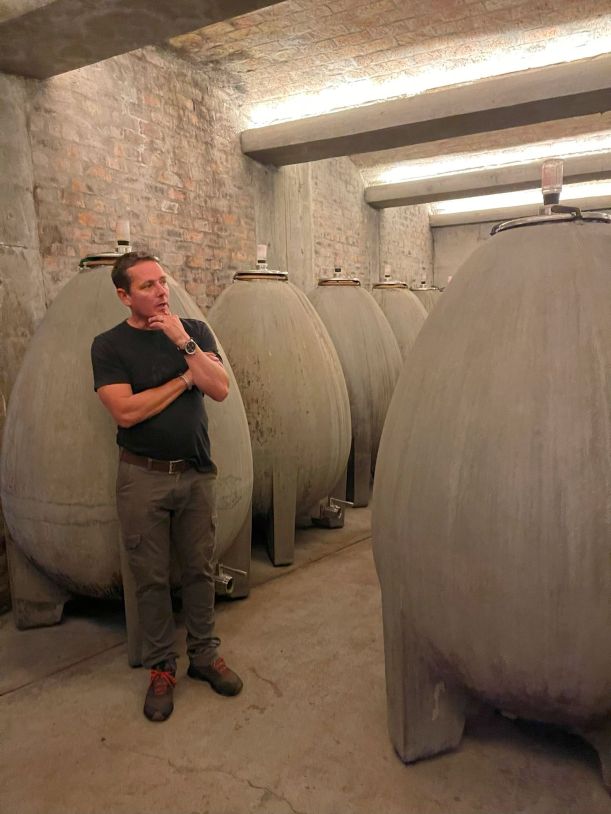
A tour through the winery revealed further details of their approach to wine making. They generally let wild yeast take care of fermentation. For red wine the concrete vessels used have rough surface that encourages a flora of yeast and so the cellar itself imparts a particular character in the same way that a cheesemakers cellar does. A part of the terrior.
Concrete eggs are used to ferment the whites, the egg shape makes vortex which moves wine around, stirring the lees and it is also gently oxidative too.
However they often ferment some in barrique and blend to achieve the final wines.
Boekenhautskloof are also using amphora made of clay fired at high temperature so this format doesn’t breath they use it for muscat.
Reds are matured in barrels. Large Foudre for Syrah to slow oxidation. Barrique for the Cabernets.
Interestingly Boekenhautskloof do not acidify their wines which is actually widely practiced to achieve balance in the wines of South Africa.
Tasting notes:
Cap Maritime 2020, Chardonnay Hemel en Aarde
Creamy, toasty, smoky with citrus zest. Great balance, full but firm body, nice structure, long.
Semillon 2019
Made from old vines the youngest planted in 1942 which are more resilient to the droughts recently experienced. Bit of polish, wax, bit of smoke, pleasant petrol aroma. Nice elastic mouth feel, baked lemon, slightly salty tang, some smoke. Capable of bottle aging and developing great complexity. Think Hunter Valley.
Cap Maritime Pinot Noir 2020
Difficult year not much energy to ripen so needed whole bunch to give a lift. Cherry, green herbs. Sweet red fruit, good lift medium body.
The Chocolate Block 2021 (1 M bottles!)
Made from 5 varieties the lend percentages always shift and change. Blind tasted to pick best but will always reflect the vintage characteristics.
Mix if red crunchy berries, dark black current then brambles, a touch of vanilla. Good balance, structured, high acid, medium body, clayey tannins present. Fruity with a tough of menthol. Med length.
Syrah 2019
Grown on blue schist in Swartland. Nose of crushed raspberries, blueberries, light spice. Fruit forward creamy texture, clove ripe fruit finish. Long.
Cabernet Sauvignon 2017
Stellenbosch fruit. Dark fruit, iodine and black current. Ripe fruit, lots of nice powdery tannin. High acid, dry savoury finish.
These are amazing age worthy, high quality wines representing superb value!
Nestled on the slopes of Simonsberg Mountain, Kanonkop Wine Estate is a proud custodian of South African winemaking heritage. Now in the hands of fourth-generation brothers Paul and Johann Krige, the estate produces around three million bottles annually, with sales evenly split between domestic and international markets. Known exclusively for its red wines, Kanonkop champions two hero grapes: Cabernet Sauvignon and Pinotage. The estate’s flagship wines are meticulously matured in French oak barrels, incorporating a portion of new wood to enhance complexity and elegance.
The Kadette range, meanwhile, showcases fruit sourced from 30 local farmers, with Kanonkop’s own viticulturalist overseeing the growing process to ensure quality and consistency,. The estate traces its name to a nearby hill (or kop) where, in the 17th and 18th centuries, a cannon (kanon) thundered to signal the arrival of ships in Table Bay. This booming call once rallied local farmers to race their wagons to the harbor, laden with fresh produce.
Since bottling its first wine in 1973, Kanonkop has become a benchmark for South African reds, carrying forward the legacy of the visionary Paul Sauer.
Tasting notes:
Kadette Range – A Young soldier ready for action!
Kadette dry Pinotage rose 2022
Short skin contact, blush colour and burst of floral notes.
50% Pinotage plus Cabernet Sauvignon and Cabernet Franc, 14% ABV.
Nice brambly nose with a bit of smoke, an inky note and touch of vanilla.
Lovely juicy fruit, fullish body but good lift and spicy finish, good length.
Pinotage 2020 14%
100% Pinotage 14% ABV. Really sweet red and black berries, touch of vanilla.
More fruit on palate, soft chewy tannins, medium acidity, good length. Slight herbal finish. Very tasty
Cabernet Sauvignon 2020 14%
Classic blackberry and black currant leaf on the nose.
Nice dry fruit, herbal, savoury, nice grainy tannin, medium length. Lovely and great value.
Estate wine Pinotage 2020
Old vineyards with 60 year old bush vines. Pinotage is dry farmed
Matured in 80% new oak. Classy barrel room notes of toast and spice.
Lovely balance, and structure, brambly fruit, coffee notes, lots of length.
Estate Cab Sauvignon 2020
Classic blackcurrant leaf and whiff of smoke.
Blackberry is ripe but not over ripe ,mineral notes, very fine ripe tannin, lingering length. Long savoury finish!
Estate Paul Sauer 2020
70% Cabernet Sauvignon, 15% Merlot and 15% Cab Franc. Matured in 100% new oak for 2 years.
More of everything. Black plum, coco powder and spice.
More talcum powdery ripe and super soft tannins. Lovely rounded fruit breadth. Very long.
In recent years Kanonkop have experienced very consistent vintages harvesting at same time of year but it is always a race against time to harvest everything as it ripens all at once. They have not apparently noticed much effect in terms of global warming.
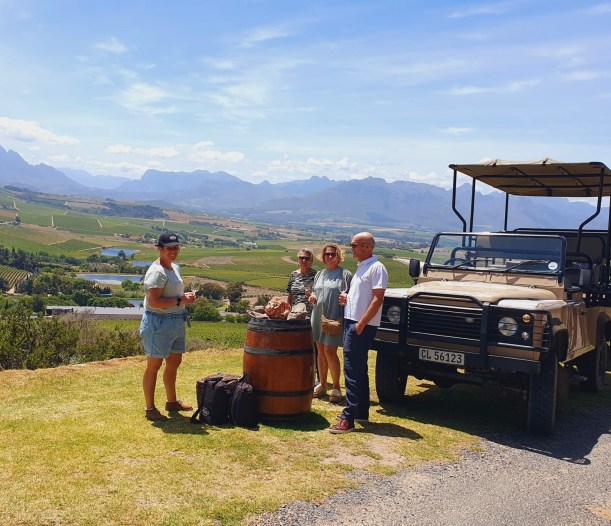
We loved the innovative safari, bumping along the dirt tracks through the vineyards at Jordan Winery in Stellenbosch. We travelled in a safari-style open topped Land Rover up to the top of the hillside to take in amazing views in one direction out to Table Top Mountain and Table Bay and the other towards False Bay. One the way we stopped for what has to be the most scenic venue for a wine tasting ever, looking out across Stellenbosch towards Simonsberg.
Along the way, we encountered the rich flora and fauna of the Cape Winelands, while gaining insight into Jordan’s unique terroir. The estate’s vineyards span altitudes from 160 to 410 meters above sea level, with slopes facing all four compass directions. Benefiting from cool coastal breezes and maritime fog, the vines thrive in soils ranging from ancient Cape Granite clay-loam to gravelly, sandy duplex. The trip finished off in the cellar with a tour and with more wine samples enjoyed in the on the sunlit restaurant terrace overlooking the lake, a great place for lunch. —a true celebration of Jordan’s exceptional terroir.
Try the Blanc de Blanc special cuve 2017 11%
Matured on lees for 54 months. Greenish gold in colour. Lovely chalky citrus notes, fresh cut granary loaf and a touch of ground almonds. Fresh, tight body, grapefruit pith and a long steely finish.
The late afternoon breeze begins to dissipate the heat of the day, the sun gently sinks over the sea, islands in the distance emerge in silhouette as the sky shades pink and purple. Evening time on the Greek islands. Hard to improve on that I hear you murmur?
Well actually there is a way to dial up the experience: make sure you are enjoying a glass of chilled Robola on the island of Cephalonia!
In Captain Corelli’s Mandolin the bottles of Robola that the drunken priest downs while hiding from his flock would bear, I imagine, little relation to the excellent wines the island currently produces. However, the storey does serve to illustrate the very long tradition of wine making on the island which stretches back over centuries of Venetian influence.
Wine is produced on several of the Ionian islands but Cephalonia is known as the home of one of the best Greek white wines Robola. Perhaps not as famous as Santorini’s Assyrtiko but definitely worth searching out particularly if you enjoy fresh, crisp and minerally wines with elegance and structure. The best are grown in poor limestone soils high up on mount Ainos.
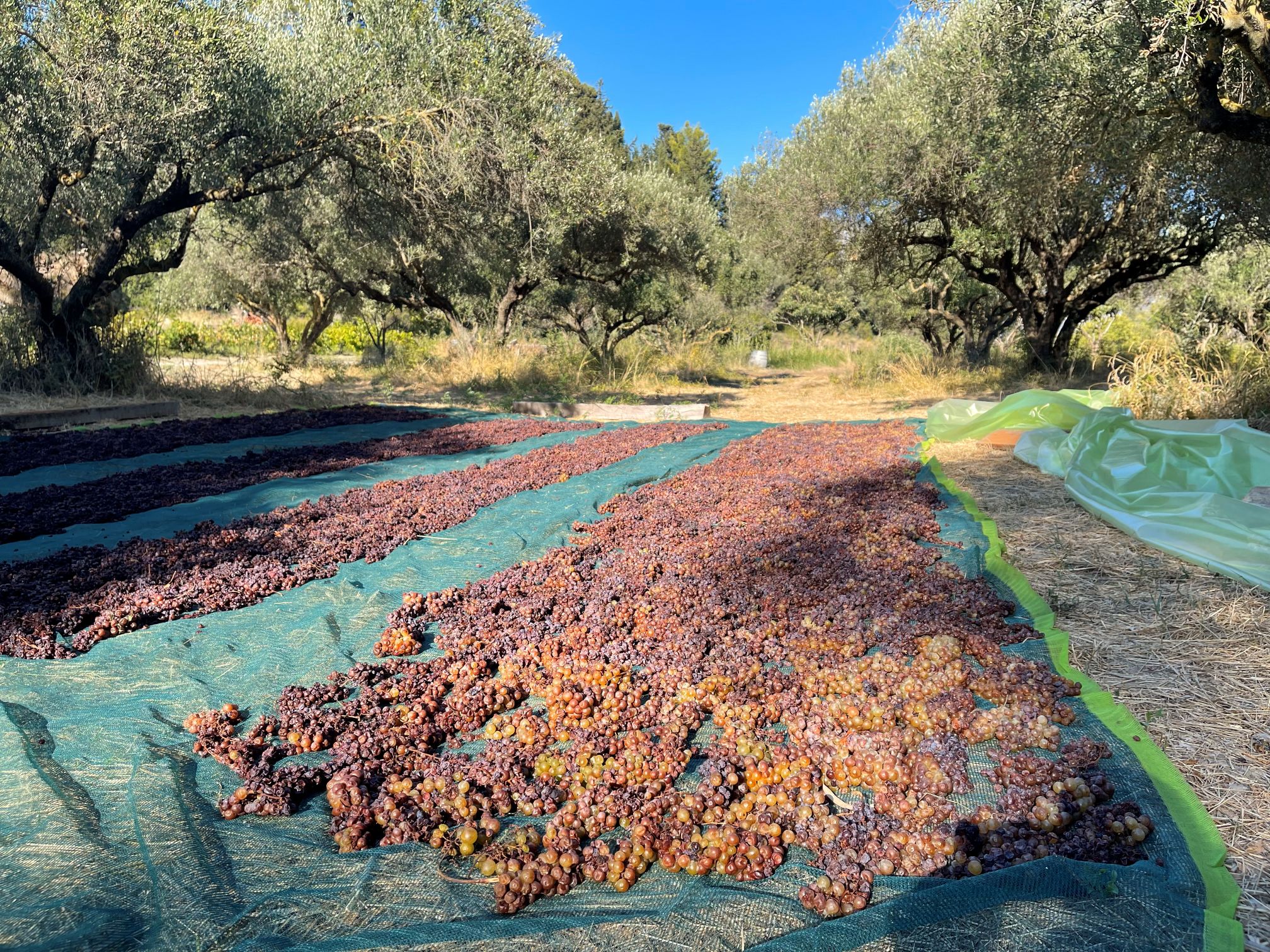
Grapes drying at Sclavos Wines
Robola is not the only show in town though indeed there is a bewildering array of grape varieties grown on the island. The other main grape varieties are Mavrodaphne and Muscat Blanc. Mavrodaphne is a red grape traditionally used to produce a sweet red wine, thanks to the Venetians love of the Passito method of sun drying their grapes, but now also made into a delicious dry reds too.
Local wines are widely available in all the tavernas, many stocking the excellent entry level Robola produced by the Cephalonia Cooperative which arrives in a cloth sack. Also, sometimes some more premium higher altitude and even single vineyard Robolas by the Cooperative and wineries such as Gentilini. Do try the various alarmingly coloured rose wines (think Aperol Spritz) that are made on the island too!
Sadly, I only managed to visit Sclavos Wines and Domaine Foivos whilst on the island and as Adam has recently reviewed Sclavos Winery here I will focus on Domaine Foivos.
Domaine Foivos
Domaine Foivos was formed when Theodore Orkopoulos bought the Matzavino family winery which is one of the oldest wineries in Greece. In fact, Theodore believes that Homer mentions the wines in the Iliad!
The estates vineyards are located in different parts of the island and contain a large range of very old indigenous grape varieties many of which are pre-phylloxera. Since the phylloxera louse killed off most native European vines by attacking their roots nearly all modern vines have been grafted onto American vine roots which are resistant so it is unusual to find old ungrafted vines that have survived.
It became evident during our three hour long tasting that Theodore possesses just the sort of boundless enthusiasm and a relentlessly enquiring mind needed to fully grasp the wine making opportunities that this precious library of vines presents.
Theodore Orkopoulos winemaker at Domaine Foivos
We started with a master class on Robola show casing different wine making techniques applied to grapes from the vineyards on mount Ainos.
Black Label Cephalonian Robola, 2021.
The vines are fully pressed and allowed a bit of skin contact.
The nose is a little floral with a touch of pink grapefruit. On the palate nice fruit, good balance and freshness and a pleasant prickle from the skin contact. A very nice wine that has tension and character.
Blue Label Cephalonian Robola, 2021.
This wine is also made with a full press but without any skin contact.
A refined nose of peach and wet stone. In the mouth a slimmer body and softer acidity with good length. This wine is available in the UK. It would work well as an aperitif to go with the sunset followed by the black label with dinner at the local Taverna.
Barcarola Cephalonian Robola, 2021.
This version of Robola is made with only the first free run juice of a selection of the grapes.
It has quite a different nose, much more perfumed, floral with delicate citrus notes. Theodore describes it as more pure expression of the grape. Again, a lighter body, very nicely balanced with a long lingering finish. This is a more premium wine.
Orange Robola 2021
This wine is made with 5 days skin contact which is relatively restrained by natural wine making standards so it is not very ‘orange’ in appearance. Possibly why I liked it so much! Ripe fruit on the nose, white peach, rounder on the palate with more ripe fruits and a nice prickly sensation. Very tasty.
Amphora Robola, 2021
This wine is made in small clay amphora.
On the nose more herbal notes over the top of peach, wet stony notes and something floral like lilac. Also complex in the mouth with a very nice texture and length.
East – West Robola + Assyrtiko, 2020
This wine is a 50:50 mix of Robola from Domaine Foivos and Assyrtiko from Zanthi.
It has a rich nose of peach and other tropical fruits and on the palate a lovely a mix of peach fruit and salty citric notes from the Assyrtiko.
Asteris Robola Rose, 2020
A bit of mavrodaphne is added to give a splash of juicy fruit to layer on top of the peach and citrus profile of the Robola. This is not one of the alarming coloured roses mentioned in the introduction, looks very respectable.
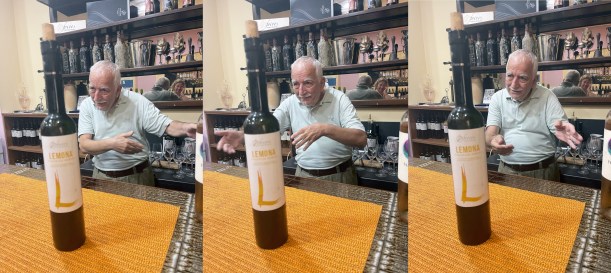
Lemona Sun dried Robola, 2012
Grapes are dried in the sun for up to 20 days. Then pressed to make this amazing sweet wine. Around 10kg of grapes are needed for each half bottle!
On the nose sweet fruit, caramel. In the mouth complex flavours of lemon, nuts and honey. Very long, great balance with real lift and length.
Appropriately named after Lemona goddess of the environment.
Foivos is one of the few wineries offering so many versions of Robola and it’s a result of Theodoros’ continuing search to discover all aspects of the grape.
The masterclass of Robola over, Theodore explained what had prompted him to start to experiment with using amphora. It’s understood that the ancient Greeks heavily watered their wine down and Theodore wanted to find out why. He set about making wine using clay amphora in the way that the ancients did, which included adding wooden staves and found that the results were good. However, Theodore realised that storage of the wine in clay amphorae over weeks and months would cause the wine to oxidise badly. So, the theory is that by the time the important religious festivals came around in the new year the wine from the last harvest would have needed to be heavily diluted to make it drinkable.
Theodore also believes that the ancient Greeks stored wines under water possibly to try and prevent it spoiling through oxidation and this has also led Foivos to carry out some very interesting experiments in aging wine under the sea.
Nautilus White, 2021
Made from blend of Tsaousi, Vostilidi, Muscatel and Muscat grapes this wine is bottle aged for 6 months in the winery aquarium which creates and environment of total darkness, constant temperature and lack of oxygen. On the nose lemon pith, lemon peel, fresh green herbs and a floral note. In the mouth round, medium acidity, more pith and citrus notes with a pleasant slight bitter bite at the end. Very vibrant and long. Available in the UK.
Nautilus Rose, 2021.
Mavrodaphne, Muscatel, Muscat, Tsaousi and Vostilidi grapes. Also bottle aged in the winery tank. Very aromatic, wild flowers and wet stones. On the palate soft red fruits, super dry with a fresh lift and a dry salty finish. Very nice in deed. Exported to British Columbia amoungst other places.
47 and 47 Undersea
47, 2017
The wine is a remarkable blend of 47 varieties: 41 whites and 6 reds to make a rose. This is where the field ‘library’ of indigenous grape varieties comes in.
Mineral, stony notes on the nose with fresh cut soft red fruit. On the palate strawberries, raspberries then baked lemon, very fresh. Complex with waves of flavours, long.
47 Undersea, 2017
As if 47 wasn’t extraordinary enough the same 47 varieties have also been bottle aged for 18 months under sea. The wine is stored in cages at depth of 22 m. As with the Nautilus wines this ensures, darkness, constant temperature and lack of oxygen but in addition higher than atmospheric pressure and a saline environment.
This wine has a different nose to the straight 47, with less obvious fruit, the fruit more integrated with the mineral notes. In the mouth tangy fruit salad flavours, complex with a stony and salty edge. Amazing to see the difference to the non-sea aged version
Red varieties.
Myesis, 2017 (initiation)
Made of 3 grapes mostly Mavrodaphne but with Cephalonian varieties: Theiako and Araklino.
A nice whiff of marzipan oh the nose with a bit of spice. A good medium body with soft rounded fruit and subtle barrel notes.
Daphne Daphne, 2016
This is a dry wine made from 100% Mavrodaphne. On the nose, plums, farmyard, smoke. In the mouth medium body, a bit of lift, dark fruits and savoury notes, medium soft tannins. Very tasty.
Amphora Red, 2021.
Another dry red mostly Mavrodaphne with 15% Vostilidi. The clay amphora gives the wine an overdose if oxygen for about 2 weeks while it ferments. Also, the amphora mean that the fermentation temperature is uncontrolled.
Nice balance, medium acidity, soft but mouth coating tannins. Lovely.
42, 2016
Another remarkable blend this time of 42 red varieties from heritage vineyards. Theodore says the grapes compete in the glass to come out on top, a continuing battle with new winners presenting themselves at each stage of the wine’s development. A rich nose of dark and red fruit and smoke. Medium body, a kaleidoscope of fruits, toasty notes, complex. Delicious!
Methyse, 2004.
Named after a follower of Dionysus the god of winemaking.
This is the traditional sweet wine of Mavrodaphne.
Super dark in colour, nose of chocolate, Kirsch, dried oranges and Christmas spices. Sweet but with enough freshness to lift it, complex and very long. A real treat!
Tasting the Foivos range of wines with Theodore at his cellar was a fascinating experience! It is wonderful that way he takes inspiration from the past, cherishes local heritage and yet continues to explore and experiment with new ways of expressing the wines. Do seek out the wines and try them.
Earlier this week I popped along to the Bordeaux Grand Crus Classes tasting 2018 to 2021.
General impression was the 2019 and 2020 are both very good vintages, 21 a bit pale in comparison and 2018 forward and inviting, perhaps a bit ‘big’ in the right bank merlot based wines.
The wines of Comtes von Neipperg were great as usual and I particularly liked the 2019s across the range. La Mondotte is astonishingly good but eye wateringly expensive however I also loved the 2019 Chateau d’Aiguihle a Cote Castillon at the other end of his range.
The 2019 has ripe dark fruit, coffee, coco powder and smoke but more tension and longer finish than the 2018. Drink dates are 2023 – 39 according to wine searcher but I thought it (along with a lot of the 18 & 19 wines) was quite approachable already if given a good decant.
Sclavos winery takes a minimum intervention approach to wine making and is transitioning to biodynamic practices in the vineyards.
Their goal is to craft natural organic wines that showcase the unique characteristics of local grape varieties, influenced by their microclimate. After harvest, grapes undergo careful hand-sorting to remove any unsuitable fruit. Vinification employs modern techniques, including stainless steel tanks, pneumatic presses with nitrogen environments, and oak fermenters.
Mavrodaphne is traditionally made as a sweet wine on Kefalonia and in order to protect the PDO classification dry versions are actually not allowed to be labelled as Mavrodaphne! Sclavos along with others, has long advocated for the recognition of red dry wines from this variety. The winery is introducing new expressions of Mavrodaphne Kefallinia, continuing its pioneering efforts in dry vinification and aging, a practice initiated 25 years ago.
The Mavrodaphne variety undergoes three weeks of fermentation, followed by over a year of aging in French oak barrels of varying sizes (225L, 500L, and large oak tanks).
The winery has 14 hectares of their own vineyards, but buys some grapes in to produce 160, 000 bottles annually.
The wines:
Alchymiste 2020 Mavrodaphne and Moschatela grapes picked relatively early. This wine is made in stainless steel tanks producing a rose colour wine. On the nose crushed raspberries and chalk dust. A nice fruit mix with a smoky slightly animal note – goaty! also malt loaf. It is fresh and medium bodied with soft powdery tannins.
Orgion 2020 Mavrodaphne aged partly in French oak barrels. There is a floral jasmine note also smoke and again malt loaf. The oak is very subtle and fills it all out the wine making it a bit rounder. Very nice.
Xinodos Biodaynamic 2020 From old vine Mavrodaphne + 17% Vostilidi, co-vinified. Matured for one year in big barrels. The wine is dark and concentrate. It is dry with red and blue fruits and has the tannin and acidity to age well.
Vin Doux Du Soleil 2020 Made from sun dried Moschato grapes. Intense concentrated fruit, good acidity, very long.
There was no better way to celebrate our first wine dinner since the start of the Covid pandemic than with the inimitable wines of Michel Chapoutier.
Maison Chapoutier was founded in 1808 and Michel Chapoutier took charge in 1988, he became the seventh generation of his family to run the Domaine. All his vineyards are farmed biodynamically.
We were lucky enough to meet the eccentric and amiable Michel at a party in his Maison when we arrived in Tain Hermitage some years ago. His wines are extremely high quality.
They have vineyards in the best sites including Hermitage, Crozes-Hermitage, Saint-Joseph, St Peray, Côte-Rôtie, Condrieu and Châteauneuf-du-Pape.
They also produce in other areas of France such as Roussillon and outside France including Australia Portugal and Germany
Guillaume Lafragette, Brand Manager of M.Chapoutier presenting excellent wines
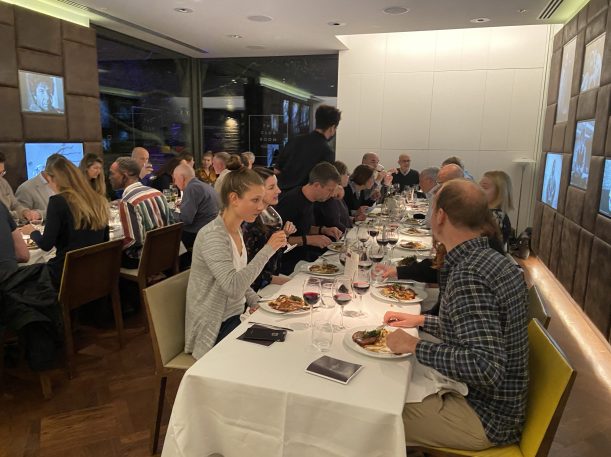
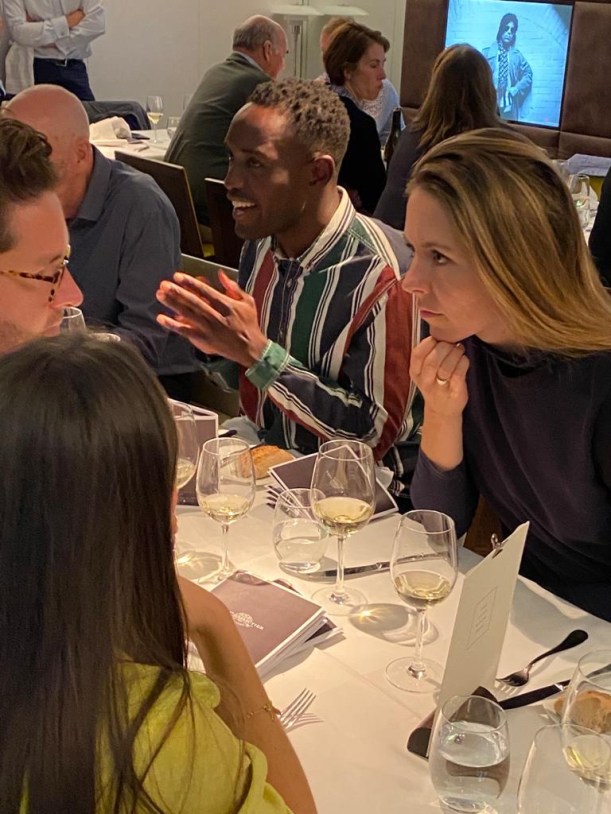
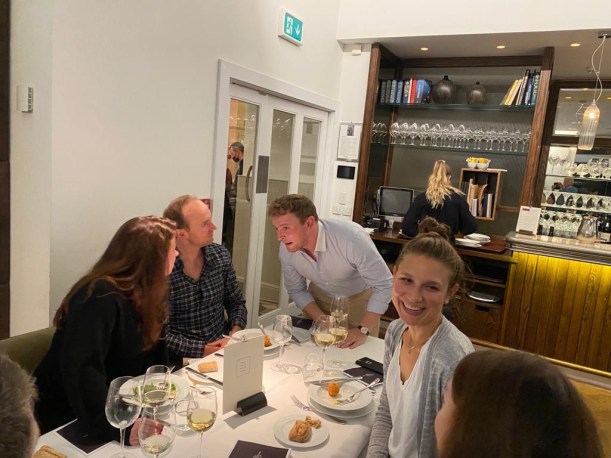
The atmosphere in the Club room at Frederick’s marked the occasion. A packed crowd on 34 wine lovers included new recruits including a cohort of wine enthusiasts, currently doing their WSET exams. We started with an introduction of Chapoutier. Guillaume Lafragette Chapoutier brand manager was equally as excited to be back to live events as our attendees
The wines showed incredibly well. Stuart’s Tasting notes below-
Esteban, Domaine de la Combe Pilate, VDF, Sparkling, White
Made using methode ancestralle where there is only a single fermentation which is stopped while the wines are put in a capped bottle to finish without any added yeast or sugar (unlike methode champenoise/traditionelle).
Light bubbles, bready, with a faint apricot nose. Opened up as it warmed up to expose more Viognier character. 9% ABV, very drinkable, not overly complex.
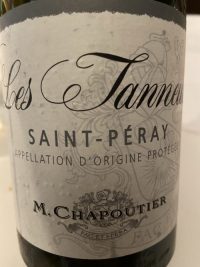
M. Chapoutier Les Tanneurs, Saint-Péray, White
100% Marsanne made in stainless steel. Apples, citrus fruit, mineral nose. Body medium +, acidity med +, very good balance between the fruit and acidity, with a lingering saline and slightly bitter finish. Very elegant, long and worthy of its place.
M. Chapoutier Mathilde Duché d’Uzès Southern rhone blend
A fuller wine made from a blend of Viognier, Grenache blanc, Marsanne and Roussane, fermented and aged in stainless steel, from clay-limestone soils. Apricots and other ripe fruit, some white flowers (Viognier), balanced with the cut of acidity from the Marsanne and Roussane, creating a beautiful blend that somehow balanced all the different weights and flavours.
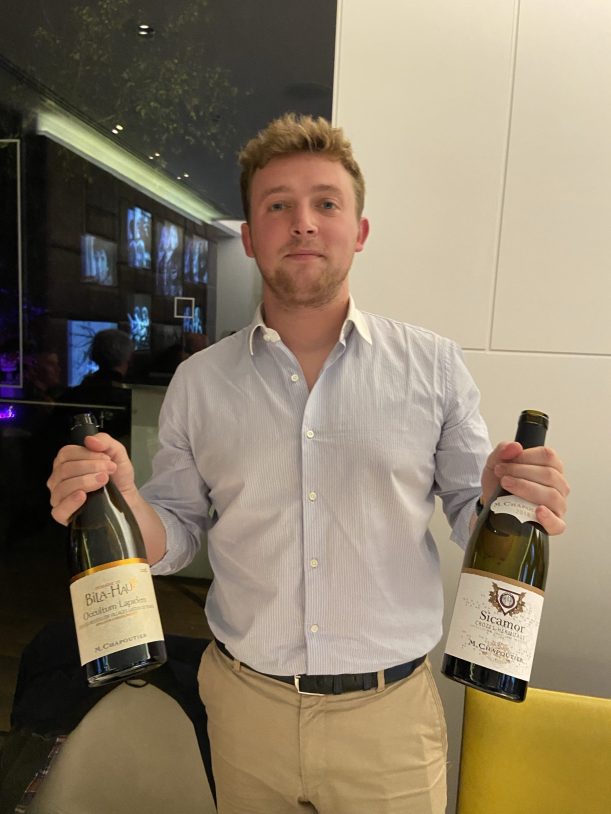
M. ChapoutierSicamor, Crozes-Hermitage, Red
100% Syrah from Crozes Hermitage, made in concrete tanks. A very typical Syrah nose of leather, spices, pepper, and black fruit, with great balance. Showing some meaty notes as the wine opened up, with a penetrating fruit concentration, fine tannins and lovely overall balance. A very classic example of Crozes.
Bila-Haut Occultum Lapidem Cotes de Roussillon
Blend of Grenache, Syrah and Carignan from Roussillon. A brute of a wine, dark in colour, exploding with garrigue and dried dark fruit, very herbaceous and spicy nose. On the palate, the wine overwhelms, with a bit of fiery bite, biting tannins as you get a sense of the individual parts of this wine as well as a good dollop of the 14.5% ABV. The wine is still quite primary, not quite knit, but based on experience, will evolve into a balanced beautiful expression of the terroir. Give it 5-7 yrs same to tame and settle.
M. Chapoutier Bila-Haut Banyuls
Made from 100% Grenache noir, fermentation stopped by the addition of alcohol to create this 17% sweet and elegant dessert wine. Chocolate powder notes with kirsch, liquer dipped cherries. Smooth and delicious with both the chocolate pot and surprisingly, the Stilton. From 500cl bottles
My favourites on the night were the St Peray 100% Marsanne for it smooth full body and texture. Stuart was more of a fan of the Clos d’uzes Mathilde and the fruit packed well balanced Sicamor Crozes Hermitage.
I was pining for mature cheese with the Banyuls rather than the chocolate dessert. True to form my father delved into his travel bag and delivered a selection of mature cheeses including Michel Chapoutier personal favorite Blue Stilton.
We would like to especially thank the excellent Hatch Mansfield for their great assistance with this dinner.




















 WanderCurtis Wine