WanderCurtis Wine

Wine tastings, corporate events, reviews and recommendations


Leave a comment

More than Grüner: other Austrian white varieties.

Grüner Veltliner has found its way onto many a restaurant wine list, supermarket shelf and specialist merchant worldwide and I am a long term fan of all the different expressions that the Winzers of Austria capably produce, from crisp easy drinking summer wines to structured treasures that bloom after a decade or two in the cellar.

But what about the other indigenous and traditional white grape varieties that Austria has to offer?  Well there are plenty including the following:

  • Welschriesling (confusingly not related to Riesling, makes easy drinking dry whites but comes into its own on the humid shores of the Neusiedlersee where its thin skins invite noble rot and where superb sweet wines are made).
  • Weissburgunder (although it is white it is not Chardonnay but actually Pinot Blanc probably originating in Burgundy).
  • Neuburger (a natural crossing of Roter Veltliner and Sylvaner).
  • Gelber and Roter Muskateller (an aromatic and ancient variety).
  • Frühroter Veltliner (another natural crossing of Roter Veltliner and Sylvaner).
  • Traminer (Savagnin): Roter Traminer, Gewürtztraminer and Gelbe Traminer (Named after the Tyrolian town on Tramin and coming in red, pink and yellow hued grapes respectively).
  • Bouvier (A cultivated crossing between Gelber Muskateller and Pinot Blanc).
  • Roter Veltliner (parent of many other but not Grüner Veltliner!).
  • Rotgipfler (Natural crossing between Roter Veltliner and Traminer).
  • Zierfandler/ Spätrot (Another natural crossing between Roter Veltliner and one of the Traminers).
  • Sylvaner/ Grüner Sylvaner (Actually an autochthonous (I know not enough vowels surely!, basically means originating from the place or indigenous) variety that made its way from Austria to Germany and Alsace but plantings have all but disappeared in its home land pushed aside by easier to grow Grüner Veltliner).

Over the last year I have been expanding my horizons by seeking out three of these in particular.

Roter Veltliner

Historically grown in Kamptal, Wagram and Kremstal often as part of a field blend this variety was largely uprooted in the 1950s and 60s as part of a shift to single varietal vineyards.  The grape is challenging to grow being prone to frost, botrytis and mould das it ripens late. Grüner Veltliner by contrast is hardier and ripens earlier and so was the favoured variety for replanting and now accounts for over 30% of all area under vine.  

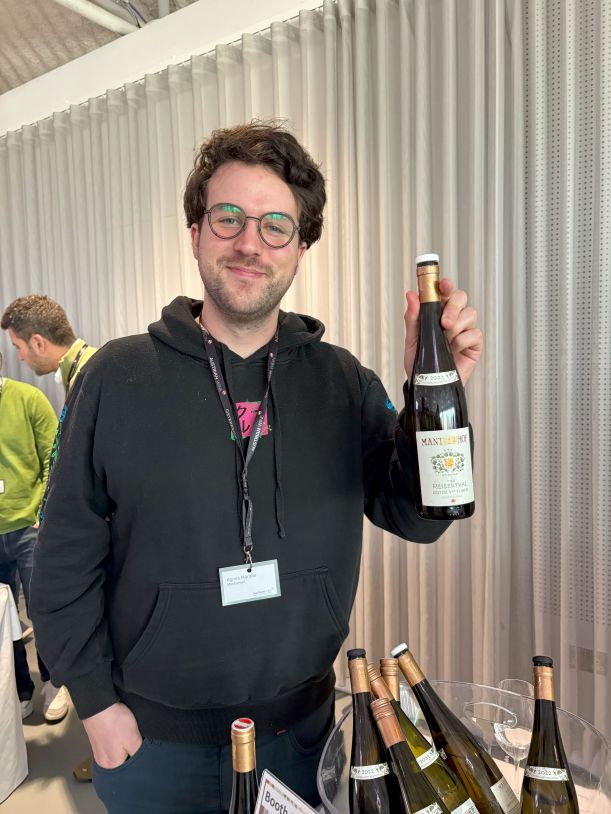
Roter Veltliner has continued to dwindle over the last couple of decades but, according to Jospeh Mantler of family Weingut Mantlerhof in Kremstal who wrote a dissertation on the variety, is making something of a resurgence as a single varietal wine.

As the climate has changed hazards such as drought, sunburn and heat stress are becoming as important if not more so than frost and fungal diseases.  It turns out that Roter Veltliner handles lack of water and heat rather well and the natural reddish pink colour of the skins means it doesn’t have to reach for the factor 50 in the sun.

So what are the wines like? The wines are not aromatic but have subtle orchard fruit, herbal and sweet root vegetable aromas. They have a broad textured mouth feel and whilst fresh have  soft acidity making them a great contrast to Grüner Veltliner.  There are two broad wine making approaches: a high yield, easy drinking style and a more concentrated textured and age worthy style that requires several passes of the vineyard to pick the grapes at optimum ripeness.

Weingut Leth of Wagram makes both styles. Their Roter Veltliner Fells Klassik 2023 has muted aromas of apple, pear, dried herbs and a touch of sweet spice. On the palate it is quite textured but with nice freshness. A nice uncomplicated partner to richer Austrian or Asian dishes.

Weingut Mantlerhof only make a reserve style from a single vineyard.  The Roter Veltliner Ried Gedersdorfer Reisenthal 2023 has notes of ripe yellow apple, pear, celeriac, parsnip and white pepper. In the mouth its actually just off dry which balances the acidity, there is a creamy mouth feel and a long persistent finish.  Joseph recommends bottle aging this wine to allow it to develop more notes of spice and dried fruit.

Rotgipfler & Zierfandler

These two varieties are largely grown in the Thermenregion particularly around Gumpoldskirchen on the hillsides of the Wienerwald just south of Vienna. The area’s volcanic springs were popular with the Romans and so of course wine has been grown there ever since. It’s a little warmer than the other parts of Niederösterreich but not as warm as Burgendland to the east.

Rotgipfler is made as a single variety but also often blended with Zierfandler for balance as it retains more acidity when ripe.  Both display some of aromatic and tropical fruit Traminer characteristics and both are textural and full bodied with sweet spicy notes.  Late harvested Zierfandler is also used to make sweet wines. High quality examples apparently mature well in bottle.

Stift Klosterneuburg’s 2023 Cuvee Gumpoldskirchen is a blend of both.  Ripe tropical fruit on the nose, with banana, cinnamon and cake spices. The body is full and alcohol high, off dry but balanced with a nice long finish.

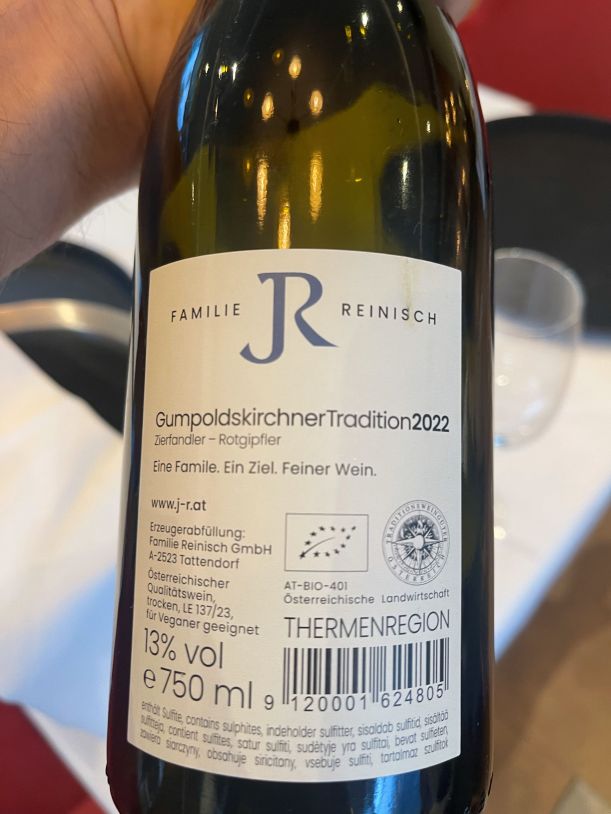
Familie Reinish Gumpoldskirchner Tradition 2022. Also a blend. Exotic, ripe stone and tropical fruit salad with sweet spices on the nose. Rich creamy mouth feel, some sweetness but overall manages to be remain fresh with a long finish.

Do try these varieties when you come across them!

AustrianWine.com has an excellent website packed full of useful information on the wines and regions and vineyards. It also provides super regional maps and contact details for wineries for when you visit. The featured image above is a photo of a great summary fact sheet provided by the association at a recent tasting in London.


An advocate for Sylvaner: Thomas Larmoyer of Soil Therapy, Alsace.

Subscribe to continue reading

Subscribe to get access to the rest of this post and other subscriber-only content.


Leave a comment

Vasse Felix: A Margaret River pioneer

If you’ve ever wondered how Margaret River came to produce some of the world’s finest Cabernet Sauvignon led Bordeaux blends, Dr. Tom Cullity is no small part of the answer.

Back in 1965 Dr. John Gladstones of the University of Western Aus had identified the ridge running north south in Margaret River as having good potential for viticulture.

Enter Tom Cullity, Perth cardiologist and, most importantly, lover of Bordeaux. He bought land in 67 and planted Cabernet, Malbec and Riesling establishing Vasse Felix wines

The Riesling didn’t make it but the Cabernet and Malbec vines still go into the winery’s flagship Tom Cullity bordeaux blend. The 2020 of which is pure silk and elegance.

It’s pretty dry during the growing season and at 34 degrees latitude it would be hot but for the cool cape current hugging the peninsula which moderates the summer temperature. As a result grapes ripen slowly and the wines to stay fresh.

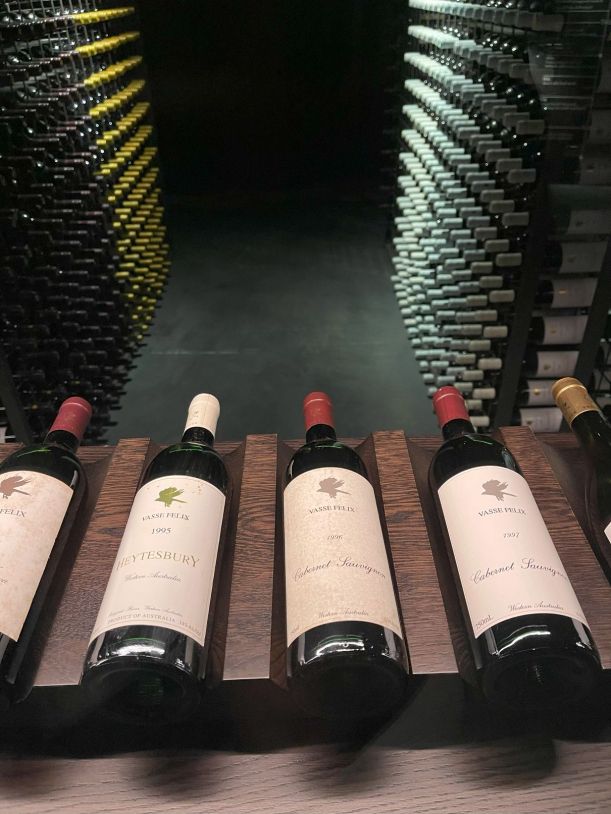
Vasse Felix also make excellent chardonnays, the ripe yet restrained Heytsbury is the premium offering, but both the estate Cabernet Sauvignon and Chardonnay are also tremendous wines.

A visit and lunch at their amazing restaurant overlooking the vineyards is definitely a must if you are in the region.


Leave a comment

Margaret River – well worth a visit.

Margaret River only produces 3% of Australia’s wine but produces a large proportion of its premium offerings.

Though a young wine region, Margaret River is recognised globally for its premium wines, particularly its elegant Cabernet Sauvignon, refined Chardonnay, and crisp white Bordeaux-style blends. Located in Western Australia, this remote yet picturesque region benefits from a unique climate and ancient soils, creating exceptional conditions for grape growing.

Margaret River’s wine story began in 1967, when Dr. Tom Cullity planted the first commercial vineyard at Vasse Felix, inspired by Harold Olmo, a University of California viticulture professor who identified the region’s potential for fine wine production. Soon after another medic Dr. Kevin Cullen and his wife founded Cullen Wines, further establishing the region’s credibility. By the 1970s, the area attracted the attention of Robert Mondavi, the legendary Napa Valley winemaker. His technical expertise and influence were pivotal in guiding Leeuwin Estate towards planting Chardonnay, which was still rare in Australia at the time. Under his mentorship, Leeuwin’s Art Series Chardonnay became one of the nation’s most celebrated wines, proving Margaret River’s potential on the world stage.

Situated at 34 degrees latitude, Margaret River’s climate should be warm to hot. However, it enjoys a cooler maritime influence due to the Cape Current, which hugs the Indian Ocean coastline surrounding the peninsula. This cooling current moderates the summer temperatures, preventing the vines from overheating and allowing for a long, gentle ripening season essential for producing wines with complexity and balance.

The region’s rainfall pattern is also significant. With high winter rainfall and dry, warm summers, Margaret River experiences a low disease pressure growing season, reducing the need for chemical intervention. The region’s red gravelly loam soils, formed over ancient granite and gneiss bedrock, are low in nutrients, naturally restricting vine vigour and promoting concentrated, high-quality fruit.

The absence of phylloxera allows Margaret River’s vineyards to have been propagated from selected heritage cuttings, preserving and enhancing the region’s clones.

Margaret River’s Cabernet Sauvignon thrives in the region’s free-draining, gravelly soils. The extended ripening period ensures full tannin maturity, resulting in wines with dark fruit flavours, fine structure, and great aging potential.

Chardonnay, often made from the region’s signature Gingin clone, performs exceptionally well in the cool maritime climate. This clone produces small, loose bunches with berries of varying sizes, resulting in wines with concentrated citrus, stone fruit, and tropical flavours, complemented by vibrant acidity.

The region’s Sauvignon Blanc and Semillon blends, inspired by white Bordeaux, flourish in the cool conditions, offering zesty citrus, passionfruit, and herbaceous notes with crisp acidity and freshness.

There is also a vibrant wine and gastronomic culture driven by visitors from nearby affluent Perth and international tourists are also drawn by the amazing coastal landscape and ancient gum tree forests.


Leave a comment

Marri Wood Park: Biodynamic wine grower in Margaret River

Tucked away in Yallingup, Western Australia, Marri Wood Park is a small family-owned vineyard known for its Demeter-certified biodynamic practices. Since 1992, this 16-acre estate, located along Caves Road near Smiths Beach, has cultivated vines with a reverence for nature’s rhythms.

The vineyard’s sustainable philosophy avoids chemicals, instead embracing celestial cycles to guide pruning, fertilising, and harvesting. Grazing animals enrich the soil, while natural biodiversity fosters a self-sustaining ecosystem. With no irrigation, the vines rely on the cooling breezes of the Southern Indian Ocean and the deep, resilient roots of their 28-year-old cabernet sauvignon, sauvignon blanc, chenin blanc, and semillon vines. The soils are a blend of sandy, gravelly loam over limestone bedrock retain water over the dry summer.

Hand-harvested grapes are meticulously sorted and fermented in a variety of vessels, including clay amphoras and French and Austrian oak barrels. This hands-on, minimalist approach captures the essence of Margaret River, producing wines of purity and depth.

Inspired by Rudolf Steiner, whose teachings revealed nature’s intelligence, and guided by Alex Podolinsky, the founder of Demeter Bio-Dynamics, Julian the owner of Marri Wood Park embraces a philosophy of ‘active perception’. He explains that through observing and engaging with the land, they have cultivated a profound affinity with their patch, a deep respect for its rhythms and ecosystem and how it works.

Visit the estate by appointment and Julian will walk you through the land and the vineyards explaining his unique approach as he goes then on returning the  barn sample the wines.

Unusually for the region they grow Chenin Blanc and the Marri Wood Park, Chenin Blanc museum release 2014 was superb!

Rich yellow in colour, with an intense nose of waxy lemon peel, preserved lemon, yellow apple, fresh green rosemary, thyme and dried herbs. There is also roasted macadamia, smoke, toast and honeycomb. Super complex.

Dry, very mouth-watering, with a lovely oily texture. Medium body, only 11.2%. More tart citrus, tinned peach, a subtle touch of vanilla, waxy and toasty, with a long taught finish.


Leave a comment

The Settlers Tavern, Margaret River.

Many of the wineries in the Margaret River region have excellent restaurants but these are normally only open at lunchtime. Great for combining a visit to the winery, a taste through the wines and a scenic lunch in the Vineyard, but what do you do in the evening?


The answer turned out to The Settlers Tavern in the town of Margaret River itself. It is very popular so you need to book but once you’re in, there’s a great menu ranging from something light like fish tacos (if you’ve already had a big lunch) through to a 300 g rump steak if you need it. Best of all they have an incredible fine wine list with a large number served by the glass either from their enomatic machine or via Coravin for their list of ‘Premium and Iconic’ wines.

I had a glass of Cullen ‘Grace Madeline’ Wilyabrup Sauvignon Blanc and Semillon blend. At a Liberty Wines tasting in London Vanya Cullen explained that this wine was inspired by Haut-Brion Blanc which counts as one of the most amazing whites I’ve ever been lucky enough to try.  This homage is stunning; aromatic but smoky, full of energy but also substance and delicious.

I also had a glass of Cullen ‘Diana Madeline, 2012 which was still perfumed, with black currant and capsicum and lovely earth and leathery notes.

We didn’t manage to visit Cullen winery and I love their wines and their biodynamic and carbon neutral approach to wine making. This made up for it though!


Leave a comment

Albury Organic Vineyard leaf stripping and green harvest volunteer day.

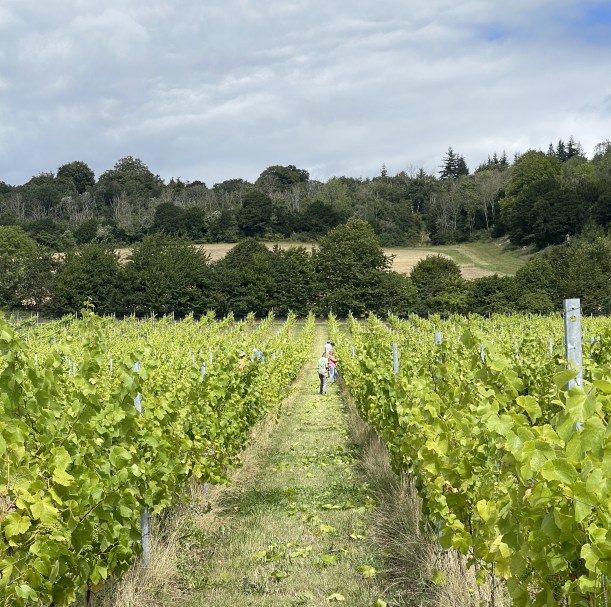
Nestled below woodland on the gentle slopes of the Surrey Hills is Albury Organic Vineyard.

The dynamic Alex Valsecchi manages the estate with her team where they grow organically, biodynamically and use regenerative viticulture practices to make wine as sustainably and environmentally friendly as they can.

Alex admits that she and Nick Wenman, the owner, must be ‘a bit mad’ to take on the challenge of growing wine in this way in the damp and fickle English climate.

But really what they’re doing is showing just what amazing results can be achieved when you have a vision (no doubt determination and a lot of hard work come into it too!).

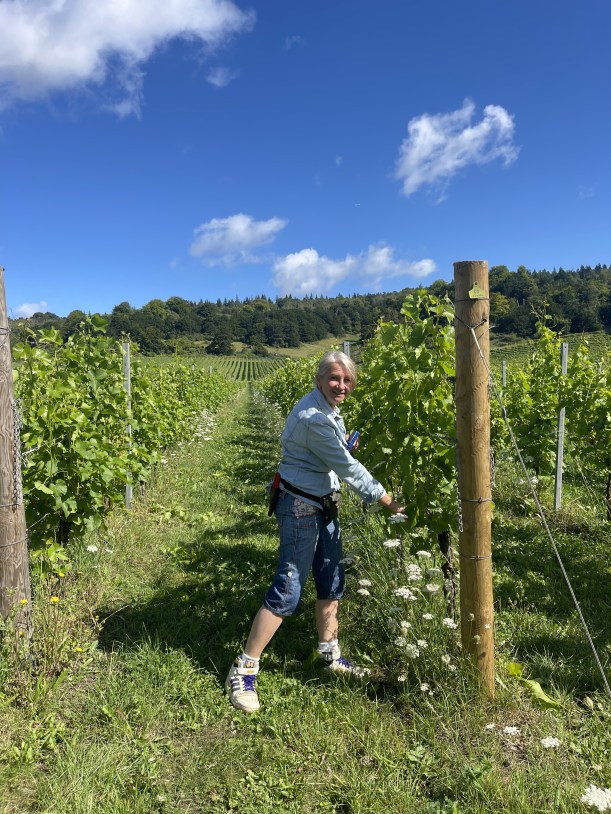
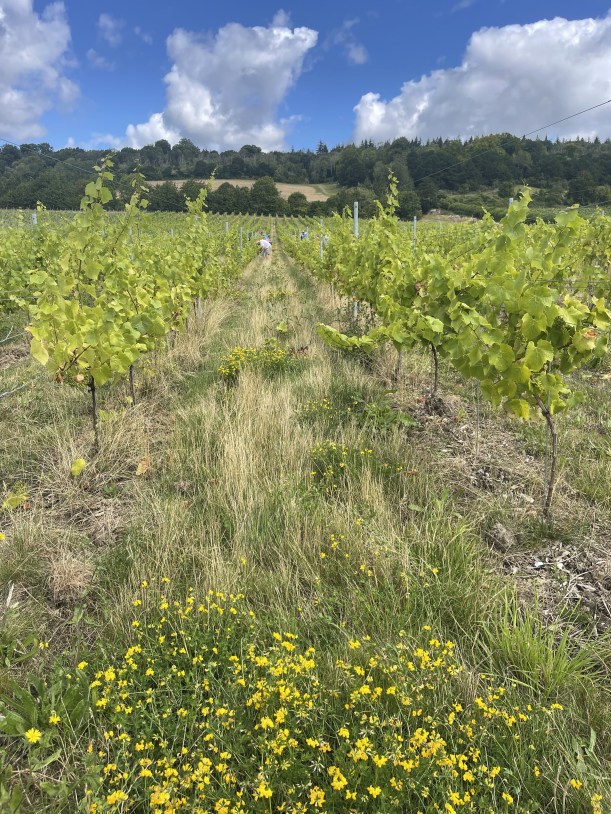
On a sunny day the vineyards are idyllic. A carpet of flowering clovers, herbs, legumes, orchids, yarrows, grasses and even wild strawberries, which are all native to the chalk hills of Surrey, has been allowed to colonise the space between the vine rows.

This along with a wildlife pond and wild flower meadow creates a diversity of habitats for beneficial insects and wildlife. 

By having diverse plants with their roots in the ground and by using only light tillage, Alex’s aim has also been to improve soil health and biodiversity below ground.

All this is on London’s doorstep and Albury welcome volunteers through the season to help out in the vineyard and experience it all first hand.

I spent a day in July helping leaf strip and green harvest in the newest section of the vineyard. Planted in 2022 these young vines need this type of tough love to strengthen them up for the future.

I can thoroughly recommend joining in and there’s a refreshing glass of Seyval Blanc fizz (tasting note bellow) and some lunch to keep you going. Harvest will most likely be in the first two weeks of October and will be an amazing opportunity to get in involved. You can sign up on their website.

Albury Estate Seyval Blanc 2021

Very pale, with fine bubbles. Blossom, hawthorn, jasmine, lemon verbena, green and yellow apple, pear, quince, thyme and a lovely touch of biscuit and croissant. Crisp acidity but rounded out by the apple & pastry flavours which linger nicely. Invigorating and Refreshing at a pleasing 11%.

I didn’t try Attila’s bite, she was at the vet!


Leave a comment

Un petit Tour de France – harvest time 2023

The onset of 2024 has left me reflecting on my inherent Francophilia. This got the better of me towards the end of last year. I had been meaning to visit Alsace for years. It took so long partly because of my preference for red wine and more recently due to Covid.

My favourite varietal though is Gewürztraminer. This is very much a marmite love or hate grape. For me it’s love. The most textured, succulent, floral powerhouse of a wine I’ve ever tasted was a Matawherho Gewürztraminer from Gisborne in New Zealand. It was an early 1990’s vintage tasted at a masterclass with my boss of the time Dr David Durham at his home next to Cloudy Bay, Marlborough New Zealand in 1995.
The 1976 Hugel Gewürztraminer with a nose distinctly reminiscent of cannabis was a highlight of many years of wine tasting.

This grape has mesmerised me since. I also have great appreciation of the other white Alsatian varieties. Well made Pinot Gris is also beautifully textured and aromatic. Riesling whilst not my first go to drink due to its high acidity playing havoc with my gastrointestinal equilibrium is still a wine I highly regard.

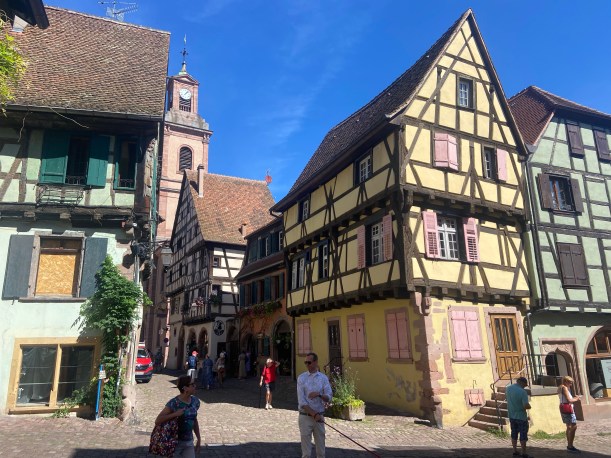
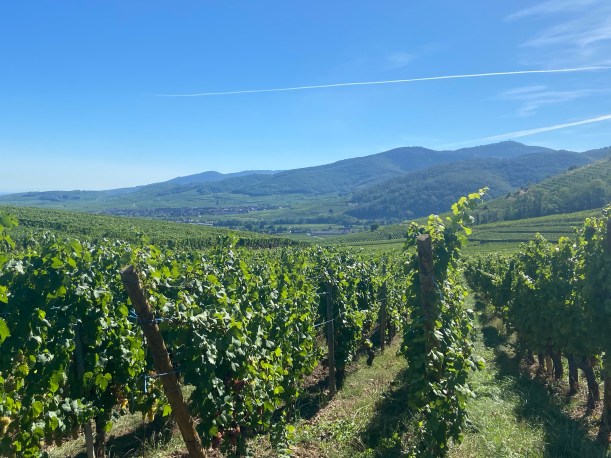
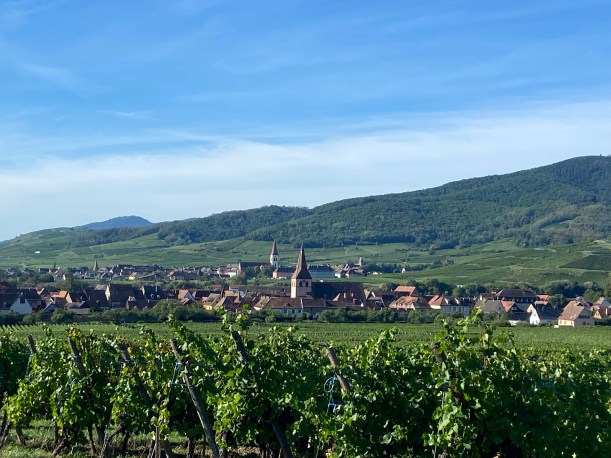
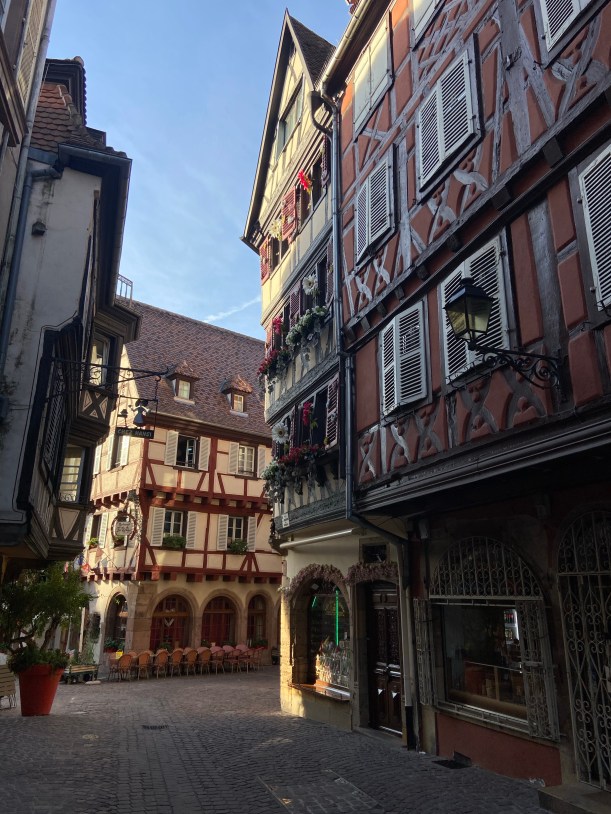
So I finally made it to Alsace, and the  wait was worth it. Not only for the wines but for the delightfully preserved chocolate box towns and villages such as Colmar, Riquewihr and Ribeauville. It really feels  like an amalgamation of France and Germany as its geography and history suggest.

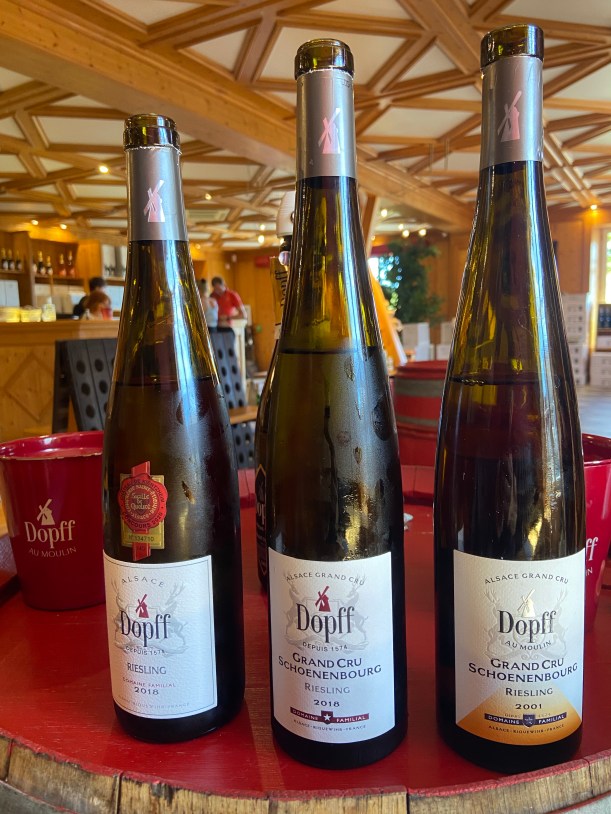
I was lucky enough to visit some of the top producers. See my interviews with Jean Frederic Hugel, Etienne Dopff, Jean Trimbach and Eddie Faller.

I stayed in central Colmar at the Hotel Le Colombier. This is very conveniently located centrally and  for the electric bike store on the same street. This is an excellent way to explore the region as there are many dedicated wine cycle routes throughout the area.

I wasn’t wild about the food, quite pork base and Germanic. They do an interesting pizza type of thing called a Tarte Flambee in French and FlammeKueche in German.


Then I hopped on a flight to Bordeaux.

Chateau Coutet, Barsac France

Visit to Chateau Coutet in Barsac, Bordeaux

It was the first day of the Rugby World Cup so the flight was awash with excited fans.

I’d had also long wished to visit Chateau Coutet in Barsac having met Aline Baly on many occasions in London. I’m also a fan of dessert wines, again not everyone’s taste. Aline was in Paulliac but generously arranged the Maitre du Chai, Laurier Girardot to entertain us.

We started in the vineyards surrounding the pristine opulent Chateau.

Laurier discussed the terroir, which is slightly different to Sauternes and a little further from the River Garonne. The style here being a little less unctuous than Sauternes and perhaps less botrytis. They also make a dry white. The wines as ever, were finely balanced, long and delicious with complexity evident in older vintages.


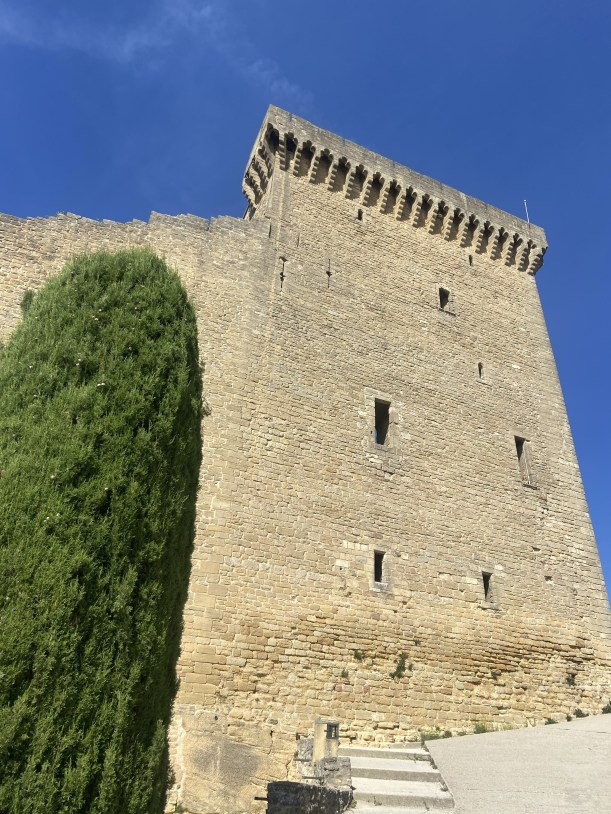
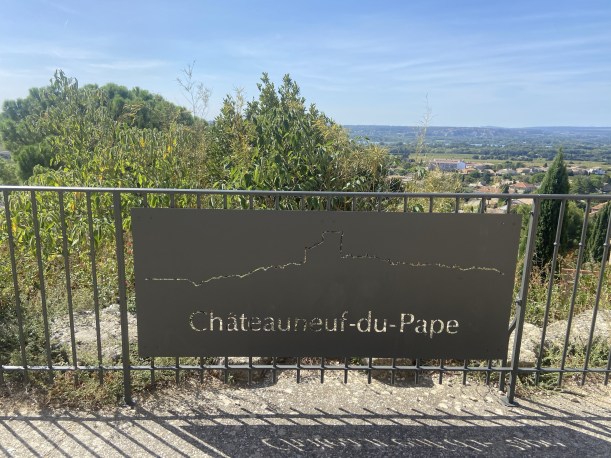
Châteauneuf-du-Pape

Next up a flight to Marseille, en route to another region I’ve longed to visit, Châteauneuf-du-Pape.

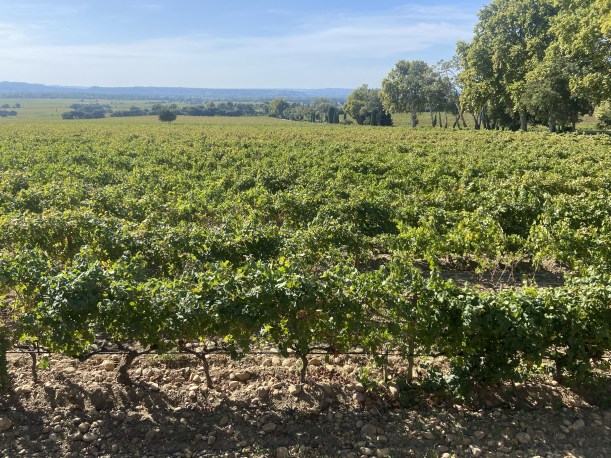
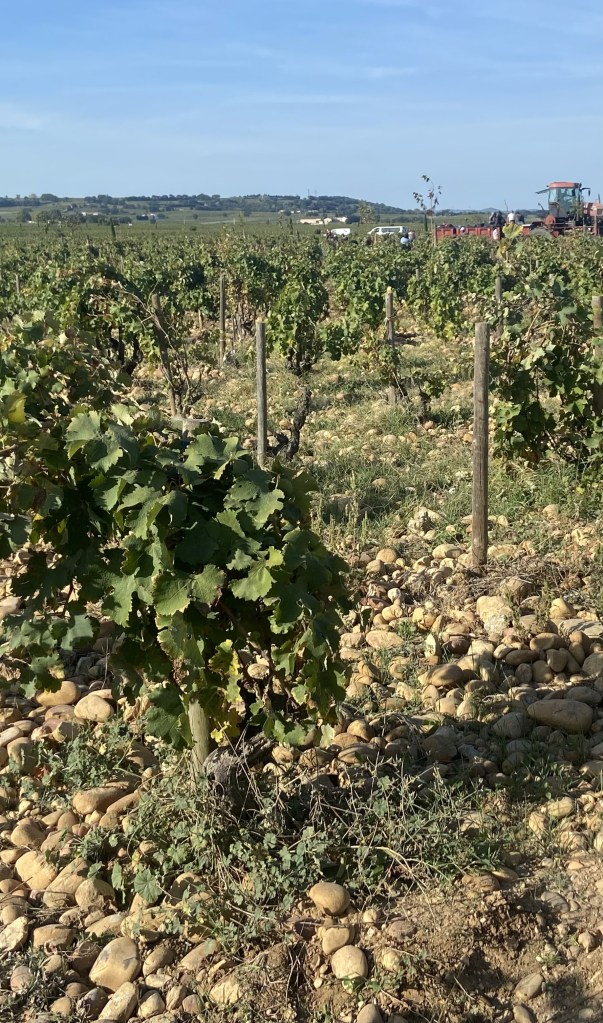
It’s one thing reading about the ‘Galets’ (larger pebbles/ smooth rocks) which are characteristic of the area. it’s another thing to see them. The entire vineyards are literally covered with layers of Galets with virtually no soil evident. These rocks have been washed down from the Alps over millions of years dating to when the area was the bed of the Rhone river.

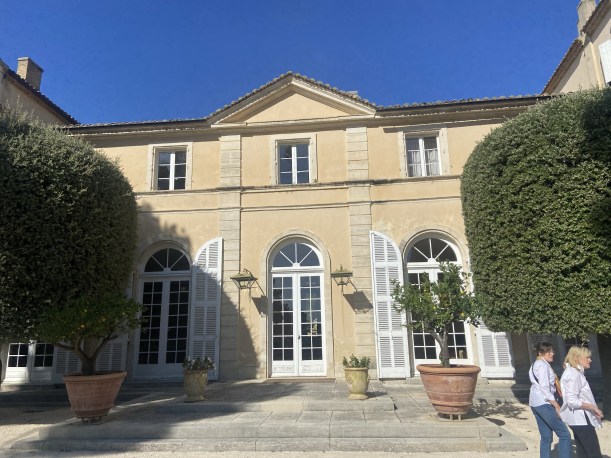
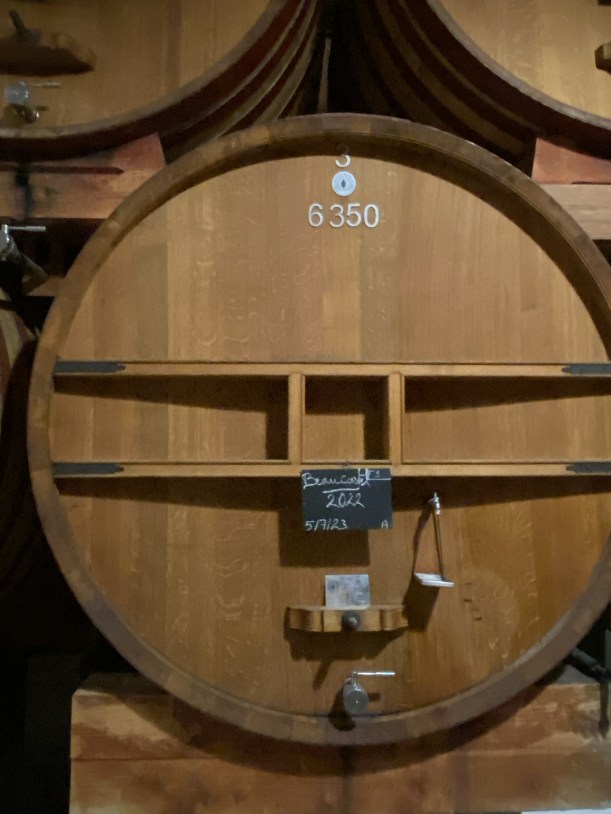
First visit, the famous Chateau de Beaucastel owned by the Perrin family.

Beaucastel were in the midst of the most fascinating new build. They had a competition amongst world renowned architects who tendered for the job. It was finally won by and Indian based firm. In keeping with Beaucastel organic and biodynamic sustainability, the new structure is being built with products of excavation.

The excavated earth for the new cellar is gently crushed and then taken to a large vertical mold and compressed. This creates the large slabs to build the new winery. It already looks amazing and effortlessly blends in with the environment.

We tasted the 2008 and 2019 Beaucastel and also a 100% Roussane of which little is made. The wines as expected were spotlessly balanced and full of fine grained tannins.

En route to Château La Nerthe we popped into Chateau Mont Redon

I was impressed by the Chateau Mont Redon range, especially with their most moderately priced Lirac which is full of fruit but also has a lovely mouthfeel. I have been buying en primeur Mont Redon from the wine society for many years.

Final visit of the day was to a very welcoming and passionate Antoine at Chateau La Nerthe.

He gave us the historical background. There have been grapes here since Roman times. More recently they were one of the pioneers of the Appelation Controlle system

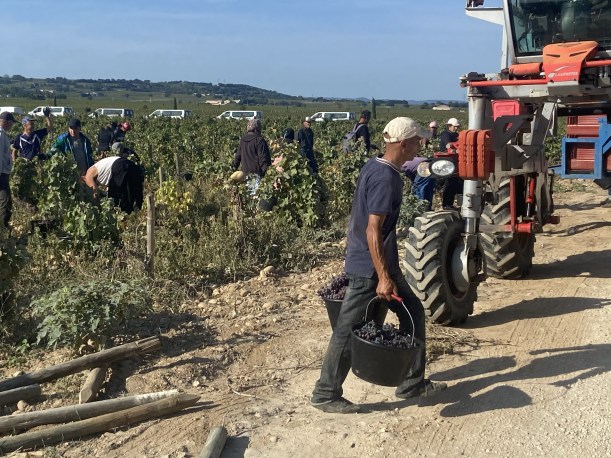
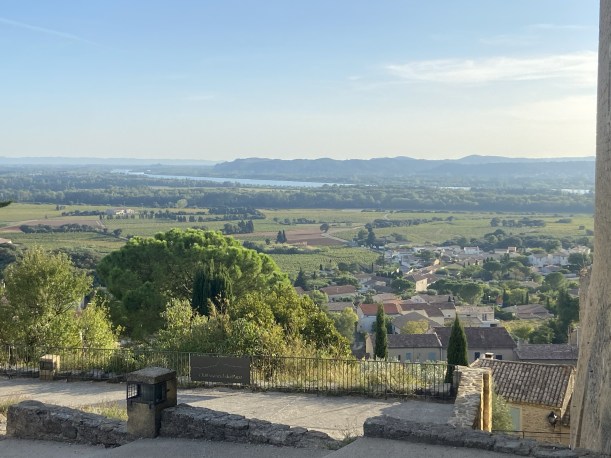
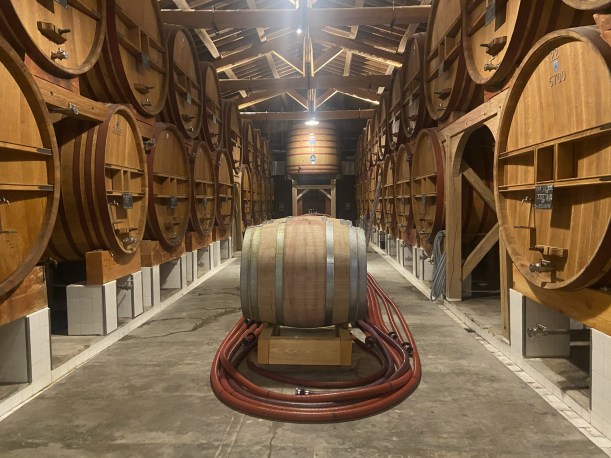
This a stunning chateau with views reaching far and wide. We toured the cellars and we were lucky enough to witness a live ‘remontage’ and sample 4 day old Mourvèdre from the tank. It was surprisingly delicious given its age.

Wine tasting here can be a little confusing as 13 grape varieties are permitted.

 6 white grape varieties: Grenache blanc, Clairette, Roussanne, Bourboulenc, Picpoul and Picardan. Grenache blanc, a mutation of Grenache noir, is the most commonly used grape variety. Red grapes: Grenache, Syrah, Mourvèdre, Cinsault, Vaccarèse, Terret, Counoise, Muscardin.

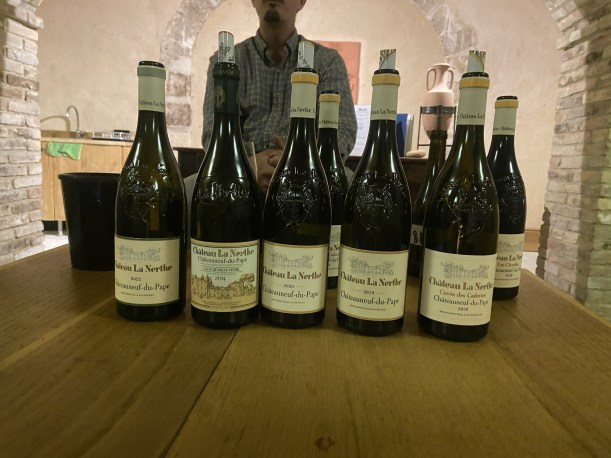
We tasted a range of their wines including

Château la Nerthe 2014 Clos de Beauvenir – it had an oxidised nose, almond, nice freshness and texture Good food wine

Château la Nerthe  Barrel sample, Syrah amazing for only 4 weeks old! Full of  fruit Soft tannins Delicious!!!

2020 Château la Nerthe Châteauneuf du Pape 25% Mourvèdre, Balanced, good year, plenty of fresh fruit alcohol well integrated

2019  Château la Nerthe Châteauneuf du Pape . 35 %Mourvèdre Syrah 31 %Grenache 33 % about a third each  A bit more serious than 2020 and probably need more ageing to develop complexity

2020  Château la Nerthe Châteauneuf du Pape Cuvee des Cadettes which is made from their  best grapes 9.000 bottles only GSM blend

2019 Château la Nerthe Châteauneuf du Pape Cadettes 55 % Mourvèdre floral earthy savoury serious big wine.

Antoine then brought out a blind wine which I immediately described as Pinotesque. I was happy to be correct in my deduction that it was one of their very limited production 100% Grenache.

This tasting was one of the highlights of many years of different wine trips. Thanks to @bossofthewine, Bruce Baldinger and the New Yorkers. We had serendipitously met them on the tour of the old Synagogue in Carpentras the day before and tagged along to this visit.


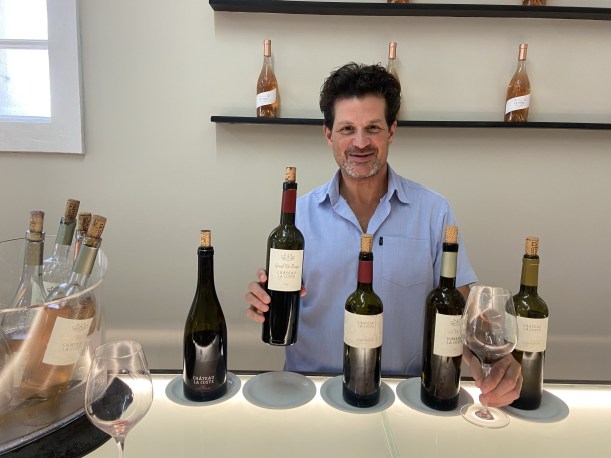
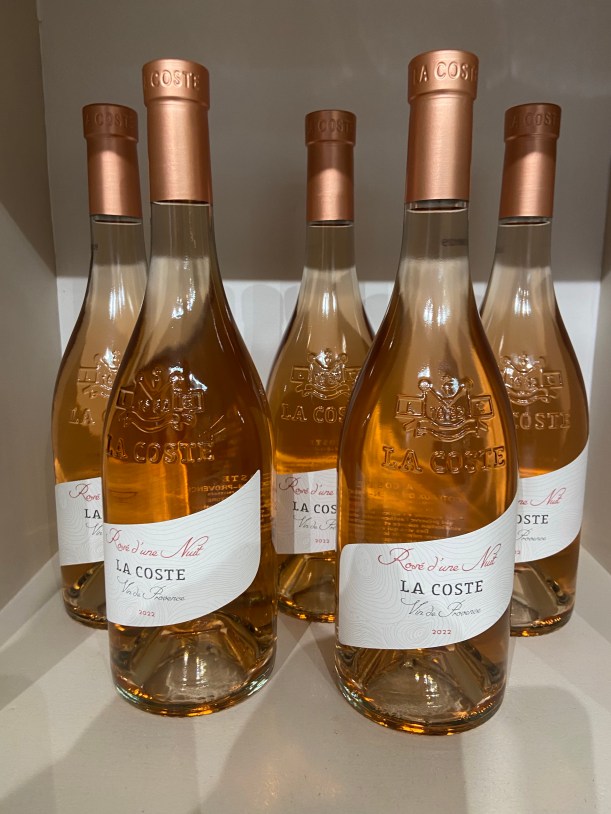
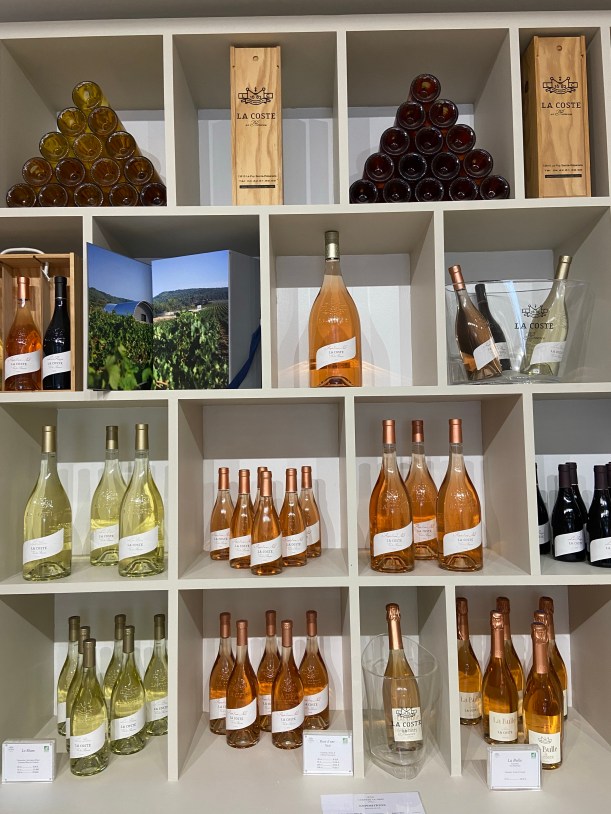
Finally I must  not forget the opulent Chateau La Coste in Provence. It was a short drive south from our accommodation in Lourmarin  through the beautiful countryside towards Aix en Provence near the village of Le Puy-Sainte – Reparade.

This is a real destination owned by Irish property magnate Paddy Mckillen. It has its own art and architecture walk, 600 acre sculpture park, a luxury hotel Villa La Coste multiple very high end  restaurants and excellent wine.

Despite the breadth and depth and quality of wines across the world, there’s nothing quite like returning to La Belle France!


Leave a comment

Bodegas Valdespino’s cellar

Jerez de la Frontera, so named as the boundary between warring Christians and Moors in the 13th Century is the home of bodegas Valdespino. And just look at this amazing cellar, in the dim light and controlled moisture haze it seems to go on as far as the eye can see!

This is where the solera for the excellent Inocente Fino and the Tio Diego Amontillado live. Both contain wine made from the highest point of the Macharnudo Alto single vineyard.

Doors to the west open to allow the cool Poniente breeze in

The best vineyards in the sherry triangle have Albariza soils which are a mix of limestone, silica and clay. These soils absorb moisture in the winter and then form a crust during the dry growing season retaining moisture and slowly releasing it to the vines. The gently sloping vineyards have a series of troughs, called Asperpia, worked into them to catch water and let it soak into the soil.  

The Macharnudo Alto vineyard has a little more elevation than elsewhere and so catches the cooling Poniente breeze from the Atlantic and the albariza soils here contain a particularly high level of limestone both contributing to more concentrated grapes.

In the cellar the solera systems sit side by side each with 10 criadera and the final tier of solera.  The Inocente barrels all contain flor and as with all Finos the resulting wine has been fully matured under a layer of yeast. Wine is removed for bottling from the bottom solera layer, where the wines are oldest, each spring and autumn when the flor is thickest. The wines therefore have an average age of around 10 years. The barrels in the solera are then topped up successively each from the criadera above it until new wine is added to the first set of barrels. The nutrients within the fresh wine added helps to feed the flor yeast and keep it alive.

The first three criadera of the Tio Diego Amontillado solera system have flor and then more spirit is added fortifying the wines up to 17% ABV which kills it off.  The wine matures in the remaining layers of the solera oxidatively resulting in a wine with both yeasty flor character and nutty, caramel type notes and a of course a darker colour. There is more evaporation without the floor and so the abv rises by another few degrees. Wine is only drawn off the solera once a year meaning that the average age of the Tio Diego is more like 17-18 years.

There is one other wine connected with these soleras and that is the Palo Cortado. Every now and then the wine maker recognises that one or two of the barrels ‘want to be’ Palo Cortado. It may be that the flor has died or the barrel displays some extra concentration or individual character.  These barrels are moved over to join the Palo Cortado solera producing Viejo C.P. or even the PC  VOS (Very Old Sherry).

There are 11 layers within these solera systems and there are 70 barrels in each making 770 in total. This sounds like a lot but less than 40% is taken out each year and with an average age of 10 and 17 years respectively it takes a lot of time and space not mention care and attention to make these fantastic wines.  

For tasting notes of the Inocente Fino see wine of the month


Leave a comment

What’s trending in Alsace?

During my recent trip to Alsace, I asked four of the most influential people in the Alsace wine scene  several questions.

  1. What’s trending in the Alsace wine world?
  2. How do you ideally envisage your business in the future? 
  3. If you weren’t in the wine business what would you be?
  4. What are your two Desert Island bottles of wine?

Here are the mini interviews 

Etienne Dopff of Maison Dopff et Moulin in Riquewihr
Jean Trimbach of Maison Trimbach in Ribeauville
Jean Frédéric Hugel of Maison Hugel  in Riquewihr 
Eddie Faller of Domaine Weinbach in Kayserberg