WanderCurtis Wine

Wine tastings, corporate events, reviews and recommendations


Leave a comment

Mayacamas

At Roberson Wine’s recent Californian tasting Cathy Cohn of Mayacamas led a tasting of the estates wines.

Mayacamas is one of the oldest continuously producing wine estates in Napa. It was founded in 1889 by John Henry Fisher a Scotsman who of all things was a sword engraver. He made his money through producing pickles and then bought land and established the vineyards at the far end of the Mayacamas mountain.

Unfortunately, when San Francisco burnt to the ground in the earthquake of 1906 all his businesses floundered and he had to sell the winery at auction. A Catholic family bought it and grew wines for the sacristy and for that reason the winery managed to survive prohibition and the vineyards were kept intact.

The wine making style here has always been traditional and this style fell out a favour as Robert Parker rose to pre-eminence in the 1990s. The Schottenstein Family bought the winery in 2013 because they love this style and have continued the wine making philosophy ever since. The winery is that an elevation of 550 m and is still accessed by a dirt track.

The Chardonnays are from Wente clones, everything is dry farmed and in order to retain freshness they keep the barrels cold to prevent malolactic fermentation. The wines are aged in stainless steel and then used oak barrels. There is some Lee’s contact but minimal battonnage.

Mayacamas Chardonnay 2022. Pale lemon colour bright and shiny.. There are thick slow legs. On the nose ripe lemon, grapefruit, yellow ripe apples and pears and peach. A touch of smoke and green nuts. In the mouth it is dry with medium acid but a distinct freshness the fruits are still ripe but mostly citrus and it is full bodied with a plush mouth feel only the merest hint of toast and smoke and it’s very long.

Mayacamas Chardonnay 2001.This Wine is medium golden colour showing his age but it’s still bright. The legs are thick and slow on the glass. There is ripe lemon, peach and then dried apricots and raisins on the nose. It’s dry with medium acid full body high alcohol but well integrated and a silky plush mouth feel. The finish is quite nutty and a touch salty. A lovely fully developed wine.

The red wines are all made in a similar way. Fermentation takes place in enamelled concrete vats and is relatively quick. They are unconcerned about achieving high levels of extraction and more interested in maintaining freshness. Flavour develops through long aging in a variety of used barrels, 3 years for the Cabernets and 2 for the Merlot. Then the Cab’s get another year in bottle before release.

Mayacamas Merlot 2021. Deep ruby colour nearly all the way to the rim, bright. There are thick slow slightly stained legs. On the nose red fruit, plums both red and black, cherries again red or black and a nice prickly capsicum note. There’s a touch of spice and a touch of stewed plump, cloves and all spice. In the mouth very fruit forward. Fresh ripe red and black plums again. Medium minus acid medium soft tannins on the gums and cheeks and there is a slight tingle of alcohol on the nose. Oak is there but very subtle. A long tasty finish.

Mayacamas Cabernet Sauvignon 2019. Deep ruby with slight brick at the rim and reflective. There are medium legs. On the nose violet, blackcurrant .blackberries, bay leaf (which apparently grows on the mountain) leather and toast. This would be difficult to place in California blind as there is such a savoury component. On the palate, dry with full body, ripe tannins ends fresh and long. Wow, this is an amazing wine. The wine is 100% Cabernet Sauvignon and has a classic slightly grainy tannin structure felt around the gums with the ‘direction’ that Nick Jackson talks about. The only clue here might be that there’s a slight hole in the mid pallet leading to 100% Cabernet Sauvignon which would be unusual in Bordeaux.

Mayacamas Cabernet Sauvignon 2014. Deep garnet.  The nose is perfumed with violets, black fruit sweet black currant, bay leaf, earth, leather and toast. This is super complex and absolutely enchanting. In the mouth the wine has great balance, it’s dry with full body, ripe fine grained tannin.  The fruit coats the mouth. This wine has a touch of Merlot in the blend but still very firmly structured. It’s super long in the finish. An amazing wine that is really singing. Cathy says that the 2019 vintage was very similar to 2104 so worth finding some and tucking it away.

Mayacamas Cabernet Sauvignon 2003. This is deep and fully garnet but still bright. More spice and tertiary notes on the nose there is still blackcurrant and blackberry some capsicum a little cedar and some mint. In the mouth it is full bodied the tannins are ripe soft and very fine grained. There is a touch of cooked fruit on the mouth and then there is a long fruit driven finish.

Mayacamas Cabernet Sauvignon 1998.  A treat brought over from Cathy’s wine fridge in New York. Deep garnet in colour, lightning to the rim but still bright. Medium thick slow legs. There is black fruit, mint and capsicum.  Then earth, mushroom, cedar and leather. A  very complex and fully developed wine. On the pallet really well balanced and very refined and elegant and very, very long.

Tasting the wines gives one an insight into what ‘traditional’ wine making means at Mayacamas: the wines are elegant, structured and clearly unfurl beautifully with age.


Leave a comment

Leoville Barton 2005

The second half of a recently Coravin’d 75cl bottle, decanted for an hour before trying. The first half was magical, hoping for the same again…

Mid ruby, hint of orange around the rim. Legs abundantly coating the glass telling me there is more fun ahead!

Nose is dark cherry, macerated strawberry, ripe blackberry, really ripe to overripe plum and cassis syrup encompassed in a lightly mushroomy, damp forest floor and cedar envelope. There are accents of spicy clove, menthol, vanilla pod, burnt toast and some newly sawn wood providing beautiful contrast between the ripe dark fruit and the lifted spiciness. I could just sit and inhale this all day (but that would defeat the purpose of the tasting note…)

The first thing you experience on the palate is bright red and black fruit, tart acidity and very refined yet abundant mouth filling tannins. The lingering flavours deepen into a menthol covered dark cherry, black currant and plum coulis with a hint of smokey dark chocolate. The finish is long, approaching the 45 second mark to still get the fruit elements and well beyond to still feel the structural aftermath of this very complete wine. As the wine continues to open, the fruit sweetens and darkens further in the mouth while the tannins are ever present and lingering. The bright acidity keeps this whole wine perfectly in balance. My estimation is this wine will easily go another 25 years if stored well.

A true Bordeaux classic from a top notch Chateau.


Leave a comment

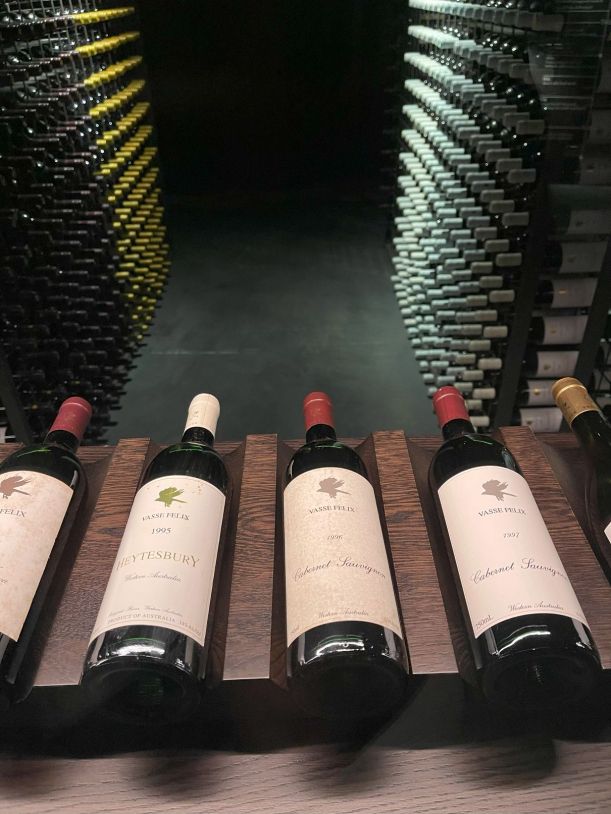
Vasse Felix: A Margaret River pioneer

If you’ve ever wondered how Margaret River came to produce some of the world’s finest Cabernet Sauvignon led Bordeaux blends, Dr. Tom Cullity is no small part of the answer.

Back in 1965 Dr. John Gladstones of the University of Western Aus had identified the ridge running north south in Margaret River as having good potential for viticulture.

Enter Tom Cullity, Perth cardiologist and, most importantly, lover of Bordeaux. He bought land in 67 and planted Cabernet, Malbec and Riesling establishing Vasse Felix wines

The Riesling didn’t make it but the Cabernet and Malbec vines still go into the winery’s flagship Tom Cullity bordeaux blend. The 2020 of which is pure silk and elegance.

It’s pretty dry during the growing season and at 34 degrees latitude it would be hot but for the cool cape current hugging the peninsula which moderates the summer temperature. As a result grapes ripen slowly and the wines to stay fresh.

Vasse Felix also make excellent chardonnays, the ripe yet restrained Heytsbury is the premium offering, but both the estate Cabernet Sauvignon and Chardonnay are also tremendous wines.

A visit and lunch at their amazing restaurant overlooking the vineyards is definitely a must if you are in the region.


Leave a comment

Margaret River – well worth a visit.

Margaret River only produces 3% of Australia’s wine but produces a large proportion of its premium offerings.

Though a young wine region, Margaret River is recognised globally for its premium wines, particularly its elegant Cabernet Sauvignon, refined Chardonnay, and crisp white Bordeaux-style blends. Located in Western Australia, this remote yet picturesque region benefits from a unique climate and ancient soils, creating exceptional conditions for grape growing.

Margaret River’s wine story began in 1967, when Dr. Tom Cullity planted the first commercial vineyard at Vasse Felix, inspired by Harold Olmo, a University of California viticulture professor who identified the region’s potential for fine wine production. Soon after another medic Dr. Kevin Cullen and his wife founded Cullen Wines, further establishing the region’s credibility. By the 1970s, the area attracted the attention of Robert Mondavi, the legendary Napa Valley winemaker. His technical expertise and influence were pivotal in guiding Leeuwin Estate towards planting Chardonnay, which was still rare in Australia at the time. Under his mentorship, Leeuwin’s Art Series Chardonnay became one of the nation’s most celebrated wines, proving Margaret River’s potential on the world stage.

Situated at 34 degrees latitude, Margaret River’s climate should be warm to hot. However, it enjoys a cooler maritime influence due to the Cape Current, which hugs the Indian Ocean coastline surrounding the peninsula. This cooling current moderates the summer temperatures, preventing the vines from overheating and allowing for a long, gentle ripening season essential for producing wines with complexity and balance.

The region’s rainfall pattern is also significant. With high winter rainfall and dry, warm summers, Margaret River experiences a low disease pressure growing season, reducing the need for chemical intervention. The region’s red gravelly loam soils, formed over ancient granite and gneiss bedrock, are low in nutrients, naturally restricting vine vigour and promoting concentrated, high-quality fruit.

The absence of phylloxera allows Margaret River’s vineyards to have been propagated from selected heritage cuttings, preserving and enhancing the region’s clones.

Margaret River’s Cabernet Sauvignon thrives in the region’s free-draining, gravelly soils. The extended ripening period ensures full tannin maturity, resulting in wines with dark fruit flavours, fine structure, and great aging potential.

Chardonnay, often made from the region’s signature Gingin clone, performs exceptionally well in the cool maritime climate. This clone produces small, loose bunches with berries of varying sizes, resulting in wines with concentrated citrus, stone fruit, and tropical flavours, complemented by vibrant acidity.

The region’s Sauvignon Blanc and Semillon blends, inspired by white Bordeaux, flourish in the cool conditions, offering zesty citrus, passionfruit, and herbaceous notes with crisp acidity and freshness.

There is also a vibrant wine and gastronomic culture driven by visitors from nearby affluent Perth and international tourists are also drawn by the amazing coastal landscape and ancient gum tree forests.


Leave a comment

Mt Brave, Mount Veeder Cabernet Sauvignon 2019, Napa Valley

Tasted ahead of our Jackson Family Wines dinner at Bocco di Lupo in Soho this wine is from the Napa Valley in California, home of super premium ripe cabernets.

Napa Valley is nestled within the coastal range of mountains but is open to San Pablo Bay in the south. The slopes of Mount Veeder AVA face east and located to the south-west experiences both the cooling influences of the Bay and altitude. East facing slopes are also shielded from the sun in late afternoon at the hottest part of the day. This means it is day time temperatures on the mountain can be 10 – 15 degrees cooler than the valley floor.  These conditions tend to produce wines that are structured with firm tannins and retained freshness and the ability to age for a long time.

The wine is mostly cabernet sauvignon but with a splash of other Bordeaux varietals: Cabernet Franc, Merlot, Malbec and Petit Verdot.  In fact JFW make a Mt Brave Mount Veeder Malbec too.

Deep crimson and ruby with lively viscous legs denoting the 14.5% ABV

Nose is superb: Ripe blackcurrant, blackberry liqueur, a lingering savoury meaty element with a bright red plum and cherry lift, followed by perfumed cedar, blackcurrant leaf, sandalwood, fresh vanilla pod, a hint of milk chocolate, a bit of pencil shavings, and lifted tones of violets encompassed by new oak. Stunningly elegant and evocatively haunting.

Palate: Fruit is all ripe but not overripe with a strong surge of acidity highlighting the red cherry and plum and a long finish tending to concentrated blackcurrant with a hint of savoury meatiness. Tannins are fine but very abundant and a bit grippy, with oak not feeling quite fully integrated yet. Warm finish denoting the ABV level. Super balance and elegance with an undercurrent of power supported by the structure. This will transform intime into a magnificent example of Napa elegance balanced with power.


Leave a comment

WanderCurtis and Jackson Family Wines at Bocca di Lupo October 30th 2024

We welcomed Michele Fazari, DWWA judge and Prestige Account Manager at Jackson Family Wines of California on Wednesday October 30th at 7pm
Jackson Family Wines are based in Sonoma County – in the heart of California’s wine country. Their flagship brand is Kendall-Jackson but their portfolio now includes 40 brands, sourced from vineyards and wineries in California, Oregon and many other wine regions worldwide. They produce wines with  broad appeal including some of the world’s best Cabernet Sauvignon.
They are very focused on sustainability. Their founder Jess Jackson said, “Take care of the land and it will take care of you.”

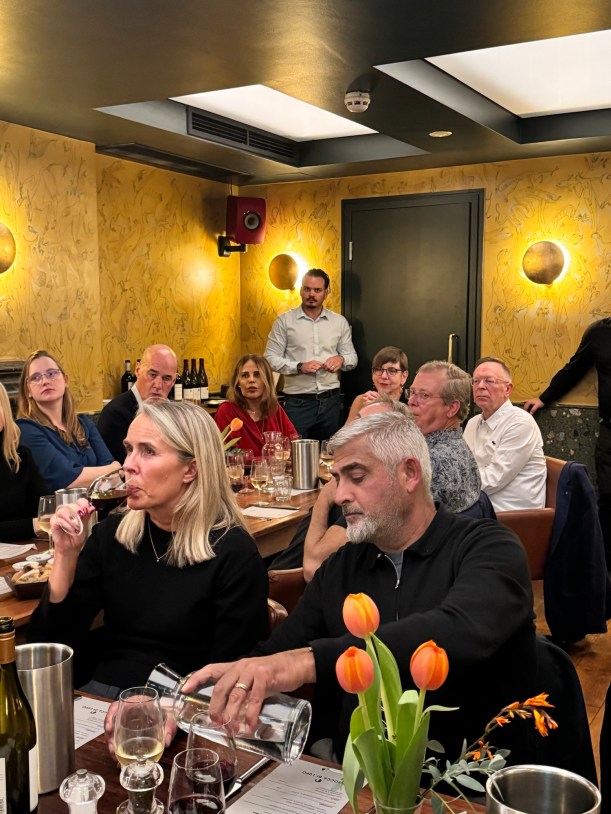
We tasted a selection of five wines from the finest Californian wine regions  served with a three-course dinner in the newly refurbished private room of the award-winning Bocca Di Lupo restaurant in Soho on Wednesday 30th October at 7pm. 

The wines served include one of Napa Valley’s best Cabernet Sauvignon’s – Mt. Brave Mount Veeder see tasting note in our Wines of the month

Kiran’s Instagram post gives a feel of the evening

Aperitif 
 Kendall Jackson Vintners Reserve chardonnay
Starter
  JFW La Crema Sonoma coast Chardonnay 2020
      JFW Hartford Court Pinot Noir Russian River 2021

Main
   JFW Edmeades Mendocino Zinfandel
     Mt. Brave Mount Veeder  Cabernet Sauvignon 2018


Leave a comment

Meerlust Rubicon 2017

From vineyards close to False Bay in Stellenbosch, South Africa. There is a noticeable cooling effect from breezes, in this part of the region, that push inland from the cold waters of the Bay really slowing the ripening season down and allowing concentrated and flavourful grapes to grow.

Founded in 1756 Meerlust Estate does call into question the use of the term ‘New World’ when comes to the wines of South Africa (see our review of Constancia which tells the story of how wine growing started in the country). On the other hand it is fair to say that the birth, or probably rebirth, of quality wine production only properly got under way after the fall of apartheid in 1994.

The idea of ‘crossing the Rubicon’, at which point there was no turning back for Julius Ceasar, inspired the name of the wine. Nico Myburgh, part of the founding family, created the wine from Cabernet Sauvignon, Merlot and Cabernet Franc, inspired by the use of blending in Bordeaux crossing the line and helping to establish the style in South Africa.

Indeed this wine is easy to mistake for a classic right back Bordeaux when tasted blind, there is something about the way that the growing conditions in Stellenbosch allow restrained and elegant wines to be made that whilst ripe retain notes of capsicum and black currant leaf characteristic of classic Claret.

This wine already shows some bricking on the garnet rim. The nose is expressive with ripe black currant, capsicum, black pepper, baked blackcurrant tart, smoke, toast and coffee grounds, signifying use of French Oak. It also has nice notes of earth and leather from the years in bottle.

In the mouth it is fresh, with ripe but firm tannin, the body is full but the alcohol well integrated. Elegant and well balanced with a very long tasty finish. This wine is widely available and great value for a wine showing enough maturity to drink now but with capacity to develop further.


Leave a comment

Wine Dinner with Te Mata Wines of Hawkes Bay, New Zealand, with Toby Buck at Bocca Di Lupo Restaurant, Soho London April 16th 2024

Te Mata Estate is New Zealand’s oldest winery, dating from the early 1890’s. Vines were first planted at Te Mata Estate in 1892. The original three vineyards produce its most famous wines: Coleraine, Awatea and Elston.

It is a New Zealand family-owned winery, based in Hawkes Bay, North Island. John & Wendy Buck have been co-owners of Te Mata Estate since 1978. Te Mata’s wines are renowned as the country’s finest.

They produce a stunning array of red and white wines including Coleraine and Awatea Cabernet/Merlots, Bullnose Syrah, Elston Chardonnay, and Cape Crest Sauvignon Blanc.

Coleraine was first made in 1982 vintage. It is a Bordeaux style wine described by Decanter magazine as “New Zealand’s First Growth”. It is made from their finest selections of Cabernet Sauvignon, Merlot, and Cabernet Franc. It is one of New Zealand’s iconic wines.

We were delighted to welcome Toby Buck, the son of the owner, over from New Zealand. Toby talked us through the history and his family wines.

We had a selection of five wines including Coleraine, served with a three-course dinner in the private room of the award-winning Boca Di Lupo restaurant in Soho.Tickets were priced is £95pp. We had a full house of 32 people.

Te Mata Estate Sauvignon Blanc 2021

Rigatoni with ricotta, broad beans & basil

Te Mata Estate Chardonnay 2023

Tagliata (served on sharing platters) Potatoes garlic & rosemary

Te Mata Bullnose Syrah 2019

Te Mata Coleraine Cab/Merlot 2018

Dessert

Te Mata Estate Gamay Noir 2023

Te Mata Wines Hawkes Bay New Zealand
Some readings of the best wine descriptions of the night

Our first time at Bocca Di Lupo was a great success. The Tagliata (Thin slices of perfectly cooked beef tenderloin) was so good it almost overwhelmed the wines! Te Mata wines lived up to their expectations and previous tastings. Beautifully crafted and immaculately balanced.


Leave a comment

Boekenhoutskloof

Founded in 1776, Boekenhoutskloof can be found  way down the scenic Franschhoek valley. The farm’s name means “ravine of the Boekenhout” (pronounced Book-n-Howed). Boekenhout is an indigenous Cape Beech tree greatly prized for furniture making. Hence the 7 wooden chairs that the wine labels feature.

As with many wineries there was a change of ownership and reboot in the early 1990s and new vineyards were planted including Syrah, Cabernet Sauvignon, Cabernet Franc, Grenache, Semillon and Viognier.

The winery also produces a number of brands: Porcupine Ridge, The Chocolate Blick, The Wolftrap. Producing 7 million bottles a year it is one of the biggest wineries.

One needs to book about 6 months in advance to visit and taste at the estate but it quite a special experience hosted by Godfried Mocke the wine maker in Franschhoek.

Godfried explained that they now have vineyards in Swartland home of the famous Porseleinsberg Syrah, for Rhone varietals. The grow Cabernet Sauvignon in Franschhoek and Stellenbosch and Semillion in Franschhoek.  They’ve set up a fairly new venture to grow and make Burguindian varieties in Hemel en Aarde called Cap Maritime.

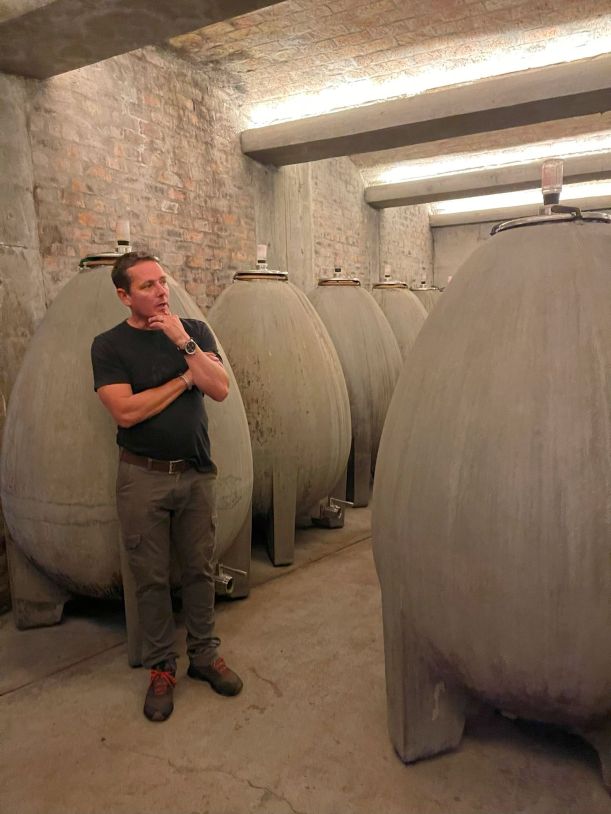
A tour through the winery revealed further details of their approach to wine making. They generally let wild yeast take care of fermentation. For red wine the concrete vessels used have rough surface that encourages a flora of yeast and so the cellar itself  imparts a particular character  in the same way that a cheesemakers cellar does.  A part of the terrior.

Concrete eggs are used to ferment the whites, the egg shape makes vortex which moves wine around, stirring the lees and it is also gently oxidative too.

However they often ferment some in barrique and blend to achieve the final wines.

Boekenhautskloof  are also using amphora made of clay fired at high temperature so this format doesn’t breath they use it for muscat.

Reds are matured in barrels.  Large Foudre for Syrah to slow oxidation. Barrique for the Cabernets.

Interestingly Boekenhautskloof do not acidify their wines which is actually widely practiced to achieve balance in the wines of South Africa.

Tasting notes:

Cap Maritime 2020, Chardonnay Hemel en Aarde

Creamy, toasty, smoky with citrus zest. Great balance, full but firm body, nice structure, long.

Semillon 2019

Made from old vines the youngest planted in 1942 which are more resilient to the droughts recently experienced. Bit of polish, wax, bit of smoke, pleasant petrol aroma. Nice elastic mouth feel, baked lemon, slightly salty tang, some smoke.  Capable of bottle aging and developing great complexity.  Think Hunter Valley.

Cap Maritime Pinot Noir 2020

Difficult year not much energy  to ripen so needed whole bunch to give a lift. Cherry, green herbs. Sweet red fruit, good lift medium body.

The Chocolate Block 2021 (1 M bottles!)

Made from 5 varieties the lend percentages always shift and change. Blind tasted to pick best but will always reflect the vintage characteristics.

Mix if red crunchy berries, dark black current then brambles, a touch of vanilla. Good balance, structured, high acid, medium body, clayey tannins present. Fruity with a tough of menthol. Med length.

Syrah 2019

Grown on blue schist in Swartland. Nose of crushed raspberries, blueberries, light spice. Fruit forward creamy texture, clove ripe fruit finish. Long.

Cabernet Sauvignon 2017

Stellenbosch fruit. Dark fruit, iodine and black current. Ripe fruit, lots of nice powdery tannin. High acid, dry savoury finish.

These are amazing age worthy, high quality wines representing superb value!


Leave a comment

Kanonkop Estate, Stellenbosch

Nestled on the slopes of Simonsberg Mountain, Kanonkop Wine Estate is a proud custodian of South African winemaking heritage. Now in the hands of fourth-generation brothers Paul and Johann Krige, the estate produces around three million bottles annually, with sales evenly split between domestic and international markets. Known exclusively for its red wines, Kanonkop champions two hero grapes: Cabernet Sauvignon and Pinotage. The estate’s flagship wines are meticulously matured in French oak barrels, incorporating a portion of new wood to enhance complexity and elegance.

The Kadette range, meanwhile, showcases fruit sourced from 30 local farmers, with Kanonkop’s own viticulturalist overseeing the growing process to ensure quality and consistency,. The estate traces its name to a nearby hill (or kop) where, in the 17th and 18th centuries, a cannon (kanon) thundered to signal the arrival of ships in Table Bay. This booming call once rallied local farmers to race their wagons to the harbor, laden with fresh produce.

 Since bottling its first wine in 1973, Kanonkop has become a benchmark for South African reds, carrying forward the legacy of the visionary Paul Sauer.

Tasting notes:

Kadette Range – A Young soldier ready for action!

Kadette dry Pinotage rose 2022

  • Short skin contact, blush colour and burst of floral notes.
  • Nice prickly mouth feel, sweet strawberry notes, peach, fresh acidity.

Cape Blend 2020

  • 50% Pinotage plus Cabernet Sauvignon and Cabernet Franc, 14% ABV.
  • Nice brambly nose with a bit of smoke, an inky note and touch of vanilla.
  • Lovely juicy fruit, fullish body but good lift and spicy finish, good length.

Pinotage 2020 14%

  • 100% Pinotage 14% ABV.  Really sweet red and black berries, touch of vanilla.
  • More fruit on palate, soft chewy tannins, medium acidity, good length. Slight herbal finish. Very tasty

Cabernet Sauvignon 2020 14%

  • Classic blackberry and black currant leaf on the nose.
  • Nice dry fruit, herbal, savoury, nice grainy tannin, medium length.  Lovely and great value.

Estate wine Pinotage 2020

  • Old vineyards with 60 year old bush vines. Pinotage is dry farmed
  • Matured in 80% new oak. Classy barrel room notes of toast and spice.
  • Lovely balance, and structure, brambly fruit, coffee notes, lots of length.

Estate Cab Sauvignon 2020

  • Classic blackcurrant leaf and whiff of smoke.
  • Blackberry is ripe but not over ripe ,mineral notes, very fine ripe tannin, lingering length. Long savoury finish!

Estate Paul Sauer 2020

  • 70% Cabernet Sauvignon, 15% Merlot and 15% Cab Franc. Matured in 100% new oak for 2 years.
  • More of everything. Black plum, coco powder and spice.
  • More talcum powdery ripe and super soft tannins. Lovely rounded fruit breadth. Very long.

In recent years Kanonkop have experienced very consistent vintages harvesting at same time of year but it is always  a race against time to harvest everything as it ripens all at once. They have not apparently noticed much effect in terms of global warming.